10 Retro Houseplants That Still Fill Homes Today
Ten retro houseplants grandma grew—jade, snake plant, pothos, and more—with light, water, and pet-safety notes so you pick a classic that fits your home.
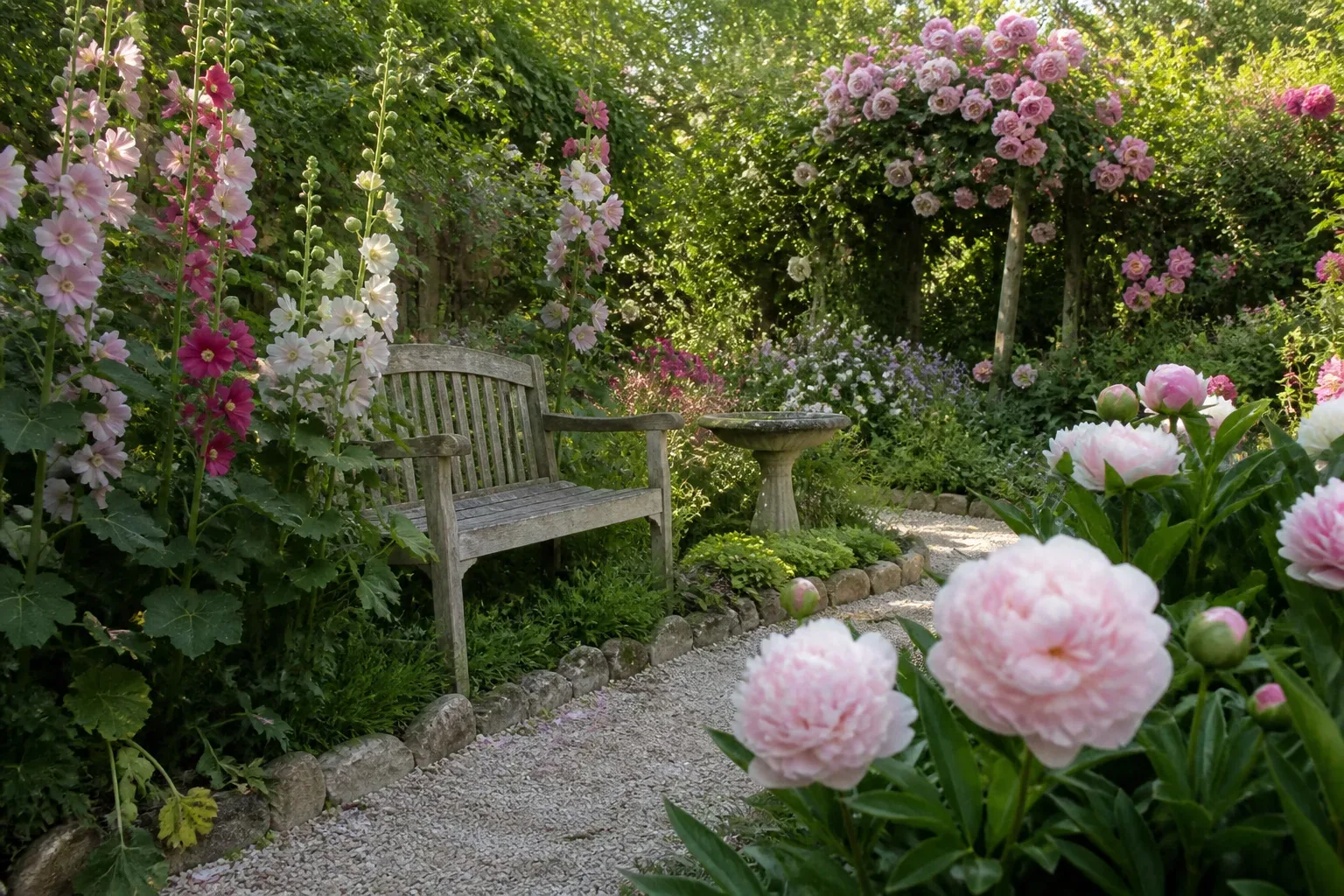
Long before open shelving and hashtag indoor jungles, spider plants spilled from macramé hangers, jade plants sat on radiator covers, and a Christmas cactus bloomed on the dining-room sideboard every December. Those plants were not props. They were living furniture that survived moves, droughts of attention, and decades of changing paint colors.
Retro houseplants are the species that kept selling after the trend cycle moved on because they tolerate real homes: uneven light, dry winter air, forgotten waterings, and pots that drain poorly. This guide covers ten classics grandma likely had, grouped by how they actually behave indoors—not by which photo looked best on a 1974 catalog cover.
Why These Plants Survived Every Decor Trend
Houseplant fashion rotates fast. Velvet calatheas, pink princess philodendrons, and fiddle-leaf figs all surged, then left thousands of struggling pots behind when buyers discovered the care mismatch. The plants on grandma’s list stayed because they combine visible reward (trailers, blooms, bold leaves) with forgivable habits (slow decline under neglect rather than sudden collapse).
What Makes a Houseplant Timeless Instead of Trendy
Timeless houseplants share three traits. First, they grow acceptably across a range of indoor conditions rather than demanding one perfect windowsill. Snake plant and pothos tolerate lower usable light; jade and aloe handle bright rooms and occasional missed waterings. Second, they propagate easily, so a single plant becomes gifts for children and neighbors—social proof built into the species. Third, they look good at multiple sizes, from a young pothos on a desk to a ceiling-high monstera without requiring a greenhouse rebuild.
Trendy plants often fail the third test: they photograph dramatically at nursery size but become leggy, finicky, or expensive to replace when conditions are average. Retro classics reward patience. A jade grown from a cutting may take years to become a small tree, but it can outlive the couch.
How to Pick the Right Retro Plant for Your Home
Choose the location and your habits before you choose the plant. The RHS houseplant growing guide stresses that decoration-driven placement fails when light, temperature, water, and humidity do not match the species. Popularity is useful data—it means care advice and replacement plants are easy to find—but it does not mean every classic fits every room.
Match Light Before You Buy
All ten plants here need access to daylight or a suitable grow light. None thrive indefinitely in a windowless hallway. The University of Minnesota Extension guide to indoor lighting explains that without enough light for photosynthesis, even tolerant plants consume stored energy and eventually weaken.
Bright indirect light suits jade, aloe, monstera, hoya, and Christmas cactus. Moderate to lower usable light works for snake plant, pothos, and spider plant, though growth slows and variegation fades. Bright indirect without hot sun on leaves is critical for Boston fern and African violet—direct sun scorches fronds and velvet foliage.
Stand where the pot will sit at 10 a.m. and 4 p.m. If you cannot see clear sky through the window from that spot, plan on a grow light for flowering plants or choose snake plant or pothos first.
Be Honest About Your Watering Habits
If you forget to water for two weeks, prioritize succulents and semi-succulents: jade, aloe, snake plant, and hoya. If you enjoy checking plants often and can maintain humidity, Boston fern and African violet will reward that attention. Pothos and spider plant sit in the middle—they prefer a partial dry-down but recover from occasional drought better than ferns.
Whatever you pick, a drainage hole matters more than the vintage ceramic pot aesthetic. Water that sits in the root zone causes rot on plants that survived grandma’s house because her clay pots breathed and dried faster than many modern glazed containers.
The Heirloom Classics Worth Passing Down
Some retro plants became family heirlooms because individual specimens live for decades and root readily from cuttings. These two are the strongest “pass it to your kid” candidates on the list.
Jade Plant (Crassula ovata)
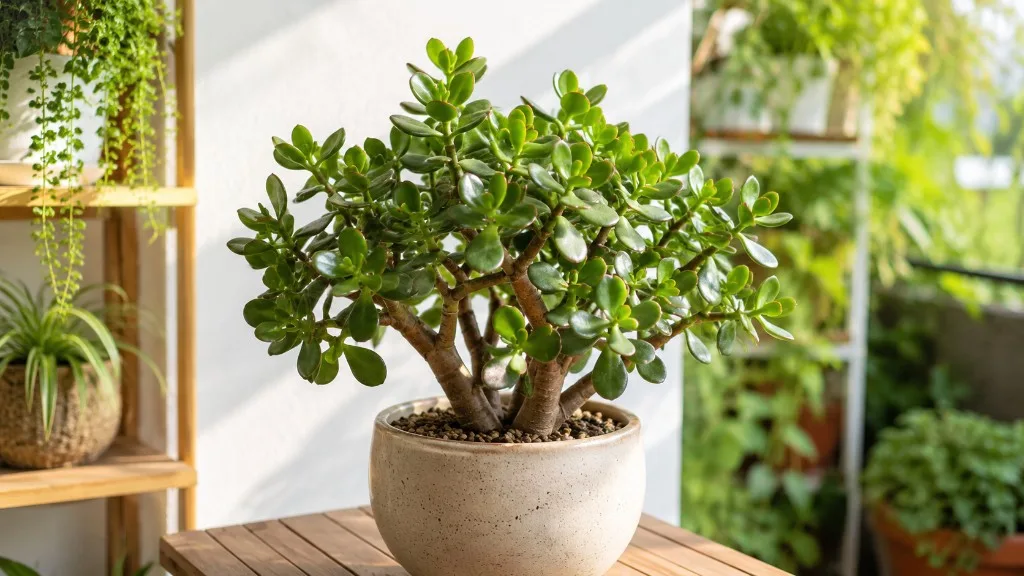
Jade is the slow-growing succulent with thick, glossy leaves and a woody stem that eventually looks like a miniature tree. Gardening Know How’s jade plant care guide notes ideal daytime temperatures around 65–75°F (18–24°C) with slightly cooler nights, though jade tolerates warmer rooms when light is strong. Salisbury Greenhouse’s jade care notes add that Dutch traders popularized the plant in Europe after African expeditions, and it has been a standard houseplant for more than a century because it accepts a wide range of indoor conditions.
Give jade at least four hours of bright light daily—a south or west window with sheer curtain protection is ideal. Use a fast-draining cactus or succulent mix and a pot that dries within a few days after watering. Water when the top inch of mix is dry; in winter, stretch intervals further. Fertilize lightly in spring and summer only.
Jade grows slowly, roughly a few inches per year, but well-cared specimens can live many decades and become genuinely large indoors. Leaf drop usually signals insufficient light, poor drainage, or roots sitting wet. Red leaf margins can mean too much direct sun—pull the plant back from the glass.
Skip jade if your brightest room is still dim, you water on a calendar without checking dryness, or you need a pet-safe plant—jade is toxic to cats and dogs if chewed (ASPCA toxic and non-toxic plant database). For deeper species care, see the jade plant hub.
Christmas Cactus (Schlumbergera)
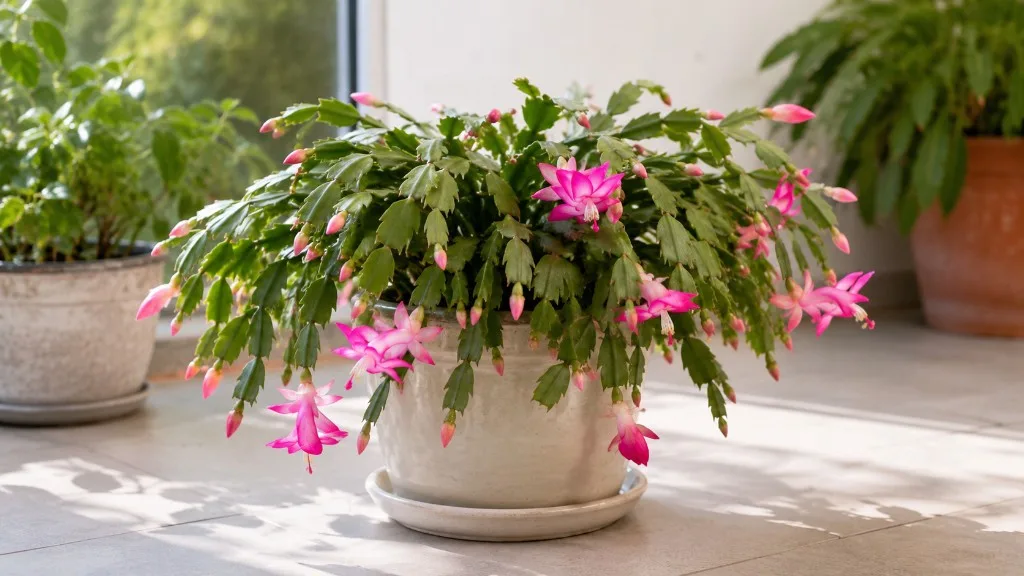
Christmas cactus is the winter-blooming succulent with segmented, trailing stems—not a desert cactus despite the name. The RHS Christmas cactus growing guide describes long-lived, easy-to-grow plants that flower from late November through January in red, pink, white, and mauve when cool nights and shorter days trigger bud formation.
Place Christmas cactus in bright light without full midday sun, keep temperatures above 50°F (10°C), and maintain humid air—dry heated rooms cause bud drop. Water when the top of the mix feels dry; reduce watering after flowering until new growth resumes in spring. Repot every two to three years in a slightly larger container with good drainage.
Plants often fail to bloom because summer nights stayed too warm or light was too bright at night—outdoor porch summers followed by a cool, bright indoor fall is the classic bloom recipe. Leggy stems can be trimmed after flowering; rooted segments become new plants for relatives.
Skip Christmas cactus if you cannot provide cool fall nights (below about 65°F / 18°C for several weeks) or if the only spot is a hot south window that never cools. See the Christmas cactus hub for seasonal detail.
Low-Light Workhorses That Never Quit
When grandma’s house had deep rooms and small windows, these two plants still grew. They remain the best retro picks for apartments and offices where light is usable but not generous.
Snake Plant (Dracaena trifasciata)
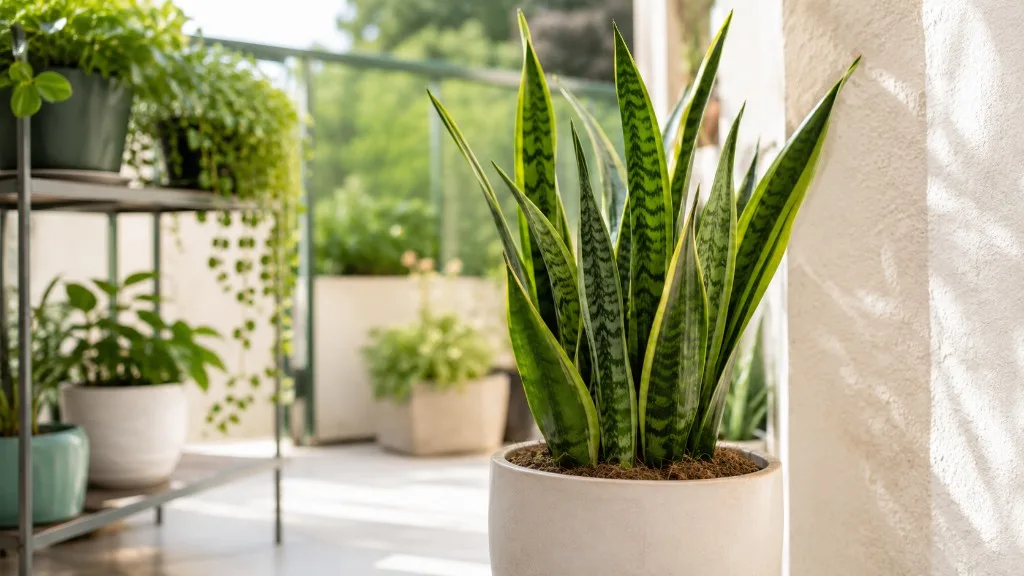
Snake plant—formerly classified as Sansevieria trifasciata—is the upright succulent with banded, sword-like leaves that tolerates neglect better than almost any classic on this list. Penn State Extension’s snake plant profile calls it forgiving and low-maintenance, suitable for beginners and travelers.
Snake plant accepts low to bright indirect light; brighter light speeds growth and keeps variegation crisp. Water when the mix is dry well below the surface—often every two to three weeks in winter, more often in bright summer rooms. Use a chunky, well-draining mix; standard peat-heavy potting soil stays wet too long.
Snake plant’s main failure mode is overwatering, especially in low light and cool temperatures. Soft base leaves and soil smell mean rot—remove affected tissue, repot into dry mix, and water sparingly. It is mildly toxic if ingested by pets. Full care lives on the snake plant hub.
Pothos (Epipremnum aureum)
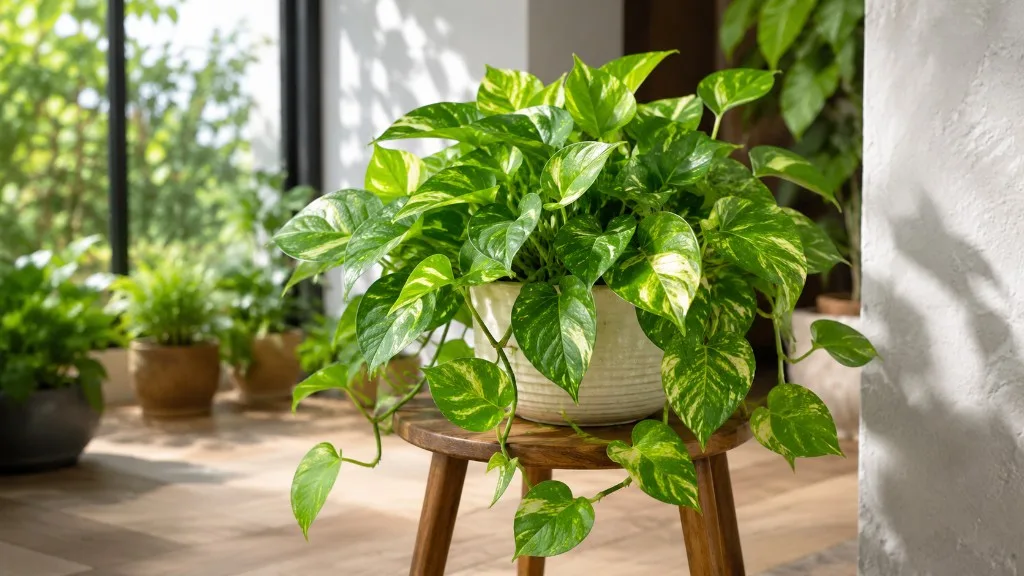
Golden pothos is the trailing vine with heart-shaped, variegated leaves that defined 1970s shelves and 2020s plant walls alike. Penn State Extension’s pothos guide highlights its tolerance of average indoor conditions and usefulness in hanging baskets or on top of cabinets.
Pothos prefers bright indirect light but grows slowly in lower light with greener leaves. Let the top half of the mix dry before watering thoroughly. Pinch leggy vines to keep the plant bushy; cuttings root easily in water or moist mix—one grandmother’s pothos can become a dozen starter plants.
Pothos contains calcium oxalates irritating to mouths and stomachs if chewed by pets or children. It is not the right retro pick for homes with habitual chewers unless vines hang out of reach. Explore varieties on the pothos hub.
Hanging and Trailing Retro Favorites
Macramé hangers were not random 1970s fashion. They solved a real problem: getting trailing plants closer to window light without sacrificing floor space.
Spider Plant (Chlorophytum comosum)
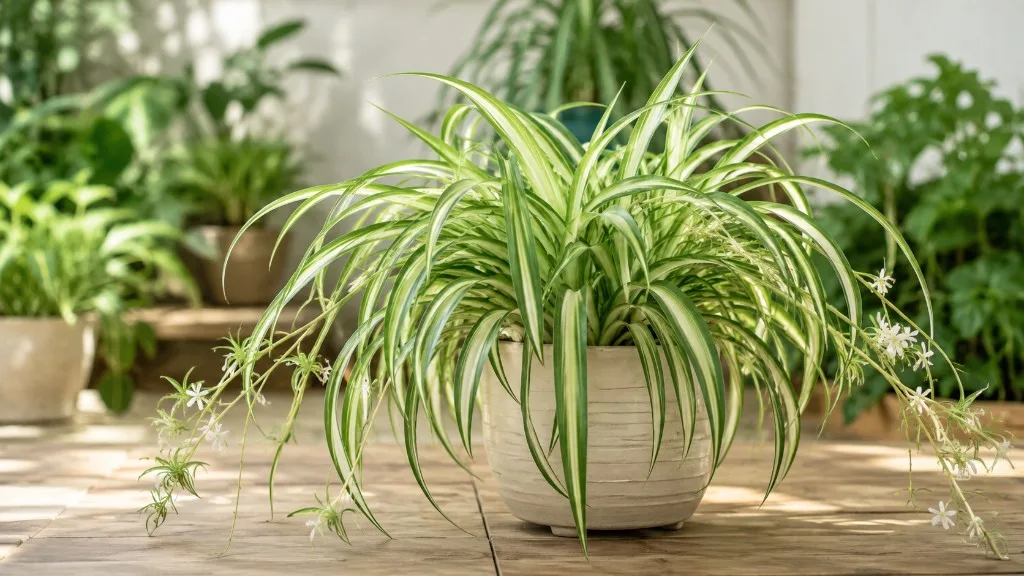
Spider plant is the grass-like clump that sends out arching stolons tipped with miniature plantlets—“spiderettes”—that root in seconds. It exploded in the 1970s in hanging baskets and remains one of the easiest plants to share.
Grow spider plant in bright indirect light for the fullest growth; it tolerates moderate light but produces fewer plantlets. Water when the top inch dries; fluoride and chlorine in tap water can brown leaf tips in sensitive plants—rainwater or filtered water helps if tips persist despite good watering habits.
Spider plant is often listed among pet-friendlier classics, though any plant can cause stomach upset if eaten in quantity—verify in the ASPCA database before assuming safety. Hang baskets where plantlets can be snipped and potted for gifts. More detail: spider plant hub.
Hoya (Hoya carnosa)
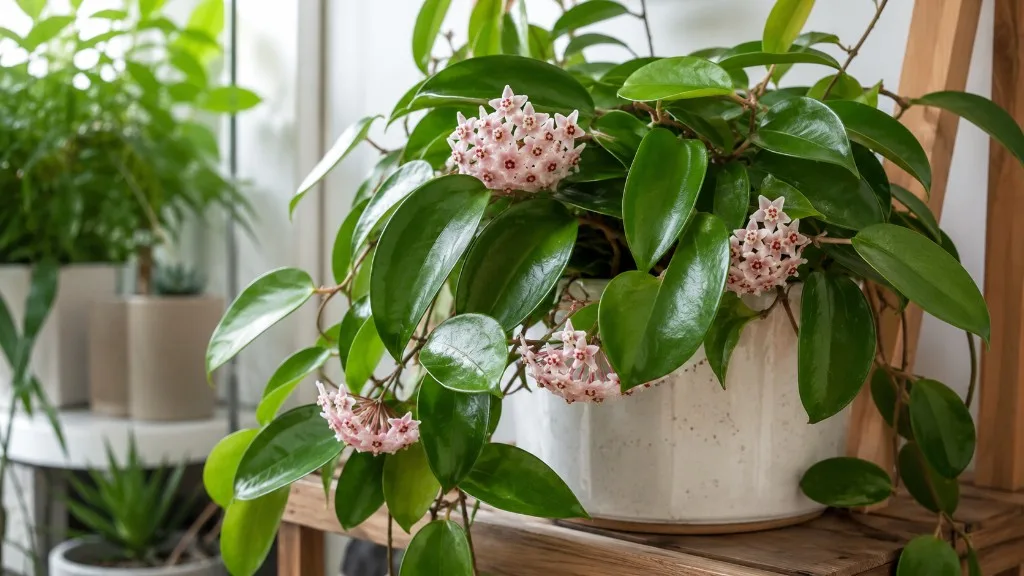
Wax plant (Hoya carnosa) is the thick-leaved trailer with clusters of fragrant, star-shaped flowers on mature plants. Hoyas rode the same 1970s wave as spider plants and monstera, then quietly persisted in collectors’ homes while social media chased rarer species.
Hoyas want bright indirect light and infrequent watering—treat them like succulents on woody stems. Let the mix dry almost completely between waterings; soggy soil kills roots quickly. Flowers appear on older stems; do not cut long vines that have bloomed before, because buds form on the same spur-like structures year after year.
Skip hoya if you need fast coverage or frequent flowers on a young plant—hoyas reward years of stable care more than first-season drama. See the hoya carnosa hub.
Statement Plants From the Mid-Century Boom
Monstera (Monstera deliciosa)
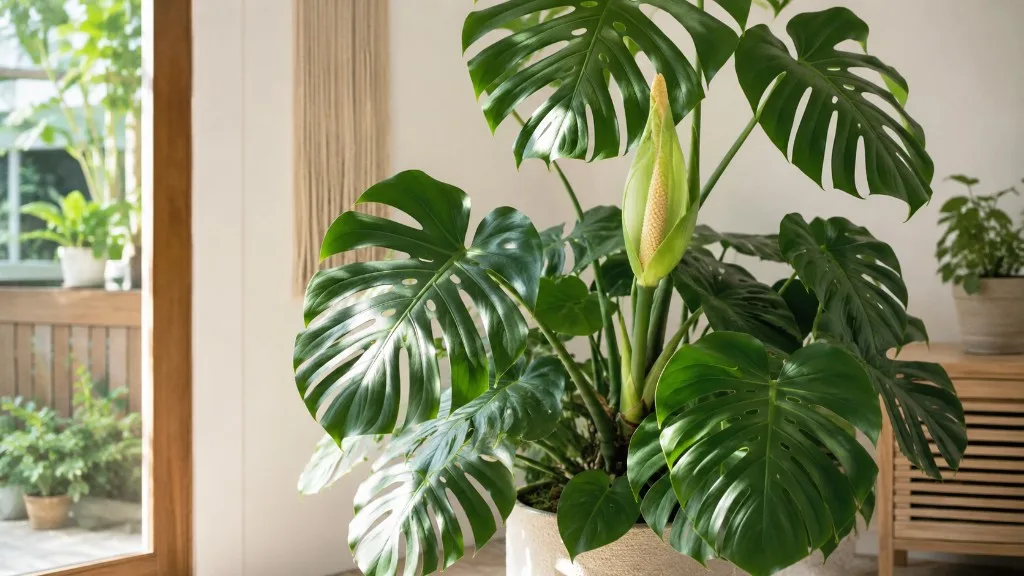
Swiss cheese plant is the large-leafed tropical climber whose split and fenestrated leaves became shorthand for mid-century modern interiors long before it dominated Instagram. Monstera tolerates average indoor temperatures and humidity better than many true tropicals, which is why it stayed in design magazines for sixty years.
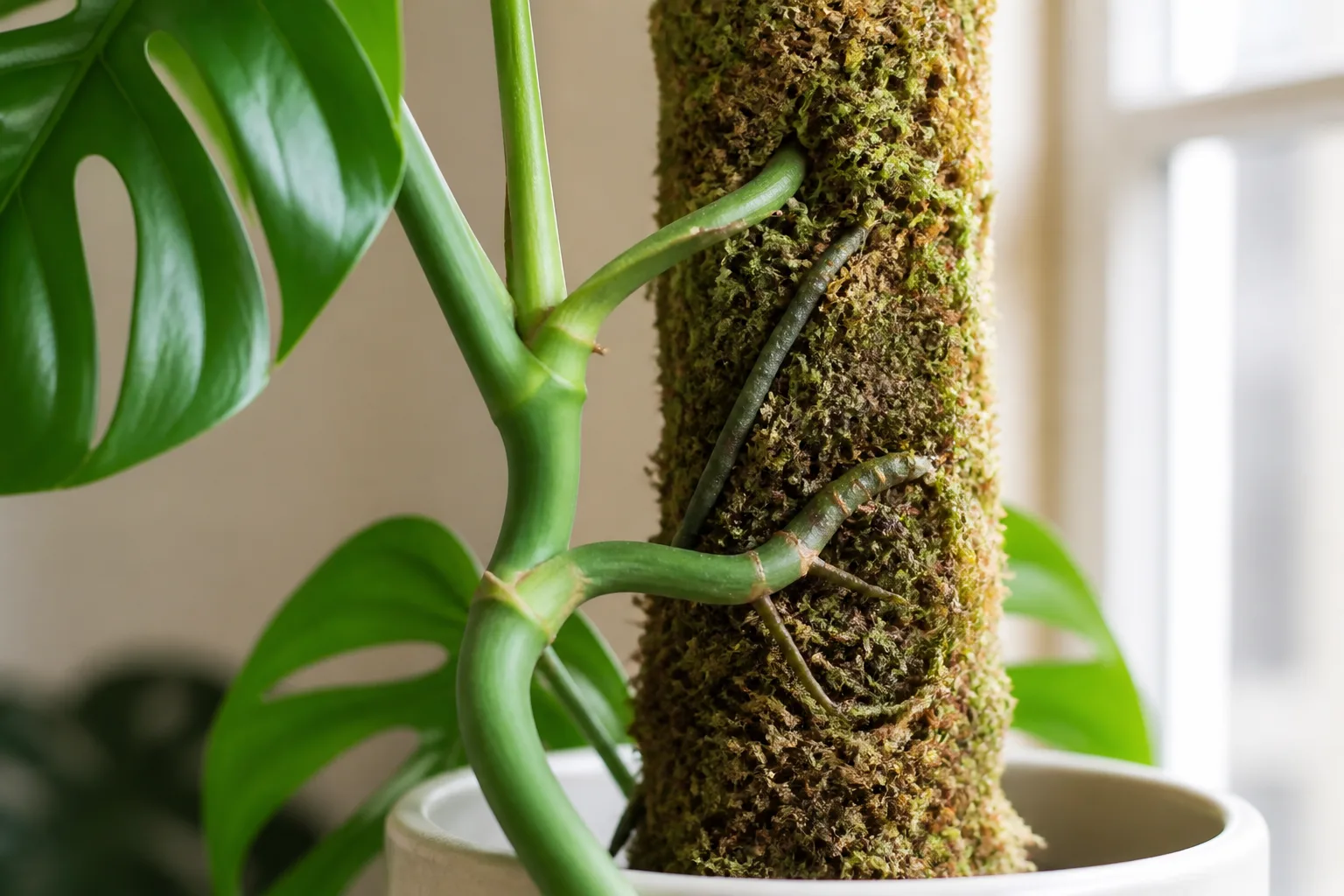
Give monstera bright indirect light—direct sun bleaches leaves; deep shade produces small, solid juvenile foliage without splits. Water when the top two inches of mix dry; reduce in winter. Support large plants with a moss pole or trellis so stems do not sprawl across the floor.
Monstera grows fast in good light and can reach ceiling height indoors. Yellow leaves often mean overwatering or poor drainage; brown crispy edges point to low humidity or salt buildup from over-fertilizing. Monstera is toxic if ingested. Full profile: monstera deliciosa hub.
Humidity Lovers From the Kitchen Window
Grandma’s kitchen often had the brightest, most humid room in the house—steam from cooking, a windowsill above the sink, and a view of the yard. Two retro favorites still depend on that microclimate logic.
Boston Fern (Nephrolepis exaltata)
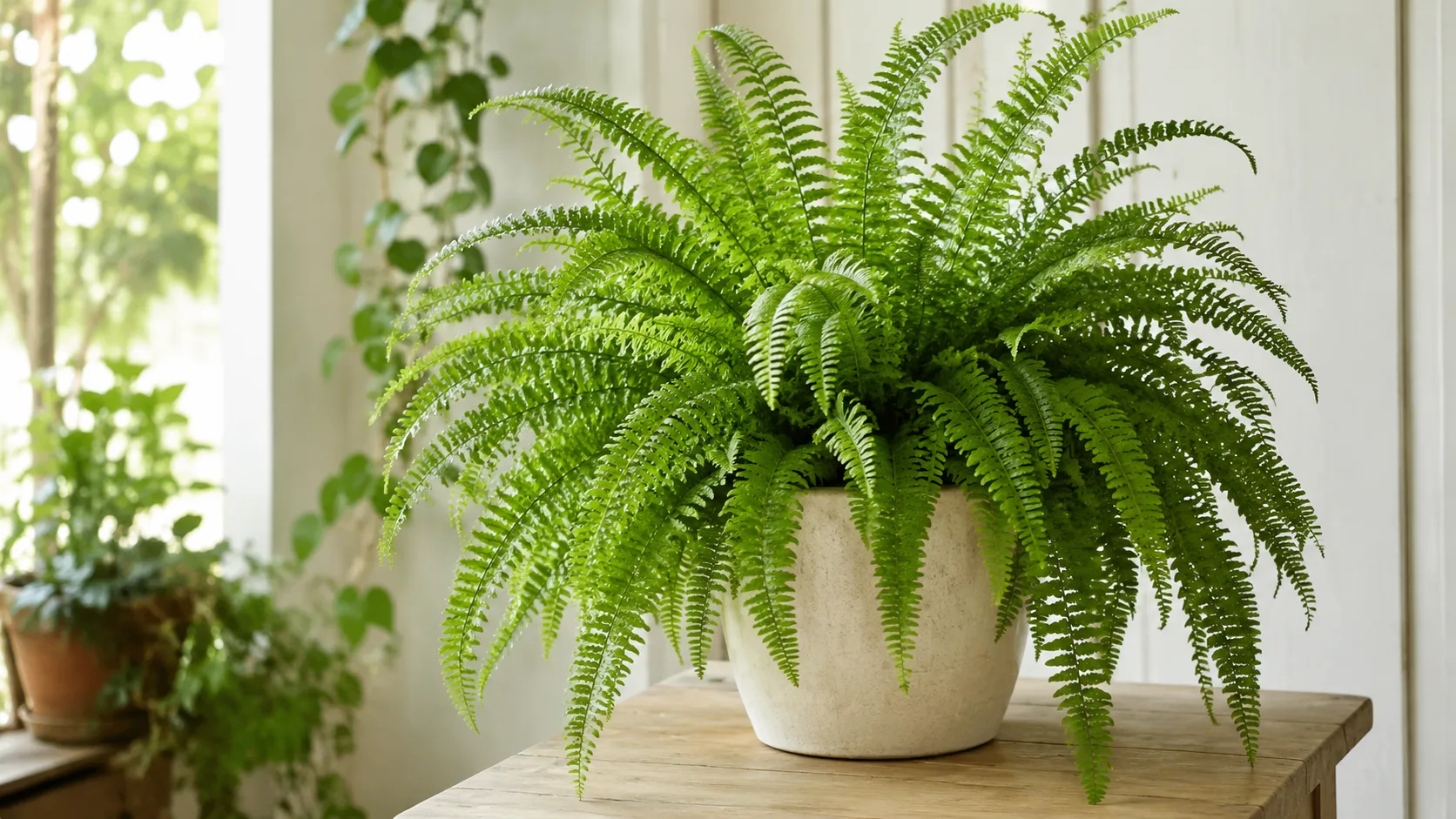
Boston fern is the arching, feathery fern that Victorian parlors and 1980s living rooms both adopted. The RHS Boston fern profile describes an evergreen fern that grows upright then arches and droops with age, reaching up to 90 cm indoors with consistent moisture and humidity.
Unlike snake plant or jade, Boston fern is not a beginner plant in dry apartments. It needs steadily moist—but not waterlogged—mix, high humidity, and bright indirect light without hot sun. Dry fronds turn brown starting at the tips; soil that stays soggy causes root rot. A pebble tray, grouped plants, or a bathroom with daylight often outperforms misting alone.
Skip Boston fern if you run central heating without humidity support or you want a plant that forgives a missed week of watering. When conditions match, it is unmatched for soft, airy texture. See the Boston fern hub.
African Violet (Saintpaulia)
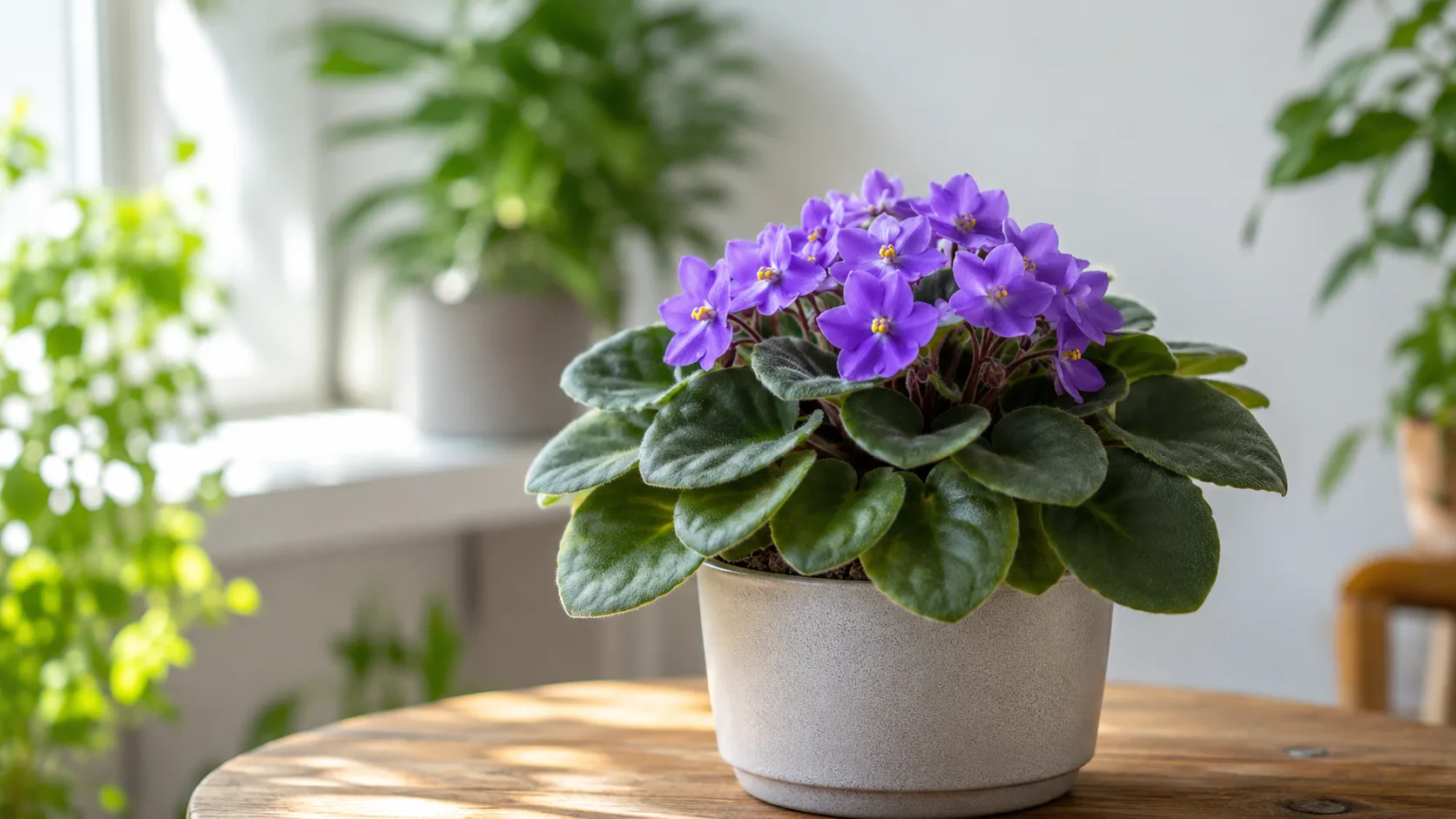
African violet is the compact bloomer with velvety leaves and flowers in purple, pink, white, and red that can flower year-round in the right setup. The RHS African violet growing guide recommends bright indirect light, careful watering, warm humid air, and regular feeding during active growth.
Water from below or along the pot edge so cold water does not sit on fuzzy leaves, which causes spotting. Use room-temperature water and a light, porous African violet or houseplant mix in a pot one-third the diameter of the leaf spread. Cool nights and steady moisture promote blooms; dry air and irregular watering produce bare plants with good leaves but few flowers.
Taxonomy shifted—many plants sold as African violets are now classified in Streptocarpus—but care principles remain the same. Skip African violets if you dislike grooming plants or cannot keep humidity above roughly 40–50% in winter. Profile: African violet hub.
The Kitchen Counter Survivor
Aloe Vera (Aloe barbadensis)
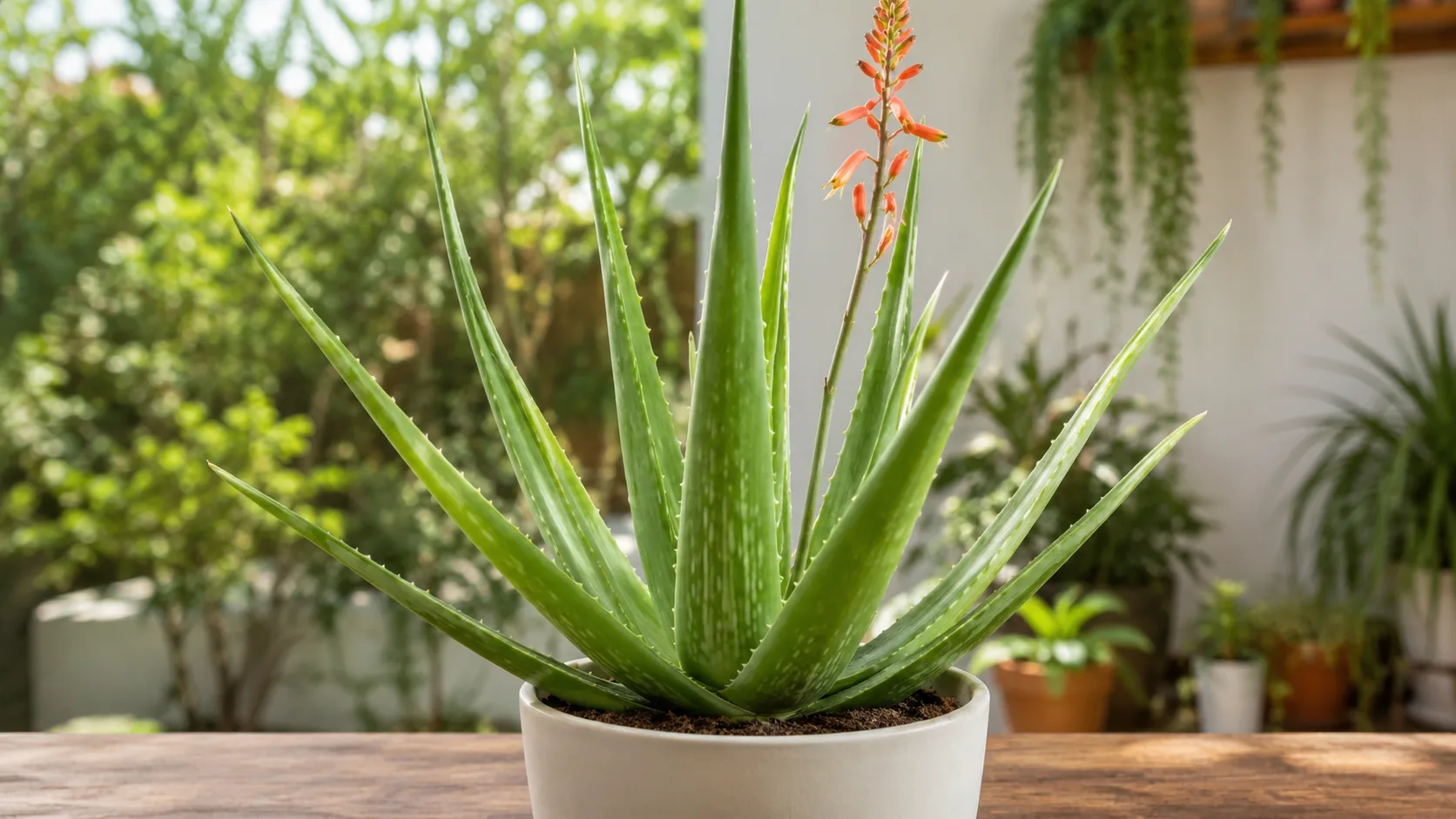
Aloe vera is the spiky succulent grandma kept for sunburn gel and kitchen-window greenery. It needs strong bright light—several hours of direct sun is acceptable in most climates—and infrequent deep watering when the mix dries completely.
Aloe rots fast in dense, wet soil. Use cactus mix and a terra-cotta pot. Harvest gel from mature outer leaves only; plants recover slowly from over-harvesting. Pups around the base can be separated for new pots or gifts.
Aloe is toxic to pets if ingested. It is a poor choice for dim apartments—plants stretch, weaken, and lose the plump leaf look that made them attractive. See the aloe vera hub.
Common Mistakes With Vintage Houseplants
Treating all classics like snake plants. Overwatering kills more retro plants than drought kills. Ferns, African violets, and Christmas cactus want different moisture rhythms than jade and aloe.
Decor-first placement. A ceramic pot on a dark bookshelf honors the aesthetic but starves the plant. Move the plant to usable light or add a grow light—then choose a pot that fits the location.
Ignoring pet toxicity. Pothos, jade, aloe, monstera, and snake plant appear on toxic-plant lists. Verify each species in the ASPCA database and block access for chewers.
Expecting instant heirlooms. Jade and hoya become legacy plants over years, not weeks. Buying a large specimen skips waiting but not the need for stable care.
Skipping humidity for ferns and violets. Dry winter air is why “grandma’s fern always looked great” stories often involve a kitchen window or a humid room—replicate the environment, not just the plant name.
Passing Plants Down Through Generations
Heirloom houseplants are usually propagated copies, not one immortal pot lugged through every move. Spider plantlets, jade stem cuttings, Christmas cactus segments, and pothos vines root easily. Label the pot with the date and parent plant—“from Nana’s kitchen jade, 2024”—so the story travels with the roots.
When passing a plant, include three instructions: where it lived for light, how often you watered in that pot and room, and what failed before you got the rhythm right. That context beats a generic care card.
For a first generational gift, spider plant and pothos offer the highest success rate; jade and Christmas cactus reward patient growers; Boston fern and African violet are better once the recipient already enjoys daily plant checks.
Conclusion
The houseplants grandma grew are still filling homes because they match how people actually live: imperfect light, busy schedules, dry winters, and the desire for something living that does not need a greenhouse manager. Jade, Christmas cactus, snake plant, pothos, spider plant, hoya, monstera, Boston fern, African violet, and aloe each solve a different indoor job—heirloom tree, winter flowers, low-light survivor, trailing filler, statement vine, humidity bellwether, or sunny counter plant.
Pick light and watering style first, then choose the retro species that fits. The right classic will outlast the next hashtag trend because it was never only decoration—it was a plant that learned to live with people.