When and How to Deadhead Hydrangeas
Deadheading hydrangeas is optional, but the wrong cut can cost flowers. Use this simple type-by-type timing guide for safer pruning and tidy blooms.
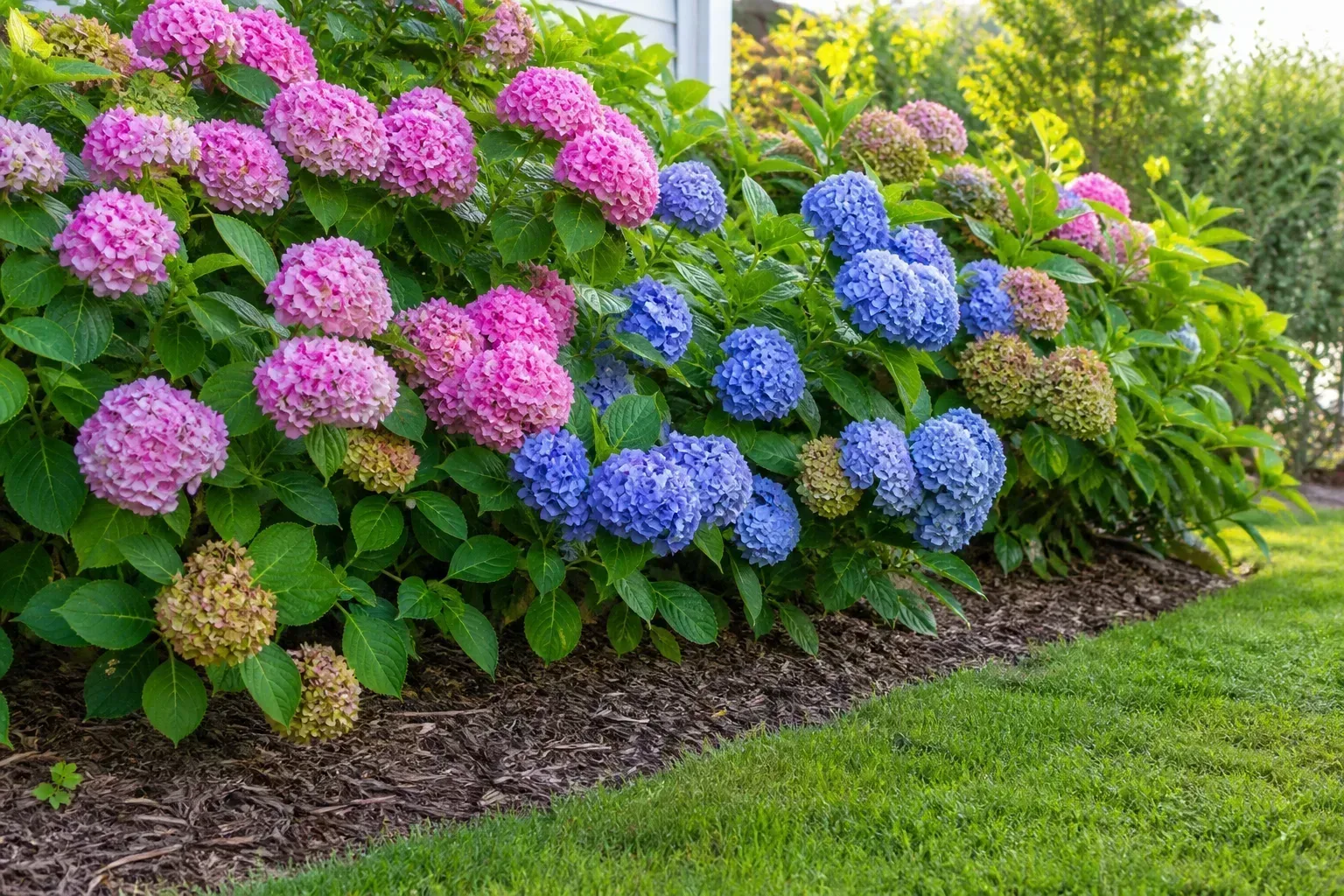
If a hydrangea flower head has faded to tan, pink, green, or papery brown, you have two perfectly reasonable choices: remove it for a tidier shrub, or leave it to dry in place. Deadheading is optional. The important decision is how far down the stem you cut and whether your hydrangea has already made next year’s flower buds.
For a safe first move, remove only the spent flower head and a short piece of stem. If you want to prune branches, reduce the shrub, or cut it back hard, stop and identify the hydrangea type first. A mophead bigleaf hydrangea and a ‘Limelight’ panicle hydrangea may look equally finished after flowering, but they store their next crop of flowers on different parts of the plant.
The quick answer: deadheading is optional
You do not have to cut off dead hydrangea blooms. They will dry, change color, and eventually break down on their own. Leaving them can preserve winter texture, give a bare shrub more structure, and protect some of the buds and stems lower on an old-wood hydrangea from harsh weather.
Cut them if you dislike the look, want to tidy a path or patio border, need stems for a dried arrangement, or are removing a flower head that has collapsed onto healthy foliage. Deadheading can also help some reblooming hydrangeas stay presentable and produce another flush, but it is not a switch that guarantees more flowers. Light, moisture, cultivar genetics, heat, and the length of the growing season still control what happens next.
The safest universal rule is simple: remove the flower, not the shrub. If you cannot identify the variety or the season is already late, make a short cosmetic cut—or leave the head in place.
Deadheading and pruning are not the same job
Deadheading means removing a spent flower head and usually a small section of its stalk. It is a surface-level cleanup. Pruning means removing living or dead branches to change the plant’s size, shape, density, or future growth. Confusing these jobs is how a harmless tidy-up turns into a lost season of flowers.
Deadheading might mean cutting a few inches below a mophead to the first pair of full-sized leaves. Maintenance pruning might mean removing a crossing branch, shortening a long stem, or taking an old stem all the way to the ground. Those deeper cuts interact with the plant’s bloom wood, so they need a type-specific window.
If your only goal is to remove brown petals, do not use the opportunity to reshape the entire shrub. Take the smallest cut that meets the goal, then save structural pruning for the season recommended for that type.
Identify your hydrangea before making a deep cut
Hydrangeas are commonly grouped by whether their flower buds form on old wood—stems that grew the previous year—or new wood, the current season’s growth. Cornell Cooperative Extension explains that panicle and smooth hydrangeas flower on new wood, while climbing, oakleaf, and most traditional bigleaf hydrangeas flower on old wood; reblooming bigleaf cultivars can flower on both (Cornell Cooperative Extension’s hydrangea Q&A).
That distinction is more useful than a calendar date. A “fall pruning” rule that is safe for a panicle hydrangea can remove the flower buds on an oakleaf or old-style bigleaf plant. Labels, nursery tags, and the cultivar name are more reliable than flower color, but the plant’s habit can still provide clues.
Old-wood hydrangeas
Old-wood types include most traditional bigleaf hydrangeas (Hydrangea macrophylla), mountain hydrangeas (Hydrangea serrata), oakleaf hydrangeas (Hydrangea quercifolia), and climbing hydrangeas. Bigleaf and mountain types often have mophead or lacecap flowers and broad, textured leaves. Oakleaf plants have unmistakable oak-shaped leaves and often show cinnamon-colored stems and strong fall foliage. A climbing hydrangea behaves more like a vine and should be treated as an old-wood bloomer.
These plants set next year’s flower buds on existing stems, often not long after the current flowers finish. A deep fall, winter, or early-spring cut can remove those buds before you can see them. UGA Extension’s pruning guide likewise recommends immediately-after-flowering pruning for bigleaf and oakleaf types and late-winter or early-spring pruning for panicle and smooth types (University of Georgia Extension).
New-wood hydrangeas
Panicle hydrangeas (Hydrangea paniculata) produce cone-shaped flower clusters. ‘Limelight,’ ‘Little Lime,’ and PeeGee types belong here. Smooth hydrangeas (Hydrangea arborescens) include ‘Annabelle’ and ‘Incrediball,’ which usually form rounded flower heads on more flexible stems.
Because these plants make their flower buds on new growth, they are generally more forgiving of late-winter or early-spring maintenance pruning before new shoots emerge. That does not mean they need to be cut to the ground every year. A strong framework often supports heavy flower heads better than a shrub that has been sheared back too aggressively.
Reblooming hydrangeas
Reblooming bigleaf and mountain hydrangeas can flower on old and new wood. ‘Endless Summer’ is a familiar example, but the cultivar name matters more than the marketing label; not every plant sold as a blue or pink bigleaf hydrangea is a rebloomer.
Treat an unknown rebloomer conservatively. Deadhead lightly during the active bloom period, avoid deep cuts after midsummer, and do not assume that cutting harder will force another flush. A missed deadheading window usually costs you appearance, not the health of the plant; leave the flowers rather than gamble with the next season’s buds.
Check whether the stem is dead or merely dormant
Brown flowers do not automatically mean a dead hydrangea branch. Spent petals naturally dry and turn papery. Deciduous stems may look bare in winter while still carrying living buds. Before removing a “dead” stick, bend it gently and look at the buds and bark.
Use a small scratch test on a questionable young stem: lightly scrape a tiny patch of outer bark with a clean fingernail. Living tissue beneath is usually green or moist; dead tissue is brown and dry. The test is not a diagnosis for every winter injury, and an old woody stem may be less obviously green, so check more than one point before cutting.
If the stem flexes without snapping, has plump buds, or begins leafing later than its neighbors, leave it alone. Remove a clearly dead tip in spring once live growth shows where it stops. Make the cut back to healthy wood rather than cutting a whole section just because it looks unattractive in winter.
When to deadhead old-wood hydrangeas
The best time to deadhead an old-wood hydrangea is usually during the growing season and soon after the flower has finished, while you can still see the structure clearly and before the plant has committed to next year’s buds. For a traditional bigleaf, mountain, oakleaf, or climbing hydrangea, think “light cosmetic cut,” not “summer haircut.”
If the plant is still blooming and you want a vase arrangement, remove a stem only if you are comfortable sacrificing that flower. If the head is simply faded, trace its stalk to the first full-sized pair of leaves and snip just above them. This removes the visual clutter while leaving most of the stem and its possible buds intact.
After midsummer—especially after August in climates where bud set is underway—be more conservative. Gardenia’s type-by-type guide advises stopping heavier deadheading of old-wood bigleaf hydrangeas by mid-August and warns against cutting into developing buds (Gardenia’s hydrangea deadheading guide). Exact timing varies with climate and cultivar, so a short cut or no cut is safer than a long stem removal when the season is late.
When to deadhead new-wood hydrangeas
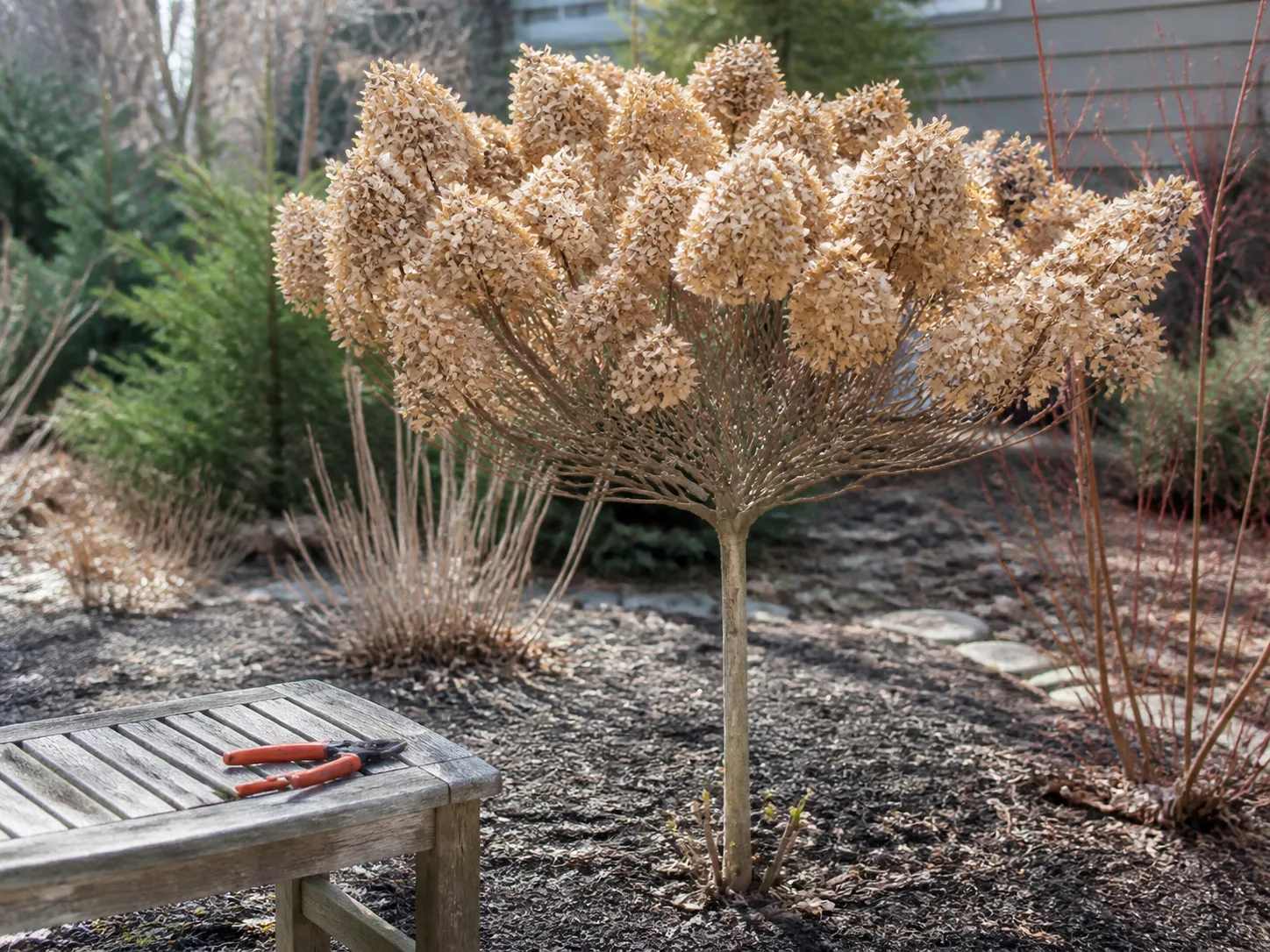
Panicle and smooth hydrangeas give you more flexibility. During summer, remove faded heads when they interfere with the plant’s shape or when you want to encourage a cleaner second look. In late summer and fall, you can also leave the dry cones or balls in place; many gardeners value them for texture.
If you want to do structural pruning, wait until late winter or early spring before new growth begins. A dormant new-wood hydrangea is easier to see and less likely to lose the current season’s buds because those buds have not formed yet. The University of Georgia guidance places panicle and smooth pruning in that pre-growth window (UGA Extension’s hydrangea pruning guide).
Even on a new-wood type, do not treat every faded head as a reason to cut several feet off the plant. Remove crossing, weak, or damaged stems first, preserve a balanced framework, and shorten only what is necessary. A hard annual cut can produce long, soft growth that flops under large blooms.
How to remove a spent hydrangea flower safely
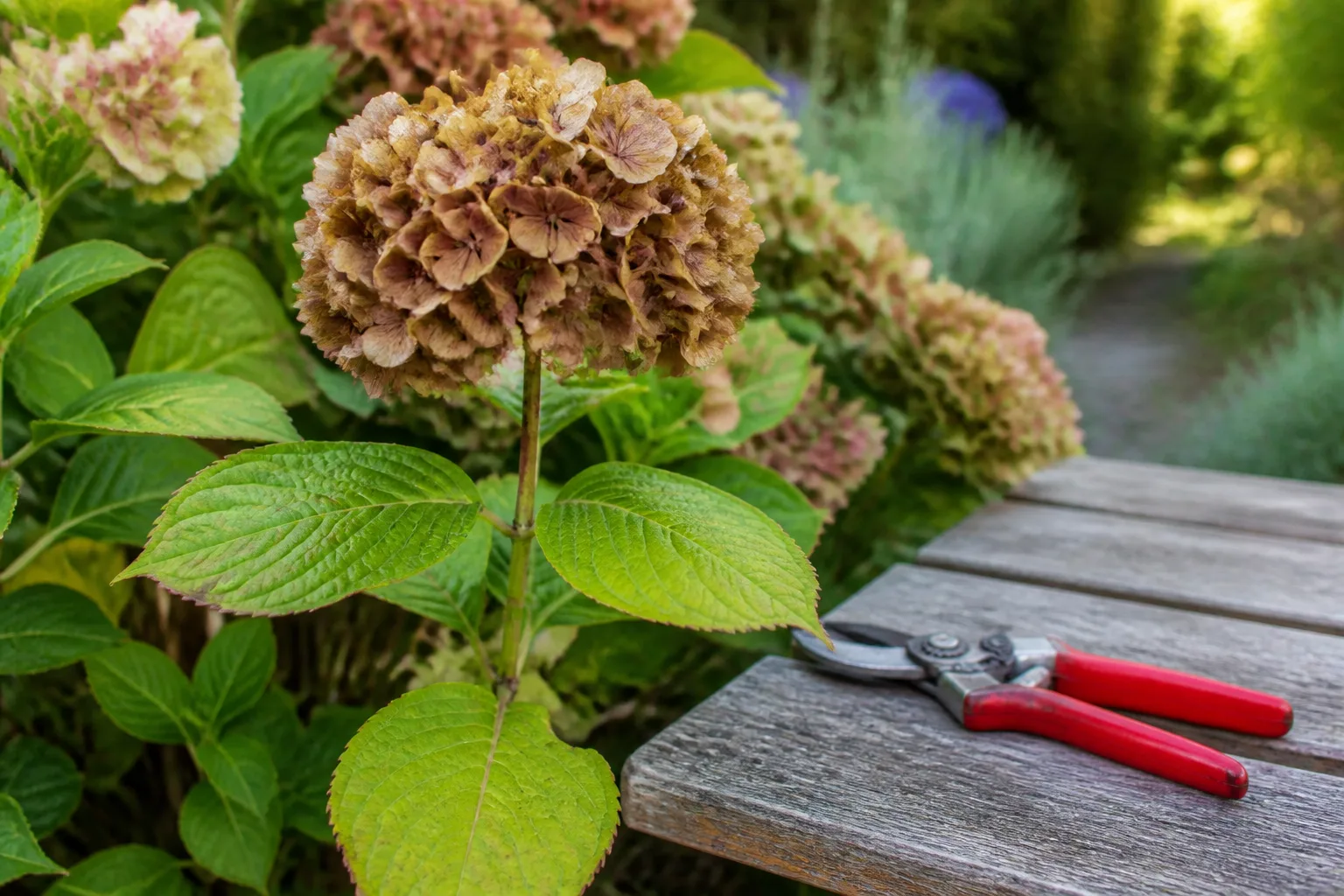
Use clean, sharp bypass pruners or snips. A clean blade gives you a neat cut; a dull blade crushes the stalk and leaves a ragged wound. If you are moving between plants with obvious disease symptoms, clean the blades before working on the next shrub.
Find the flower head that you want to remove and follow its stalk downward. Do not cut at the top of the flower head or randomly in the middle of a leafless stem. Look for a healthy node: a pair of full-sized leaves, a pair of buds, or a strong side shoot.
Follow the stem to the first full-sized leaves
For a routine in-season deadhead, position the blades about a quarter inch above the first full-sized pair of leaves below the spent bloom. This is a short, controlled cut that leaves the plant’s framework intact. Martha Stewart’s gardening guidance describes the same basic method and emphasizes that old-wood varieties should not be cut farther down just for tidiness (Martha Stewart’s hydrangea deadheading guide).
Make the cut at a slight angle so water does not sit on the cut surface, but do not obsess over the angle. Accuracy matters more than geometry: preserve the node and avoid slicing through a developing bud. If there is a pair of tiny buds directly below the flower, leave them in place even if the shrub looks a little less tidy.
Make a shorter cut when the season is late
Late-season deadheading is where restraint pays off. On an old-wood hydrangea, remove only the flower head and the shortest piece of stalk that lets you make a clean cut above a large leaf pair. Do not follow the stem deep into the shrub, and do not combine late deadheading with shape pruning.
On a new-wood hydrangea, the timing risk is lower, but the same short-cut rule prevents unnecessary loss of structure. If winter interest matters to you, simply skip the cut and let the flowers dry naturally. Proven Winners’ pruning guidance makes the broader point clearly: no hydrangea requires pruning in order to grow and bloom well, and the safest choice when you are unsure is not to prune (Proven Winners hydrangea pruning guide).
When dead flowers should stay on the shrub
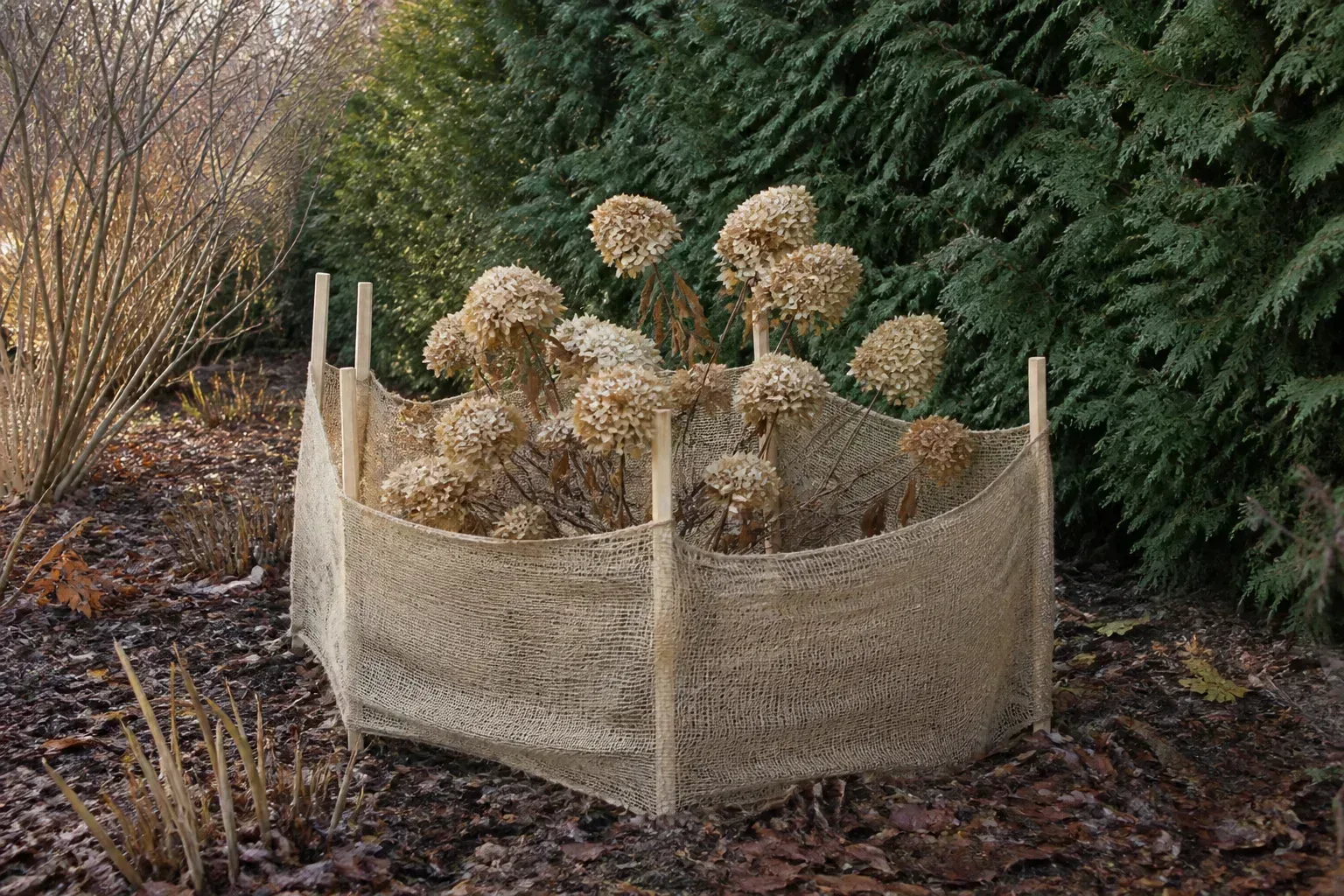
Leave the flower heads if they are attractive in their dried form, if you like winter texture, or if you are not sure which type of hydrangea you have. Dried panicle cones can look good against snow, while old-wood flower heads can help shield buds and upper stems from weather. They also provide a little visual structure after the leaves drop.
Leave them when the plant is under stress, too. A hydrangea that has recently suffered drought, severe heat, transplant shock, or storm damage does not need a cosmetic pruning session. First restore consistent moisture, remove only clearly broken material, and wait to see which stems recover.
Removing flowers is also unnecessary when you want to collect them for drying. Choose heads that feel papery rather than soft, cut them with a useful length of stem, strip the leaves, and place them in a dry, dim, well-ventilated spot. That is a display decision, not a plant-health requirement.
What to do when flowers turn brown too early
Late-season browning is often normal aging, especially when the flower head has already held its color for weeks. Early browning can also follow heat, drought, wind, overhead irrigation, storm bruising, or frost. Look at the whole plant before reaching for the pruners.
Heat and drought stress
If leaves are limp at dawn, edges are crisp, or several flower heads browned during a hot, dry spell, treat the root zone first. Water deeply when the soil is dry rather than spraying the flowers, and add a modest mulch layer without piling it against the stems. Do not “fix” drought stress with a heavy pruning cut; removing more foliage can reduce the plant’s ability to recover.
Hydrangeas prefer evenly moist, well-drained soil, but constantly saturated soil creates a different problem. If the soil stays wet for days and stems or leaves are collapsing, check drainage and roots rather than watering more. Remove a damaged flower head if it is resting on foliage, but keep the response proportional to the evidence.
Frost, storm, or disease damage
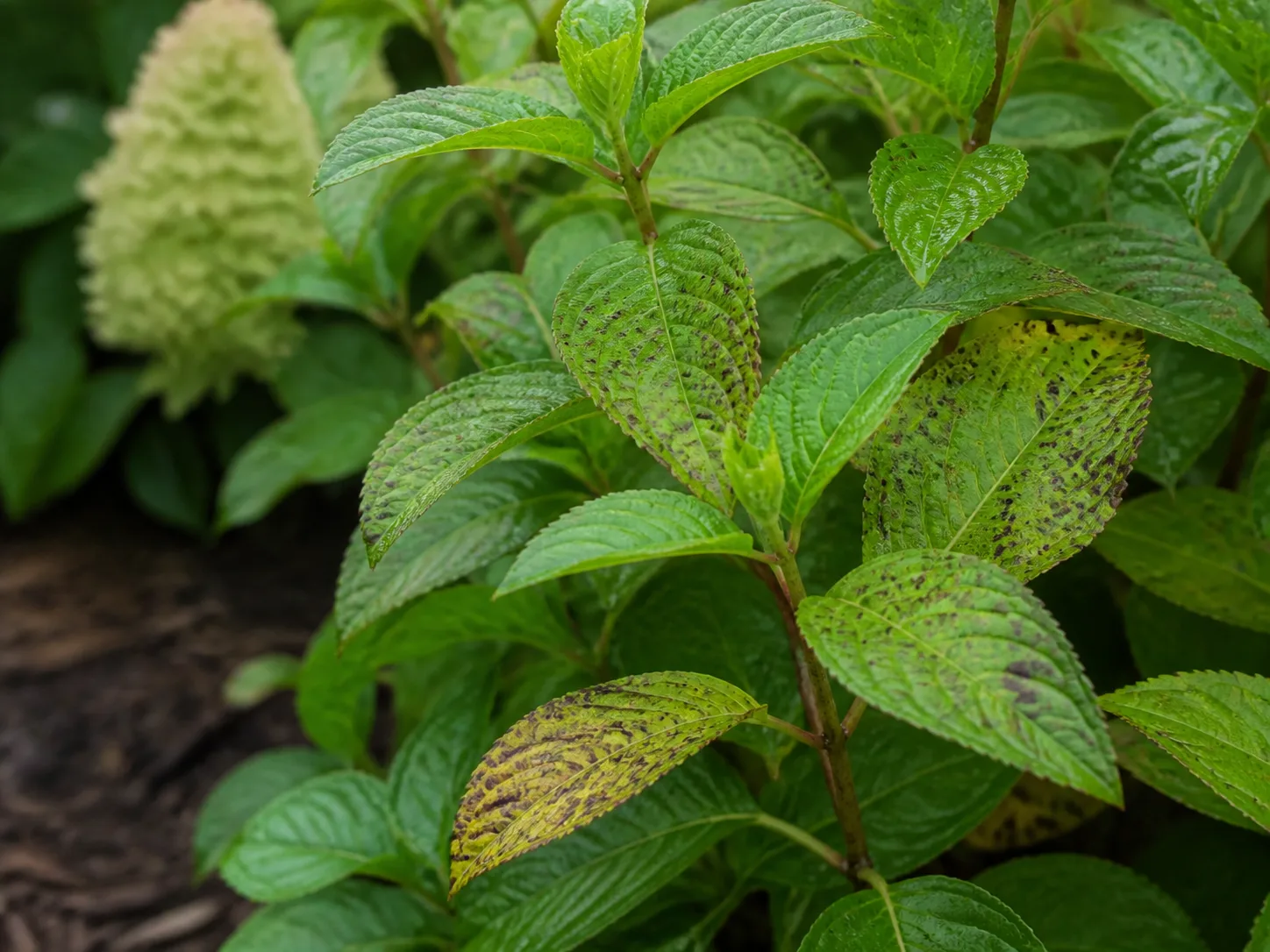
After a late frost, wait until new growth shows which portions are alive. Frost-blackened tips can look dramatic while lower buds remain viable. After a storm, remove cleanly broken branches back to a healthy lateral or the base, but do not use storm cleanup as an excuse to reshape the entire plant.
Disease is more likely when browning comes with spotting, a spreading lesion, fuzzy growth, or rapid collapse of leaves and stems. Isolate the affected cuttings from compost if the material is visibly diseased, keep irrigation off the foliage, and use a local extension diagnostic service when the pattern is unclear. A single papery old flower is not enough evidence to call the shrub diseased.
Maintenance pruning comes later—and depends on type
If the shrub is too large, crowded, floppy, or damaged, you are no longer just deadheading. For old-wood bigleaf, mountain, oakleaf, and climbing hydrangeas, do meaningful shaping immediately after flowering and keep it light. Remove dead or damaged wood, thin a crowded interior selectively, and shorten only branches that truly need correction.
For new-wood panicle and smooth hydrangeas, late winter or early spring is the usual maintenance window. Remove dead, weak, and crossing stems first. If the plant is established and the cultivar tolerates it, you can shorten some stems, but leave enough sturdy framework to hold the flowers upright.
Do not cut every hydrangea to the ground because one online rule says it is “the best” method. Smooth hydrangeas are more tolerant of hard renewal pruning than old-wood types, but even they do not need the same treatment every year. A shrub that is planted in a space too small for its mature size will keep outgrowing the space after a hard cut; relocation or replacement with a compact cultivar is the lasting solution.
Common hydrangea cutting mistakes to avoid
Cutting before identifying the plant. “Hydrangea” is not a pruning schedule. Check the cultivar tag, flower shape, leaf shape, and the breeder’s care information before removing whole branches.
Treating deadheading as a rebloom guarantee. Removing a spent flower may improve appearance and can help some reblooming cultivars, but it cannot override a plant’s genetics, drought stress, heat, shade, or winter injury.
Making a deep late-season cut on an old-wood type. The farther down you cut, the greater the chance of removing next year’s buds. Late in the season, either cut just above the first full-sized leaves or leave the flower.
Pruning a dormant stem because it looks dead. Wait for spring growth or use a small scratch test. Dormancy is not the same as death.
Cutting healthy foliage along with every flower head. The leaves are the plant’s working surface. Remove a spent bloom cleanly, but do not strip out healthy stems just to create a perfectly bare silhouette.
Using dirty or dull shears. Ragged cuts and contaminated blades add avoidable stress. Clean, sharp tools are a small step with a large payoff.
Conclusion: make the smallest cut that solves the problem
Yes, you can cut off dead hydrangea flowers—but you do not have to. If the flower is simply faded and you are unsure of the cultivar, leaving it in place is often the safest decision. If you want a tidy shrub, deadhead lightly to the first full-sized leaves and stop before the cut becomes structural pruning.
Remember the decision that protects next year’s display: old-wood hydrangeas need conservative, post-flowering care; new-wood types tolerate more flexible timing; rebloomers deserve a light touch; and clearly dead wood can be removed once you can distinguish it from dormancy. The goal is not the most aggressive cleanup. It is a healthy shrub with the flower buds you meant to keep.



