Divide Perennials in Fall or Spring? Use This Rule
Should you divide perennials in fall or spring? Match the season to bloom time, frost risk, root type, and the aftercare your new divisions need.
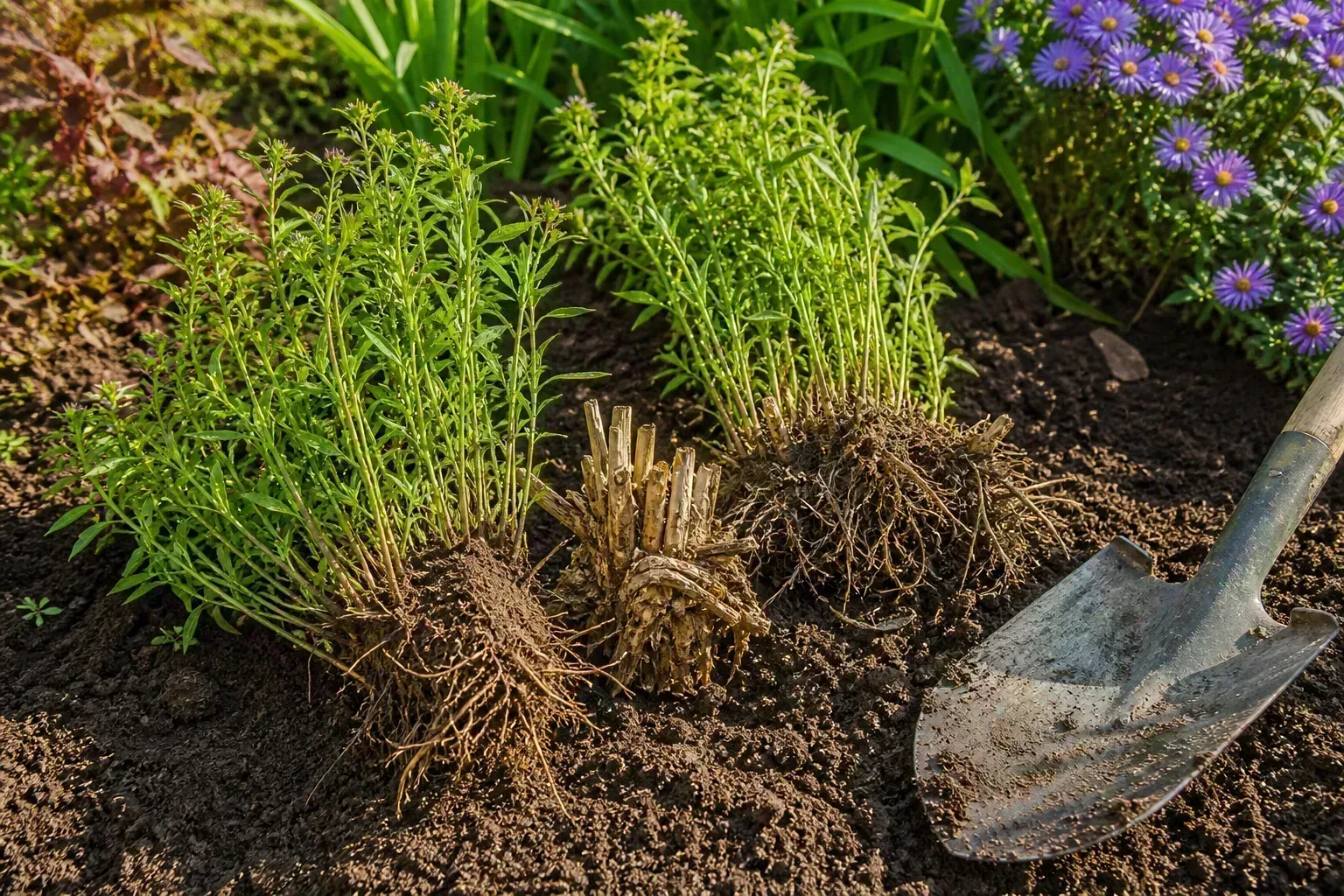
The best answer is not simply “fall.” Divide spring- and early-summer-blooming perennials in early fall when the soil is still workable and several mild weeks remain before hard freezing. Divide late-summer and fall bloomers in early spring, after the last damaging frost but before flower buds open. That timing lets the plant spend the quieter part of its cycle rebuilding roots instead of trying to support flowers.
There is one more answer that saves gardeners a lot of unnecessary work: if a perennial is healthy, flowering well, and still fits its space, you do not have to divide it at all. Division is a tool for a crowded, declining, misplaced, or overgrown clump—not a yearly obligation. Clemson Cooperative Extension identifies controlling size, rejuvenating old plants, and making more plants as the main reasons to divide, while Penn State Extension cautions that very small divisions take longer to mature (Clemson Cooperative Extension; Penn State Extension).
The Quick Decision: Let Bloom Time Pick the Season
Start with the plant’s flowering season, then check the weather. Spring and early-summer bloomers usually belong on the fall-division list because flowering is finished and the plant can direct resources into roots before winter. Hostas, daylilies, garden phlox, astilbe, yarrow, many irises after flowering, and some coneflowers are common examples. Early fall is preferable to late fall because a new root system needs time to anchor before freeze-thaw cycles.
Late-summer and fall bloomers usually belong on the spring-division list. Asters, chrysanthemums, sedum cultivars grown for autumn color, goldenrod, and many late-season salvias have a job to finish before they are disturbed. Digging them while they are budding or blooming can cost the display you planted them for and leaves a recently divided plant with less time to recover before cold weather. Wait for new spring growth to emerge, but try to work before the plant is in full bud.
This is a decision rule, not a rigid species law. Some perennials can be divided in either season, and a local extension recommendation for your climate can outweigh a generic list. If the plant is flowering now, the soil is waterlogged, temperatures are extreme, or a hard freeze is close, waiting is usually kinder than forcing the job.
Signs a Perennial Is Ready for Division
Look for a pattern of decline rather than one disappointing week. A division-ready clump may produce smaller or fewer flowers, flop where it once stood upright, push new growth mostly around the outside, or develop a dead, woody, or hollow center. It may also have expanded into a path, crowded neighboring plants, or become so dense that rain and air cannot reach the crown easily.
Size alone is not proof. Some hostas and peonies are slow to reach their best form and can live productively for years without being disturbed. A healthy clump that is the right size is often better left in place. If you want more plants, take the smallest effective division or propagate from offsets where the species permits it rather than dismantling the entire plant.
Age is only a rough guide. Many clump-forming perennials can be assessed every three to five years, while aggressive spreaders may need attention sooner and plants such as peonies may rarely need division. The better question is, “Is crowding or declining performance limiting this plant?” If not, use your digging time elsewhere.
Perennials That Usually Benefit From Fall Division
Fall suits plants that have finished their spring or early-summer show and still have enough growing weather left to make roots. Common candidates include hosta, daylily, astilbe, garden phlox, yarrow, coreopsis, bee balm, black-eyed Susan, many coneflowers, and Siberian iris. A spring-blooming plant that has gone quiet on top can be easier to handle because you can see the crown and are not sacrificing an imminent display.
Bearded iris is a special case within this group. Its rhizomes are horizontal stems, not ordinary underground roots, and the best window is generally after flowering—often in summer or early fall—rather than whenever the rest of the border is being divided. Each usable piece needs a healthy rhizome section, roots, and a fan of leaves. Replant the rhizome shallowly, with the top exposed or barely covered, rather than burying it like a fibrous-rooted perennial.
Peonies may also be divided in early fall, but they are not a beginner’s “make more plants” project. A division needs several strong eyes, or buds, and enough root to support them. Even a successful peony division may take a season or more to flower, so move one only when the plant truly needs a new site or you value the additional plants more than immediate blooms.
Perennials Better Divided in Spring
Spring is the safer choice for many late-summer and fall-blooming perennials, including asters, chrysanthemums, autumn sedum, goldenrod, late-blooming helianthus, and some salvias. The exact list varies by species and climate, but the logic is consistent: let the plant complete its flowering cycle, then divide as new shoots begin to appear and roots are entering active growth.
Spring division has a useful advantage: the plant has a long growing season ahead. A newly separated root system can rebuild while temperatures are rising instead of racing against winter. The trade-off is a greater need for watering as leaves expand and summer heat approaches. Penn State Extension specifically notes that spring is a better fit for plants that are not fully hardy or that dislike wet winter conditions (Penn State Extension).
Do the work early enough that the divisions are not carrying a full canopy of leaves and flower buds. If a plant has already made a large top, trim some foliage after lifting so the reduced roots do not have to replace more water than they can absorb. A spring division may bloom later, less heavily, or not at all that year; that is a normal establishment cost, not automatic evidence that the plant failed.
Plants to Leave Alone or Handle Differently
Not every perennial is a cooperative clump. Woody herbs and subshrubs such as lavender, rosemary, santolina, and some artemisias are not best treated like hostas. They may have rooted layers or soft new shoots that can be propagated, but chopping a woody base into pieces often produces weak or dead sections.
Taprooted or disturbance-sensitive plants such as baptisia, butterfly weed, milkweed, columbine, Japanese anemone, baby’s breath, and established bleeding heart may sulk after being lifted. Some are easier to grow from seed, offsets, basal cuttings, or volunteer seedlings. Clemson Extension also lists euphorbias and false indigo among plants that should generally not be divided, and warns that old hellebores can be difficult to move (Clemson’s division guide).
This does not mean “never move” for every difficult plant. It means raise the threshold for disturbance. Correct a bad site, rescue a plant from construction, or divide a truly crowded clump only with a species-specific plan. When you do not know the root structure, identify the plant first; a beautiful but generic division tutorial is not a substitute for knowing where its buds and storage organs are.
Use Frost, Soil, and Weather as Your Real Deadline
For fall work, count backward from your local first hard freeze, not from a universal calendar date. A four-to-six-week establishment window is a sound target for many hardy perennials, but it is not a guarantee. Cold, wet soil slows root activity; a sheltered garden may remain workable longer than an exposed site; and a container can chill faster than the ground. Clemson and Epic Gardening both emphasize allowing roughly a month or more for roots to settle before serious cold (Clemson Cooperative Extension; Epic Gardening).
Choose a cool, cloudy day if possible. Water the parent plant a day or two before lifting when the soil is dry, but do not work in mud. The ideal bed is moist enough to dig cleanly and crumbly enough that roots are not smeared with a heavy coating of clay. If a hard freeze is forecast within days, leave the established plant in place and schedule spring division.
For spring work, wait until the risk of a damaging late frost has passed in your area and new shoots show where the crown is active. Do not wait until a full canopy is transpiring heavily if you can avoid it. Gardener’s Path summarizes the practical balance well: spring and autumn are usually easiest, but fall divisions need several weeks before frost and spring divisions need several weeks before hot weather (Gardener’s Path).
Fall Division vs. Spring Division
| Consideration | Fall division | Spring division |
|---|---|---|
| Best fit | Spring and early-summer bloomers after flowering | Late-summer and fall bloomers before budding |
| Main advantage | Cool air, warm soil, and less top growth to support | A long growing season for root recovery |
| Main risk | Too little time before hard freeze or winter wet | Heat and drought arrive while roots are still small |
| Watering demand | Often moderate, but new divisions still need checks | Usually higher as leaves expand and summer approaches |
| Visibility | Mature clump is easy to find and assess | Small emerging shoots can be harder to map |
| Delay the job when | Frost is near, soil is saturated, or the plant is still green and flowering | Late frost is likely, buds are open, or summer heat has arrived |
Neither season wins for every plant. The best season is the one that gives that species a resting or early-growth phase, a reasonable root-establishment window, and manageable moisture. If those three conditions do not line up, waiting is a valid horticultural decision.
Prepare Tools, Soil, and New Planting Sites First
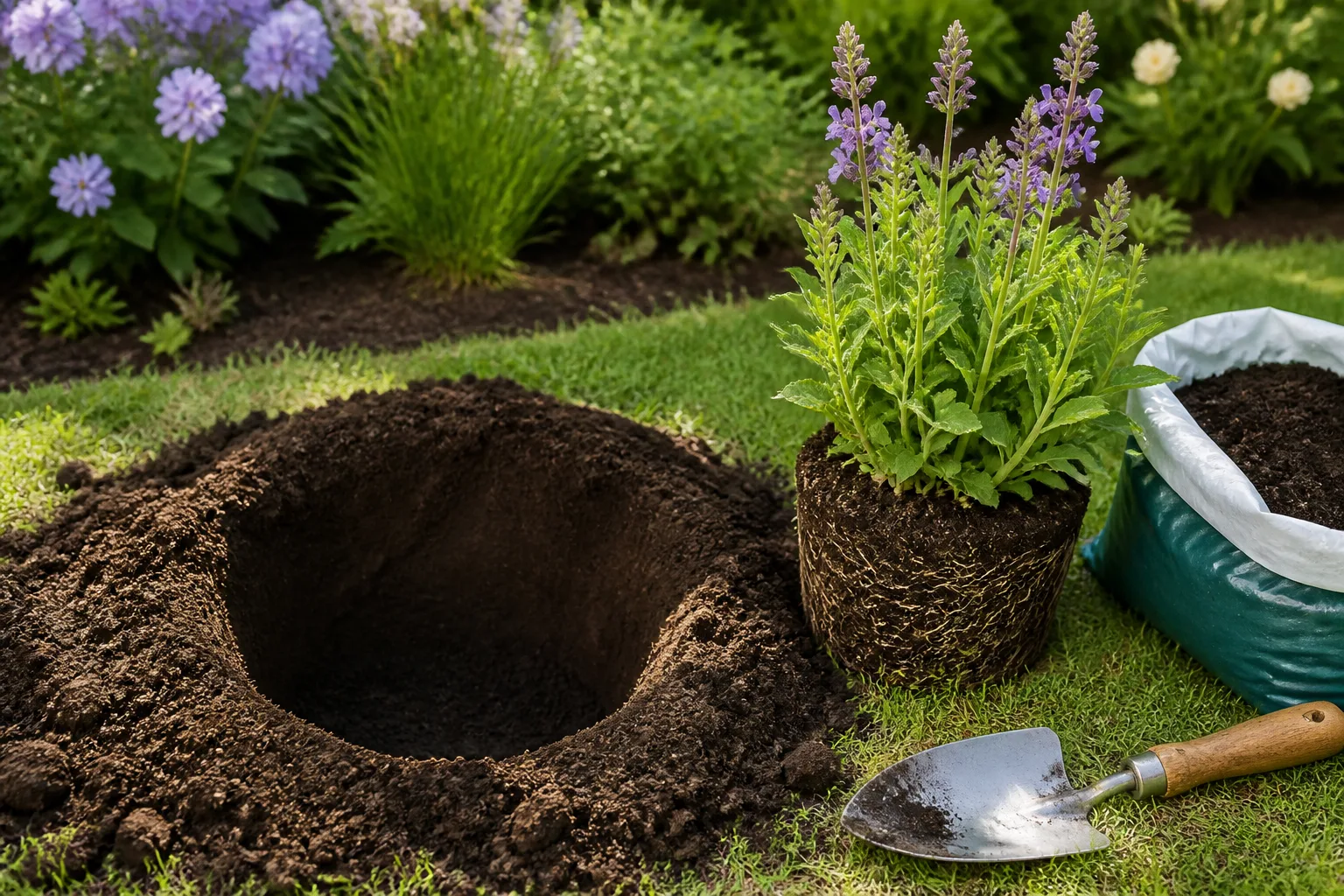
Division fails most often because the roots sit exposed while the gardener searches for a place to put them. Before lifting, mark each destination and dig holes or prepare containers. The new hole should be wide enough for the roots to spread without bending sharply; depth should match the original planting unless the species has a special crown or rhizome requirement.
Gather a sharp spade or digging fork, clean pruners, a sturdy knife for thick crowns, a bucket or tarp, and water. A hori hori or folding saw can help with dense ornamental grasses, but use the least force that makes a clean cut. Epic Gardening recommends cleaning and sharpening tools, watering deeply the day before, and removing dead or diseased material before division (Epic Gardening).
Improve the planting site only as much as the soil needs. Incorporate finished compost into a poor bed, break up compaction, and correct drainage problems before you install a vulnerable division. Do not create a rich, water-holding pocket in otherwise lean native soil or bury the crown under a pile of amendments. The right site conditions matter more than a strong dose of fertilizer.
Lift the Mother Plant Without Shredding the Roots
Cut back spent stems or foliage enough to see your work, especially after flowering. Keep green leaves if the plant is still actively feeding and you are only making a small edge division. Insert the spade or fork well outside the crown, following the outer reach of the foliage rather than stabbing close to the center. Work around the plant, loosening the soil before levering the clump upward.
Lift the root ball in one piece when possible. Shake off loose soil gently; you need to see the crown and natural seams, not strip every root bare. If the clump is enormous, make a few controlled cuts in the ground rather than wrestling the entire mass out and dropping it. A violent separation can be appropriate for some tough fibrous roots, but it is a poor choice for brittle-rooted plants such as peony.
Set the lifted clump in shade while you work. Do not put roots on hot concrete or let wind dry them. If the plant is too large for one person, reduce the top first, divide it in place, and carry sections to the prepared holes rather than damaging the crown trying to move an unwieldy mass.
Match the Division Method to the Root System
The goal is not an equal number of pieces. The goal is a viable division with both a growing point and enough roots to supply it. For fibrous, spreading clumps such as yarrow, aster, bee balm, and coreopsis, tease apart young outer sections by hand or cut them with a sharp knife. Discard weak, woody centers and tiny fragments that have no convincing root mass.
For clumping plants such as hosta, astilbe, daylily, and many ornamental grasses, cut through the crown or pry it apart with two forks placed back to back. Each section should retain one or more healthy buds, eyes, or shoots. Larger sections establish faster than a scattering of single shoots, although the ideal size depends on the variety and your goal.
For rhizomes, preserve the structure rather than treating it like a ball of roots. Iris sections need a piece of rhizome, attached roots, and a leaf fan; remove old or soft sections. For tubers such as dahlia, a usable piece needs a stem connection and a visible growth eye. If an eye is missing, that piece may never produce a new plant no matter how healthy the storage tissue looks.
Gardener’s Path and Clemson both distinguish spreading roots, clumping crowns, rhizomes, and tuberous roots because the anatomy changes the cut you make (Gardener’s Path; Clemson Cooperative Extension). When in doubt, stop cutting and identify the crown before making the next slice.
Keep Divisions Moist Until They Are Planted
Lay separated sections on a damp tarp or place them in a bucket with a little water around the roots—not enough to submerge crowns or leave the plant sitting in a slurry. Work efficiently and keep the material shaded. A division that dries in the time it takes to prepare one more bed may look fine at first and then collapse after planting.
If planting must wait, heel in the divisions. Make a shallow trench in loose soil, lay the roots into it, cover most of the root mass, and water gently. This temporary arrangement keeps roots cool and humid without committing you to the final spacing. Label sections if you are dividing several cultivars; a pile of nearly identical crowns is an easy way to lose track of color and height.
Trim broken roots cleanly, but do not perform cosmetic root surgery. Every cut is a wound. Remove only tissue that is crushed, rotten, or clearly dead, and keep healthy fine roots attached.
Replant Every Division at the Correct Depth
Set each division at the depth where the parent was thriving. Spread roots down and outward, then backfill so there are no large air pockets. Firm the soil with your hands rather than compacting it hard with your foot. Water thoroughly to settle the soil, then add more soil if the crown has sunk.
Most crowns should sit at or just below the previous soil line, but rhizomes and special crowns break the rule. Iris rhizomes generally need their upper surface visible; peony eyes should be shallow rather than buried deeply; and some grasses perform better when the crown is not planted low in a wet hole. Follow the species’ planting depth when it differs from the general rule.
Space the new pieces for their mature size, not their current small appearance. A division is still the same plant genetically and will fill the space again. Replanting every piece shoulder-to-shoulder recreates the original crowding and makes the next division arrive sooner.
Water and Mulch During the Establishment Window
Water immediately after planting, then check the root zone regularly. The surface can look damp after rain while the soil around the roots is dry, especially under trees or in a raised bed. New fall divisions usually need less frequent irrigation than spring divisions, but they still cannot draw moisture from soil they have not yet colonized.
Aim for even moisture, not permanent saturation. If water stands in the hole or the soil stays slick for days, improve drainage rather than adding more water. In spring, increase checks as leaves expand and wind or heat raises water loss. Birds & Blooms recommends keeping roots slightly moist after division and stretching the interval as the new plantings establish (Birds & Blooms).
After the soil has cooled in fall, apply a loose mulch layer around the root zone. Shredded leaves, pine straw, or fine bark can reduce moisture swings and frost heave, especially for recent divisions. Keep mulch away from the crown and do not create a dense wet mound. In spring, pull settled mulch back as shoots emerge so the crown can dry and warm.
Skip aggressive fertilizer at division time. Fresh roots need moisture, oxygen, and contact with soil more than a chemical push. If the bed needs nutrients, apply a measured, plant-appropriate feed during active spring growth after the division has shown that it is re-establishing.
Diagnose a Weak or Wilting Division
A little wilt after moving is common; a plant that stays collapsed for days needs investigation. First check whether the division still has a living bud or crown, whether the soil is dry or saturated, and whether the top is too large for the remaining roots. In spring, removing some foliage can reduce water loss. In fall, do not assume wilt means the division needs more water if the soil is already cold and wet.
Roots that dried before planting, a buried crown, broken rhizomes, or a division with too few roots can all cause failure. So can a hot, sunny planting day. Move the plant only if the problem is clearly site-related; repeated lifting adds another shock. Shade a newly planted division temporarily in extreme heat, keep moisture steady, and wait for new growth before deciding it is dead.
If the crown is soft, foul-smelling, or discolored, stop watering on a schedule and inspect drainage. Do not share a division from a plant with unexplained mottling, spreading leaf spots, or persistent crown decline. Clean tools between plants and ask a local extension service for a diagnosis rather than spreading a disease through the garden in the name of propagation.
Adjust the Plan for Containers and Unusual Climates
Container perennials need a more conservative fall deadline because their root balls cool faster than roots in the ground. A hardy plant can still be vulnerable in a small pot exposed to wind and repeated freezing. Divide earlier, use a sheltered container, or wait for spring if the pot cannot be protected from severe cold.
In mild-winter climates, fall may offer a long, gentle rooting season, but warm spells can trigger new growth that is later damaged. In hot climates, spring division should happen early enough to beat heat, and a cloudy day plus temporary shade may be more important than the month on the calendar. In wet climates, spring may be preferable for plants that dislike sitting in winter moisture even when fall temperatures are ideal.
The calendar rule also changes across hemispheres and elevations. “Fall” means the season before your local winter, not a particular month named in a northern gardening list. Use your own frost records, soil temperature, rainfall, and the plant’s flowering cycle as the inputs.
What to Expect in the First Season After Division
The first year is about roots. A well-made division may produce fewer flowers, shorter stems, or a smaller clump while it rebuilds. That is especially normal for peony, iris, ornamental grass, and other plants with substantial crowns or storage organs. A spring division can postpone flowering because it has been disturbed just as it was preparing to bloom; a fall division may spend winter looking quiet before emerging at a reduced size.
Judge success by firm new growth, stable moisture, and gradual filling, not by a single missing flower. Mark the planting date and cultivar, and note whether the site stayed wet, dried quickly, or received more sun than the parent location. If the plant is still declining next season, revisit light, drainage, spacing, and planting depth before dividing it again.
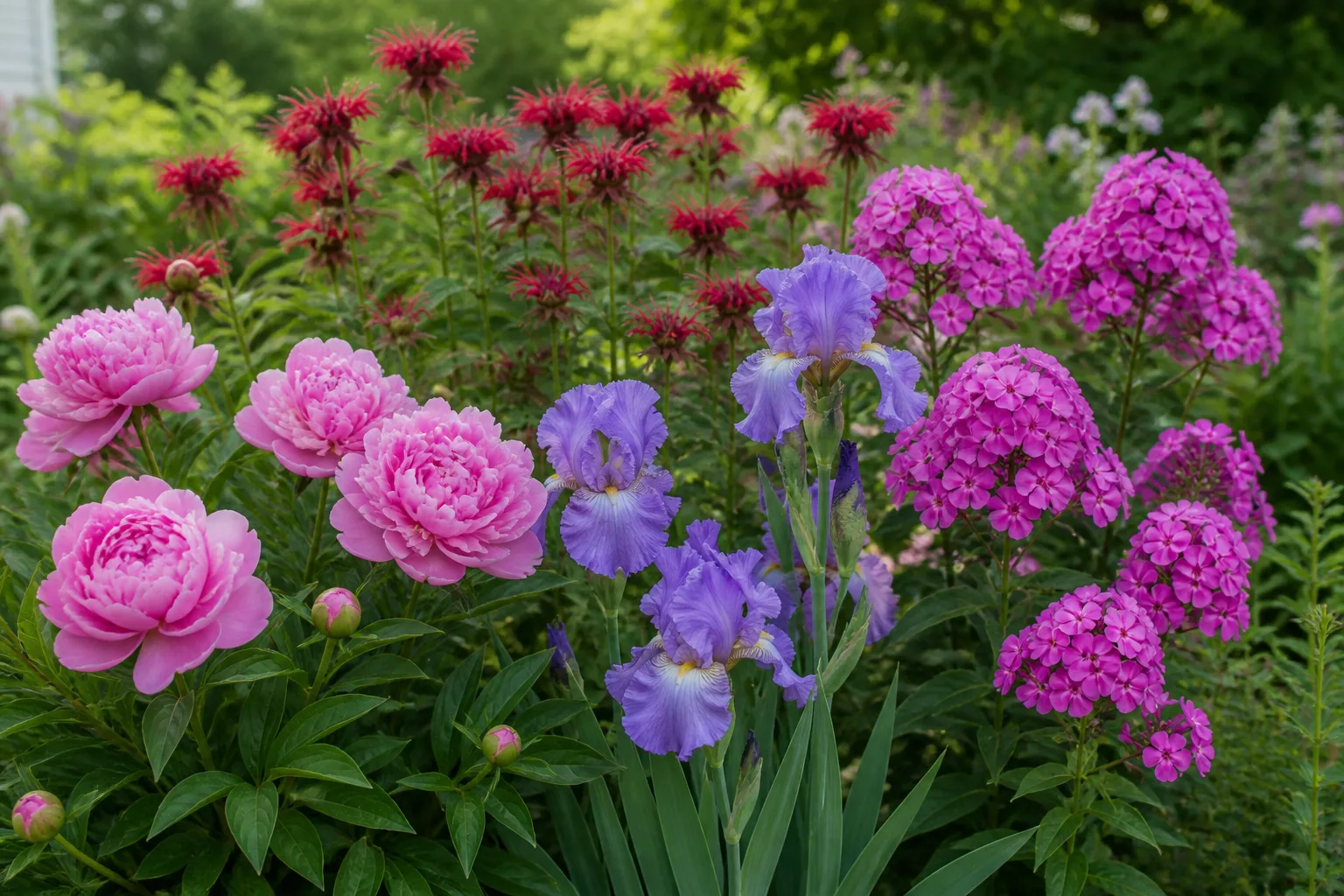
Division should leave you with a healthier arrangement than the one you started with: the right plant in the right space, separated sections with a genuine root-and-bud connection, and enough room for mature growth. That is more valuable than maximizing the number of pieces.
Conclusion
Divide spring and early-summer perennials in fall, and late-summer and fall perennials in spring, but only when the plant needs the work and the weather offers a safe establishment window. If fall is close to hard frost, the soil is saturated, the plant is flowering, or the species dislikes root disturbance, wait. A healthy clump that is performing well can stay where it is.
When the timing is right, prepare the new sites first, water the parent if needed, lift carefully, match the cut to the root system, keep every division shaded and moist, and replant at the correct depth. Water consistently without creating soggy soil, mulch loosely after fall planting, and give the new plants time to earn next year’s flowers. The strongest division decision is not the one that makes the most plants; it is the one that gives each plant a realistic chance to root, rest, and return.