Mix Used Potting Soil With Fresh: Safe Repotting Rules
Can you mix used potting soil with fresh? Learn when it is safe, the best ratio, when to use all-new mix, and how to avoid pests, disease, and root stress.
Yes, you can mix used potting soil with fresh when repotting—but only when the old mix came from a healthy plant and still has a workable texture. For a typical houseplant, a 1:1 blend by volume is a sensible default. If the old material is badly compacted, salt-crusted, pest-ridden, foul-smelling, or associated with root rot, do not dilute it with fresh soil and hope for the best. Use all-new mix, or send the old material to a safer alternate use.
That conditional answer matters because “used” describes several different situations. A healthy pothos that has simply exhausted some nutrients is not the same as a plant that sat in waterlogged soil with black roots and fungus gnats. The first can often be refreshed; the second can carry problems into the next pot.
Short answer: yes, but only if the old mix passes a safety check
Think of potting mix as part of the root environment, not just filler around roots. A good mix has enough pore space for oxygen, enough water-holding capacity to prevent rapid drying, and enough structure to keep those properties stable after repeated watering. Cornell’s greenhouse-media guidance describes growing media as a balance of solid particles, water-filled pores, and air-filled pores; roots need that balance to remain healthy.
Fresh mix improves your odds because its physical structure and nutrient charge are predictable. Used mix can still be useful, but it has already been compressed by watering, colonized by roots, exposed to fertilizer and tap-water salts, and altered by the plant that lived in it. Fresh soil can restore some structure and fertility; it cannot reliably disinfect contaminated old soil.
The simplest rule is this: if you would confidently give the old mix to a plant you care about after smelling it, crumbling it, and checking the previous plant’s roots, you can consider blending it. If the previous pot tells a story of disease, pests, standing water, or persistent failure, start clean.
What changes in used potting mix?
Nutrients are depleted, but that is fixable
Plants do not consume every nutrient in a pot at the same speed, and fertilizer does not stay perfectly balanced forever. Some nutrients are taken up by roots, some leach through drainage, and some become less available as the mix’s pH and salt concentration change. The result is not that old potting mix becomes biologically “dead”; it is that its fertility becomes less predictable.
The University of Minnesota Extension recommends fresh potting mix when a plant is being repotted because it provides better drainage, oxygen, and nutrients. That is a useful default for a tired root ball, but it does not mean every handful of previously used mix must be thrown away. It means you should not treat old mix as a complete, ready-to-use growing medium without checking what it has lost.
Adding fresh mix is the gentlest way to rebuild the nutrient reserve because it also brings new fibers and particles into the blend. If you add fertilizer, follow the label for the new mix or fertilizer product; do not stack a heavy dose on top of unknown fertilizer already in the old material. Too much feed can raise soluble salts and damage roots, especially in small pots.
Structure, pore space, and salt levels can drift
Physical condition often matters more than the age printed in your memory. Repeated watering and the weight of a root ball can collapse large air spaces. Fine particles settle into gaps, peat-based material can become difficult to rewet after drying, and a mix that once drained briskly may stay wet near the bottom of the pot.
Cornell’s media guidance explains that compaction reduces pore space and that low air space limits oxygen around roots. The same guidance also warns that water retention and aeration must be balanced: a mix that holds water too long can create a saturated zone where roots are stressed and more vulnerable to disease. That is why simply adding a handful of perlite to a dense old clump may not repair the whole root environment.
Look for white or tan crusts on the soil surface or pot rim, particularly if the plant was fertilized often or watered with hard water. Those deposits suggest soluble salts have accumulated. A fresh-mix blend may lower the concentration, but a plant already sensitive to salts is better served by removing the crust and using a larger proportion of clean mix—or starting over.
When old potting soil should not go into a new pot
The old plant’s condition is your strongest piece of evidence. Do not make a healthy new plant the test subject for soil you already suspect.
Disease and root rot are stop signs
Discard or isolate mix from a plant that had root rot, stem rot, bacterial or fungal disease, or a persistent unexplained decline tied to wet soil. Soft brown or black roots, a sour odor, and soil that stayed wet for unusually long periods are enough reason to stop. You do not need a perfect diagnosis before deciding that the risk is not worth carrying into a new pot.
Clemson University’s houseplant disease guidance connects overwatering and low oxygen with root disease and recommends fresh soil when salt buildup or root problems are involved. The important practical point is not that every pathogen survives in every mix; it is that a home grower usually cannot identify or measure the risk by sight. Fresh mix is cheaper than losing the replacement plant and then wondering whether the old material was responsible.
Do not “save” contaminated mix by adding equal parts fresh mix. That changes the proportion of questionable material but does not remove the source. Keep tools, the old pot, and the new plant separate while you clean up; wash and disinfect reusable pots before they return to the plant shelf.
Pests, mold, salts, and bad texture need a different response
Be equally cautious with old mix that contains fungus-gnat larvae, visible soil insects, weed seedlings, recurring algae or slime, or a musty odor. A small patch of harmless surface fungus can appear when organic matter stays moist, but mold plus poor drainage, bad smell, or a declining plant is a reason to abandon reuse rather than diagnose the surface alone.
Salt crust is not the same as a disease, but it is a quality warning. If the old mix is otherwise healthy and crumbly, you can remove the crust, use more fresh mix, and avoid overfertilizing. If the mix is hard, sour, permanently wet, or impossible to wet after drying, its physical behavior is already working against the roots.
Also skip reuse when you cannot identify the old mix’s history. Soil from an unknown outdoor container may contain weed seeds, pesticide residues, garden insects, or a texture that is too dense for indoor pots. A commercial houseplant mix is designed for containers; garden soil is not a safe substitute just because it is free.
The practical decision rule: reuse, refresh, or discard
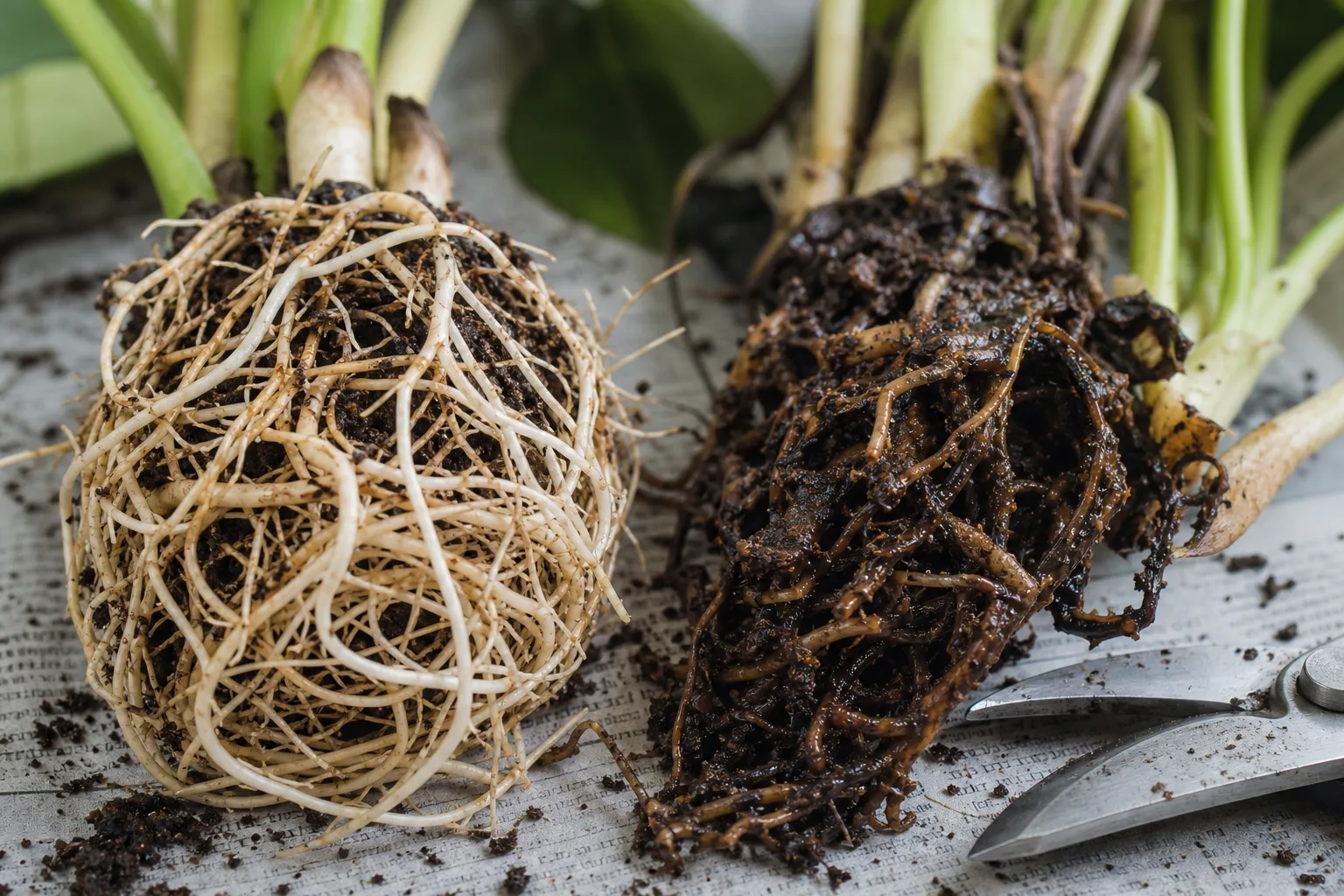
Use the table below before you empty a pot. It separates the decision by the problem you can actually observe rather than by an arbitrary number of months.
| What you find | Best choice | Why |
|---|---|---|
| Previous plant was healthy; mix is loose, neutral-smelling, and drains normally | Refresh and blend | The mix may have useful structure but needs new fertility and some fresh pore space. |
| Previous plant was healthy; mix is a little tired or compacted but breaks apart | Use more fresh mix | A 1:2 old-to-new blend gives the new material more influence over drainage and structure. |
| Pot is stable and the plant is healthy, not root-bound, and growing normally | Top-dress instead of repotting | Replacing the top inch or two can add fresh material without disturbing working roots. |
| Salt crust, hydrophobic behavior, or mild compaction | Inspect, remove debris, and use mostly fresh mix | These are repairable only if the old mix still crumbles and smells clean. |
| Root rot, disease, fungus gnats, persistent mold, sour smell, severe compaction, or unknown history | Do not use in the new pot | Fresh mix will not reliably remove biological or structural risk. |
This is a risk-management rule, not a claim that every healthy used mix needs the same treatment. If the plant is valuable, sensitive, newly rescued, or already stressed, the cost of all-new mix is usually a reasonable insurance policy.
Choose the right old-to-new soil ratio
Use a 50/50 blend as the default
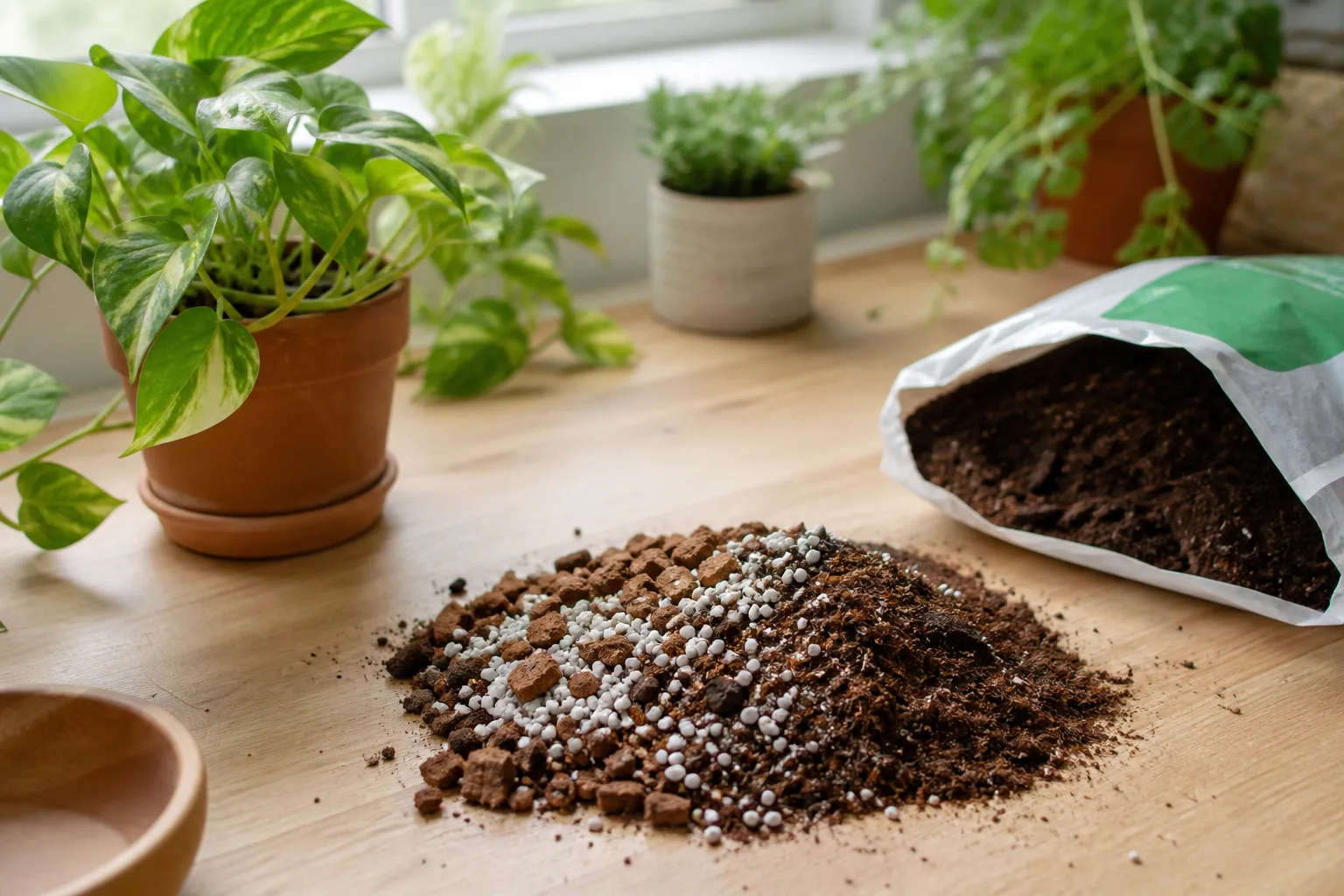
For healthy, structurally sound old mix, combine one part old mix with one part fresh potting mix by volume. A bucket, scoop, or empty nursery pot can be your measuring container; the exact brand does not matter as much as keeping the proportions consistent.
Montana State University Extension gives a similar practical rule: after checking that old soil is free from salts, pests, and disease, add at least 50% new soil to refurbish it. That is a useful minimum for routine houseplant repotting, not a target for soil from a diseased or root-rotted plant.
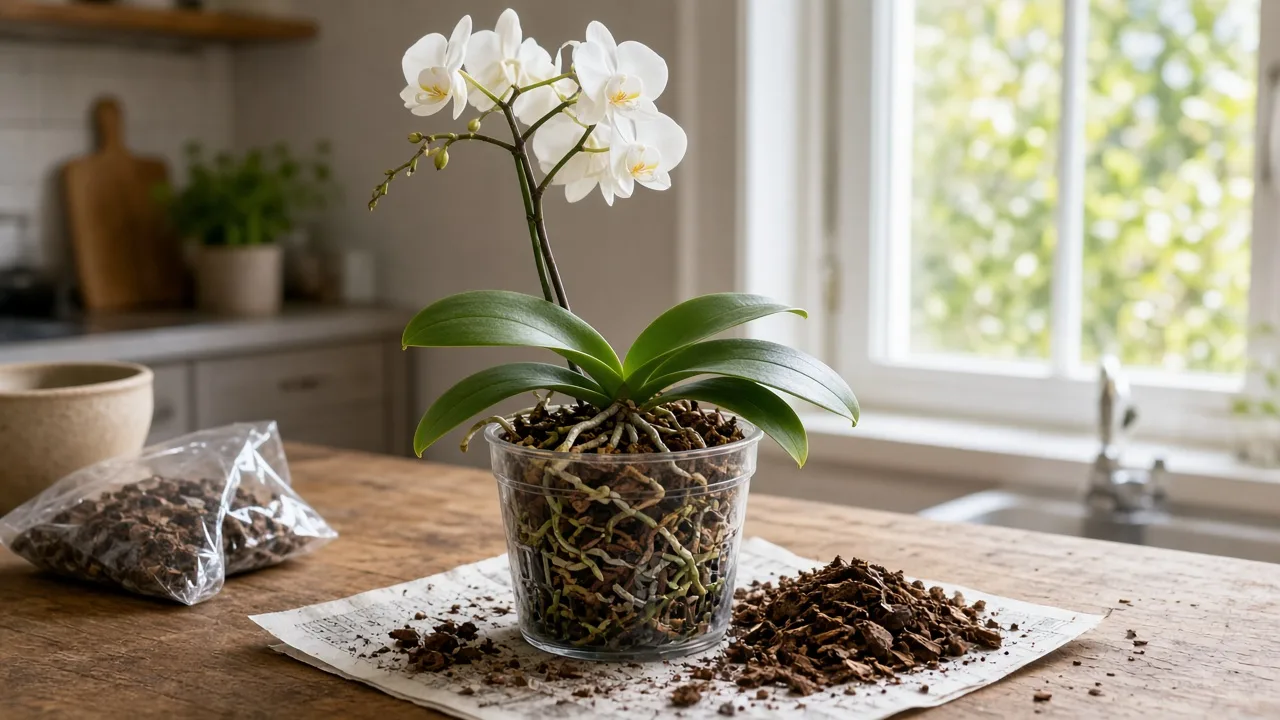
Use the blend for a plant with a normal root ball and ordinary container needs. You can still tailor the fresh half: use a chunkier, faster-draining mix for a succulent, an airy orchid mix for an epiphyte, or a moisture-balanced houseplant mix for a tropical foliage plant. Mixing two incompatible textures can leave you with the average of both problems, so match the fresh component to the plant. Savvy Gardening’s practical reuse guidance similarly treats screening, refreshing, and plant choice as separate decisions rather than assuming all old mix is interchangeable.
Use more fresh mix when the old material is tired
Move to one part old mix and two parts fresh mix when the old material has lost some spring, contains many fine particles, or shows light salt buildup but no sign of disease or pests. The larger fresh fraction gives the new root zone more stable structure and dilutes accumulated salts more effectively than a 50/50 blend.
Use all-new mix when the plant is recovering from root rot, when you trimmed a large amount of damaged root tissue, when the old mix stayed waterlogged, or when the plant is unusually sensitive to salt or poor drainage. Seedlings and newly rooted cuttings also deserve clean, purpose-appropriate media because their small roots have less tolerance for unpredictable fertility and pathogens.
Do not treat compost as a one-for-one replacement for fresh potting mix. Compost can add organic matter and nutrients, but too much can make a small container hold water or salts differently. If you add an amendment, preserve the air space and drainage the plant requires rather than chasing a darker color.
How to inspect and prepare used potting soil
Do this before the old material touches the new plant. A tarp, tray, or washable surface makes it easier to see roots, larvae, and hard clumps.
- Trace the history. Note what plant lived in the mix, whether it had pests, how quickly the pot dried, and whether leaves or stems declined. A healthy history does not guarantee perfect mix, but a bad history is a clear warning.
- Remove roots and debris. Pick out old roots, fallen leaves, stems, fertilizer clumps, and any visible insects. Large roots can create air gaps around a new root ball and make the blend uneven.
- Smell the mix. Clean potting mix smells earthy or nearly neutral. Sour, sewage-like, or persistently musty odors suggest poor aeration or decomposition; do not use it for repotting.
- Test the texture. Moisten a dry handful and squeeze it lightly. It should hold together briefly and then crumble when touched. Hard bricks, sludge, or material that stays in a tight ball indicate a structural problem.
- Check how it wets. Very dry peat-based mix can repel water and pull away from the pot. Rewet it slowly in a separate container; if it still forms dry pockets or sheds water after thorough mixing, do not make it the dominant part of a new root zone.
- Remove crusted surface material. Scrape away salt deposits rather than folding them back into the blend. If the crust is widespread, choose more fresh mix or discard the old material.
Do not pulverize every clump into dust. A little variation in particle size helps create pore space; the goal is a loose, even blend, not a powder that will settle into a dense layer after the first watering.
How to repot with an old-and-fresh soil blend
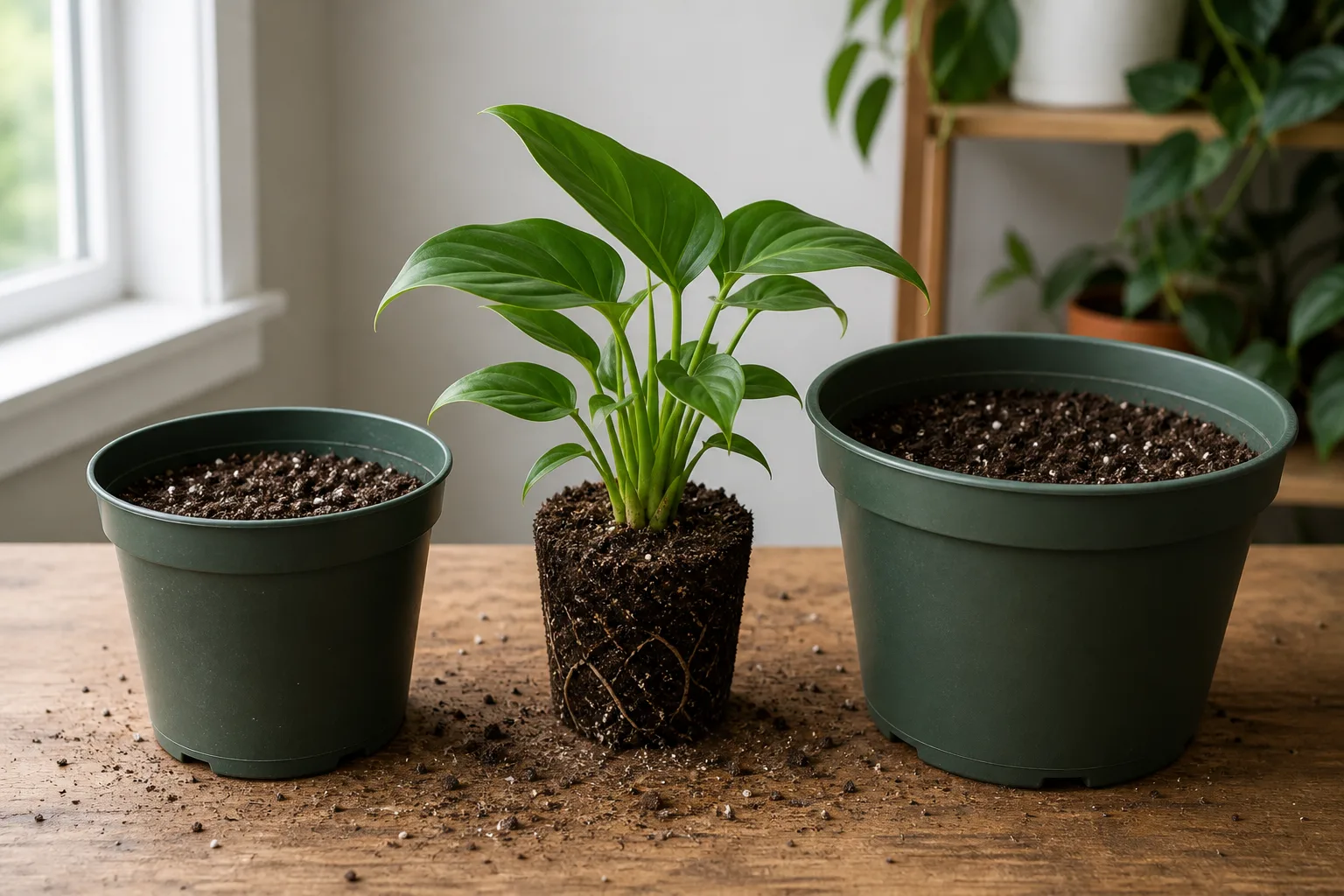
Repot during active growth when possible, especially for a healthy plant that is not in immediate trouble. Montana State University Extension identifies late winter and early spring as an optimal seasonal window for many houseplants, while also noting that a stressed plant may need attention outside that window. A plant with root rot should not be left in failing soil just because the calendar says to wait.
Choose a pot with drainage holes and only a modest increase in size. One pot size larger—or roughly one-third wider and deeper for a larger container—usually gives roots room without surrounding a small root ball with a slow-drying mass. Clean and rinse a reused pot; if it previously held a diseased plant, disinfect it before use.
Prepare the blend separately, then follow this sequence:
- Water the existing root ball enough to make it cohesive, not soggy. This reduces root breakage as you remove it.
- Slide the plant out and inspect the roots. Healthy roots are usually firm; trim dead, mushy, or clearly diseased tissue with a clean, sharp tool.
- Put a small amount of the blend in the pot so the root ball will sit at its original depth. Do not bury the crown or stem base just to use extra soil.
- Set the plant in the center and fill around the sides with the blend. Tap the pot gently to settle large air gaps, but do not pack the mix down hard.
- Leave a small watering space below the rim. The pot should be full enough to drain properly, not half-empty and not mounded above the edge.
- Label the pot with the date and mix ratio if you are testing a reused batch. That note helps you identify whether the blend dries normally over the next few weeks.
The old mix does not need to form a separate bottom layer. A layer of one texture beneath another can change how water moves through the pot; mix the materials evenly so the root zone behaves consistently from top to bottom.
Water and settle the new mix without compacting it
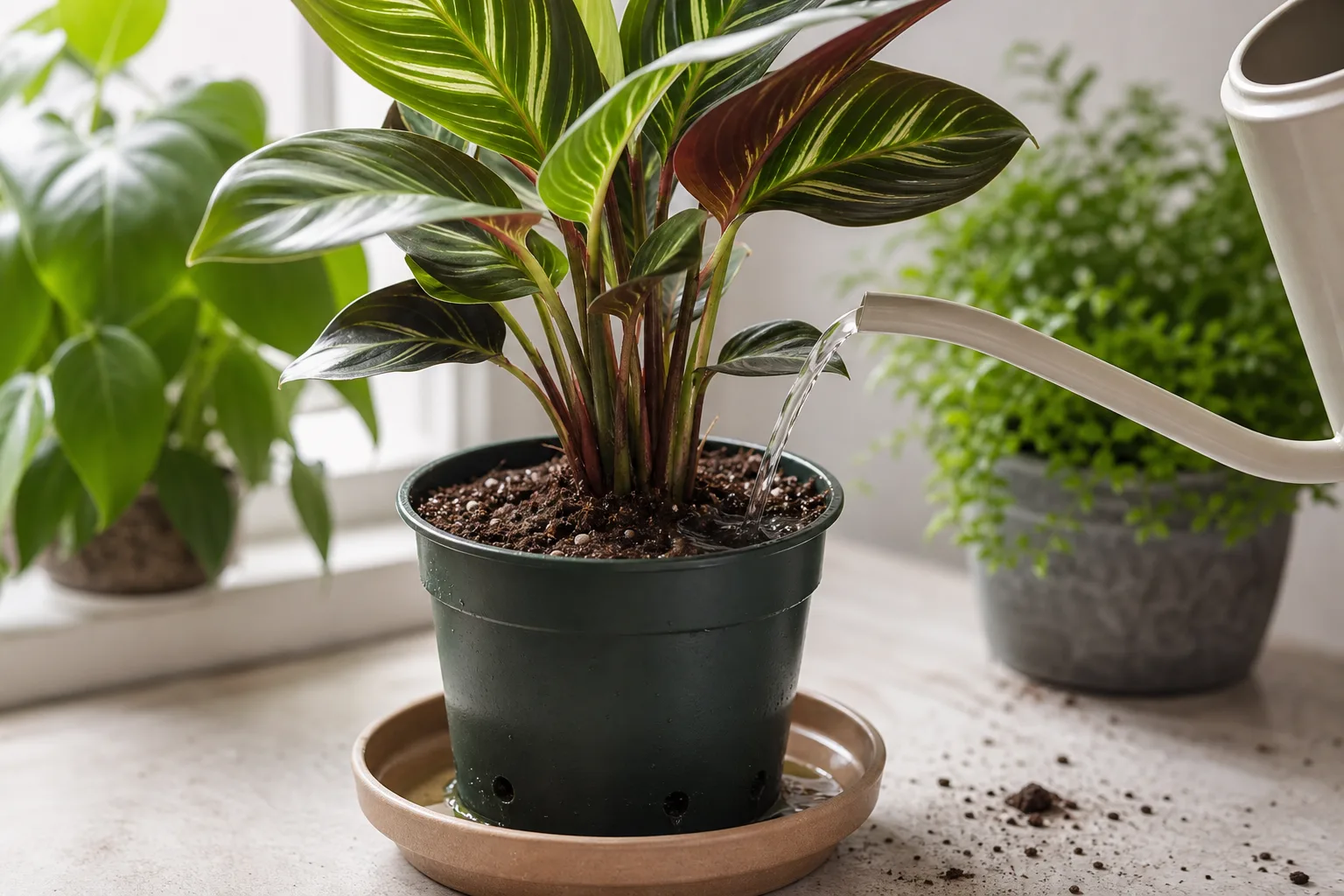
After repotting, water thoroughly once so the fresh particles settle around the root ball and dry pockets collapse in a controlled way. Let water run from the drainage holes, empty the saucer, and check the soil level after the pot drains; add a little more blend if the surface has dropped.
Avoid repeated small sips during the first week. They can leave some areas wet and others dry, especially when old mix and fresh mix have different water-repelling behavior. After that first settling water, let the plant’s light, temperature, pot material, and mix determine the next watering rather than following a fixed calendar.
Keep the repotted plant in bright indirect light or its normal filtered position for a few days, and avoid adding fertilizer immediately. Montana State University Extension recommends waiting at least two weeks to give roots time to regenerate. A short pause is especially sensible when the fresh mix already contains starter fertilizer.
Should you sterilize used potting soil?
For ordinary houseplant repotting, sorting and choosing clean fresh mix is usually better than trying to sterilize questionable old mix at home. Heat treatment can reduce some pests, weed seeds, and pathogens, but it is not a practical way to identify what was wrong with a diseased plant, and it can remove helpful organisms along with unwanted ones.
Some gardening references, including Better Homes & Gardens’ overview of reuse methods, describe oven, microwave, or solar heat treatments for old container media. Those methods require controlled moisture, temperature, depth, ventilation, and cooling; they are not interchangeable recipes, and a kitchen appliance can create unpleasant odors or safety problems. Do not improvise a high-heat treatment in a food-preparation appliance as a substitute for discarding mix with root rot or an unknown disease history.
If you are reusing a large volume of healthy container mix for a low-risk outdoor project, a formal, well-controlled sanitation method may be worth researching through your local extension service. That is a different decision from saving a few quarts of houseplant mix. For a single indoor pot, the cleanest path is usually to discard suspect mix, disinfect the pot and tools, and use fresh media.
When top-dressing is better than a full repot
Not every plant that has been in one pot for a year needs its entire root ball disturbed. If the plant is growing normally, the pot drains at a normal pace, roots are not circling densely or escaping from the holes, and there is no disease or pest history, remove the loose top inch or two and replace it with fresh potting mix.
The University of Minnesota Extension specifically notes that a healthy plant that is happy in its current pot can receive a top layer of fresh soil for a nutrient boost. This option preserves working roots and avoids transplant shock while still refreshing the surface where salts and depleted particles often collect.
Top-dressing is not a rescue for a waterlogged, root-bound, or foul-smelling pot. If the mix stays wet for too long, water races straight through a dry root ball, roots circle tightly, or the plant declines despite correct light and watering, unpot it and inspect the entire root environment.
Common mistakes that make reused mix fail
Mixing fresh soil into contaminated soil. Fresh material changes the ratio, but it does not make root-rot or pest history disappear. When the old plant was sick, start clean.
Using all old mix because it looks dark. Color is not a fertility test. Dark organic matter can still be compacted, salt-loaded, hydrophobic, or short on available nutrients.
Adding garden soil to make more volume. Garden soil is usually too dense for indoor containers and can change drainage, air space, and pest exposure. Use a container mix made for the plant instead.
Packing the pot tightly. Firming the surface to hold the plant upright is fine; compressing the whole pot removes air space. Settle with water and add more mix if needed.
Choosing a pot that is far too large. Extra soil does not equal extra root growth. A large wet volume can dry slowly around a small root ball, especially in low light or cool rooms.
Adding a gravel layer for drainage. Gravel at the bottom does not correct a dense mix and can reduce the effective depth of well-aerated medium. Use a pot with open drainage holes and choose the mix for the plant.
Fertilizing immediately and heavily. A new root system can be sensitive after repotting, and fresh mix may already contain nutrients. Wait, observe new growth, and then fertilize according to the product label and plant needs.
Safer alternate uses and storage for rejected mix
Old mix that is healthy but not worth refreshing can go into a compost pile or an established outdoor bed where its remaining organic matter can be used as a soil conditioner. It can also fill low spots or help pot up a temporary, forgiving outdoor division if the material has no disease, pest, or chemical history.
Do not share or spread mix from a plant that had a serious disease, root rot, persistent pests, or an unknown cause of collapse. Bag it according to local waste rules, or ask a local extension office about the safest disposal route. The right alternate use depends on what you know about the material; “outdoors” is not a universal decontamination step.
For clean mix you plan to reuse, let it dry to a lightly moist or dry condition, remove debris, and store it in a labeled, covered container in a dry place. Keep the container off damp ground and away from rodents, rain, and new plants. Write down the source plant and any amendments you added so the next repotting starts with information rather than guesswork.
Conclusion: let old mix earn its way back
You can mix used potting soil with fresh when the old mix came from a healthy plant, smells clean, crumbles after moistening, and drains normally. Start with a 50/50 blend by volume; use a larger fresh fraction when the old material is tired, salty, or mildly compacted, and use all-new mix after root rot, disease, persistent pests, severe compaction, or an unknown history.
The best repotting decision is not the one that saves the most soil. It is the one that gives the new root zone predictable air, water, and nutrients without carrying an avoidable problem forward. Inspect first, blend evenly, avoid hard packing, water once to settle, and let the plant’s response tell you whether the mix is doing its job.