Should You Plant Tulip and Daffodil Bulbs in October?
October fits many spring bulbs, but not every garden. Learn when to plant tulips and daffodils, how deep to dig, and what to do if you miss the window.
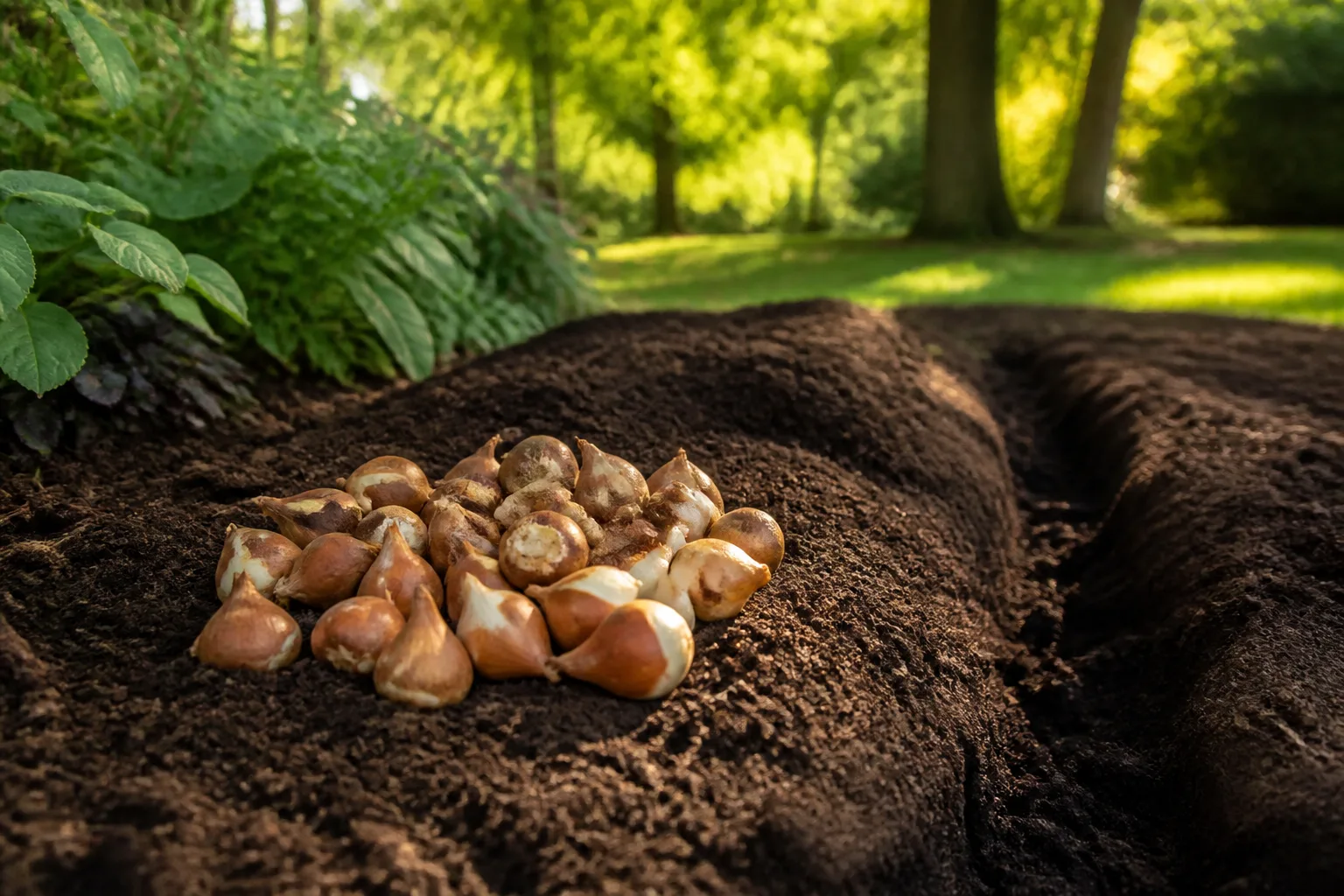
Usually, yes—if the ground is workable, the soil at bulb depth has cooled to about 60°F or lower, and winter is still far enough away for roots to form. October is a dependable planting month for many gardeners, but it is not a universal instruction. In a cold climate it may be the last comfortable window; in a warm climate, October soil may still be too hot for tulips and some daffodils.
The best decision comes from three conditions, in this order: soil temperature, drainage, and time before the ground freezes. A calendar can tell you when to check, but it cannot tell you whether your sunny foundation bed is still warm or whether a shaded clay pocket will stay wet all winter. The guide below helps you decide what to do with the bulbs you have today.
The Short Answer: October Is Often Right, Not Always
For most cool- and moderate-winter gardens, October is a strong month for planting spring-flowering bulbs. Penn State Extension places September to October among the best planting months in western Pennsylvania, while Ohio State University Extension recommends getting spring bulbs in through October so they can root before the ground freezes. The exact date shifts with latitude, elevation, exposure, and the arrival of winter.
October is too early when the bed is still hot and likely to stay hot, especially if it is also wet. Warm, saturated soil can encourage rot before the bulb settles into dormancy. October is too late only when the ground is frozen solid, waterlogged, or the bulbs have deteriorated; if the soil is still diggable, planting promptly is generally safer than leaving bulbs in a warm shed for weeks.
Use Soil Temperature and Frost Timing Together
Check the soil where the bulbs will actually sit, not just the air on your porch. Clemson’s Home & Garden Information Center advises waiting to plant many spring-flowering bulbs until soil temperature at planting depth remains below 60°F; the same source says to keep unplanted bulbs in a cool area below 60°F. A simple soil thermometer is useful, but even without one, a cool spell, falling night temperatures, and soil that no longer feels warm several inches down are meaningful clues.
Pair that reading with your average first frost or the date when your ground usually begins to freeze. Roots need a period of cool, workable soil before the soil locks up, so planting on the eve of a hard freeze is not the same as planting several weeks before it. If your area has a short autumn, plant as soon as the soil is ready; if your area stays warm well into November, wait rather than forcing an October date.
Here is the practical stop-or-go test:
- Go: soil at planting depth is about 60°F or cooler, the bed drains after rain, and the ground is easy to dig.
- Wait: soil is still hot, especially during a warm spell, but the bulbs are firm and can be stored correctly.
- Plant promptly: the soil is cool and workable, even if the ideal date on the calendar has passed.
- Change the plan: the bed stays soggy or the ground is frozen; use a better-drained location or consider a properly protected container.
Why These Bulbs Need Autumn and Winter
Tulips and daffodils are not planted in fall because they need to grow leaves immediately. They are planted so their basal plates can make roots while the soil is cool, then the bulbs can experience winter dormancy before spring growth begins. Penn State Extension classifies tulips and daffodils among true bulbs and explains that spring-blooming bulbs are planted before the first frost for early- to late-spring or early-summer flowers.
Cold exposure is a separate requirement from root growth. Clemson notes that many spring bulbs need roughly 12 to 16 weeks of chilling to produce flowers; bulbs that do not receive enough cold may flower on unusually short stems. That is why a warm-climate gardener may need pre-chilled bulbs or varieties selected for lower chill, while a gardener in a cold winter region usually gets the required cold naturally in the ground.
This also explains why planting too early can be unhelpful. If a bulb sits in warm soil, it may begin root or shoot growth before the season has settled, and wet warmth raises the risk of decay. The aim is not to bury bulbs as soon as they arrive; it is to give them a cool rooting window followed by a stable winter.
October Bulb Timing by Climate
Hardiness zones are useful shorthand, but they are not the whole decision. Two gardens in the same zone can differ because one is a south-facing bed beside a foundation and the other is an open, north-facing slope. Use the table as a starting point, then let soil temperature and local frost timing make the final call.
| Garden pattern | What October usually means | Best move |
|---|---|---|
| Early-freezing, short autumn | October may be the end of the window | Plant as soon as soil is cool and workable; mulch for freeze-thaw protection when appropriate. |
| Moderate winter, four-season climate | October is often the sweet spot | Plant after the soil cools, with several weeks for roots before the ground freezes. |
| Mild or warm winter | October soil may still be too warm | Wait for cooler soil, use suitable pre-chilled bulbs, and check the cultivar’s regional guidance. |
| Coastal or foundation-warmed microclimate | Calendar dates can run later or earlier than nearby gardens | Measure the bed itself; avoid a hot, wet pocket even if neighbors are planting. |
The American Daffodil Society gives the same climate-first idea in more practical language: bulbs shipped in September should be kept cool and airy, then planted when the ground has cooled, which can be September in some climates and November in warmer ones. That is a better model than assuming every North American garden should plant on the first day of October.
Cold, Middle, and Mild Climate Windows
In colder regions, October can be a catch-up month. If your garden normally freezes early and your bulbs are still in the bag, choose the first stretch when the soil is workable, prepare the bed quickly, and plant rather than waiting for a perfect weekend. A few leaves emerging later in fall is not automatically a disaster; Clemson notes that some spring bulbs naturally send up leaves during late fall and winter, and no special protection is normally required.
In moderate climates, October is often ideal because the soil has cooled but still holds enough warmth for root development. The exact week depends on the year, so a warm October may shift the job toward late October or November, while an early cold snap may make early October the sensible choice.
In warm climates, classic tulips are the most demanding choice. Clemson’s regional guidance for South Carolina says to purchase bulbs in September or October but wait to plant many types until soil at planting depth stays below 60°F; coastal gardeners may wait until late December or early January. That does not mean every warm garden must copy that exact schedule, but it does show why an October rule cannot be transplanted from a northern garden to a hot coastal one.
What to Do When October Is Too Early or Too Late
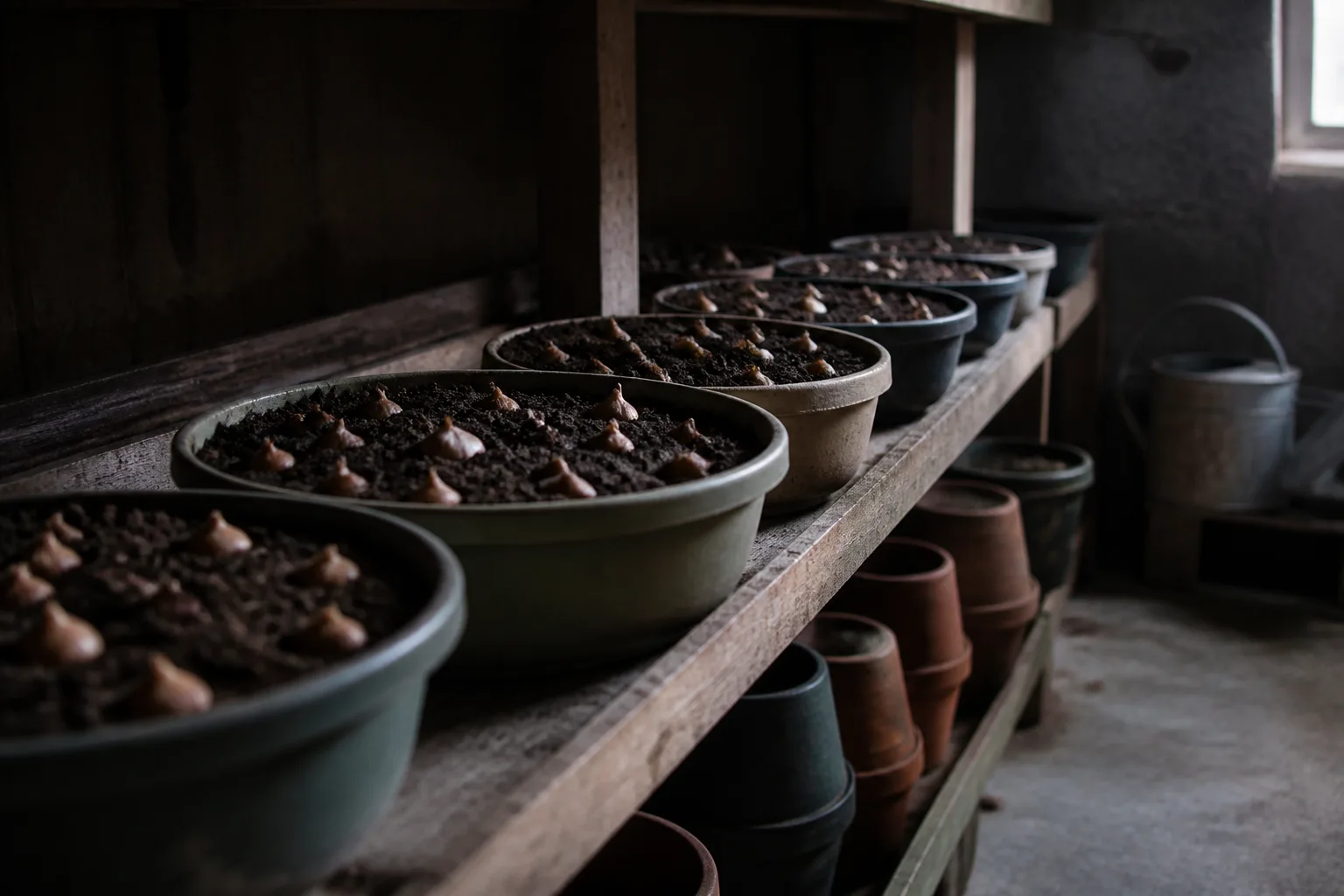
If October soil is too warm, keep firm bulbs in paper or mesh bags in a cool, dry, well-ventilated place. Do not seal them in plastic, set them beside a heater, or store them in a humid basement. If your region requires artificial chilling, follow the supplier’s instructions and keep bulbs away from ripening fruit; Clemson warns that fruit-produced ethylene can interfere with blooming.
If October is nearly over but the ground is cool and open, plant. The bulbs may root for less time and the first display may be less uniform, but a sound bulb in the ground has a chance to establish. The RHS advises planting dormant bulbs as soon as possible and says that even bulbs that have started to sprout are worth planting, provided they are not soft or rotten.
If the first frost has passed, do not use that single event as an automatic stop sign. A light frost above ground is different from frozen soil several inches down. Test whether you can dig a clean hole without forcing a spade through a frozen layer; if you can, plant at the recommended depth, water once if the soil is dry, and protect the surface from heaving.
If the soil is frozen solid or stays saturated, do not bury bulbs in a bad bed just to meet a date. A pot with drainage holes can be a temporary option in a mild area, but in cold regions the pot itself freezes more severely than the ground and needs insulation or an unheated sheltered location. Otherwise, discard compromised bulbs and start with fresh stock in the next appropriate season.
Choose the Bed Before You Choose the Bulbs
The prettiest bulb order cannot overcome a bed that holds winter water. Before digging, watch the area after a hard rain. If water pools for hours, the soil is compacted or the site is a low point, and the bulb may rot before spring. Penn State Extension calls excellent drainage crucial for root development and dormant-season bulb-rot prevention.
Drainage and Spring Light Are Nonnegotiable
Choose full sun to part shade, with at least several hours of spring light. A spot that is shaded in June may be bright in March before deciduous trees leaf out, making the edge beneath a tree a useful location for early bulbs. Avoid the warmest foundation pocket if it repeatedly pushes plants into premature growth during winter thaws; Ohio State Extension specifically cautions that a southern foundation exposure can encourage early emergence and freezing injury.
Improve heavy clay before planting, but do not turn the hole into a bucket of fluffy compost. Clemson recommends working roughly 2 to 3 inches of organic matter into the bed to a depth of 10 to 12 inches when drainage needs improvement; a raised bed or berm may be the better fix where water has nowhere to go. The goal is a broad, airy rooting zone, not a rich pocket that stays wet around one bulb.
Test soil if the bed has a history of weak growth. Clemson and Penn State both place most bulbs around a soil pH of 6 to 7, but pH amendments should come from a soil test rather than guesswork. A low-nitrogen, slow-release bulb fertilizer can be incorporated according to its label, but never press concentrated fertilizer directly against the bulb or roots.
Buy Good Bulbs and Store Them Correctly
Bulb size is a practical predictor of first-season impact, but condition matters more than a large label. Choose bulbs that feel firm and heavy for their size, with intact papery skin, no spreading mold, no soft basal plate, and no deep cuts or bruises. Ohio State Extension advises choosing dry, hard bulbs and notes that larger bulbs generally produce larger flowers; the same principle is useful when comparing two otherwise healthy packages.
Avoid bulbs that are shriveled, leaking, or soft at the base. A loose outer tunic is not necessarily a problem, but a sour smell, wet tissue, or gray mold is a reason to discard that bulb rather than plant it in a bed with healthy stock. Buy from a grower that names the cultivar, bloom time, and recommended planting region, especially if you want tulips to return for more than one year.
Firm Bulbs, Ventilation, and the Fruit Problem
If the soil is not ready when the bulbs arrive, store them in a cool, dry, airy place until planting. A paper bag, mesh bag, or shallow ventilated tray is safer than a sealed plastic bag. Keep different kinds labeled so you do not lose track of bloom time, color, or where the package says to plant them.
Do not store bulbs with apples, bananas, or other ripening fruit. Ethylene released by fruit can interfere with bulb development, and Clemson specifically warns warm-climate gardeners to avoid storing fruit near bulbs. If a supplier tells you to pre-chill tulips or another bulb, use a dedicated ventilated space or a clearly separated refrigerator drawer, and follow its timing rather than improvising with a warm, damp container.
How to Plant Tulip and Daffodil Bulbs
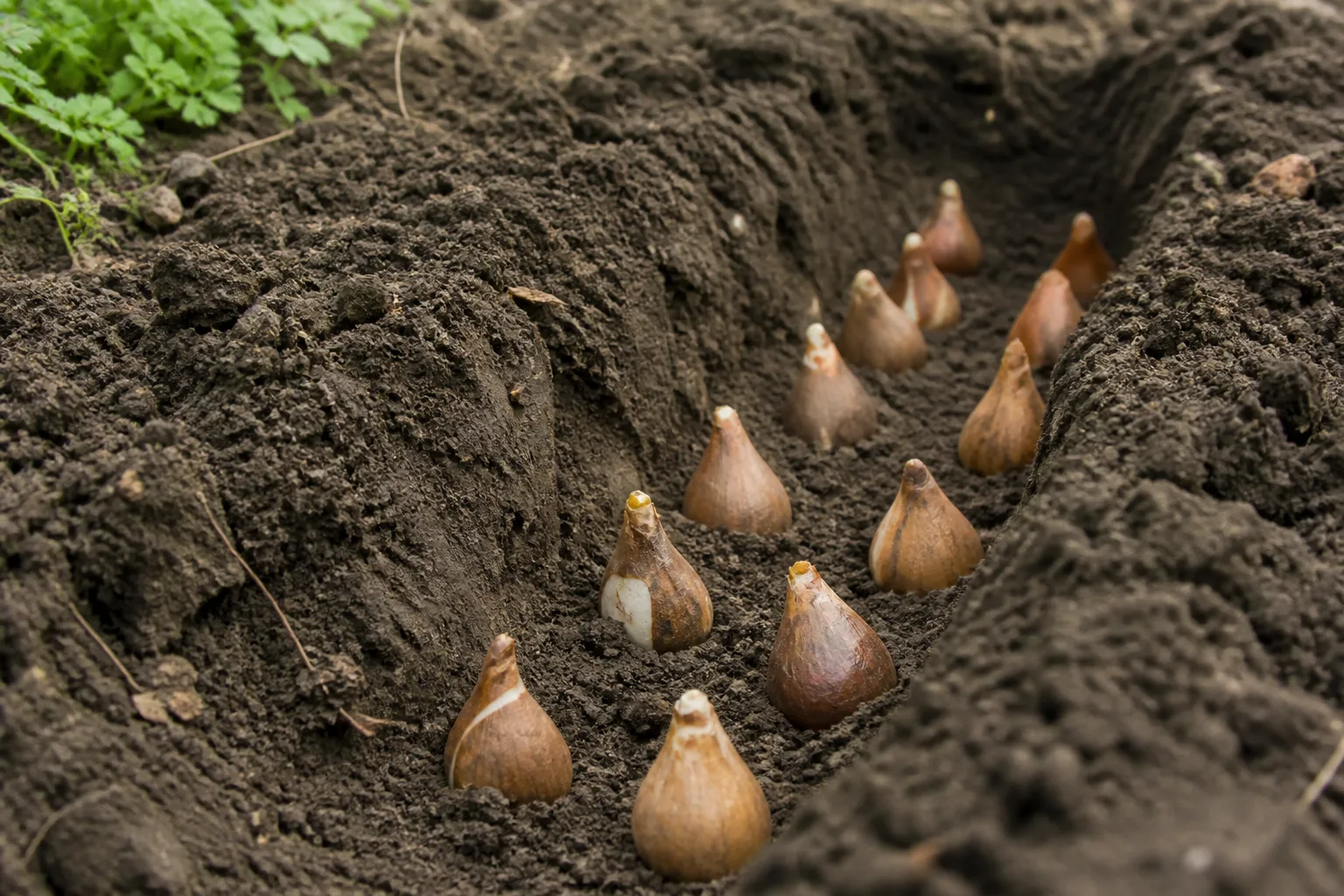
Once the soil passes the timing test, plant in a sequence that prevents most avoidable failures. Prepare the whole bed, lay out bulbs before digging individual holes, check depth against the package, plant with the root base down, water once if needed, and finish with the regional mulch plan. This is faster and more accurate than digging one hole at a time while trying to remember which end belongs up.
Depth, Orientation, and Spacing
Depth guidance varies slightly by source because bulbs differ in size and because some instructions measure from the soil surface to the bulb base while others use the bulb’s height as the multiplier. Penn State Extension and the RHS use about two and one-half to three times the bulb’s height as a practical rule; Clemson describes many bulbs as three to four times as deep as the bulb is wide, measured from the bulb’s base. The safest rule is to follow the package for the cultivar, then use roughly three times bulb height when no reliable instructions are available.
For a typical 2-inch-tall tulip, that often means the bulb’s base ends about 5 to 6 inches below the soil surface. Large daffodils are commonly planted about 6 to 8 inches deep, while smaller species bulbs need less. In heavy clay, the package may call for the shallower end of the range; in sandy soil, deeper planting can help keep bulbs anchored and evenly insulated.
Set the pointed shoot or “nose” upward and the flat basal plate, where roots emerge, downward. If the bulb has no obvious point, plant it on its side rather than guessing; the shoot can orient itself. Backfill with the same improved soil, firm gently, and avoid stepping directly over the planting holes.
Space large bulbs roughly 3 to 6 inches apart and smaller bulbs about 1 to 2 inches apart, adjusting to the package and the eventual size of the plant. For the strongest visual effect, plant in groups rather than isolated dots. A staggered cluster looks more natural than a rigid row, and keeping one cultivar or bloom period together makes the spring display easier to evaluate and repeat.
Water, Fertilizer, and Mulch After Planting
Water deeply after planting if the soil is dry. The first watering settles soil around the bulb and starts root growth; it does not mean the bed should remain wet. RHS notes that watering is not critical when autumn soil is already moist, while Penn State and Clemson recommend watering when needed, so let rain and soil texture determine the next application.
Mulch helps maintain even moisture, moderate temperature swings, and reduce winter heaving. Clemson recommends about 2 to 3 inches of mulch after planting. In mild areas, apply a light layer after planting; in colder areas, Ohio State Extension advises waiting until the soil has frozen an inch or two so the mulch does not keep the bed artificially warm during a late fall spell.
Use shredded leaves, clean compost, pine bark, or another loose organic mulch that will not mat into a waterproof blanket. Keep the layer moderate and pull it back enough for shoots to emerge in spring. If you are fertilizing a permanent bed, use a low-nitrogen product according to its label or a soil test; a handful of bone meal or high-nitrogen fertilizer in each hole is not a substitute for good soil and can attract digging animals or injure roots.
Tulips and Daffodils Make Different Promises
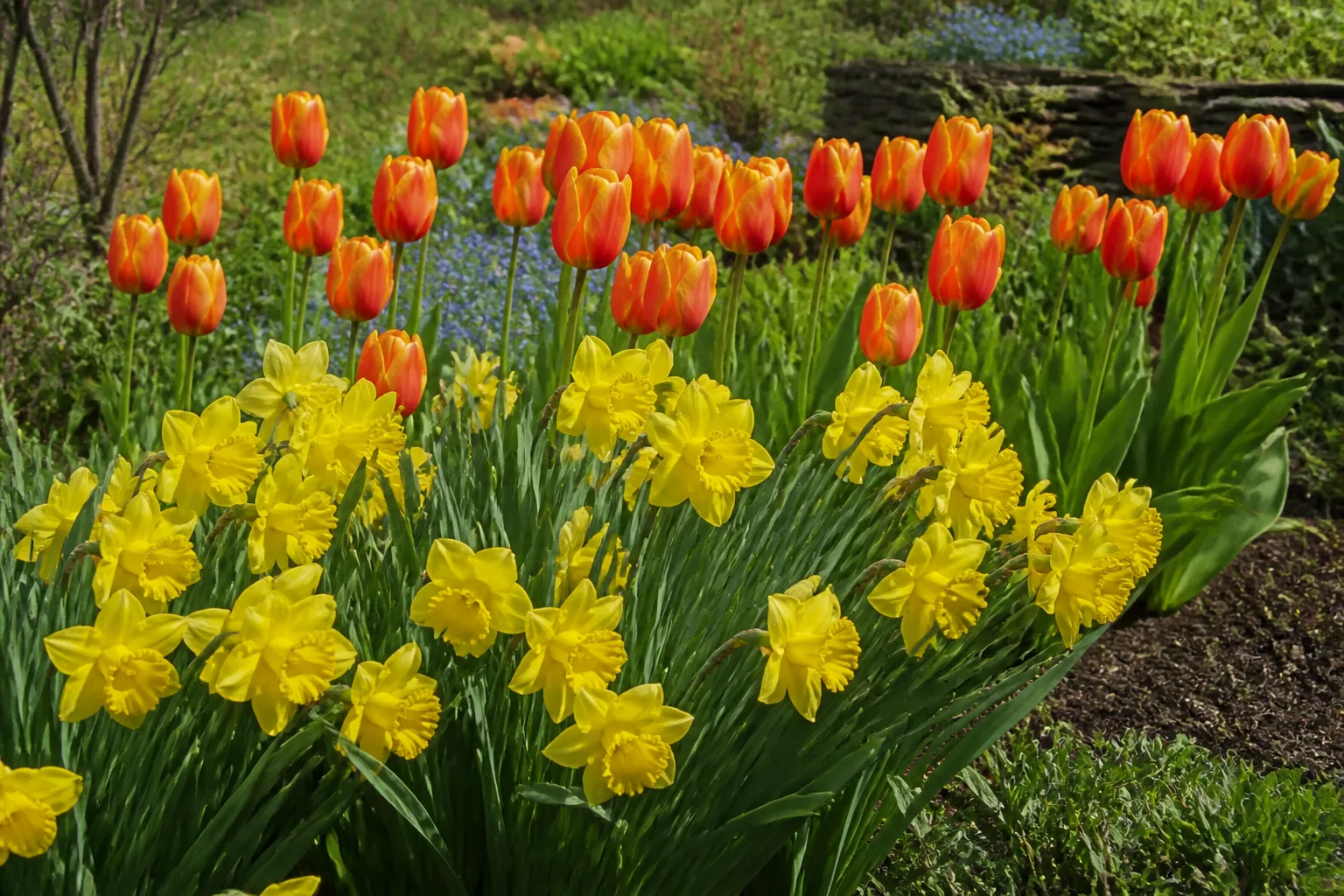
Planting them together can create a long spring display, but they are not interchangeable. Thinking about what you want after the first bloom—reliable return, bold color, resistance to wildlife, or a one-season show—will help you choose better than a simple “both are fall bulbs” label.
| If your priority is… | Tulips | Daffodils |
|---|---|---|
| Strong first-year color | Wide range of colors, forms, and bloom times | Reliable color with many forms and sizes |
| Return performance | Many large hybrids rebloom poorly and are treated as annuals | Many types naturalize and multiply when site conditions fit |
| Wildlife pressure | Tulip bulbs and emerging foliage are often attractive to rodents and browsers | Bulbs are generally avoided by many animals |
| Warm-climate success | Often needs careful cultivar choice and chilling | Some types are more adaptable, but regional selection still matters |
| Best layout | Masses of one color or a planned mix | Drifts, under deciduous trees, and long-lived clumps |
Tulips: Big Color, Less Certain Rebloom
Tulips reward a well-planned first season with strong color and an enormous range of shapes, from simple cups to fringed or lily-flowered forms. They are excellent for a deliberate spring composition, especially when you plant several bulbs of one cultivar together rather than scattering a few of many colors. The Skagit Valley Tulip Festival’s grower guidance similarly emphasizes firm bulbs, full sun, good drainage, and fall planting before the ground freezes.
The trade-off is longevity. Gardening Know How notes that tulips are susceptible to wildlife and may not bloom again reliably after the first year, especially among heavily hybridized types. If annual replanting would annoy you, choose cultivars described as perennial or naturalizing for your climate, and give them full spring light and summer drainage; do not assume that every tulip on the rack will behave like a long-lived daffodil.
Tulips are also the bulb most likely to suffer from squirrels, chipmunks, mice, or voles before you ever see a shoot. If you are planting in a high-pressure wildlife area, budget for a mesh barrier from the beginning or use tulips as a smaller accent around a more animal-resistant backbone of daffodils.
Daffodils: Better Naturalizers and Animal Resistance
Daffodils, botanically in the genus Narcissus, are the steadier choice when you want a bed to improve over time. The American Daffodil Society recommends a sunny, well-drained site, and its growing guidance says bulbs can remain in the ground for several years when they are not overcrowded. Many daffodils produce offsets, so an initial cluster can become a larger drift with patience.
They are not indestructible. Daffodils can fail in waterlogged soil, deep shade, poor light during their leafy period, or an overcrowded clump. If a clump produces leaves but few flowers, check drainage, spring sun, planting depth, and whether foliage was cut before it finished feeding the bulb.
Daffodils are also a smart wildlife choice, but they are not pet-safe edibles. ASPCA lists daffodils as toxic to dogs, cats, and horses, with lycorine and other alkaloids concentrated most strongly in the bulb. Tulips are also toxic to pets, with tulipalin A and B concentrated in the bulb; keep packages and dug-up bulbs away from animals and contact a veterinarian or animal poison-control service promptly if ingestion is suspected.
Protect the Bed and Read the Spring Results
The first winter is mostly about leaving the bulbs in a stable, breathable environment. Squirrels and chipmunks may dig newly disturbed soil, while mice and voles may eat tulips underground. Ohio State Extension recommends a half-inch hardware-cloth enclosure for small plantings or a sheet of hardware cloth over the bed; secure it so animals cannot lift an edge, then remove or reposition it as shoots emerge.
Avoid attractant-rich organic meals when rodents are a known problem. Garden.org’s spring-bulb guidance specifically warns that bone, fish, or peanut meal can draw diggers, while the RHS identifies squirrels as a particular problem for tulips and crocus. A physical barrier is more dependable than scattering a kitchen ingredient over the bed, and it does not require guessing whether a homemade repellent will survive rain.
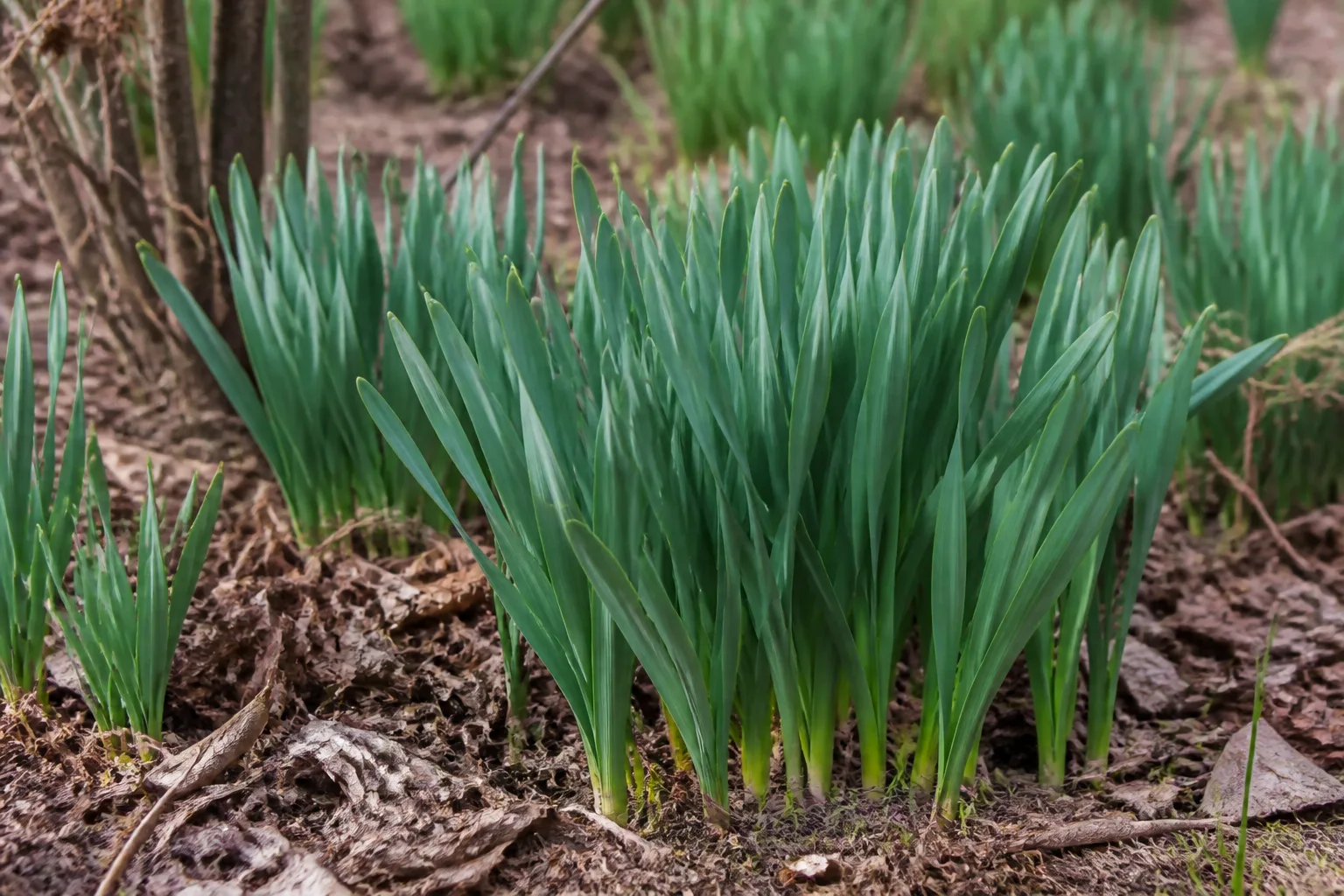
If warm weather triggers a few shoots in late fall, do not cut or pull them. Protect the bed from sharp temperature swings with a loose mulch layer appropriate to your climate. Bulb leaves are built to handle cold better than gardeners often expect, and Clemson notes that late-fall or winter foliage is a normal occurrence for many spring bulbs.
When spring arrives, let flowers fade naturally enough to keep the leaves working. Remove spent tulip or daffodil flowers if you want to prevent seed formation, but leave green foliage in place for at least six weeks after bloom or until it turns yellow and collapses. Clemson and the American Daffodil Society both stress that the leaves recharge the bulb for the following year; braiding or tying them tightly can reduce the leaf surface doing that work.
Water while the plants are actively growing if rainfall is sparse, especially during a dry spring. Once the foliage has yellowed and the bulb enters dormancy, reduce watering and avoid digging until the leaves are finished. Divide daffodils when clumps become crowded or flowering declines, and decide in advance whether you will treat a hybrid tulip as a one-season display or leave it in place to test its return.
The spring result tells you whether the planting decision worked. Rot points back to drainage or overwatering. Short stems can indicate inadequate chilling, premature growth, or variety-specific behavior. Leaves without flowers suggest weak bulbs, too little light, shallow planting, overcrowding, low fertility, or foliage removed too soon the previous year. Use that diagnosis to change one variable next autumn rather than replacing every bulb at once.
Conclusion
So, should you plant tulip and daffodil bulbs in October? Yes, in many gardens—but only when October soil has cooled, the bed drains well, and the bulbs have time to root before the ground freezes. In cold and moderate climates, that often makes October the ideal month. In warm climates, it may be a storage month while you wait for soil below about 60°F or prepare pre-chilled bulbs.
Plant firm bulbs at the package depth, usually around two to three times their height, with the pointed end up; water once when dry; mulch according to your winter pattern; and cover the bed if animals dig. Choose tulips for their color and accept that rebloom can be uncertain, choose daffodils when naturalizing and wildlife resistance matter, and leave all spring foliage in place until it has done the quiet work of charging next year’s flowers.