Should You Cut a Rose Stem After the Flower Dies?
Should you cut a rose stem after the flower dies? Learn where to cut, how much stem to remove, and when to leave rose hips for your rose type.
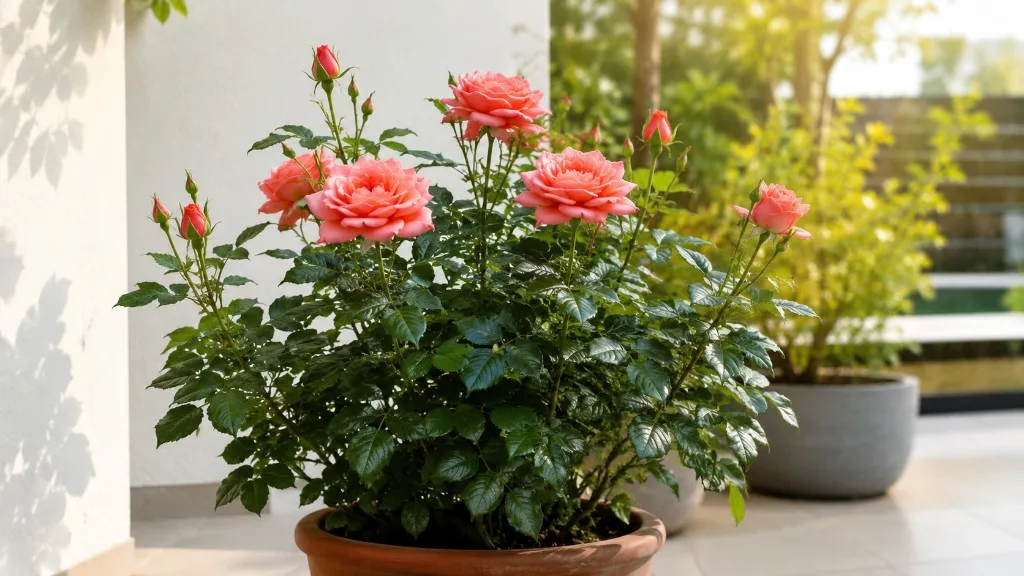
Yes—if it is a repeat-flowering rose and your goal is more flowers. Remove the spent bloom before it develops into a rose hip, then follow the flowering stem down to a healthy bud or leaf joint and cut just above it. That small cut redirects the plant’s next effort toward new growth instead of leaving every finished flower to move into seed production.
But “cut the stem” does not mean “cut the whole cane,” and it is not a universal instruction for every rose. A once-flowering rambler may be setting the hips that give it autumn color, a climber may need its main framework preserved, and a newly planted rose needs more leaves left behind than a vigorous established bush. The safe rule is identify the rose, find the finished growth, and remove only what that plant and your goal require.
The short answer: deadhead repeat-flowering roses
For most modern bush roses—hybrid teas, grandifloras, floribundas, and many repeat-flowering shrubs—cutting off faded flowers is useful maintenance. Deadheading is the removal of spent flowers before the plant puts more energy into forming seed-bearing hips. The Royal Horticultural Society explains that deadheading can encourage more flowers and that roses are among the plants that benefit from removing old blooms.
The practical cut is usually just above a strong, outward-facing bud eye on a healthy part of the stem. A bud eye is the small dormant bud where a leaf meets the cane. Leave a short stub above it, keep the bud intact, and make the cut slope slightly away from the bud so water does not sit on the cut surface. The exact angle is less important than using a sharp blade and choosing a bud that can grow into open space.
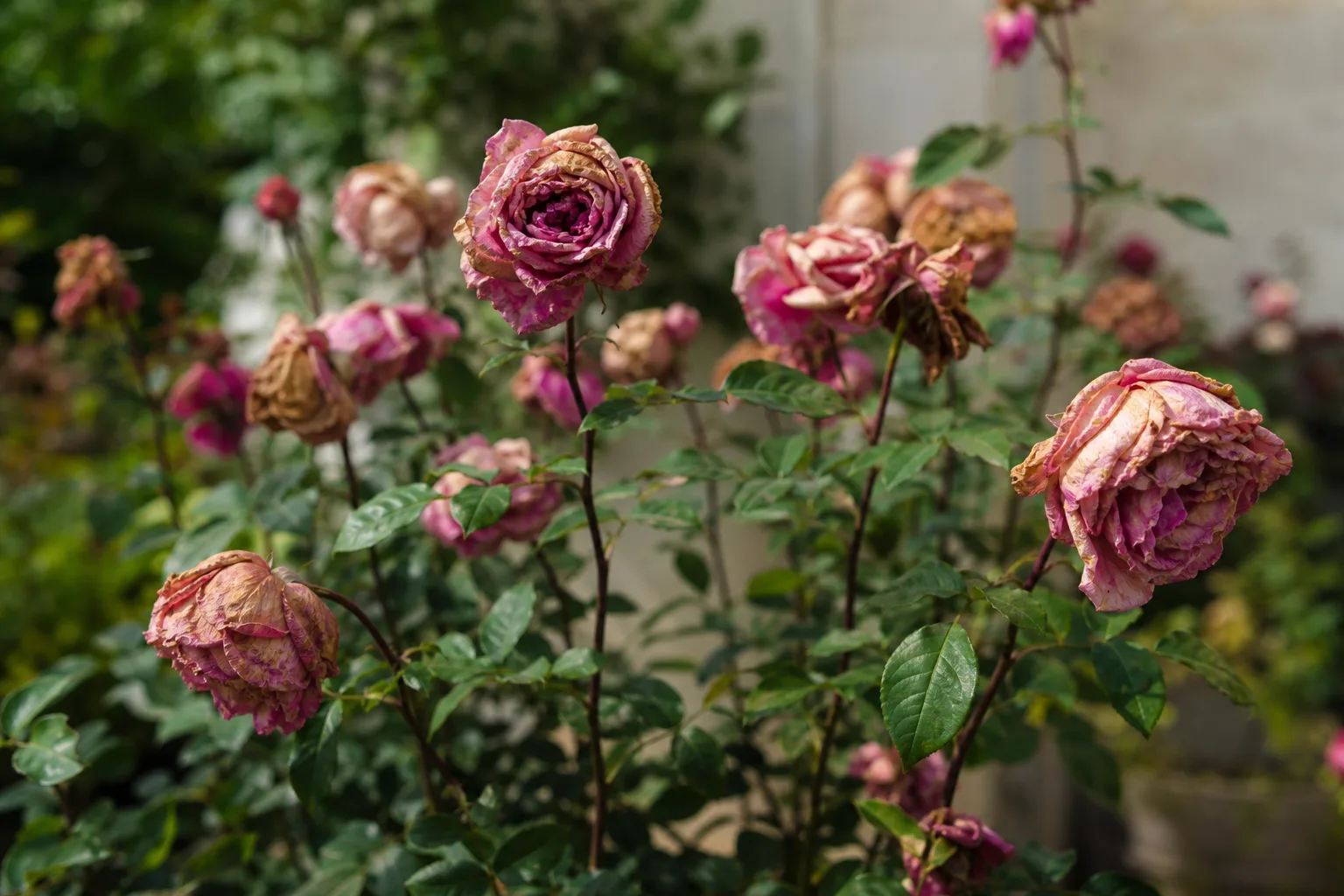
Deadheading is not essential for the survival of a healthy rose. It is a choice that can improve repeat flowering, keep petals from littering the plant, and make the shrub look cared for. If you miss a week, do not rush and remove a large section of healthy cane to catch up; a careful cut is more valuable than a perfectly tidy calendar.
Identify the rose before making a deeper cut
The biggest mistake in post-bloom rose care is treating every rose as if it were a hybrid tea. Look at the plant’s flowering pattern and structure before you lower the pruners. Does it flower in several flushes, or does it put on one major display and then develop hips? Is it a self-contained bush, or does it have long canes tied to a support?
Repeat-flowering bush roses
Hybrid tea roses usually carry one large flower per stem, while grandifloras combine large flowers with a taller, more branching habit. Floribundas carry sprays of blooms. All are commonly repeat-flowering, so removing spent flowers can help them move into another flowering cycle rather than allowing every old bloom to mature into a hip. The RHS rose-pruning guide treats hybrid teas and floribundas as repeat-flowering bush roses but distinguishes how strongly their stems are cut during structural pruning.
For an established, vigorous bush, you can usually trace a finished flower down to a sturdy leaf set and a bud that faces away from the plant’s center. A thin stem carrying an oversized hybrid-tea bloom may deserve a deeper cut to stronger wood; a healthy shrub rose often needs a lighter cleanup. Do not take the deepest possible cut just because you found a five-leaflet leaf lower down.
Once-flowering and hip-producing roses
Many species roses, old garden roses, and ramblers flower once and then develop attractive hips. If you want those hips for autumn color, seed collection, or wildlife value, leave at least some spent flowers in place. The RHS specifically recommends leaving roses that produce decorative or bird-friendly hips, and the Missouri Botanical Garden notes that allowing a plant to form seed shifts its energy toward that reproductive process.
There is a useful compromise when you are unsure: deadhead a portion of the plant and leave a few healthy, well-placed flowers to become hips. That gives a repeat-flowering rose some room to produce another flush while preserving the fruit display. If the rose flowers only once, however, deadheading will not create a second flush that the variety is not genetically prepared to make.
Climbers, ramblers, and self-cleaning roses
A repeat-flowering climbing rose has permanent framework canes and shorter flowering laterals growing from them. Deadhead the finished laterals; do not cut the main canes down as though they were bush-rose stems. Keeping those canes trained and tied allows them to produce the side growth that carries future flowers.
Ramblers need even more caution. Many ramblers flower once on older wood, so an aggressive summer cut can remove next year’s flowering potential. The RHS guidance for general rose pruning advises treating unknown long-caned roses carefully, and the David Austin summer-pruning guidance likewise distinguishes repeat-flowering roses from many once-flowering ramblers.
That same distinction appears in practical guidance from Ashridge Nurseries: leave a mature once-flowering rose to make hips, while a young plant may be deadheaded lightly as it builds size. If the label is missing, a cautious flower-only cut is safer than shortening a long cane until you know whether the plant flowers on that wood.
Self-cleaning landscape roses can shed their own petals and keep producing flowers without regular deadheading. If the plant stays tidy and buds keep forming, you can skip the chore. Remove a few obvious brown heads for appearance if you want, but do not strip a large shrub flower by flower simply because a generic pruning rule says every dead bloom must be cut.
Deadheading is not the same as pruning
These jobs overlap, but they solve different problems. Deadheading removes a finished flower or cluster so the plant can keep flowering or look tidier. Structural pruning changes the plant’s framework: it removes dead, damaged, crossing, weak, or unproductive wood and shapes the remaining canes. Structural pruning is usually a late-winter job for bush roses, not an automatic response to every flower that fades.
There is also a middle option sometimes called summer pruning: when a whole spray has finished, you follow the flowered stem farther down and remove that entire finished section above a healthy leaf or side shoot. David Austin describes this as a more generous form of deadheading. It makes sense when the whole cluster is over, but it does not mean cutting every cane back to the same height.
Keeping the distinction in mind prevents two common errors. First, you do not leave a long, leafless stub above a bud simply because you were trying to deadhead quickly. Second, you do not turn a five-minute cleanup into a hard prune that removes the leaves and young canes the plant needs to fuel new growth.
Find the right cut point on the stem
Start at the faded flower and move down the stem slowly. Find a living bud eye at a leaf joint, then choose one that points outward or toward an open gap. An outward-facing bud is not a guarantee of a perfect new shoot, but it gives the next growth a better direction than a bud aimed into the crowded center.
The familiar five-leaflet rule is a landmark, not a law. A strong five-leaflet leaf often indicates a mature section of stem with a useful bud, but a rose can also have strong three- or seven-leaflet leaves. On a young, newly planted, or stressed rose, cutting to the first robust leaf may preserve more useful foliage than searching for a particular leaflet count.
The RHS general pruning advice recommends making cuts close above the bud, sloping away from it, and using sharp tools for a clean cut. Use that as the technical target: close enough that the stub does not die back, far enough that the blade does not nick the bud.
Single blooms on hybrid teas and grandifloras
For a single spent bloom, follow the stem to the first healthy, substantial leaf set. If the stem below it is pencil-thin, weak, or points into the center, continue down to stronger wood and a better-positioned bud. A deeper cut takes longer to return to flower, but it can produce a sturdier new stem that supports the next large bloom.
If the rose is young, recently transplanted, heat-stressed, or carrying very little foliage, make the lightest useful cut instead. Removing a flower and a small amount of stem is enough; you do not have to reshape the plant every time you deadhead. The plant needs its remaining leaves to build roots and recover.
Finished clusters on floribundas and shrub roses
With a floribunda, remove individual faded flowers while the rest of a cluster is still opening. Once the entire spray has finished, take the cluster back to one strong leaf or side shoot rather than making several tiny cuts that leave a thicket of stubs. The goal is one clean, useful point of regrowth.
Repeat-flowering shrub roses usually look best with a lighter hand. Remove old clusters, shorten awkward flowered tips, and take out clearly weak or crossing growth when you see it. If the shrub is full of healthy leaves and retains a balanced outline, there is no prize for cutting lower.
How to cut a spent rose safely
Work in this order so you do not cut first and diagnose later:
- Confirm that the flower is spent. Loose petals, browning, a drooping head, or a developing hip indicate that the bloom has finished. A tight brown bud that never opened is a different problem and should not automatically be treated as a normal spent flower.
- Trace the stem to living growth. Look for a firm bud eye and a leaf set below the flower. Skip weak, inward-facing, damaged, or obviously diseased sections when a better bud is available.
- Choose the shallowest useful cut. Remove the finished flower and enough stem to leave a healthy bud with room to grow. Go deeper only when the stem is weak, the cluster is finished, or you are removing damaged wood.
- Cut just above the bud. Use one decisive cut with a sharp bypass pruner. Leave a small stub, slope away from the bud, and avoid crushing the cane.
- Collect the debris and reassess. Pick up petals and cuttings, then look at the leaves and soil before moving to another rose. Deadheading is also a good moment to notice black spots, aphids, heat stress, or drought.
Prepare sharp, clean tools
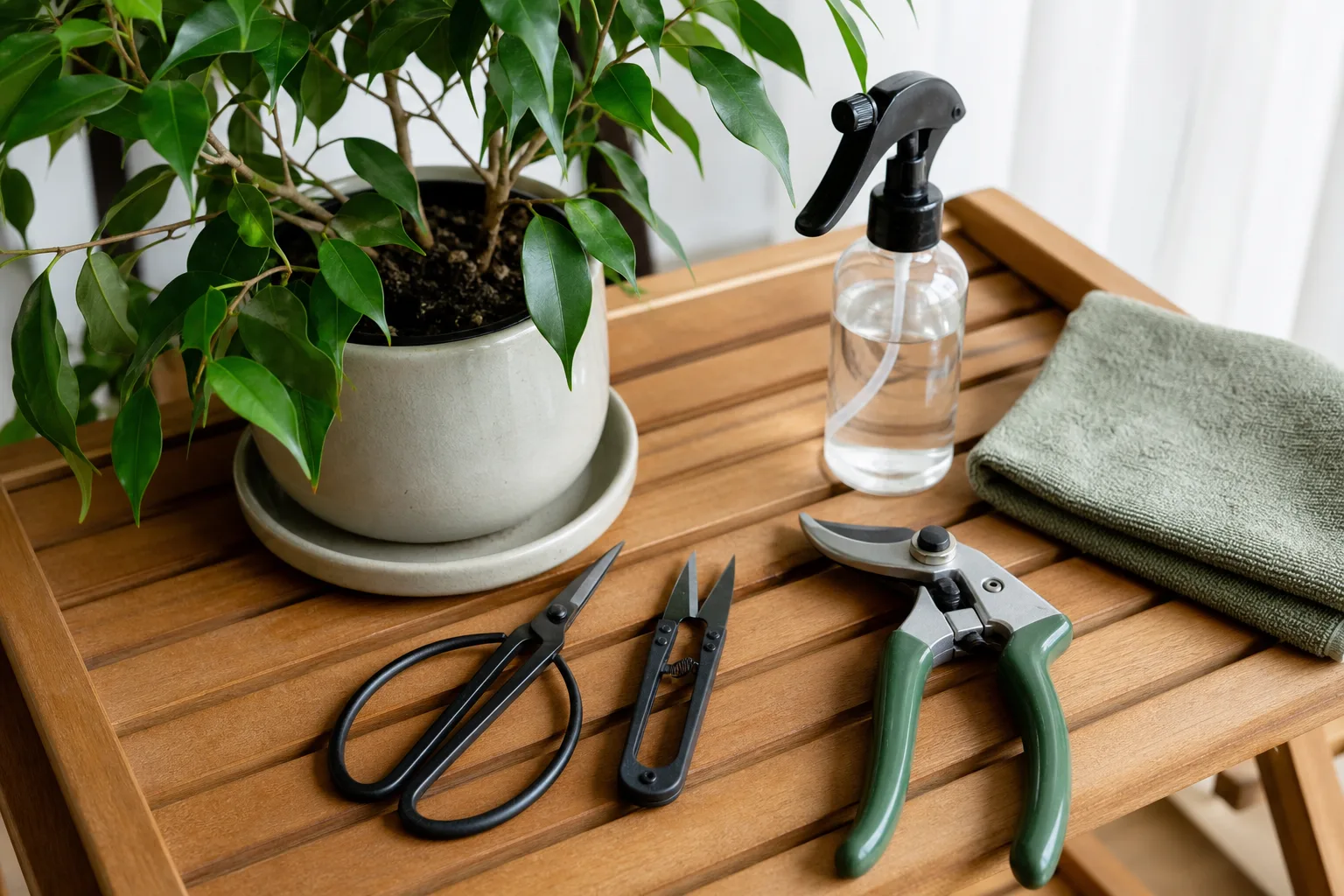
Use bypass pruners for living rose stems and keep the blades sharp enough to slice rather than crush. Wear thorn-resistant gloves, especially when reaching into the center of an established bush. A dull blade makes a ragged wound and can push you to twist the cane, damaging the bud you meant to keep.
Clean visible sap and plant debris from the blades before you begin. If you cut through a stem that is clearly diseased, clean and disinfect the blades before touching another rose, following the product label and handling instructions. The RHS emphasizes clean cuts and sharp tools; the broader principle is simple: do not carry suspicious plant material from one fresh wound to the next.
Decide how much stem and foliage to remove
For ordinary deadheading, remove the finished flower and the short section of stem above a healthy bud. For a complete finished cluster, follow the stem farther down to a strong leaf or side shoot. For a dead or diseased cane, trace it back to healthy tissue or the base, which is a different operation from removing one faded bloom.
Preserve healthy leaves whenever possible. Leaves are the rose’s energy-producing surface, so a plant that has lost foliage to black spot, drought, or transplanting should not be given an unnecessarily deep deadheading cut. A balanced plant with adequate leaves will usually respond better to a moderate cut than to a severe haircut made in pursuit of symmetry.
Handle brown, dead, or diseased stems differently
Not every brown rose stem is simply a finished flower stem. A normal spent bloom has a fading head at the tip while the stem and leaves below remain firm and green. A dead or diseased cane may be brown through its length, soft, cracked, shriveled, streaked, or surrounded by dying leaves. If the tissue inside a cut is not healthy, continue only until you reach firm living tissue; do not keep trimming randomly through the plant.
Remove dead, damaged, crossing, and diseased stems with clean tools, and take the cuttings out of the bed. Do not compost suspicious disease material unless your local composting guidance says the pile reaches conditions that safely destroy it. The RHS rose guidance recommends pruning dieback back to healthy white pith and removing dead or diseased stems while opening space for airflow.
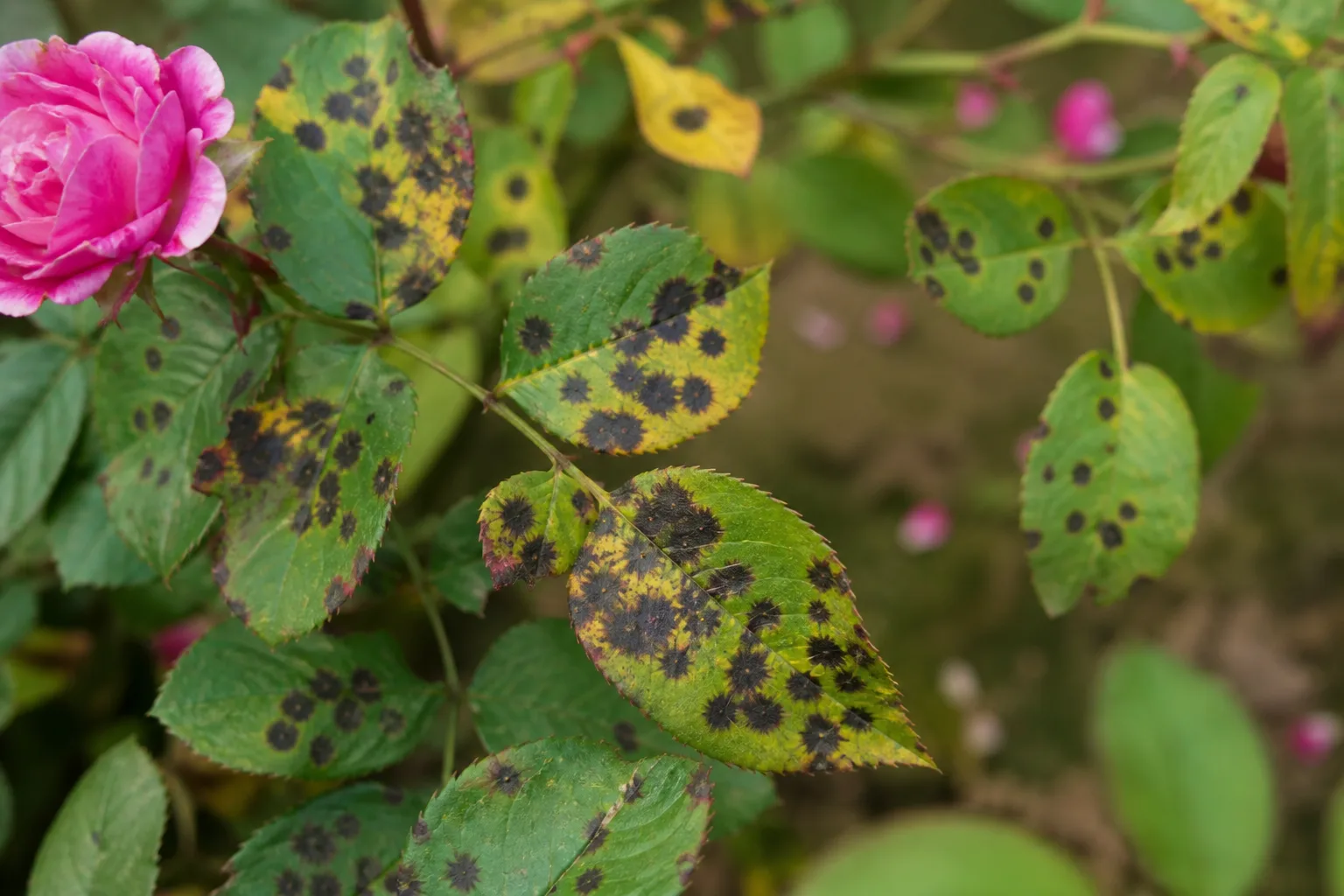
Black spot is a leaf disease, not something a deadheading cut can cure. If leaves show expanding black lesions and yellowing, remove badly affected material, keep irrigation off the foliage, improve air movement, and use a locally appropriate rose-disease plan rather than simply cutting off more flowers. The rose needs healthy leaves for the next flush.
Do not seal ordinary rose cuts with paint or wound dressing. A clean, properly placed cut that can dry is usually the better approach. When the problem is a suspect cane, the priority is accurate identification, clean tools, removal of affected tissue, and preventing the disease from moving to another plant—not making the cut look cosmetically finished.
Time deadheading around the bloom cycle and season
During the main bloom season, check repeat-flowering roses about once a week. In hot weather or during a heavy flush, petals may loosen quickly, so a more frequent pass keeps the plant from spending as long on finished blooms. The RHS deadheading guidance recommends removing faded flowers as they become untidy but also notes that a delay of several days or a week does not greatly affect flowering performance.
The best moment is after the flower has clearly finished but before the hip has swollen and the petals have scattered through the plant. If some flowers are still beautiful and others are brown, remove only the finished ones. A good deadheading pass edits the plant selectively; it does not erase the whole display.
Ease off as the season closes if you want hips or if your local climate is moving toward frost. There is no universal “last deadheading day”: a rose in a mild climate may keep flowering later than one in a cold region. Use local weather, the rose’s flowering habit, and your goal—more flowers, hips, or a slower transition into dormancy—to decide when to stop.
Use a lighter cut on young or stressed roses
First-year roses are establishing roots, so their leaves are doing double duty: they support current growth and help the plant settle into its site. Remove the spent head with the least healthy stem necessary, often above the highest strong leaf set, rather than cutting deep into a long cane. The same conservative approach applies after transplanting, severe heat, drought, or major pest damage.
Wait to make structural cuts until the plant has regained vigor. A rose that is wilting, dropping leaves, or growing in dry soil will not be rescued by a perfectly angled cut. Check the root zone, water deeply when needed, reduce competition, and look for pests or disease before asking the rose to replace a large amount of top growth.
This is also where the five-leaflet rule causes the most harm. If the first strong leaf below a faded flower has three leaflets and the plant is young or weak, leaving it may be the better decision. The bud’s quality, the plant’s foliage, and the rose’s vigor matter more than counting leaflets like a test you must pass.
If the rose still does not rebloom
Deadheading only removes one bottleneck: a finished bloom that is moving toward seed. It cannot turn a once-flowering cultivar into a repeat bloomer, replace missing sunlight, repair drought-stressed roots, or reverse a disease that has stripped the leaves. If a repeat-flowering rose does not produce new buds, troubleshoot the plant rather than cutting it shorter and shorter.
Check these causes in order:
- Rose type: Confirm that the plant is meant to repeat. Species roses, many ramblers, and some old garden roses have one principal flowering season.
- Light: Roses need strong light for vigorous flowering. A plant with long weak shoots and few buds may be growing in too much shade.
- Root-zone moisture: Feel the soil several inches down. A dry root zone can stall buds, while persistently wet soil can damage roots and reduce the energy available for flowering.
- Foliage health: Black spot, rust, powdery mildew, or severe insect feeding can reduce the leaves that power new growth.
- Pruning depth: Repeatedly removing long sections of cane can leave too little mature wood or foliage for a quick recovery, especially on young plants.
- Season: A rose that has just finished a flush may need time to produce a new shoot, and a once-flowering rose may simply be done for the year.
If buds turn brown before opening, do not call them spent flowers and keep cutting. Inspect for heat or rain damage, thrips, aphids, gray mold, and drought stress. Deadheading is a maintenance response to a finished bloom; unopened buds that fail are a diagnostic clue.
Conclusion: cut for the rose’s goal
Cut a spent rose stem when the plant is a repeat-flowering type and you want more blooms. Make the smallest useful cut just above a healthy, outward-facing bud or leaf joint, preserve healthy foliage, and take a finished cluster farther down only when the whole flowering section is over.
Leave hips when they are part of the plant’s appeal, protect the framework of climbing roses, and treat once-flowering ramblers differently from modern bush roses. A careful gardener does not ask whether every dead rose should be cut; they ask what this rose is trying to do next—and make the cut that supports that goal.