Can You Water Plants in Full Sun? When to Do It
Can you water plants in full sun? Learn when midday watering is safe, how to rescue a wilted plant, and why root-zone watering matters more than the clock.
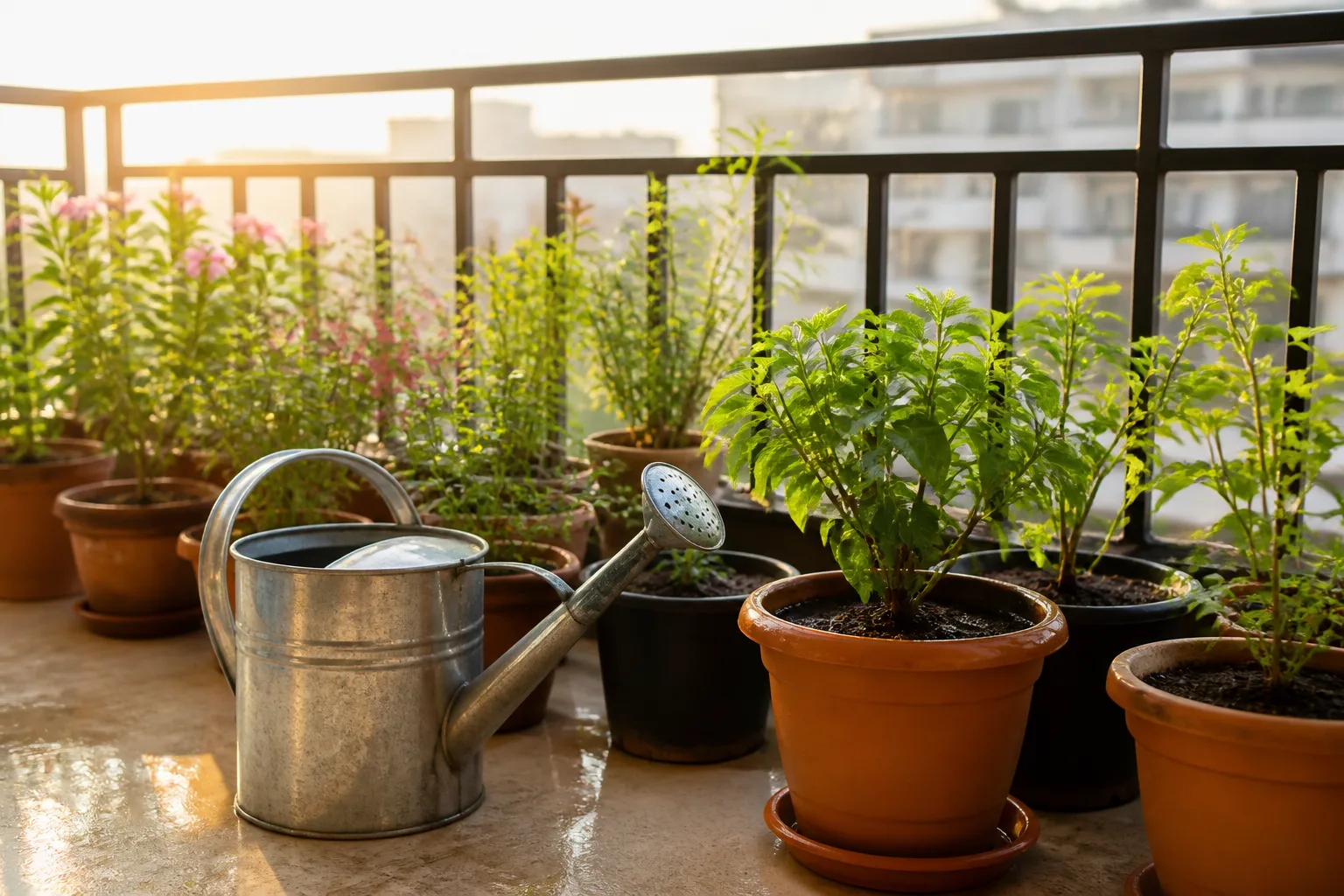
The best time to water is usually early morning, but “never water in full sun” is too rigid to be useful. If a plant’s root zone is genuinely dry or the plant is collapsing from heat and drought stress, give it water when you notice the problem—even if the sun is high.
The important distinction is between routine watering and rescue watering. Routine watering is easier and more efficient before the hottest part of the day. Rescue watering is about preventing a thirsty plant from losing more water than its roots can replace. In either case, apply water slowly to the soil, not as a dramatic shower over the leaves.
The short answer: water a thirsty plant now
Watering plants in full sun is acceptable when the soil is dry in the active root zone, a container is drying rapidly, or a new planting is showing real water stress. Waiting several hours for evening can deepen the stress, especially for seedlings, cuttings, recently planted shrubs, hanging baskets, and small pots exposed to reflected heat.
That does not mean every drooping plant needs another drink. Heat can make leaves temporarily fold, curl, or droop even while the soil is moist. Check the soil before adding more water. If the soil is dry where the roots are growing, water now; if it is moist or saturated, look for heat load, root damage, wind, pests, or a poor drainage problem instead.
For regular garden care, early morning remains the easiest default. The Royal Horticultural Society recommends watering early in the morning because less water is lost to evaporation and plants can use the moisture during the day. Evening is workable when the water reaches the soil, but wet foliage that stays damp overnight can raise disease and pest concerns.
Think of the clock as an efficiency setting, not a plant-care commandment. The condition of the root zone comes first.
Why morning is usually best (but not a hard rule)
Morning gives a hand-watering session several advantages at once. Air and soil are often cooler, wind may be calmer, water has more time to move into the root zone before peak heat, and any splashed foliage can dry during the day. The result is less waste and fewer hours of wet leaves than a late-night overhead shower.
This is why so many watering guides point to early morning. It is a good default for a mixed garden where you may be using a can, hose nozzle, or sprinkler and cannot monitor every droplet. It is also a pleasant time to catch problems before heat turns a small moisture deficit into a wilted container.
Still, “morning” does not mean one universal hour. A cool, cloudy morning, a windy dawn, a shaded courtyard, a hot afternoon on a rooftop, and a humid evening do not have the same evaporation rate. Soil type, plant size, pot material, plant stage, and irrigation method can matter as much as the time on the clock.
Where midday watering loses efficiency
Midday watering loses efficiency mainly when water is sprayed across a hot, exposed surface. Fine droplets can evaporate in the air, wind can carry them away, and water that lands on foliage may never reach the roots. A shallow sprinkle can also wet only the top layer of soil, which dries again quickly while deeper roots remain thirsty.
The risk is greatest with overhead sprinklers and mist-like nozzles on hot, windy days. It is smaller when a slow stream is directed at soil covered by mulch, and smaller still with a properly installed drip line that releases water at the root zone. The question is not simply whether the sun is shining; it is how much of the water reaches the soil and stays there.
A useful test is to watch the soil while you water. If the surface beads up, runs downhill, or becomes muddy while water is still pooling, stop and let it infiltrate before continuing. If a sprinkler is wetting pavement or the plant canopy more than the soil, adjust the pattern or change the method instead of extending the runtime.
Why the “magnifying glass” warning is oversimplified
You may have heard that a water droplet on a leaf acts like a tiny magnifying glass and burns the leaf in full sun. That explanation is too broad to be a reliable watering rule. Leaves can be damaged by heat, drought, intense light, salt deposits, disease, or a sudden change in exposure; a wet leaf is not automatically a scorched leaf.
The practical advice still points in the same direction, but for better reasons. Water splashed over foliage is inefficient because leaves are not the target root system, and persistent wetness can create a more favorable environment for some fungal diseases. The RHS specifically advises applying water to the base of plants to help avoid fungal disease, while Penn State Extension distinguishes overhead irrigation from drip irrigation because drip keeps the canopy dry.
So do not panic if a few leaves get wet during a rescue watering. Do aim the water at the soil whenever possible, avoid turning a hot afternoon into a long leaf-wetting session, and investigate true scorch as a symptom rather than blaming every brown patch on one water droplet.
Diagnose before you water
The fastest way to waste water is to respond to every midday wilt with another drink. Before watering, combine a soil check with a look at the whole plant and its surroundings. A plant is telling you about its water balance, not necessarily asking for a fixed volume of water.
A quick soil, root, leaf, and weather check
Start at the soil surface, then test below it. In a container, push a finger about one-third of the way down; the RHS container-watering guide recommends checking at that depth. In a bed, scrape aside mulch and dig several inches down near—but not against—the plant’s root area. For a newly planted shrub or tree, check the root ball and surrounding soil, because the original root ball can dry out even when nearby soil looks damp.
Next, look at the pattern of the symptoms. Soft, limp leaves with dry, light soil suggest water stress. Crispy edges, a dry gap between pot and soil, or a container that feels unusually light support that diagnosis. Yellow leaves in wet soil, a sour smell, slow drainage, or a stem that stays soft point away from “more water” and toward overwatering, root damage, or poor aeration.
Finally, account for the weather and exposure. A black or metal container on a south-facing patio, a hanging basket in wind, a plant beside a hot wall, and a seedling in a shallow tray can need attention sooner than the same species in a mulched bed. A cloudy day after rain may call for no water at all, while a dry, windy afternoon can empty a small pot surprisingly fast.
When midday wilt is not thirst
Some plants droop during the hottest part of the day and recover by evening without additional water. This can be a temporary response to high transpiration: leaves are losing water faster than roots can supply it for a few hours, even though the soil still contains moisture. Watering on top of already wet soil can reduce oxygen around roots and turn a short-lived heat response into a root problem.
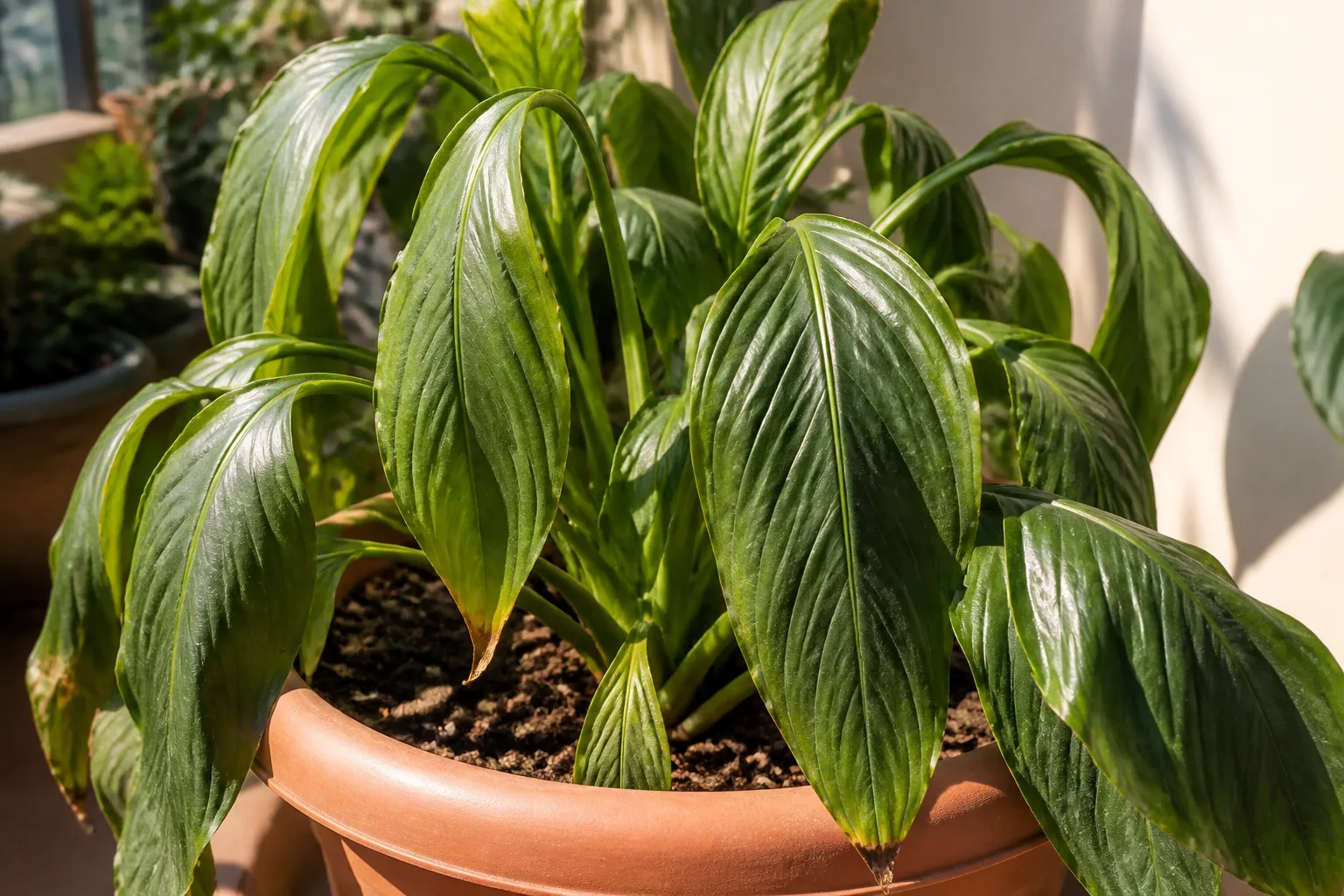
Watch what happens after the temperature falls. If the leaves recover and the soil is moist, improve the plant’s conditions rather than watering on a timer: add mulch around in-ground plants, move a container out of reflected heat, provide temporary shade during an extreme event, or check whether roots are circling and the pot is too small. If the plant remains limp and the soil is dry, it needs water rather than reassurance.
There are other look-alikes, too. Wind can increase water loss, pests can damage leaves, and a blocked drainage hole can leave roots unable to function even when the pot is wet. Wilting is a prompt to inspect the root zone, not proof that the answer is always a deeper soak.
How to water a plant in full sun without wasting water
When the soil check says the plant needs water, the method matters more than the time. Water the place that can use it, deliver enough to moisten the active root zone, and pause when the soil cannot accept more. This is how a midday rescue becomes useful instead of becoming a brief, wasteful leaf shower.
Soak the root zone slowly
Use a watering can with a rose, a hose wand set to a gentle flow, a soaker hose, or a drip emitter. Place the stream at the base of the plant and move around the root area rather than pouring hard against one stem. Slow application gives water time to infiltrate and reduces erosion, runoff, and the dry-core problem that can occur when water races down the sides of a container.
For a very dry pot, water in two or three passes. Apply enough to wet the surface, wait a minute for it to absorb, then apply more. If water immediately runs down the outside of the root ball or out of a gap at the pot wall, the mix may have become hydrophobic; break the stream into smaller doses or temporarily bottom-soak a small pot so the mix can rehydrate evenly.
In a bed, water broadly enough to reach the plant’s roots, not just the inch of soil around the stem. The RHS advises slow, thorough watering and checking that soil is moist to about 15 centimeters for many established border plants. The right depth depends on the plant, soil, and root system, but the principle is consistent: a deep, absorbed soak is more useful than repeated surface sprinkles.
Keep the canopy dry when possible
Leaves do not need to be sprayed for ordinary root watering. Directing water to the soil reduces evaporation from exposed foliage and limits the time leaves stay wet. It also keeps flowers from being battered and helps you see whether water is actually infiltrating the soil.
There are exceptions. A gentle rinse can be part of a specific pest-management or dust-removal routine, and a plant that is overheating in an exceptionally dry environment may benefit from a carefully chosen cooling strategy. Those are separate jobs from watering the roots. Do not confuse misting leaves with replenishing soil moisture, especially for plants in sun where a light mist disappears quickly.
If a midday rescue splashes the foliage, do not wipe every leaf in a panic. Shake excess water from dense growth only if practical, improve airflow, and return to base watering for the next application. The goal is a better watering pattern, not a frantic attempt to keep a plant perfectly dry.
Recheck infiltration and drainage
After watering, check whether the root zone is actually wetter. Insert a finger or trowel away from the stem, lift a little mulch, or compare the pot’s weight before and after watering. If the surface is soaked but the lower root zone is still dry, the soil may be compacted, the pot may be root-bound, or water may be bypassing the mix along a gap.
Good drainage is not the same as fast drainage. A healthy container should shed excess water, but it should also hold enough moisture for roots to use. Make sure drainage holes are open and that a saucer is not keeping the pot in standing water. If a bed sheds water immediately, organic matter and mulch can improve structure over time; simply watering harder usually increases runoff.
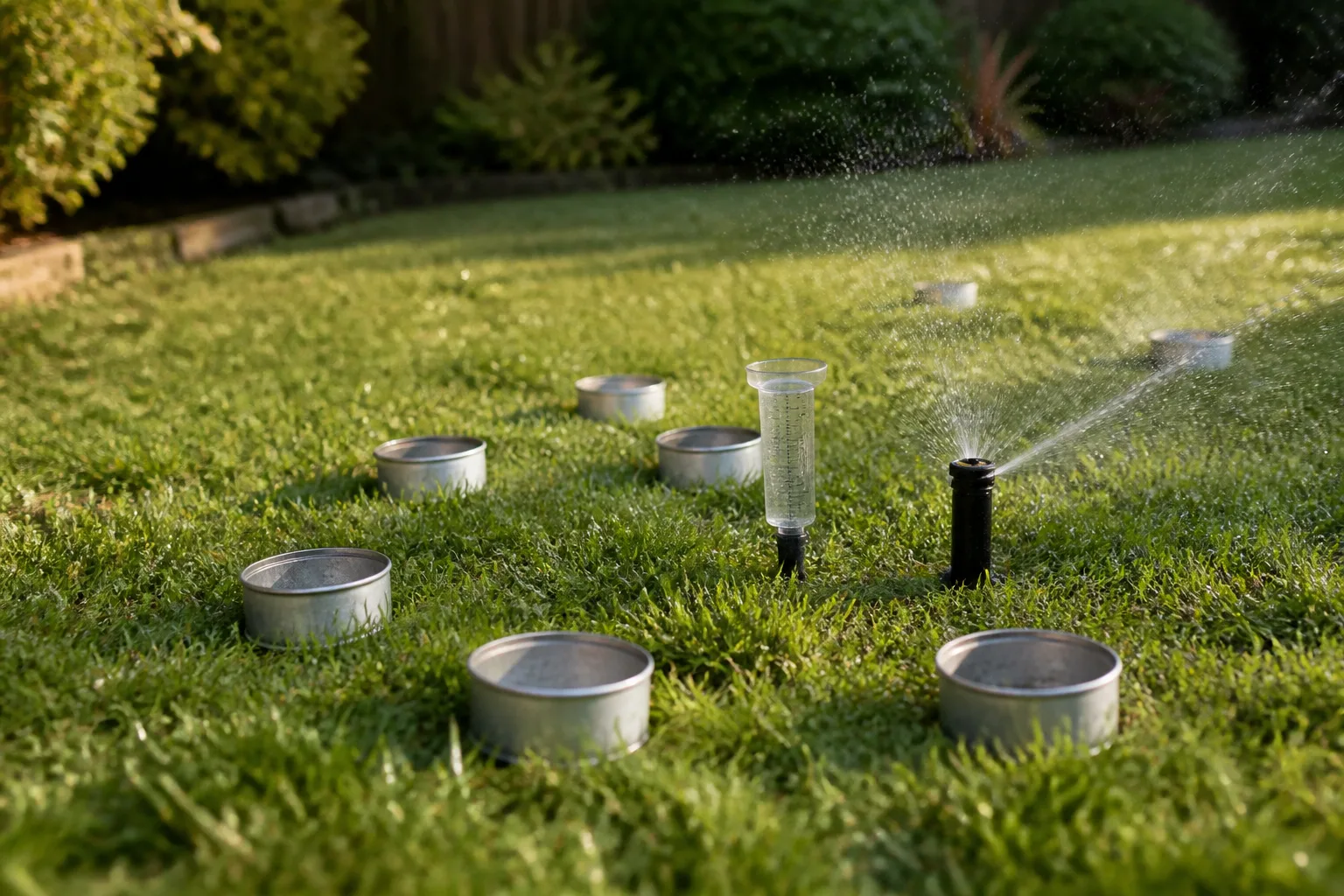
Keep notes for difficult spots. A cheap rain gauge or a few straight-sided catch cans can reveal whether a sprinkler is applying evenly, while a weekly pot-weight check can show which containers dry first. Observation turns a vague “it is hot” routine into a watering plan that uses only what the plants can absorb.
Timing by setup: beds, containers, sprinklers, and drip
The best time to water depends partly on where the water goes. A hand-held can aimed at a plant base, a sprinkler wetting an entire canopy, and a drip line under mulch are different systems even when they run at the same hour.
In-ground beds and established shrubs
Established plants in the ground usually have more root volume and soil insulation than plants in small pots. They may tolerate a hot afternoon without irrigation, particularly when the soil is deep, mulched, and well structured. That is not permission to ignore new plantings: young roots and recently disturbed root balls can dry out quickly before they extend into surrounding soil.
Water a dry bed slowly at the soil line, then check whether moisture has moved down rather than collecting on top. Newly planted trees and shrubs often need a separate watering zone around the root ball, while mature drought-tolerant plants may need water only during an extended dry spell. The RHS advises prioritizing stressed individual plants instead of applying a routine schedule to every established border plant.
Morning watering is convenient for a bed because it supplies moisture before the day’s demand rises. If the bed is already dry in late afternoon, watering then is still better than waiting for a preferred window and allowing leaves to wilt repeatedly. Adjust the next watering based on how long the root zone stays moist, not on guilt about breaking a schedule.
Containers and hanging baskets
Containers are the main reason a “wait until morning” rule can fail. A pot has a limited volume of soil, more exposed surface area, and often a hotter root environment than the ground. Terracotta can lose moisture through its sides, metal can heat the mix, and hanging baskets dry rapidly in wind.
Check the mix before watering, even if the plant looks tired. The RHS notes that young plants may need regular watering in warm, dry weather, while drought-tolerant plants, larger pots, and deeper containers can go longer. In a heat wave, a small sunny pot may need to be checked morning and afternoon; that does not mean it should automatically be watered twice.
If a container is dry and wilted at midday, water it at the base and move it temporarily to bright shade or a less exposed position while it recovers. Do not leave the pot sitting in a deep saucer of water for hours. Once the root zone is rehydrated, improve the setup with a larger pot, a moisture-retaining but well-aerated mix, mulch on the surface, or a drip system sized for the plant.
Sprinklers versus drip lines
Sprinklers and overhead spray are most sensitive to timing because they wet foliage and expose water to wind and evaporation. Use them during the cooler parts of the day when possible, check for overspray onto pavement, and measure output with catch cans rather than assuming a longer runtime means deeper watering.
Drip irrigation is different. Penn State Extension explains that drip systems deliver water directly to the root zone and generally keep the canopy dry, so irrigation efficiency is not strongly determined by morning versus afternoon timing. Soil moisture, frequency, and duration matter more than following a single “best” hour.
That flexibility does not make every drip system efficient. Emitters can clog, pressure can vary along a long line, and a timer can keep watering a plant after rain. Test the line, watch the soil at the farthest emitter, and adjust duration to the root zone. If a drip line is buried under mulch, inspect it occasionally instead of assuming a silent system is working.
Build a heat-proof watering routine
An effective summer routine is built around priority, not a promise to water everything every day. Check the plants that can lose moisture fastest first: seedlings, new transplants, cuttings, shallow-rooted crops, containers, hanging baskets, and plants under eaves or beside heat-reflecting walls.
Then check established beds selectively. The BBC Gardeners’ World Magazine’s drought guidance recommends prioritizing containers, seedlings, new plantings, and thirsty crops while allowing established, mulched plants to tolerate some dry periods. A brown lawn can often wait for rain, while a newly planted tree or fruiting vegetable may not.
Set up the routine so you can catch errors. Run sprinklers only after checking their coverage, use a timer that can be adjusted after rain, and group containers by water demand rather than giving every pot the same volume. Check soil at the same depth each time; otherwise, you will mistake a dry surface for a dry root zone or a wet surface for a fully watered pot.
Use mulch, temporary shade, and better soil coverage
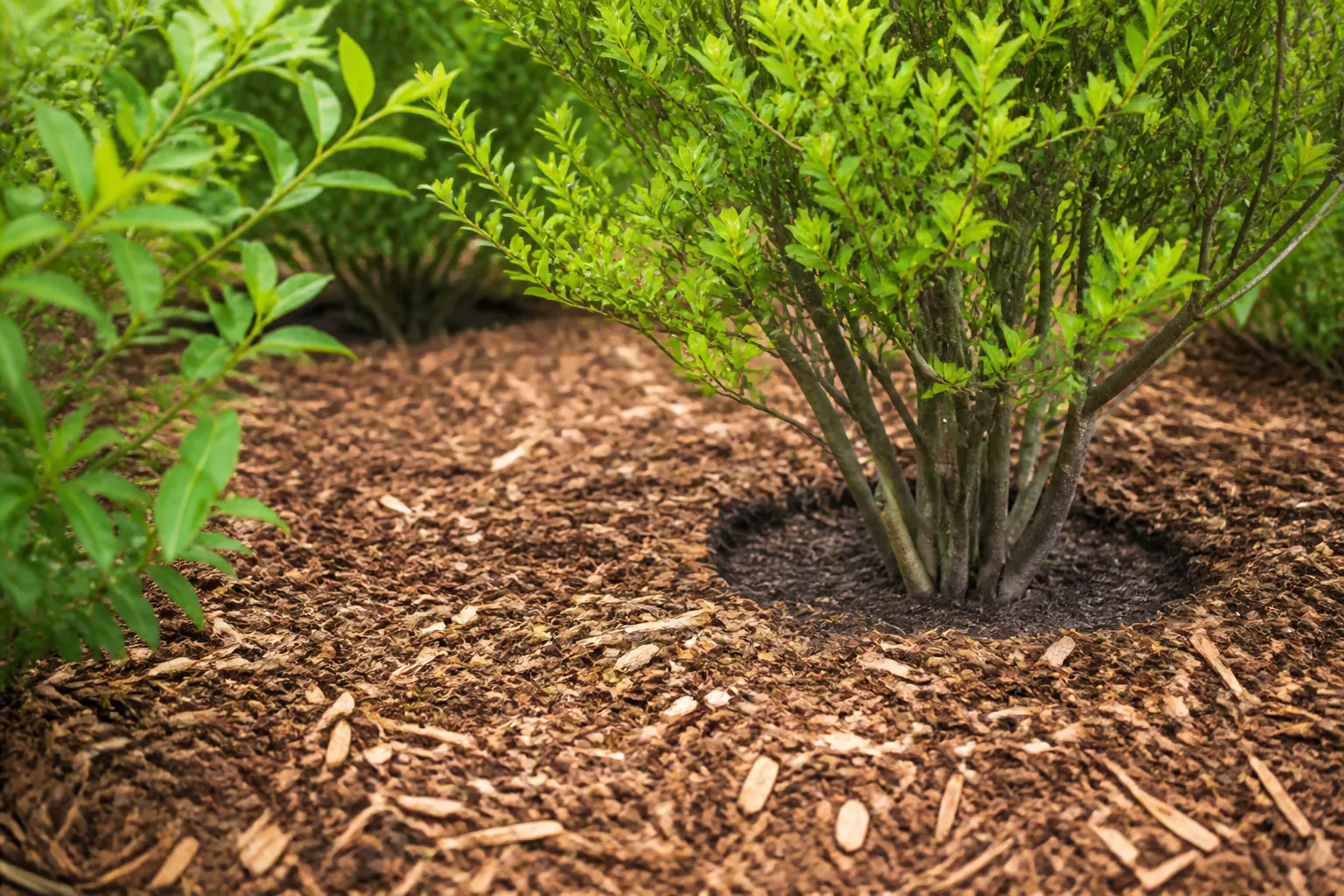
Mulch does not replace watering, but it changes how long water remains available. A suitable layer over bare soil reduces direct evaporation, moderates temperature swings, and slows the drying that follows a shallow rain or quick irrigation. Keep mulch away from direct contact with trunks and soft stems so the crown stays dry and airy.
Temporary shade is a rescue tool, not a permanent substitute for matching a plant to its site. A shade cloth, patio umbrella, or move to a bright sheltered spot can lower the immediate heat load on a container while the root zone recovers. Do not place a sun-loving plant in deep shade for weeks just because one hot afternoon caused stress.
Soil structure matters, too. Compacted soil may shed water across the surface, while very light or organic-poor soil may dry quickly. Add compost or another appropriate soil amendment over time, protect the surface with mulch, and water slowly enough for the soil to accept each application. These changes make correct timing less important because more of the water stays where roots can reach it.
Common full-sun watering mistakes
The most common mistake is waiting too long because a preferred watering window became a rule. If a plant is dry and wilting, rescue it first; then improve the schedule so the emergency does not repeat. A close second is watering every drooping plant without checking the soil, which can suffocate roots and hide drainage problems.
Another mistake is applying a tiny amount every day. A surface sprinkle may make leaves look fresher for an hour while encouraging shallow roots and leaving the deeper root zone dry. Water thoroughly when needed, let excess drain, and change the interval according to weather, soil, plant stage, and container size.
Do not assume evening is automatically safer than afternoon. Evening root-zone watering can be efficient, but overhead watering that leaves dense foliage wet all night is a poor choice in a humid garden or a plant already prone to leaf disease. If morning is impossible, water at the soil line in the evening; if the plant is dry at noon, water at noon with the same root-zone technique.
Avoid using a fixed “10 a.m. to 4 p.m.” prohibition as if every garden shares the same climate. A breezy, dry rooftop and a shaded clay bed have different losses. Instead, check how quickly the soil accepts water, how much reaches the roots, and whether the plant recovers after the root zone is rehydrated.
Finally, do not confuse wet leaves with a watered plant. A plant can have dripping foliage and a dry root ball, especially after a brief sprinkler cycle. Aim at the soil, inspect below the surface, and use a soaker or drip line where repeated overhead watering is wasting water.
Conclusion
Yes, you can water plants in full sun. The right question is not “What time is it?” but “Is the root zone dry, and can I deliver water to it without creating a new problem?”
Use early morning as the default for routine hand or overhead watering because it reduces evaporation and gives foliage time to dry. Use evening when needed with soil-level delivery. Use midday when a plant is truly dry, newly planted, rapidly losing water, or already wilting—and make that rescue count with a slow soak at the base, a quick infiltration check, and temporary shade for exposed containers.
Once you match timing to the irrigation method and the plant’s actual condition, full sun stops being a watering taboo. It becomes one factor in a simple decision: water deeply enough to reach the roots, keep the canopy as dry as practical, and let the soil—not the clock—tell you when to do it.



