Talking to Plants: What Current Research Actually Shows
Learn what the RHS tomato trial and plant-sound research can—and cannot—prove, plus a simple way to test the idea while giving plants the care they need.
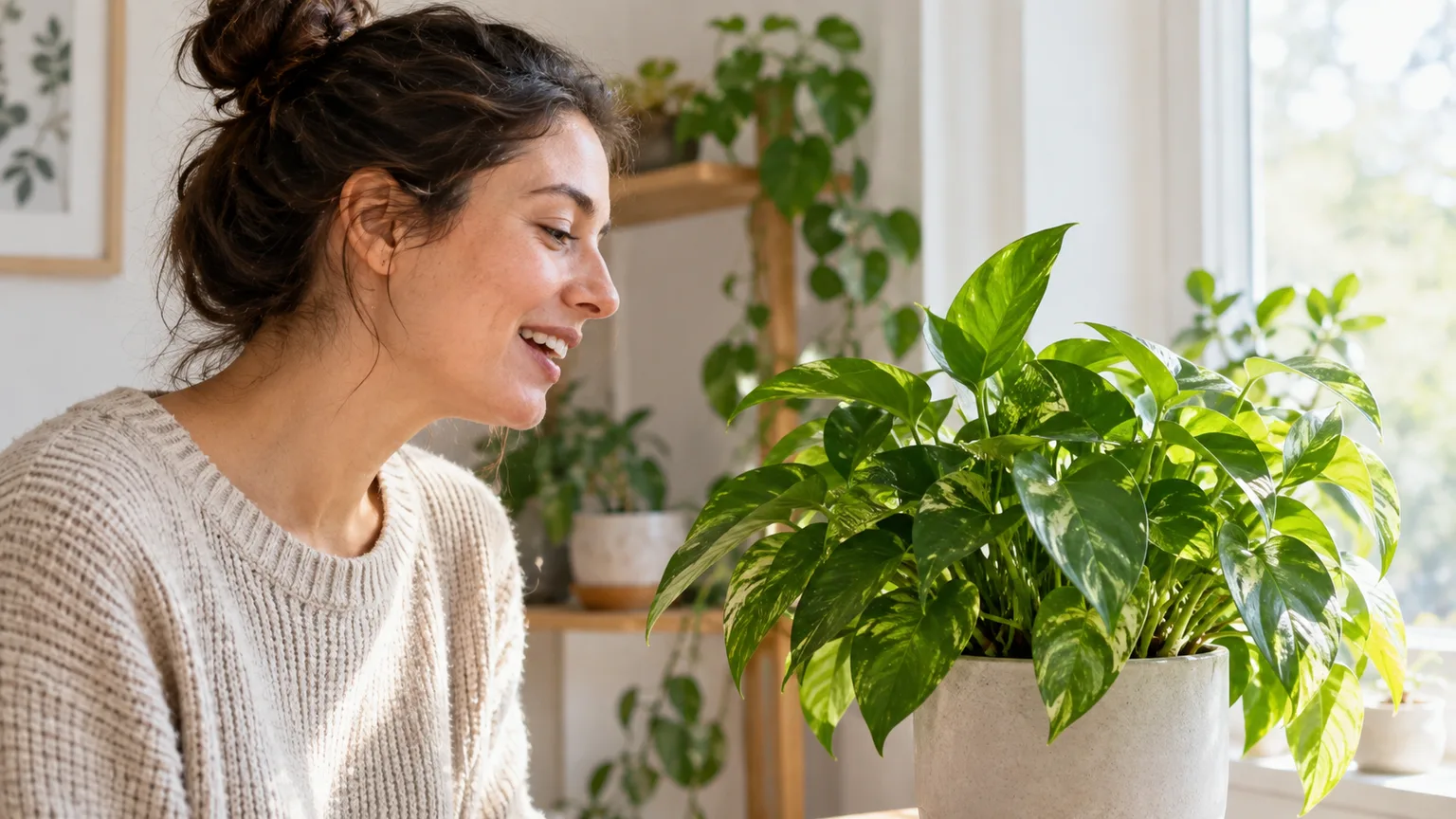
You can talk to a plant if you enjoy it, but current evidence does not show that an everyday conversation reliably makes a houseplant grow faster. Researchers have found that plants can respond to some physical vibrations; that is different from showing that they understand words, recognize a speaker, or grow because a person is being kind.
The most useful answer is practical: let talking be part of a care routine, not a substitute for one. If conversation brings you to the windowsill often enough to notice dry soil, a new pest, or a plant leaning away from the light, that attention can help the plant indirectly. If growth is the goal, the conditions around the roots and leaves matter much more than the topic of your conversation.
Is there a direct growth benefit?
There is not enough evidence to promise a measurable growth boost from speaking to a plant in a normal room. A few experiments suggest that sound can produce biological responses under particular conditions, but those studies do not establish a repeatable recipe for faster growth from talking, singing, or playing a playlist.
That distinction is easy to lose because “plants respond to sound” sounds like “plants grow better when I talk to them.” The first statement describes a physical stimulus and a possible plant response; the second claims a predictable outcome from a familiar human habit. To make that leap, researchers would need replicated studies that compare ordinary speech with appropriate controls while holding light, watering, temperature, plant variety, and handling constant.
Talking is still a perfectly reasonable thing to do. It costs nothing, may make plant care feel more enjoyable, and does not need to be justified by a claim that the leaves understand you. Just keep expectations grounded: a plant that perks up after you speak may also have received more light, a drink, or closer attention.
What did the RHS tomato trial actually test?
The Royal Horticultural Society (RHS) ran a month-long demonstration with 10 tomato plants, each assigned one recorded voice played through headphones attached to its pot, plus two plants left in silence as controls. A contemporaneous account of the trial says the treatment plants shared the same growing conditions, while a BBC report on the planned experiment describes the test as a question about recorded voices and growth—not whether tomatoes could interpret a story.
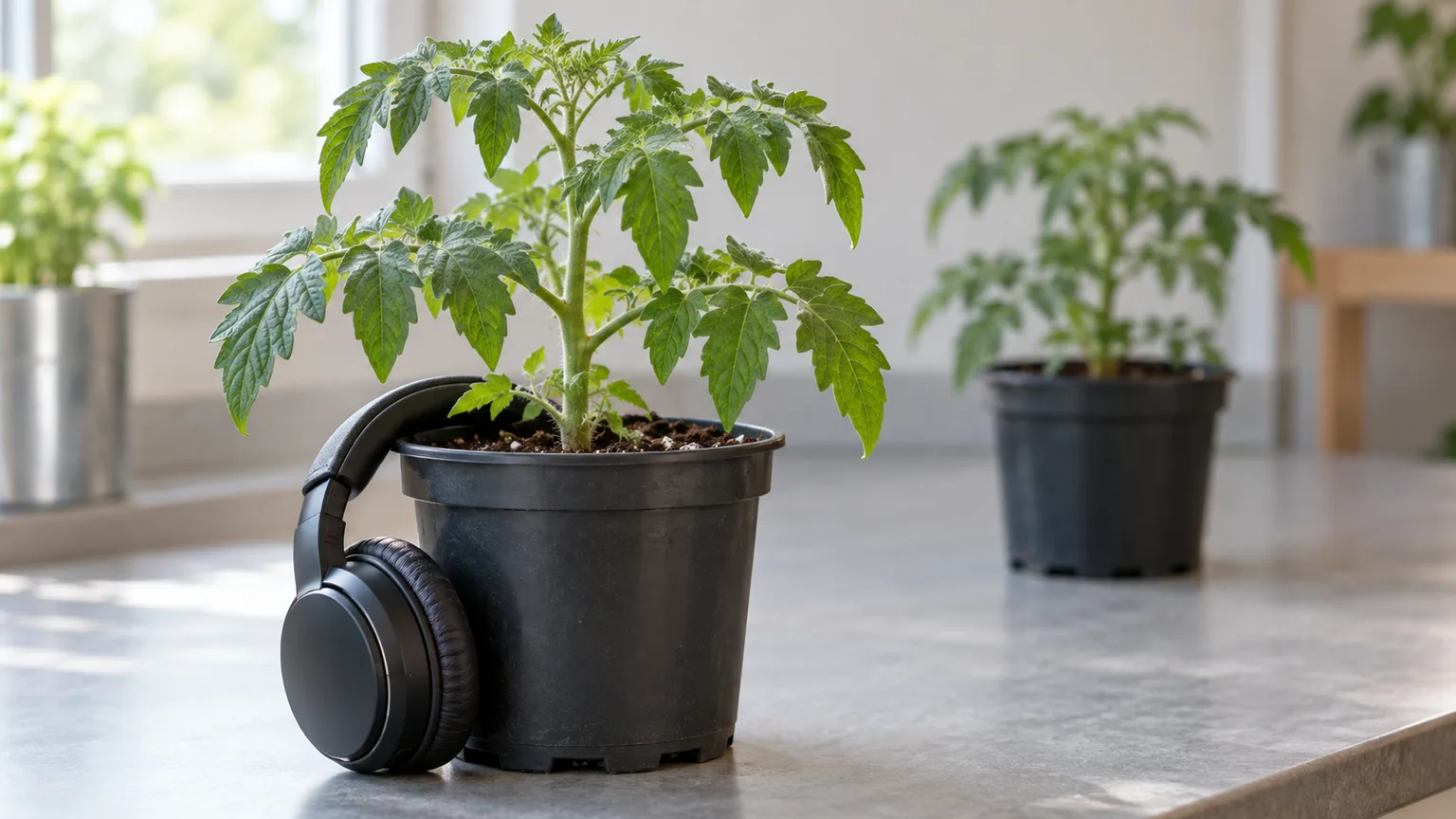
Illustrative sound-study setup, not a photograph of the RHS trial.
Afterward, news coverage reported that plants exposed to recordings of female voices were taller on average than those exposed to male voices. NPR’s report of the results noted that the individual plant exposed to Sarah Darwin’s reading was about two inches taller than the best-performing plant in the male-voice group. That is an interesting result from one small trial, not evidence that every female voice outperforms every male voice or that the plants preferred the words being read.
The design also leaves important questions open. The public reports do not provide a full scientific paper with the raw measurements, statistical analysis, randomized assignment, repeated trials, calibrated sound levels, or enough plants in each group to estimate how much normal plant-to-plant variation mattered. With so few plants, a difference in starting size, position, or individual vigor can look like an effect even when the sound was not the cause.
The recordings also differed in more than one way: each person has a distinct pitch, rhythm, volume, and delivery, and the readings were not all the same text. The trial therefore cannot tell us whether any height difference came from voice frequency, sound intensity, the words, a random difference among plants, or some combination. It is best treated as a small, curiosity-generating horticultural demonstration rather than a care rule.
What plant sound research can tell us
A peer-reviewed review in Frontiers in Plant Science describes experiments in which defined sound waves or vibrations were associated with changes in plant physiology, gene expression, growth, or defense. These experiments used different species and different setups, so the results should not be compressed into one claim that “music makes plants grow.”
Some studies used calibrated tones with specified frequencies, intensity, and exposure periods; those are not equivalent to a person chatting beside a pot while moving around the room. Researchers need to know the actual stimulus before they can compare outcomes. A sound wave is described by features such as frequency and intensity, and a broad musical recording can vary across both from moment to moment.
The review also describes a more ecologically grounded example: when Arabidopsis plants were exposed to recordings of caterpillars chewing, they later showed chemical defenses associated with herbivore attack. The primary study by Heidi Appel and Reginald Cocroft examined leaf vibrations associated with insect chewing, not human speech. It supports the idea that a plant can register some mechanical cues; it does not show that a plant understands a sentence or grows faster when praised.
Plants react to vibration, not ideas
Sound is movement that travels through air or another medium. A voice can make leaves or a pot vibrate slightly, and plant cells can respond to mechanical forces through processes often described as mechanosensing. Scientists are still working out which parts of the plant detect which stimuli and how those signals affect later growth or defense.
This is not the same as human hearing. Plants do not have ears or a nervous system like ours, and researchers have not demonstrated that they decode language, identify a familiar person by voice, or distinguish a compliment from an insult. A physical stimulus may cause a biological response without giving the plant awareness of what the speaker meant.
That distinction also keeps plant science from slipping into anthropomorphism. Saying that a plant “heard a sound” can be convenient shorthand, but it may make a reader imagine an ear, attention, or comprehension that has not been shown. More precise wording is that the plant was exposed to a vibration and some measured response changed.
Laboratory sound is not living-room conversation
A laboratory experiment can specify that plants receive a particular frequency, a measured intensity, and a defined exposure schedule. Researchers can keep light, water, temperature, and soil consistent, then compare the result with plants that were not exposed. That control makes it possible to ask whether a specific sound treatment contributed to a difference.
Ordinary speech is an uncontrolled mixture of tones, pauses, volume changes, room reflections, and distance from the plant. One person may speak softly from across a room; another may lean close to read a page; a speaker or television may be audible all day. Those are not interchangeable treatments, so a result from one setting cannot tell you what to do in another.
Even where a study reports a response, its endpoint matters. A change in a gene’s activity, a short-term defense response, a root’s direction, plant height, biomass, flowering, and fruit yield are different outcomes. A result in one category does not automatically mean a potted plant will look healthier or produce more flowers at home.
Can plants hear a human voice?
Plants do not hear a voice in the animal sense, but they can be exposed to the vibrations a voice creates. A leaf, stem, root, or pot may move in response to some mechanical energy, and that movement can be detected by plant tissues. Whether an ordinary speaking voice creates a strong enough stimulus to cause a useful change in a particular houseplant is not established.
There is also a difference between detecting vibration and locating or interpreting a sound source. A plant changing gene activity after a calibrated tone does not mean it recognizes who made the sound. Research on plant sound responses is still developing, and the mechanisms described in scientific reviews remain incomplete rather than settled into a household care technique.
So the accurate short version is: plants may respond to some physical sound stimuli, but “plants hear me talking” overstates what the evidence shows. If you speak while watering or checking leaves, the clear benefit is that you are present and attentive; the plant’s ability to understand your words has not been demonstrated.
Do female voices make plants grow faster?
The RHS demonstration reported a taller average for the plants exposed to recordings of female voices, but it did not establish a general preference for women’s voices. A result from a small group of plants can be affected by the exact pitch, loudness, reading style, and placement of the recordings, as well as by ordinary differences among individual plants.
Gender is not a sound treatment that can be isolated by listening to a few different people. To test pitch, researchers would need to compare voices or recorded tones that differ in a controlled way while keeping intensity and timing consistent. To test whether a specific voice has an effect, they would need repeated trials with enough plants to separate a real pattern from chance.
The reported result is a reason to ask a better research question, not a reason to change who talks to a tomato. There is no established best voice, accent, or speaking style for houseplants. Choose the voice you like hearing in your own home and spend your plant-care effort on conditions you can actually control.
Do plants like compliments, insults, or music?
There is no credible evidence that plants understand the meaning or emotional tone of words. If recordings of praise and insults differ in sound, a plant could be exposed to different acoustics, but that would not show that it reacted to kindness or negativity as a human listener would. A meaningful test would have to separate the sound pattern from the words themselves.
Music studies do not provide a simple playlist recommendation either. The peer-reviewed literature includes varied tones and recordings, and the sound-study review notes that earlier experiments often used inconsistent music styles and did not standardize frequency or intensity. A response under a controlled treatment is not proof that classical music, a particular artist, or a daily playlist improves every plant.
If you already play music in the room, there is no need to turn it off for a healthy plant. There is also no reason to purchase headphones or speakers for a pot, or to play sound loudly in pursuit of growth. Keep the room comfortable for people and pets, and do not let an audio experiment distract you from watering appropriately or giving the plant enough light.
Use conversation as a plant-care cue
A conversation can be useful because it creates a repeatable moment to look at the plant. Instead of asking whether the plant seems to “like” you, ask what changed since the last time you checked: Is a new leaf opening? Is the stem leaning? Does the soil still feel wet? Are there spots or webbing on the undersides of leaves?
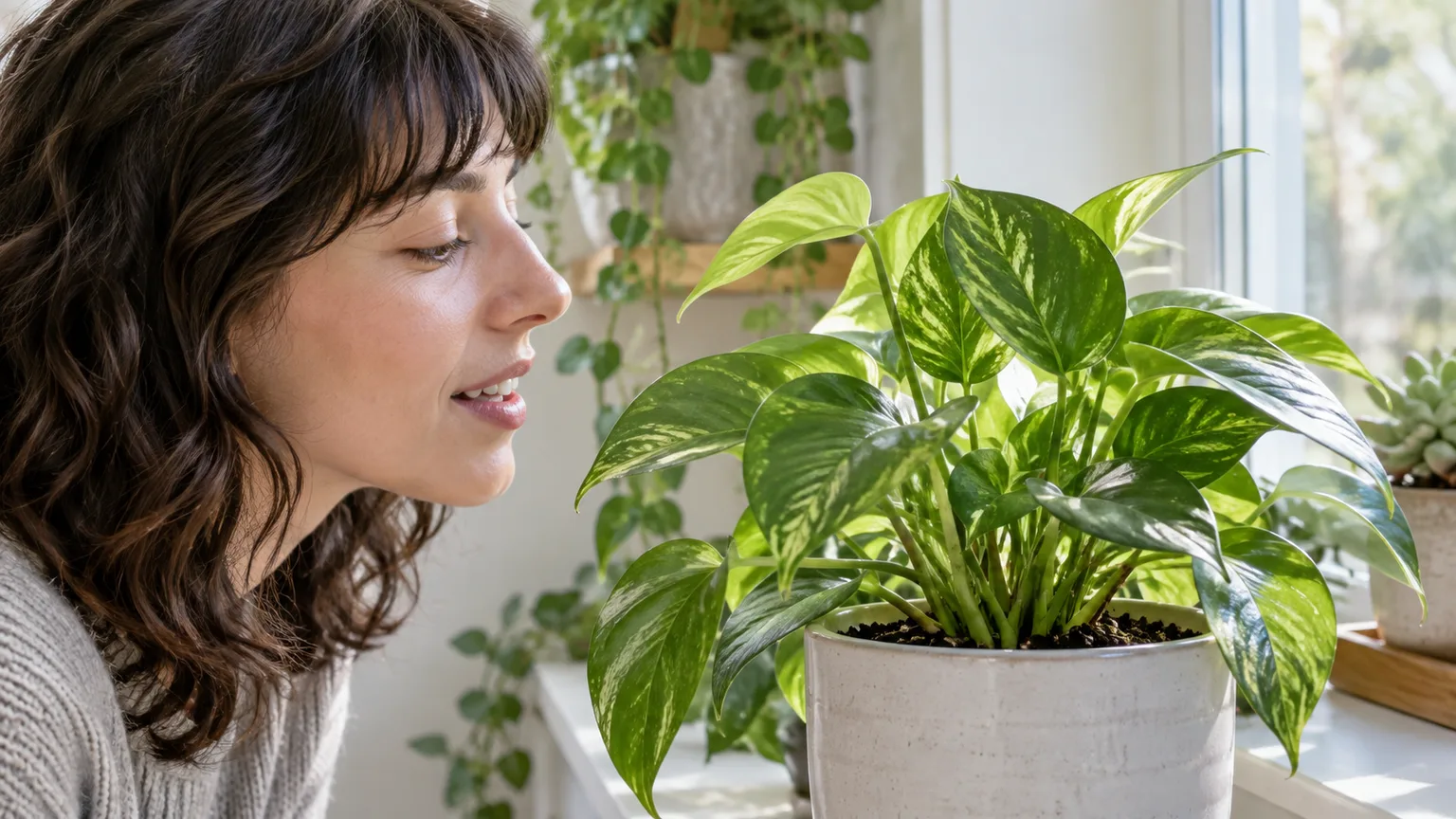
This is a human-side benefit rather than proof that speech speeds growth. A grower who notices a problem earlier can correct a care issue sooner, while a grower who talks to a plant but never checks the soil may still overwater it. Make the routine short enough to repeat and let observations—not mood or sound—guide the next action.
Turn the chat into a quick plant check
Pick a time you already pass the plant, such as when you open the curtains or make coffee. Take a few seconds to look at the newest growth and scan both sides of accessible leaves, then check the soil or pot weight before deciding whether water is needed. Do not water automatically just because you stopped to talk; the plant’s needs depend on its species, pot, mix, light, and recent conditions.
A simple note can help you catch slow changes that are hard to remember. Record the date, whether the soil was dry or moist, the number of new leaves, and any visible issue, such as yellowing or pests. If the plant changes after a week, those notes can help you connect the change to a real condition rather than assuming it reacted to a phrase.
When you notice a problem, make one measured correction at a time. Moving a plant, increasing watering, adding fertilizer, and switching to a grow light all at once makes it difficult to tell which change helped. A calm conversation can mark the start of the check, but your notes and the plant’s actual conditions should determine the care response.
Keep sound comfortable and ordinary
Normal conversation in a lived-in room is a reasonable choice if you enjoy it, but no evidence-backed duration or volume has been established for household growth. You do not need to place your mouth beside a leaf, keep a speaker running all day, or repeat a phrase a set number of times. If you want to include sound in an experiment, define the routine because it helps you compare plants—not because a proven dose exists.
Avoid turning “sound affects plants” into a reason to blast music at them. Studies using measured, controlled stimuli do not establish that prolonged or high-volume sound is safe or helpful for every species and setup. Ordinary, comfortable room sound is enough for a casual habit, and silence is also fine.
How to test the idea at home without fooling yourself
A home comparison can help you observe what happens in your own conditions, but one plant next to a speaker is not a reliable experiment. If you change a plant’s location, water it more often, or spend extra time checking it because it is in the “talking” group, you will not know whether any difference came from sound or care. Decide what you want to test before you begin.
For a small informal trial, compare similar plants of the same species and cultivar, with roughly similar starting size and health. Use more than one plant in each group if you can, and assign plants to groups by chance rather than picking your favorite for the treatment. A few plants cannot settle the question scientifically, but they are less misleading than a single pair.
Set up comparable plants
Place the plants where they receive similar light and temperature, and use the same pot type, potting mix, and watering approach. Keep sound exposure consistent: for example, use the same short recorded voice clip at the same distance and time each day for one group, while the comparison group receives no added recording. Do not change the clip or add music midway through the trial.
Give both groups equal human attention. If you inspect or photograph the sound-exposed plants more often, do the same with the comparison plants so that extra handling and faster problem detection do not become hidden variables. Keep ordinary household sounds similar around both groups; the goal is to compare one chosen sound routine, not create a perfect laboratory in a living room.
Measure growth and keep care consistent
Before starting, choose a small number of measurements you can repeat the same way. Measure height from the soil line to the growing tip, count new leaves, or take a photo from the same distance beside a ruler once a week. Write down watering dates and note unusual events such as a heat wave, a move, or a pest outbreak.
Look for a pattern across several plants and several weeks, not one impressive leaf or a single tallest stem. If a group appears taller but has fewer leaves or weaker stems, height alone may not mean better overall growth. At the end, describe what happened as an observation from your setup—not proof that talking works for all plants.
If you want a stronger personal test, repeat the comparison with a fresh set of similar plants or reverse which side of the room gets the recording. Repetition makes it less likely that one unusually vigorous plant or one brighter windowsill explains the whole result. A small home experiment can be satisfying, but it cannot substitute for controlled, replicated research.
What actually speeds plant growth?
If a plant is growing slowly, look first for the factor that is limiting it. Growth depends on the plant’s species and life stage, but common constraints include too little usable light, roots kept constantly wet or allowed to dry too far, poor drainage, a temperature mismatch, or a lack of nutrients during active growth. A Royal Horticultural Society guide to how plants use light explains why light supplies the energy plants use for photosynthesis; conversation does not replace that energy.
Water is another condition to manage rather than maximize. Roots need both moisture and oxygen, so a pot that stays saturated can slow growth even if the leaves look thirsty. The RHS explains how plants absorb water, while practical care guides from established gardening editors such as BBC Gardeners’ World also emphasize matching care to a plant’s needs rather than following a universal schedule.
Fertilizer is useful only when the plant can use it and the product suits the plant and growing season. Extra feeding will not compensate for dark conditions or damaged roots, and concentrated fertilizer can create new problems. Before changing anything, identify the plant, check the light it actually receives, and assess moisture and drainage; then change one limiting factor and give the plant time to respond.
Fix the limiting factor first
Start with the simplest diagnosis: compare the plant’s current position with the light it needs, then check whether the pot drains and the mix dries at a reasonable pace for that species. A plant leaning toward a window may need better placement; a pot that remains wet for many days may need a change in watering frequency or root inspection, not a playlist. If there are no obvious problems, allow for normal growth cycles—many plants grow slowly in winter or after flowering.
Make corrections gradually where possible. Sudden changes in sun exposure can scorch leaves, and repotting a plant that does not need it adds stress without solving a light problem. The goal is not to force growth at any cost; it is to remove a real constraint while keeping the plant’s needs and season in view.
Once the basics are right, talking can remain part of the routine simply because it makes you more consistent. Think of the conversation as a reminder to look, measure, and respond thoughtfully. The plant benefits from suitable conditions; the words are for you.
Conclusion
Talking to plants may expose them to vibrations, and scientific research suggests that some sound treatments can trigger measurable responses in particular experiments. The small RHS tomato demonstration and later plant-acoustics research do not prove that ordinary conversation makes houseplants grow faster, that plants understand words, or that one voice is universally better.
Talk if it makes caring for plants more enjoyable, and use the moment to inspect leaves, soil, and new growth. If your goal is a healthier, faster-growing plant, focus on the conditions that support photosynthesis and healthy roots: appropriate light, water, drainage, temperature, and nutrition. Those are the changes you can assess and improve; speech is an optional extra.