26 Flowering Shrubs for Full Sun: Size and Care
Find flowering shrubs for full sun, from early forsythia to late-summer hibiscus, with practical notes on drainage, mature spread, pruning, and pet safety.
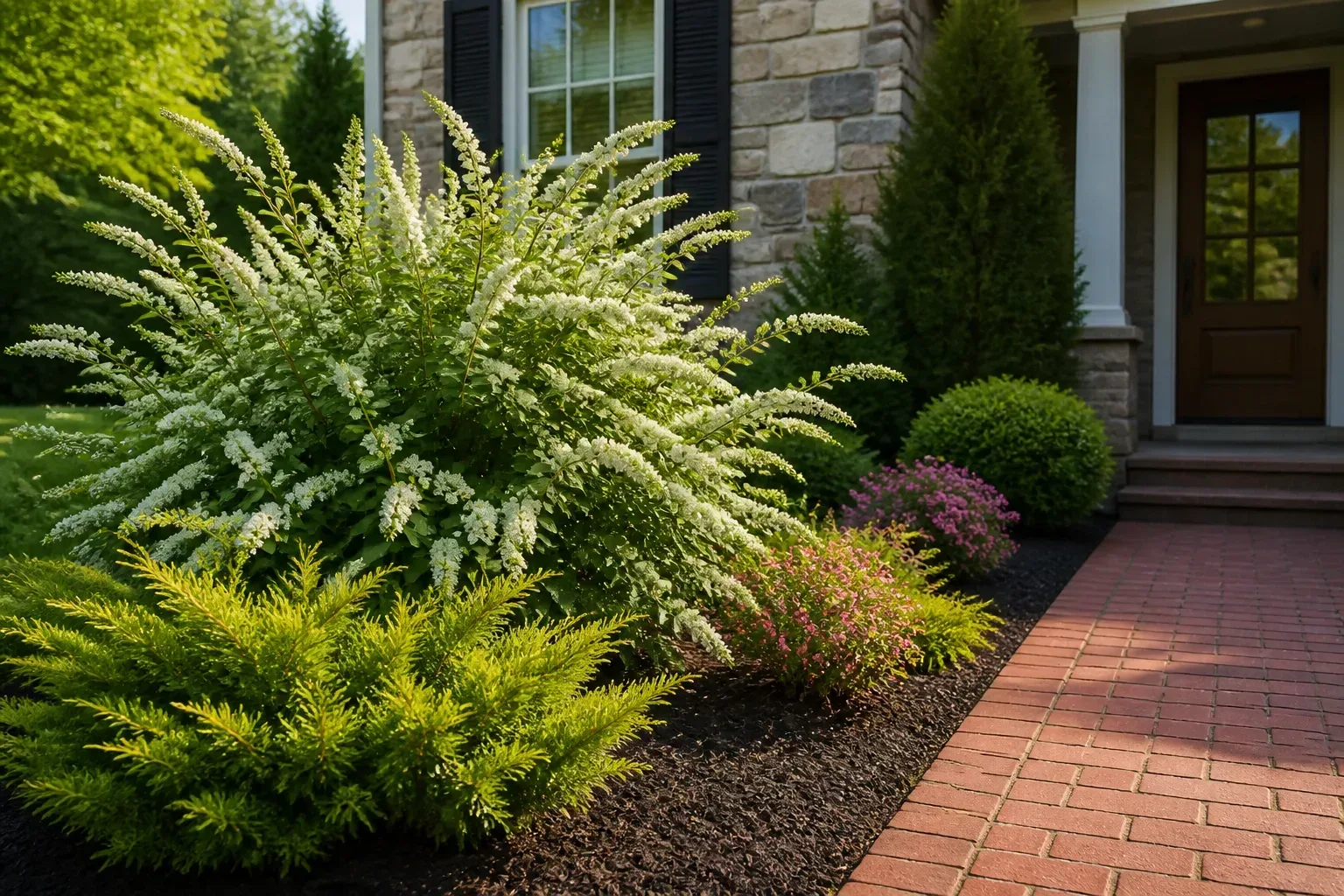
A sunny border can carry flowers from the first warm weeks of spring into fall, but “full sun” does not tell you whether a shrub wants dry soil, summer heat, or room to spread. Choose by matching those conditions first, then use bloom season, fragrance, foliage, and wildlife value to narrow the list. A bloom calendar is more useful than expecting one shrub to flower for months; Fine Gardening’s advice on planning for peak bloom shows why summer color needs to be planned as deliberately as spring flowers.
The 26 shrubs below include true heat-and-drought performers as well as plants that flower in sun only when their roots stay moist. That distinction matters: a summersweet in a sunny rain-garden edge may thrive, while a rockrose in the same soggy soil may decline. Cultivar size also varies sharply, so use the plant tag for the exact selection rather than assuming a species-wide height.
Start with the site, not the flower color
Measure direct sun in the growing season
In horticultural references, full sun generally means at least six hours of direct light. North Carolina State Extension uses that threshold in its plant database, but count the hours during the leafy growing season, when nearby trees cast their largest shadows. A yard that seems bright in March may become part shade after maples leaf out; observe the bed in late spring or summer before buying a plant for a “full-sun” label.
Note when the sun arrives, not just the total. Six hours of morning light with afternoon shade is gentler than the same duration against a west-facing wall that radiates heat. A shrub can receive adequate light yet struggle with hot pavement, wind, salt spray, or dry reflected heat, so treat exposure as more than a number.
Separate winter hardiness from summer heat
USDA hardiness zones describe average annual extreme minimum winter temperatures. They do not show how hot a plant’s summer will be, how long drought lasts, or whether a site has humid nights and heavy soil. A shrub listed for a broad zone range may still perform poorly outside its regional pattern: California lilac is a strong choice in many dry-summer western gardens, while a hot, humid eastern site can be a poor match even if winter temperatures seem suitable.
Use the plant’s exact species and cultivar when checking a hardiness range. The words “dwarf,” “compact,” and “heat tolerant” are not substitutes for a mature-size label or a local recommendation. In extreme heat, light afternoon shade can protect a plant that is otherwise suited to sun, especially where foliage faces a reflective wall.
Match soil moisture and mature spread
Check how quickly water drains after rain and how dry the bed becomes in July. Full-sun flowering shrubs range from rockrose, which needs sharp drainage once established, to summersweet and sweetbay magnolia, which accept persistently moist ground. The Royal Horticultural Society notes that plants adapted to hot, dry conditions often have traits such as silvery, waxy, narrow, or aromatic leaves; that is a useful clue, not a guarantee that every plant with those traits will tolerate your soil.
Measure the planting area against the mature width printed for the cultivar, leaving access for pruning and airflow. Penn State Extension points out that pruning is not a substitute for choosing the right-sized shrub: repeatedly shearing an oversized plant removes its natural form and can shade its interior. If a foundation bed is only five feet deep, choose a compact cultivar that fits without annual cutting back rather than planting a ten-foot shrub and trying to hold it there.
26 flowering shrubs, grouped by bloom season
Early spring: flowers before summer heat
These shrubs start the display while many trees are still bare. Some bloom on old wood, so wait until their flowers fade before shaping them.
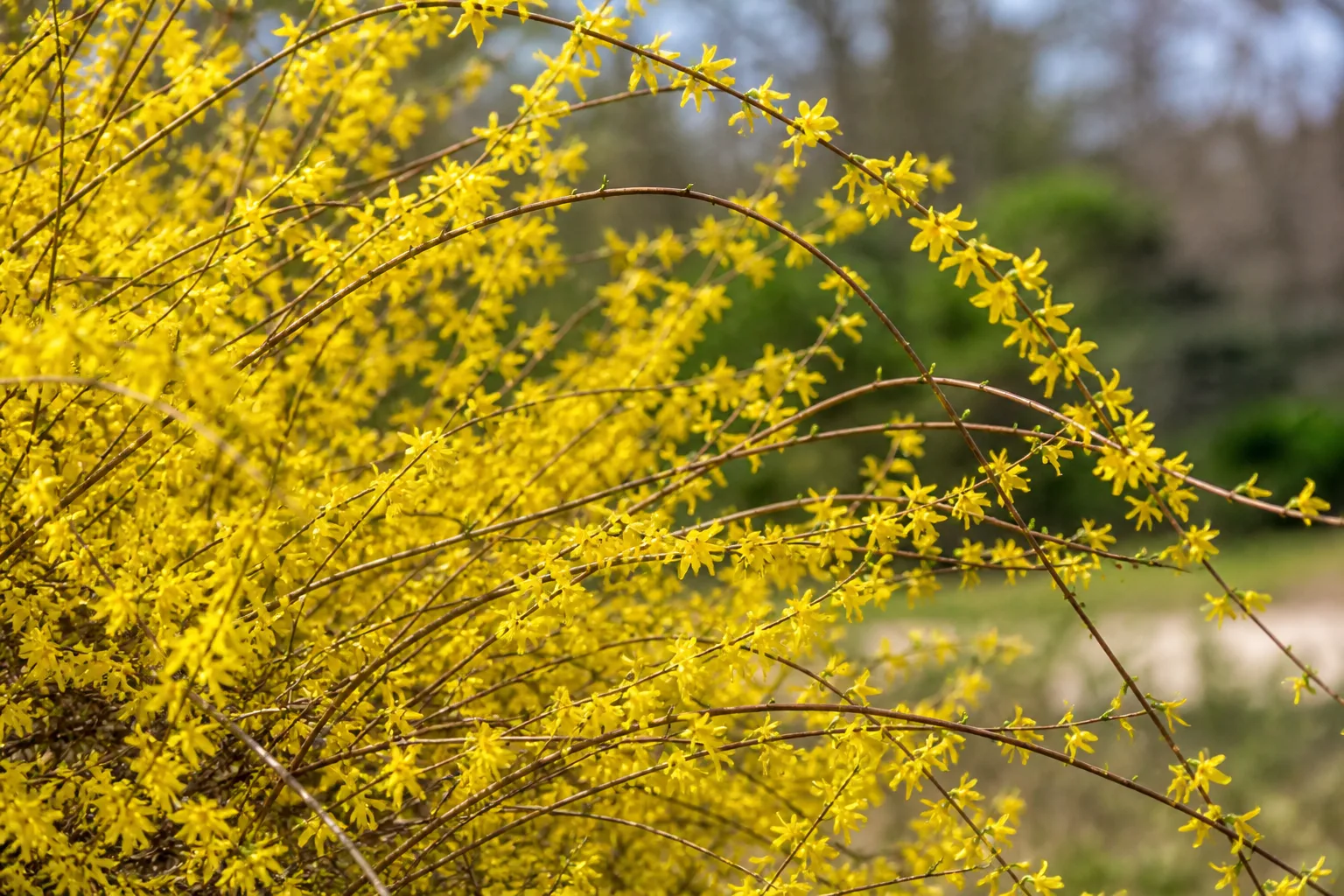
- Forsythia (Forsythia × intermedia) — Arching stems covered in bright yellow flowers make forsythia one of the clearest early-spring signals. It grows quickly and can become a wide, loose shrub; choose a compact cultivar for a small yard, and prune just after flowering rather than shearing it in fall.
- Flowering quince (Chaenomeles speciosa) — Red, orange, pink, or white flowers open very early, often before the shrub leafs out. The thorny branches make it useful as a barrier, but keep it away from narrow paths and play areas; its mature width can be more important than its height.
- Fothergilla (Fothergilla gardenii or F. major) — Fragrant white bottlebrush flowers appear in spring, followed by blue-green foliage and strong autumn color. The dwarf species stays smaller than large fothergilla, but both prefer acidic, well-drained soil that does not dry out completely; North Carolina State Extension describes fothergilla as a southeastern native that supports pollinators and tolerates both moist and dry spells once established.
- Common lilac (Syringa vulgaris) — Lilac earns its place through dense, fragrant spring panicles and a cold-hardy, long-lived habit. It needs a sunny site and a winter cool enough for the cultivar to set buds reliably, and the common form may reach 10 feet or more; do not choose it for a small, warm-winter garden just because its flowers smell wonderful.
- Daphne (Daphne spp.) — Daphne is a group, not one uniform plant: species differ in size, leaf habit, and flowering season. The fragrant winter-to-spring Daphne odora is better protected from scorching afternoon exposure in very hot climates, and North Carolina State Extension warns that it is poisonous to people; place it where children cannot taste berries or foliage, and wear gloves if its sap irritates your skin.
Mid-spring to early summer: fragrance and structure
This group fills the stretch after the earliest flowers. It includes several shrubs that perform well in sun but appreciate moisture or some afternoon protection in hot regions.
- Beautybush (Kolkwitzia amabilis) — Soft-pink bell-shaped flowers cover its fountain-like branches in late spring. It can reach roughly six to ten feet tall and wide, so give it room to arch instead of repeatedly cutting it into a tight ball; renew crowded stems after bloom.
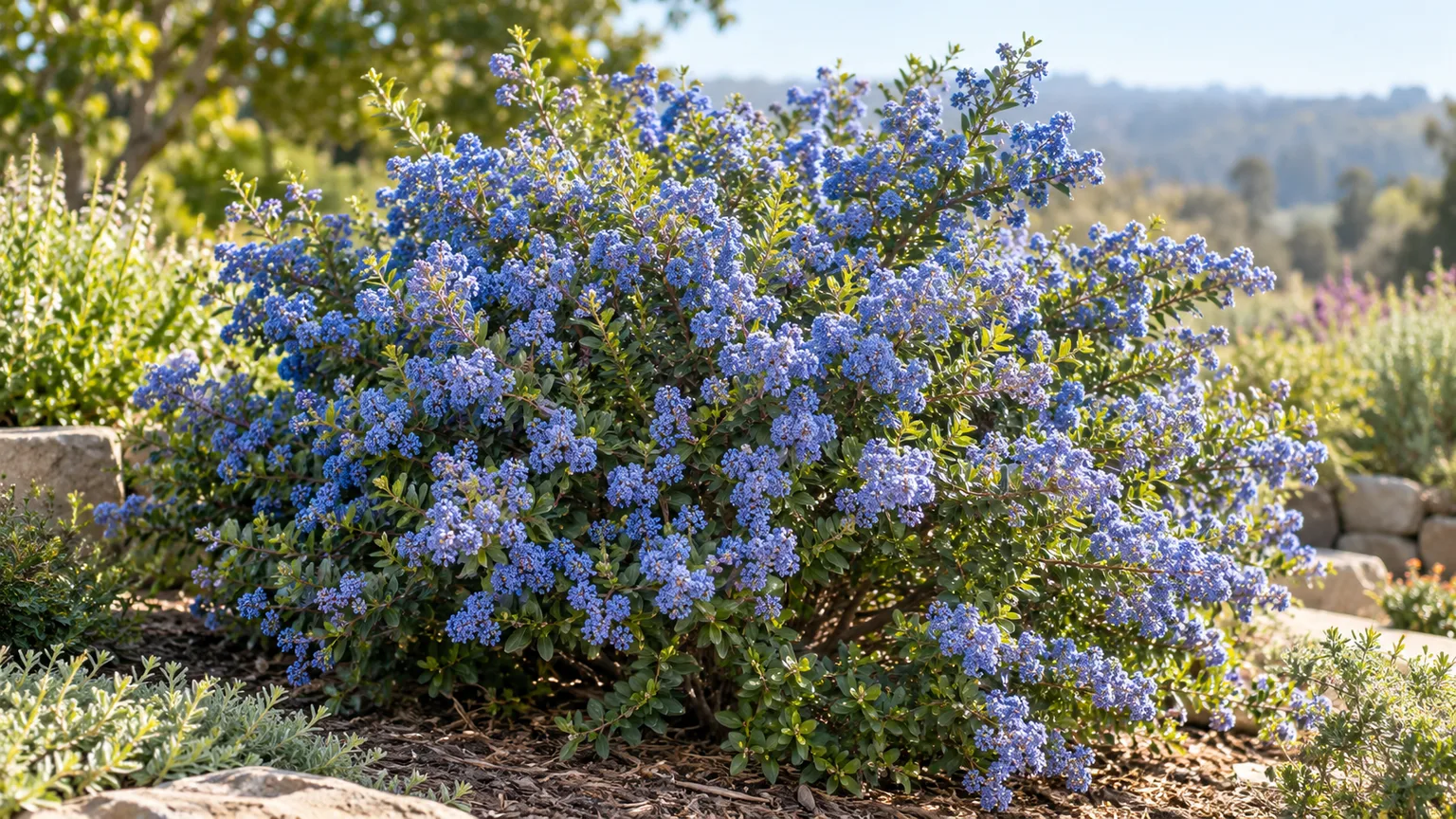
- Blueblossom (Ceanothus thyrsiflorus) — The evergreen California lilac carries dense blue flower clusters in spring and can spill over a wall or slope. It is a better match for regions with dry summers and fast-draining soil than for humid climates with waterlogged clay; local climate fit matters more than the word “drought tolerant.”
- Chinese fringe flower (Loropetalum chinense) — Fringe-like pink or white flowers are paired with foliage that may be burgundy, red, or green, depending on cultivar. Most forms appreciate well-drained soil and a warm climate; mature size ranges widely, so a named dwarf cultivar can make the difference between a foundation accent and a shrub that overtakes the bed.
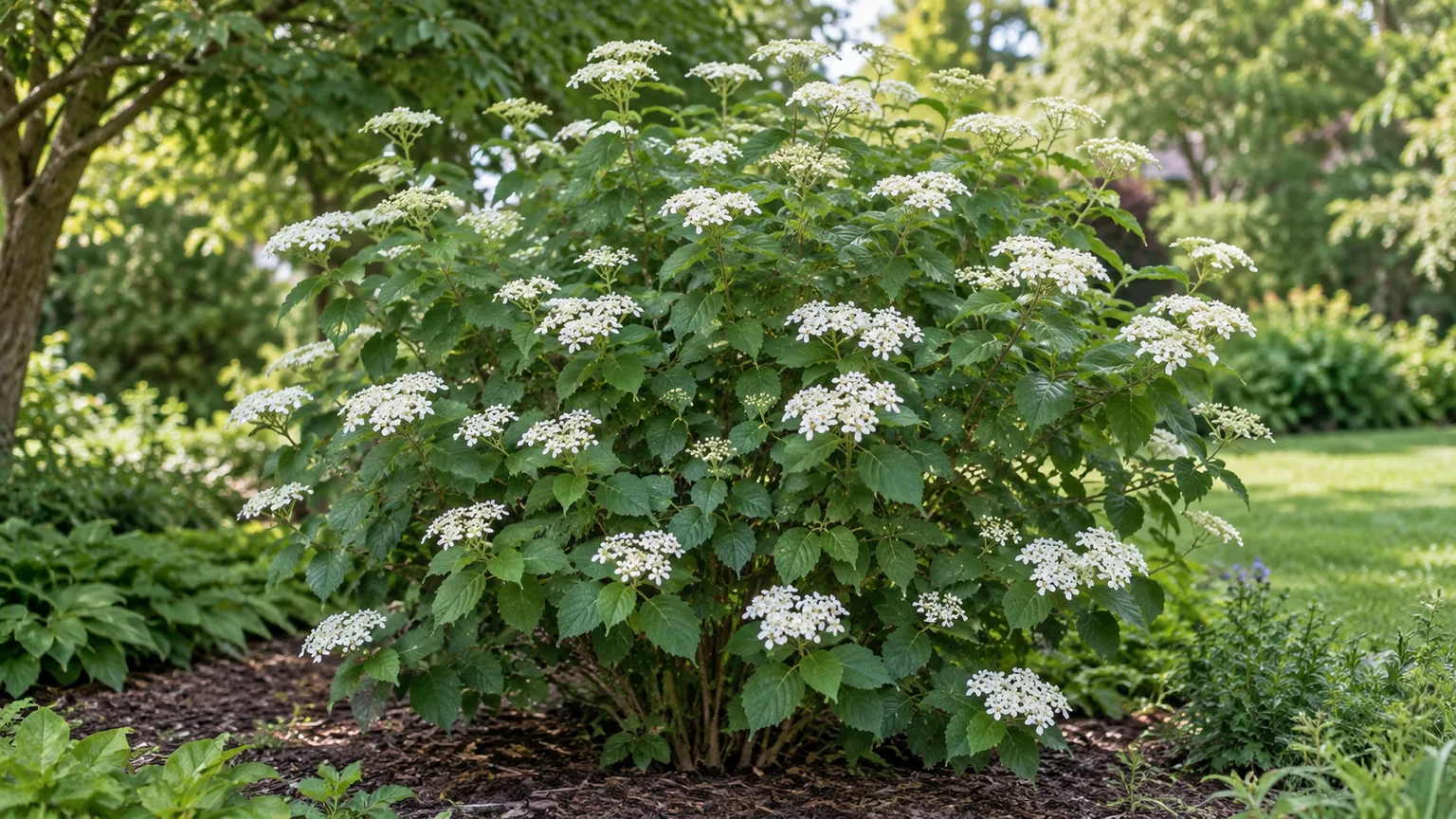
- Doublefile viburnum (Viburnum plicatum f. tomentosum) — Flat white flower clusters sit in layered rows along horizontal branches, with berries and fall color adding later interest. It can become broader than expected, and it flowers best when it has room to develop its natural branching; provide regular moisture during establishment and avoid pruning it into a narrow column.
- Mock orange (Philadelphus spp.) — White flowers with a citrus-like fragrance open in late spring or early summer. Place this shrub near a patio or path where the scent can be enjoyed; Better Homes & Gardens similarly recommends putting flowers and fragrant foliage where people pass close enough to notice them. Look for a compact selection if a classic mock orange’s tall, arching habit will crowd a window or walkway.
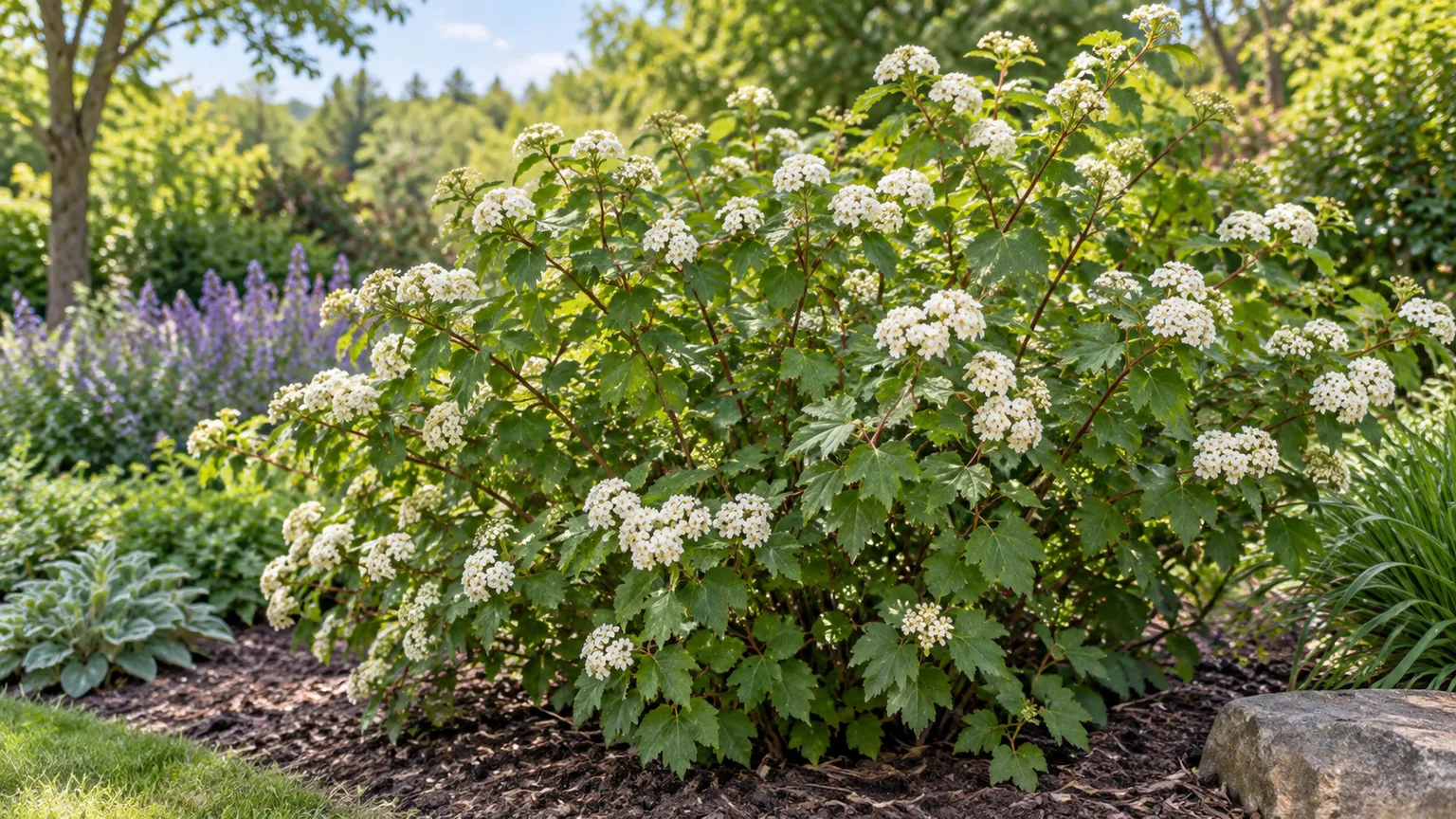
- Ninebark (Physocarpus opulifolius) — This adaptable North American shrub combines spring flower clusters with peeling bark and, in some cultivars, purple or gold foliage. Cultivars vary from compact to large; full sun helps many colored forms hold their foliage, while a too-dry site can stress a newly planted shrub before it is established.
- Weigela (Weigela florida and hybrids) — Pink, red, or white tubular blooms cover many weigelas in late spring, and some cultivars flower again lightly later in the season. Traditional plants may grow quite large, while modern selections can stay under four feet; prune after the main bloom because the following season’s flowers form on older stems.
- Black Lace elderberry (Sambucus nigra ‘Eva’) — Nearly black, finely cut leaves provide contrast even when the pale pink flower clusters are not in bloom. The shrub can reach around six to eight feet and benefits from afternoon shade in very hot parts of its range; use it for ornamental foliage and flowers, and do not assume that berries from an ornamental cultivar are ready to eat.
Summer to fall: color that carries the garden
Late flowers are valuable after spring shrubs finish, but the plants below vary sharply in water needs and regional suitability. “Blooms all summer” should never outweigh whether the shrub can live through your winter or soil conditions.
- Abelia (Abelia spp.) — Small tubular flowers can appear over a long stretch from late spring into fall, while glossy foliage often turns bronze or burgundy as weather changes. Compact cultivars make useful low hedges or foundation plants; larger forms arch broadly, and the shrub’s long bloom season makes it a practical choice when one short flush is not enough.
- Bluebeard (Caryopteris × clandonensis) — Blue flower clusters arrive in late summer, when many spring shrubs are finished and pollinators still need forage. This compact, woody shrub flowers on new growth; in colder regions stems may die back, so prune in early spring and let the plant regrow rather than treating winter dieback as failure.
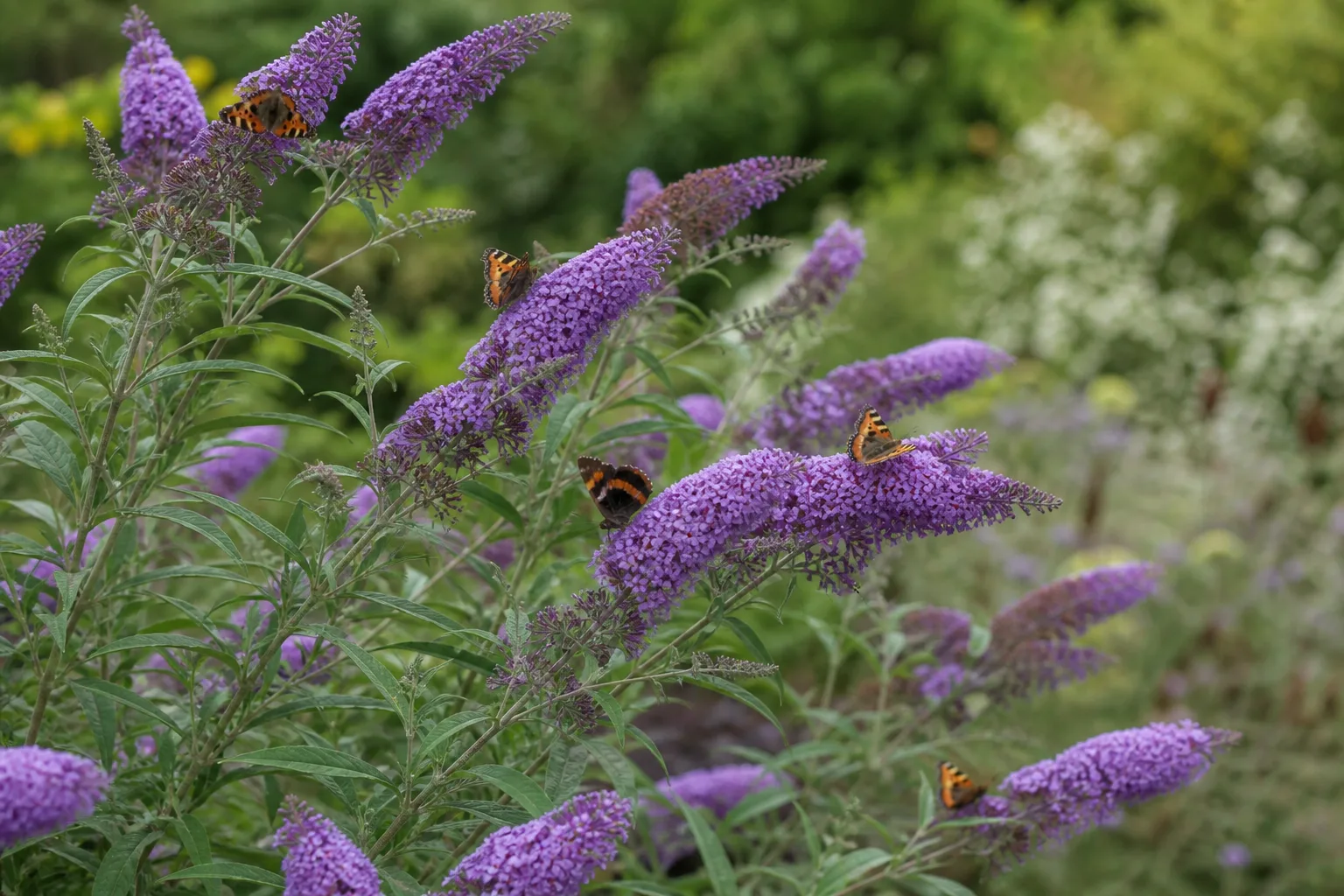
- Butterfly bush (Buddleja spp., including compact cultivars) — Long flower spikes can draw adult butterflies through summer, but the familiar species B. davidii self-seeds and is invasive in some regions. North Carolina State Extension also explains that adult nectar does not make it a host plant for native caterpillars; check your local invasive-plant list and select a verified low-seed cultivar or a native alternative rather than relying on a generic “butterfly friendly” label.
- Landscape rose, including ‘Candy Oh!’ (Rosa hybrids) — Shrub roses can repeat bloom through summer and fall with less shaping than many hybrid teas. ‘Candy Oh!’ is valued for abundant pink-red flowers and a compact, roughly three-to-four-foot form, but it is not chosen for fragrance; give roses sun, airflow, and room to avoid a crowded, disease-prone hedge.
- Cotton rose (Hibiscus mutabilis) — Large flowers may open pale and deepen toward pink or red as they age, so one shrub can show several colors at once. It grows into a substantial, often tree-like shrub in warm climates and may die back after a hard freeze; confirm winter hardiness before giving it permanent space.
- Hardy hibiscus (Hibiscus moscheutos) — Dinner-plate flowers make this a strong late-summer focal point in a sunny rain garden or consistently moist bed. It is a herbaceous perennial that dies back in winter rather than a woody evergreen, and it needs more dependable moisture than drought-tolerant shrubs such as rockrose.
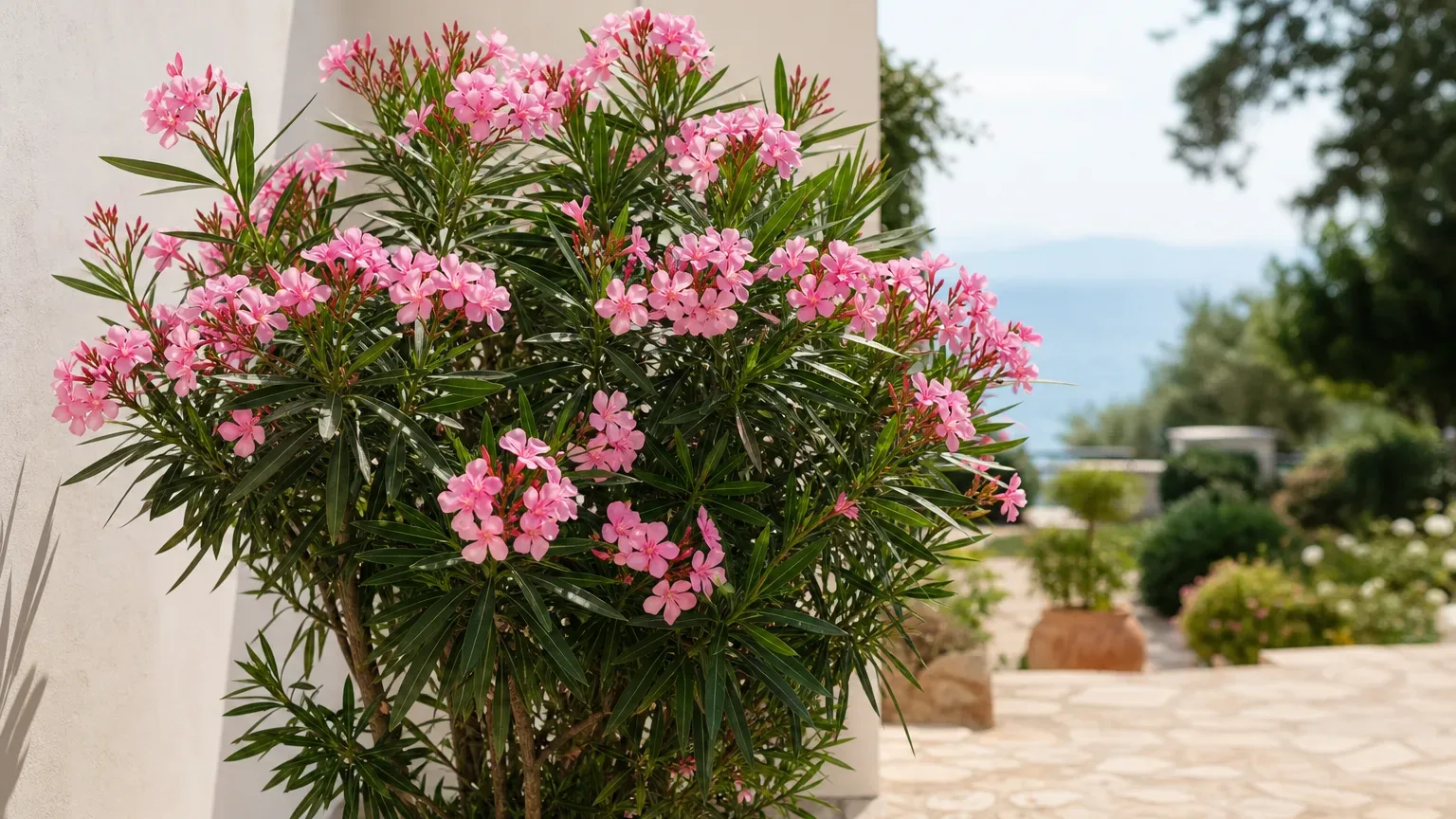
- Oleander (Nerium oleander) — In warm climates, oleander offers evergreen leaves and flowers over a long season, and established plants tolerate heat and dry conditions. It is highly toxic: the ASPCA lists oleander as toxic to dogs, cats, and horses, so skip it where pets or children may chew leaves, stems, or flowers; do not treat it as a harmless low-maintenance choice.
- Rockrose (Cistus spp.) — Papery white, pink, or yellow flowers open above evergreen foliage in summer, often in hot, dry gardens where moisture-loving shrubs struggle. Individual flowers are brief, but successive buds extend the display; plant it in sharply drained soil and do not try to rescue it with frequent irrigation if its roots remain wet.
- Rose of Sharon (Hibiscus syriacus) — This upright shrub produces hibiscus-like flowers from summer into fall, when many gardens need fresh color. Standard plants can grow eight feet or taller, but compact cultivars suit smaller spaces; check whether the selection sets seed freely if seedlings would be a problem in your region.
- Summersweet (Clethra alnifolia) — Fragrant white or pink flower spikes bloom in mid-to-late summer and attract bees and butterflies. Unlike the name suggests, it is not a dry-site shrub: it performs best with consistent moisture and can suit a sunny rain-garden edge where other flowering shrubs would dry out.
- Sweetbay magnolia (Magnolia virginiana) — Creamy white flowers with a lemon-like fragrance appear in late spring or early summer, followed by attractive foliage and seed cones. It can be evergreen in warmer parts of its range and deciduous farther north, but its mature size varies from a large shrub to a small tree; give it moist, acidic soil and more space than a foundation bed usually allows.
- Tea olive (Osmanthus fragrans) — Tiny flowers may be easy to miss, but their fragrance can carry through a garden in fall and sometimes spring. In warm climates this evergreen can become a large shrub or small tree, so plant it beside a path or entry where scent is useful without placing it in a tight corner.
- Virginia sweetspire (Itea virginica) — Arching white flower tassels bloom in late spring and early summer, with red-orange fall foliage extending its season of interest. It tolerates moist soil better than many sunny shrubs and can spread by suckers; use it where a colony is welcome or plan to remove unwanted shoots.
Match a shrub to the job in your yard
Small gardens and foundation beds
Start by measuring the bed from the wall to the front edge, then compare that depth with the mature width of the cultivar. Compact abelia, dwarf fothergilla, selected weigelas, dwarf butterfly-bush cultivars where locally appropriate, and compact roses can fit where a standard lilac, mock orange, sweetbay magnolia, or tea olive cannot. The label should show the cultivar name; “dwarf” alone does not tell you whether a shrub will stay two feet tall or six.
For year-round structure, combine one evergreen form with a deciduous shrub that supplies the main bloom. Chinese fringe flower or abelia can anchor the bed in warmer regions, while weigela or a compact rose provides seasonal color. Keep enough clearance for mature branches, gutters, windows, and paths; planting closer to the wall does not reliably keep a large shrub smaller.
Dry, hot, reflected-sun sites
For fast-draining ground and a hot summer, consider rockrose or a regionally suitable California lilac. In a climate with cold winters, bluebeard or a hardy shrub rose may be a more dependable choice; in warm climates, oleander can tolerate intense sun but its toxicity rules it out for many households. Do not group all “sun plants” together and give them identical irrigation: a drought-adapted shrub and a newly planted rose have different root-zone needs.
Against paving or a south- or west-facing wall, choose plants that handle heat and leave space for air movement. Add organic matter only when it suits the soil and species; adding compost to improve every site can hold too much moisture around plants that need sharp drainage. The RHS recommends matching plants and soil preparation to the conditions rather than trying to make every hot site behave like a cool, moist border.
Damp soil and pollinator plantings
If the sunny bed stays damp after rain, choose summersweet, sweetbay magnolia, Virginia sweetspire, or hardy hibiscus rather than rockrose or ceanothus. These moisture-tolerant options help turn a difficult area into a deliberate planting, but they still need the right drainage and room for the root system; “tolerates wet soil” does not mean a plant can live with standing water at its crown year-round.
For pollinators, use a succession of blooms and include native shrubs that feed local insects, such as fothergilla, ninebark, elderberry, or Virginia sweetspire where they are locally native. A nectar-rich exotic shrub can feed adult butterflies yet fail to feed their caterpillars; North Carolina State Extension’s butterfly-bush profile explains why host plants matter and lists regional concerns for Buddleja davidii. Build a mixed planting, not a single-species butterfly patch.
Planting and care that protect flowering
Establish roots with water and mulch
Plant in a mild period when the root ball can be kept evenly moist, usually spring or fall depending on local weather and the shrub’s cold sensitivity. Set the root flare at soil level, backfill with the native soil unless a soil test calls for a specific amendment, and water slowly enough to wet the full root ball and the surrounding soil. For the first growing season, check moisture under the mulch before watering; a calendar alone cannot account for rainfall, soil texture, or a heat wave.
Spread a two-to-three-inch mulch layer over the root zone while keeping it a few inches clear of stems. Mulch reduces evaporation and weeds, but a thick pile against bark traps moisture and can damage the crown. Once established, water according to the plant’s needs: drought-adapted shrubs should not be kept constantly wet, while summersweet and hardy hibiscus may need supplemental water during dry spells.
Avoid automatic high-nitrogen feeding. Excess nitrogen can push leafy growth at the expense of flowers, and established shrubs in ordinary garden soil often do not need routine fertilizer. If growth is weak or leaves show a nutrient problem, test the soil and follow a locally appropriate recommendation rather than guessing from the flower count.
Prune according to when the shrub blooms
The simplest rule is to prune spring-flowering shrubs soon after their flowers fade, because many form next year’s buds on older wood. Penn State Extension’s pruning guidance lists forsythia, lilac, fothergilla, mock orange, weigela, viburnum, and quince among the spring bloomers that can lose next year’s display if pruned too early. Remove dead, broken, or crossing stems first, then thin a few of the oldest branches instead of shearing the whole plant into a dense shell.
Many summer- and fall-flowering shrubs bloom on new growth and can be pruned in late winter or very early spring before new shoots lengthen. Bluebeard and butterfly bush are examples, but a specific cultivar’s label and local climate should guide how hard to cut them. If you do not know the shrub, wait until after its flowering and identify it before making a major renovation cut.
Diagnose a shrub that will not flower
Start with the last pruning date and the plant’s actual sun exposure. If a shrub blooms on old wood and was cut back in winter, it may have lost its flower buds; if an overhanging tree now shades it, the same shrub may have gradually stopped flowering even though it once thrived in that location. A transplant may also spend a season establishing roots before it produces its typical display.
Then check for stress: soil that stays saturated, a root ball that dries between waterings, excessive fertilizer, winter injury, or a cultivar unsuited to the local climate. Correct one likely cause at a time and allow a growing season to respond before adding fertilizer or cutting the shrub harder. If the plant is healthy but simply too large, replacing it with a cultivar sized for the bed is often more successful than repeated severe pruning.
Conclusion
The best flowering shrub for full sun is the one that fits the site after the novelty of its blooms passes. Use direct-light hours as a starting point, then check summer heat, soil moisture, winter hardiness, and the shrub’s mature spread; a mismatch in any of those can erase the benefits of a long bloom season.
For early color, compare forsythia, flowering quince, lilac, or fothergilla. For late-season flowers, look at abelia, bluebeard, hardy hibiscus, summersweet, or rose of Sharon, matching each to its moisture and size needs. Confirm the cultivar, plant only regionally appropriate species, and prune according to the shrub’s bloom cycle so the sunny bed keeps flowering year after year.