4 Things You Shouldn't Add to Christmas Tree Water
Sugar, bleach, aspirin, and tree food will not keep a cut Christmas tree fresh. Learn what to skip and which water, cut, and stand habits work instead.
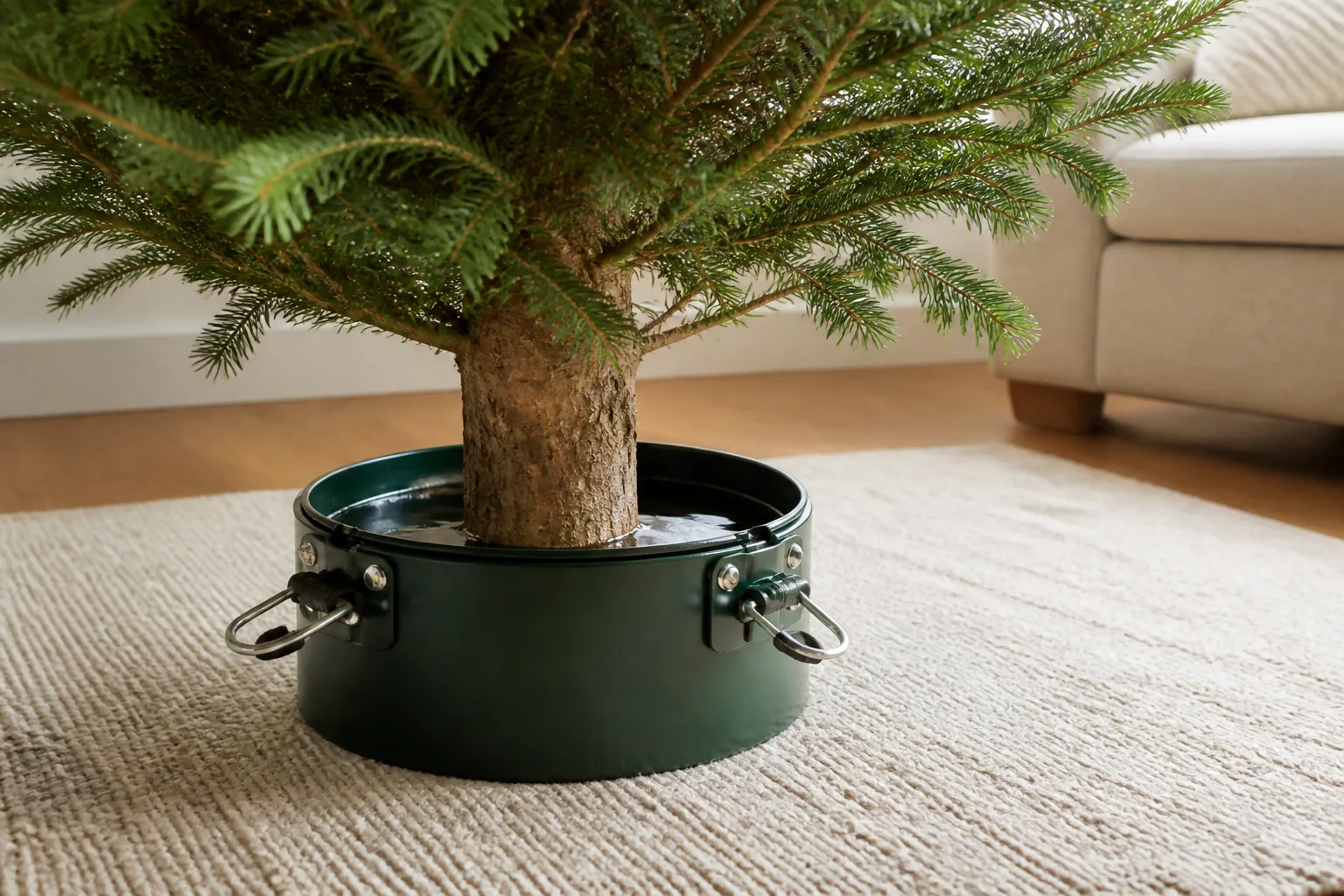
If you have a fresh-cut Christmas tree, the best thing to add to its stand is plain, clean water. Skip the kitchen recipes and commercial mixes: sugar, bleach, aspirin remedies, and bottled “tree food” do not replace the fundamentals that keep a tree hydrated.
The National Christmas Tree Association recommends a fresh perpendicular cut, a stand with enough capacity, and a water level that never drops below the trunk base. University extension guidance from Ohio State University Extension and UF/IFAS Extension likewise says additives such as aspirin, sugar, bleach, soft drinks, or preservatives are unnecessary.
That answer may feel almost too simple, especially when a tree starts shedding needles. The useful distinction is this: a cut tree’s freshness depends mainly on whether water can move through the trunk and whether the room is drying the foliage faster than the stand can supply it. An additive cannot fix a sealed cut, an undersized reservoir, or a tree parked beside a heat vent.
The Short Answer: Plain Water Is the Better Preservative
Fill the stand with ordinary tap water and keep the cut end submerged. The National Christmas Tree Association’s care guidance says the temperature of the water is not important, while adequate volume and daily checks are; Iowa State University Extension advises against molasses, sugar, soft drinks, aspirin, and commercial products because they provide no real benefit.
The four categories below are the ones most likely to appear in holiday “tree-preserver” recipes. They are different substances with different proposed jobs, but they share one problem: none is more important than keeping a clean water supply available to the trunk.
Why Additives Fail in a Christmas Tree Stand
A Christmas tree sold for indoor display is cut, but its needles and water-conducting tissues can remain functional for weeks. It continues losing moisture through transpiration, so the stand is replacing water that the foliage is still giving off. The tree is not growing a new root system in the stand and does not need a sugary drink or fertilizer solution to stay green.
A Cut Tree Needs Water, Not Food
Sugar, corn syrup, honey, molasses, and soda are often described as “food.” That sounds plausible because a rooted tree uses carbohydrates made by photosynthesis, but pouring carbohydrates into a cut trunk is not the same as feeding an intact plant. The tree’s immediate limiting factor is access to liquid water, not a shortage of pantry calories.
Sugary water also makes the reservoir sticky and can provide a food source for microbes. Even if you never see mold, a sweet mixture gives you a dirtier stand without giving the tree a proven freshness advantage. The practical choice is to remove the sugar and return to fresh water rather than trying to balance one additive with another.
The Cut Surface Is the Real Bottleneck
The base of a tree can begin sealing with sap after it is cut and left exposed to air. If the sealed surface is sitting in water, the stand can look full while the tree drinks poorly. This is why NCTA guidance focuses on removing a thin disk from the base, placing the tree in water quickly, and never allowing the water line to fall below the trunk.
No hole drilled into the trunk, angled point, or chemical shortcut makes up for a bad fit or a dry reservoir. The outer wood is also important for uptake, so shaving the sides of a trunk to force it into a small stand is counterproductive. Use a stand that fits the trunk as it is.
1. Sugar, Syrup, Honey, and Soda
Skip sugar water. This includes granulated sugar, brown sugar, corn syrup, honey, molasses, lemonade, cola, and other sweet drinks. The proposed benefit is that the tree will absorb the sugar as energy, but the available extension guidance does not support that claim for a cut display tree.
The more useful way to think about this category is as a substitution error. A person notices needle drop and assumes the tree needs nourishment, when the more likely questions are whether the fresh cut was made at the right time, whether the trunk base is submerged, and whether the room is hot. Sweetening the reservoir distracts from those checks and can leave residue that attracts insects or makes cleaning harder.
If sugar has already gone into the stand, drain the mixture, rinse the reservoir with clean water, and refill it. Do not add bleach to “sanitize” the sugar water. A clean refill and a reliable daily check are simpler and safer.
2. Bleach, Borax, and Disinfectant Mixes
Do not add bleach, borax, chlorine products, or homemade antibacterial blends. These recipes are meant to kill organisms in the water, but extension recommendations for cut Christmas trees do not call for them. You would be introducing a household chemical into an open reservoir near children, pets, ornaments, floors, and electrical cords without a standardized tree-care dose.
Bleach is especially easy to misuse when someone combines it with vinegar, acids, ammonia-containing cleaners, or a sugary recipe. Keep the stand-water routine separate from household cleaning chemistry: empty the reservoir, rinse it with water, and refill with plain water. Never mix cleaning products in the stand.
The tree stand does not need to be sterile to work. It needs to stay full enough that the entire cut end remains underwater. If water turns cloudy or smells off, change it and investigate the trunk, heat, and freshness of the tree rather than escalating to stronger additives.
3. Aspirin, Pain Relievers, and Home Remedies
Leave aspirin and other tablets out of the stand. Aspirin is sometimes promoted as a way to acidify water or mimic a floral preservative. Ohio State Extension’s cut-tree guidance directly answers that aspirin, preservative, soda, and sugar do not keep a tree alive; there is no reason to turn a tree stand into a medication experiment.
This category also includes crushed pain relievers, pennies, alcohol, and other “one small trick” remedies. A tablet cannot reopen a sap-sealed trunk, and alcohol is not a hydration treatment. A penny does not create a reliable care system, either: it cannot compensate for a small stand or a missed refill.
There is a household-safety reason to skip these experiments even when a recipe sounds harmless. Dogs and cats may drink from tree stands, and a child may reach the water while touching ornaments. The cleanest baseline is the easiest one to identify: water only.
4. Commercial Preservatives and “Tree Food”
Do not assume a product belongs in the reservoir just because its label says “preserver.” Floral preservatives are designed for particular cut flowers and are not automatically appropriate for a woody Christmas tree trunk. Homemade mixes and commercial packets also create a false sense of security if they encourage you to check the stand less often.
The UF/IFAS Extension care guide lists commercial tree preservatives with sugar, aspirin, and bleach among the things a fresh-cut tree does not need. That is a useful default for the household tree: skip the product and spend the effort on a proper cut, an adequate stand, and daily refills.
This does not mean every product marketed for Christmas trees is automatically dangerous. It means the label cannot change the basic biology of a cut trunk. If the stand runs dry, the tree sits in heat, or the cut surface seals, a preservative is not a substitute for correcting the care problem.
What to Use Instead: Clean Water and a Full Reservoir
Use cool or room-temperature tap water that is clean enough for ordinary household use. You do not need to add sugar for energy, bleach for cleanliness, aspirin for acidity, or fertilizer for growth. The National Christmas Tree Association specifically says water temperature does not affect uptake, so focus your attention on the water line and the condition of the trunk.
Water Temperature Is Not the Main Variable
Hot-water and cold-water arguments are mostly a distraction. Water at a comfortable tap temperature is fine; the important action is getting the tree into water soon after a fresh cut and keeping the cut end covered. The NCTA says most species can still take up water six to eight hours after cutting, but sooner is better, especially after a long, dry trip home.
Filtered water is not required for a normal cut tree. If your household tap water is safe to drink, it is a practical choice. Rainwater or filtered water will not rescue a tree whose base is above the water level, so do not delay a refill while searching for a special water source.
Match the Stand to the Trunk
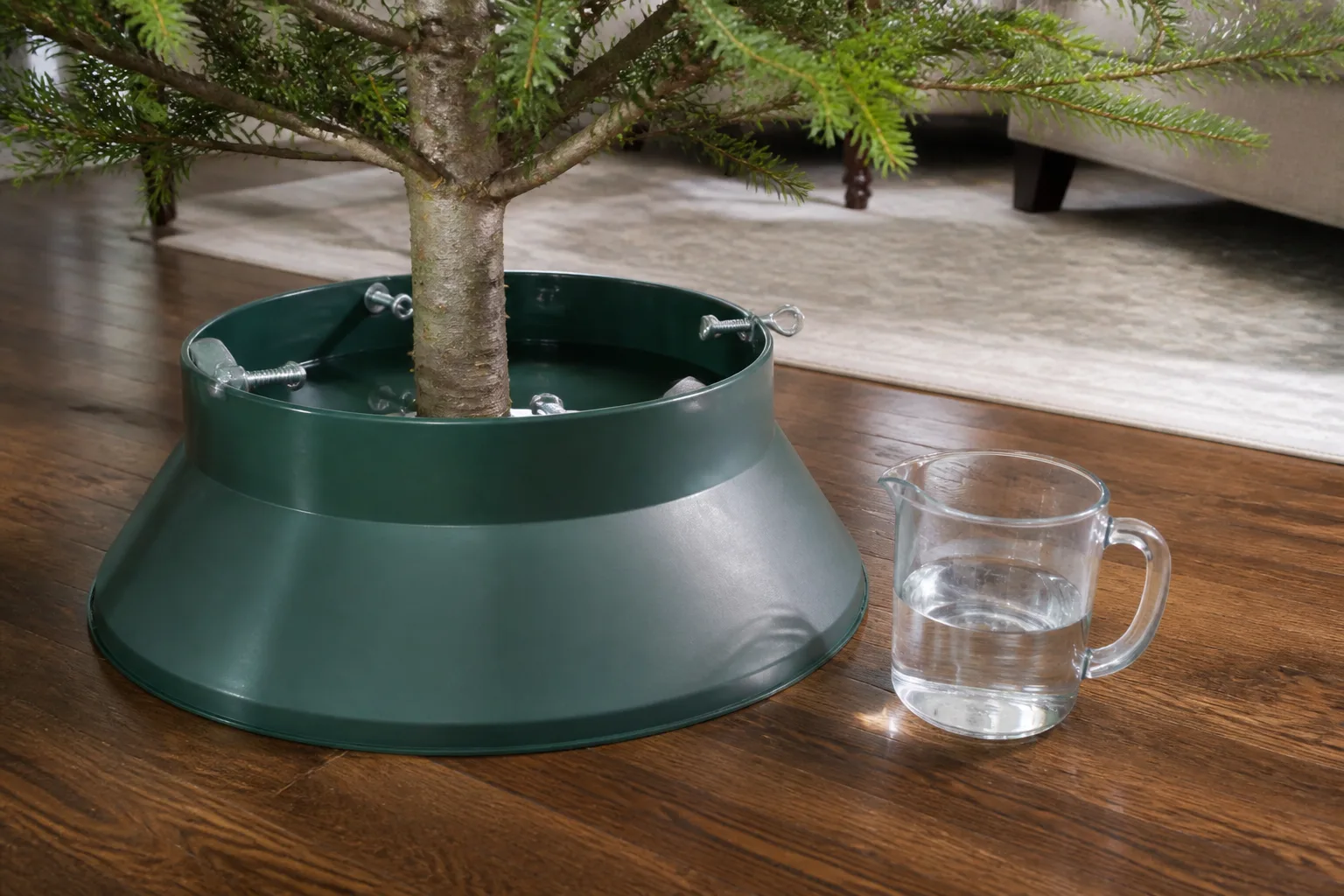
Choose a stand that fits the trunk without shaving off the outer wood. NCTA uses a starting rule of about one quart of reservoir capacity per inch of trunk diameter. The stand must be able to hold water with the tree mounted, not merely hold that volume when empty on a store shelf.
| Trunk diameter | Starting daily water-use estimate | Practical stand capacity |
|---|---|---|
| 3 inches | About 3 quarts | At least 3 quarts |
| 4 inches | About 1 gallon | At least 1 gallon |
| 5 inches | About 1.25 gallons | At least 1.25 gallons |
Actual uptake varies by species, freshness, room temperature, and the time since harvest. Treat the rule as a sizing and planning guide, not a promise that every tree drinks the same amount every day. A larger reservoir gives you a little more margin, but it does not replace checking the stand.
The Fresh-Tree Routine That Actually Works
The most reliable routine is short enough to repeat even during a busy decorating day: choose a fresh tree, make a straight cut, set it in water quickly, check the reservoir at least once a day, and keep the tree away from concentrated heat.
Make a Straight Cut and Set It in Water Quickly
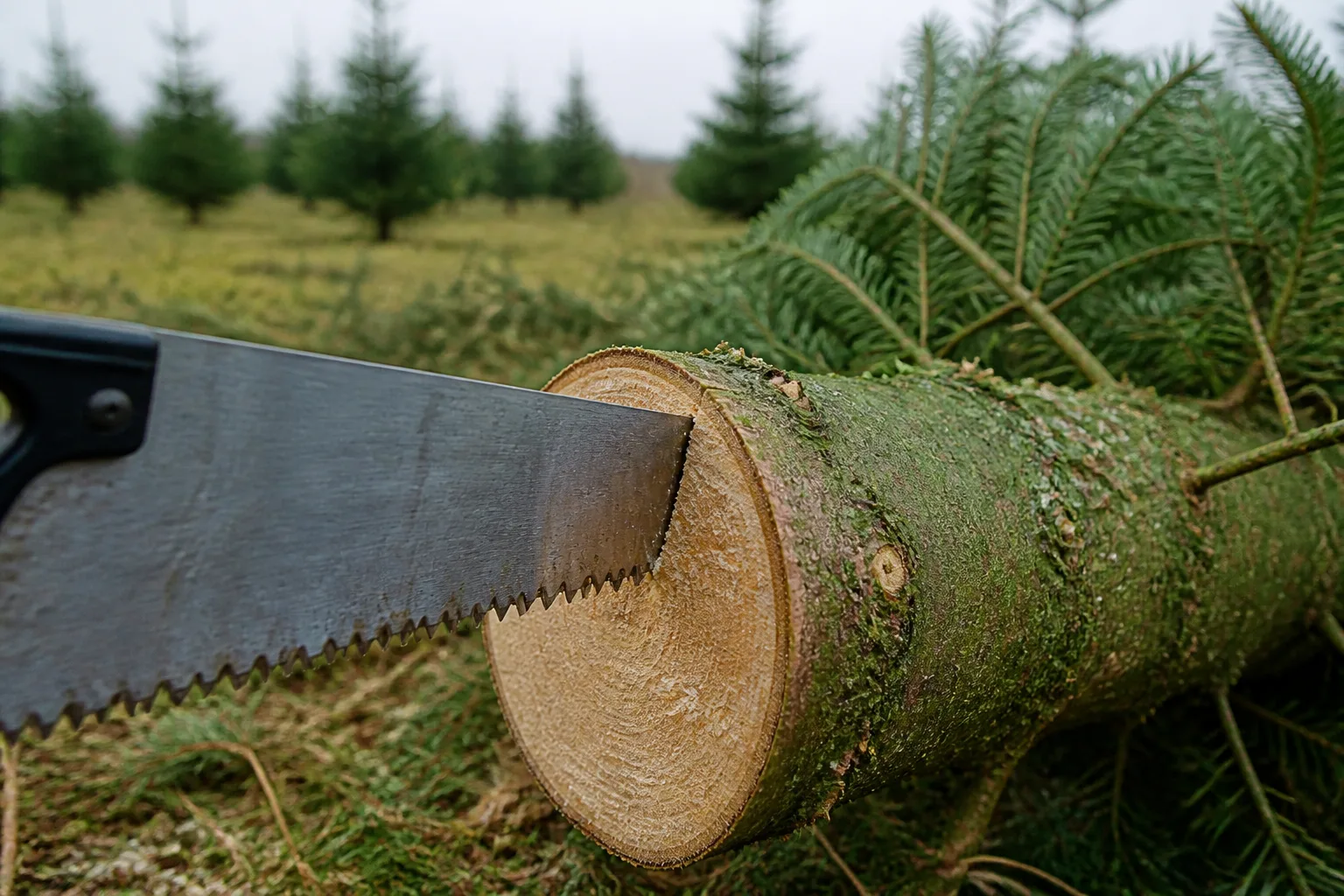
Saw approximately one-half inch from the base of the trunk immediately before setup, cutting straight across and perpendicular to the trunk. UF/IFAS Extension recommends placing the tree in water within 15 to 30 minutes after recutting; if that is not possible, stand the trunk in a bucket of water in a cool, sheltered place.
Do not make a diagonal or V-shaped cut. A perpendicular cut keeps the tree stable and leaves a broad, flat surface in contact with the reservoir. Do not drill a hole in the center, strip the bark, or whittle the trunk to fit an undersized collar. Those tricks create more opportunities for instability and damaged uptake tissue, not a dependable hydration advantage.
Check the Reservoir Before It Looks Empty
Look at the actual water line every morning. During the first 48 hours, a second check in the evening is worthwhile because a fresh tree can drink quickly; UF/IFAS Extension notes that a trunk can take up roughly one quart per inch of diameter per day, with larger trees using much more in the first few days.
Top off whenever the level drops, and make sure the water reaches the cut surface. A stand can still look wet while the trunk base has lifted above the water. That is the failure condition to prevent, not simply an empty-looking bowl.
If you are away for a day, ask someone to check the stand or use a purpose-built watering system that keeps the reservoir topped up. Do not pour in extra additives as a substitute for arranging a refill.
Keep Heat From Undoing Good Watering
Even a perfectly cut tree can dry quickly in the wrong spot. Keep it away from fireplaces, radiators, space heaters, heat vents, and strong direct sun. Gardening Know How recommends checking the stand morning and night and keeping the tree away from hot air; UF/IFAS suggests a distance of roughly three to five feet from common heat sources when possible.
Lower-heat LED lights reduce localized warming compared with older incandescent strings. Inspect cords, avoid overloaded circuits, and turn lights off when you leave or go to bed. The NCTA also advises removing a very dry tree from the home and never burning any part of a Christmas tree in a fireplace or wood stove.
A humidifier may make a heated room more comfortable, but it is optional and cannot compensate for a dry stand. The reservoir is the tree’s water supply; room humidity is only part of the environment around its needles.
What to Do If Someone Already Added Something
Do not panic and do not try to “neutralize” one recipe with another. Use this reset:
- Remove ornaments or lights only if needed for safe access, and unplug lights before working near the stand.
- Drain the additive mixture and rinse the reservoir with clean water.
- Refill with plain water until the entire cut end is submerged.
- Check the room for heat vents, fireplaces, radiators, and direct sun.
- Watch the water line and needle condition over the next day.
If the mixture was bleach or another cleaner, avoid skin and eye contact, ventilate the area, and follow the product label for safe cleanup. Never add vinegar, ammonia, or another chemical to the stand to counteract it. If the tree was left dry, the additive is not the main issue anymore: a fresh cut may be needed, and a decorated tree may be difficult to recut safely.
When a Tree Stops Drinking or Starts Drying
A slower water drop after the first several days is not automatically a crisis. A tree can drink most heavily right after setup and then settle into a lower rate. Use the condition of the tree and the water level together rather than treating one quiet day as proof that it is dead.
Work through the likely causes in order:
- The cut end is not submerged. Add water until the whole base is below the surface. Remember that the reservoir may contain water even when the trunk is no longer touching it.
- The trunk dried before setup or after a missed refill. If practical and safe, remove the tree and make a new straight cut, then return it to water immediately. A chemical additive is not a substitute for that reset.
- The room is too warm. Redirect a vent, move the tree farther from a fireplace, or choose a cooler spot. The tree may be losing moisture faster than it can replace it.
- Additive residue is present. Drain and rinse the stand, then monitor it with plain water.
- The tree is genuinely dry. Brittle needles, widespread shedding, drooping branches, and a tree that stops taking water for multiple days are signs to plan removal. Ohio State Extension warns that brittle, shedding trees should be taken out to reduce fire risk.
Do not mistake a little interior needle drop for total failure. Older inner needles can shed naturally, while the more serious warning is widespread brittleness and easy needle loss when branches are handled. Once the tree is dry, no additive can restore pliable needles; remove it promptly and check local recycling or chipping programs.
Conclusion
The four things to leave out of Christmas tree water are sugar-based mixes, bleach or borax, aspirin-style remedies, and routine commercial preservatives. Plain water is the better baseline because it addresses what a cut tree actually needs: a continuously submerged trunk and a clean, dependable reservoir.
Make a straight fresh cut, choose a stand with enough capacity for the trunk, check the water line at least daily, and keep the tree away from heat. Those habits do more for freshness, needle retention, and household safety than anything in the pantry.