Soil vs. Dirt: What Gardeners Need to Know
Soil vs. dirt is partly a matter of context, not a strict scientific split. Learn what soil contains and what to use in beds, raised beds, and pots.
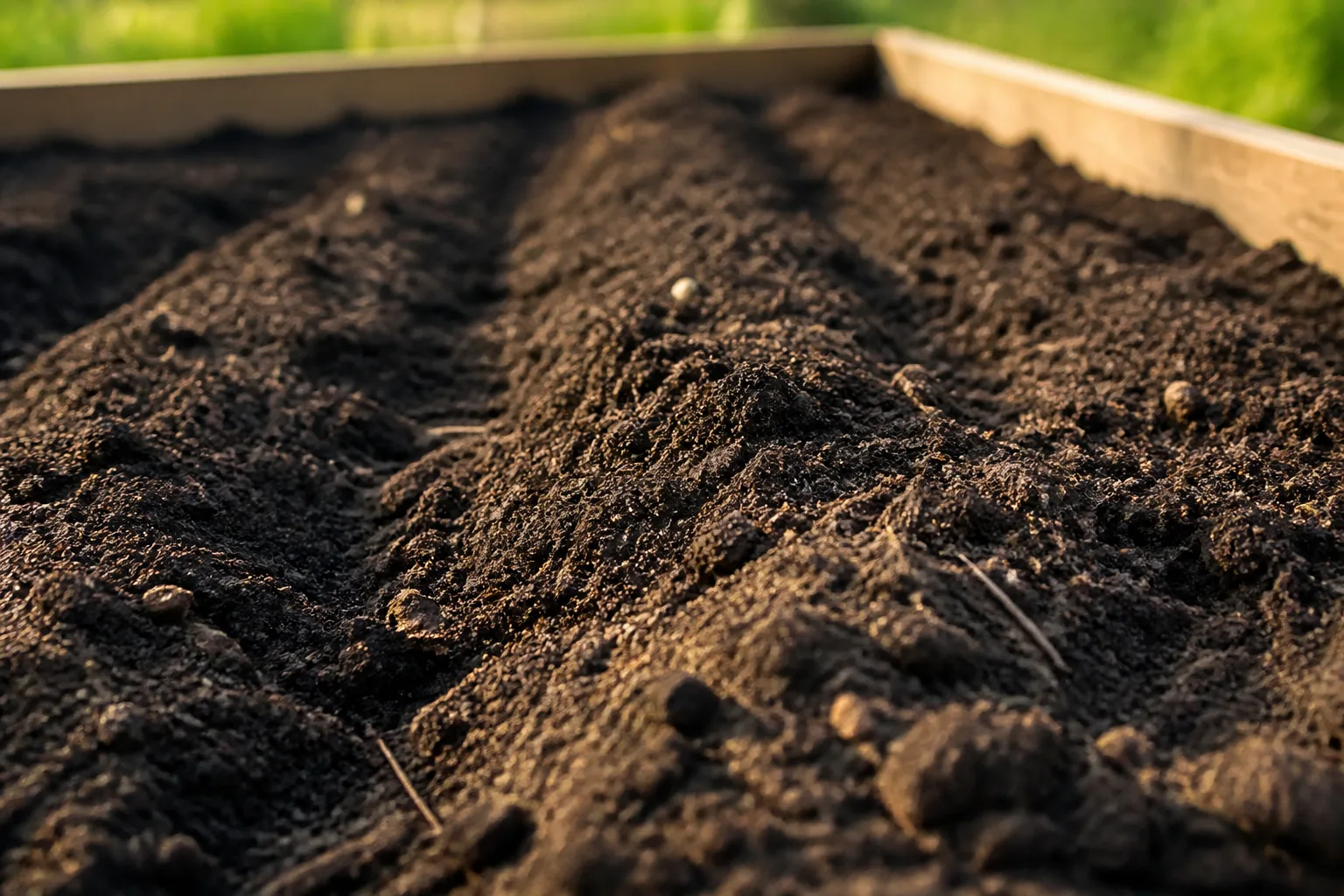
In everyday gardening, soil usually means the ground plants grow in, while dirt often means loose material that has been moved or tracked somewhere it does not belong. That shorthand is useful, but it is not a strict scientific division: “dirt” is not a single soil type with a universal recipe, and material called dirt can still contain fertile topsoil. If you are choosing what to put around roots, the more useful questions are where the material came from, how it holds water and air, and whether it suits a bed, raised bed, or pot.
The short answer: soil is a natural growing system; dirt is a casual term
Soil is a natural body made from mineral and organic material, water, and gases, shaped over time by climate, organisms, landscape, and parent material. It can support rooted plants, but its quality varies widely: one soil drains quickly and holds few nutrients, while another stays wet or has a pH that limits what plants can use. The USDA Natural Resources Conservation Service’s soil definition describes soil as more than a pile of particles; it is material altered by environmental and biological processes.
“Dirt” is an everyday word rather than a standardized horticultural class. People use it for soil on shoes or floors, for loose mineral material, or for a poor-quality pile delivered to a site. In the familiar phrase “soil out of place,” the substance has not magically changed its chemistry when it lands on a boot; the word has changed because the material is now unwanted. In a garden conversation, someone may also call poor fill or compacted ground dirt, but that label alone tells you little about its texture, fertility, drainage, or safety.
The practical takeaway is simple: do not reject a material because someone called it dirt, and do not assume something is ready for planting because a bag says soil. Evaluate its intended use and physical behavior. The medium around a plant’s roots needs suitable pore space, water retention, anchorage, and—when grown in a container—reliable drainage.
What soil contains and how it works
Soil does several jobs at once. It anchors roots, stores and moves water, leaves room for oxygen, holds nutrients in forms roots can access, and provides habitat for organisms that break down residues and cycle nutrients. These parts work together, which is why a handful’s color or texture cannot tell the whole story.
A typical, well-conditioned mineral soil is often described as roughly 45 percent mineral matter, 25 percent water, 25 percent air, and 5 percent organic matter by volume, but those proportions are a broad illustration, not a formula every garden must match. The Oregon State University Extension guide to soil explains how soil properties vary with parent material, climate, living organisms, topography, and time. A wet clay soil, a dry sandy soil, and an organic wetland soil will not behave alike.
Mineral particles: sand, silt, and clay
Most garden soil’s mineral fraction comes from weathered rock. Soil scientists group its fine particles by size: sand feels gritty and has the largest particles, silt feels smooth or floury, and clay has very small particles that can feel sticky when wet. A soil’s texture is the relative proportion of these three particle sizes; labels such as sandy loam or clay loam describe combinations, not pure ingredients.
Texture affects how quickly water moves and how readily nutrients are held, but it does not by itself rate a soil as good or bad. Sandy soil can drain so quickly that roots dry between waterings; clay can hold water and nutrients well but may drain slowly or compact when worked wet. Plants can grow in both when the root environment and plant choice fit. Oregon State Extension’s soil guide distinguishes texture from structure, a distinction that helps prevent the common mistake of trying to “fix” all clay or sand with one shortcut.
Organic matter and living organisms
Soil organic matter includes decomposing leaves and roots, microbial remains, and living organisms. As fungi, bacteria, earthworms, and other soil life process organic material, they help recycle nutrients and build aggregates. Organic matter can also improve a soil’s ability to hold water and nutrients, especially in sandy soil, and improve aeration and workability in many clay soils.
That does not mean a soil must look black, contain visible worms, or be packed with microbes to count as soil. A mineral soil can support plants with modest organic matter, and a dark, compost-rich material can still be too wet, salty, nutrient-rich, or poorly structured for a particular crop. Soil organisms contribute to nutrient cycling; they do not replace the need to match pH and nutrient availability to the plant. Mississippi State University Extension describes soil as a living, dynamic resource, while Utah State University Extension’s soil-improvement guidance explains how organic matter affects structure and water behavior.
Water, air, and structure
Roots need both moisture and oxygen. Soil has pores between particles and aggregates; larger pores tend to drain and exchange air, while smaller pores hold water. If pores collapse under compaction or remain full of water, roots have less oxygen. If the soil has too few water-holding pores, moisture can pass beyond shallow roots too quickly.
Structure is the arrangement of particles into aggregates and the spaces between them. It differs from texture: you cannot practically change the underlying sand-silt-clay ratio of a whole yard by sprinkling on a bag of sand, but you can often improve aggregation and surface condition through careful management. OSU Extension notes that texture is difficult to change while structure can improve with management. This is why a soil test and observation are more useful than judging by color alone.
Is dirt a scientific soil category?
No. Unlike sandy loam, clay, or silt, dirt is not a formal texture class or a standardized blend with a defined percentage of minerals, organic matter, and air. Extension materials sometimes use “soil out of place” to explain the word, but “dirt” also carries a negative everyday meaning: material that seems lifeless, compacted, contaminated, or unsuitable for the job. Those meanings overlap, but they are not interchangeable scientific diagnoses.
This matters because the phrase “soil is dirt plus life” can oversimplify the subject. Soil is a natural body with mineral and organic solids, water, gases, organisms, and layers shaped by its environment. Organic matter and biology are important, but there is no single visible ingredient that converts every pile of mineral material from dirt into soil. The NRCS definition is useful here: it focuses on the natural body and processes, not on a garden-center distinction between two everyday words.
Use “dirt” when you mean tracked-in soil or when you are speaking casually; use a more precise name when making a gardening decision. “Compacted clay subsoil,” “screened topsoil,” “compost,” and “container potting mix” tell you more about the material’s likely behavior than “dirt” or “soil” alone. If a supplier cannot explain whether a delivered pile is topsoil, subsoil, or fill, ask for its source and intended use before ordering a large amount.
Can plants grow in dirt?
Yes—if by dirt you mean ordinary soil that has been moved, plants may still grow in it. Soil tracked onto a patio does not lose its mineral nutrients or texture just by being displaced, and topsoil piled beside a garden may remain biologically active. If “dirt” means construction fill, stripped subsoil, very compacted material, or a mix dominated by stones and debris, it may provide poor rooting conditions, but the word alone cannot tell you which problem exists.
Plants do not need a special ceremonial category called soil; they need a suitable root environment. Some species tolerate lean, sandy, or rocky conditions. Others need a deeper, consistently moist, fertile medium. A plant can survive in a poor soil for a time while growing slowly, producing fewer flowers, or struggling during heat because roots cannot access enough water or nutrients. That is a performance problem, not proof that the material has stopped being soil.
Before using a pile of unknown material for vegetables or herbs, consider where it came from. Soil from a clean garden bed may be usable, while demolition debris, industrial land, roadside fill, or material with an unknown history deserves more caution. Routine fertility testing does not automatically screen for every contaminant; ask a university extension office or accredited laboratory about contaminant testing when the site history warrants it. OSU Extension notes that some laboratories offer testing for contaminants such as heavy metals and pesticides in addition to routine soil tests.
Displaced topsoil can still be productive
“Soil out of place” is a convenient definition of dirt, not a statement that displaced soil is useless. If you dig up a patch of healthy topsoil to build a path, that material can still support plants if returned to a bed or used in a suitable growing blend. The important caveat is that excavation can mix topsoil with poorer subsoil, gravel, construction waste, or weed roots, so a heap is not necessarily uniform from top to bottom.
Look at the source and test a representative sample before spreading a large delivery across a food garden. A small test area can reveal obvious drainage or growth problems, but it cannot rule out chemical contamination or identify precise nutrient deficiencies. If you are restoring a bed, spread the material in manageable layers, remove debris, and use a soil test to decide whether compost, fertilizer, or a pH adjustment is actually needed.
Soil, topsoil, garden soil, and potting mix compared
These terms describe different things, and a retail label is not always consistent across regions or brands. Topsoil refers broadly to the upper layer of ground; it may be screened, blended, or sold as-is, so quality varies. Garden soil is commonly sold as an amendment or blend intended for in-ground planting. Potting soil may be a soil-based mix or a soilless container medium, depending on the product. Potting mix often signals a lightweight blend of materials such as bark, coir, peat, perlite, compost, or vermiculite, but the ingredients and intended use still matter.
| Material | What the name usually means | Best starting point |
|---|---|---|
| Native soil | The ground already on the property | Keep it for in-ground planting; test or amend based on the site and plant |
| Topsoil | Surface soil sold in bags or bulk; composition varies | Use for filling or grading only after checking quality and intended use |
| Fill dirt | Subsoil or mineral material used to fill or shape land | Do not assume it is fertile or clean enough for planting |
| Garden soil | Bagged blend marketed for garden beds | Check the label; many are meant to be mixed into in-ground soil |
| Potting soil or potting mix | Container medium; may or may not contain field soil | Choose a product labeled for the plant and container use |
The label is a clue, not a complete specification. Read the intended-use statement, ingredients, fertilizer charge, and any directions about mixing with existing soil. A term that sounds natural or premium does not guarantee good drainage, suitable pH, or clean sourcing.
Topsoil versus fill dirt
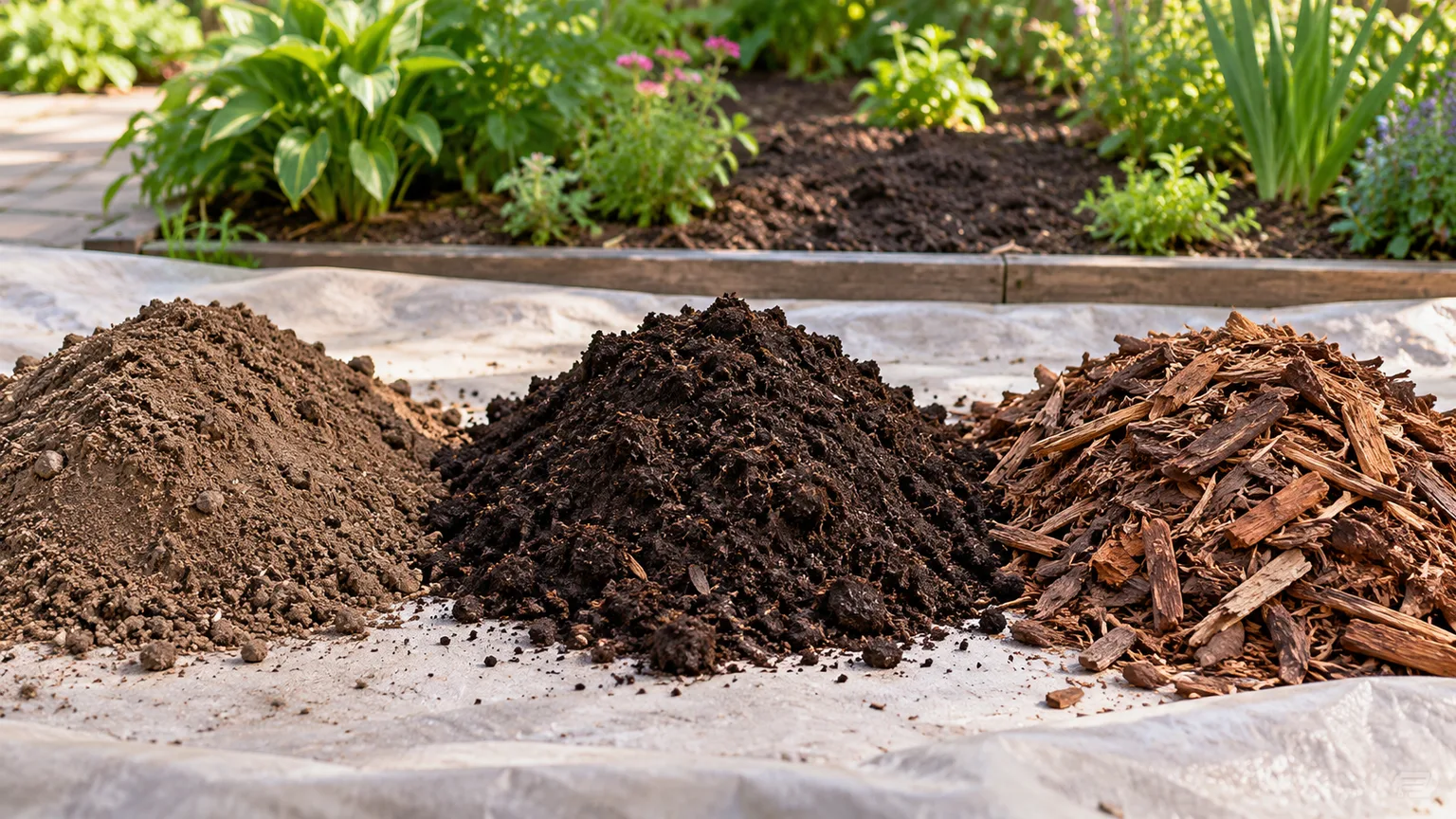
Topsoil is the upper horizon of a soil profile, where roots, organic matter, and biological activity are often more abundant than in deeper subsoil. But the word on a truck ticket does not guarantee rich loam: topsoil sold in bulk can vary in texture, screening, organic content, and source. Ask a supplier what was screened out, whether the product is blended, and whether it is intended for planting or simply for grading.
Fill dirt is generally sold to raise or level an area and may contain subsoil with little organic matter, along with stones or other debris. It can be useful beneath the planting layer when changing grade, but do not assume it will perform like topsoil around new roots. If fill is part of a garden project, use a suitable top layer for the plants and check the source if contamination is a concern. A low price per yard does not compensate for a poor growing surface if plants are the goal.
Garden soil versus container mix
In-ground beds have a large soil volume connected to surrounding ground. A container is a small, bounded root zone with drainage holes; it needs a medium that drains reliably yet holds enough water between irrigations. Field soil can settle or compact inside a pot, reducing air space around roots. A product designed for containers is usually the simpler choice for houseplants, patio pots, and seedling containers.
Do not rely on “potting soil” versus “potting mix” as a universal technical distinction. University of Minnesota Extension advises checking the bag’s weight and ingredients and distinguishes container mixes from heavier garden soil and topsoil. Fine Gardening’s guide to soilless potting mix explains why container media need both water-holding capacity and open pore space. Some mixes contain little natural fertility, so check whether fertilizer is included and follow the product directions rather than assuming “potting soil” is complete food for a plant.
Choose a medium based on where roots will grow
Start with the planting location, then choose or improve the material around the roots. A bed open to the ground can use native soil and targeted amendments; an elevated bed needs a blend deep enough to hold moisture and support roots; a pot needs a container medium with dependable pore space and drainage. The same bag should not automatically be used in all three settings.
Think of the choice as a physical fit, not a status ranking. Bagged media are not automatically superior to native soil, and native soil is not automatically the right fill for a small pot. The best option is the one that lets the specific plant establish roots, access water, and obtain nutrients without staying saturated or drying out too fast.
In-ground garden beds
For an in-ground bed, begin with the soil already present rather than replacing it wholesale. Existing soil may need better structure, more organic matter, a pH adjustment, or a nutrient correction—but those are different issues with different responses. A pH and nutrient test can prevent unnecessary fertilizer or lime applications; a texture jar test can help estimate the sand, silt, and clay proportions, while a simple infiltration observation shows how quickly water enters the surface.
If the soil drains slowly, do not assume that a shallow layer of purchased garden soil will solve the problem. Roots may continue into the native layer, and water movement can change where the materials meet. Correct compaction, surface drainage, and organic matter management with the whole root zone in mind. For a new bed over clean ground, no-dig sheet mulching or gradual additions may be more appropriate than hauling out all the native soil.
Raised beds
Raised beds need a mix with enough bulk and mineral structure to resist drying, not just a light seed-starting or houseplant mix. A common approach is to combine quality topsoil with mature plant-based compost, but proportions should reflect the product, local climate, crops, and drainage. University of Minnesota Extension’s raised-bed guidance recommends looking for a raised-bed mix or using topsoil and compost, and cautions that too much compost can create water-management problems.
Before buying several cubic yards, inspect a sample: it should not contain persistent trash, strong sour or ammonia odors, or large amounts of undecomposed woody material unless that material is intentionally used as a lower layer. Ask what the blend contains and whether it has been screened. Avoid filling the entire bed with pure compost; compost is an amendment, not a universal stand-in for stable mineral soil. Also, a raised bed set over soil generally benefits from connection to the ground below rather than a sealed bottom that blocks drainage and roots.
Pots and houseplants
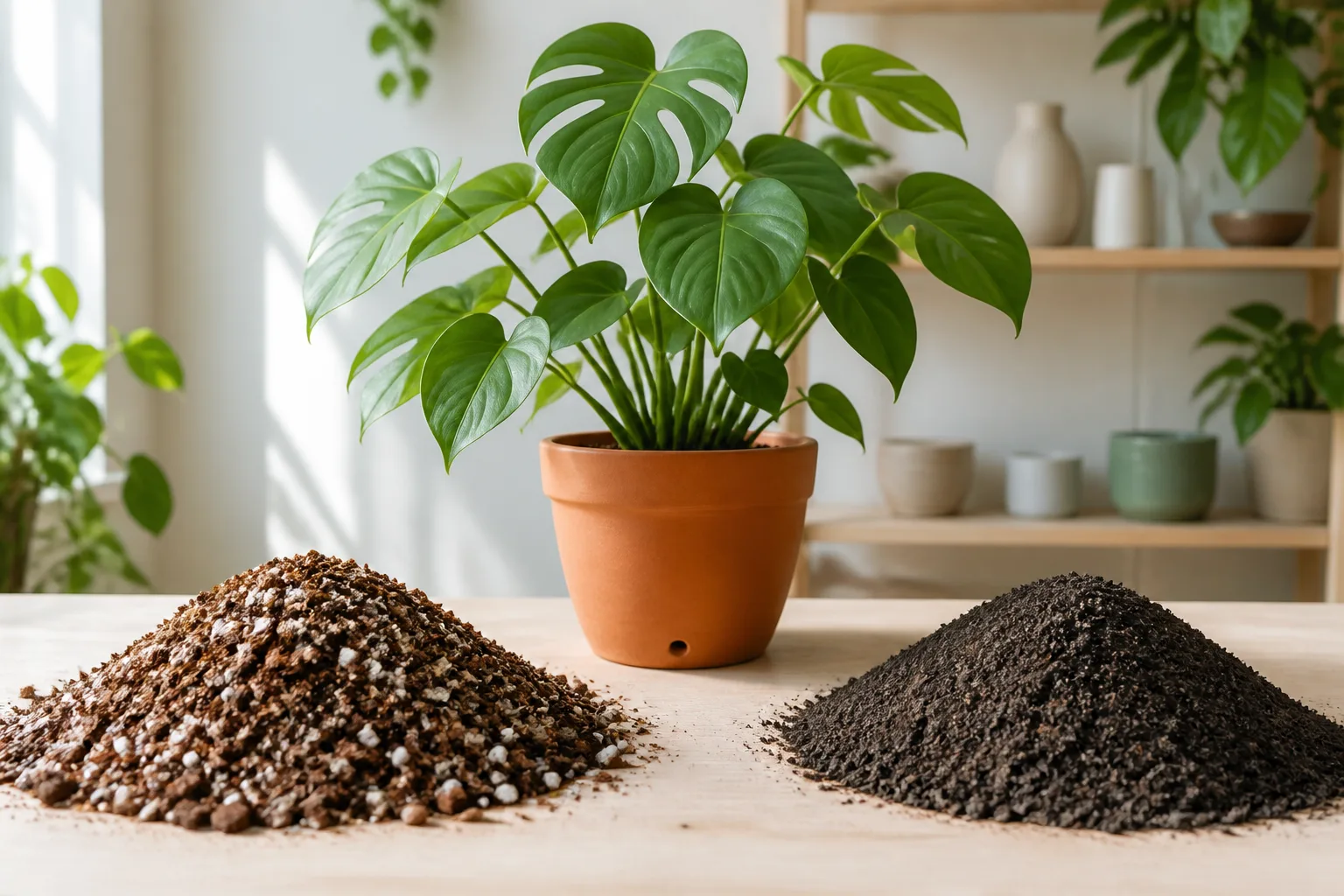
Use a mix labeled for containers and suited to the plant: a moisture-retentive blend for many tropical foliage plants, a grittier and faster-draining blend for many cacti and succulents, or a fine seed-starting medium for germination. Keep drainage holes open and do not pack the mix hard around roots. The bag’s ingredient list helps you judge whether the medium is bark-heavy, peat- or coir-based, compost-rich, or already fertilized.
If you make a custom mix, treat recipes as starting points rather than fixed laws. Watering frequency, pot size, indoor humidity, and plant roots affect how a blend behaves. The Royal Horticultural Society’s container guidance distinguishes garden compost used as a soil improver from potting compost used to grow plants in containers. A little screened garden soil can appear in some carefully formulated homemade mixes, but a scoop of unamended yard soil in a small pot is not an equivalent substitute.
How to improve poor garden soil safely
Do not try to turn every difficult patch into ideal loam before growing anything. First decide what is actually limiting the plants: water standing after rain, a hard surface that sheds irrigation, roots that stop at a compacted layer, low fertility, unsuitable pH, or simply a plant that does not match the site. Improvement is usually a series of small, measured changes, not a one-time replacement of all the ground.
For example, a vegetable bed that puddles may need drainage and compaction attention before it needs fertilizer. A sandy bed that dries quickly may benefit from organic matter and surface mulch, while a soil test may show that nutrients are already sufficient. Utah State University Extension describes organic matter as a broadly useful amendment, while emphasizing that soil improvement takes time and should not substitute for testing.
Observe texture, drainage, and plant performance first
Use simple observations to narrow the issue before amending. A handful of moist soil that forms a long ribbon when pressed suggests more clay; gritty soil that will not hold a ball suggests more sand. A jar test can show approximate particle layers, but it is not a lab test and does not measure nutrients. For a drainage check, note how quickly water enters a small test area and whether puddles remain after ordinary rain; compare several spots because beds can vary across a few feet.
Look at the plants too, but do not diagnose soil from one leaf or one season. Stunted growth, poor flowering, or chlorosis can come from light, water, pests, temperature, roots, pH, or nutrients. A routine laboratory soil test can report pH and nutrients and guide fertilizer or lime decisions. OSU Extension’s soil assessment guidance explains that laboratory testing is the most accurate way to evaluate routine fertility, and that separate contaminant screening may be available when a site’s history justifies it.
Add organic matter gradually and protect soil structure
Mature compost, leaf mold, or well-rotted plant material can improve many garden soils, but more is not always better. A modest layer mixed into an annual bed or left on the surface as a mulch for established perennials can build organic matter over time. OSU Extension’s practical advice on organic matter notes that it can improve water and nutrient holding in sandy soils and improve drainage and aeration in clay soils; the right amount and method depend on the site.
Avoid adding sand to clay as a quick recipe for loam. Changing texture across a meaningful garden area would require an impractical volume, and the wrong proportions can compact into a dense material. Also avoid digging or tilling when soil is wet: wet soil smears and compacts under pressure, damaging pore space. Keep the surface covered with mulch or living plants, use compost that is finished and suitable for gardens, and retest before repeating large applications. Soil improvement is measured in seasons, not in the color of the newest bag.
Conclusion
Soil and dirt are not opposites in a strict scientific sense. “Dirt” is a casual word for soil out of place or for material someone considers poor, while soil is a natural, variable system of minerals, organic matter, water, air, organisms, and structure. A pile called dirt may still grow plants; a bag called soil may still be wrong for a pot or bed.
For the next decision, focus on the roots’ setting. Use native soil for in-ground beds and improve it only where evidence points to a need; choose a stable raised-bed blend for elevated gardens; use a labeled container medium in pots. If you do not know what a material contains, ask its supplier, observe how it drains, and use a soil test when nutrient or pH decisions matter. That is a more reliable way to choose than arguing over whether the handful in front of you deserves to be called soil or dirt.



