Spider and Insect Pest Control: Start With the Clue
Get a practical spider and insect pest control plan: identify the visitor, prevent repeat entry, use safer targeted methods, and know when to call a pro.
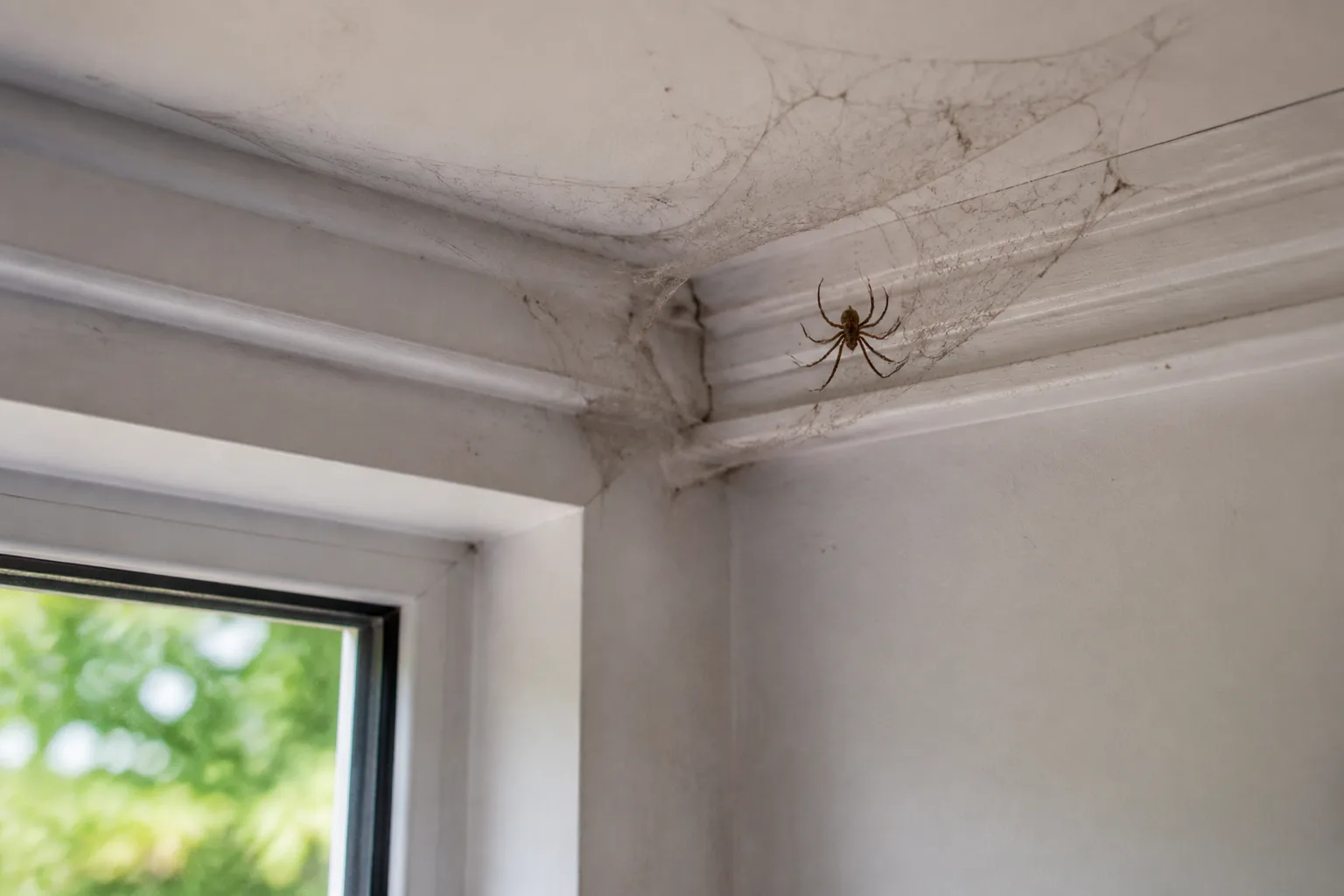
A bug on the windowsill does not tell you whether you have an infestation, and a spider web does not automatically mean the house is overrun with insects. The useful first move is to identify what you found, where it appeared, and whether the conditions that support it are still present. A house spider, a cockroach, a fruit fly, a bed bug, and a caterpillar in the vegetable patch need different responses; treating them all with the same spray often misses the source and adds avoidable exposure.
A practical plan follows integrated pest management (IPM): monitor, identify, prevent, choose an appropriately targeted control, then check whether it worked. Penn State Extension describes the same practical sequence: identify the pest, remove the conditions that support it, and use prevention and nonchemical controls before considering a carefully chosen pesticide (Penn State Extension on household IPM). That approach is useful at home because it helps distinguish a one-off visitor from a problem that needs sustained action.
Start with the pest, not the spray
First decide whether the insect is actually causing a problem. One outdoor beetle that wandered through an open door may need nothing beyond a cup and paper; a line of ants moving toward an uncovered food source calls for cleanup and a route check. In a garden, a few chewed leaves can be compatible with a healthy ecosystem, while a growing cluster of sap-feeding pests on new shoots may justify intervention. A sighting is evidence to inspect, not an automatic instruction to spray.
Also separate nuisance from risk. Some pests contaminate food or damage materials, some can bite or sting, and some are chiefly unwelcome. Spiders are arachnids rather than insects, and many common house spiders are not medically significant; however, species and bite risks vary by region. If you suspect a medically important spider, do not handle it to confirm its identity. Take a clear photo from a safe distance and contact a local extension service, poison center, or other qualified source. Skin lesions alone are not a reliable way to identify a spider bite.
Identify what you found and where
Save a photo, note the date and room, and record whether the pest was alive, dead, flying, crawling, or associated with a web, droppings, shed skins, damaged food, or plant injury. Include scale in a photo if you can do so without touching the specimen. Look for a pattern: several small flies around a drain differ from one large fly entering through a screen gap, and a spider under a porch light suggests a different setup from repeated roaches inside a kitchen cabinet.
Do not rely on color alone. Many household insects change appearance between young and adult stages, and unrelated species can look alike at a glance. Place a sticky monitor where activity is suspected, or collect a specimen in a sealed container only if it is safe. Compare the evidence with a university extension or government identification guide. If the identification remains uncertain and the stakes are high, wait to apply pesticide until someone qualified can identify it. The wrong treatment may kill harmless insects while leaving the pest untouched.
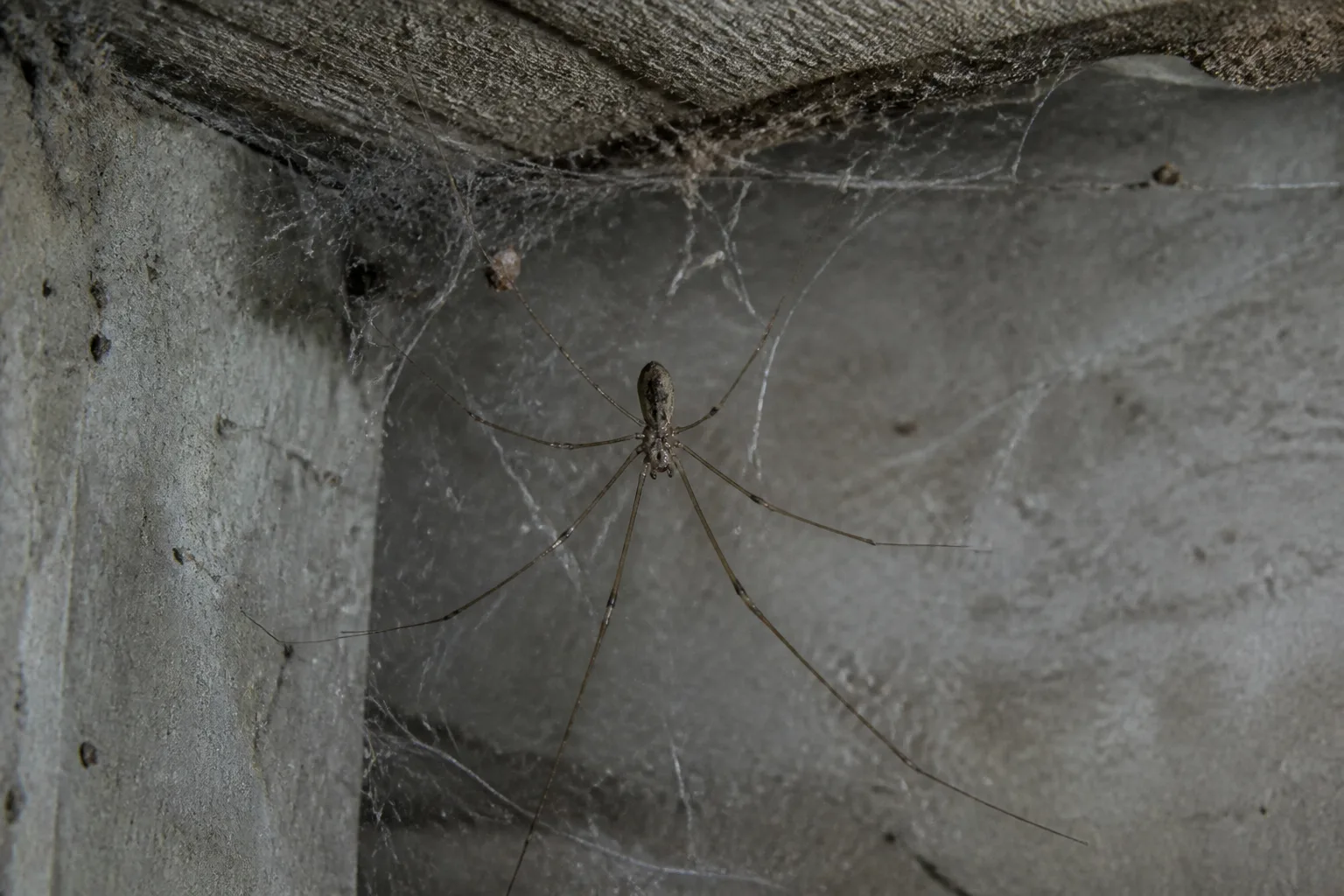
Use an IPM sequence that fits the problem
IPM is a sequence rather than a product label. Monitor and identify, prevent, choose an appropriate control, and reassess. A workable home version is: observe → identify → remove food, water, shelter, or entry → use the least disruptive effective control → inspect again. The pest’s biology determines the details; a fly emerging from a drain cannot be controlled by sealing a window alone, while an occasional spider at a loose screen may not need any pesticide.
Monitor and set a sensible threshold
Before changing anything, record what is happening. Count sightings or trap captures in the same location on a regular schedule, and check whether the numbers are rising, stable, or falling. This baseline helps answer whether a control worked and prevents random repeat applications. It also keeps you from treating insects that are passing through rather than living or breeding in the home.
Set a threshold that fits the consequence. A single ant scout and a cockroach nymph in a food-preparation area should not be treated as equivalent findings. A confirmed bed bug deserves a faster, coordinated response because the problem can spread and is difficult to resolve with casual spot treatment. In a garden, identify the insect and assess plant damage before removing beneficial predators or pollinators. The right threshold is not “zero bugs everywhere”; it is the point where evidence, damage, or health concern justifies control.
Prevent access and remove what supports pests
Think in four categories: food, water, shelter, and entry. Store pantry goods in sealed containers, clean spills and grease, empty kitchen waste regularly, fix leaks, dry standing water, and reduce cardboard or clutter where pests hide. Seal gaps around pipes and baseboards, repair door sweeps and window screens, and inspect boxes or secondhand items before bringing them inside. The National Pesticide Information Center recommends checking entry points, clutter, food, moisture, and items brought into the home as part of household IPM (NPIC home IPM).
Match the correction to the clue. Fruit flies around a compost caddy call for cleaning the container and removing fermenting scraps; ants beneath a sink make a plumbing leak worth checking; spiders near a bright exterior doorway may be following insects attracted to the light. Keep firewood, leaf piles, and dense vegetation from touching the foundation when practical, but avoid stripping the whole garden of habitat. Outdoor changes should reduce pest pressure near the building without eliminating every useful insect or spider.
Choose a control that reaches the pest
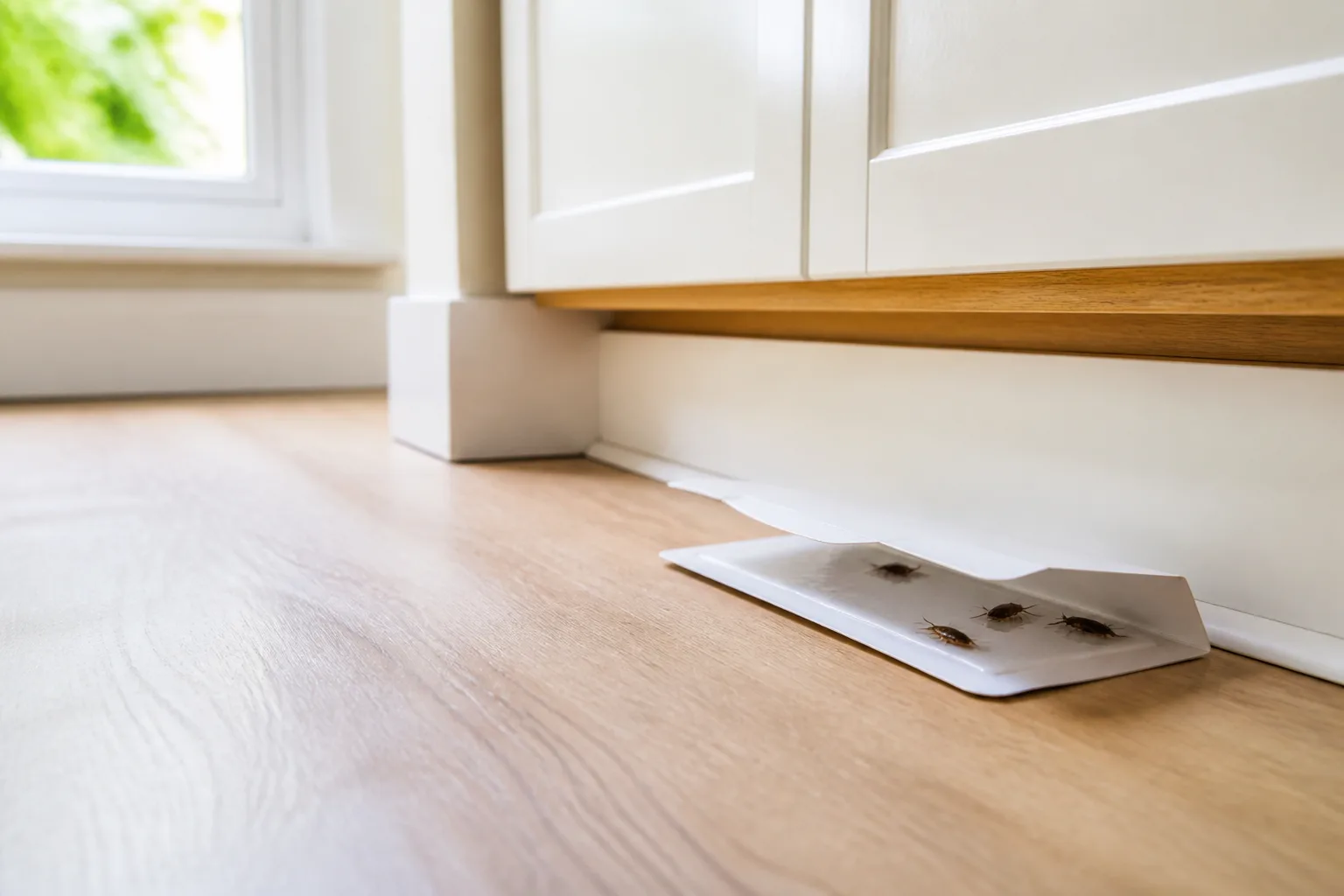
Physical tools solve some problems cleanly: a vacuum can remove a web and egg sac, a flyswatter can remove a single adult, a drain brush can clear organic buildup, and a tightly sealed food container can make a pantry less attractive. Traps are most useful when they are matched to the pest and placed where activity occurs. A glue board can monitor a crawling route or catch some wandering insects, but it does not repair a leak, seal an opening, or prove that a hidden population is gone.
Baits work differently from contact sprays. A bait must remain accessible to the target pest and should not be contaminated by competing food, cleaning residues, or repellent sprays. For cockroaches and ants, sanitation and careful bait placement can be more useful than spraying visible trails; follow the product label and keep stations away from children and pets. For bed bugs, one household trap is only a monitoring aid within a broader plan, not a stand-alone cure. Recheck the same spots after treatment and continue as long as the pest’s life cycle or label requires.
Control spiders by removing the conditions they use
For one spider indoors, capture it with a container and stiff card if you can do so safely, or remove it with a vacuum. Vacuum webs and egg sacs in corners, behind furniture, and around windows, then empty the canister outside into a sealed bag. A few spiders can be tolerated if you prefer; Colorado State University Extension explains that most spiders are beneficial insect predators and that sanitation, exclusion, web removal, and reducing prey insects are more useful than pesticides alone (Colorado State University Extension: spiders in the home).
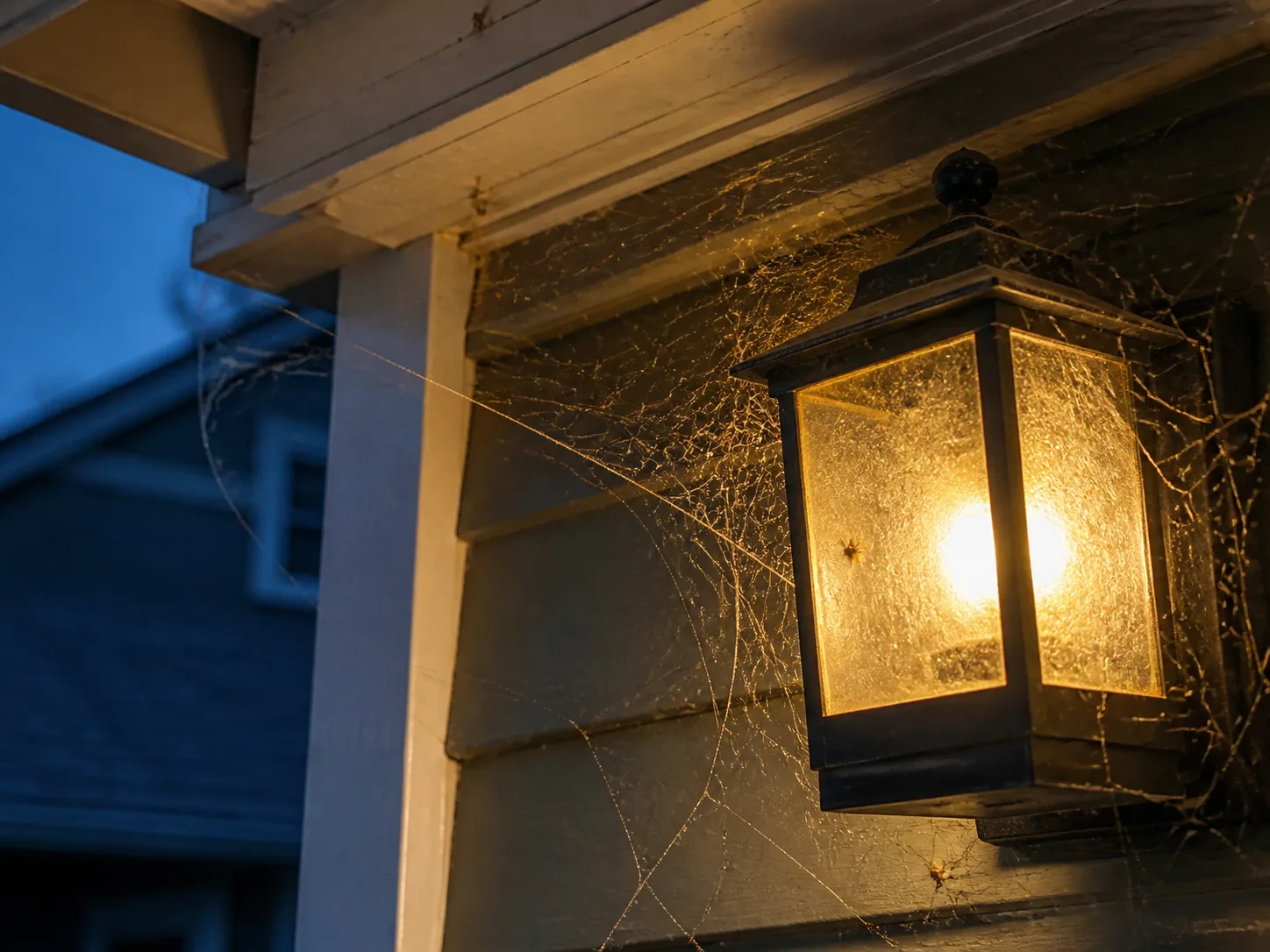
If spiders keep appearing, look for the conditions that explain the pattern. Repair screens, add door sweeps, seal cracks around ground-level windows and utility penetrations, and move outdoor lights away from doors or use less insect-attractive lighting where appropriate. Reduce the nearby insect supply by managing standing water and lights, not by spraying every surface. Trim plants that touch siding and move stored materials away from the foundation. A spider wandering indoors may be an occasional outdoor hunter; webs repeatedly rebuilding in the same quiet spot point to a sheltered site that needs regular removal or exclusion.
Surface fogging is a poor shortcut for spiders because it may not reach the cracks where they hide, and a pesticide does not remove the web, egg sac, or entry gap. If you consider an insecticide, use only one whose label names the target and site, and apply it exactly as directed. For a large, recurring problem, identify the species and the source before paying for treatment; that helps a professional choose a targeted plan instead of a calendar spray with no diagnosis.
Stop flies and other flying insects at the source
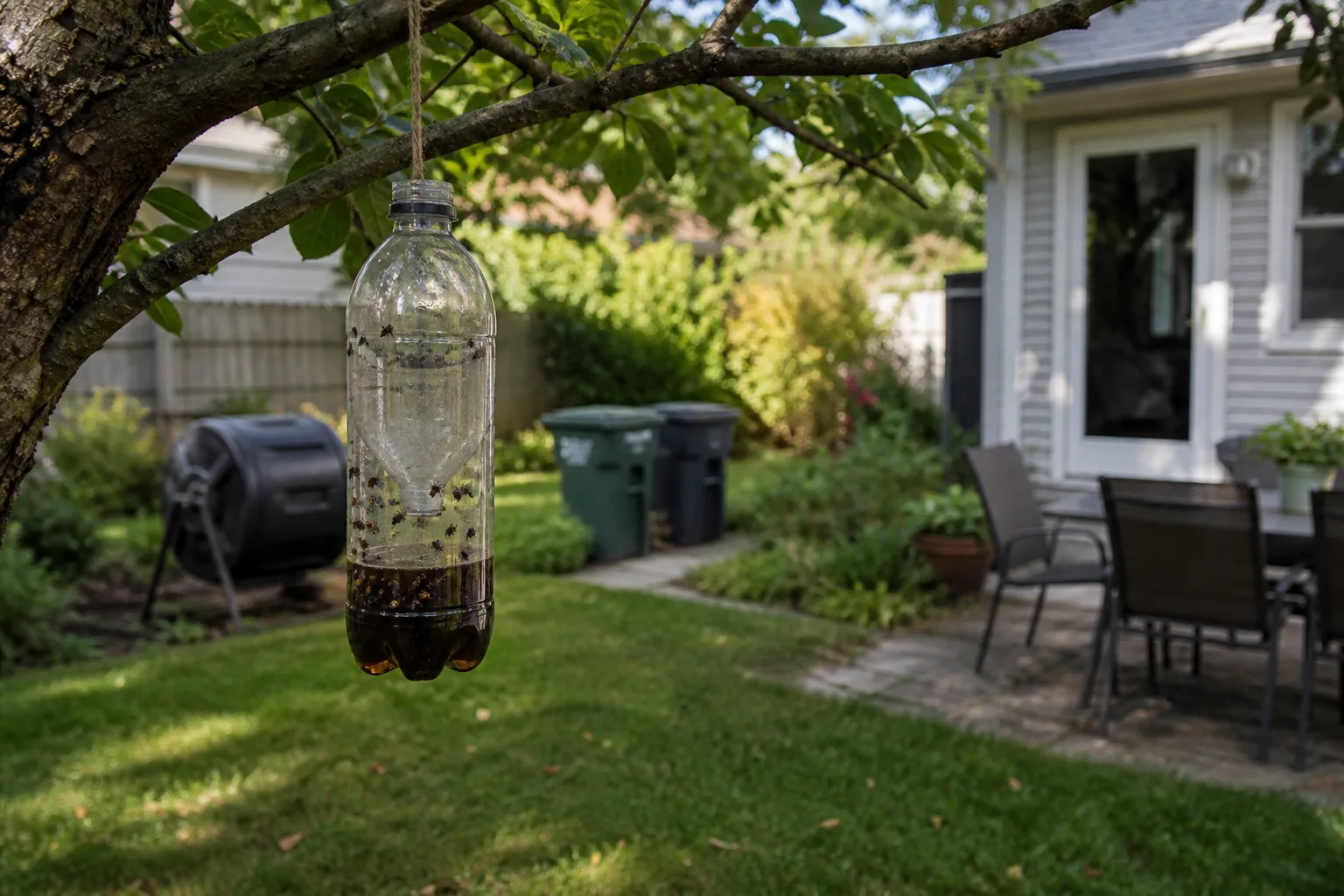
The first question is where the adults are coming from. Fruit flies usually point toward fermenting fruit, recycling residue, a damp mop, or another moist organic source; drain flies suggest a film of organic matter in a drain or overflow; fungus gnats are often tied to persistently damp potting media. House flies may enter from outside or breed around refuse or animal waste. These are clues, not definitive identifications, so watch where flies gather and inspect the nearby source before choosing a trap. Penn State Extension notes that fruit flies are drawn to ripe produce, drains, garbage disposals, and other moist fermenting material, while house flies feed on varied moist, decaying matter (Penn State Extension: common urban pests).
Remove or clean the breeding material, cover food, rinse cans and bottles before recycling, keep screens in good repair, and empty indoor compost or garbage before it becomes a lure. For a suspected drain source, clean the drain and its overflow mechanically; repeatedly pouring chemicals down the drain without confirming the source may not reach the biofilm where larvae develop. A vinegar trap can catch some adult fruit flies, but it does not stop a new generation if rotting material remains. Treat a trap as feedback: if captures continue, the source has not been found or access remains open.
Handle cockroaches and ants with targeted methods
Cockroaches are not just a cosmetic problem; they can contaminate surfaces and aggravate allergies or asthma in some settings. Inspect under sinks, behind appliances, inside cabinets, and along plumbing routes for droppings, egg cases, shed skins, or live nymphs. Store food and pet food in sealed containers, clean crumbs and grease, remove overnight water sources, and repair leaks. Place monitors along suspected routes to learn where activity is concentrated. Penn State Extension’s urban-pest guide recommends food and moisture control, crack sealing, cockroach baits, and sticky monitors; it also notes that different roach species favor different sites (Penn State Extension: common urban pests).
For ants, trace the route back toward the entry and remove the food source before wiping the trail. Baits can take time because workers carry them back to the colony; spraying a repellent insecticide directly across a bait route can interfere with feeding. Use a labeled bait in a location that children and animals cannot reach, and avoid placing it on food-contact surfaces. If roaches or ants keep returning in an apartment building, tell the landlord or building manager: shared walls, pipe chases, and utility voids can make a single-unit cleanup incomplete.
Treat suspected bed bugs as a separate problem
Do not identify bed bugs from bites alone. Look for the insect itself or corroborating evidence around mattress seams, bed frames, upholstered furniture, and nearby cracks. A speck or skin reaction is not proof; if you find a specimen, photograph or contain it for identification. Avoid moving potentially infested furniture or belongings through shared hallways, where that can spread the problem.
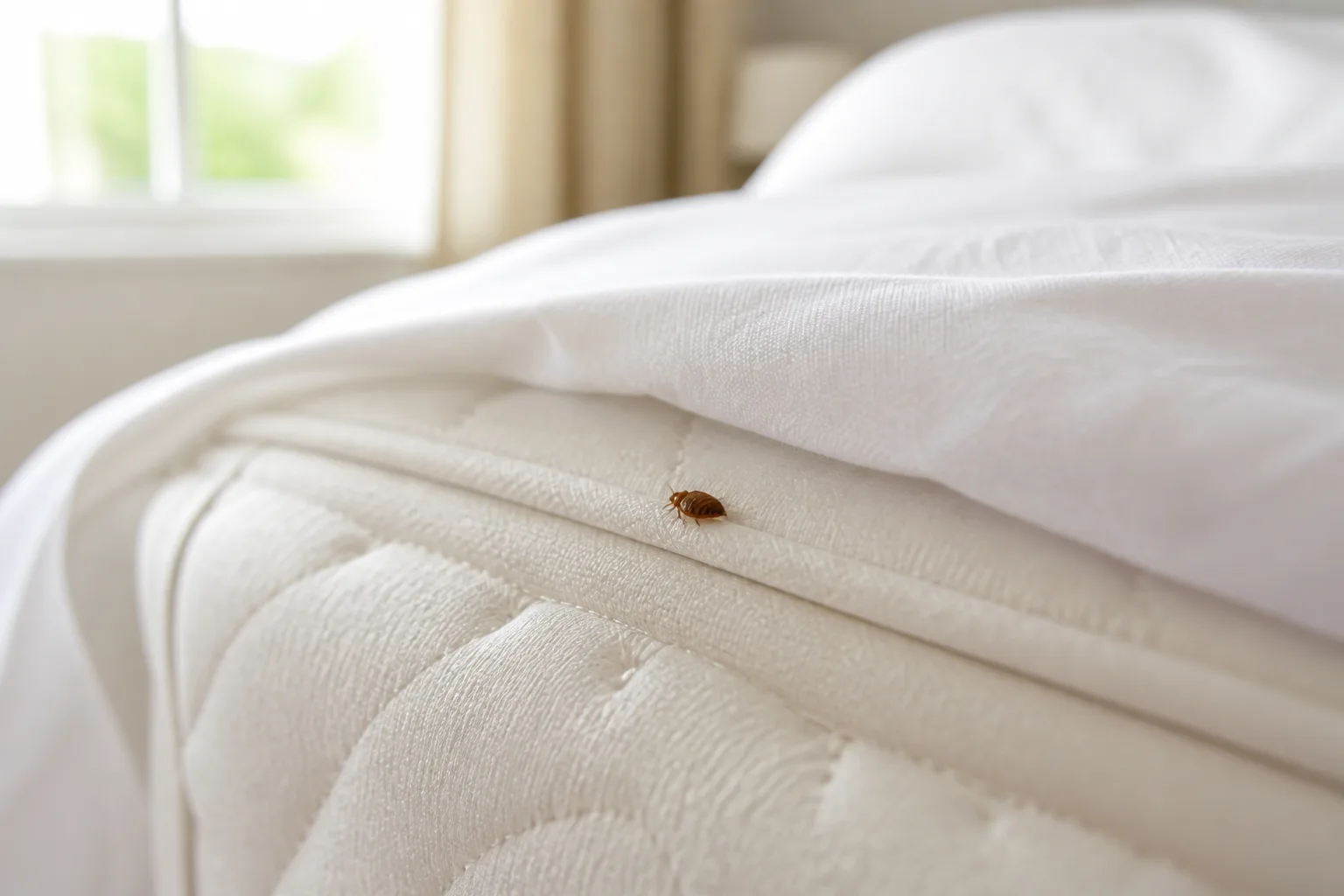
If bed bugs are confirmed or strongly suspected, contact your landlord or building manager promptly if you rent, and consider a pest-management professional experienced with bed bugs. Prepare for repeated inspection and follow-up rather than expecting one treatment to work. Penn State Extension advises drying suitable suspected items on high heat and says established bed bug problems generally need a qualified pest professional; it cautions that aerosols and “bug bombs” can miss hidden insects (Penn State Extension: common urban pests). NPIC likewise recommends an IPM plan, reading labels, and avoiding outdoor-use products indoors because they can increase exposure and scatter bed bugs (NPIC bed bug pesticide guidance).
Avoid rubbing alcohol, outdoor pesticides, excessive pesticide applications, and bug bombs used as the sole tactic. Penn State Extension warns that aerosols and foggers may not contact hidden bed bugs; NPIC notes that using products not intended for this pest can increase exposure and spread activity. For an established infestation, ask a qualified professional how they will inspect, monitor, treat, and verify results.
Find and remove pantry, fabric, and occasional invaders
When insects appear in a pantry, check the food packages rather than spraying shelves. Look for webbing, larvae, holes, clumping, or fine debris in flour, cereal, nuts, dried fruit, pet food, and birdseed. Seal and discard clearly infested food according to local waste guidance, vacuum cracks and shelf-pin holes, and wipe the shelf before restocking in airtight containers. Inspect unopened packages too; a small hole or loose seam can be enough for an insect to enter.
For clothes moths or carpet beetles, inspect natural-fiber clothing, rugs, stored blankets, lint, and undisturbed closets for larvae, shed skins, or irregular fabric damage. Clean the affected area and launder, dry-clean, freeze, or heat-treat items only with a method appropriate for the material. Store clean textiles in sealed containers after treatment. A flying adult seen near a window may have come in from outdoors, so confirm larvae or repeated damage before treating an entire wardrobe.
Some occasional invaders—such as lady beetles, stink bugs, or boxelder bugs—cluster at warm sunny walls in seasonal weather. Vacuuming or carefully collecting them is often more useful indoors than a broad indoor spray. Prevent recurrence by sealing likely entry points before the season, repairing screens, and removing accessible accumulations around doors and windows. If insects are emerging from a structural void or appearing in large numbers, seek identification before sealing an active nest or treating a wall cavity.
Protect the garden without wiping out beneficial insects
Outdoors, identify the insect and assess the actual damage before intervening. Aphids, caterpillars, beetles, and mites can be prey for lady beetles, lacewings, spiders, and other predators; some insects also pollinate crops or feed birds. Remove only what is causing meaningful damage, and where possible use a physical barrier, hand-picking, pruning, or a targeted treatment rather than blanket spraying. A garden with some insects is not necessarily an unhealthy garden.
A useful field check is to inspect both sides of leaves and the newest growth, look for eggs or cast skins, and note whether predators are already feeding. Photograph unfamiliar insects and ask a local extension service for identification, especially before treating edible crops. BBC Gardeners’ World notes that garden pests are part of the food chain and recommends encouraging predators, washing aphids off, and hand-picking some damaging insects; Fine Gardening describes beneficial insects as useful but not a cure-all (Gardeners’ World garden-pest guide, Fine Gardening on friendly pest control). Avoid spraying flowering plants when pollinators are active; follow all crop, timing, and re-entry directions on the product label. If damage is minor and stable, continue monitoring rather than escalating automatically.
Use pesticides only when a label and a plan support them
A pesticide label is not optional fine print: it defines where, how, and against which pests a product may be used. Confirm that the target pest and location—indoors, outdoors, food area, garden plant, or other surface—are listed. Use the amount and interval stated on the label, wear the specified protective equipment, and follow ventilation, re-entry, storage, and disposal instructions. Never use an outdoor product indoors, mix products unless the label explicitly directs it, or assume a stronger dose works better. Penn State Extension recommends reading the label for proper use, storage, disposal, and first aid, and notes that some application types pose greater child-exposure risks; NPIC likewise warns against using products for pests or sites not named on their labels (Penn State household IPM, NPIC bed bug pesticide guidance).
Keep bait stations and treated surfaces inaccessible to children and pets. Remove pet bowls, toys, and bedding before an application, and keep animals away for at least the label’s stated period; NPIC advises removing pets from the treatment area, keeping them away during application, and following all label directions; secure baits and pesticide containers where pets cannot reach them (NPIC pets and pesticide use). This matters especially for curious pets that lick floors, chew plants, or investigate bait stations. If exposure is suspected, use the product label’s first-aid directions and contact the appropriate poison-control or veterinary resource.
Avoid foggers as a routine first move. They disperse pesticide through a room but may not reach pests inside cracks, nests, drains, or mattress seams; they can expose people and pets when directions are ignored. If nonchemical prevention is not enough, choose a targeted control whose label fits the pest and place it where monitoring shows activity. For complicated infestations, a licensed professional can assess whether the product, placement, and repeat interval make sense.
Know when a professional is the better next step
Call a qualified pest professional when the pest is hard to identify, activity keeps returning after source correction, the infestation is inside a wall or inaccessible void, or the problem involves bed bugs, termites, recurring cockroaches, fleas, or a species of medical concern. A professional is also sensible when pesticide handling would be difficult around infants, people with respiratory sensitivity, pets, aquariums, or food-preparation areas. For stinging insects, nests near entrances, or suspected dangerous spiders, keep distance and get local guidance rather than disturbing the nest or specimen.
Ask the provider what evidence supports the identification, what source conditions they will address, which nonchemical steps they recommend, where products will be applied, and how they will measure success. Request the product name and registration number, a copy of the label or safety information, and clear re-entry instructions. For bed bugs, ask specifically about monitoring and follow-up; Penn State Extension recommends a reputable, licensed professional for an established infestation, and NPIC notes treatment may require multiple visits. A proposal that promises total, permanent elimination of every insect without inspection or a follow-up plan deserves scrutiny.
Keep a short prevention and follow-up routine
A simple routine catches change early without turning the home into a treatment project. Once a week, check kitchen edges, sink plumbing, trash and recycling, window screens, the pantry, and any location with a recent sighting. In a garden, inspect plants with fresh damage and note whether natural predators are present. Keep a brief log of date, location, pest count, trap capture, and action; even a phone note can show whether the pattern is improving.
After a control, inspect at the interval appropriate to the pest and the label. A falling trap count is encouraging, but it does not prove a hidden infestation is gone; check for fresh droppings, new damage, egg cases, or live insects. If the count does not decline, revisit your identification and source hypothesis before applying more product. Continued activity may mean the source is hidden, the control missed the pest’s life stage, or the problem is entering from a neighboring space.
Prevention is specific, not perfection. A dry, sealed pantry helps with stored-food pests; screen repair and weatherstripping reduce outdoor visitors; leak repair and dry sink areas make kitchens less attractive to moisture-seeking insects; and sensible garden monitoring protects plants without erasing beneficial life. Keep the correction you made tied to the evidence you saw so you can adjust without layering unrelated treatments.
Avoid fixes that create new problems
Do not spray a room because you saw one bug, treat a bite as proof of a spider, or use a product simply because it says “natural.” Plant-derived oils and homemade mixtures can still irritate people, harm pets, damage surfaces, or injure plants, and they may not work for the pest in question. Likewise, ultrasonic devices and strong-smelling repellents should not replace exclusion, identification, and monitoring unless reliable evidence and a label support a specific use.
Do not move an infested item through a building without containing it, especially when bed bugs are possible. Do not put a pesticide in an unmarked bottle, place loose bait where pets can reach it, or spray over a bait trail. Do not keep repeating the same failed treatment without asking whether the pest was correctly identified or whether the source was removed. A failed result is useful information: it points to a mismatch in the target, location, timing, or route of entry.
Conclusion: Match the response to the pest
Effective spider and insect pest control begins with a clear identification and a look at where the pest gets food, water, shelter, or access. Remove what supports it, close the route when possible, use a control suited to its behavior, and check the same evidence again. A spider in a corner, a fly breeding in a drain, a cockroach in a shared building, and confirmed bed bugs are different problems; treating them differently is safer and more likely to work.
If the pest is uncertain, medically concerning, persistent, or difficult to reach, get qualified local help before escalating pesticide use. A good plan aims to manage the actual risk—not to make every room or garden completely free of life.



