Snake Plant Leaves Curling: 7 Causes and Fixes
Snake plant leaves curling can mean dry soil, damaged roots, pests, or stress. Use leaf texture and a root-zone check to find the cause and choose the right fix.
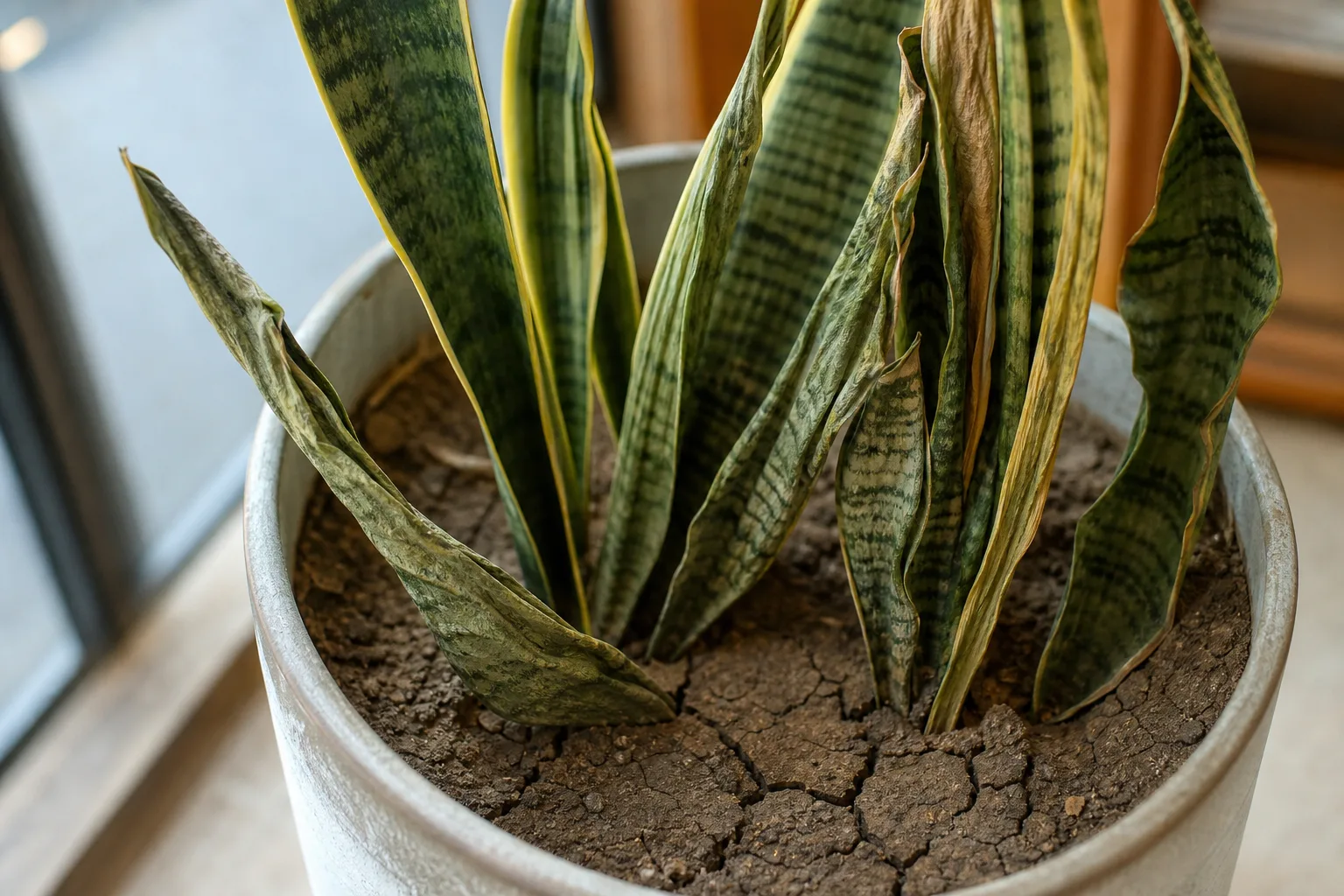
A snake plant leaf that starts rolling inward, folding, or twisting is signaling stress, but the curl alone cannot tell you what to do. A thirsty plant and one with roots damaged by persistently wet soil can both look limp; adding water without checking can help the first and worsen the second.
Start with the root zone, then compare what you find with the leaf’s texture, base, and recent conditions. The plant is commonly known as snake plant or Sansevieria; its accepted botanical name is Dracaena trifasciata. Its thick, water-storing leaves and preference for freely draining soil explain why both prolonged drought and soggy compost can cause trouble. Penn State Extension’s snake plant guide and the Royal Horticultural Society’s growing guide emphasize letting the mix dry before watering and avoiding poor drainage.
Start with the shape, texture, and timing
Look at more than the direction of the curl. A leaf rolling lengthwise with both edges turning inward may be losing firmness from water stress, while a distorted, twisted leaf with rough or silvery marks points toward a different kind of injury. Softness at the base, yellowing, or a sour smell from wet mix raises concern about root damage; a firm, dry pot suggests the opposite.
| What you notice | Check this first | What it suggests |
|---|---|---|
| Wrinkled or folded leaves and dry mix several inches down | Moisture at the center and bottom of the pot | Underwatering or a root ball that repels water |
| Curling with yellowing, soft bases, or mix that stays wet | Drainage holes, saucer, then roots if decline continues | Overwatering or root rot |
| Twisted new leaves, silvery scuffs, or tiny insects | Leaf folds, undersides, and the soil line | Sap-feeding pests |
| Curl beginning after a move, cold night, or hot window | Temperature and light exposure where the plant sits | Environmental shock or sun stress |
| One leaf is bent but the rest of the plant is firm and growing | That leaf’s history and cultivar shape | Physical damage or normal variation |
Compare affected leaves with healthy growth. Snake plant cultivars do not all grow as perfectly upright, flat blades; some twist, arch, or have naturally wavy margins. If the shape is stable, the tissue is firm, and new growth looks normal, you may be looking at the plant’s form rather than an active problem. The RHS describes the range of leaf forms across Sansevieria cultivars.
A single crease often traces to being bent, squeezed during transport, or pressed against a wall. That damage can remain visible even after the plant is otherwise healthy. Curl that is spreading across several leaves, especially with yellowing, weak growth, or a persistently wet or dry pot, deserves a closer check.
Seven causes of snake plant leaf curl
1. Underwatering
Snake plants store moisture in thick leaves, so they tolerate dry periods better than many houseplants. That reserve is not unlimited: if the potting mix stays dry for too long, leaves can lose firmness, wrinkle, and curl inward, often with dry or crispy edges. A dry surface alone is not enough evidence; a large pot may still hold moisture lower down.
Check the mix at more than one depth with a wooden skewer or your finger, avoiding damage to the rhizomes near the base. If the root zone is dry and the leaves remain firm at the base rather than mushy, water thoroughly until excess drains through the holes. Empty the saucer or decorative cachepot instead of leaving the pot sitting in runoff. Penn State Extension recommends watering only when the medium is dry and warns that excess water is a common way to harm a snake plant.
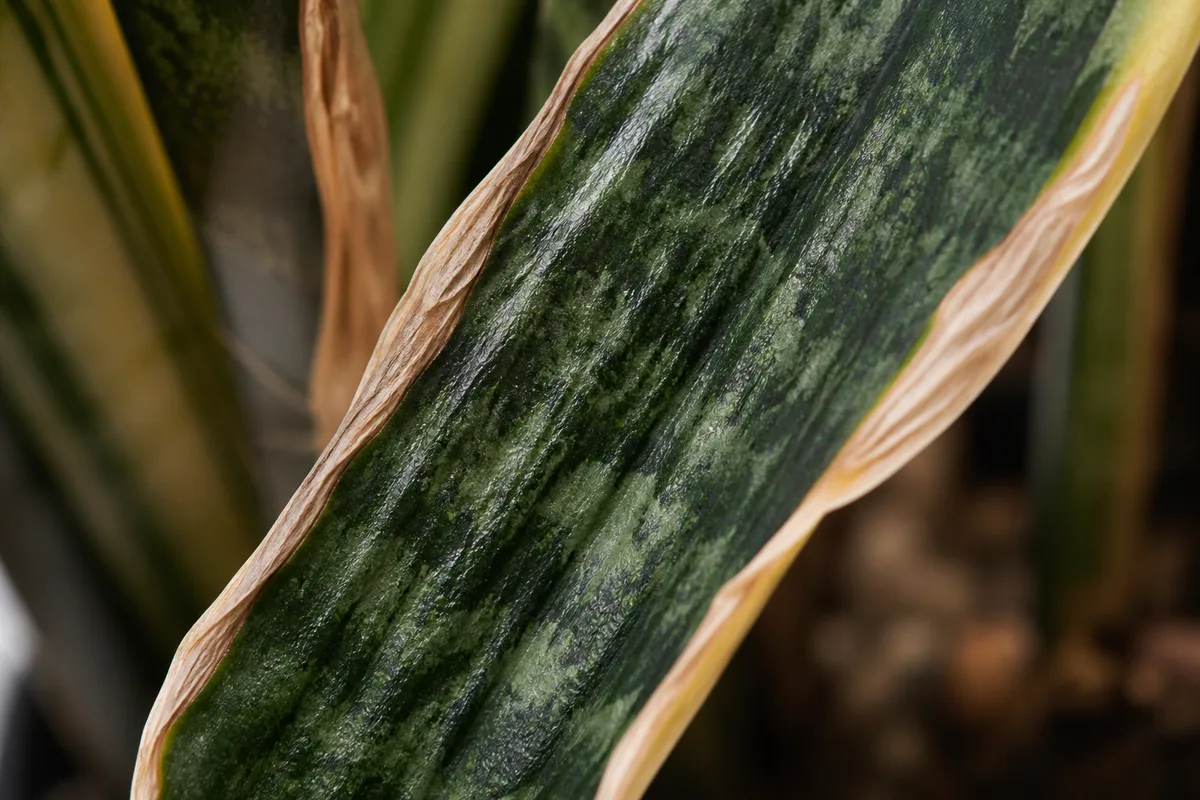
Dry, wrinkled foliage paired with dry soil supports a dehydration diagnosis; check the full root ball before watering.
After a proper watering, do not keep adding small splashes to chase the curl. Let the mix dry again before watering, and remember that a plant in low winter light may take much longer to use its water than one in a warm, bright room. The goal is not a weekly schedule; it is a full drink when the root zone has dried, followed by a drain-and-dry interval.
How long that interval takes depends on the setup, not just the season. A small terracotta pot near a bright window may dry sooner than a large plastic pot across a dim room, and a dense mix may stay wet long after the top looks dry. Use the pot’s weight as a second clue: a recently watered pot feels heavier, while a dry one is noticeably lighter. Learning that difference for your own container is more useful than copying someone else’s watering calendar.
2. Overwatering and root damage
When roots sit in wet, poorly aerated mix, they can decay and stop supplying water normally. The leaves may then seem thirsty even though the pot is damp. Yellowing, soft or collapsing leaf bases, a musty smell, and water that remains in the pot long after watering make root trouble more likely than simple drought. North Carolina State Extension notes that overwatering can rot snake plant roots.
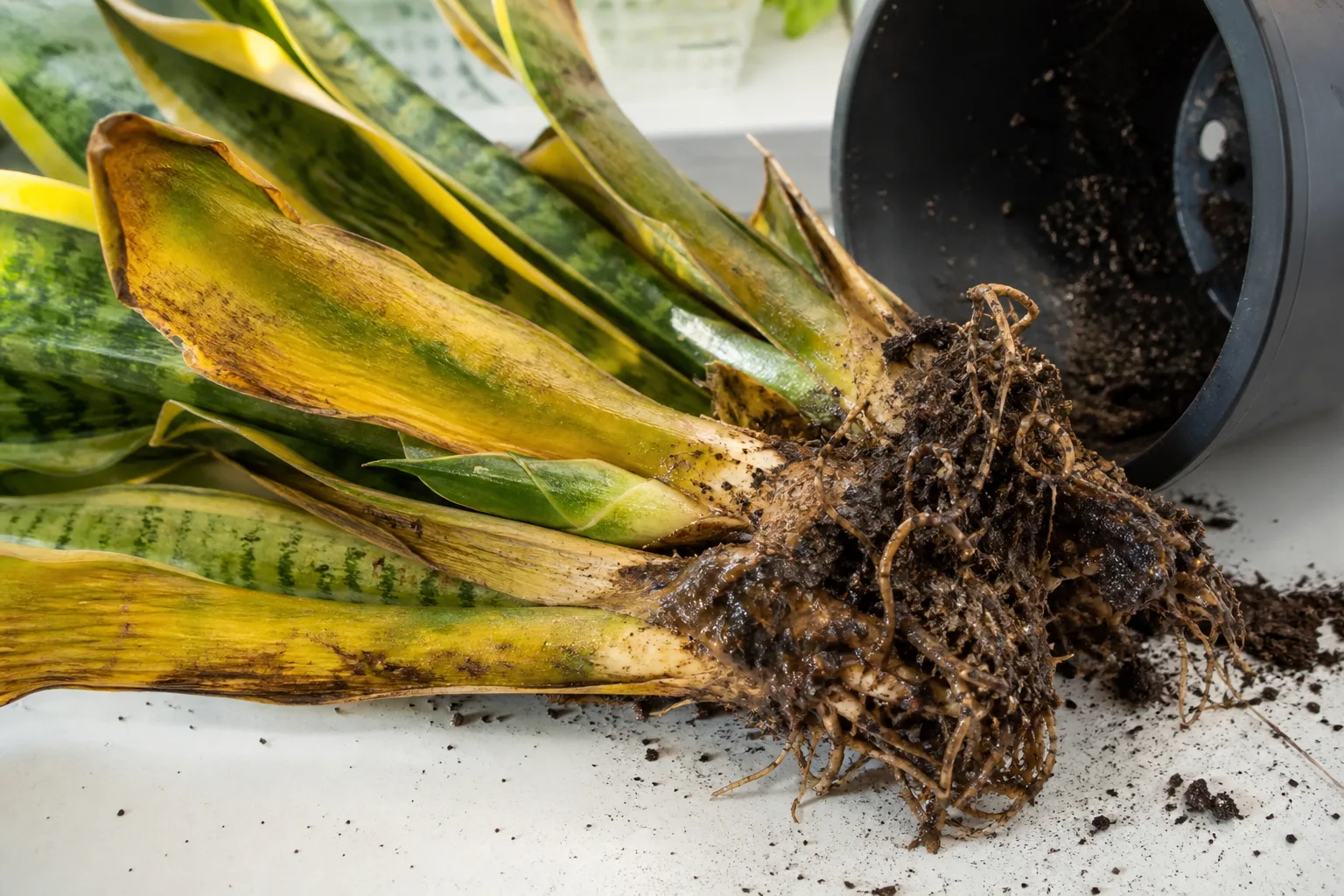
Soft bases and dark, deteriorating roots call for a root check rather than another watering.
First remove standing water and confirm that the drainage holes are open. If the mix remains wet and the plant continues to decline, slide it from the pot and inspect the roots. Healthy roots and rhizomes should feel firm; roots that are brown or black, soft, and falling apart are damaged. Trim only clearly decayed tissue with a clean tool, then repot into fresh, airy mix in a pot with drainage. Do not choose a much larger pot: the extra unused mix can stay wet around a small root system.
If the soil is merely damp after a recent watering and the plant is stable, do not unpot it just because one leaf curled. Give the mix time to dry and keep the saucer empty. The RHS advises watering only after the compost dries and warns that leaving the plant in water encourages root rot.
If you do find rot, distinguish the roots from the rhizome, the thick horizontal stem that produces leaves and roots. Remove only tissue that is unmistakably soft or decomposing; firm, pale roots and firm rhizomes are worth preserving. A plant with a large amount of firm tissue may recover, but a collapsed crown or widespread rot can limit the chances of success. Reassess the pot and mix before watering again rather than following an automatic “water after repotting” rule for a root-damaged plant.
3. Compacted or water-repellent potting mix
Old, compressed mix can create two opposite-looking problems. When it is wet and dense, little air reaches the roots and water drains slowly; after it becomes extremely dry, some mixes pull away from the pot and allow water to run down the gap without wetting the root ball. In the second case, a watering can empty quickly while the center of the pot stays dry.
Watch how the pot behaves during watering. If water immediately races down the sides, apply it slowly in a few passes and pause between them so the mix can absorb it. Let all excess drain. If the center still sheds water, or the medium is a hard, compacted mass, repot into fresh, free-draining container mix. The RHS recommends a cactus compost or a mix amended with horticultural grit for Sansevieria; Penn State Extension also suggests cactus mix or perlite.
Avoid packing fresh mix tightly around the roots. Firm the medium just enough to steady the plant, then water once and observe how it drains. A layer of rocks at the bottom does not repair heavy mix or blocked drainage; the useful change is an open drainage hole and an airy medium throughout the pot.
When replacing the mix, remove loose old medium without stripping every root bare. Choose a container mix designed for pots, then add a coarse component such as pumice, perlite, or horticultural grit if the base mix holds water for too long. Avoid dense garden soil and fine sand, which can settle into small spaces and make drainage less predictable. The goal is a mix that wets evenly, then releases excess water and allows air back to the roots.
4. Sap-feeding pests
Thrips, mealybugs, scale, aphids, and spider mites can distort leaves while they feed. Pests are more likely when new growth is twisted or uneven, or when you find fine stippling, silvery scuffs, sticky residue, cottony patches, shed skins, or tiny insects tucked into leaf folds. The North Carolina State Extension plant profile recommends monitoring Dracaena for common houseplant pests; Gardening Know How’s snake plant troubleshooting article also calls attention to rough feeding scars and distorted leaves associated with thrips.
Inspect the front and back of each leaf, the tight spaces where leaves meet, and the soil line. A magnifying glass or phone camera zoom helps because thrips and mites can be difficult to see. Curling by itself is not proof of pests, so do not spray a plant just because its leaves look unusual.
If you find insects, move the plant away from other houseplants and wipe or rinse the leaves carefully, including the undersides. Reinspect over the next several days. If the pest persists, use only a product labeled for that pest and for indoor ornamentals, and follow its label for coverage, repeat timing, ventilation, and pet or child precautions. Severely damaged leaves may stay curled, but limiting the infestation protects new growth.
Do not combine several sprays or homemade mixtures simply because a rinse did not flatten the leaf. Treatments only affect pests they contact, and folds can hide insects, so repeat inspection matters. If you cannot identify the pest, get a clear close-up or ask a local extension service before applying a stronger product.
5. Temperature swings or abrupt light exposure
A plant moved beside a chilly window, left in a cold draft, or placed under an air-conditioning vent can develop stress that resembles a watering problem. Heat against a radiator or a hot, bright pane can dry the pot quickly; a sudden shift into strong direct sun can scorch or dehydrate leaves. Look for a clear timing link between the curl and a move, season change, or equipment turning on.
Keep the plant in steady indoor conditions. The RHS gives 15–24°C (60–75°F) as a suitable room-temperature range and recommends avoiding cold drafts and radiators. It also notes that midday summer sun can scorch leaves, while North Carolina State Extension describes snake plants as tolerant of low light but dependent on careful watering and drainage. Low light alone more often slows growth or makes tall leaves lean than suddenly curls an established leaf.
Move a cold-stressed or sun-stressed plant gradually to bright, indirect light, away from a vent or glass that becomes very cold. Do not compensate for a hot window by watering every day; confirm the root zone is dry first. Tissue already scarred by cold or sun may not become smooth again, so judge recovery by whether the damage stops spreading and new leaves emerge normally.
Also separate true curling from a plant that is simply leaning. Snake plants in dim locations may grow more slowly or angle toward the brightest side, while sudden bleaching or brown, dry patches after a move suggest too much sun. Turn the pot gradually for even light, but do not expect rotation to reverse wrinkled tissue.
6. Excess fertilizer or mineral salts
Too much fertilizer can concentrate soluble salts around the roots, making it harder for them to take up water. Brown, crisp tips, a white crust on the soil or pot rim, and symptoms that began soon after feeding are stronger clues than curl alone. Hard-water minerals may also accumulate over time, especially when little water drains out of the pot.
Pause feeding while the plant is stressed. If the mix drains freely and there are no signs of root rot, rinse the medium slowly with clean water and let the runoff leave the pot; never let the container stand in that runoff afterward. If the mix is compacted, the pot has no drainage, or roots are already failing, flushing may keep the root zone wet longer, so correct the drainage or replace the degraded medium instead. The RHS cautions that overfeeding can damage roots and reduce plant health.
Do not use fertilizer as a treatment for curling or yellowing. A stressed plant does not need an extra dose to “recover,” and a snake plant growing slowly in low light generally uses less fertilizer than one actively producing leaves in bright conditions. Resume a restrained houseplant feeding routine only after the plant has stabilized and growth resumes.
7. A crowded root ball
A snake plant can become crowded as its rhizomes and roots fill a container, but it does not need a roomy pot every year. The RHS says repotting is usually needed only once roots and leaves fill the pot or cause it to buckle; a larger-than-needed pot contains more mix than the plant can use and may remain damp too long.
Look for several signs together: a visibly solid root mass with little mix left, roots emerging from several drainage holes, the container bowing or cracking, or water passing through rapidly while the pot dries unusually fast. A single root showing at one hole is not enough on its own. Snake plants tolerate snug quarters, and repotting an otherwise stable plant can add unnecessary stress.
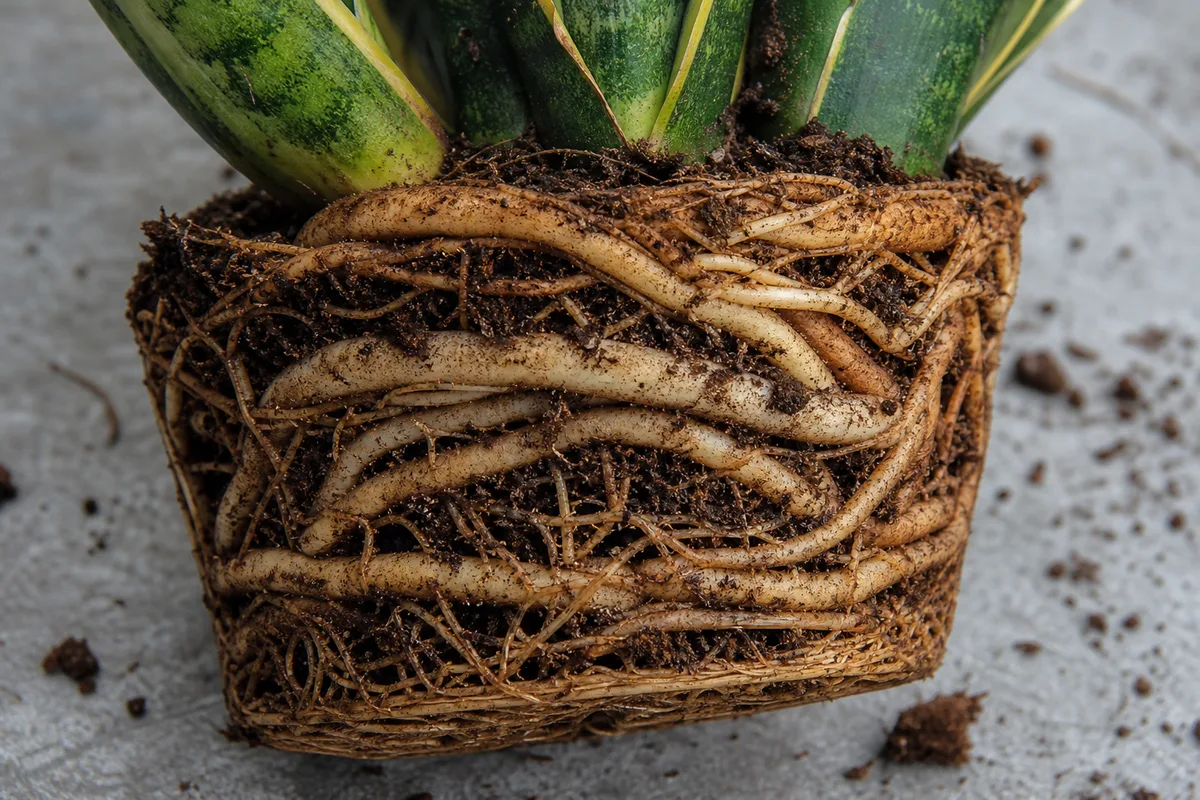
Repot when the root mass has genuinely filled the container, not simply because one root reaches a drainage hole.
When a crowded root ball is confirmed, choose a pot only one size larger with open drainage holes and a fresh, gritty mix. Keep the plant at its previous depth and avoid breaking healthy roots unnecessarily. If only one side is tight, division may be an option during repotting, but it is not required just to correct leaf curl.
After repotting, watch how quickly the new container dries. If a compact root system goes into a very large pot, extra soil can stay wet around the roots and recreate the original stress. A close-fitting pot is not neglect; repotting should restore usable space and fresh structure, not surround a small plant with a reservoir of damp mix.
A five-minute diagnostic sequence
Check moisture through the root zone
Take the plant out of its decorative outer pot and empty the saucer. Test the mix several inches down near the edge and, if the pot is large, in a second spot. A moisture meter can help, but compare its reading with the pot’s weight and a wooden skewer because meter readings vary by medium and placement.
- Dry deep down, firm bases: give one thorough watering, then drain.
- Wet mix, soft bases, yellowing, or a sour smell: do not water; check drainage and roots if decline continues.
- Water runs around a dry root ball: re-wet slowly; repot if the medium is hard or persistently water-repellent.
- Moisture seems normal: check leaf folds for pests, then review recent changes in light, heat, cold, or fertilizer.
This sequence is safer than using a fixed interval or reacting to a single leaf. The same plant can need very different amounts of water across a bright summer window and a cool, dim winter corner. A pot with no drain hole, a dense mix, or a cachepot holding runoff changes the risk more than the calendar does.
Match the other clues before treating
Next, inspect the plant at the soil line. Press gently on the leaf bases; firm tissue is reassuring, while soft, collapsing tissue is a reason to check roots. Notice whether the curl affects old outer leaves, fresh central growth, one side facing the window, or the whole plant.
Then look for visible evidence, not just possibility. Silvery scrapes, sticky residue, cottony clusters, or moving specks justify pest management; no signs mean you should not default to insecticide. A white mineral crust or recent heavy feeding makes salts more plausible, while a recent cold spell or relocation points toward environmental stress.
Help the plant recover without adding new stress
Choose one correction that matches the evidence and give the plant time to respond. If it was dry, water thoroughly once; if the pot is wet, stop watering and solve drainage or root damage; if pests are present, isolate and treat the identified pest. Making several changes at once—repotting, pruning, fertilizing, moving, and spraying—makes it difficult to know what helped and can create fresh stress.
Leave the plant in bright, indirect light with stable temperatures while it recovers. Snake plants are slow-growing, so the best sign is not that every damaged leaf immediately becomes straight; it is that the curl stops progressing, the base remains firm, and new leaves grow normally. Check moisture before every later watering rather than sticking to the interval that caused the trouble.
Prune only leaves that are mostly collapsed, rotting, or too damaged to keep. Use a clean blade and cut the leaf near soil level without gouging the rhizome. A leaf with a stable crease or old scar can remain in place if it is otherwise firm and healthy.
When a curled leaf will not straighten
A leaf that folded because its tissues lost water may recover some firmness after the root zone is rehydrated and the underlying cause is corrected. Recovery is not instant, and a leaf that was sharply bent, crushed, cold-damaged, sun-scorched, or distorted while growing may keep its shape. That does not mean the plant itself is still sick.
Watch the newest growth and the pattern over time. If fresh leaves emerge firm and straight, the plant is improving even if older leaves retain marks. If fresh leaves keep twisting, bases soften, yellowing spreads, or the pot stays wet, return to the diagnostic sequence and reconsider the cause instead of repeating the same treatment.
Conclusion
Snake plant leaves curl for several reasons, and the safest first move is to check the mix and the leaf bases before reaching for water. Dry soil with firm bases points toward underwatering; wet soil with softness or yellowing calls for a drainage and root check. Pests, compacted mix, environmental shocks, salt buildup, and a genuinely crowded root ball each leave additional clues.
Correct the confirmed cause once, keep conditions stable, and judge progress by healthy new growth rather than expecting every old leaf to straighten. A curled leaf is useful evidence, but it is not a diagnosis on its own.



