5 Spring Flowers to Grow Like Martha Stewart
Build a polished spring garden with snowdrops, crocus, hellebores, witch hazel, and muscari—plus practical planting and maintenance tips.
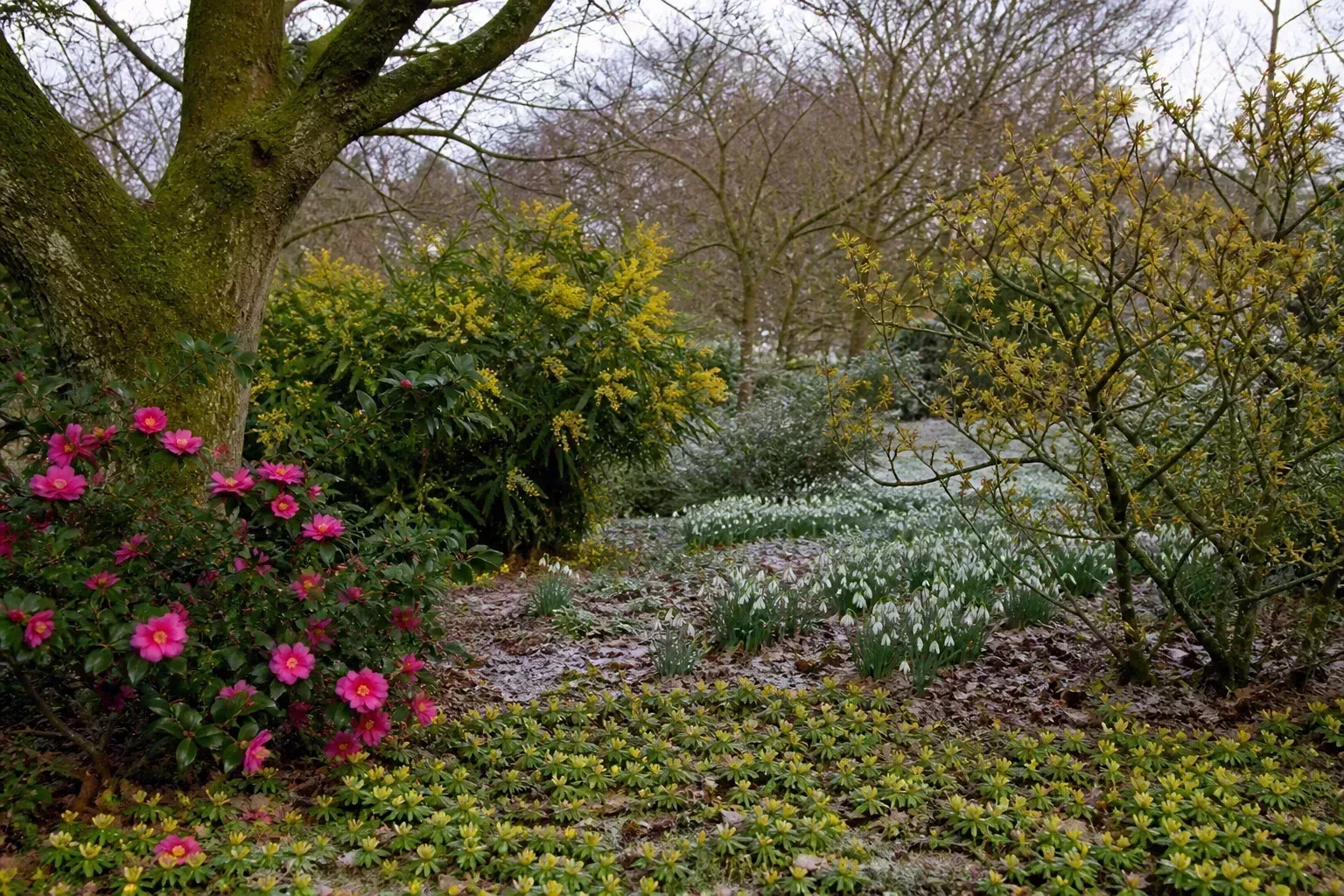
A Martha Stewart–style spring garden is less about owning one fashionable plant than about making the garden look composed when winter is barely over. The best displays use a few dependable plants repeatedly: something bright and low at ground level, something with height and structure, and flowers that overlap rather than all opening on the same weekend.
The five flowers below—snowdrops, crocus, hellebores, witch hazel, and muscari—work because they cover different jobs. Some are bulbs or corms that should be planted in fall, one is a deep-rooted perennial, and one is a slow-growing shrub. Treating them as five interchangeable “spring flowers” is the fastest way to get the timing wrong, so use the growing notes as part of the selection process.
What Makes This Spring Garden Look So Polished
The visual trick is repetition with variation. A few snowdrops scattered beside one path can look accidental; several small drifts repeated under a tree, beside a step, and near a seating area look intentional. The same is true of muscari’s blue: one clump is a cute accent, while recurring ribbons of blue make the garden feel designed.
Height matters, too. Witch hazel supplies a woody framework that is visible even when most perennials are dormant. Hellebores fill the middle layer with broad evergreen foliage and long-lasting nodding flowers. Snowdrops and crocus sit close to the ground, while muscari creates a slightly stronger band of color later in the bulb display.
This combination also has a practical advantage: it does not require one uniform site. Snowdrops and hellebores are comfortable in a woodland-edge setting, crocus needs reliable drainage and bright light, muscari can handle sun or the shifting shade beneath deciduous trees, and witch hazel needs room to become a shrub. Match the plant to the microclimate instead of forcing all five into one bed.
When to Plant Spring-Blooming Flowers
For most gardens, the important planting season is the season before the flowers appear. Dry snowdrop bulbs, crocus corms, and muscari bulbs are generally planted in fall so they can root before winter. Rutgers Cooperative Extension’s spring-flowering bulb guide describes the broader rule: plant after the soil cools in early to mid-fall, then water once to settle the soil without leaving it saturated. The guide also explains that “bulb” is often used loosely for corms and other underground storage organs, which is why crocus and muscari are commonly grouped with bulbs.
Spring purchases are different. A hellebore blooming in a nursery pot can usually be planted in spring, and a pot of flowering muscari or crocus can be moved outdoors after you have chosen a suitable site. Handle the root ball gently, water it in, and expect the first season to be more about establishment than a full naturalized display.
Do not buy a bag of dry spring bulbs in late spring and expect an immediate flush of flowers. The bulbs may be viable for the next season, but they have missed the normal rooting and dormancy cycle. In warm climates, the bigger question is whether a particular cultivar receives the winter conditions it needs; local bulb growers and extension offices are more useful than copying a calendar from a colder region.
1. Snowdrops for the Earliest White Blooms
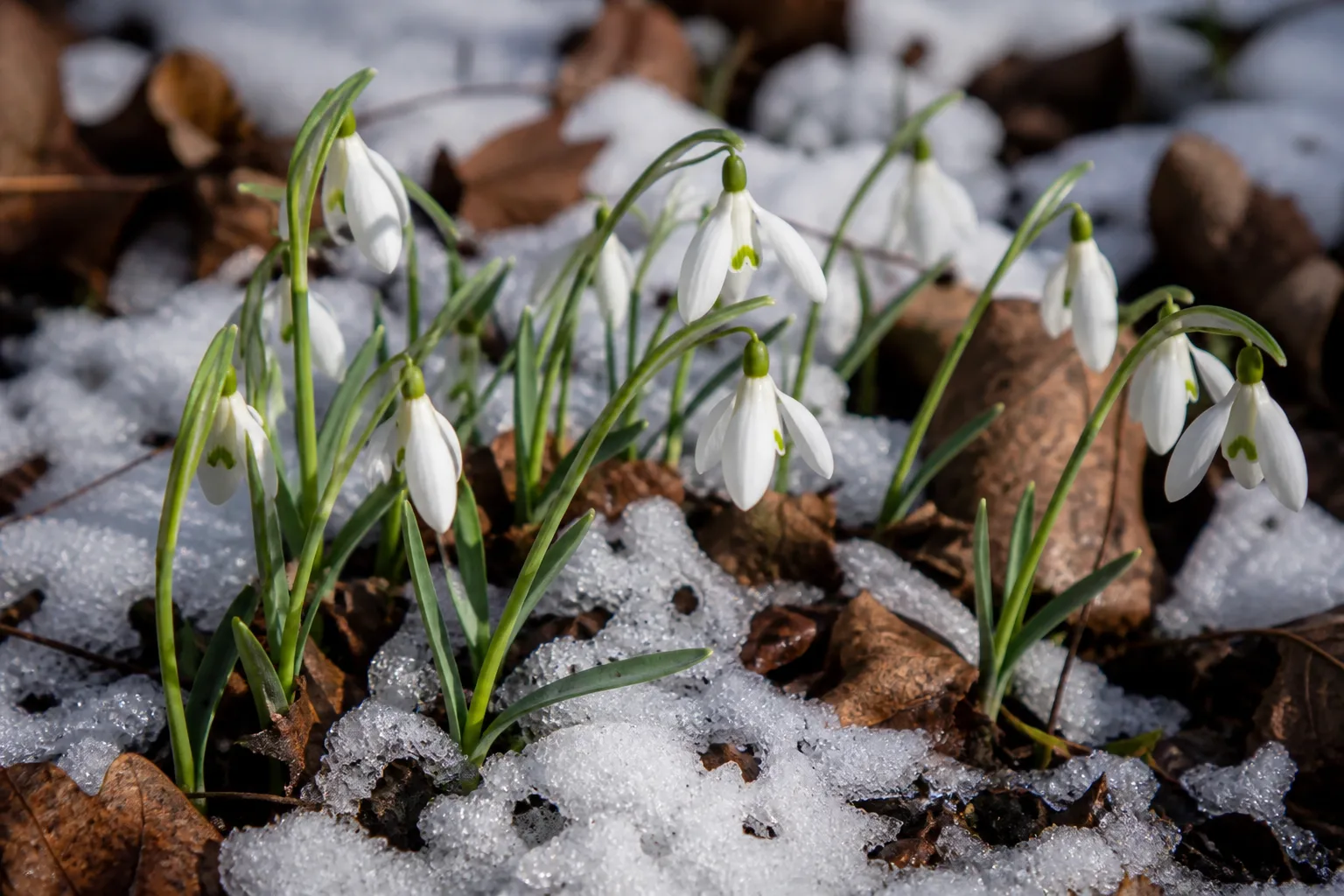
Snowdrops (Galanthus species) are the quiet opening note of this planting plan. Their white, pendant flowers and narrow leaves can appear while the garden is still mostly brown, which is why they make a small bed feel established before the rest of the spring display begins. Fine Gardening’s winter-blooms guide lists snowdrops as hardy across a broad range of climates and recommends rich soil that does not dry out in summer.
They are not a substitute for a dry, sunny bulb bed. Snowdrops prefer the cool, moisture-retentive conditions of a woodland edge, especially beneath deciduous trees where winter and early-spring light reaches the soil before the tree canopy fills in. A site can be shady later in the year and still work; deep, dry shade under evergreen trees is a much less reliable choice.
Best Site and Planting Strategy for Snowdrops
The most natural look comes from planting snowdrops in loose groups rather than a ruler-straight row. Tuck them beside a path, around the base of a deciduous shrub, or through an open patch of leaf mold where you will see the flowers at eye level. If you are buying plants after bloom, “in the green”—with leaves still attached—often gives you a better establishment opportunity than bulbs that have been stored dry for too long.
Improve compacted soil before planting, but do not turn the bed into a water-holding bowl. Add organic matter to improve structure, and make sure winter rain can drain away. Snowdrops are small enough that a heavy layer of mulch can delay or smother their emergence, so use a light, loose covering rather than burying the planting under a thick blanket.
Once flowering is finished, leave the leaves in place. They may look insignificant, but they are charging the underground storage organ for next year. A small companion plant or groundcover can hide the brief dieback without requiring you to cut the foliage early.
2. Crocus for Color in Lawns and Borders
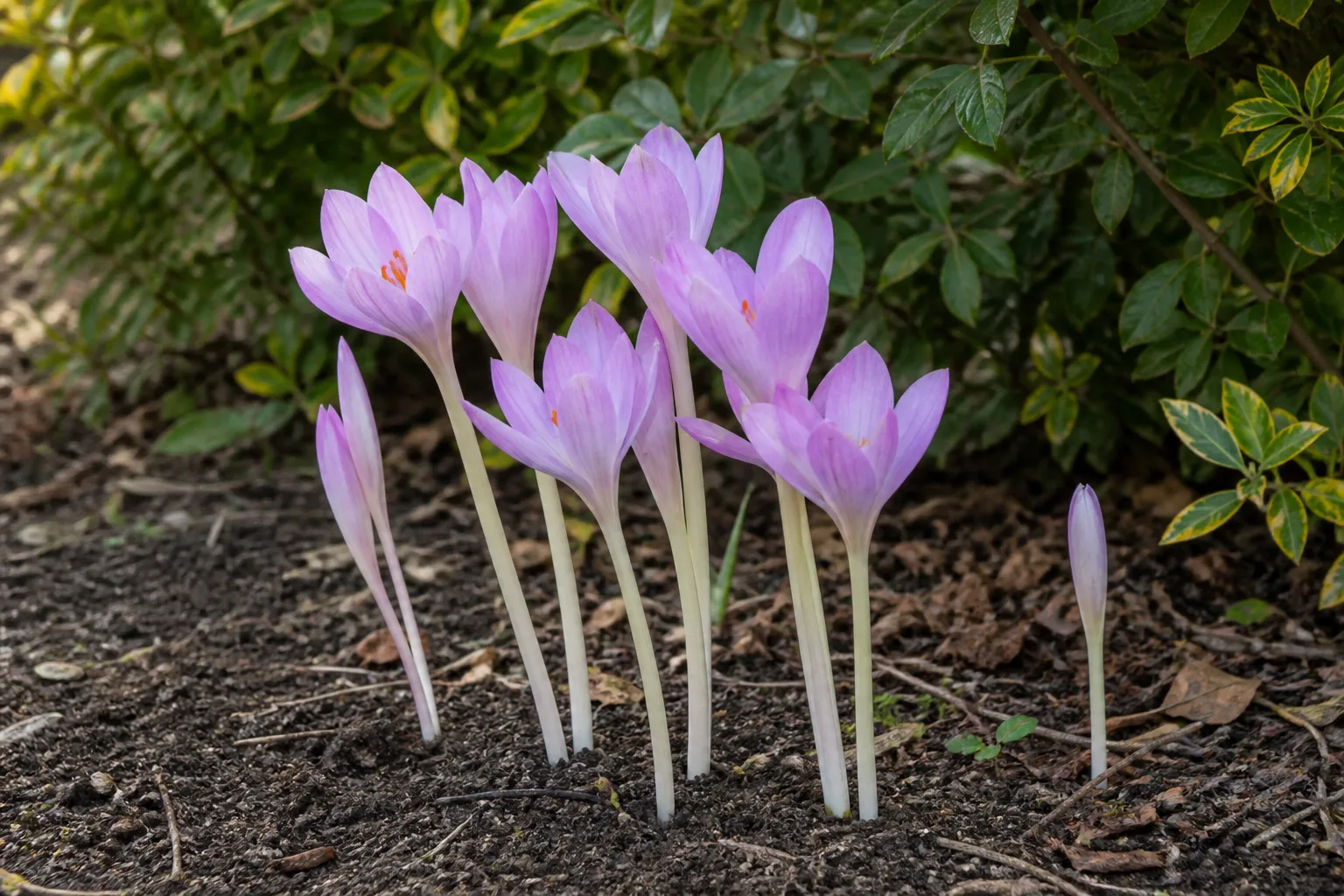
Crocus are corms, not true bulbs, and they earn their place by being both early and versatile. The goblet-shaped flowers can appear in purple, white, yellow, and striped forms, often opening wide in bright weather and closing when conditions are cold or wet. They are especially effective where you want color close to the ground: a lawn, a rock garden, a raised bed, or the front of a border.
The Royal Horticultural Society’s crocus guide emphasizes two decisions that prevent disappointment: choose the species for the setting, and plant spring-flowering crocus in autumn. Smaller early types such as Crocus tommasinianus suit sparse grass and the area beneath deciduous trees, while stout Dutch hybrids are better choices for containers and many lawn displays.
Pick the Right Crocus for Your Setting
For a lawn, choose an area that can be left unmown long enough for the leaves to ripen. Crocus foliage needs to manufacture and store food after flowering; mowing it immediately because the flowers have faded weakens the planting. The RHS guidance on naturalizing bulbs recommends waiting until foliage has yellowed and become straw-like, with at least several weeks allowed after flowering for many lawn bulbs.
Plant crocus in small groups at roughly 3 to 4 inches deep, following the package guidance for the exact variety. The RHS growing guide for crocuses notes that spring crocus generally prefer sun and good drainage, and that outdoor plants usually need little supplemental water except in containers or during unusual dry spells while in leaf.
Do not use the name “crocus” as a guarantee of spring bloom. Autumn-flowering species are a separate timing choice and should be planted for late-season color. If you want the spring look, check the flowering season on the label before you buy, then choose a site that will be bright when the corms are growing.
3. Hellebores for Long-Lasting Woodland Color
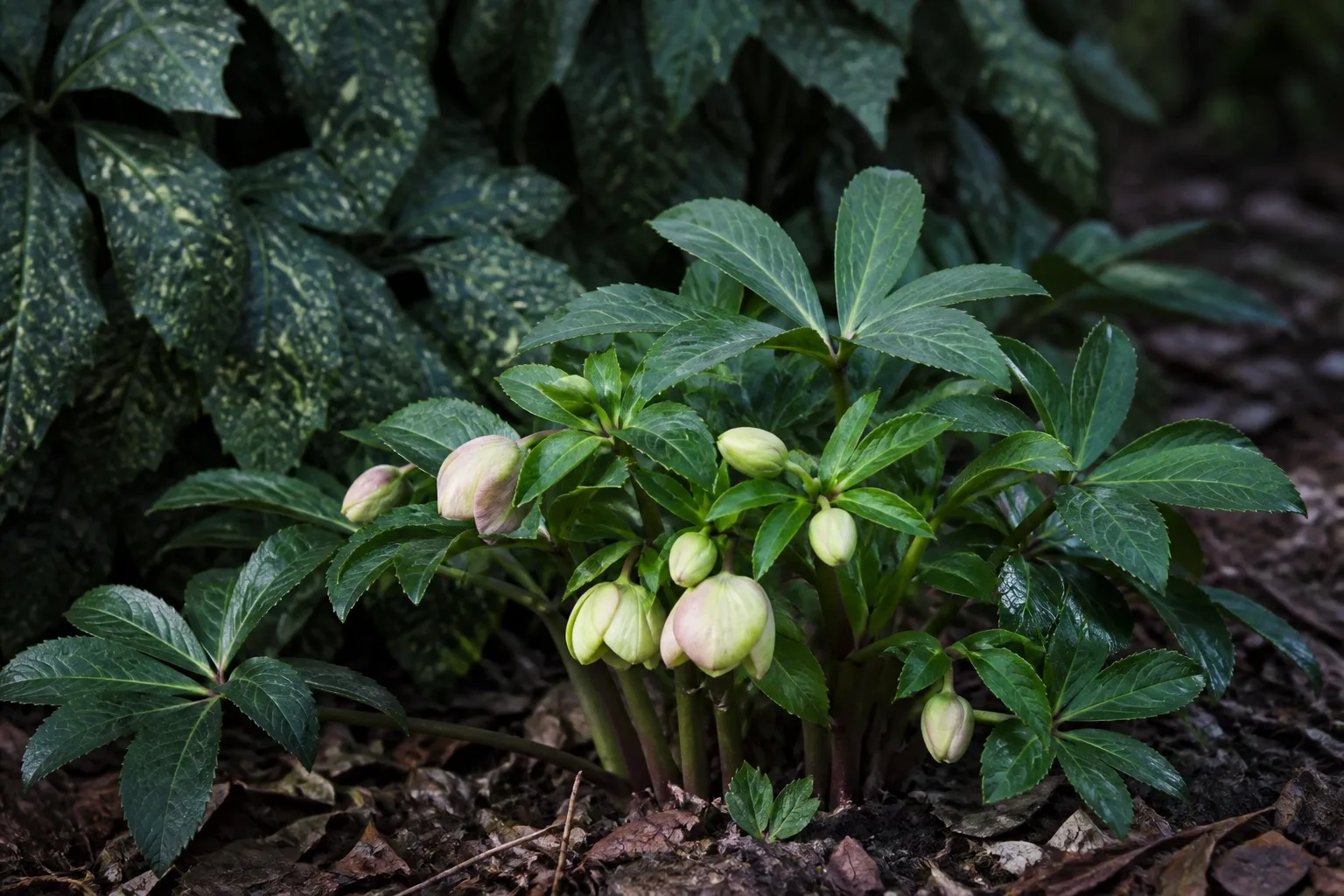
Hellebores are not bulbs at all. They are deep-rooted perennials that bring substantial foliage and flowers to the garden for months, often overlapping with snowdrops and the first crocus. Their nodding blooms come in whites, greens, pinks, purples, and speckled forms, so you can use them to soften the transition between the tiny bulb layer and a larger shrub.
The practical reason to grow them is staying power. Gardens Illustrated’s hellebore growing guide describes hellebores as plants that can look good from midwinter into spring and notes that their flowers provide nectar and pollen when those resources can be scarce. That makes a hellebore more than a pretty filler: it is a reliable middle layer with a long season of interest.
Give Hellebores the Light They Actually Want
The sweet spot is light shade or filtered light, especially shade from strong midday sun. Hellebores tolerate sunnier conditions when moisture is consistent, but they do not perform well in deep shade where flowering is weak. The best planting position is often under or near deciduous trees, where the plants receive more light in winter and early spring and more shade as temperatures rise.
Prepare a deep, organic-rich planting hole because hellebores make substantial roots. Water them consistently during the first year, then mulch with compost in autumn without piling it against the crown. Old leaves can be removed when they are declining or spotted so that air and light reach the center of the plant; do not strip healthy foliage just because the flowers have opened.
Hellebores can be enjoyed temporarily in a container, but their deep roots make long-term pot culture less forgiving. If you buy one in bloom for a porch or patio, treat that as a way to enjoy the flowers while choosing its permanent garden position, not as proof that a shallow pot is its ideal home.
4. Witch Hazel for Structure and Fragrance
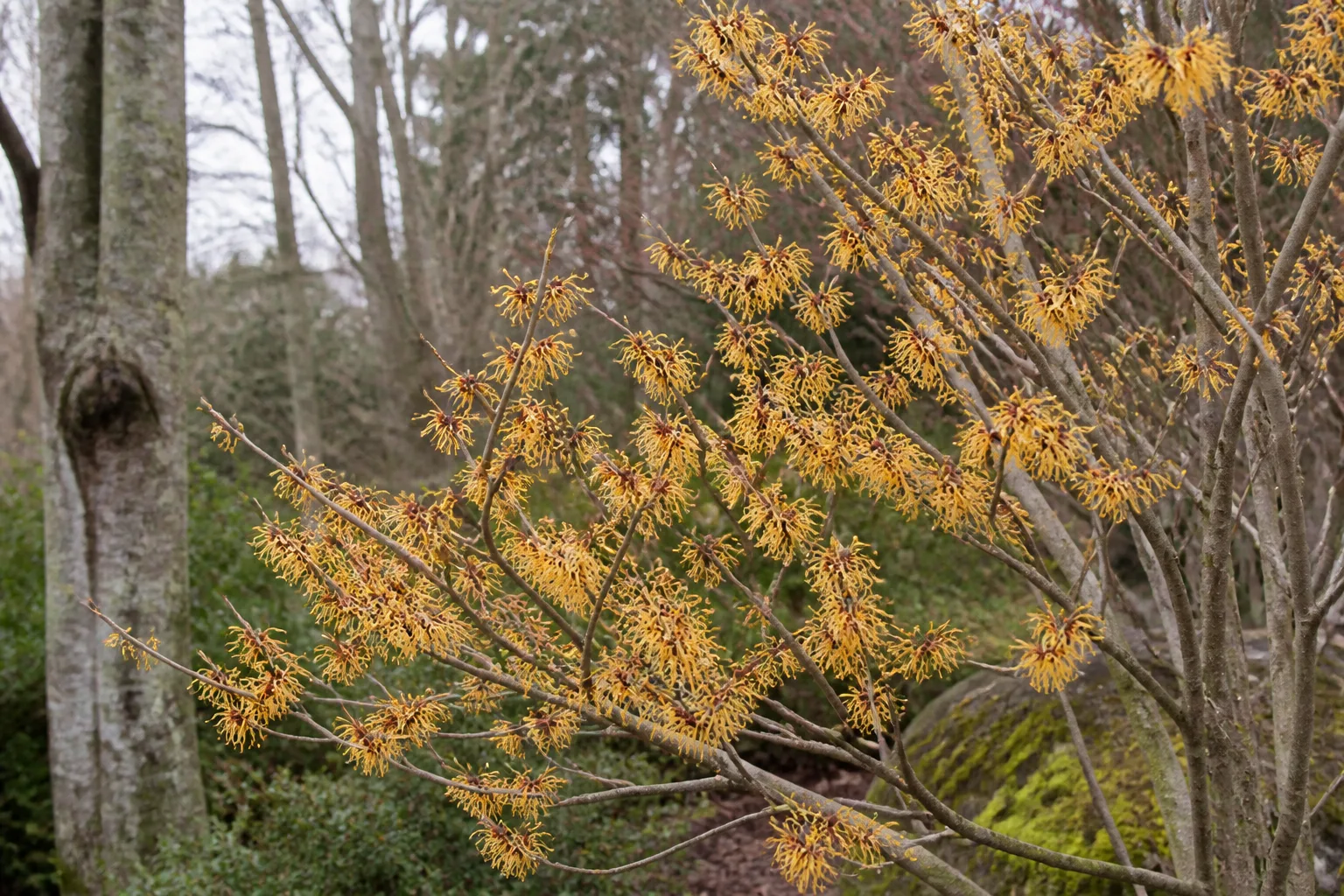
Witch hazel (Hamamelis) changes the scale of the planting. Snowdrops, crocus, and muscari are low bulbs; hellebores are clumping perennials; witch hazel is a deciduous shrub with bare branches that carry spidery, often fragrant flowers in winter and early spring. Gardens Illustrated’s witch hazel guide describes flowering from roughly December into February or March, depending on the plant and conditions.
Use it as the anchor rather than squeezing it into a tiny flower bed. The yellow, orange, or red flowers are easiest to appreciate against bare branches and a quiet background, while a carpet of snowdrops or hellebores at its feet makes the shrub feel integrated into the garden. A plant that looks modest at purchase can eventually become several metres tall and wide, so give it a view line and enough root space.
Plan for the Shrub You Will Have, Not the Plant You Buy
Witch hazel prefers well-drained soil enriched with organic matter and a sunny, open position for the most compact shape. It can grow in shade, but the branches may become long and loose. A sheltered position protects young foliage from strong wind, and consistent moisture is especially important while the plant establishes or during hot summers.
Soil preference varies among witch hazels and cultivars. Gardens Illustrated describes an acid to neutral soil as ideal while acknowledging that established plants can perform in some higher-pH gardens. If the leaves become chlorotic, test the soil before adding amendments; changing pH blindly can damage neighboring plants and may not solve a drainage problem.
Prune only with a reason. Remove dead wood, or reduce a plant just after flowering by cutting back to a suitable leaf bud. Pruning later can remove the next season’s flower wood, and aggressive annual shaping defeats the graceful branching that makes witch hazel worth growing.
5. Muscari for Blue Drifts and Easy Naturalizing
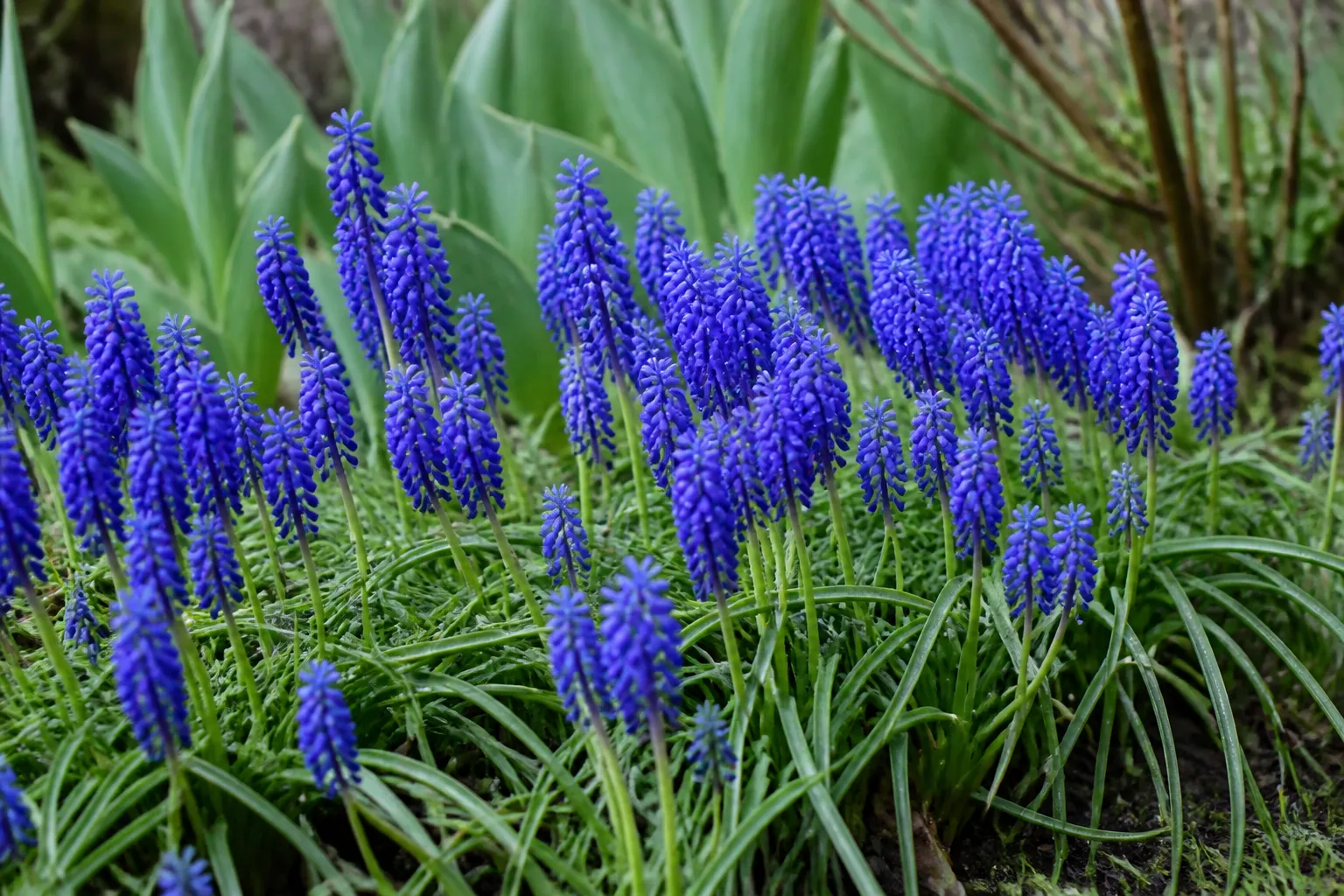
Muscari, commonly called grape hyacinth, supplies the saturated blue that keeps an early-spring garden from becoming a study in white and brown. Its flower spikes resemble tiny clusters of grapes, and its grasslike foliage makes it useful at the front of a bed, around a path, in a container, or naturalized through a lawn or meadow. The RHS Muscari guide describes its use in borders, lawns, and meadows and notes that it can self-seed over time.
Muscari is also forgiving about placement, within limits. The RHS says it can grow in almost any soil but prefers free drainage, full sun, or the shifting shade beneath deciduous shrubs and trees. The same source warns against two opposite mistakes: letting the bulbs dry out while they are actively growing in spring, and planting them in wet soil where the bulbs can rot.
Keep Grape Hyacinth Abundant, Not Invasive
Plant dry bulbs in autumn, preferably in small clusters rather than evenly spaced dots. BBC Gardeners’ World’s grape hyacinth guide recommends a planting trench around 10 centimetres deep and notes that muscari can self-seed and return each year. That persistence is part of its charm, but it is also a design decision: use containers or a defined bed if you do not want the blue drift to travel.
After flowering, remove spent flower heads if you want to reduce self-seeding. Let the leaves fade naturally, and divide congested clumps while the plants are dormant in summer if flowering weakens or the planting has spread beyond its intended boundary. Avoid feeding and watering by habit; in ordinary ground, muscari usually needs little intervention once established, but it should never be left in a permanently wet pocket.
How to Combine All Five Into a Succession of Bloom
Start with the permanent frame. Place witch hazel where its winter flowers can be seen from a window or path, then plant hellebores around—not directly against—the shrub’s base. Their broad leaves make a useful bridge between the woody structure and the ground-level flowers.
Next, repeat the small bulbs in drifts. Put snowdrops in the cooler, moisture-retentive pockets and crocus where there is more sun and drainage. Use muscari to connect the two areas with blue, or place it along an edge where its leaves can fade without blocking a later perennial.
Think in weeks, not in a single peak. Snowdrops can open first, crocus follows as light increases, hellebores carry the middle season, and muscari adds a stronger color note as spring advances. Witch hazel may begin before all of them and continue as the bulbs emerge, so the composition has something to look at even on days when rain or cold keeps the small flowers closed.
The most polished result usually comes from repeating each plant at least three times. A single specimen of every flower reads like a collection; groups of the same plant repeated through the garden read like a plan. Keep enough space between groups for the plants to expand, and do not bury tiny bulbs beneath later plants that will need frequent summer irrigation.
Planting Checklist for a Spring Flower Display
Before buying, walk the garden at the time of year when you want to see flowers. Note which areas are sunny in February or March, which stay wet after rain, where the mower must pass, and which views are visible from indoors. The best plant on paper is still the wrong plant if its flowers face away from the place you actually spend time.
Use this sequence for the planting itself:
- Choose the site by conditions, not color. Put crocus in bright, free-draining ground; give snowdrops and hellebores a cooler woodland edge; reserve open space for witch hazel; and use muscari where a spreading clump is welcome.
- Prepare the soil before the bulbs arrive. Spring bulbs prefer soil that drains but does not turn bone-dry. Rutgers Cooperative Extension gives a general planting depth of two to three times the bulb’s height and recommends watering after planting without overwatering.
- Buy firm, healthy planting material. Reject bulbs or corms that are soft, moldy, badly nicked, or already rotting. For shrubs and perennials, choose a plant with a healthy root ball and no sign of persistent waterlogging.
- Plant in groups. Small bulbs make more visual impact in clusters or loose drifts. Scatter them naturally if you want a meadow effect, but avoid planting so close that expanding clumps compete within a year or two.
- Label unusual cultivars. A simple label prevents the common mistake of forgetting which crocus blooms in spring, where a hellebore came from, or which muscari was intended to stay in a container.
- Water for establishment, then reassess. Newly planted bulbs need moisture to root, but a saturated bed encourages rot. Once established, water according to soil, rainfall, container size, and the plant’s active growth—not a fixed weekly rule.
After-Bloom Care: Let Bulb Foliage Recharge
The flowers are the visible reward, but the leaves are doing the important work after the show. Green foliage captures energy and stores it underground for the next season. Rutgers Cooperative Extension and the RHS both stress the same practical rule: do not mow or cut bulb leaves while they are still green.
In a lawn, delay mowing the bulb area until the foliage has yellowed and begun to die back. If that is incompatible with your lawn schedule, move crocus and muscari to a border or a rough-grass area you can leave alone. This is one reason a carefully placed drift often performs better than bulbs scattered across every part of a frequently mown lawn.
You can remove spent flowers when they look tired, especially on muscari if you want to limit seed. Do not respond to every fading leaf with fertilizer. The planting material, soil fertility, and drainage matter more than a late, heavy feed, and excess moisture or fertilizer can shorten the display or encourage rot.
Give each plant its own cleanup timing. Cut back declining hellebore leaves when needed, prune witch hazel just after flowering if it needs shaping, and let bulb foliage fade naturally. The garden will look less “tidy” for a short period, but that temporary restraint is what keeps the spring display perennial.
Common Mistakes That Ruin Spring Displays
Planting every flower in the same bed. Five plants with different light, drainage, and mature-size requirements should not be treated as one recipe. The solution is to create small connected zones: a shrub-and-hellebores layer, a cool snowdrop pocket, a sunny crocus area, and a muscari edge.
Cutting leaves when flowers fade. This is the most common reason a once-promising bulb drift declines. Hide the foliage with later perennials or allow the planting to grow through a rough-grass area instead of removing it early.
Choosing deep shade because it feels “woodland.” Hellebores and snowdrops can handle filtered light, but deep shade can suppress flowering, and muscari will not flower well where evergreen shade is heavy during its active season. Look for seasonal light, not just the shadow you see in summer.
Ignoring drainage. Spring gardens are often planted during cool, wet weather, which can disguise a bed that stays waterlogged. If soil remains saturated after rain, solve the drainage problem or use a raised, amended planting area before adding valuable bulbs.
Underestimating witch hazel. A young shrub may fit beside a path; a mature one may not. Check the cultivar’s eventual height and spread, and leave room for its branches, roots, and view.
Assuming “low maintenance” means “no maintenance.” Muscari may need division or boundary control, crocus needs foliage protection, hellebores benefit from thoughtful cleanup, and young witch hazel needs water during hot dry weather. Low maintenance means fewer interventions after the right setup, not zero decisions.
Conclusion
The five flowers in this plan create a polished spring garden because each contributes something different: snowdrops bring the first white bells, crocus adds bright color close to the ground, hellebores carry long-lasting woodland texture, witch hazel provides structure and scent, and muscari supplies blue repetition.
Start with the conditions you actually have. Plant dry bulbs and corms in fall, use spring-blooming container plants when they are available, place each species where its light and drainage needs make sense, and protect the foliage after flowering. That combination of good siting and restraint will give you a garden that feels thoughtfully composed every spring—not just one that looks good in a single photograph.