How to Grow and Care for St. John's Wort
Grow common St. John's wort without regret: site checks, container options, pruning, seed starting, invasive warnings, and safer Hypericum alternatives.
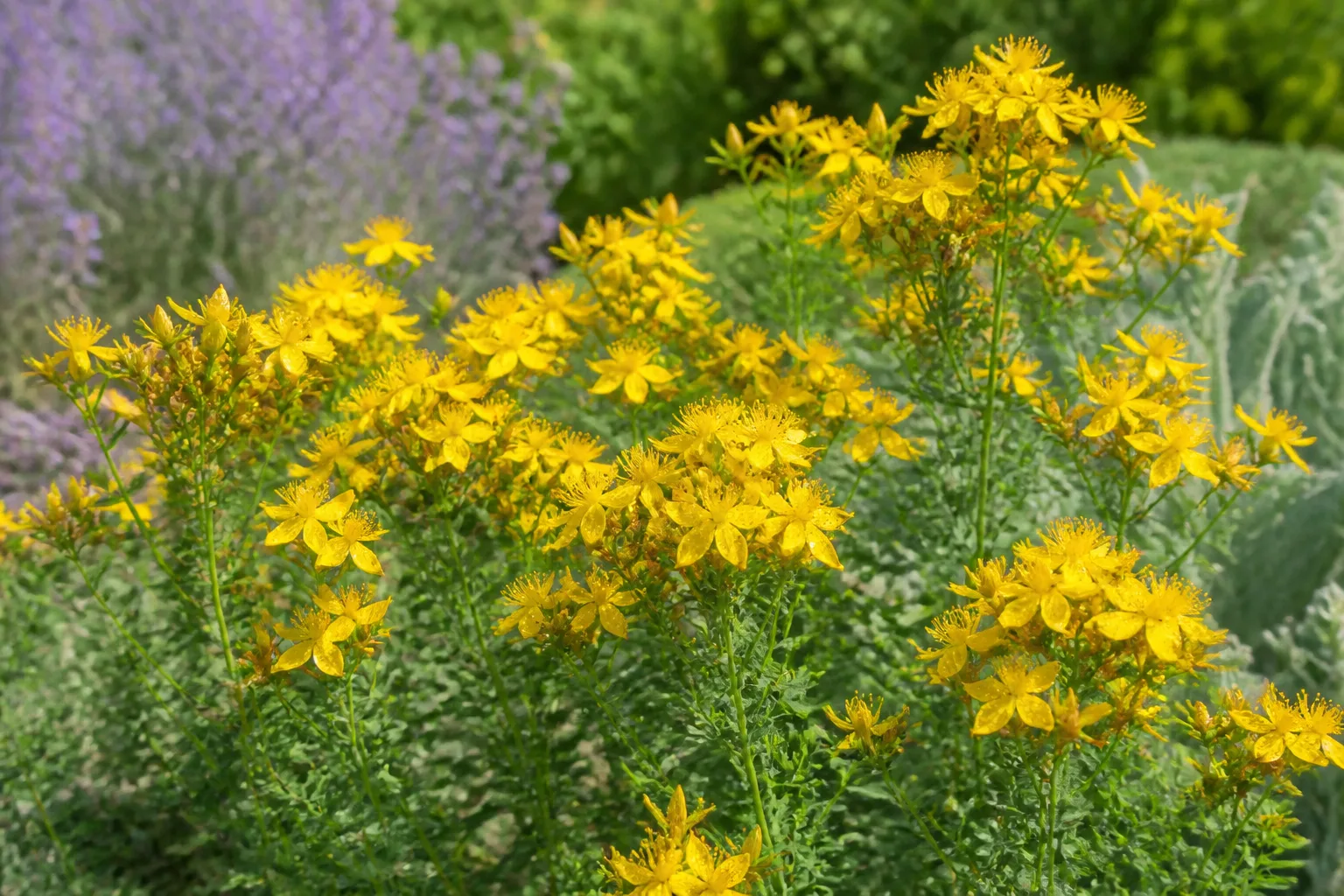
Common St. John’s wort (Hypericum perforatum) is the yellow-flowered Eurasian perennial behind the herbal name — and the noxious weed called Klamath weed in rangeland. It is not the same plant as the low, berry-bearing ornamental Hypericum shrubs sold at nurseries. That naming overlap causes more planting mistakes than any single care tip can fix.
If you want summer gold in a border, a pollinator patch, or a contained herb bed, this guide covers identification, regional risk, daily care, propagation, and the containment work H. perforatum demands once it likes your soil.
Why the Hypericum Name Matters Before You Plant
Gardeners use “St. John’s wort” for dozens of Hypericum species — nearly 500 worldwide. Only a handful are common in North American gardens, and they behave very differently.
Hypericum perforatum is an herbaceous perennial with rhizomes. It spreads by underground stems, creeping surface shoots, and wind-blown seed. NC State Extension lists it as potentially invasive, high maintenance, and weedy despite its pollinator value.
Ornamental shrubby species such as Hypericum kalmianum (shrubby St. John’s wort), H. prolificum, and hybrids like Hypericum × inodorum ‘Elstead’ or H. × moserianum ‘Tricolor’ are clumping landscape plants selected for form, berries, or variegated foliage — not for aggressive meadow takeover.
Buying or sowing seed without checking the botanical name is how a medicinal herb project becomes a pasture problem. Confirm H. perforatum only when that is what you intend.
St. John’s Wort at a Glance
| Feature | Details |
|---|---|
| Common names | St. John’s wort, common St. John’s wort, Klamath weed, goatweed |
| Botanical name | Hypericum perforatum (Hypericaceae) |
| Plant type | Herbaceous perennial; rhizomatous spreader |
| Mature size | 1–3 ft. tall, 9–24 in. wide per crown; colonies expand wider |
| Sun | Full sun best; tolerates partial shade |
| Soil | Sandy, loamy, or clay; moist, well-drained preferred |
| Soil pH | Acidic to alkaline |
| Bloom time | Late spring through summer (May–August typical; into September in cool years) |
| Flower color | Bright yellow with black dots along petal margins |
| Hardiness | USDA zones 3–8 (NC State Extension) |
| Native range | Europe, western Asia, North Africa; naturalized across North America |
| Spread | Rhizomes, seeds (up to ~100,000 per plant per year), creeping stems |
| Toxicity | Toxic to people, dogs, cats, and horses; hypericin causes photosensitization (ASPCA) |
| Maintenance | High — primarily because of spread control |
The common name ties to St. John’s Day near the summer solstice, when plants are often in peak bloom in temperate climates.
Should You Grow Common St. John’s Wort in Your Region?
Start with a regional honesty check, not a nursery tag.
The Invasive Plant Atlas of the United States documents H. perforatum displacing native vegetation in parts of the West, where it alters soil nutrients and grazing value. It appears on invasive species lists in the Pacific Northwest, California, the Midwest, Kentucky, Oregon, and other states. National parks including Glacier and Yellowstone have reported it.
Plant H. perforatum only if:
- Your state or county does not list it as a prohibited or recommended-avoid species
- You can commit to deadheading before seed set, digging stray rhizomes yearly, and never composting pulled plants with mature seed
- Pets and grazing animals cannot reach the planting
- You genuinely want this species — for an enclosed herb garden, research plot, or restoration context where it is already present and you are managing, not introducing
Skip it or choose a native Hypericum instead if:
- You live in dry rangeland or open pasture where seed could escape
- You want low-maintenance yellow flowers in a mixed border
- You have dogs, cats, or horses that browse vegetation
- You cannot verify the botanical name on seed packets or shared divisions
When in doubt, search your state invasive plant council database using Hypericum perforatum, not the common name alone.
H. perforatum Versus Ornamental Hypericum Shrubs
Many generic plant profiles list cultivars like ‘Elstead’ and ‘Tricolor’ in the same breath as H. perforatum. For garden planning, treat them as different jobs.
| Trait | H. perforatum (common) | Ornamental Hypericum shrubs & hybrids |
|---|---|---|
| Habit | Herbaceous perennial, multi-stemmed mound | Woody or semi-woody shrub |
| Spread | Rhizomatous; potentially invasive | Clumping; generally well-behaved |
| Typical use | Herb beds, wildflower meadows (managed) | Foundation plantings, borders, cut stems |
| Berries | Small dry capsules | Showy red or pink berries on many hybrids |
| Hardiness | Zones 3–8 | Often zones 5–9 depending on species |
| Maintenance | High (containment) | Low to moderate |
Hypericum × inodorum ‘Elstead’ brings red autumn berries on arching stems. H. × moserianum ‘Tricolor’ adds cream-and-pink variegation. H. kalmianum and native H. prolificum suit pollinator gardens without the weed risk of H. perforatum. If you only want yellow summer flowers and tidy habit, shop the shrub aisle — not the medicinal herb seed catalog.
How to Identify Common St. John’s Wort
Correct ID prevents accidental spread and mistaken foraging.
Leaves are opposite, oblong, about 1 inch long, and sessile. Hold a leaf to bright light: translucent perforations (oil glands) dot the surface — the species name perforatum refers to this. Margins of the lower leaf surface often show scattered black dots.
Stems are green with two to four ridges on new growth, branching toward the top into flat-topped flower clusters.
Flowers are bright yellow, about ¾ inch across, usually five-petaled, with a bushy center of stamens. Black glands line the petal margins — a reliable field mark noted by the Invasive Plant Atlas.
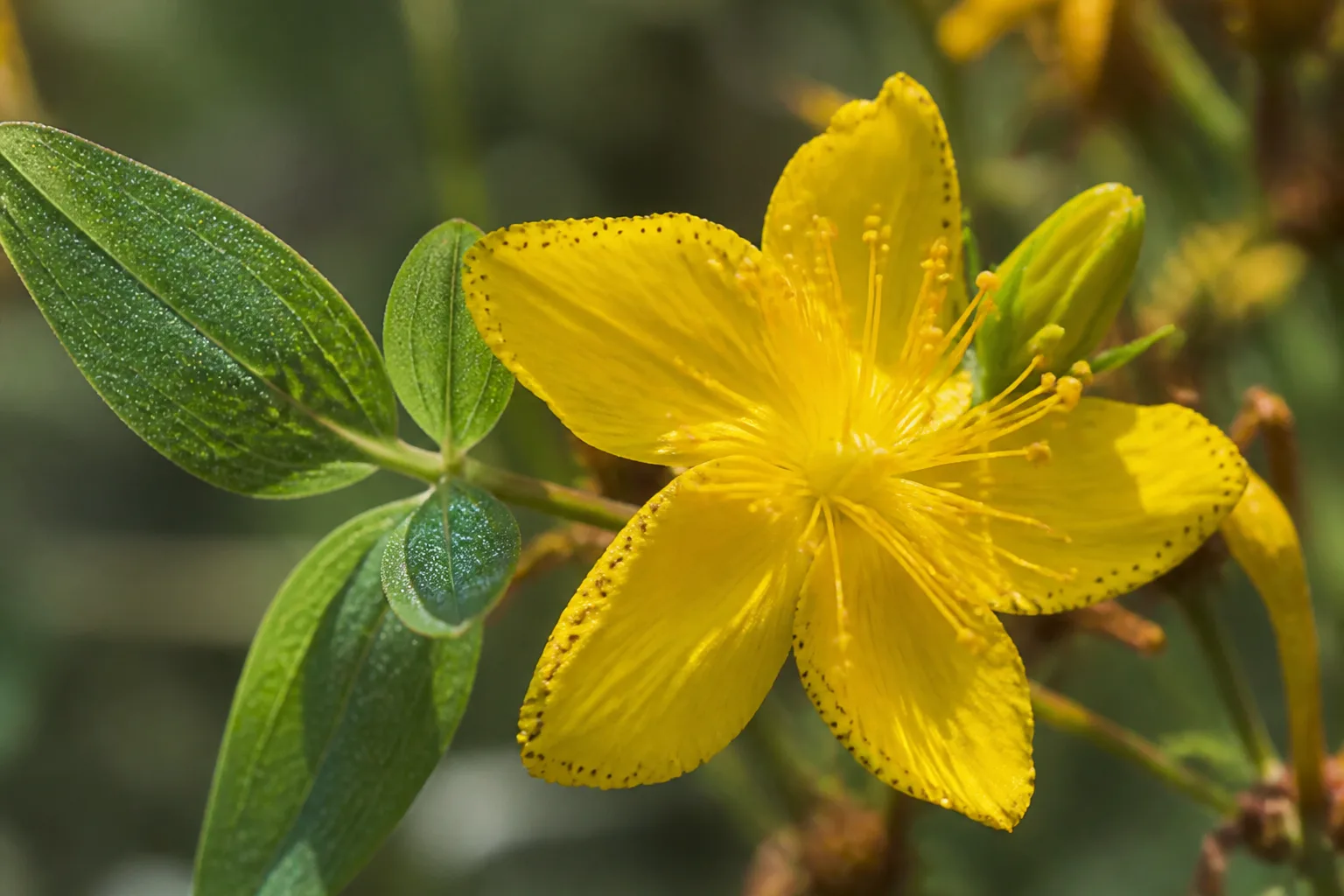
Fruit is a three-celled capsule with many tiny black seeds per cell. Seeds buried in soil may remain viable for years; NC State Extension cites persistence up to a decade.
If perforations and marginal petal dots are missing, you may have a different Hypericum. Do not assume the common name on a label is enough.
Light and Regional Placement
Full sun produces the densest bloom. Six or more hours of direct light is ideal in northern zones 3–6. In the South and in zone 8, afternoon shade reduces heat stress and helps hold flowers longer into summer.
H. perforatum tolerates light woodland edge conditions but flowers thinly in shade. Place new plantings where you can monitor spread — not against wild meadows, fence lines shared with pasture, or unmowed banks that seed will colonize.
For herb-garden placement near paths, remember that sap contact can trigger photosensitivity in sensitive people. Wear gloves when pruning or pulling, and wash skin after handling bruised stems.
Soil, Water, and Fertilizer Needs
This plant is unfussy once established — which is part of the problem.
It grows in sand, loam, or clay, acidic to alkaline pH, and survives compacted or poor soils better than most ornamentals. Preferred conditions are moist but well-drained soil. It tolerates drought after the first season, though extended dry spells shorten bloom.
Establishment watering: Keep root zones evenly moist for the first 8–12 weeks after planting. Water deeply twice weekly in absence of rain, then taper as new shoots lengthen. Mature plants need supplemental water only during prolonged drought.
Fertilizer: Rich soil supports lusher growth — and faster spread. A light compost top-dress in early spring is enough in average garden beds. Skip heavy nitrogen feeds unless you are deliberately pushing an enclosed container plant; excess fertility fuels rhizome run.
Planting in Beds and Establishing New Plants
Spring planting after the last hard frost gives roots a full season before winter. Fall planting six weeks before ground freeze works in zones 5–8 where soil drains well.
Site prep: Clear competing weeds. Loosen soil 8–10 inches deep. Mix compost only if soil is very lean — fertility is not usually limiting.
Spacing: Set plants 18–24 inches apart if you intend to let them fill a defined patch. Wider spacing with mulch between plants makes rogue rhizome detection easier.
Planting depth: Crown at soil grade; burying stems encourages rot. Firm soil and water thoroughly.
First-year expectations: Expect modest bloom. Energy goes to root and rhizome establishment. Mark planting locations with stakes so you do not mistake dormant crowns for weeds in early spring.
Growing in Containers to Limit Spread
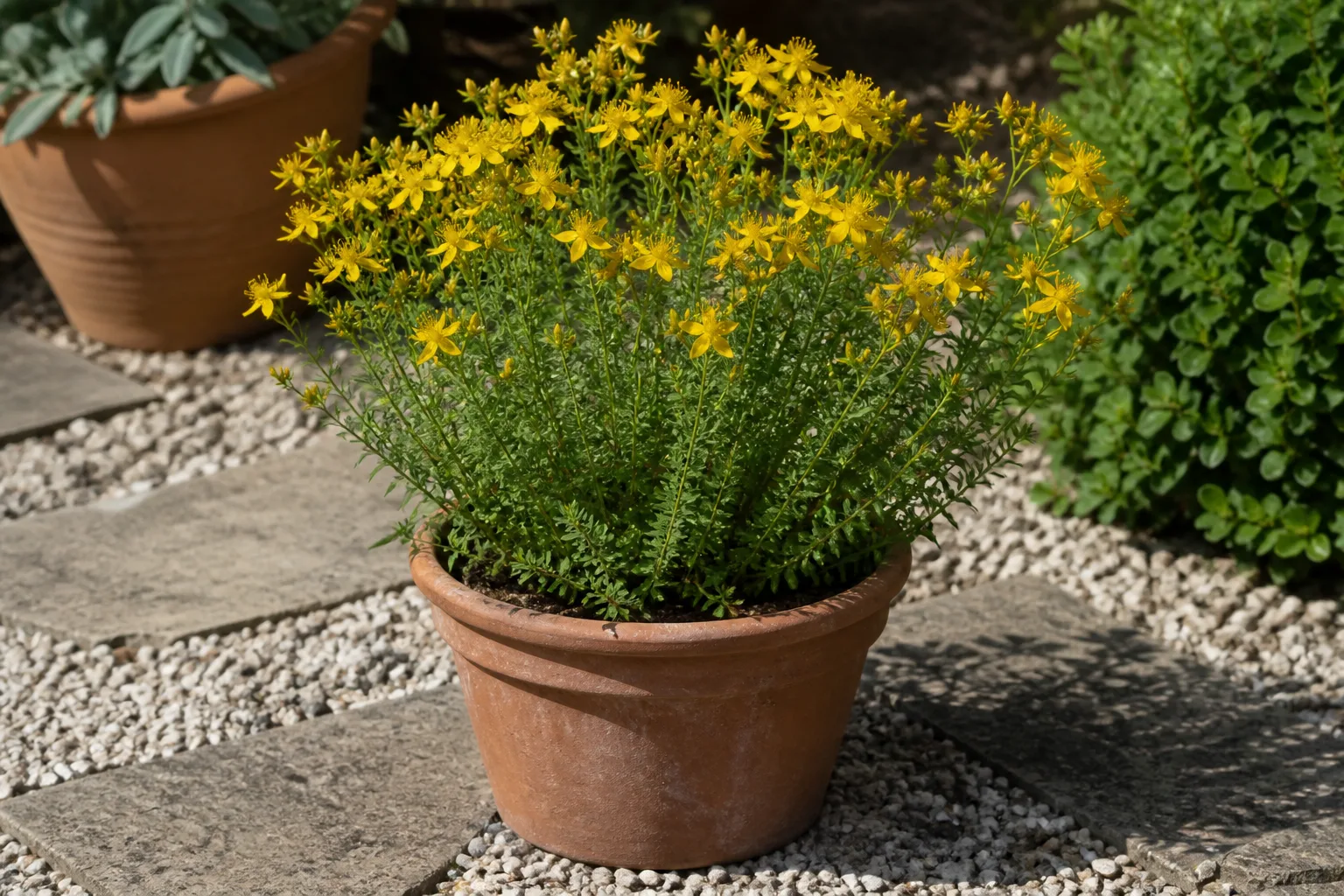
Containers are the most practical way to grow H. perforatum in suburban gardens when local spread is a concern.
Choose a pot at least 12–14 inches wide and deep for one mature plant, with multiple drainage holes. Use quality potting mix — not garden soil, which compacts. Elevate pots on feet so roots cannot exit through drainage holes into paving cracks.
H. perforatum grows quickly. Plan to divide and repot annually or move to a larger container each spring before growth resumes. Prune roots and outer rhizome pieces when repotting, and discard removed material in the trash, not the compost pile.
Site pots in full sun on a paved or gravel pad if possible. Sweep fallen seed capsules from surrounding pavement in late summer. Container culture does not eliminate responsibility — wind can still carry seed — but it removes the rhizome runway that makes ground beds risky.
Invasive Spread and Containment Strategies
Yes, St. John’s wort spreads — aggressively when conditions suit it.
Spread happens three ways: rhizomes underground, creeping stems that root where they touch soil, and seeds from capsules that ripen July through September. A single plant can produce enormous seed loads, and soil-stored seed creates a long-term seed bank.
Containment playbook:
- Deadhead before capsules brown. Cut flower clusters when petals drop and green capsules swell but before they split. Bag debris for landfill, not compost.
- Install rhizome barriers if growing in ground — buried landscape edging 12–18 inches deep around a defined patch. Check outside the barrier each spring and fall.
- Pull volunteers early when seedlings show paired cotyledons and first opposite true leaves. Young plants lift easily; established rhizomes do not.
- Mow or cut perimeter strips where the patch meets lawn to prevent stem layering at the edge.
- Never share divisions without disclosing species and regional risk.
In listed invasive regions, the better choice is often not to plant at all — or to remove existing patches methodically over several seasons because seed bank turnover takes years.
Pruning for Shape and Reblooming
Prune in early spring before new growth, or immediately after the main summer flush if you want to control height and encourage a second, lighter bloom.
Remove dead, damaged, or frost-kilted stems at the base. Cut remaining healthy stems back by up to one-third to promote branching. Pull rooted offsets that appear outside your intended boundary at the same time — spring pruning doubles as a containment pass.
For large managed patches, a hedge trimmer set high can shear tops quickly; follow with rake-up of cut material so stems cannot reroot. Wear gloves: sap exposure during bulk pruning is when contact dermatitis most often appears.
Propagating St. John’s Wort
H. perforatum propagates easily — another reason to handle it deliberately. The National Gardening Association outlines four reliable methods.
Softwood cuttings (June–September): Take 4–6 inch terminal cuttings from green current-year stems. Strip leaves from the lower two nodes, dip in rooting hormone, and insert in moist perlite–coir mix. Cover with humidity dome; roots often form in about four weeks. Harden off before planting out at least a month before first hard frost in cold zones.
Division (early spring while dormant): Dig the entire clump, cut the root mass into sections with at least one stem and healthy roots each, and replant immediately. Water consistently until new growth matches established plants. Do not distribute divisions casually.
Layering (spring or summer): Bend a low flexible stem to soil, nick the underside lightly, bury the wounded section, and pin with a U-wire. Keep moist; sever and transplant the rooted offset the following spring.
Seed: See next section. Only collect or sow seed when you have a containment plan.
Starting From Seed
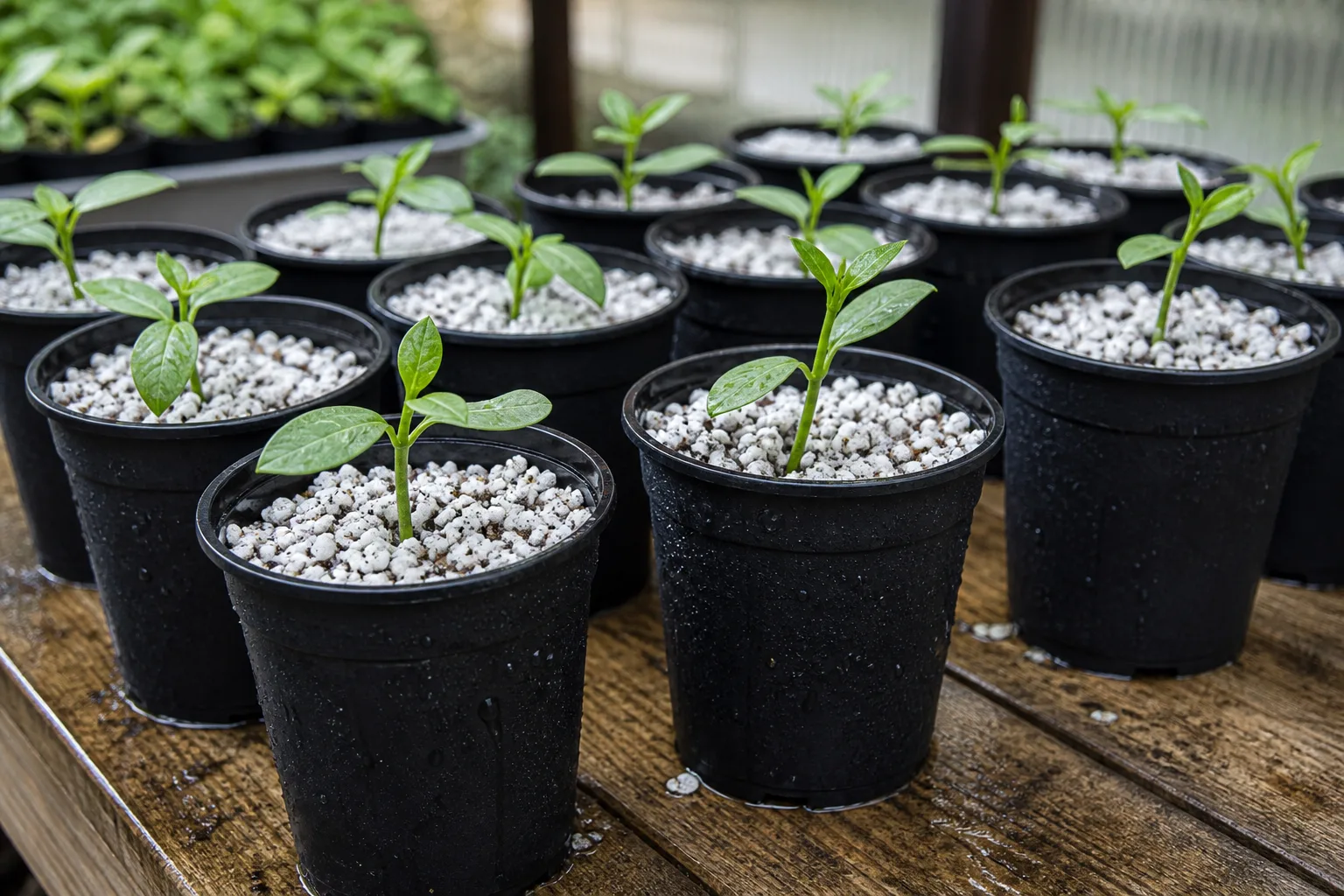
Seed is the escape route into wild areas — treat sowing as a controlled operation.
Collect capsules in mid-fall when brown but before they shatter. Dry indoors, extract tiny black seeds, and store cool and dry if not sowing immediately.
Sowing steps:
- Fill trays with damp seed-starting mix.
- Press seeds onto the surface; do not bury — light aids germination.
- Mist and cover with a humidity dome or plastic until sprouts appear.
- Provide bright light immediately after germination; leggy seedlings bloom poorly later.
- Transplant to individual pots when seedlings have several true leaves, then to final positions after frost.
Germination often occurs within two to three weeks under warmth and light, though some seed may straggle. Thin or prick out to avoid overcrowding that holds moisture and invites damping-off.
Never scatter H. perforatum seed in meadows, roadsides, or “wildflower” mixes unless you are conducting authorized restoration with a written management plan.
Getting St. John’s Wort to Bloom
Expect the heaviest show from late June through August in most climates, with first flowers sometimes appearing in May and tail blooms into early fall where summers are mild.
Flowers are small but numerous — bright yellow with a faint resinous scent sometimes described as turpentine-like. Each bloom lasts a few days; peak impact comes from hundreds opening in succession.
More blooms, without reckless feeding:
- Maximize sun on the planting face.
- Keep soil evenly moist during bud formation — drought at that stage aborts flowers.
- Shear lightly after the first flush if plants are not seed-managed; regrowth can flower again.
- Avoid shade creep from nearby shrubs that have outgrown their original spacing.
If bloom is sparse on an old patch, division in spring rejuvenates vigor. If bloom is sparse in year one, wait — young plants often flower lightly until roots establish.
Pests, Diseases, and Wet-Soil Problems
H. perforatum has few dedicated insect enemies in North America — part of why it prospers as a weed. Aphids may appear on soft tips; blast with water or prune affected stems. No routine spraying is needed for a plant this tough.
Root rot and wilt show up in waterlogged clay or pots without drainage. Symptoms include yellowing lower leaves, blackened crown tissue, and sudden collapse. Improve drainage, reduce irrigation, and remove affected plants before rot spreads through a rhizome network.
Deer resistance is generally good according to extension tags, though starving deer may sample anything. The larger “pest” is the plant itself when seed and rhizomes leave your boundary.
Toxicity to Pets, Livestock, and People
Take toxicity seriously — this is not a playground edging plant.
The toxic principle hypericin causes photosensitization. The ASPCA lists St. John’s wort as toxic to dogs, cats, and horses. Grazing animals develop ulcerative, weeping skin lesions on white or light-pigmented areas exposed to sun — the classic Klamath weed livestock poisoning that made the plant infamous in western rangeland.
Pets: Ingestion risk rises in dogs that chew garden plants. Keep beds fenced or grow in suspended pots. Call ASPCA Animal Poison Control at (888) 426-4435 or your veterinarian if ingestion is suspected.
People: NC State Extension rates poison severity as medium. Sap contact can trigger contact dermatitis and photosensitivity in susceptible individuals. Ingestion of plant material — including teas made without standardized dosing — can cause gastrointestinal upset, fatigue, and allergic reactions.
Medication interactions: NC State notes that ingestion can reduce effectiveness of prescription medicines, including some antidepressants, birth control, anticoagulants, and immunosuppressants. This article is horticulture, not medical advice; consult a healthcare provider before any herbal use.
Wear gloves, wash tools, and supervise children around plantings.
Native Hypericum Alternatives
If yellow summer flowers are the goal but H. perforatum is wrong for your site, native or well-behaved Hypericum species deliver color without the weed legacy.
Shrubby St. John’s wort (H. kalmianum) — compact native shrub, yellow flowers, zones 4–8, excellent drainage.
Shrubby hypericum (H. prolificum) — native southeastern species with showy stamens; attracts bees; clumping habit.
St. Andrew’s cross (H. hypericoides) — low native subshrub for dry sandy soils in the Southeast.
Golden St. John’s wort (H. frondosum) — silver-blue foliage and yellow bloom; suited to sunny borders.
Any of these replace H. perforatum in pollinator gardens, foundation plantings, and native borders where regional lists flag the common species. Match the botanical name at purchase — labels still say “St. John’s wort” for all of them.
Conclusion
Common St. John’s wort is easy to grow — and hard to keep local. Hypericum perforatum rewards full sun and average soil with weeks of yellow bloom, feeds pollinators, and roots from cuttings without fuss. It also runs on rhizomes, loads the soil seed bank, poisons grazing animals through photosensitization, and appears on invasive plant lists across much of North America.
Grow it only with eyes open: confirm the species, check your regional list, contain rhizomes and seed, and keep pets and livestock away. If you want yellow flowers without the baggage, plant a native or ornamental Hypericum shrub instead. The best St. John’s wort care plan starts with deciding whether this particular Hypericum belongs in your yard at all.



