When to Plant Allium Bulbs: Timing by Region
Most ornamental alliums are planted in autumn, but the right month depends on your climate. Use these soil and weather cues to choose your window.
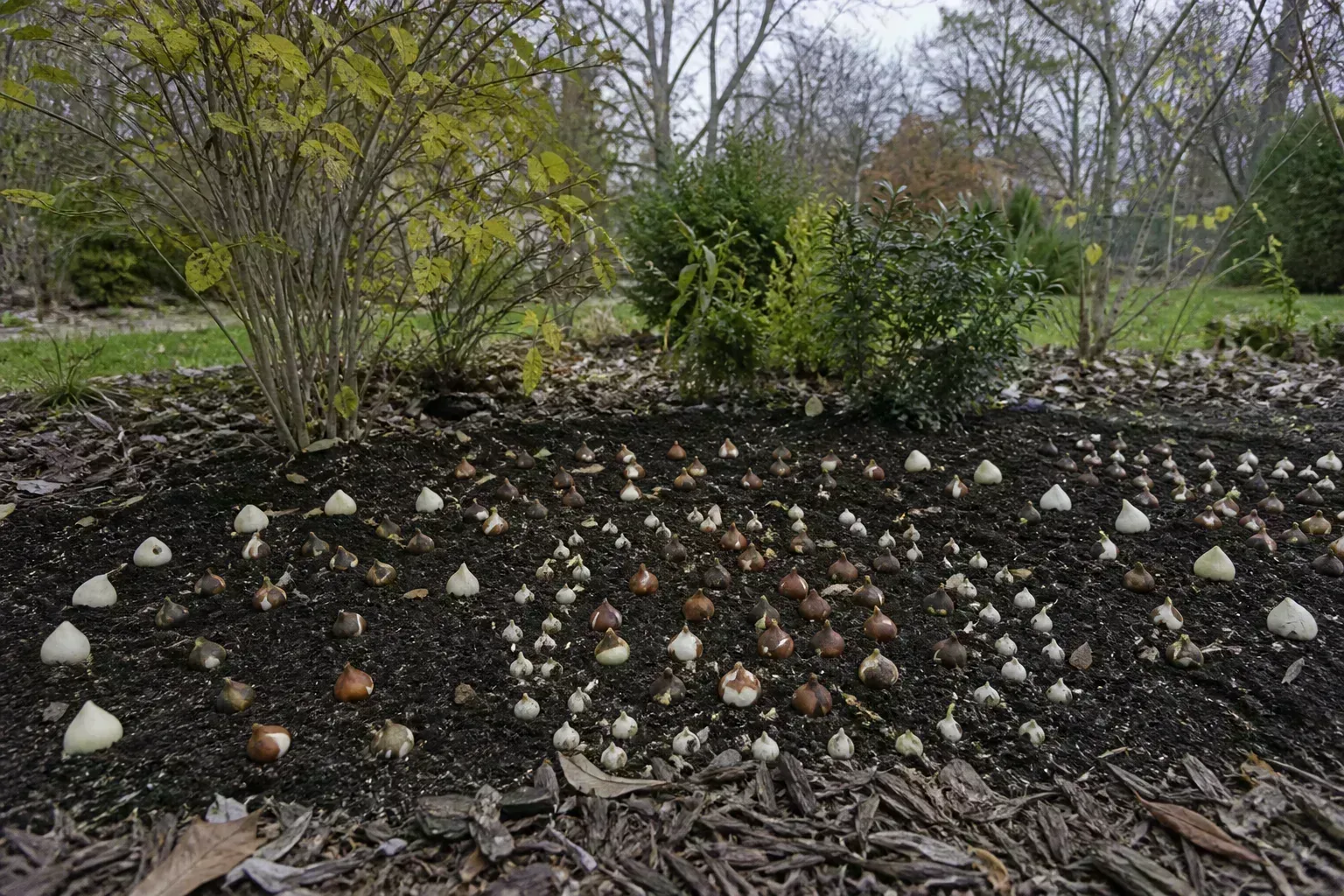
Most ornamental alliums that grow from bulbs belong in the ground in autumn, while the soil is cool enough for root growth but still workable. The calendar month changes with climate: a gardener facing an early freeze may plant in September, while someone in a mild-winter region may be planting in November or later.
Use the local season, your soil, and the variety’s planting label together. The best window is not a date that arrives everywhere at once; it is the stretch of fall when summer heat has eased, the bed drains well, and the soil has time to settle around the bulb before it freezes solid.
The short answer: plant bulb-forming alliums in autumn
For spring- and early-summer-flowering ornamental alliums, plant bulbs during your local fall, before the ground freezes. That gives the bulbs a cool dormant period and an opportunity to establish roots before winter; it also avoids asking a newly planted bulb to begin growth during spring’s rapid warm-up.
Use a rough target of several weeks before the ground in your garden is normally frozen, adjusting earlier in colder areas and later where autumn stays mild. “Fall” might mean September or October in a short-season northern garden, October or November in many temperate regions, and a later autumn window in a warm climate. These are planning examples, not climate-zone guarantees.
Colorado State University Extension’s PlantTalk says fall is the best time for allium bulbs and recommends well-drained soil. The North Carolina State Extension Plant Toolbox profile for giant allium also specifies fall planting for that species. Follow the supplier’s instructions for the allium you actually have, since some plants sold under the allium name are herbaceous perennials rather than dormant bulbs.
Why the planting window changes by climate
Allium bulbs do not respond to the name of a month; they respond to the conditions in the bed. In a region where winter arrives quickly, waiting for a neat calendar cue can leave too little workable soil time. In a long, warm autumn, planting as soon as bulbs appear in stores may put them into soil that is still hot and dry.
The useful middle ground is cooling soil with enough time before a hard freeze. The bulb needs contact with soil that can settle around its base, and the bed should be moist enough to support root establishment without staying waterlogged. If fall remains unusually warm, wait for temperatures to moderate; if a freeze is forecast early, plant as soon as the ground is workable.
Hardiness zones help you screen varieties for winter survival, but they do not tell you the exact date your soil will freeze. A south-facing raised bed, a shaded low spot, a coastal garden, and an exposed high-elevation site can all have different soil conditions within the same zone.
Regional planting windows at a glance
| Garden conditions | Practical fall window | What to watch |
|---|---|---|
| Short, cold autumn or high-elevation garden | Early to mid-autumn; often September into October | Plant as soon as summer heat eases and the bed is workable; do not wait for a late calendar date |
| Temperate areas with a longer fall | Mid-autumn; often October into November | Use cooling weather and the usual hard-freeze pattern, not a fixed national date |
| Mild-winter or warm-summer regions | Late autumn into early winter, if the species is adapted locally | Confirm the variety’s hardiness and whether it needs winter chilling |
| Southern Hemisphere | Local autumn, using the same soil and freeze cues | Month names differ; translate “fall” to your own season rather than following Northern Hemisphere dates |
These windows are meant to help you plan, not replace a local forecast or plant label. The Colorado State University Extension allium guide describes fall planting across a range of alliums, while the North Carolina State Extension profile gives a specific fall schedule for giant allium. The difference between these plant profiles is a reminder that species and local growing conditions matter.
If you garden in a warm area where the soil rarely freezes, do not assume every giant ornamental allium will behave like it does in a cold-winter garden. Check the exact species and cultivar for its hardiness and bloom requirements, and choose varieties recommended for your region rather than forcing a northern calendar onto a subtropical climate.
First frost is not the same as frozen soil
The first light frost can be a convenient reminder that fall planting is underway, but it is not a requirement to wait for before putting allium bulbs in. Air temperature can dip below freezing while soil remains warm enough to work, and a garden can have a long period between its first frost and a ground freeze.
Conversely, an early cold snap or an exposed garden can make the soil difficult to dig sooner than expected. If the bed is already cool and the soil is workable, plant; if the ground is frozen solid, do not chip into it or leave bulbs sitting in a wet hole. The more useful deadline is the loss of workable, draining soil, not the first time a weather app shows a frost icon.
Some bulb guides use “after first frost” as a familiar seasonal marker. Treat that as shorthand for fall conditions rather than a strict trigger: planting before the first frost is reasonable if autumn has cooled and the bulbs are ready, especially where the growing season is short.
Check which kind of allium you bought
“Allium” is a large plant genus that includes ornamental bulb flowers, culinary onions and garlic, chives, and herbaceous perennials. This guide’s autumn timing applies primarily to ornamental alliums sold as dormant bulbs—for example, giant allium, Persian onion, and drumstick allium—not every plant with Allium on its label.
Herbaceous types such as chives and ‘Millennium’ allium grow from fibrous roots or clumps rather than the kind of dry bulb sold for fall planting. Longfield Gardens distinguishes fall-planted bulb alliums from herbaceous types that can be planted during the growing season. If the tag says plant, pot-grown perennial, or root division rather than bulb, use that plant’s instructions.
Check the botanical name on the bag or pot before using an allium planting calendar. The label also helps you confirm hardiness zone, flowering season, depth, spacing, and whether the variety is expected to perennialize. If a mixed bag lacks cultivar information, use the most conservative planting directions printed by the supplier and avoid assuming that every bulb needs identical depth.
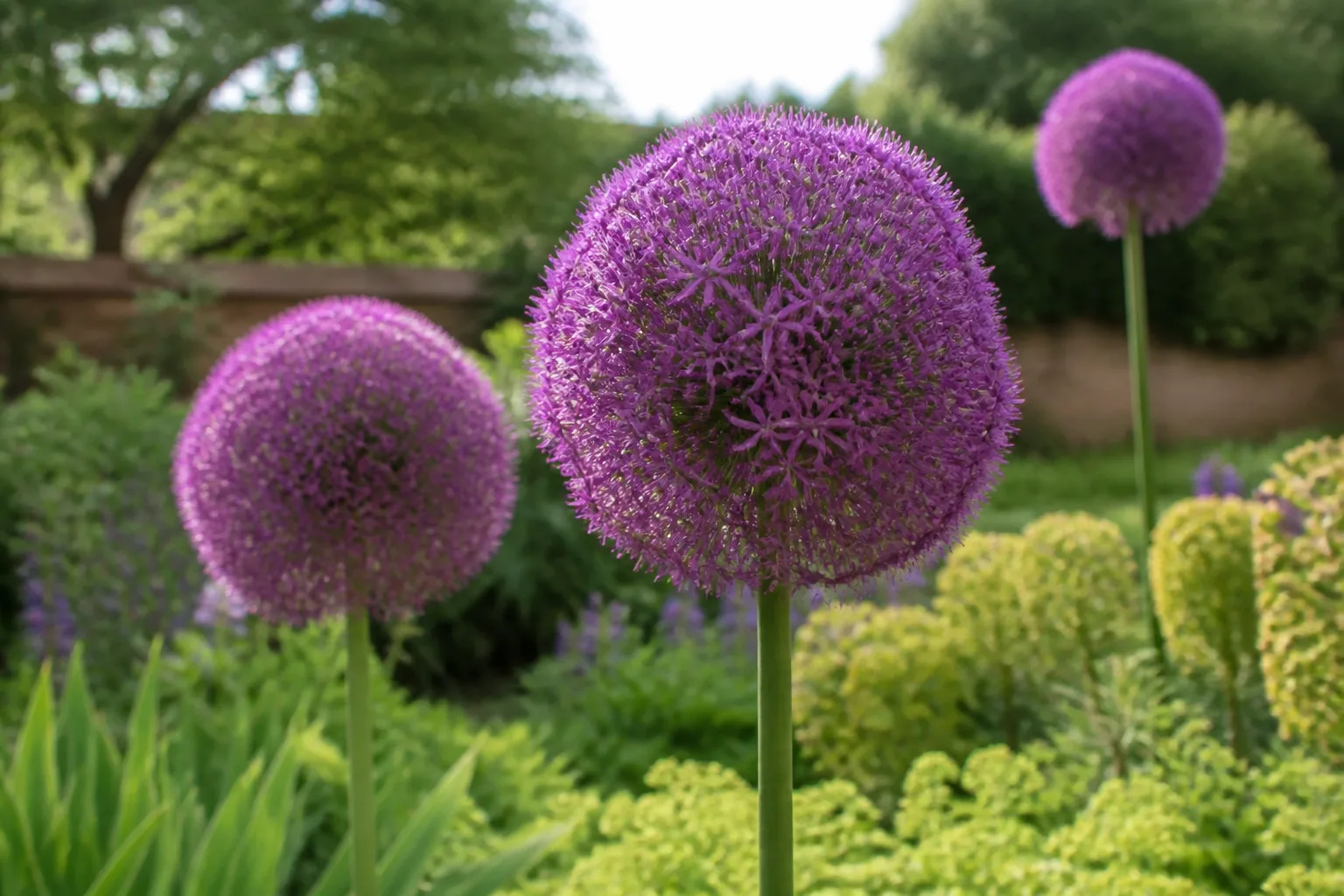
A globe-shaped ornamental allium is a bulb-forming type; check the botanical name because not every allium is planted as a dormant bulb.
Choose a site before you open the bulb bag
The planting date will not compensate for a site where water sits around bulbs all winter. Choose a sunny or appropriately bright position with well-drained soil; if rain collects there after a storm, shift to a raised bed or another location rather than planting into a soggy pocket.
Mark the site while perennials are still visible and plan around the allium’s mature height. A giant allium needs a different position from a short rock-garden species, and an allium planted behind an evergreen shrub may not receive the light its profile recommends. The North Carolina State Extension Plant Toolbox describes giant allium as a full-sun plant for well-drained soil.
If you want flowers to appear in groups, plant several bulbs in a loose cluster rather than lining them like fence posts. Leave enough space for mature foliage and the specific variety’s size, but do not use a generic spacing rule to override the package. Some alliums are large statement plants; others are small species meant for rock gardens or the front of a border.
Planting depth depends on the species and bulb size
There is no single depth that fits every ornamental allium. Colorado State University’s general allium page says to plant bulbs 2 to 4 inches deep, while NC State’s giant allium profile specifies an 8-inch planting depth. Fine Gardening’s genus-level allium profile also gives 2 to 4 inches as a general guideline and notes that clump-forming alliums have a different growth habit.
Those figures are not a reason to average the numbers and plant everything at 5 inches. They reflect different allium species, bulb sizes, and instructions. Use the variety-specific package first; if it is missing, identify the allium and consult a reliable profile for that species. Set the basal plate down and the pointed end up, then measure depth from the soil surface to the bulb’s base or follow the label’s definition.
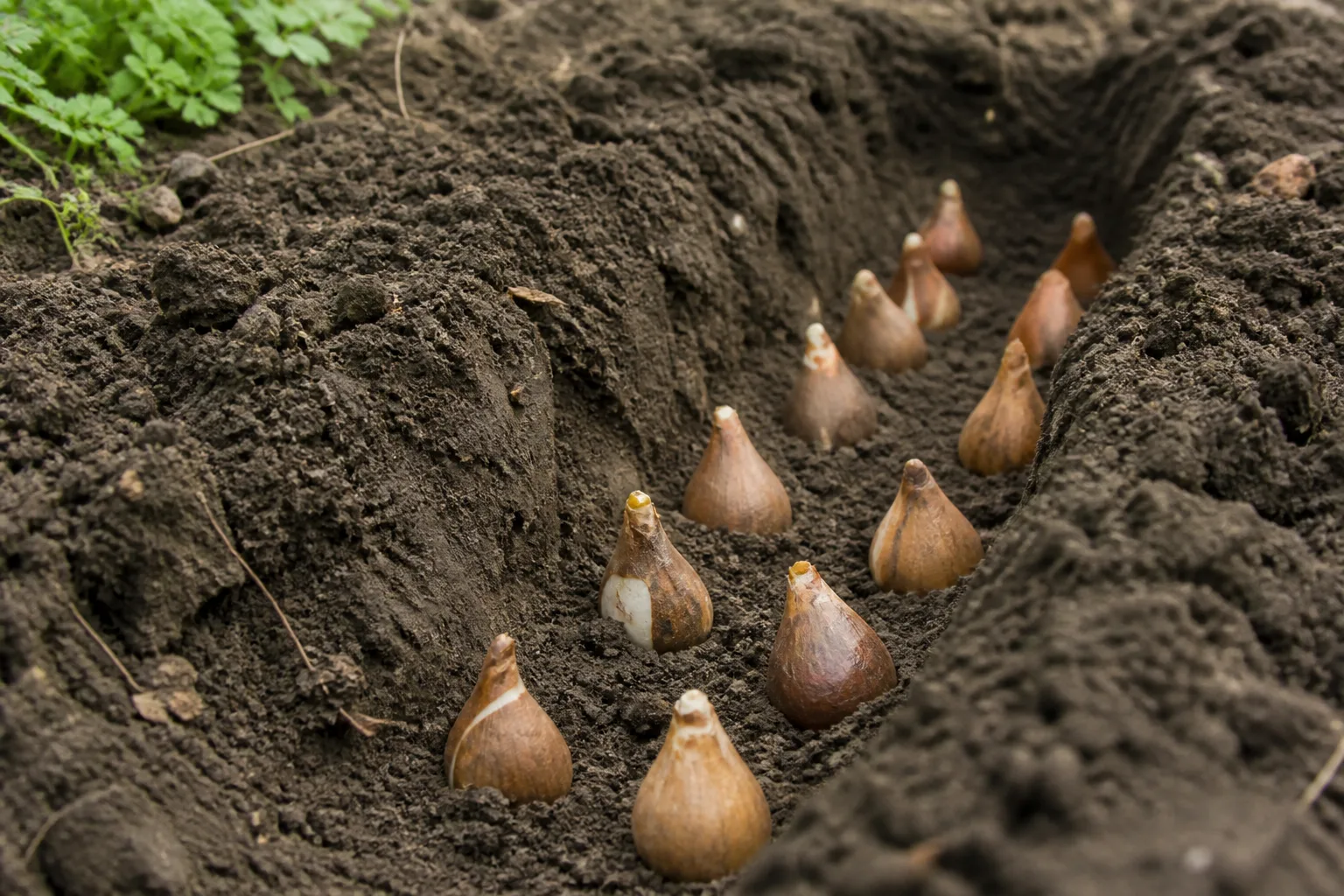
Planting depth is a variety-level detail: use this image as a general bulb-planting reference, then follow the exact allium label.
For a large bulb, make a hole or trench deep enough to avoid bending or crushing the bulb. Backfill gently so there are no large air gaps, and do not press the soil into a hard, compacted cap above the planting. In heavy clay, improve the planting area’s drainage across a broad bed rather than adding a little gravel at the bottom of each isolated hole.
Planting alliums in containers
Plant container-grown allium bulbs in the same autumn window as bulbs in garden beds. A pot does not cancel the need for seasonal root establishment, but it changes the winter risk because the whole root zone is exposed to cold and temperature swings instead of being buffered by surrounding soil.
Choose a deep, frost-resistant container with several open drainage holes and enough depth for the variety’s roots and label-specified planting depth. Fill it with a free-draining potting mix, set the bulbs at the spacing on the package, and place the container where excess rain can escape. A decorative pot without drainage can remain wet long enough to damage bulbs.
Before winter, protect the container if your climate gets colder than the bulb’s hardiness or if the pot is likely to freeze repeatedly. You can sink a suitable pot into the ground, move it to a sheltered unheated area, or insulate the sides; keep it cool and do not bring it into a heated room to make bulbs bloom early. Longfield Gardens notes that many alliums can grow in containers, but the chosen species and the pot’s drainage still determine success.
What to do if the bulbs arrive late
If the bulbs arrive while the soil is still workable, plant them promptly rather than holding them for an ideal date. Inspect each bulb first: firm bulbs are the best candidates, while bulbs that are soft, badly moldy, or damaged may not establish. Keep sound bulbs dry, cool, and ventilated until you can plant.
If the ground is frozen, do not leave bulbs in a warm room or plant them in a waterlogged container outdoors as a substitute. Contact the seller or a local horticulture office for advice on storing that specific variety until conditions permit planting. Storage life and chilling needs vary, so a general household-fridge recipe is not reliable for every allium.
Prioritize the bed with the best drainage and easiest access, and avoid trying to force bulbs into saturated soil after prolonged rain. A short delay in planting is usually a more reasonable risk than burying the bulbs in a cold, wet site where they cannot drain. Record the variety and planting date so you can judge emergence accurately next season.
Can you plant allium bulbs in spring?
If you missed autumn, you can plant a firm, viable bulb as soon as the soil can be worked, but flowering that same spring is uncertain. A bulb planted late may not have enough time to establish before growth begins, and some varieties require the seasonal conditions of fall and winter for dependable flowering.
Spring planting is not a guaranteed substitute for autumn. The plant may produce foliage without a flower, flower later or less strongly, or wait until a later cycle; the result depends on species, bulb condition, local climate, and how it was stored. Do not add extra fertilizer or water heavily in an attempt to force a bloom.
If you already have bulbs and spring is your only option, plant them according to their label and give them a well-drained site. Then maintain the foliage if it emerges and assess the plant over the next growing cycle. If the bulbs are still firm but you cannot plant, ask the supplier whether that variety can be held or should be planted in a container for the season.
How to plant allium bulbs once the window is right
Prepare the bed before opening the package so the bulbs do not sit exposed while you decide where they belong. Loosen compacted soil, clear perennial weeds, and identify the label’s depth and spacing for each cultivar; then arrange bulbs on the surface to check the group before covering them.
Plant with the pointed tip upward and the basal plate down, unless the bulb’s shape makes orientation unclear; many bulbs still grow when planted sideways, but correct orientation gives shoots a direct path. Backfill with the existing soil, water once to settle the planting if the ground is dry, and label the group if several kinds are close together.
The Colorado State University Extension allium page recommends well-drained soil and a 2-to-4-inch depth for its general allium guidance. The NC State giant allium profile describes a much larger bulb planted deeper and farther apart, so confirm the species rather than copying directions from a different allium.
Watering and mulch after fall planting
If the soil is dry when you plant, water enough to settle it around the bulbs, then let natural rainfall and the season’s lower evaporation take over. Do not keep the bed constantly wet; alliums are vulnerable to rot in damp conditions, and good drainage matters more than frequent irrigation.
Mulch can moderate temperature swings and help protect soil structure, but it should not turn a poorly drained spot into a soggy one. Apply a light, loose layer after the soil has cooled if mulch is part of your usual winter routine, and keep heavy material from compacting over small shoots. Colorado State Extension advises fall mulch for bulbs left in the ground.
Avoid fertilizer touching the bulb directly, and do not interpret dormant foliage as a signal to dig up the planting. Depending on the variety, leaves may appear before or with the flower stalks, or remain hidden until the season warms. Leave the bed undisturbed unless drainage or a site problem requires intervention.
What happens if you plant too early?
Planting well before autumn has cooled can expose bulbs to hot soil, dry conditions, and an unnecessarily long period before winter. In a warm fall, the issue is not the date on the calendar by itself but whether the bed remains summer-hot or the bulbs begin to sprout before the season is ready for growth.
If bulbs are already in the ground and shoots appear early, do not dig them up just to reset the date. Keep the soil from becoming waterlogged, protect tender growth if a severe freeze threatens, and let the plant follow its normal seasonal cycle. Early emergence does not guarantee bloom failure, but it can leave exposed growth more vulnerable to winter weather.
The better prevention is to buy bulbs when you can store them correctly and plant once the weather has begun to cool. If you garden in a hot region, select alliums suited to that region and follow the timing recommendations for the named species rather than using a generic spring-bulb schedule.
What happens if you plant too late?
Late planting reduces the time available for roots to grow before the soil freezes, but it does not mean every bulb will fail. If the soil is still workable and drains freely, plant firm bulbs as soon as practical; a late fall planting is generally more sensible than leaving viable bulbs to dry out indoors.
If freezing weather has already made the bed inaccessible, do not force a planting hole through frozen soil or leave the bulbs in a pot of saturated mix. Keep them cool, dry, and ventilated while you seek variety-specific guidance. In a mild spell, plant them when the soil has thawed and conditions allow proper drainage.
Set expectations for the first spring. A late-planted bulb may flower weakly, produce foliage only, or not emerge until a later season; discard it only if it has softened or rotted rather than because it missed a calendar date. Keep a record of what happens and adjust next year’s planting window earlier.
When to expect flowers after planting
Fall planting is meant to prepare bulbs for their normal flowering season, which varies by allium species. Colorado State Extension notes that allium bloom can range from spring to late summer, and NC State lists giant allium as a spring-to-summer bloomer with flowers in early summer.
A bulb’s first season can also be affected by size, storage, planting depth, drainage, and whether it was allowed to establish roots. Small or newly planted bulbs may need time to build strength before they produce the large flower head shown on a mature plant. The bulb’s label is a better forecast than a genus-wide promise.
If foliage appears but no flowers do, do not cut the leaves down while they are green. The bulb uses foliage to replenish stored energy after flowering or during growth; give it time to yellow naturally, then review light, drainage, depth, and species suitability before buying more bulbs.
Common timing mistakes to avoid
- Waiting for a named month: Use local autumn and soil conditions; a calendar date cannot account for elevation, coast, or year-to-year weather.
- Waiting for the first frost as a hard rule: A light frost is a cue, not a prerequisite. Plant once fall conditions arrive while soil is workable.
- Treating every allium as the same plant: Bulb-forming ornamentals and herbaceous alliums can have different planting seasons and care.
- Using one depth for all varieties: Large and small bulbs can require different depths; package instructions should lead.
- Planting in a wet pocket because it is the only free spot: Drainage is essential. Choose a raised or better-drained site instead.
- Assuming spring planting guarantees spring flowers: A late bulb may need another cycle to establish, and outcomes vary by species and storage.
These corrections make the job simpler: identify the plant, watch the season, choose a draining site, then plant according to the specific variety. If a supplier’s directions conflict with a generic guide, ask about the named cultivar and your local conditions.
Conclusion
Plant most ornamental allium bulbs in your local autumn, while soil is cooling and workable and before it freezes solid. In short-season gardens that window arrives earlier; in mild areas it may stretch later, but the plant’s hardiness and local climate still matter.
Check the botanical name, drainage, bulb size, and variety label before planting. If the bulbs arrive late, plant firm ones as soon as the soil allows and accept that first-season flowering may be uncertain; a locally timed, species-specific decision beats a dated “plant now” deadline.