Best Time to Plant Hydrangeas for Bigger Blooms
Find the best time to plant hydrangeas by season, type, zone, and container. Get a frost-aware planting plan for stronger roots and better blooms, too.
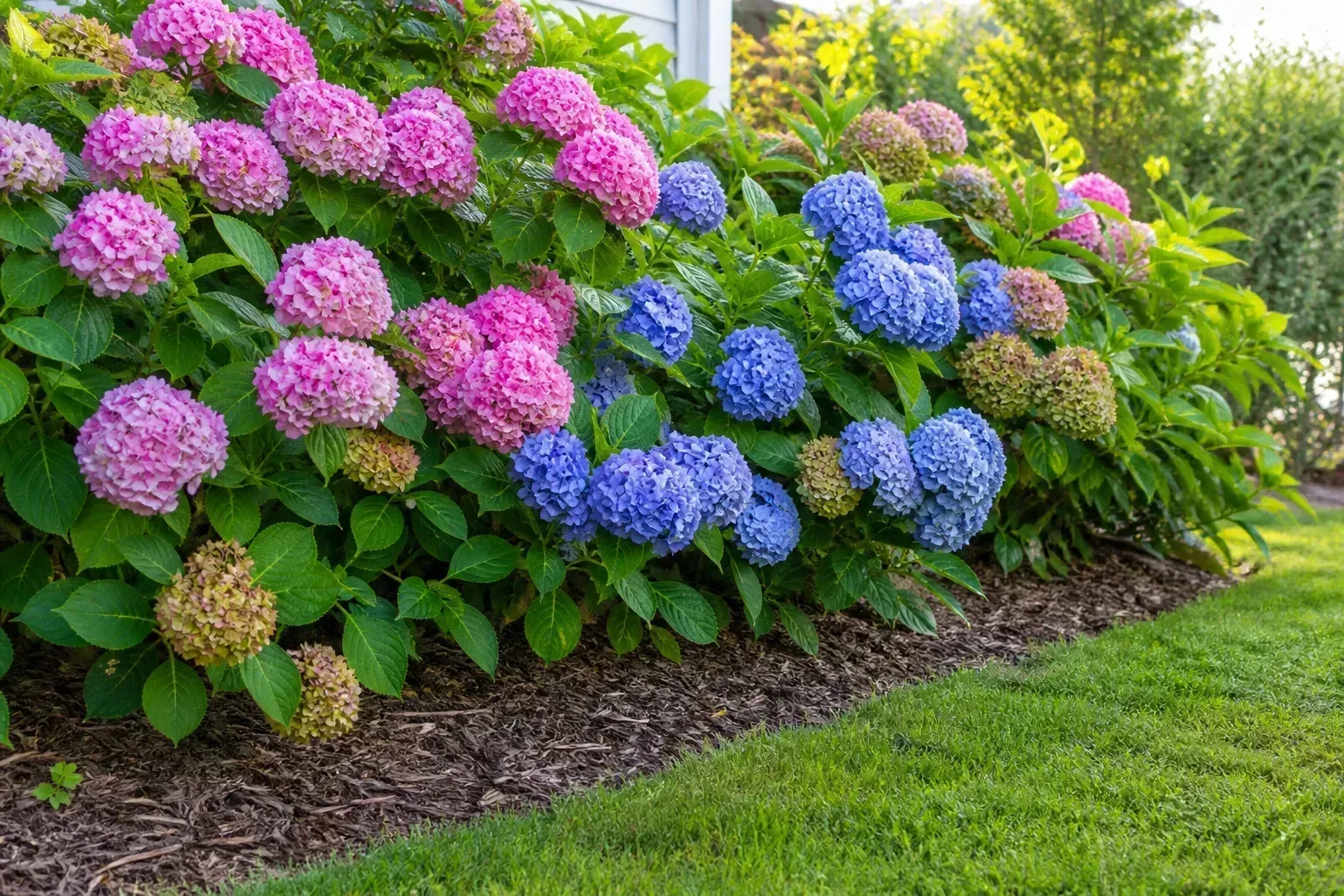
The best time to plant hydrangeas is fall or early spring, when the soil is workable and the plant has several weeks of mild weather before a hard freeze or sustained summer heat. Fall is usually the easier choice for an in-ground shrub because cool air and reduced top growth let the roots settle. Early spring is safer for tender bigleaf types in places with severe winters.
That rule needs two important adjustments. A hydrangea still in a small nursery pot has less root insulation than one planted in the ground, and a hydrangea already pushing leaves or flowers is under more transplant stress than a dormant plant. Use the calendar as a starting point, then check the plant, the forecast, and the soil before you dig.
The quick answer: plant during a mild window
For most gardeners, the ideal planting window begins after the worst summer heat has passed and ends several weeks before the ground is likely to freeze. In spring, it begins after the local danger of a hard frost has passed and ends before hot, dry weather arrives. The goal is not to plant on a particular date; it is to give new roots time to grow while the leaves are losing water slowly.
In a cold-winter climate, aim for early fall rather than late fall. Better Homes & Gardens uses roughly four weeks before the first frost as a useful planting marker; a longer cushion—around six weeks before the soil is likely to freeze—is more conservative for tender cultivars, exposed sites, or short seasons. A light frost is not the same as frozen ground, so use local soil and weather patterns rather than treating one calendar date as a universal cutoff. In spring, wait until the soil can be worked without smearing into a wet ball, then plant before the first sustained heat wave.
This is why two apparently conflicting answers can both be sensible. A mild coastal garden may plant in late fall or winter, while a northern garden may need to wait until late spring for the same cultivar. Rutgers New Jersey Agricultural Experiment Station describes spring planting after spring frosts and before the hottest summer weather as a useful general window, while the North Carolina State Extension Gardener Plant Toolbox emphasizes that hydrangeas need consistent moisture and can need extra watering in full sun (Rutgers NJAES; NC State Extension). For a fall deadline, Better Homes & Gardens recommends planting about four weeks before the first frost, while the Royal Horticultural Society cautions more generally against working frozen or waterlogged soil; those are useful boundaries, not a promise that every shrub will root on schedule (Better Homes & Gardens; RHS planting guide).
Start with the hydrangea type, not the calendar
“Hydrangea” is a genus, not one uniform plant. The common types differ in hardiness, mature size, sun tolerance, and—most important for planting decisions—the age of the stems that carry flower buds. Read the nursery tag before choosing a date, especially if your main goal is flowers next season.
Old-wood bloomers need bud protection
Bigleaf hydrangeas, mountain hydrangeas, and oakleaf hydrangeas commonly carry at least some of their flower potential on older stems. Bigleaf hydrangea (Hydrangea macrophylla) is the classic example: it forms flower buds during the previous season, so a severe winter or a poorly timed pruning cut can remove the buds before they open. Rutgers’ species notes explain why bigleaf hydrangeas can survive cold while still failing to bloom—the stems or their overwintering buds may be damaged even when the root system lives.
For these plants, fall offers excellent root-establishment conditions but also exposes the existing stems to winter. In a mild or sheltered site, fall is often worth choosing. In a cold, windy location, early spring can be the better trade-off because it avoids giving a tender plant an entire winter immediately after transplanting. You may sacrifice that year’s flowers, but you reduce the chance of combining root disturbance with winter bud loss.
Do not assume a reblooming label removes every risk. Cultivars that can flower on new growth may still produce a stronger first flush from surviving older stems, and a plant cut back to the ground after severe cold may not flower until later in the season—or at all that year.
New-wood bloomers give you more timing flexibility
Panicle hydrangea (Hydrangea paniculata) and smooth hydrangea (Hydrangea arborescens) generally form flower buds on current-season growth. That makes them more forgiving about winter dieback and late-winter pruning than old-wood types. It does not make summer planting harmless: a new shrub still needs water while its roots are small, and hot, dry weather can outpace the root ball’s ability to supply the leaves.
New-wood bloomers are often the strongest choice when you garden in a cold climate and want reliable flowers without having to protect every stem. Panicle hydrangeas also tolerate more sun than many bigleaf selections, although more sun usually means a greater watering demand. Smooth hydrangeas prefer moisture and can handle part shade; they are not a license to plant in a permanently saturated bed.
Choose fall or spring using three weather checks
When you are deciding whether to plant this weekend, use three checks instead of asking only which season is “best.” The right answer is the season in which all three conditions are true:
- The soil is workable. You can dig and close the hole without creating a slick, compacted mass. Frozen ground, waterlogged soil, or baked clay is a poor planting medium in any season.
- The weather is moderate. Avoid a forecast that combines hot afternoons, drying wind, or a hard freeze. A cloudy, calm day with mild temperatures is kinder to a newly disturbed root ball.
- The plant has time to establish. Give it several weeks of reasonably mild weather before the next major stress: a hard freeze in fall or persistent heat and drought in spring. A six-week cushion is sensible in a short season or exposed site, but it is not a guaranteed threshold for every climate.
When fall is the better choice
Choose fall when summer heat has broken, the soil will remain open for several weeks, and the hydrangea is slowing down rather than producing a flush of tender leaves. The cooler air reduces the demand from the canopy while the still-warm soil can support root growth. That combination is especially useful for an in-ground shrub with a healthy root ball.
Planting in early fall also gives you time to observe the site through winter. If water pools around the roots after rain, you can correct the drainage before spring growth begins. If wind strips leaves or dries a bigleaf hydrangea, you learn that the site needs more shelter or a hardier cultivar.
When spring is the better choice
Choose spring when winter is severe, the cultivar has fragile old-wood buds, the plant is not yet dormant, or the fall window has narrowed too close to a hard freeze. Plant after the final damaging frost for your area, but do not wait until the shrub has fully leafed out if you can avoid it. Tiny swelling buds are easier to transplant than a plant carrying a full canopy.
Spring planting comes with a maintenance bill: you must keep the root zone evenly moist through the first growing season, especially during wind, heat, and drought. Oregon State University Extension Service likewise recommends planting hydrangeas after spring frosts and before the hottest summer conditions settle in (OSU Extension).
Adjust the planting window to your climate and zone
USDA hardiness zones help describe winter lows, but they do not tell the whole planting story. A zone number does not capture spring heat, coastal wind, rainfall, soil drainage, elevation, or the frost pocket at the bottom of your yard. Use your local average frost dates as a guide, then adjust for the actual microclimate.
In zones 3 through 5, an early-fall planting is usually more sensible than a late-fall gamble. Plant as soon as the heat eases, protect the root zone with mulch, and select a cultivar that is genuinely suited to your winter. A bigleaf hydrangea in a protected courtyard may succeed where the same plant fails beside an exposed driveway.
In zones 6 and 7, the fall and spring windows are often more balanced. Fall can give roots a head start, while spring can make winter-damaged bigleaf plants easier to assess before purchase. If your garden has clay that stays wet in winter, a well-timed spring planting may be safer than putting roots into a cold, saturated bed.
In zones 8 and 9, late fall, winter, or very early spring may all work if the soil is workable and the plant is not being hit by a sudden heat wave. Summer remains risky in dry regions even when winter frost is not a concern. In zone 10 or another frost-free climate, winter can be an excellent planting season for a dormant plant, but cultivar heat tolerance and irrigation become more important than frost protection.
The practical rule is simple: plant before the stressful season, not during it. Use a local weather forecast for the next two weeks, a frost-date calculator for the broader season, and your own observation of whether the soil drains after rain.
Treat potted hydrangeas as a separate timing problem
Planting a hydrangea from a nursery pot into garden soil is often best in fall or early spring. Keeping a hydrangea in that pot through winter is a different decision. The soil volume around container roots is small, and cold can penetrate from every side. A root system that would be insulated by surrounding garden soil may freeze in an exposed pot.
For a hydrangea that will remain in a container, spring is usually the safer repotting and placement season, after the worst frost risk has passed. Use a large container with drainage holes, a moisture-retentive but airy mix, and a spot where you can protect the pot from afternoon heat. In mild climates, fall container planting can work, but the container still needs more winter protection than an in-ground shrub.
If you are moving a potted hydrangea into the ground, the balance shifts back toward fall or early spring. Fall is attractive because the roots can explore the surrounding soil before summer, and the ground insulates them better than a pot. Spring is preferable when the variety is tender, the container is small, or the local winter is close enough that the new roots would have little time to settle.
Do not leave a dormant nursery hydrangea in a tiny black plastic pot on a sunny porch and assume dormancy makes it safe. Check the root ball during cold snaps, move the container to an unheated but sheltered space when needed, and keep the mix from becoming bone-dry. A dormant plant uses less water; it does not use none.
Know when to wait, shelter the plant, or plant anyway
There are three sensible responses to a bad planting day. Wait when the ground is frozen, saturated, or cracked by drought; when a heat wave is forecast; or when a hard freeze is only days away. Shelter a potted plant when it is healthy but the outdoor window has closed. Plant anyway only when the hydrangea is at greater risk in its current container, the ground is workable, and you have a clear watering and frost-protection plan.
The most dangerous compromise is planting during a short warm spell in late fall, then assuming the plant has established because the leaves remain green for a week. Warm weather can trigger tender growth just before a freeze. If the forecast turns sharply cold, a thick, even mulch layer over the root zone can buffer soil temperature, but it cannot make an unsuitable cultivar hardy.
Summer planting is possible when the plant is small, the site is shaded from afternoon sun, irrigation is dependable, and no cooler season is available. Savvy Gardening also describes summer planting as workable with regular deep irrigation, but this is a higher-maintenance exception, not the low-risk choice (Savvy Gardening). Remove flowers if necessary to reduce water demand, do not fertilize a stressed root system, and expect the plant to spend its first season establishing rather than producing its biggest display.
Pick a site that can support big blooms
The date matters, but the site determines whether the roots can keep up after planting. The North Carolina State Extension Gardener Plant Toolbox lists hydrangeas for full sun to partial shade, while practical care guidance repeatedly comes back to the same balance: light enough to grow and flower, shade enough to prevent heat and moisture stress.
Balance light, moisture, and drainage
Morning sun with afternoon protection is a reliable starting point for many hydrangeas. Panicle types can often take more sun, particularly in cooler climates, while bigleaf and mountain hydrangeas usually appreciate protection from the hottest afternoon rays. Dense shade can keep foliage alive but may reduce flowering and produce weak, stretched growth.
Hydrangea roots prefer soil that stays evenly moist but still contains air. Improve compacted soil with finished compost or other stable organic matter, but do not turn the planting hole into a pocket of rich, loose soil surrounded by hard clay. Water can collect in that pocket, leaving the new roots wetter than the surrounding ground. If your site drains slowly, plant slightly high or choose a raised bed instead of digging deeper.
Check mature size before you space the shrub. A plant crowded against a foundation, fence, or another shrub dries unevenly, receives less airflow, and becomes difficult to water at the root zone. Allow room for the mature width on the nursery tag, and leave enough access to inspect stems and prune only when the type calls for it.
Prepare the hydrangea before it goes in the ground
Water the nursery pot thoroughly a few hours before planting if the mix is dry. A hydrated root ball is less likely to shed fine roots, and the plant will have a better reserve while you disturb it. If the hydrangea is wilted from transport or the container mix is hydrophobic, soak the root ball until water runs through the drainage holes, then let it drain.
Inspect the plant rather than buying the fullest one automatically. Healthy foliage should be free of widespread collapse, and the stems should not be soft or cracked. Slide the plant from its pot if the nursery permits it. A mass of circling roots may need gentle loosening at the outer edge; a dark, sour-smelling, collapsing root ball is a reason to choose another plant or address the problem before planting.
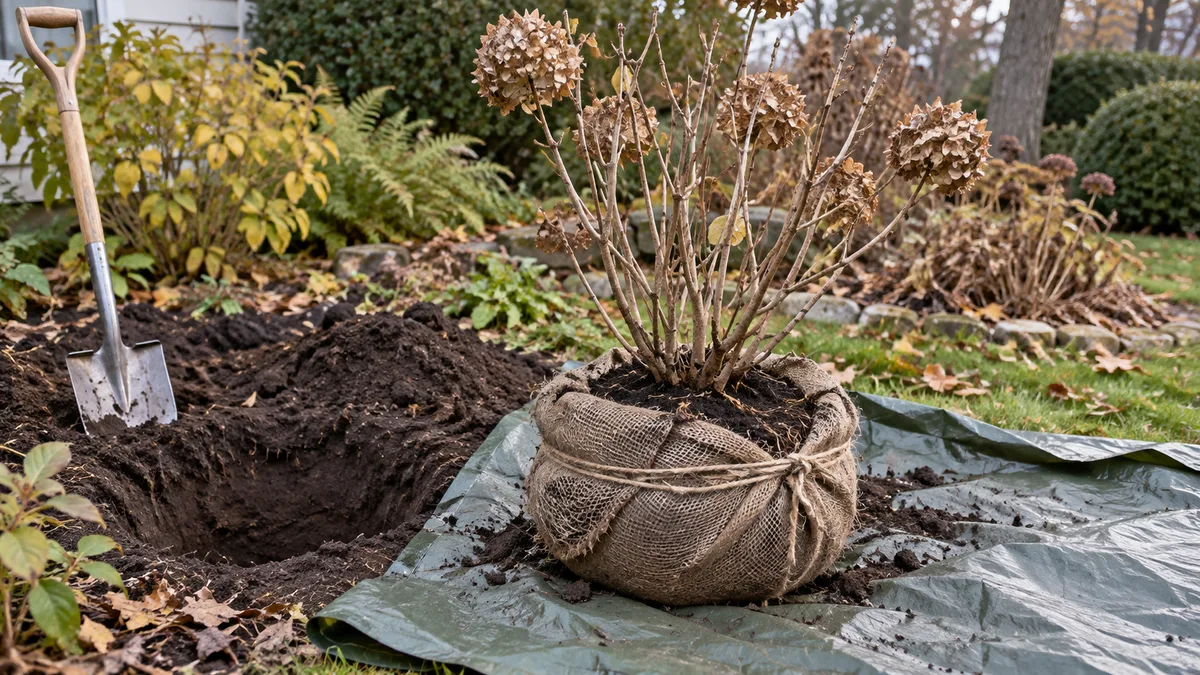
Do not shake all the nursery soil away. The goal is to expose and correct severe circling, not to bare-root a shrub unnecessarily. Find the top of the root ball and the stem flare, because the correct planting depth is measured from those points—not from the height of the foliage.
Plant the shrub without burying the root crown
Dig a hole about two to three times wider than the root ball and no deeper than its height. A wide hole gives new roots loosened soil to move into, while a shallow or level-bottomed hole prevents the shrub from settling too deeply after watering. Mix compost through the backfill if the existing soil needs organic matter, but keep the texture close to the surrounding bed.
Set the hydrangea so the top of the root ball is level with the surrounding soil or just slightly proud of it. Never bury the crown to make the shrub look shorter. Deep planting reduces oxygen around the upper roots and can keep the stem base wet. Backfill in stages, firming lightly to close large air pockets without compacting the soil into a hard layer.
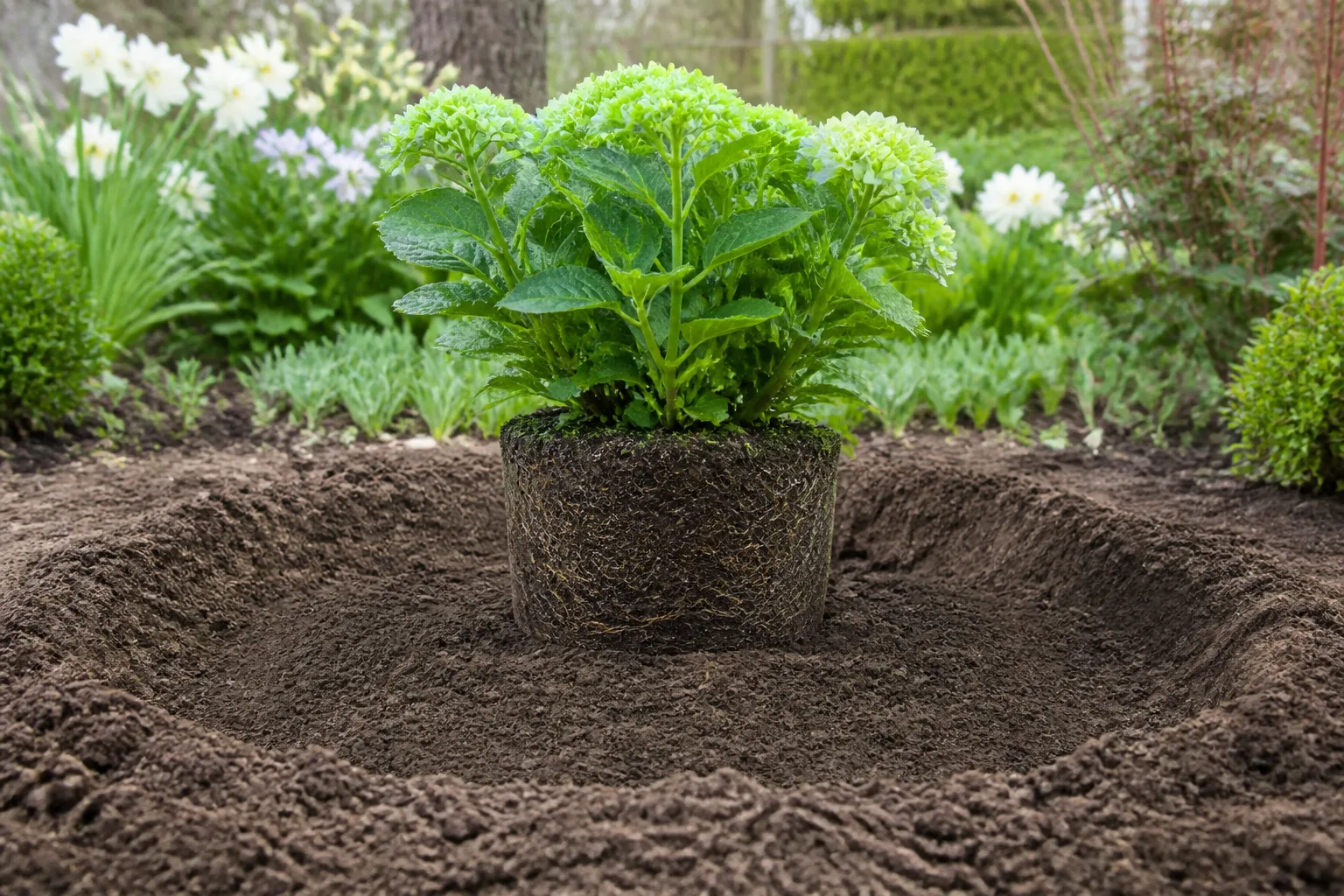
Create a shallow watering basin just outside the root ball if the soil drains normally. Water slowly until the entire planting area is wet, not merely the surface directly beside the stems. If water sits for hours, stop adding more and reassess drainage; keeping a newly planted hydrangea constantly saturated is not “extra care.”
Water for establishment, not by a rigid schedule
The first watering settles the soil; the following weeks build the root system. Check moisture at the root-ball depth every few days during the first two weeks, then adjust based on temperature, rainfall, soil, and leaf condition. A light sprinkle that wets the mulch but not the root ball does not count as a deep watering.
Water at the base and apply it slowly enough to soak outward into the surrounding soil. A soaker hose or a low-flow wand is easier to control than a blast from a hose. During hot, dry weather, a hydrangea may need water more often than once a week; during cool, rainy weather, adding more can cause root problems.
New leaves that wilt during a hot afternoon but recover by evening may reflect temporary water demand. Persistent wilt in the morning, a dry root ball, or leaves that crisp at the edges points toward insufficient moisture or excessive sun. Wilt with wet soil suggests a different problem: damaged roots, poor drainage, or a planting hole that is holding water.
Continue attentive watering through the first growing season, especially for a spring planting. Fall-planted shrubs need less frequent irrigation as temperatures fall, but water deeply during dry spells until the ground freezes. In mild winter regions, check the soil occasionally rather than letting a new root ball dry for months.
Mulch now and make a first-winter plan
Apply about two to three inches of organic mulch over the root zone, extending toward the mature drip line as space permits. Mulch slows evaporation, reduces weeds, moderates soil temperature, and protects hydrangea roots that tend to be shallow and spreading. Keep mulch a few inches away from the stems so the crown stays dry and visible.
Winter protection should match the plant and the climate. A hardy panicle hydrangea in the ground may need only a good mulch layer. A bigleaf hydrangea in a cold or windy site may benefit from a temporary windbreak or a breathable enclosure after the ground has cooled. Protection that traps wetness against the stems or warms the plant too early can create its own problems.
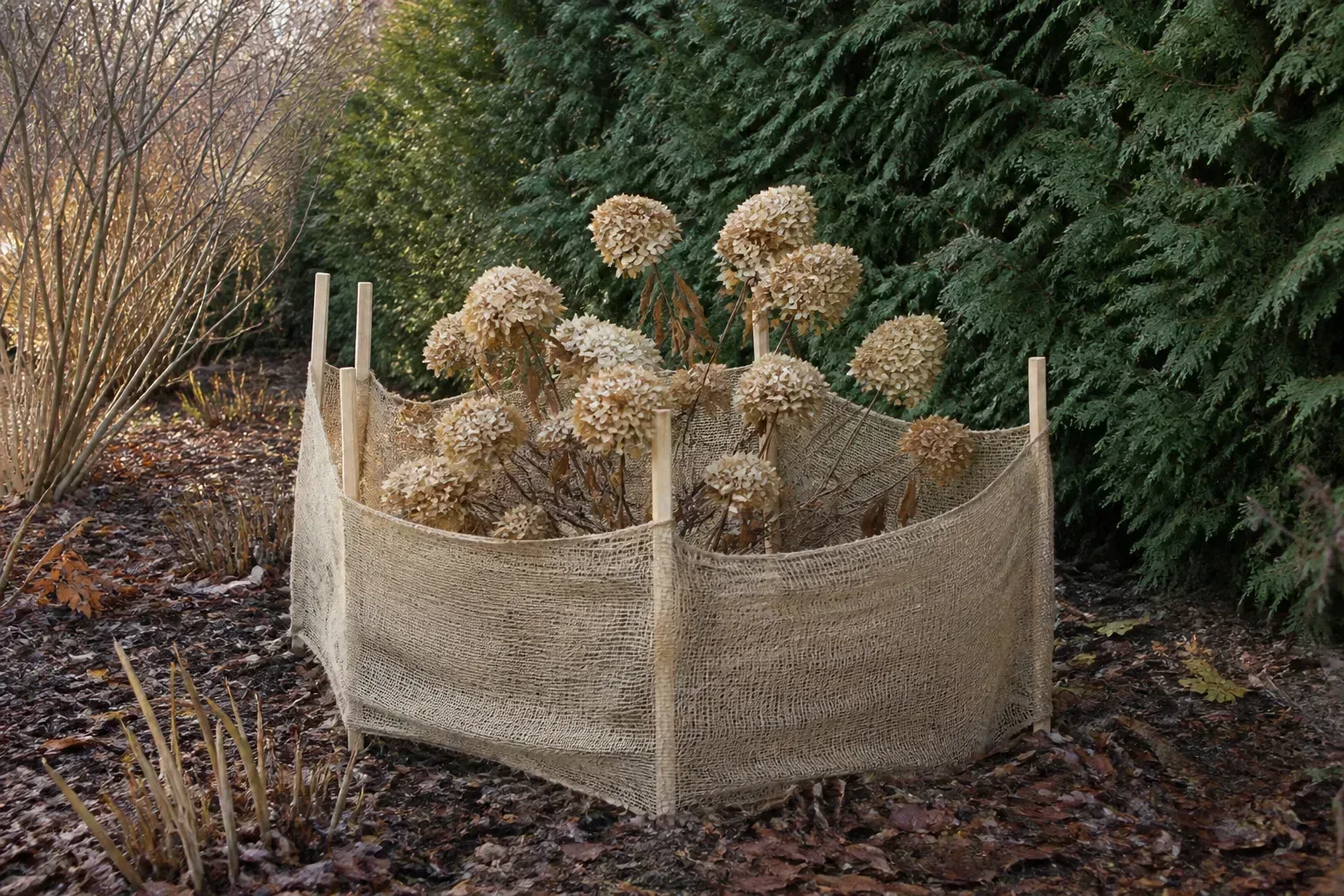
Do not wrap a shrub tightly in plastic or pile wet leaves against the stem base. The purpose of protection is to reduce drying wind and temperature swings, not to create a sealed greenhouse. Remove or open the protection as winter breaks so the plant does not overheat and begin growth prematurely.
Delay fertilizer and protect the future bloom wood
A newly planted hydrangea usually does not need a strong fertilizer dose. The priority is root contact with the surrounding soil, adequate moisture, and a site that does not stress the leaves. High-nitrogen fertilizer can push soft top growth before the root system is ready to support it and can make large flower heads more prone to flopping on some cultivars.
If a soil test shows a nutrient deficiency, correct that deficiency according to the test rather than adding a generic bloom booster. Rutgers Extension notes that hydrangeas share a need for consistent moisture but differ in cultural requirements, and its pruning guidance demonstrates why “more feeding” cannot substitute for knowing the species. Established plants in poor soil may need fertilizer in spring; a fall-planted shrub should generally be allowed to settle until active growth resumes.
Pruning is another way gardeners accidentally erase the payoff from good planting timing. Do not cut back a bigleaf, mountain, or oakleaf hydrangea just because it looks quiet in winter; you may be removing next season’s flower wood. Panicle and smooth hydrangeas are more flexible because they bloom on new growth, but even they do not require an automatic annual hard cut. Identify the type first, then remove dead or damaged stems at the appropriate time.
If you bought a hydrangea in bloom, here is the best move
A blooming nursery hydrangea is tempting because you can see the flower form and color, but flowering is not the easiest transplant stage. The plant is spending energy on a full canopy and flowers, and the root ball may already be tight in its container. If the weather is hot or frost is imminent, keep it sheltered and hydrated rather than planting immediately.
If the soil and forecast are suitable, you can plant it, but handle the flowers as temporary. Water the pot before moving it, protect the plant from harsh afternoon sun for the first week, and accept that the existing flowers may wilt or fade. Removing some blooms can reduce water demand; it does not guarantee faster establishment, so use the plant’s condition and the weather to decide.
The bloom you see today also does not prove that the plant will flower the same way next year. Flower color may change with soil conditions in some bigleaf hydrangeas, and next year’s flowers depend on whether the cultivar blooms on old wood, new wood, or both. The most useful purchase information is the cultivar name, mature size, hardiness range, and bloom habit—not just the flower color on the sales bench.
Expect the first year to be a root-building year. A well-timed, correctly planted hydrangea may bloom, especially if it is a new-wood type or a strong established plant, but fewer flowers or smaller heads are not automatically a failure. Consistent moisture, adequate light, and avoiding untimely pruning will usually do more for future bloom size than adding fertilizer or transplanting again.
Conclusion: give the roots the season they need
Plant hydrangeas in fall or early spring, choosing the season that gives roots several weeks of mild weather before the next hard freeze or sustained heat. A roughly six-week cushion is useful in cold, exposed, or short-season gardens, while milder locations can sometimes plant later if the soil remains workable and enough mild weather remains for roots to settle. Favor fall for a healthy in-ground shrub when winter is moderate; favor spring for tender bigleaf types, exposed containers, or sites where late-fall cold is too close.
Before you dig, confirm the cultivar, mature size, light, drainage, and bloom habit. Plant the root ball high enough to keep the crown above the soil line, water deeply and consistently, mulch without touching the stems, and protect vulnerable plants from winter wind. The biggest blooms come from that complete sequence: the right plant, the right site, and the right season working together.