Red vs. Yellow Tomatoes for Hot Weather
Red or yellow tomatoes can both grow in heat. Learn which traits matter, what to plant, and how to prevent blossom drop, yellow shoulders, and white core.
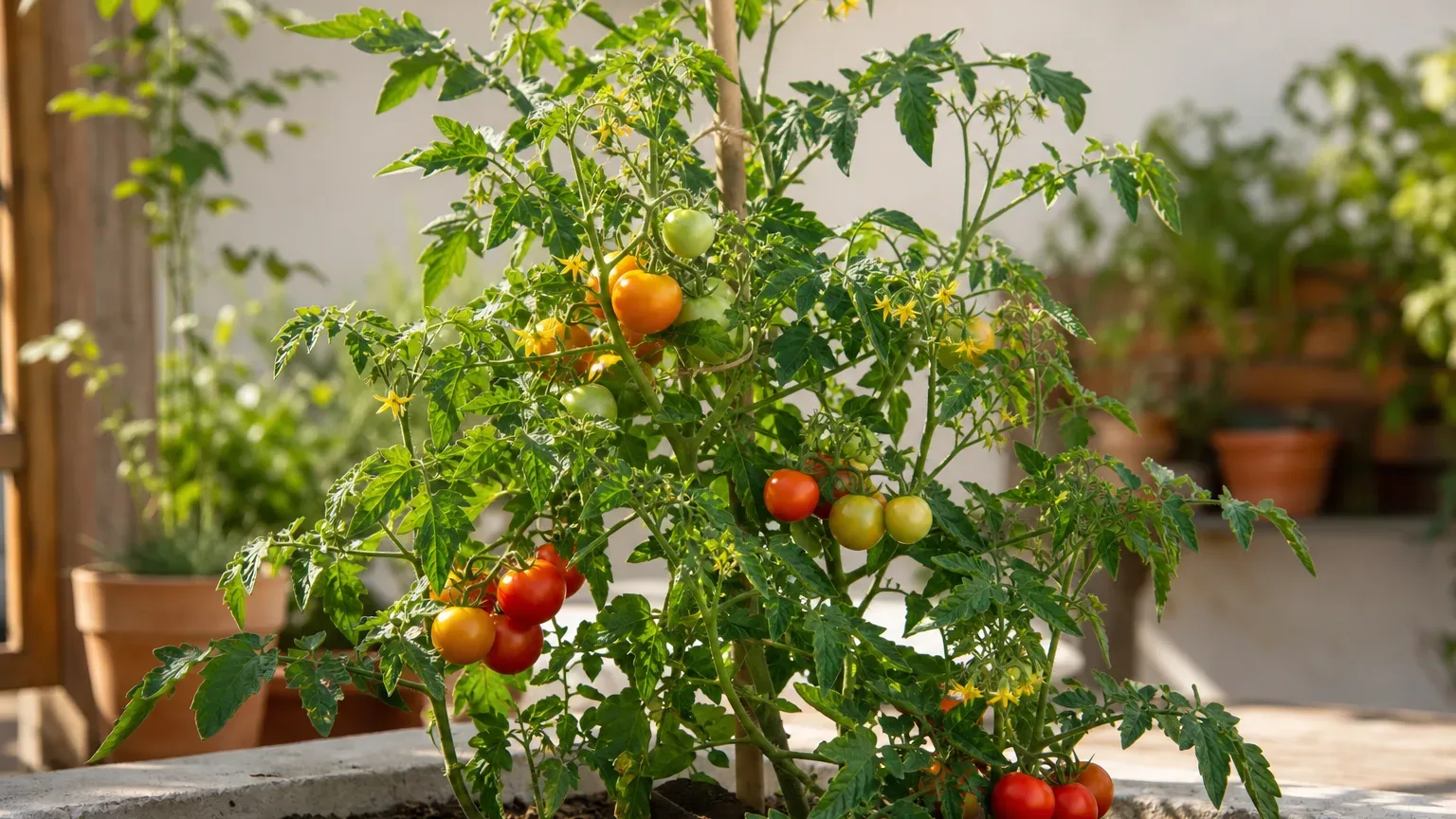
If you are choosing between red and yellow tomatoes for a hot garden, fruit color is not the deciding trait. A yellow cherry tomato can fail in a heat wave, while a red cultivar bred for hot conditions can keep setting fruit. The stronger clues are the variety’s genetics, fruit size, days to maturity, disease resistance, and how well its foliage protects the fruit.
There is one useful color-related exception: very dark purple or black tomatoes can be more prone to sunscald when intense sunlight hits exposed fruit. That does not make all red or yellow tomatoes heat tolerant, but it does make skin color worth considering alongside the growing conditions rather than using it as a shortcut.
The short answer: variety beats fruit color
Red and yellow tomatoes need essentially the same growing conditions: strong light, fertile but well-drained soil, consistent moisture, support, and enough airflow to reduce disease pressure. A yellow tomato does not need a special soil mix or a different watering routine simply because the ripe fruit is yellow.
What changes from one plant to the next is the cultivar. A heat-tolerant tomato is one whose genes help it keep flowers viable, set fruit, and maintain growth when temperatures are stressful. That trait occurs in red, pink, orange, yellow, and other fruit colors. It is also uneven: one cultivar may set fruit through a hot spell while another in the same bed drops every flower.
The best answer for most hot gardens is to choose a variety described as heat tolerant, early, disease resistant, or suited to your region, then select the color and flavor you want within that group. If you have room for two plants, grow one reliable heat-tolerant red and one yellow or orange variety you want to test. That small side-by-side trial tells you more than a general color rule.
What heat does to tomato flowers and fruit
Heat affects two separate jobs: making a tomato and ripening a tomato that already exists. Confusing those stages leads gardeners to blame fruit color for a pollination problem or to keep waiting for a ripening process that high temperatures have slowed.
Why high day and night temperatures reduce fruit set
Tomato flowers need viable pollen and successful fertilization before a tiny green fruit can form. When temperatures rise above about 90°F during the day and 70°F at night, flowering and fruit set commonly decline. The University of Missouri’s fruit-disorder guidance notes that night temperature may be especially important, with an optimal nighttime range around 59–68°F. (University of Missouri Integrated Pest Management)
That is why a plant can look lush, green, and well watered while producing no new tomatoes. The leaves are still growing, but the flowers opening during the hot stretch may have pollen that is not viable, may fail to fertilize, or may abort before a fruit enlarges. A heat-tolerant cultivar may improve the odds, but it cannot make every flower immune to extreme weather.
Do not judge the variety after one week of empty clusters. Record the daytime high, nighttime low, watering, and whether new flowers appear after the weather moderates. A plant that resumes fruit set when nights cool may be responding normally to a temperature window rather than failing because it is red or yellow.
Why green fruit can ripen slowly in a heat wave
Once a fruit is fertilized, it still needs time to mature before its final color develops. Mature green tomatoes ripen most quickly when temperatures stay roughly between 68 and 77°F. Above that range, the ripening process slows; in extreme heat it can nearly stop. (University of Missouri Integrated Pest Management)
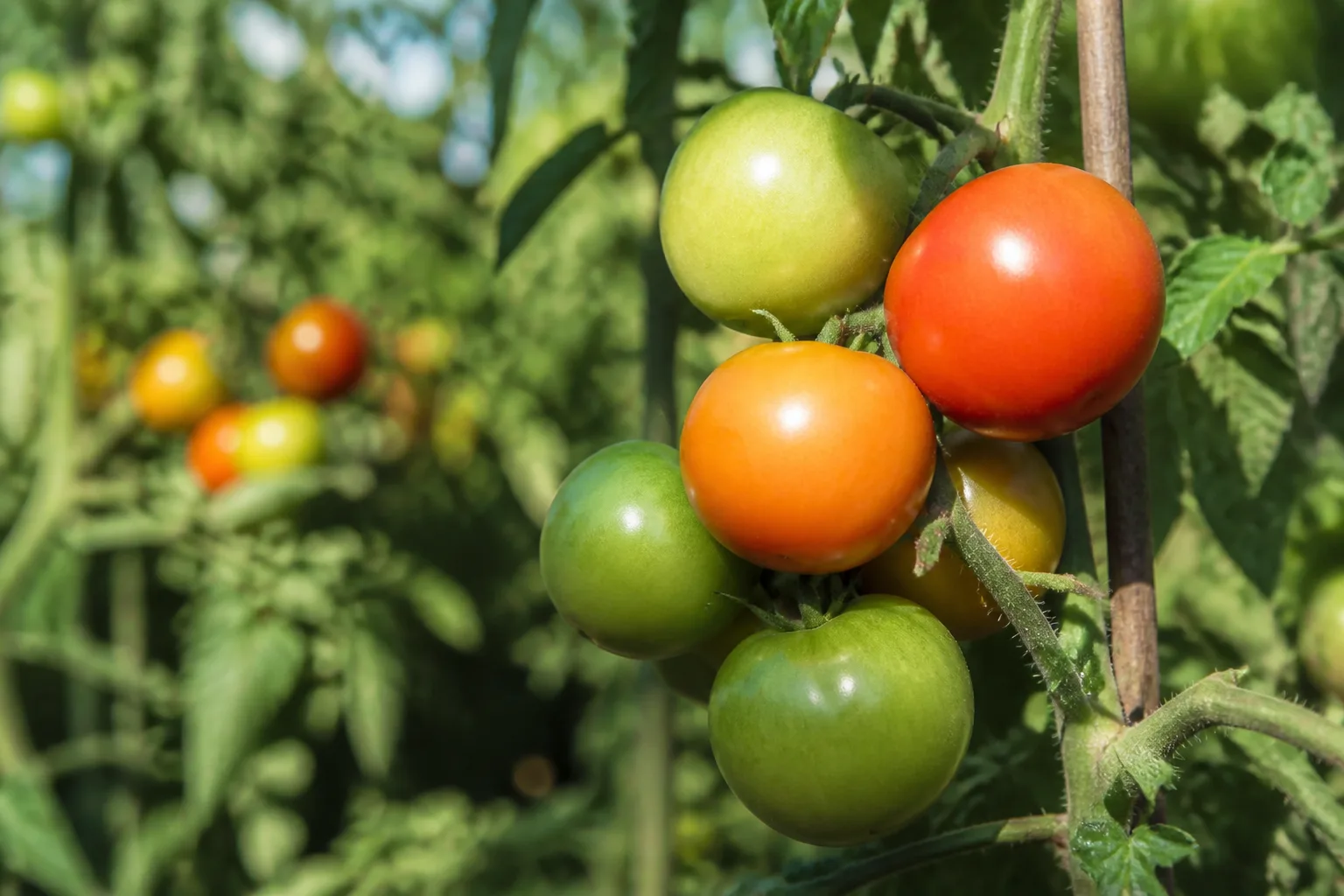
The pigments involved are temperature sensitive, too. Lycopene contributes the red color, while carotene contributes yellow and orange tones. University of Missouri guidance explains that temperatures above 85°F can slow or halt production of both pigments, so even a yellow tomato can experience delayed, uneven, or poor-quality ripening. A yellow variety simply does not need to build the same amount of red lycopene to look ripe.
The practical distinction is important: a red tomato staying orange during a heat wave is not proof that a yellow tomato would produce better, and a yellow tomato reaching its visible color is not proof that it set fruit better. Look separately at flower retention, fruit enlargement, ripening speed, texture, and flavor.
What red and yellow color actually changes
Fruit color tells you something about pigment chemistry and often hints at flavor, but it tells you very little about how well the plant’s flowers tolerate heat. Red cultivars tend to have more lycopene and may taste more acidic or balanced; yellow and orange cultivars are often perceived as mild or sweet. Those are broad tendencies, not reliable predictions for an individual variety.
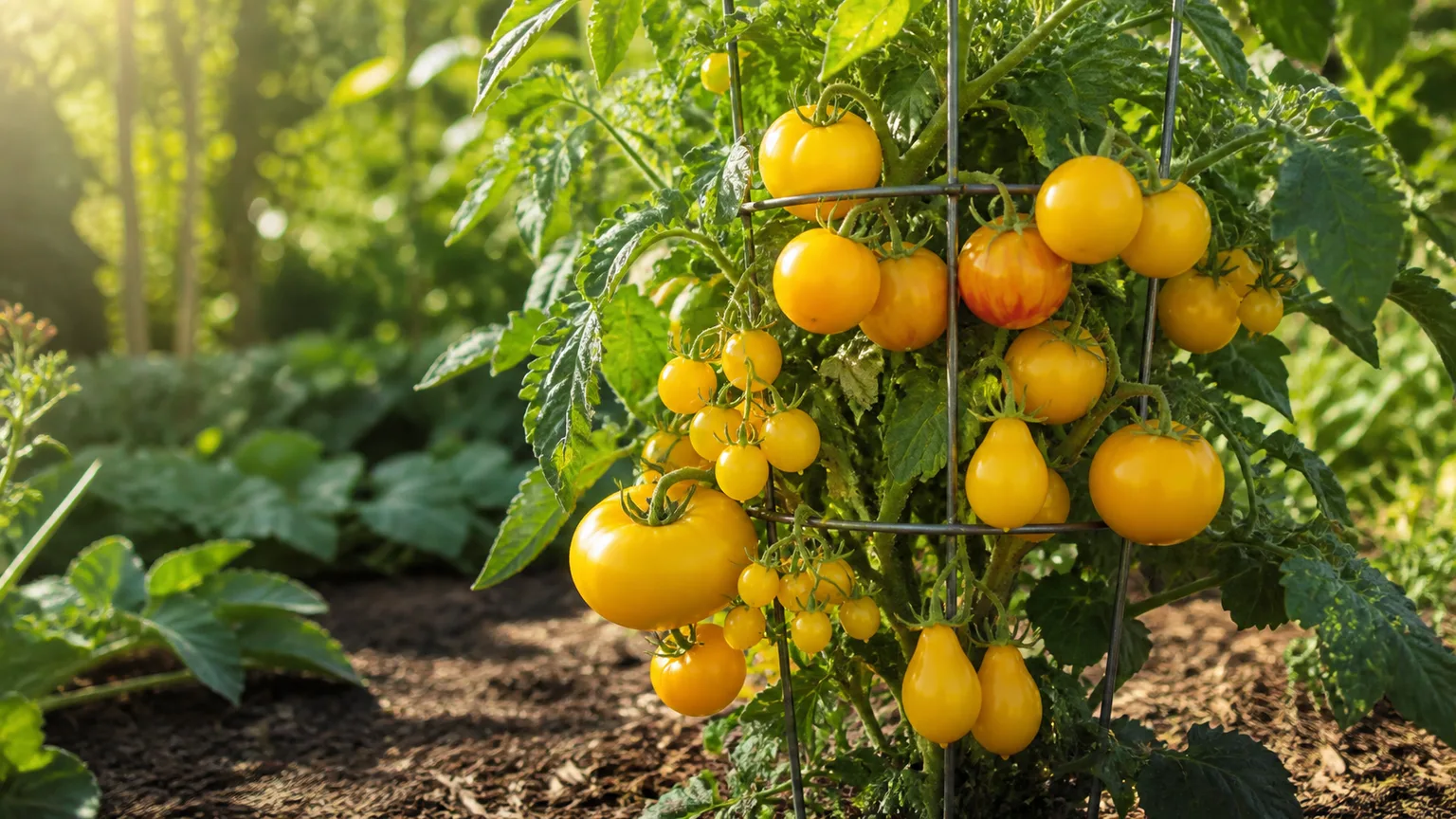
For example, a small yellow cherry and a large yellow beefsteak do not have the same crop behavior. The cherry may mature quickly and produce many fruits, while the beefsteak takes longer, carries more fruit mass, and has more opportunities for heat, sun, and water stress to affect quality. Both are yellow, but their useful growing traits are different.
Flavor and pigment are not the same as heat tolerance
Heat tolerance is a reproductive and growth trait; flavor is the result of a cultivar’s sugars, acids, volatile compounds, texture, maturity, and growing conditions. A heat-tolerant hybrid may set fruit dependably but taste less complex than your favorite heirloom. A flavorful heirloom may perform beautifully when planted early, shaded in the afternoon, and protected from disease, yet struggle if its flowers open during a long run of hot nights.
This is why a “best” list needs a use case. If your priority is dependable fruit during the hottest part of summer, choose heat tolerance and disease resistance first. If your priority is slicing flavor, choose the flavor type you love and use timing, afternoon relief, mulch, and foliage protection to give it a better chance. If you need sauce, a smaller plum type may be a better heat-season compromise than a huge slicer regardless of whether the skin is red or yellow.
Very dark-fruited types deserve a separate note. In hot, high-light gardens, purple, black, and other dark fruits can absorb more solar heat and may show sunscald more readily when foliage is sparse. Epic Gardening’s hot-climate guidance recommends that gardeners in intense sun consider red, pink, orange, and yellow fruits before dark-fruited types, while also emphasizing that cultivar choice and site management matter. (Epic Gardening)
Choose a heat-tolerant tomato by traits
Read the seed packet or nursery tag as a climate document, not just a color label. The most useful information is usually the combination of maturity, growth habit, disease resistance, fruit size, and a specific note about heat tolerance or regional adaptation.
Start with the seed packet’s maturity and resistance notes
Look for heat tolerant, good fruit set in heat, or a variety recommended for hot Southern gardens. Treat those phrases as useful screening information, not a guarantee. Local weather, soil, irrigation, disease pressure, and planting date can overwhelm a cultivar’s advantage.
Then check days to maturity. In a region where summer heat arrives early, an early or mid-season tomato can set and ripen a crop before the worst heat. In a hot region with a long fall, a variety that keeps flowering after the first heat wave may be more valuable than one that ripens quickly.
Disease resistance matters most in hot, humid climates. Look for resistance codes that match the problems you have actually seen, and give the plant enough spacing and airflow to make that resistance useful. Epic Gardening recommends at least about two feet between plants in humid conditions unless you are intentionally training plants to one or two leaders; your seed packet and local extension advice should take priority for the specific growth habit. (Epic Gardening)
Growth habit changes the trade-off. Determinate plants can produce a concentrated crop and may be useful for a heat window, but an indeterminate plant can continue flowering after a stressful spell if the season stays long enough. Neither habit is automatically more heat tolerant; choose based on harvest timing, space, support, and the length of your season.
Favor smaller fruit when summer is brutal
Small cherry, grape, saladette, and plum tomatoes often give hot-climate gardeners a more reliable harvest than very large beefsteaks. They generally mature faster and place less water and structural demand on each fruit. That is an advantage during heat, but it is not a law: a well-adapted large-fruited cultivar can outperform a poorly adapted cherry in the same garden.
Use fruit size as a tie-breaker. If you have one container or one narrow bed and cannot protect it from afternoon sun, start with a smaller-fruited, earlier variety. If you have deep soil, a sturdy trellis, good foliage cover, and a long season, you can take a calculated chance on a larger slicer for flavor.
Heat-tolerant red and yellow varieties to consider
The varieties below are starting points for a trial, not a promise that every plant will thrive in every climate. Compare the days to maturity and disease-resistance notes on the current seed packet, because availability and recommendations can vary by supplier and region.
Red options for reliable set
Florida 91 is a red determinate slicer developed for hot conditions and is a logical first choice for gardeners who want a larger red tomato. Phoenix and Heatmaster are also red heat-tolerant cultivars commonly offered for hot gardens. University of Maryland Extension trialed Florida 91, Heatmaster, Jamestown, and Phoenix under Mid-Atlantic conditions; the plants produced through summer heat, but staff observations showed differences in productivity, texture, and flavor. That is a useful reminder that “survives heat” and “best tasting” are separate ratings. (University of Maryland Extension)
Solar Fire is another red option often listed for hot climates. Celebrity can also be worth considering where local growers report good performance, especially if you value a familiar, disease-resistant garden tomato over a novelty variety. If your summer is both hot and humid, do not stop at heat tolerance: match the resistance package to early blight, Septoria, bacterial disease, or other problems common in your garden.
The University of Delaware’s 2019 heat-stress trial is a stronger argument for testing named cultivars than for picking a color. In that trial, marketable yield and white-tissue incidence varied substantially among 28 commercial and experimental cultivars, and white tissue generally declined as temperatures cooled. (University of Delaware Extension)
Yellow and orange options for flavor and color
Yellow and orange tomatoes can grow well in heat when the plant is adapted to the site. Sun Sugar and Yellow Pear are practical yellow or orange cherry types to trial if you want a smaller fruit and a long picking season. Dr. Wyche’s Yellow is a larger yellow heirloom option for gardeners who have the space and are willing to manage water and afternoon exposure carefully.
These varieties are not automatically better in heat because they are yellow. Choose them when their maturity, fruit size, disease notes, and local reputation fit your garden. A yellow cherry may be a better hot-weather bet than a giant yellow beefsteak simply because it finishes fruit sooner; that is a size-and-maturity advantage, not a color advantage.
If flavor is the main goal, grow a yellow or orange favorite alongside a dependable red heat-tolerant variety. You can protect the favorite with afternoon shade and a healthy canopy while relying on the red plant for a better chance of fruit during the hottest gap in the season.
Match the variety to your climate
“Hot” is not one growing condition. A humid coastal garden, a dry high-UV garden, and a short-season garden can all have high daytime temperatures but need different tomato strategies.
Hot, humid, hot, dry, and short-season gardens need different compromises
In a hot, humid garden, prioritize disease resistance, airflow, spacing, and a variety that can keep setting fruit when nights stay warm. Trellis plants so leaves are not pressed against the soil, keep irrigation at the base, and avoid turning a dense canopy into a damp tunnel. Choose a cultivar that has performed well locally even if its fruit color is not your first choice.
In a hot, dry or high-UV garden, prioritize early establishment, steady root-zone moisture, mulch, and protection from the harshest afternoon sun. Epic Gardening’s desert-growing guidance also notes that sudden temperature swings and very hot nights can stop fruit set; shade cloth or a movable container location can moderate the microclimate, but keep enough light and airflow for the plant to function. (Epic Gardening)
In a short or cool growing season, days to maturity may matter more than heat tolerance. Choose an early variety that can set and ripen before cold weather returns. A yellow or red early tomato can outperform a heat-tolerant late variety simply because it reaches harvest while conditions are still favorable.
Practical short-season starting points include Sub-Arctic Plenty, Early Girl, Stupice, and New Yorker for red fruit; Sungold for a fast orange cherry; and Orange Roma when you want a paste-type tomato that finishes sooner. Color still does not decide the race—maturity date, fruit size, and local performance do. Check current seed-packet days-to-maturity notes, because catalogs revise listings and regional trial results change over time.
The most useful local evidence is a notebook or a conversation with a nearby extension office, seed library, or experienced gardener. Track first ripe fruit, fruit set during the hottest week, cracking, disease, and taste. After two seasons, you will have a better regional variety list than any color-based ranking.
Keep fruit set and ripening on track
Even the right cultivar needs a workable microclimate. Heat management is not about keeping a tomato plant cool at all costs; it is about preventing the roots from cycling between dry and saturated, keeping the fruit from baking in exposed sun, and letting the foliage do its protective work.
Use shade and steady water without creating a wet, weak canopy
Tomatoes need strong light, but late-afternoon relief during an extreme heat spell can protect flowers and exposed fruit. University of Maryland Extension suggests moving crops to a spot with late afternoon shade or using about 30% shade cloth when heat is reducing flowering and fruiting. Put shade above the plant rather than wrapping it tightly around the foliage, anchor it securely, and remove or reduce it when the heat passes. (University of Maryland Extension)
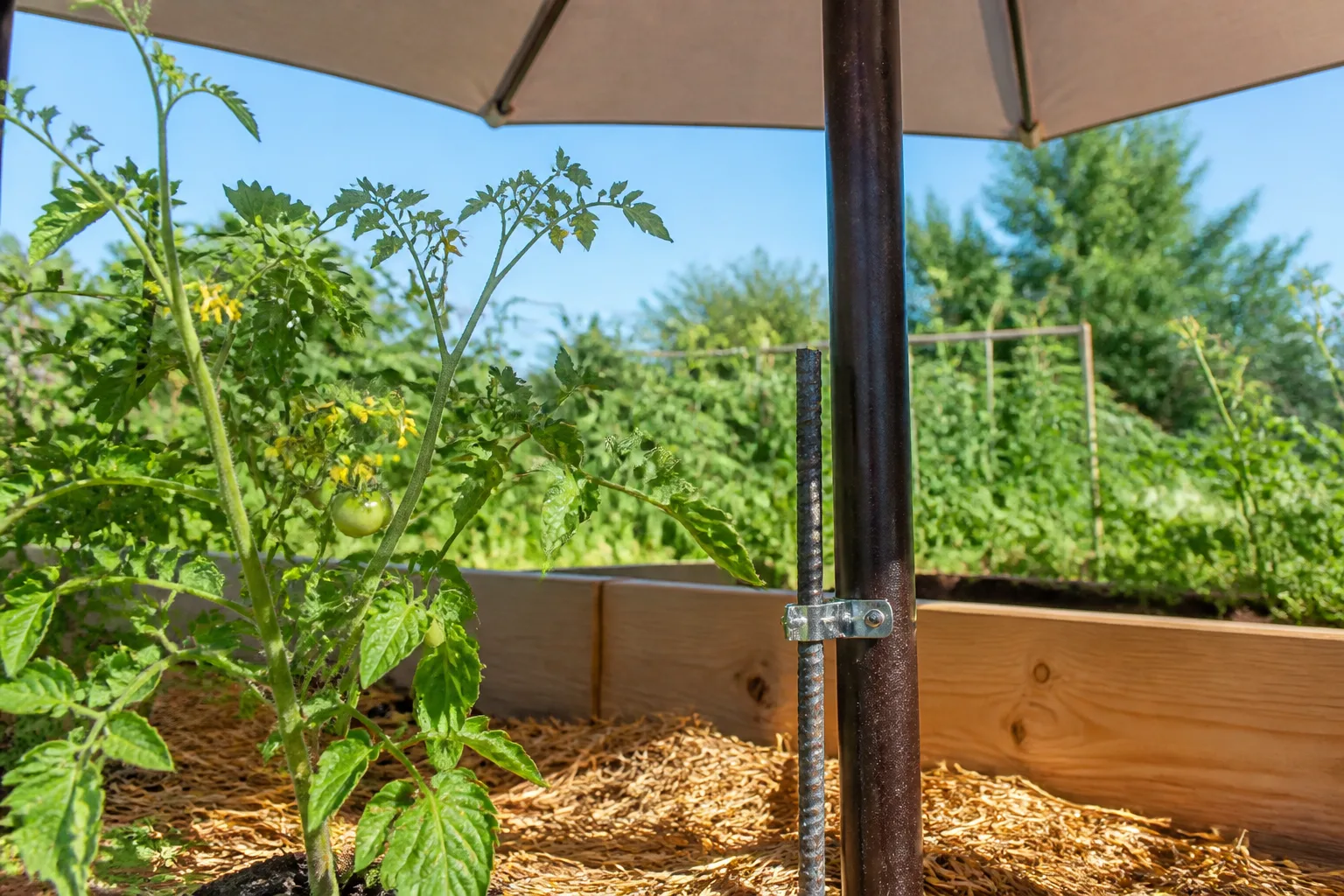
Water deeply enough to moisten the root zone, then allow excess to drain. Check the soil under the mulch instead of following a rigid daily schedule. Mulch helps reduce evaporation and moderate soil temperature, while direct-to-soil irrigation avoids wetting leaves. Epic Gardening recommends mulch, base watering, and avoiding overhead irrigation in hot, humid conditions because wet foliage and poor airflow raise disease pressure. (Epic Gardening)
Avoid two common overreactions. Do not keep soil saturated in the hope that extra water will force flowers to set, and do not stop watering a fruiting plant to concentrate flavor. Drought followed by heavy irrigation increases plant stress and can contribute to blossom-end rot, fruit cracking, and uneven fruit growth.
Fertilize according to a soil test or a product made for fruiting vegetables. Excess nitrogen can produce a soft, leafy plant with delayed fruiting, while poor potassium status has been associated with yellow shoulders, white core, and blotchy ripening. That does not mean you should add potassium blindly; correct the actual soil or fertility problem and keep enough foliage around the fruit.
Protect foliage and airflow instead of over-pruning
Leaves are not just decoration. They power growth and cast shade over ripening fruit, so stripping a tomato plant bare during a heat wave can expose fruit to sunscald and worsen yellow shoulders or white core. Remove diseased leaves and any foliage touching the soil, but avoid removing healthy leaves simply because the plant looks crowded.
Support the plant early, maintain the spacing recommended for its habit, and prune only enough to keep the canopy manageable and air moving. In humid conditions, a little extra airflow can reduce leaf-disease pressure; in dry, blazing conditions, too much pruning can remove the shade the fruit needs. The correct amount of pruning depends on humidity, disease history, growth habit, and the strength of the support—not on a universal rule.
Diagnose heat symptoms before changing varieties
Use the symptom and the timing together:
- Flowers drop or clusters stay empty: Check day and night temperatures first, then soil moisture and excessive nitrogen. Wait for cooler nights and watch whether new flowers set before deciding the cultivar has failed.
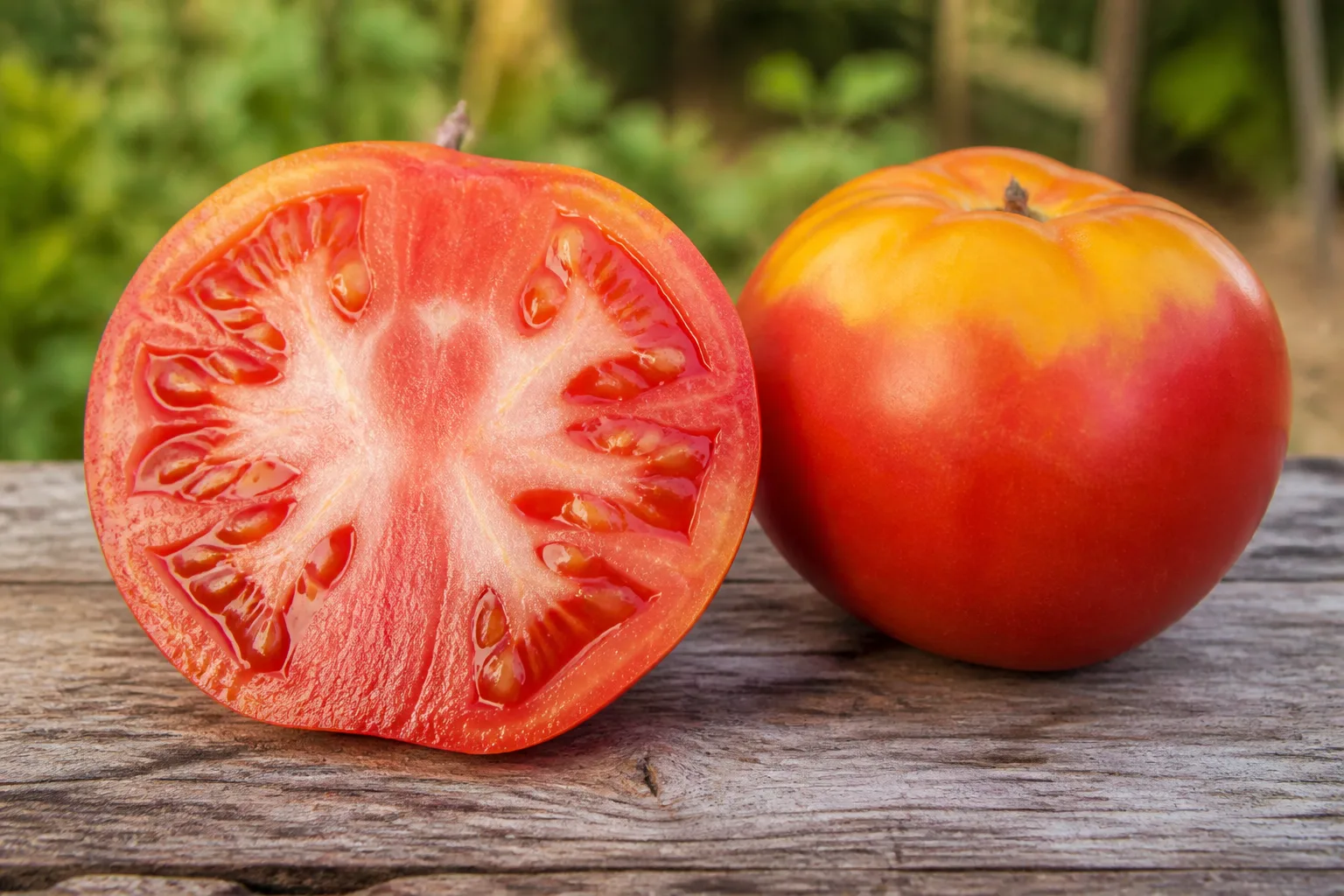
- Red fruit has yellow shoulders or stays orange: Heat can slow lycopene production, while direct sun, sparse foliage, variety genetics, and low potassium can worsen the disorder. Keep foliage over the fruit, maintain balanced nutrition, and harvest the lower portion when it is ripe; do not expect a red tomato to color normally in extreme heat.
- A white, tough core appears inside: Internal whitening is associated with heat and can be more common in some older fruit types. University of Missouri notes that newer beefsteak types with multiple locules may be less prone, but cultivar choice, foliage cover, and fertility still matter. Cut away the tough tissue and assess the rest of the fruit rather than treating the problem as a disease that will spread from tomato to tomato. (University of Missouri Integrated Pest Management)
- A pale patch appears on the sun-facing side: Think sunscald, especially after disease or pruning removes leaf cover. Shade the plant during the worst exposure and protect the foliage instead of moving immediately to a different fruit color.
- Fruit cracks, or the blossom end turns dark: Cracking usually follows rapid changes in water uptake; blossom-end rot is a calcium-transport problem often worsened by uneven moisture or root stress. Stabilize irrigation and drainage first, then use a soil test before adding amendments.
If the same symptoms appear on both a red and yellow plant growing side by side, the site or management is more likely the main problem. If one cultivar sets fruit and ripens cleanly while the other repeatedly fails under the same conditions, genetics and maturity are the better suspects.
Conclusion
Red and yellow tomatoes can both grow in hot weather. Neither color is a reliable heat-tolerance label. Choose the variety that matches your climate, season length, fruit-size preference, disease pressure, and desired harvest, then use steady moisture, mulch, afternoon relief, healthy foliage, and good airflow to give it a fair chance.
For the most dependable hot-weather plan, start with one locally proven or explicitly heat-tolerant cultivar and one yellow or orange variety you want to taste. Record what happens during the hottest weeks. That simple comparison will show whether your garden needs a different color—or, much more likely, a different cultivar, planting date, or microclimate.