Tomato Plant Wilting: 5 Causes and Practical Fixes
Learn why tomato plants wilt and how to separate dry soil, heat, waterlogged roots, disease, walnut toxicity, or stem injury before choosing a safe fix.
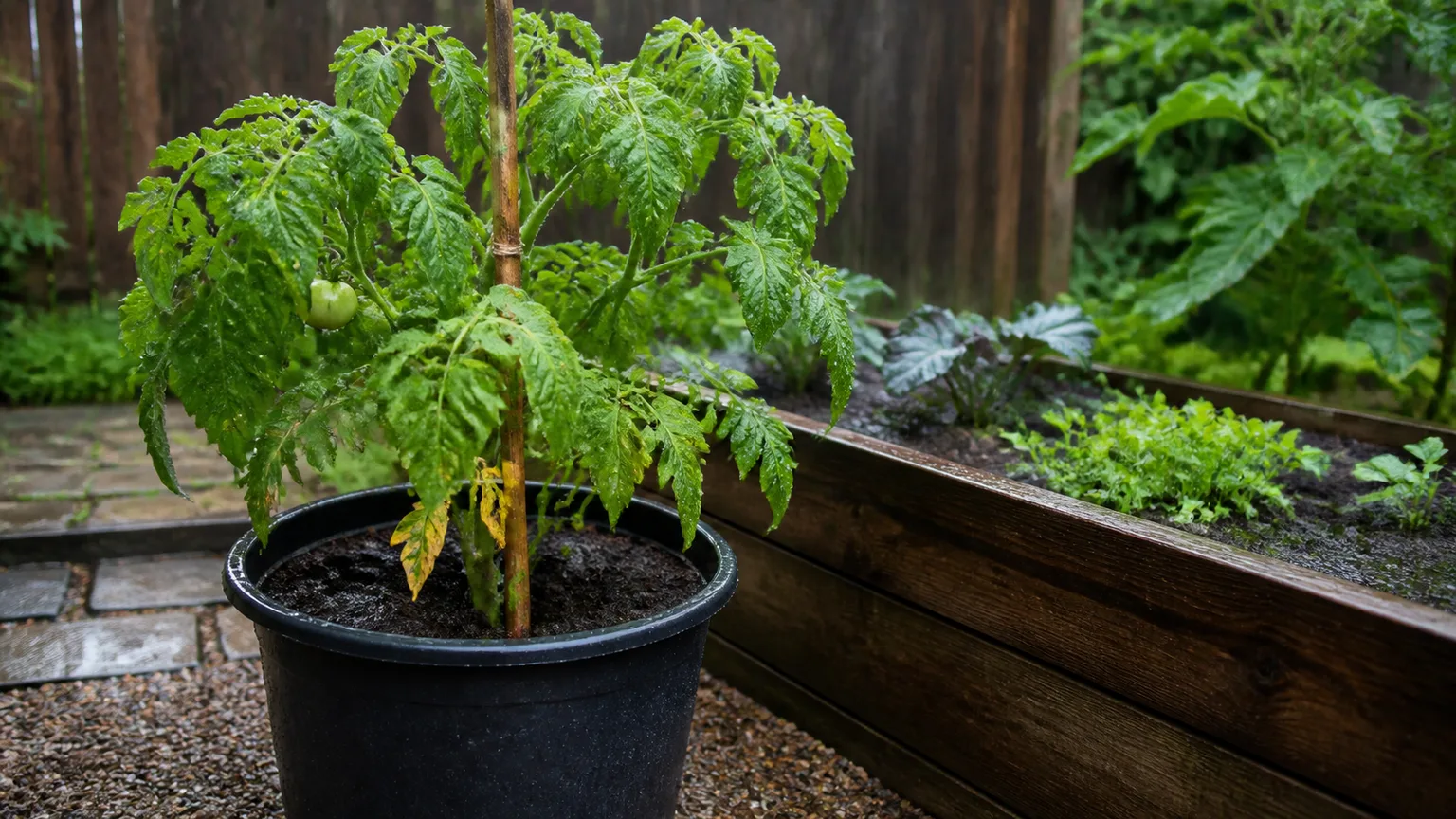
A tomato that droops at 3 p.m. and stands upright again at breakfast may be reacting to heat. A tomato that stays limp in cool morning air, even with damp soil, needs a different investigation. Both plants can look equally thirsty, so watering by appearance alone is a fast way to make some wilt problems worse.
Before you reach for the hose, check two things: when the plant wilts and how the soil feels several inches below the surface. Those clues separate ordinary afternoon stress from a dry root ball, waterlogged roots, disease, or physical damage. The five causes below are ordered from common and reversible to less common and more serious.
Run a two-minute wilt triage before you act
Look at the whole plant before focusing on one leaf. Note whether every branch is drooping or just one side, whether leaves are yellowing or mottled, and whether the plant was normal yesterday or has declined over several days. Then check moisture at root depth: push a finger or a wooden skewer a few inches into the bed, or lift a container to feel its weight and inspect the mix below the surface.
| What you find | What it suggests | First response |
|---|---|---|
| Dry soil below the surface; pot feels light | The roots may not be receiving enough water | Water slowly at the root zone, then recheck |
| Wilt appears in hot afternoon and mostly clears by morning | Heat or wind may temporarily exceed water uptake | Confirm the soil is moist; do not automatically add water |
| Soil stays wet and the plant remains limp | Poor drainage, root injury, or disease is possible | Pause watering and check drainage and roots |
| One branch wilts while the rest looks normal | A broken, girdled, or tunneled stem may be involved | Trace that branch down and inspect the stem |
| Several nearby plants decline with yellowing or distorted new growth | A disease or shared site problem deserves attention | Avoid handling healthy plants with the same tools until you inspect |
These are clues, not a laboratory diagnosis. Hot wind, recent transplanting, root damage, and soil-borne disease can overlap, and a plant can have more than one stress at a time. A whole-plant inspection is useful because tomato problems can also show up as stem lesions, leaf spots, or fruit changes; Gardenia’s tomato problem guide gives a broader symptom reference. If you are unsure, take dated photos of the whole plant, the leaves, the stem, and the soil before changing several things at once.
Read the timing and shape of the wilt
Check again early in the morning, before the sun has warmed the foliage. A plant that is firm then but droops during hot, bright, or windy hours is experiencing a different pattern from one that is still collapsed at dawn. Recovery overnight is reassuring, though it does not rule out a developing problem if the wilt is becoming stronger each day.
The pattern across the plant matters too. A uniform droop after a missed watering points toward root-zone dryness; a single limp branch can indicate a local stem injury. Progressive yellowing, stunting, mottled leaves, or a wilt that persists despite reasonable soil moisture shifts the investigation toward root or vascular trouble.
Check the root zone, not just the soil surface
The top inch can dry while deeper soil remains damp, especially under mulch. Conversely, water can run down the side of a pot or pass through a shrunken root ball without wetting it evenly. Check below the crust and, for a container, compare how heavy the pot feels after a thorough watering with how it feels now.
Do not add fertilizer, prune heavily, or apply a disease product while you are still guessing. Those actions do not restore water transport, and extra fertilizer can stress roots that are already struggling. Make one evidence-based change, then watch the plant through the next cool morning.
1. Dry soil or a dry root ball
Underwatering is the most straightforward cause when soil at root depth is dry and the plant is limp across most of its canopy. Leaves may feel thin or lose their usual firmness; if the drought continues, some may curl, yellow, or develop dry edges. A plant with living roots and stems can often recover after a slow, thorough watering, although scorched or dead leaves will not turn green again.
Water the soil around the plant rather than giving the leaves a quick shower. Apply water slowly enough that it can soak in, pause if it begins to run off, then resume until the root area is wetted. If a container mix has become water-repellent, wet it in several passes; a single fast pour may drain away while the center of the root ball stays dry.
Avoid turning “one inch a week” into a rigid prescription. That familiar garden estimate is a starting point, not a schedule: rainfall, soil texture, mulch, plant size, wind, and heat all change how quickly a bed dries. The useful target is a consistently moist root zone with time to drain, not a fixed amount poured on a fixed day. Epic Gardening’s tomato watering guidance also emphasizes that a brief hot-weather droop differs from persistent morning wilt.
2. Heat or wind temporarily outpaces water uptake
On a hot afternoon, leaves can lose water faster than roots replace it. Strong sun, dry wind, reflected heat from paving or walls, and a small container can intensify the mismatch. If the soil is still evenly moist and the plant recovers as the evening cools, the answer may be to wait rather than water again.
Repeatedly soaking already moist soil does not cool the plant in a useful way; it reduces the air spaces roots need. Check the plant at the same times for a day or two and note whether the overnight recovery is complete. If morning wilt appears, or yellowing and decline continue, move on to root or disease checks.
For a container baking against a sunny wall, move it temporarily to a spot with morning sun and some protection from harsh late-day heat if that is practical. In a bed, a temporary shade cloth can reduce the load during an extreme spell, but avoid making permanent changes based on one afternoon. Tomatoes still need strong light for productive growth; the goal is to reduce a short-term stress, not keep the plant shaded indefinitely.
3. Saturated soil leaves roots short of oxygen
Wet soil does not guarantee that a tomato can take up water. Roots need oxygen as well as moisture; when soil remains saturated, oxygen becomes scarce, roots weaken, and the canopy can wilt even though the ground feels damp. This is why “it looks thirsty” is not enough reason to water.
Look for soil that stays soggy long after rain or irrigation, standing water, a blocked container drain, or a saucer that never empties. Yellow lower leaves, soft growth, a sour smell, or roots that are brown and mushy strengthen the case for root damage. Healthy roots are generally firm; color varies with soil and age, so texture and smell are more useful than color alone.
Pause irrigation and correct the cause of the saturation. Clear drainage holes, empty a pot’s saucer, divert runoff, or stop irrigating on a calendar while the root zone is still wet. Do not put gravel in the bottom of a pot as a drainage fix; it does not make a blocked hole work. For a container with badly decayed roots, unpotting may confirm the damage, but repotting cannot revive roots that have already rotted away.
A garden bed that repeatedly holds water may need a longer-term drainage or siting change rather than another amendment tossed into the planting hole. The Piedmont Master Gardeners’ overview of vegetable wilts and root rots explains why these problems can look alike above ground even though one damages the root system and another interferes with water movement through the plant.
4. A disease disrupts the plant’s water system
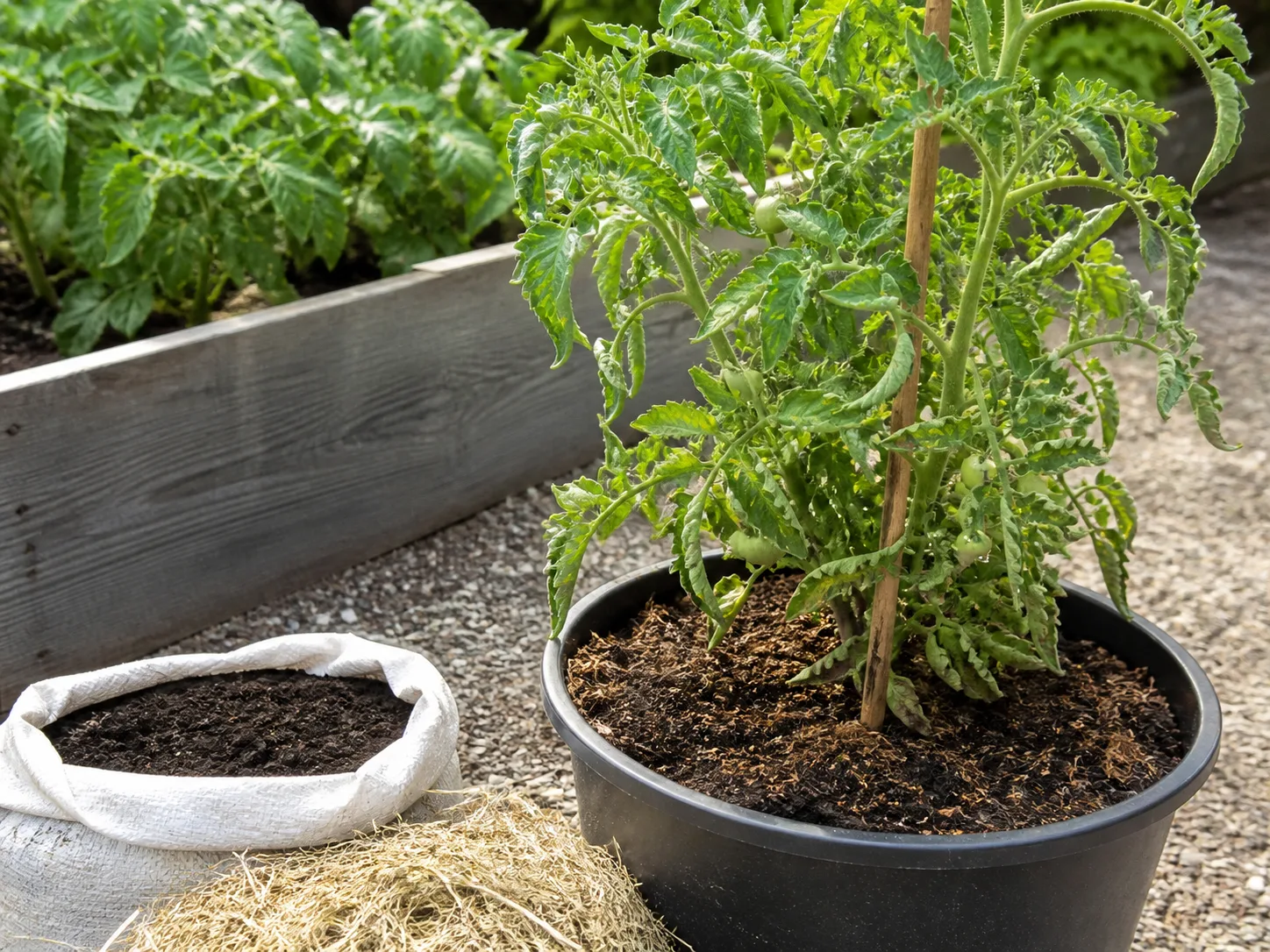
If the root zone is neither bone-dry nor persistently saturated, and the plant stays wilted through the cool morning, consider disease. Fusarium and Verticillium wilts are soil-borne fungal diseases that interfere with water-conducting tissue. A common pattern is gradual decline, often beginning with lower or one-sided yellowing before more of the plant wilts; those signs raise suspicion but cannot identify the pathogen by themselves.
A cut stem may show brown vascular tissue, but this is only a clue. Similar discoloration can have other causes, and a home cut cannot reliably distinguish Fusarium from Verticillium or some bacterial problems. If the diagnosis matters for future planting, photograph the plant and ask a local extension office or plant diagnostic lab whether a sample is appropriate before discarding it.
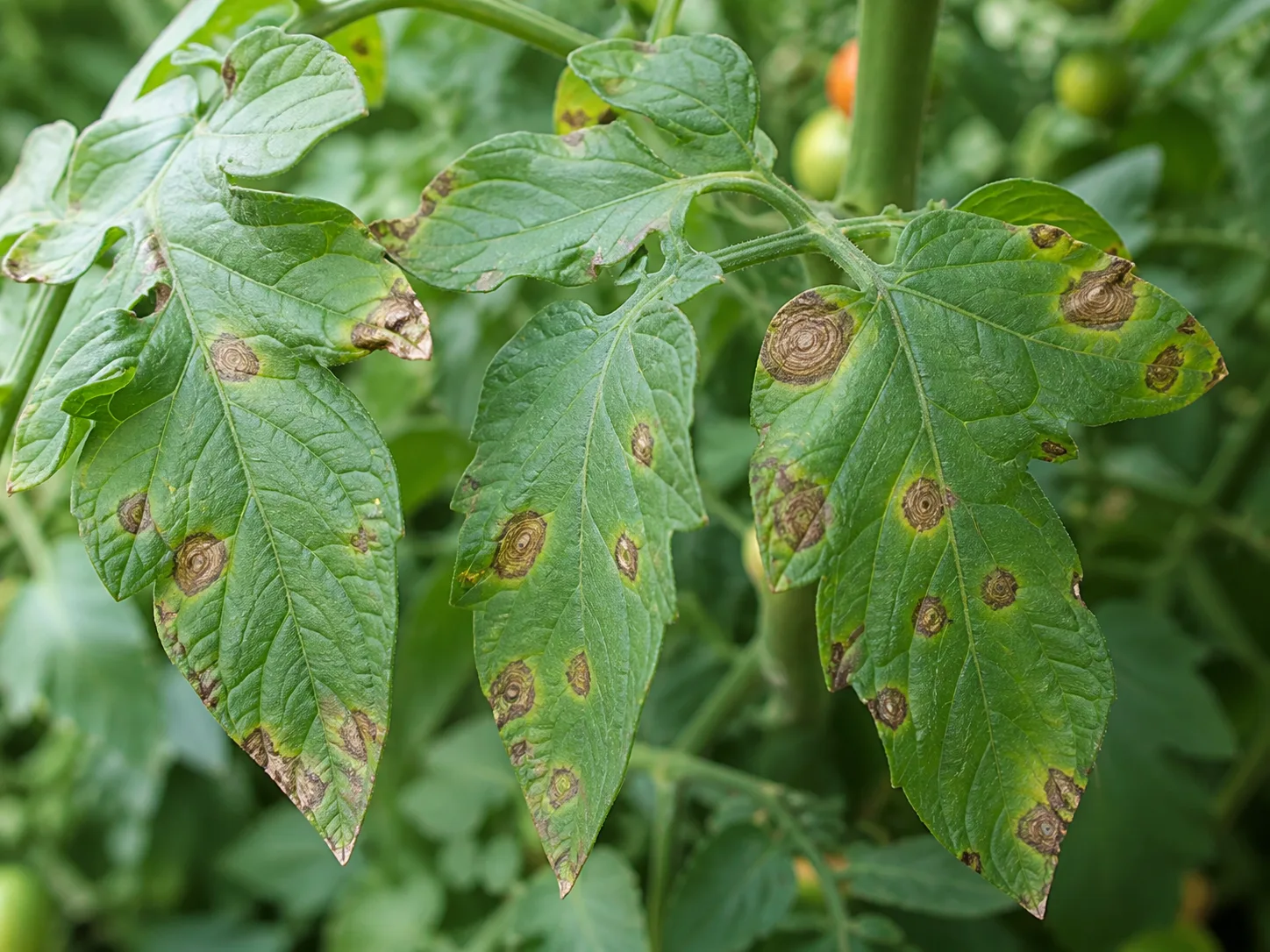
Virus symptoms can look different. Tomato spotted wilt virus may cause stunting, distorted new growth, bronzing or purplish marks, and poor fruit development; thrips can transmit it. N.C. Cooperative Extension’s tomato disease notes describe these clues and the lack of a curative treatment for the viral disease. A single yellow leaf is not enough to label a plant viral—look for a pattern and consider local disease pressure.
Vascular wilt and virus clues
Fungal wilt often progresses in the same plant while the soil remains reasonably moist. Look for the combination of persistent wilt, yellowing, slow decline, and possibly vascular browning. If the plant was healthy and then wilted abruptly, inspect for a snapped or chewed stem before assuming a soil-borne fungus.
Virus concerns rise when new growth is twisted or stunted, leaves develop unusual mottling or bronzing, and fruit set or quality declines. Ordinary heat stress is more likely to follow the hot part of the day and ease when temperatures fall; a virus does not disappear at night. Even so, symptom overlap is real, so treat these differences as a reason to investigate, not a certain diagnosis.
What to do when disease is plausible
Do not move soil from a suspect plant’s root zone to another bed, and avoid working through wet foliage. If symptoms are severe and the plant is declining, isolate it from routine handling; clean soil from tools before sanitizing them, and wash hands after handling suspicious plants. Do not put a clearly diseased tomato into home compost unless your composting process is known to reach conditions that destroy the pathogen.
For confirmed or strongly suspected Fusarium or Verticillium, fungicide sprays will not cure infection inside the vascular system. Remove a plant that is rapidly collapsing, and rotate tomatoes and other susceptible nightshades—such as peppers, eggplants, and potatoes—out of the affected ground. Rotation can lower risk but may not eliminate pathogens that persist in soil or survive on other hosts. When replanting, look for resistance codes that match the problem: F for Fusarium and V for Verticillium, while remembering that a resistance label is not immunity to every disease or strain.
5. Walnut roots or stem damage block normal growth
Two less common clues can explain a wilt that does not fit a watering pattern: the tomato is growing within the influence of a black walnut, or a section of stem has been damaged. They point to different fixes, so check the site and the stem rather than treating both as ordinary drought.
Black walnut toxicity is a location clue
Black walnut trees release juglone from roots and other tissues. Tomatoes and several related vegetables are sensitive; a plant growing in the root zone may yellow, stunt, wilt, or die despite reasonable care. The affected area can extend beyond the canopy, so distance from the trunk alone is not a dependable all-clear. Wisconsin Horticulture at UW–Madison notes that juglone symptoms can resemble drought or infectious wilt. Horticulturist Melinda Myers advises keeping tomatoes at least 50 feet from the trunk; treat any distance as a cautious guide, not a universal safe boundary, because a tree’s roots and the garden’s soil conditions vary.
Ask whether the garden bed is near a mature black walnut and whether the problem repeats in the same patch. If so, extra irrigation will not remove juglone from the root zone. A container filled with clean mix and kept separate from tree roots is a more dependable place for tomatoes; simply removing a tree may not solve the immediate problem because roots left in the soil can continue to affect susceptible plants as they decay.
Inspect a suddenly wilted branch for a tunnel or break
When only one shoot or side wilts, follow it down to the main stem. A split, constriction, chew mark, entry hole, or frass-like material can indicate a physical injury or a stem-boring larva. This is uncommon compared with water and heat stress, but it is a better fit than whole-bed disease when neighboring branches remain firm.
If you find a damaged branch, remove it below the injury with clean pruners and discard it rather than leaving it on the bed. If the main stem is girdled or tunneled through, the plant may not recover because water cannot reach the canopy. Avoid spraying an insecticide based on a hole alone; identify the pest first and follow local extension guidance and the product label if a control is warranted.
How to water a wilted tomato without making it worse
If the soil is dry at root depth, water slowly at the base of the plant until the root area is evenly moist. For a bed, water long enough for moisture to move down rather than wetting only the surface; for a pot, continue until water drains from the holes, then empty the saucer. If water beads or runs off, pause and apply it in several rounds so the root ball can absorb it.
Then leave the plant alone long enough to respond. A thirsty plant may regain firmness within hours, but severe stress or root injury can take longer; damaged tissue will not repair itself just because new water arrives. Recheck at dawn and the next afternoon, and do not keep adding water if the mix is still moist.
Avoid wetting foliage late in the day when disease pressure is high, and do not apply fertilizer as a rescue treatment. The first job is restoring a workable root-zone moisture pattern. Once the plant is stable, normal feeding can resume according to the soil, container mix, and product label.
Container tomatoes need a faster, separate moisture check
Pots hold less soil than beds, warm faster, and lose moisture through drainage and evaporation. A mature tomato loaded with foliage can dry a container quickly in hot, windy weather, but a large pot with dense mix can also remain wet for days. Check the actual mix and drainage each time rather than assuming every container needs daily watering.
Use a pot with unobstructed drainage holes and a mix designed for containers. Water the entire root ball, not just one side, and let excess drain freely. If the pot is too small for the plant, roots may fill it so thoroughly that water runs through quickly; moving to a larger container can help, but do it when the plant can tolerate transplanting and avoid disturbing roots during peak heat.
When to remove a plant and protect the rest of the bed
A wilted plant is not automatically doomed. If the soil was dry, the stems are still firm, and the plant perks up after a thorough soak, continue monitoring it. If wet soil, root rot, or a broken stem is the issue, recovery depends on how much living root and stem tissue remains.
Remove a plant that is rapidly collapsing with persistent moist-soil wilt, severe root decay, or a strong virus-like pattern, especially when nearby tomatoes are still healthy. Bag or otherwise contain suspicious material for disposal according to local rules; do not shake soil over neighboring beds. Clean tools before using them on another plant, and note the location so you can avoid planting susceptible crops there next season.
If several plants fail in the same bed, do not assume each needs a different treatment. Check shared conditions first: irrigation coverage, a low wet spot, a recent herbicide exposure, black walnut roots, or a disease history. A local extension office can help identify a pathogen from photographs or a submitted sample and prevent unnecessary removal of healthy plants.
Prevent repeat wilting through the season
Build consistency around the soil, not a calendar. Water deeply enough to wet the active root zone, then let the soil drain; use mulch to slow surface evaporation, keeping it from piling against the stem. Drip irrigation or a soaker hose can deliver water at the base with less leaf wetting, but inspect emitters because a clogged line can leave one plant dry while its neighbors look fine.
Give plants enough spacing and support for air movement and inspection. Remove diseased leaves when appropriate, keep weeds from crowding the bed, and avoid moving contaminated soil on tools or shoes. Rotate tomatoes and other nightshades where feasible, and choose varieties with relevant disease resistance if wilt has occurred before. Resistant cultivars can reduce risk; they do not correct poor drainage, protect against every virus, or make a walnut-affected site suitable.
For pots, choose a container large enough to buffer hot-weather swings and use a free-draining mix with open drainage holes. Grouping containers can reduce wind exposure, but do not crowd foliage so tightly that leaves stay damp. A quick morning check during heat waves is more useful than waiting until the canopy has already collapsed.
Conclusion
Tomato leaves droop for several reasons, and the first useful clue is not how dramatic they look—it is the combination of timing, soil moisture, and symptom pattern. Dry soil calls for a slow root-zone soak; afternoon-only wilt in moist soil calls for observation; wet soil with persistent decline calls for a drainage or root check; and distorted growth, vascular clues, walnut roots, or a damaged stem call for a more careful diagnosis.
Make one change at a time and reassess at the next cool morning. That approach gives a recoverable tomato the water it needs while protecting its roots—and the neighboring plants—from the wrong fix.



