Trailing Lantana Care: Sun, Water, Pruning and Winter
Learn trailing lantana care, from full sun and well-drained soil to pruning, watering, winter protection, and the real limits of year-round blooms by climate.
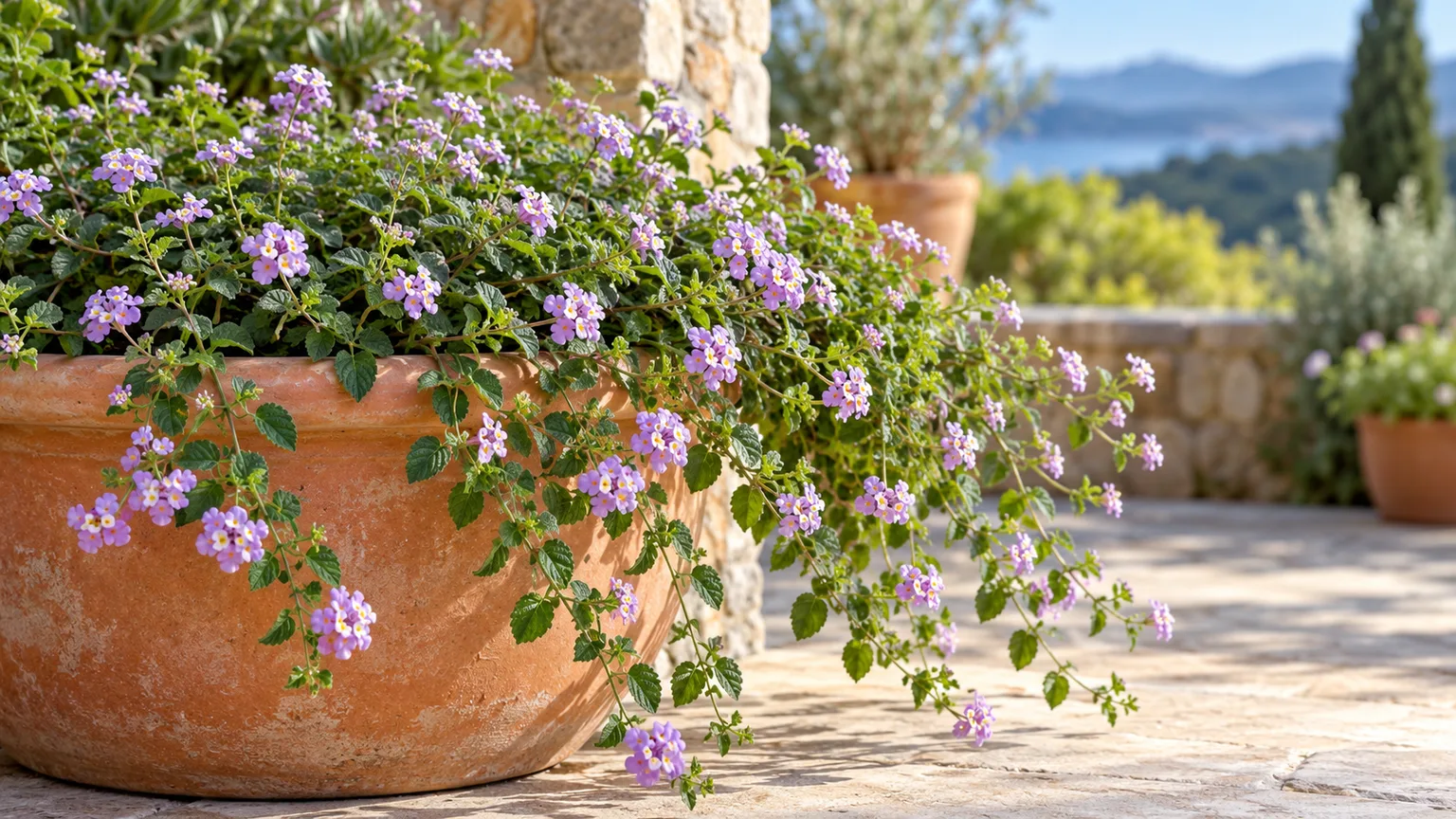
Trailing lantana is a sun-loving, warm-weather plant with arching stems and clusters of small lavender or purple flowers. It can spill from a hanging basket, soften the edge of a retaining wall, or spread into a low groundcover, but the promise of “year-round blooms” needs a climate qualifier: in places with winter frost, expect flowers from the warm growing season until cold weather slows or stops them. Continuous color is most realistic where winters stay mild and the plant keeps getting warmth and sun.
The plant sold as trailing, weeping, or creeping lantana is usually Lantana montevidensis. Give it six or more hours of sun, soil that drains freely, and deeper but less frequent watering once it is established. The rest of good care is restraint: don’t overfeed it, don’t treat every yellow leaf as a fertilizer problem, and decide whether you want to control its spread before planting it in the ground.
Trailing Lantana at a Glance
| Care factor | Practical starting point |
|---|---|
| Botanical name | Lantana montevidensis |
| Habit | Low, spreading woody perennial with long, arching stems |
| Typical size | About 1 to 1.5 feet tall and 3 to 5 feet wide |
| Light | Full sun for the strongest flowering; some partial shade is tolerated |
| Soil | Well-drained; sandy or loamy soil is easiest |
| Water | Keep new plants evenly moist as they establish; let established soil dry somewhat between deep waterings |
| Bloom season | Often spring or summer through fall frost; longer in frost-free climates |
| Winter behavior | Perennial in warm regions; may die back and resprout in mild Zone 8 conditions; often grown as an annual in colder climates |
| Main cautions | Can spread or self-seed in suitable climates; toxic if eaten and sap or leaves can irritate skin |
NC State Extension’s Plant Toolbox profile for trailing lantana describes the plant as about 1 to 1.5 feet tall and 3 to 5 feet wide, with cascading stems and purple-pink flower clusters. It lists the species for full sun, well-drained soil, and USDA Zones 8a through 10b, while noting that it can be grown as an annual in colder climates. These are useful planning ranges, not a guarantee that every cultivar or site will behave identically.
Identify the Right Lantana Before You Buy
Read the botanical name on the nursery label. Lantana montevidensis has long, flexible stems that run along the ground or hang over a container; its small flower clusters are commonly lavender to purplish-pink with pale centers. The related Lantana camara is usually more upright and shrub-like, with larger, often multicolored flower heads. Both may be sold simply as “lantana,” so a common name alone is not enough if you need a trailing form.
Cultivars can differ in flower color, vigor, and mature spread. A white-flowered selection may be sold as ‘Alba,’ while purple forms are common; ask the nursery how wide the specific selection grows and whether it is suited to your region. Oklahoma State University Extension’s plant profile identifies L. montevidensis as trailing lantana and describes it as a spreading perennial used as an annual or in hanging baskets, which is a good reminder that the same plant can fill different roles depending on winter temperatures.
Decide Where It Belongs
Think about where the stems will go after a full season of growth. NC State Extension notes in its trailing lantana profile that stems can form dense mats and may root where they touch soil, so a plant beside a path or neighboring border may need periodic trimming even if it starts as a small nursery pot.
Groundcover and slopes
A sunny slope or raised bed can suit trailing lantana because the cascading growth covers bare ground and can soften a wall or bank. Allow room for its mature spread, and don’t plant it where you need a precise, non-spreading edge. NC State Extension lists the species as naturalized in parts of the southern United States, where seeds can move beyond a garden; check local invasive-plant guidance before using it as a large, permanent groundcover.
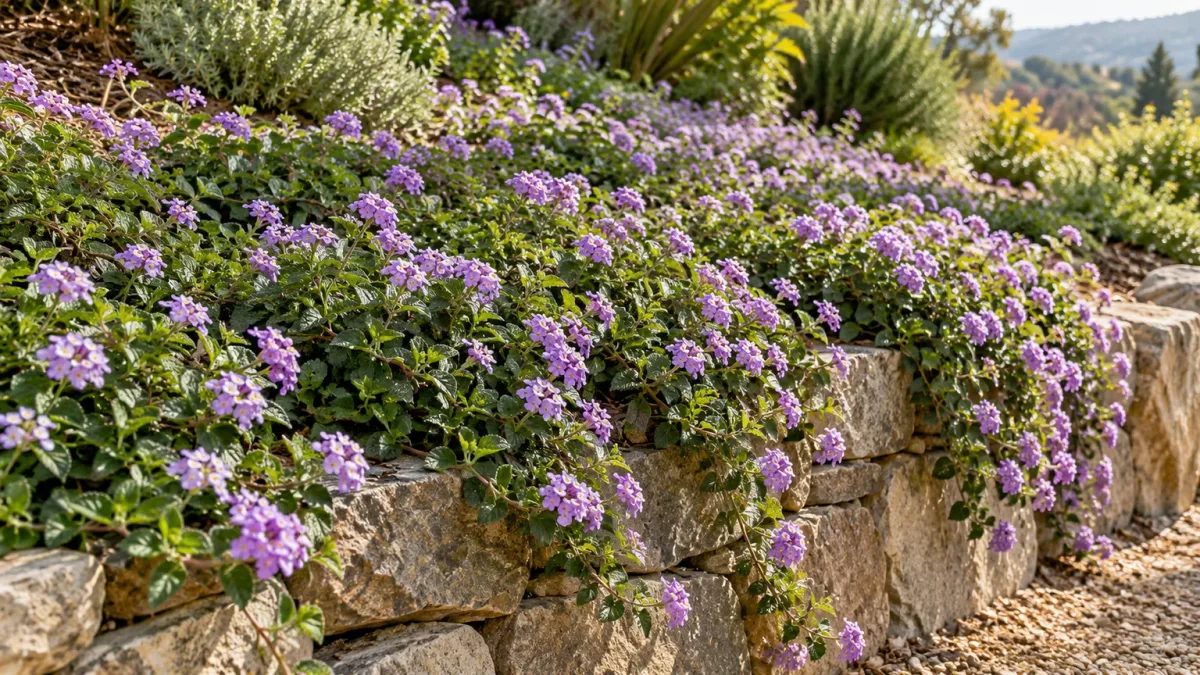
The low habit is also useful at the front of a warm-climate border, where stems can trail without hiding taller plants. If shoots are rooting outside the intended bed, lift or cut them back promptly and keep spent fruit from being carried away; a contained planter is a better choice when you cannot monitor a groundcover.
Containers and hanging baskets
Choose a pot or basket with drainage holes and use a free-draining container mix rather than dense garden soil. A wider container gives the stems room to cascade, while a hanging basket makes it easier to keep the plant from rooting at ground level. Containers dry faster than an in-ground bed, especially in direct sun, wind, or hot weather, so check the mix more often rather than assuming the drought tolerance of an established bed applies to a small pot.
Set the container where it receives ample direct light, and rotate it occasionally if one side faces a wall or gets much less sun. If water sits in a saucer after watering, empty it; lantana can cope with a short dry spell better than roots that remain in saturated mix.
Plant It After Frost
In a climate with winter freezes, plant outdoors in spring after frost risk has passed and nights are reliably warming. A new lantana needs time to establish roots before it faces either summer heat or winter cold, so don’t place a tender nursery plant into cold, waterlogged soil simply because a calendar says it is planting season. In frost-free climates, spring or fall can work, with the cooler of the two seasons often making establishment easier.
Dig a hole no deeper than the root ball and about twice as wide, loosen circling roots gently, and set the top of the root ball level with surrounding soil. Backfill with the native soil, water thoroughly to settle it, and apply a modest mulch layer while leaving space around the stems. Avoid enriching the planting hole heavily with fertilizer; the goal is root-to-soil contact and good drainage, not a pocket of rich material that holds excess water.
Give It Sun and Fast-Draining Soil
Full sun is the simplest route to a dense, flowering plant. NC State Extension’s Plant Toolbox profile defines full sun as at least six hours of direct sunlight a day and notes that trailing lantana can tolerate partial shade, but shade generally means fewer flowers and looser growth. If a plant is healthy but produces long bare sections and sparse bloom, count actual direct-sun hours across the day before you add fertilizer.
Well-drained soil matters as much as light. Sandy or loamy soil is easy to manage, and lantana can tolerate some dryness once established; heavy soil can still work if water drains away rather than pooling around the crown. If your bed stays wet after rain, choose a raised site or a container instead of repeatedly amending the same planting hole. In a pot, use a mix designed for outdoor containers and confirm that water can escape through every drainage hole.
Water According to Root Age and Container
Water newly planted lantana when the upper soil begins to dry, then soak deeply enough to wet the root ball and the surrounding soil. During the first several weeks, check more frequently in hot, windy weather or sandy ground; the aim is steady establishment, not a permanently wet root zone. Rainfall, pot size, and exposure change the schedule, so “once a week” is only a rough starting point.
After roots spread into the bed, allow the soil to dry somewhat between thorough waterings. An established plant can tolerate short dry periods, but a container-grown lantana may need water more often because its limited mix heats and dries quickly. Before watering a wilted plant, check the soil with a finger: dry soil points toward thirst, while wet soil plus yellowing or limp stems suggests that extra water may make the problem worse.
Water at the soil line when possible, especially if the site is humid or crowded. A quick surface sprinkle can leave the root ball dry while the top looks wet, so water slowly until moisture reaches the full depth of the pot or planting hole. If a container is so root-bound that water runs straight down the sides, repot into a slightly larger pot rather than responding with several shallow waterings each day.
Feed Lightly and Deadhead Selectively
Trailing lantana is not a heavy feeder in reasonably fertile garden soil. Too much nitrogen can push leafy growth at the expense of flowers, and a stressed plant rarely benefits from adding nutrients before you confirm that light, drainage, and watering are appropriate. If the plant is growing well in the ground, you may not need to fertilize it at all.
A container loses nutrients faster than an open bed, so use a balanced, slow-release fertilizer or a diluted liquid feed during active growth only if the potting mix or label calls for it. Follow the product directions and stop feeding as the plant slows for winter. Don’t use extra fertilizer as a quick fix for poor bloom; if the plant is in shade or its roots are cold or waterlogged, more nutrients won’t correct the underlying condition.
Deadheading is optional for appearance and can reduce the number of berries that form. It is not necessary to remove every old cluster to keep lantana alive, but removing some spent heads can keep a small basket tidy and limit seed production. This matters most where you are trying to prevent a plant from spreading; NC State Extension notes that wildlife can spread its seeds, so clipping spent clusters is a practical containment step, not merely cosmetic grooming.
Prune for Shape and Reliable Regrowth
Use pruning to shape the plant, remove damaged growth, or keep stems inside their intended space—not as a repeated hard shearing routine. During active growth, trim a long stem back to a healthy leaf node to encourage branching nearby, and remove dead or crossing stems to improve airflow. Small, regular corrections are easier on the plant than cutting the whole crown back whenever it looks untidy.
In regions with cold winters, wait until the worst frost has passed and new growth begins before deciding how much of the plant is dead. A Zone 8 plant may lose its top growth and resprout from roots protected by mulch; cutting it to the ground too early can remove live stems or expose the crown to another cold snap. In warm regions, shape the plant after a flush of growth or bloom, leaving enough green growth for recovery.
Wear gloves and long sleeves if your skin reacts to lantana. NC State Extension identifies the leaves and sap as potential skin irritants, so avoid rubbing your eyes while pruning and wash exposed skin and tools afterward. Use clean, sharp shears, and discard cuttings where pets and children cannot chew them.
Propagate with Stem Cuttings
Stem cuttings are a straightforward way to make another plant that resembles the parent. Both Gardening Know How and Petal Republic describe lantana propagation by cuttings, and NC State Extension’s species profile also lists stem cuttings for L. montevidensis. Take cuttings from a healthy, actively growing plant in spring or summer rather than from frost-damaged, flowering, or pest-covered stems.
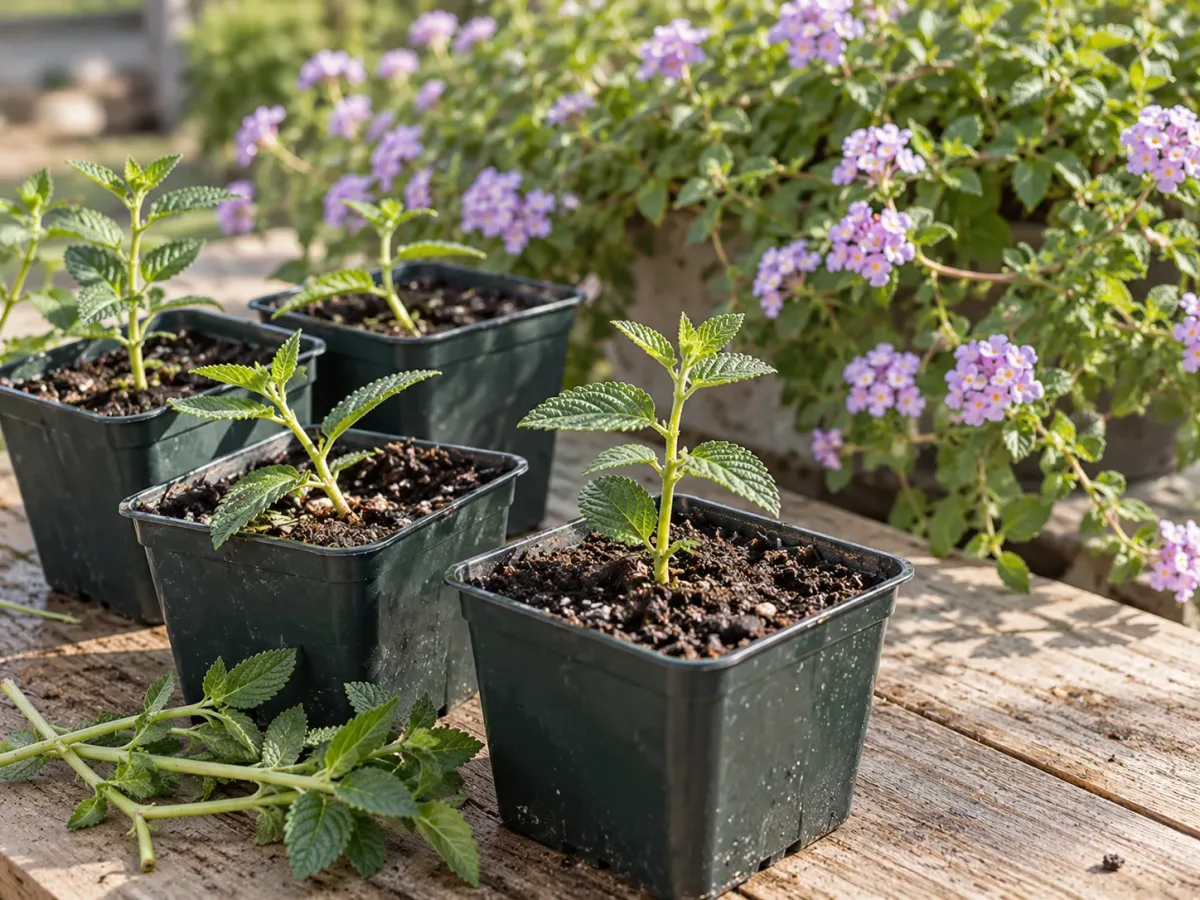
Use clean snips to take a 4- to 6-inch tip with several nodes, then remove the leaves from the lower part of the stem. Insert the bare nodes into a moist, airy propagation mix, firm it gently, and keep the pot warm in bright indirect light while roots form. Covering the pot loosely can slow drying, but ventilate it and keep the mix damp rather than waterlogged.
New leaf growth and gentle resistance when you tug the cutting can indicate that roots have formed. Pot it on once the root system holds the mix together, then acclimate it gradually to brighter outdoor sun. Do not plant a cutting straight into a large wet container; a small pot makes it easier to keep the young root zone evenly moist without leaving it saturated.
Keep It Blooming Through the Seasons
For the longest flowering season, combine bright light with consistent establishment watering, drainage, and restrained feeding. Trailing lantana commonly flowers through the warm months and may continue until frost; its flowers do not stay open as one permanent cluster, but new clusters can appear as stems keep growing. In a frost-free climate, it may bloom for much of the year, but growth can still pause when temperatures or light drop.
Regional behavior is real. NC State Extension’s profile describes flowering from June until fall frost, while the University of North Florida Botanical Garden notes that its plants in northern Florida can flower well in part shade and seem strongest in cooler months. Use those observations as local context rather than a universal schedule: in a hot inland garden, more sun may drive the best bloom, while a very hot exposed site can need afternoon protection during establishment.
If bloom slows, work through the causes in order: check that the plant is getting enough direct sun, confirm that the root zone is not staying wet, and review whether it has received repeated high-nitrogen fertilizer. Then look for cold stress or berry formation. That sequence prevents a common mistake—feeding a plant that actually needs more light, better drainage, or a weather-appropriate pruning window.
Overwinter It or Grow It as an Annual
Trailing lantana is easiest to keep as a perennial where winters are mild. NC State Extension’s Plant Toolbox profile lists it for Zones 8a through 10b and notes that plants in Zone 8 can die back to the ground yet resprout in spring when the roots are protected. Treat that as a possibility, not a promise: a wet winter, exposed crown, prolonged freeze, or plant in a small pot can make survival less reliable.
In colder zones, grow it as a warm-season annual or keep a container plant in a bright, frost-free place for winter. Before bringing a pot indoors, inspect leaves and stems for insects, remove dead growth, and place the plant where it gets as much light as your home can provide. Growth and flowering will usually slow indoors, so reduce watering to match the slower growth and do not continue summer feeding.
A cool, bright room is often more practical than trying to maintain fast flowering in a heated living room. If overwintering space is limited, take a few healthy cuttings before frost and treat the outdoor plant as seasonal; this preserves a favorite cultivar without hauling a large, sprawling container inside. In spring, wait until frost risk has passed before moving a tender plant outdoors, and increase its sun exposure gradually over several days.
Diagnose Problems by Pattern
Start with the whole plant and its growing conditions before treating a single leaf. Look at recent weather, soil moisture, the amount of direct sun, and whether the symptoms affect old or new growth; these clues help distinguish cold damage, drought, and wet-root stress.
Yellow leaves and weak flowering
Yellow leaves are a symptom, not a diagnosis. If the soil is persistently wet, check drainage and reduce watering; if stems are soft or the roots smell sour, the root zone may be rotting. If the soil is dry and a container feels unusually light, water deeply and recheck the next day rather than giving several small splashes.
When foliage is green but flowers are scarce, start with sun exposure and fertilizer history. Less than six hours of direct sun, excess nitrogen, or a recent cold spell can all suppress flowering. If the plant is in a pot, also check whether roots have filled the container so densely that water cannot soak in evenly; repotting one size up may help, but a very large pot can hold too much unused wet mix around a small root ball.
If the top growth browns after a frost, do not assume the whole plant is dead immediately. In a climate where roots may survive, wait for warmer weather and inspect for new shoots before removing the crown. If no growth appears after the local spring growing period, replace it or use a cutting saved before winter.
Mites, whiteflies, mildew, and stem rot
Inspect leaf undersides for fine stippling, webbing, or small insects that flutter when disturbed; spider mites and whiteflies are known lantana pests. Oklahoma State University Extension also lists spider mites and stem rot among susceptibility concerns for trailing lantana. Isolate a container plant if it is near other ornamentals, remove badly affected material, and identify the pest before choosing any treatment.
A white powdery coating can point to powdery mildew, while blackened or soft stems around a wet crown suggest a different problem. Improve light and airflow, avoid leaving foliage crowded against a damp wall, and correct persistent wet soil before using a pesticide or fungicide. If you choose a product, use one labeled for the plant and problem, follow its directions, and protect pollinators by avoiding treatment when bees are actively visiting open flowers.
Protect Children and Pets
NC State Extension’s toxic-plant information for trailing lantana rates it as toxic if eaten by people, dogs, cats, and horses; it also warns that leaves and sap can irritate skin. Keep the plant out of reach of animals that chew vegetation, and prevent children from tasting leaves or berries. A hanging basket reduces access but does not make the plant safe if dropped flowers, clipped stems, or fallen fruit can reach the ground.
Wear gloves when pruning or handling broken stems, wash your hands afterward, and dispose of clippings securely. If someone or a pet eats any part of the plant, contact a poison-control service, veterinarian, or local medical professional for situation-specific advice rather than waiting for symptoms. Keep the nursery label or botanical name available so the plant can be identified accurately.
Conclusion
Trailing lantana gives the most dependable color when you treat it as a warm-climate, sun-loving plant with a spreading habit—not as a guaranteed year-round bloomer. Identify Lantana montevidensis, plant it after frost in freely draining soil, water more often while it establishes, and then let the soil dry somewhat between deep drinks.
Use a pot or regular trimming when you need to contain its reach, prune with gloves, and protect it from winter cold according to your climate. With full sun, light feeding, and a little attention to drainage and seed spread, it can make a long-flowering groundcover or a cascading container plant for the part of the year your weather supports.