How to Make a Trader Joe's Flower Bouquet Under $10
Turn Trader Joe’s flowers into a polished bouquet on a $10 cap. Choose stems by role, condition them, size the vase, and build a balanced arrangement.
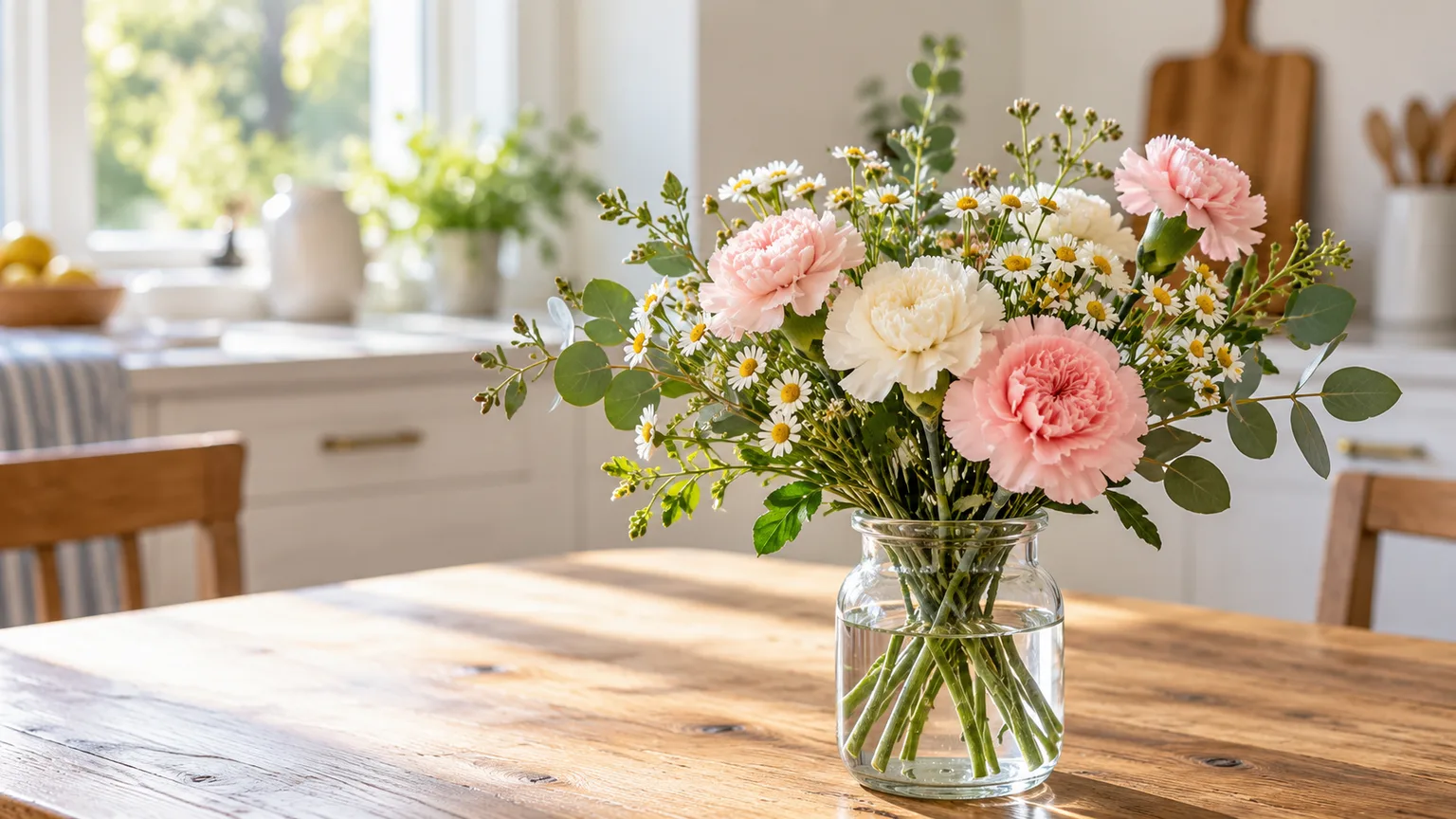
A small bunch can look like a considered arrangement when you shop for shape, edit the stems before they go in the vase, and give the flowers room to show their form. The useful trick is to spend the budget on a few clear roles—one visual anchor, supporting texture, and enough foliage or negative space to define the outline—instead of trying to make every stem equally important.
Trader Joe’s flower choices, bunch sizes, and prices vary by store and season, so there is no dependable $10 shopping list that works everywhere. Treat $10 as a ceiling for the flowers, read the tags on the day you shop, and use the plan below to build the best arrangement the shelf actually allows.
Treat $10 as a design limit, not a fixed recipe
Start with the shelf total rather than a recipe that assumes specific prices. A mixed bunch may already include a main bloom, small flowers, and greenery; another bunch may have only one variety. Look at the stems and the tag together, then decide whether one bunch can carry the arrangement or whether a second ingredient fits the remaining budget.
The most polished result is not necessarily the fullest one. A handful of flowers with consistent colors, different heights, and visible gaps can feel more deliberate than a crowded vase holding twice as many unrelated stems. When only one bunch fits, use a smaller vessel or split it among several bud vases instead of stretching it thin across a large container.
A good budget rule is to make the flowers do one job well. Choose either a compact, single-variety display; a small mixed bouquet with a clear focal bloom; or a few stems arranged separately around a room. Save the vase, ribbon, and decorative extras for another day—the flower heads, clean cuts, and arrangement shape do most of the visual work.
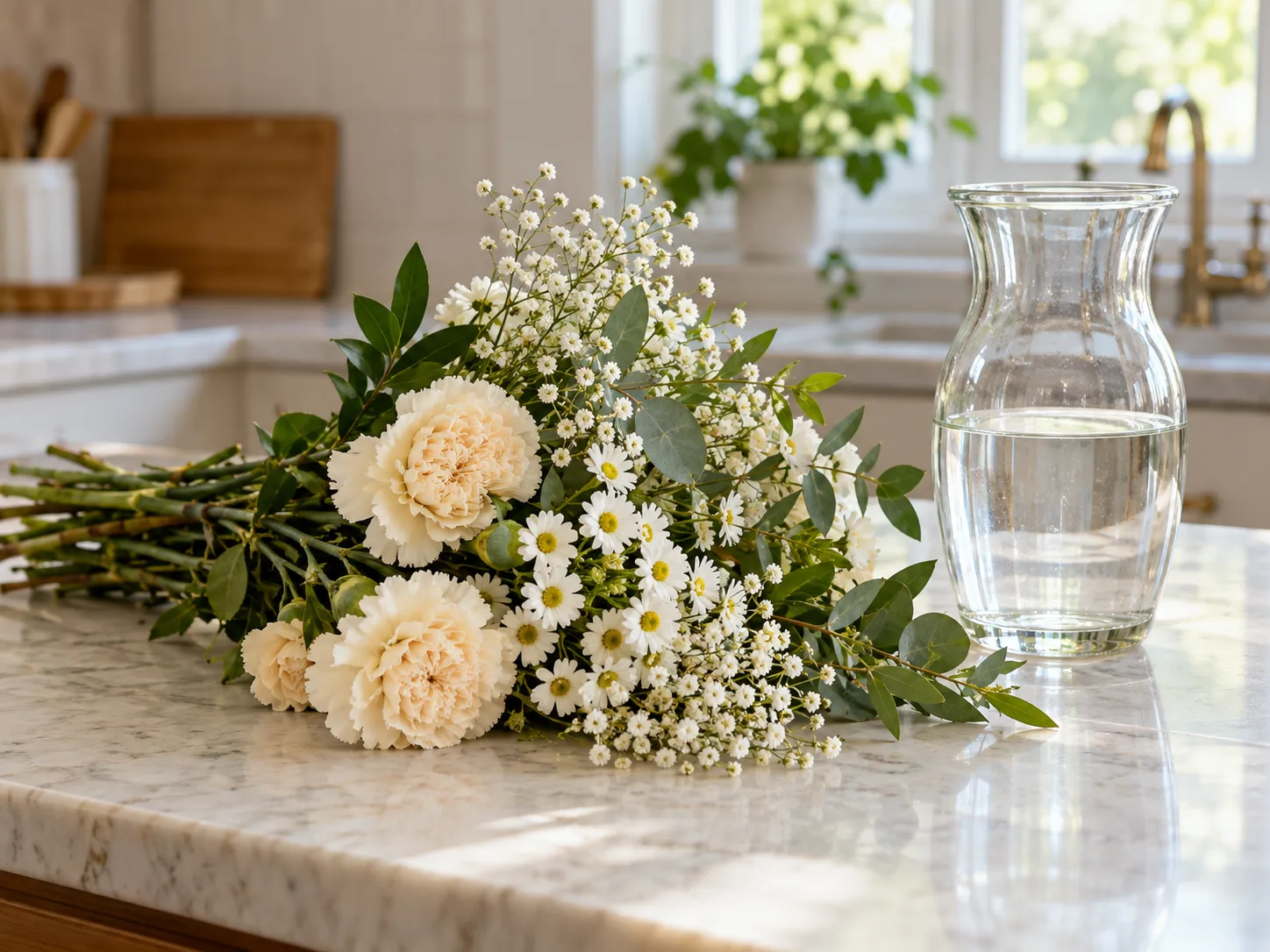
Choose a color palette before you shop
Decide on a simple palette before the flower display starts making every bright bunch look tempting. One easy formula is a dominant color, a neighboring or contrasting accent, and green.
For example, blush and cream can share a vase with one deeper pink accent; yellow blooms can look crisp with white flowers and fresh green foliage. These are design options, not rules about which colors “go” together.
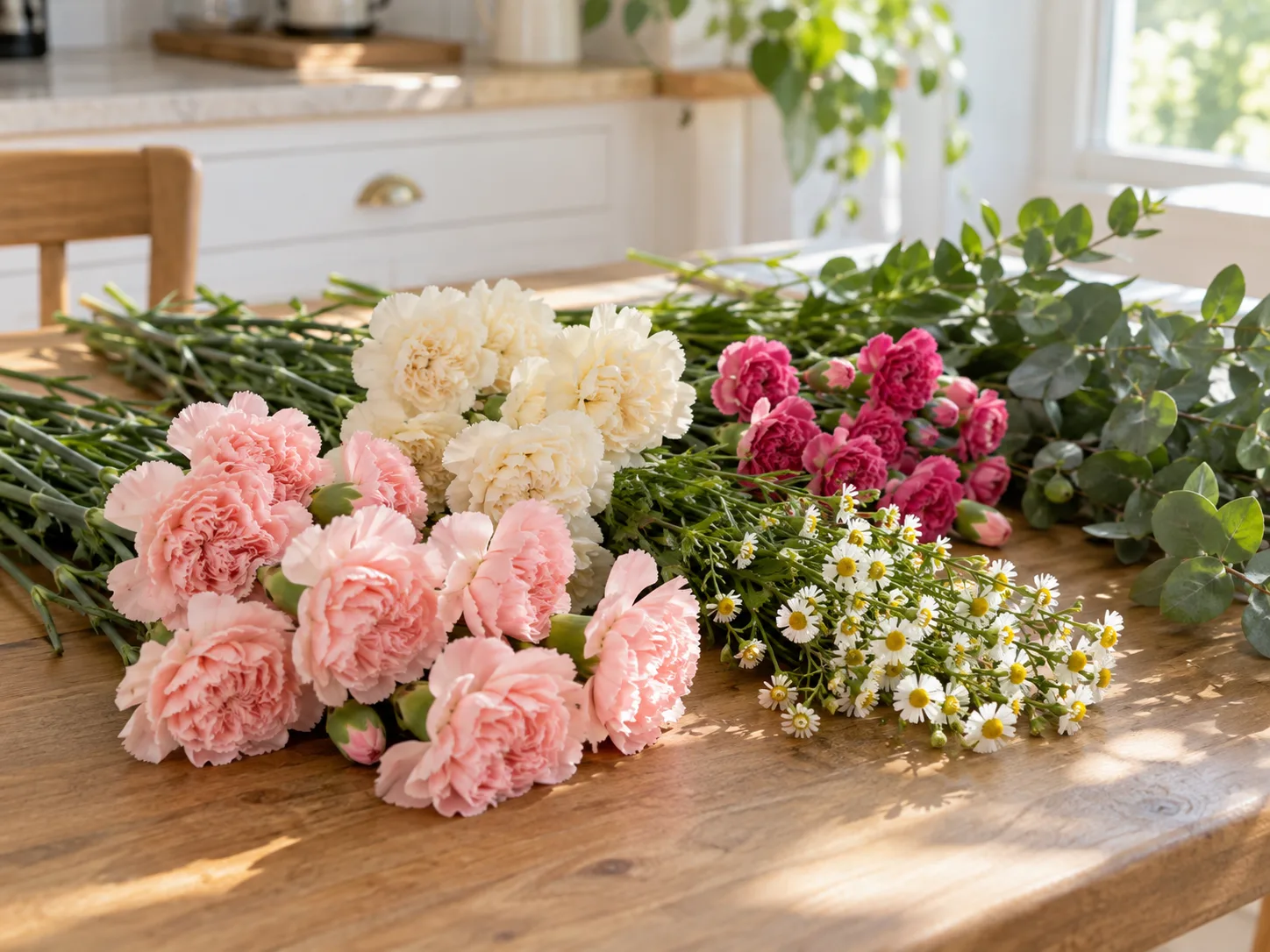
If the available stock is limited, choose one color family and vary the flower shapes instead. A single-color bunch gains interest from round blooms, small airy flowers, and foliage at different heights. If a mixed bunch already contains several colors, repeat its strongest color elsewhere rather than adding a new one just because it is available.
Check the flowers under the store’s lighting and imagine them in the room where they will sit. Warm indoor lamps can make yellow and orange look stronger; a cool, bright room can emphasize white, lavender, and blue. If the arrangement will be viewed from across a table, contrast and silhouette matter more than tiny petal details.
Shop the buckets by stem role and condition
Think in roles, not in fixed species. A focal flower draws the eye; a filler flower connects the larger heads and softens gaps; greenery frames the flowers and gives the arrangement its outline. One stem can sometimes do more than one job, and a mixed bunch may supply all three.
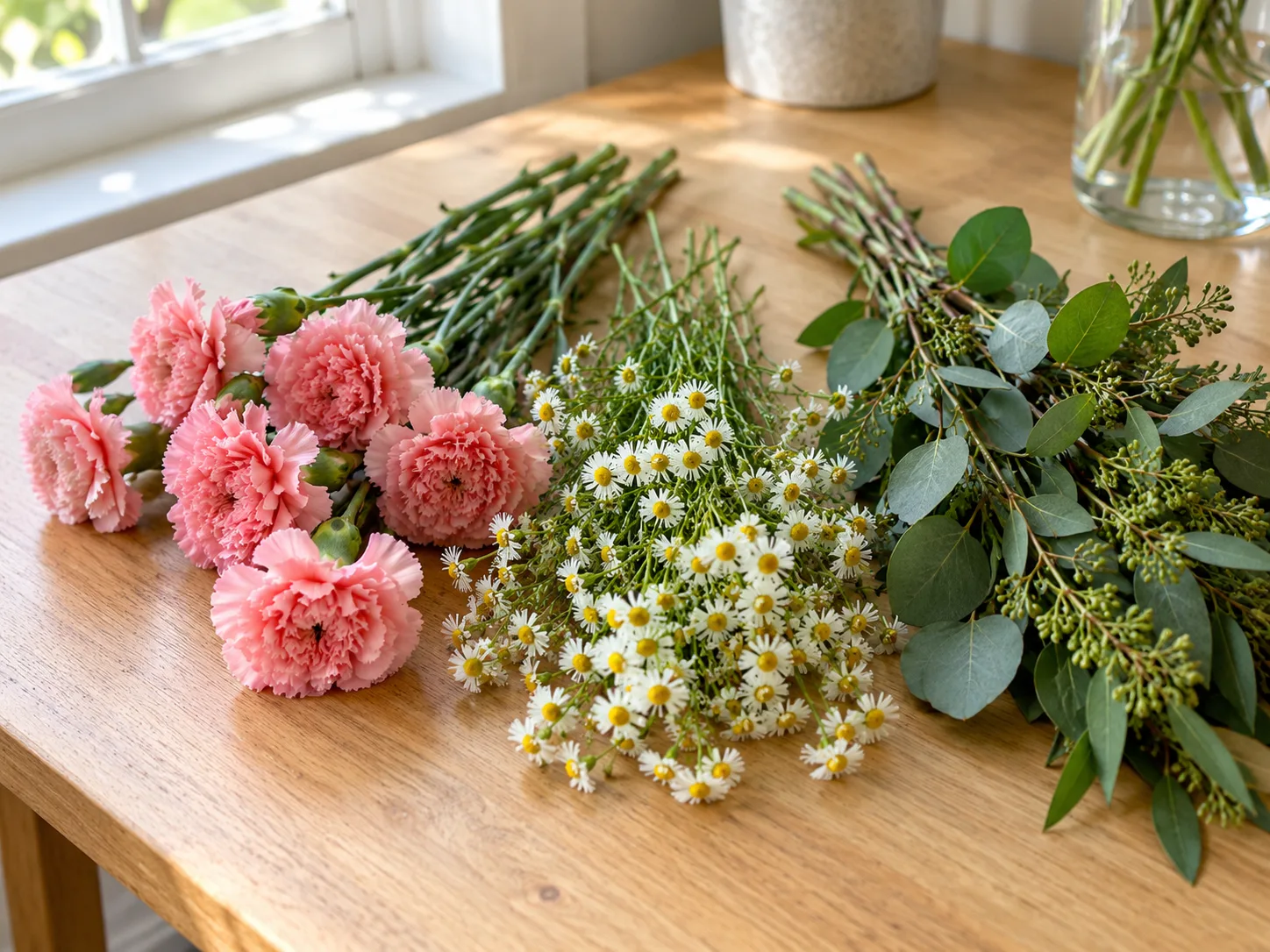
Inspect the whole bunch before buying. Favor firm stems and leaves that look hydrated rather than limp, spotted, slimy, or crushed.
Choose blooms that show their color and look intact, while remembering that the right opening stage depends on the flower: some buds open reliably, while a very tight bud may not open well indoors. Avoid building the whole plan around a type or color that is not on your store’s shelf that day.
Choose one focal flower
Pick one kind of bloom to be the visual anchor. Roses, tulips, carnations, chrysanthemums, sunflowers, and alstroemeria are examples you may encounter in grocery flower buckets, but selection changes with season and location. Look for a bloom head large enough to read from a few steps away, or choose a repeated cluster of smaller blooms if the bunch has no obvious large flower.
Focal does not mean every stem must be the same height or face forward. If you buy several similar flowers, let one sit slightly higher and another lower or closer to the rim. That small variation creates depth, while leaving space between the heads keeps them from looking like a flat row.
Add filler for texture, not bulk
Filler flowers—such as baby’s breath, statice, small daisies, or other branching stems—help connect the larger blooms. Use them in small passes. A common grocery bunch may include more airy material than a compact vase needs, so reserve some for a second jar rather than forcing every piece into the main design.
Texture matters more than quantity. A few branching stems can make a tight arrangement feel lighter, while too much filler can hide the focal flowers and make the bouquet look like an undifferentiated cloud. If you have only one variety, you can skip filler entirely; repeated blooms at different heights can make a strong arrangement on their own.
Use greenery to create shape
Foliage gives the eye a path around the flowers and helps soften the vase rim. Eucalyptus is one possible option, but any healthy greenery already included in the bunch can do the job. Keep enough leaves above the waterline to frame the blooms, then remove leaves that would sit in the water during conditioning.
You do not need to buy a separate greenery bunch. If your bunch has attractive leaves, use them as part of the design; if it does not, leave more open space around the flowers or use a narrower vase to make a few stems feel intentional. Avoid cutting unknown plants from roadsides or shared landscaping, where plant identity, pesticide use, and permission may be unclear.
Build a flexible under-$10 shopping plan
At the shelf, compare what each bunch gives you per dollar in usable stems, not just how large the plastic sleeve looks. The first option is one mixed bunch: separate it into roles at home, remove any damaged stems, and use a smaller vase if the remaining count is modest. This route is usually the easiest when the mixed bunch already has color and texture you like.
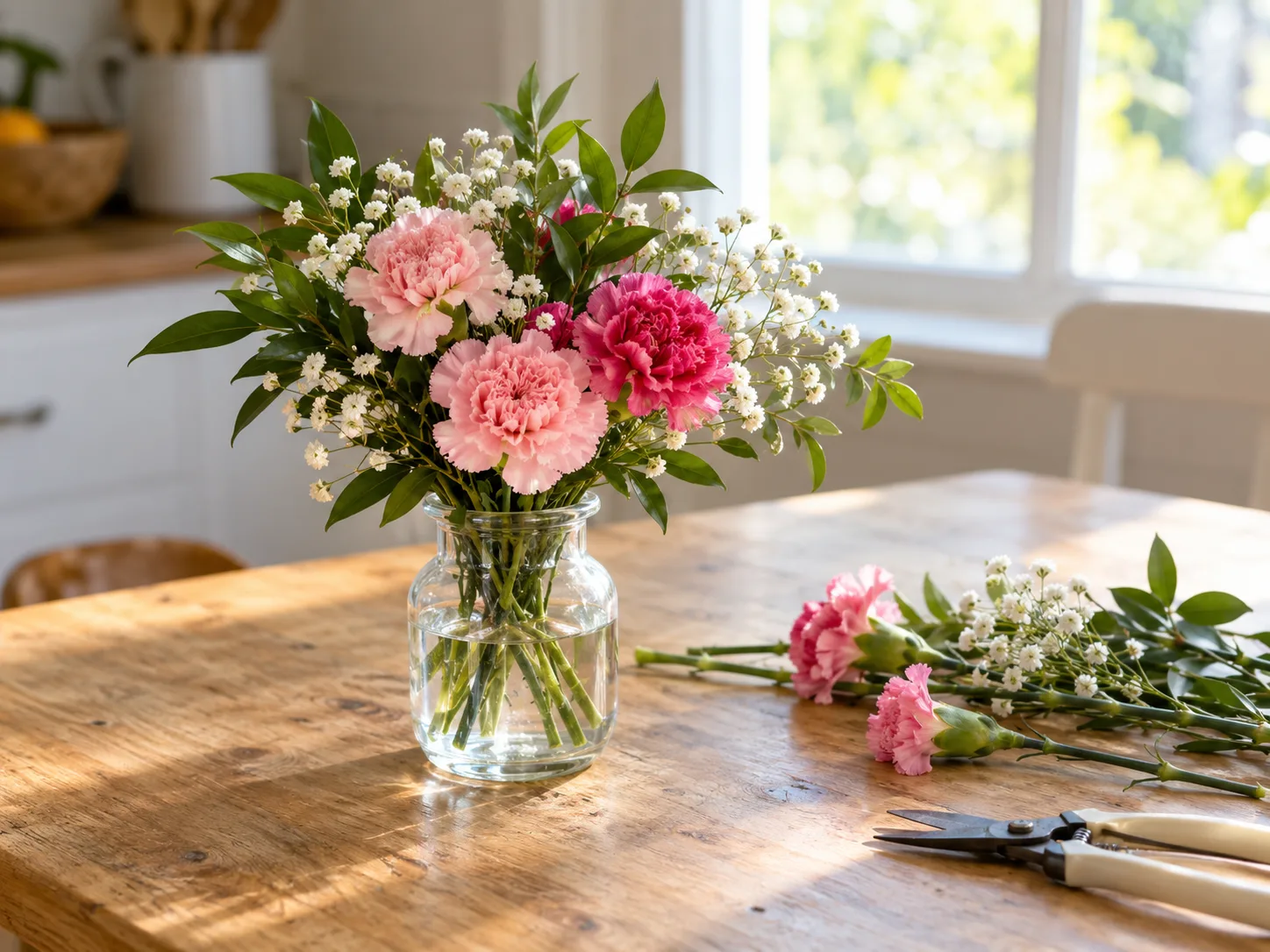
The second option is one bunch of a single flower plus foliage you already have at home. A monochrome arrangement can look intentional because repeated heads create a clear rhythm. Use a short vase and vary stem height; the amount of empty space around the flowers becomes part of the composition rather than a sign that you need more stems.
The third option is a focal bunch with a small supporting bunch, only if the actual shelf prices fit your cap. Choose the supporting bunch for contrast in scale or texture, not for a second competing focal flower. If the tags push the total over budget, put one bunch back and simplify the design instead of relying on a discount or a store price that may not be current.
Before you leave, check that the stems will fit your available vase and that the blooms are not all at the same stage of opening. A little variation helps the arrangement develop over several days, but a bunch of tightly closed heads is not automatically fresher or better. A small amount of visible color and firm foliage gives you more information about what you are bringing home.
You can make a good bouquet without floral foam or specialist equipment. Set out a clean vase, sharp scissors or floral shears, a clean work surface, water, and the flower-food packet that came with the stems if one is provided. A small waste bowl makes it easy to collect leaves and damaged petals as you work.
If the vase has a wide opening, add clear waterproof tape to make a loose grid across the top. If you do not have tape, choose a vessel with a narrower mouth or divide the stems among smaller jars. The goal is to keep the stems from sliding to the outside, not to hide elaborate mechanics inside a $10 arrangement.
Condition the stems before arranging
A few minutes of preparation can improve both the design and the flowers’ ability to take up water. Purdue Extension’s guide to keeping cut flowers attractive emphasizes fresh stem cuts, clean containers, removal of excess foliage, and limiting heat and moving air. Penn State Extension also notes that postharvest handling and cooling affect the quality of cut flowers.
Unwrap, sort, and remove submerged leaves
Take off plastic sleeves and bands carefully so petals do not snag. Separate the stems on the table and sort them into focal blooms, filler, and greenery; this makes it easier to see whether the bunch already has a balanced mix. Remove broken or mushy stems, brown leaves, and petals that are already badly damaged, saving a shortened healthy bloom for a small bud vase when possible.
Wash the vase with soap and water, then rinse it well. Leaves left underwater break down and cloud the water, so strip off every leaf that would fall below the final waterline. Keep the rest of the foliage if it looks good; removing every leaf can make the bouquet look bare without improving its shape.
Make fresh cuts and get the stems into water
Use sharp, clean shears to remove roughly a half inch or more from each stem, cutting above any dried or crushed end. A diagonal cut is a practical way to keep the stem from sitting flat against the vase bottom, but a clean cut and prompt hydration matter more than chasing a perfect angle. Put each stem in water as soon as it is trimmed rather than leaving the fresh ends exposed while you work through the bunch.
Fill the vase with clean water and use the included flower food according to its packet directions. A packet is formulated for a stated volume; adding extra product to a small vase or guessing at a homemade mixture can make the solution too concentrated. Martha Stewart’s cut-flower care guidance likewise recommends a clean vase, fresh stem cuts, flower food, and water maintenance, while Longfield Gardens’ vase-life guide describes conditioning the flowers before arranging and keeping them cool.
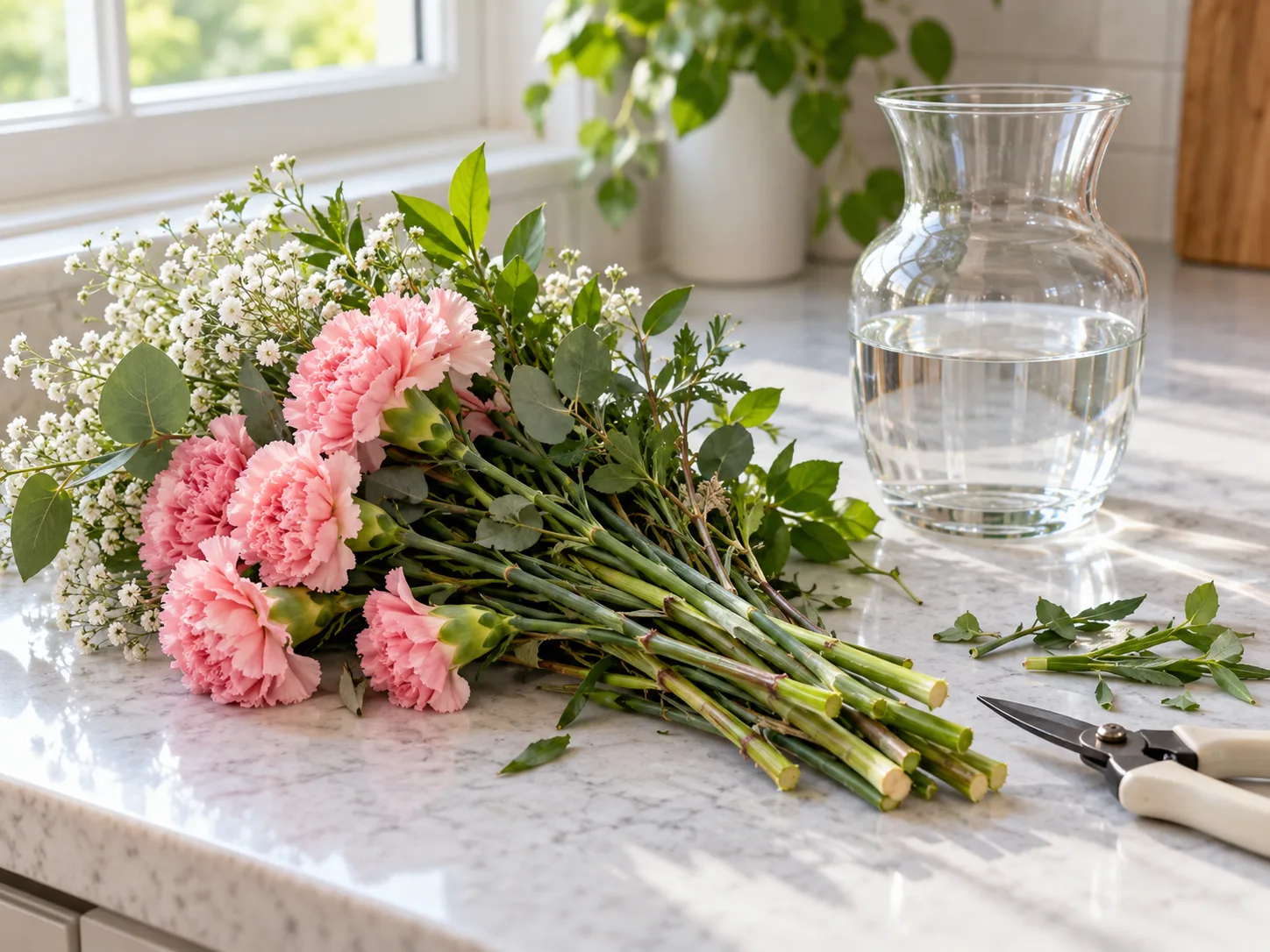
If the stems look limp after travel, give them time to hydrate in a cool spot before arranging. Keep the blooms out of direct sun and away from heat vents while they rest. Conditioning does not reverse damage from old or crushed stems, but it can make hydrated stems easier to place and less likely to droop as you build the design.
Pick a vase that fits the bouquet
Choose the vessel before cutting the flowers to final length. A narrow-necked bottle or small vase naturally gathers a few stems, while a wider opening gives you more room but lets stems splay unless you add a grid or other support. A clean drinking glass, small pitcher, or jam jar can work if it is tall enough to hold water and stable enough not to tip.
As a design starting point, let the arrangement stand around one and a half times the height of the vase, then adjust to the flower heads and the place it will sit. A low table bouquet may need a broader shape that leaves sightlines open; a counter arrangement can be taller. Cut conservatively at first—you can shorten stems again, but you cannot put length back.
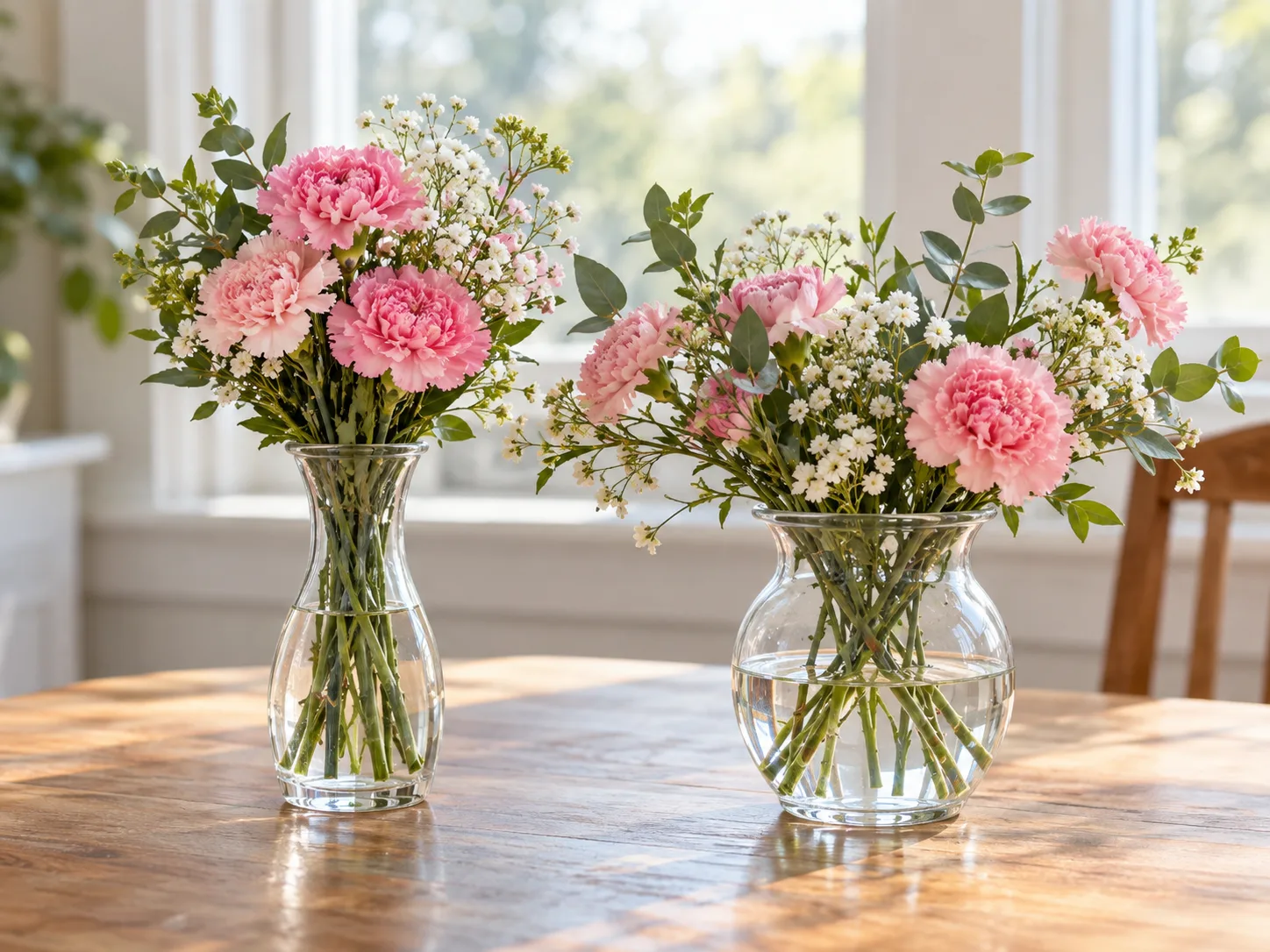
Color and vessel shape should support each other. A busy, colorful bunch often looks calmer in a plain vessel, while a sculptural single-color arrangement can handle a more decorative vase. If the vase itself is attractive, leave more of it visible rather than wrapping every inch in foliage.
Make a simple mechanic for a wide vase
A wide-mouth vase can make a small bunch look sparse because each stem falls toward the glass. Stretch two or three strips of clear waterproof tape across the opening in one direction, then add another set at right angles to make broad openings. Keep the grid wide enough for the stems you have, and make sure the tape is anchored to a dry rim.
You can also use a narrow vessel inside the wider decorative container, or divide the stems among several small vases. Those approaches keep the stems together without buying floral foam. If you use a tape grid, hide it with the first foliage stems and keep the water level high enough that every cut end stays submerged.
Arrange using a repeatable sequence
A dependable order is greenery, focal flowers, then filler. Work with the vase on the table and rotate it as you go if the bouquet will be seen from all sides. The arrangement should look composed from the front and still have a sensible back; avoid building a flat face that only works from one angle unless the vase will sit against a wall.
Establish the outline with greenery
Begin with a few leafy stems placed around the rim and through the center. Let some foliage extend outward to define the width, and keep some lower so the vase opening does not look bare. You are setting a loose frame, not making a dense ball of leaves; stop when the flowers have a place to sit and the outline feels stable.
If the bunch has very little greenery, do not try to imitate a full florist arrangement by packing the vase with leaves from unrelated plants. Work with fewer stems and make the silhouette compact. A short arrangement with clear space around each bloom usually looks more confident than a tall one that is too thin to support itself.
Place focal blooms at varied heights
Add the largest or most eye-catching flowers next. Place the first bloom slightly off center, then add the others at different heights and depths rather than lining their heads up along one level. Turn the vase as you work and look for places where flower faces are hidden behind one another; move a stem instead of adding another one.
For a loose, natural look, let one or two stems lean toward the edge while the central blooms sit a little higher. For a compact dome, keep the heads closer together but vary the stem lengths enough to create layers. Odd-number groupings can be a helpful starting point when you have many focal blooms, but they are not a requirement; the visible spacing and balance matter more than the count.
Finish with filler and edit the shape
Add filler in small increments where it connects two larger blooms or softens an abrupt gap. Step back before using the whole bunch. If the filler hides the focal flowers or makes the arrangement wider than the vase can support, pull some out and use it in a second container.
The final edit is simple: remove a stem that blocks another flower, shorten anything that makes the bouquet lean, and check the outline from the height at which people will see it. A few uneven stems add movement; a single heavy side can make the whole vase appear unstable. Stop once the main flowers, supporting texture, and negative space are all visible.
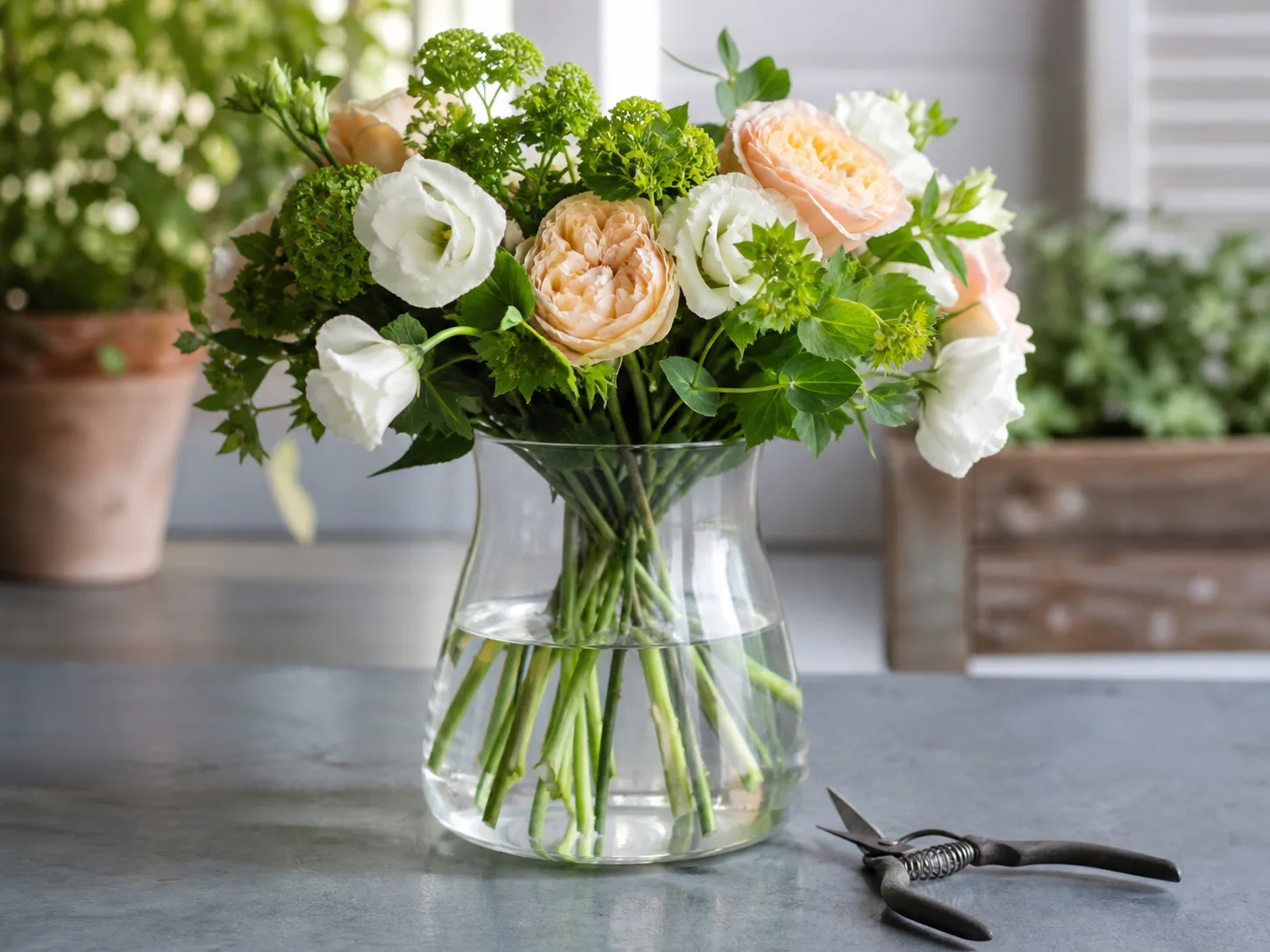
Keep the arrangement fresh after it is made
Put the vase in a cool place away from direct sunlight, heaters, strong drafts, and ripening fruit. Penn State Extension’s cut-flower production guidance explains that cooling and postharvest handling help preserve flower quality; Purdue Extension also advises avoiding excessive heat and air movement. A dining table can be a good display spot, but move the bouquet somewhere cooler overnight if the room gets warm.
Check the water every day or two, especially during the first day when the stems may take up more than you expect. If it turns cloudy or develops debris, rinse the vase, add fresh water and a correctly measured dose of flower food, and recut the ends if they look dry or damaged. Martha Stewart’s florist-backed advice recommends regular fresh water, and Longfield Gardens advises refreshing the solution as needed rather than letting it become murky.
Remove flowers as they fade so they do not dominate the arrangement or sit in the water as they break down. As the bouquet gets smaller, shorten healthy stems and move them to a smaller vase. The arrangement can have a second life as a compact bedside bunch even after it no longer suits the original container.
Fix common grocery-bouquet problems
The bouquet looks crowded. Take out some filler first, then separate flower heads that are touching. If the vase still feels packed, move a few stems to another small vessel; the main arrangement will look more intentional with visible gaps.
The stems keep falling to the edge. The opening is too wide for the number of stems, or the support grid is too loose. Switch to a narrower vase, tighten the tape openings, or use a glass placed inside the decorative vessel. Do not solve a support problem by adding more flowers unless your budget and the vase both allow it.
The bunch looks flat. Recut stems to create a high-low pattern and turn the vase as you work. Move one focal flower forward and another back so the heads sit at different depths. If all stems are nearly identical, use the vase rim as a low boundary and let one or two flowers rise above the rest.
The water clouds quickly. Remove any submerged leaves or fading stems, wash the vase, and replace the water and flower food. Dirty tools, a previously used vase, and decaying plant material can undermine an otherwise sound arrangement; Purdue Extension’s care steps explain why clean containers and water matter.
Some blooms droop while others still look fresh. Mixed bouquets often contain flowers at different stages and with different needs. Recut the drooping stem, place it in a smaller clean vessel to rehydrate, and keep the best-performing blooms in the main vase. A grocery bunch is not a synchronized set, so one fading flower does not mean every stem has failed.
Conclusion
A $10 Trader Joe’s flower arrangement works best when the budget shapes the design. Let the shelf prices decide whether you buy one mixed bunch, one repeated flower, or a focal stem with a small supporting ingredient, then use color, height, a suitable vase, and careful editing to make the ingredients feel connected.
The practical sequence is straightforward: inspect the bunch, clean and trim the stems, keep leaves out of the water, arrange greens before focal blooms and filler, and refresh the vase as needed. Inventory and flower life vary, but a small number of well-prepared stems can still make a balanced bouquet when you choose a scale that fits what you brought home.



