18 Best Foliage Plants for Color, Texture, and Drama
Eighteen foliage plants chosen for leaf color, texture, and drama — with light needs, mature size, difficulty, and pet-safety verdicts from the ASPCA and university extension for each.
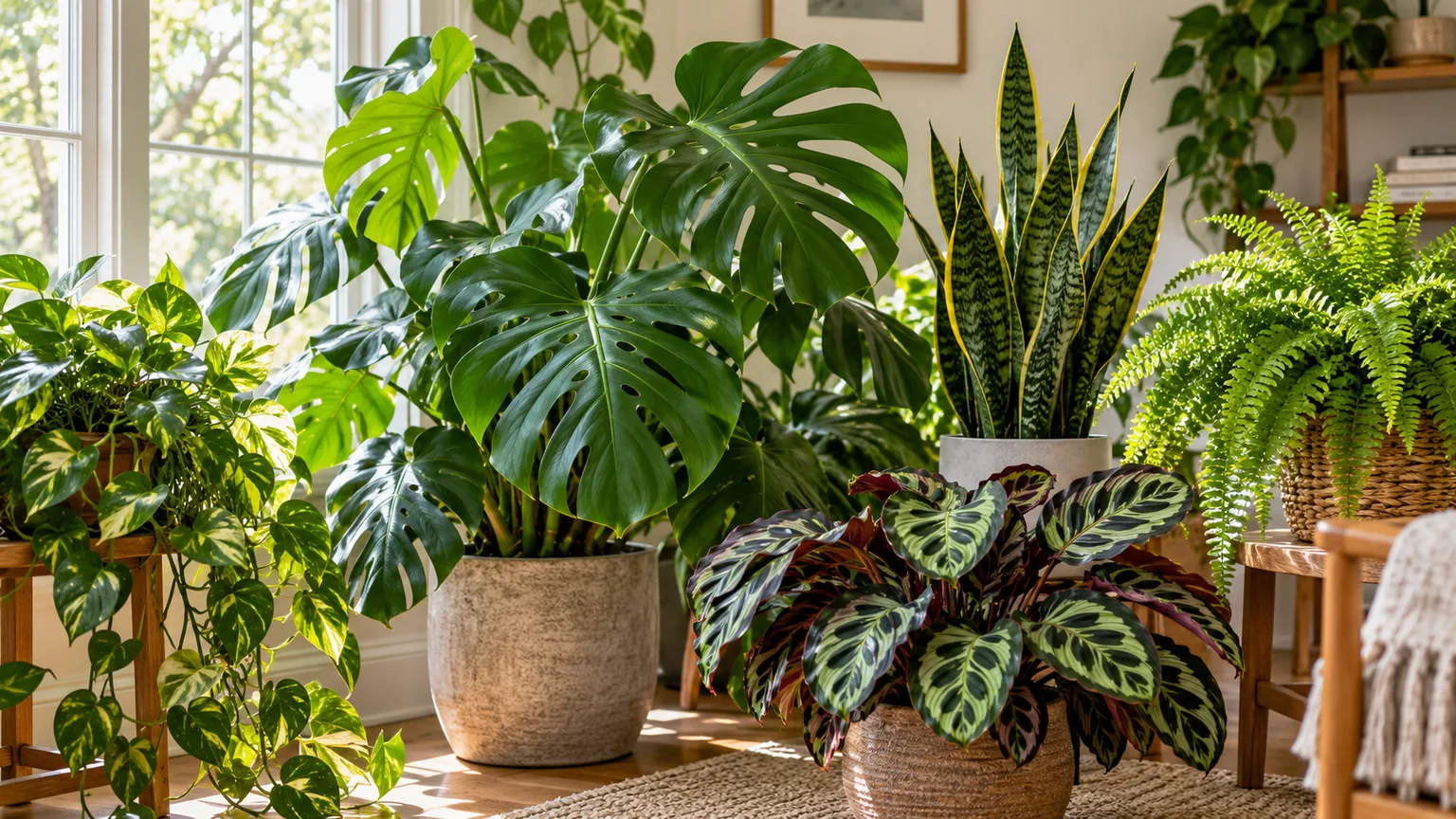
If you’ve ever looked at a bed in late July and thought where did all the color go, you have run into the gap that foliage plants fill. A flowering plant delivers three weeks and then leaves you with a green stick. A well-chosen foliage plant delivers structure, color, or texture every single week of the year, and most of them do it in a pot on a windowsill rather than in a bed you have to dig.
The catch is that “foliage plant” is a broad category, and most roundups treat it like a gallery: a photo, a sentence about the leaf color, and a hardiness zone that means nothing indoors. That is not useful if you’re standing in a shop trying to work out whether the plant will survive your light, your watering habits, and your cat.
This list is built the other way around. Every entry below carries the same six facts: light requirement, typical mature size indoors, water tolerance, a difficulty rating that reflects how honestly the plant behaves, a sourced pet-safety verdict that names which database it came from, and a concrete cue for who should buy it and who should walk past. The full comparison table further down puts all eighteen side by side so you can sort by whatever matters to you.
What Makes a Plant a Foliage Plant
A foliage plant is any plant grown primarily for its leaves rather than its flowers. That covers everything from a ZZ plant with glossy pinnate leaflets to a calathea with hand-painted markings to a Boston fern built entirely from arching fronds. The defining characteristic is that the leaf is the display, and flowering is incidental or absent.
That definition matters more than it sounds, because it changes how you buy and care for the plant. Flowering plants are usually bought in a bloom cycle, given a bright position, fed on a bloom-leaning fertilizer, and eventually discarded or neglected once the flowers fade. Foliage plants are bought young, kept for years, and judged on leaf quality the entire time. Most will never bloom indoors at all, and that is not a failure — it is the design.
Three things foliage does that flowers cannot. Duration: a Monstera leaf is a structural object that changes the room; a petunia flower is a decoration with an expiration date. Seasonality: several plants on this list change color or pattern as they mature, and calathea and prayer plants visibly move their leaves within a single day. Placement: because you care about the leaf rather than the bloom, you can put a foliage plant in a dim corner, a bathroom, or a shelf and still have it look intentional. There is no flower-plant equivalent of a dim corner.
The honest downside is that foliage is slower. Monstera, ZZ plant, and dracaena can take years to reach the size you’d see in a shop photo, and a plant that is meant to be a ten-year relationship is a harder sell in the moment than a pot of petunias. Buy for the plant you can actually keep, not the plant you saw on a screen.
How This List Was Assembled
These eighteen were selected from the plants that genuinely dominate foliage searches and that a reader can realistically buy, using published care profiles from university extension services rather than blog roundups. Light requirements and mature indoor sizes come mainly from the NC State Extension Plant Toolbox; the rubber plant entry follows the Clemson Cooperative Extension fact sheet, which is unusually thorough on the light and temperature tolerances of Ficus elastica.
Pet-safety data is different, and this is the part most lists get wrong. Every plant here was checked against the ASPCA’s own toxic and non-toxic plant database — the per-plant records, and where a plant was ambiguous, the ASPCA’s printable cats list, dogs list and horse list, which list by scientific name. Three plants on this list have no ASPCA record at all: ZZ plant, Chinese money plant, and Ficus elastica. Where that happens, the guide says so plainly and attributes the claim to a university extension service instead — NC State, for instance, rates ZZ plant as medium severity and monstera as low. Where the two sources disagree in granularity, both are reported rather than smoothed over.
Two limitations are worth stating up front. First, the ASPCA itself says its list is a compilation of frequently encountered plants rather than an exhaustive database, so “not listed” is not the same as “proven safe.” Second, this list deliberately excludes plants that appear in most foliage roundups but belong to a different category — ornamental grasses, conifers, and garden-only perennials. Nearly everything here can live in a pot indoors, which is what the term is being asked for.
Pet Safety First: What Is Actually Toxic
This has to come before the plant list, because it eliminates roughly half the candidates before you spend anything. Cats are the reason most households need this filter, and the research is unambiguous: of the plants most people call pet friendly, a large share are on the ASPCA’s toxic list for cats.
The short version: monstera, pothos, philodendron, dieffenbachia, aglaonema, dracaena, and snake plant are all listed as toxic to dogs and cats by the ASPCA, and alocasia — another common aroid in this category, grown for leaves 12 to 36 inches long per NC State Extension — is listed as toxic as well. ZZ plant belongs in that toxic group too, but its source is different and worth stating plainly: the ASPCA does not list ZZ plant on any of its three lists, for cats, dogs, or horses. The medium severity rating comes from NC State Extension, which is also where the low rating for monstera comes from. That is a reminder that “low severity” still means “not food,” and that a plant being absent from the ASPCA database is not a safety signal — the ASPCA says itself that its list is a compilation of frequently encountered plants, not an exhaustive one. Snake plant and dracaena are toxic by saponins; the aroids — monstera, pothos, philodendron, dieffenbachia, aglaonema, ZZ, alocasia — are toxic by insoluble calcium oxalates. Those are different mechanisms, and the difference matters for triage: oxalates cause immediate mouth pain, swelling, drooling and difficulty swallowing, while saponins tend to produce vomiting and lethargy.
The two toxicity classes you need to know
If you own one plant from the arum family — and that family includes most of the famous “unkillable” houseplants — you are dealing with insoluble calcium oxalates. The ASPCA’s pothos record and philodendron record both specify calcium oxalates with oral irritation, swelling of mouth and lips, excessive drooling, and difficulty swallowing. This is a painful, unpleasant experience for the animal rather than a systemic one, which is the reason these plants are described as “mildly” toxic — a word that means nothing to a cat that has just bitten into a leaf and is drooling on your sofa.
The second class is saponins, which covers snake plant, all dracaenas, and corn plant. The ASPCA lists these as toxic to dogs and cats, and the horse list covers snake plant and the dracaenas too, so the entry for each of those names a horse rating. The clinical signs are vomiting, salivation, and in cats, anorexia and depression. Saponin plants tend to be the ones people feel safest about precisely because they are tough as old boots, and that combination — toxic and indestructible — is the worst one, because the plant survives a chewing incident perfectly well while the pet does not enjoy it.
What “pet safe” really means
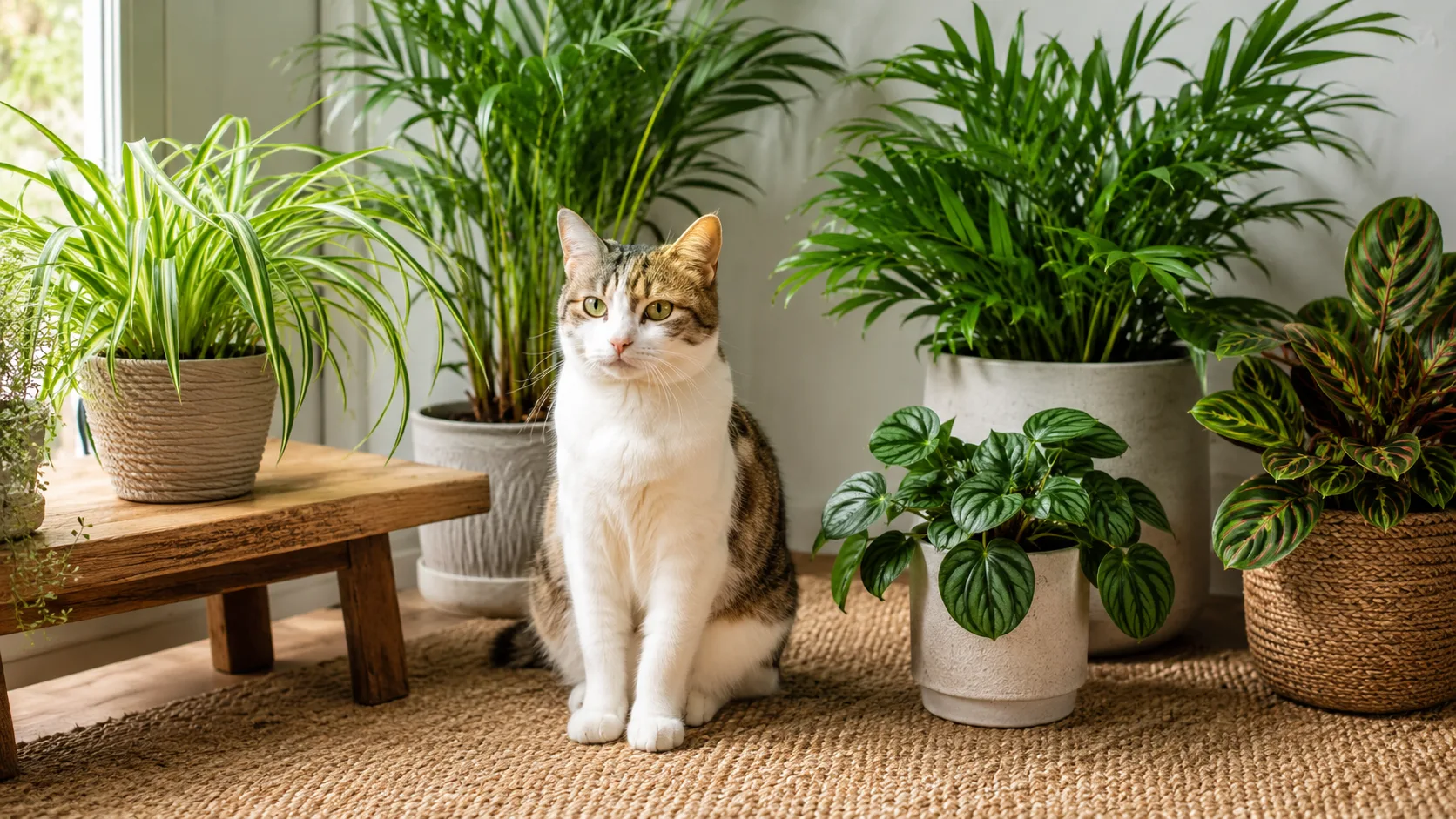
The plants in this list that the ASPCA lists as non-toxic to both cats and dogs are baby rubber plant (Peperomia obtusifolia), calathea, prayer plant, polka dot plant, Boston fern, spider plant, and parlor palm. Chinese money plant is a useful addition for a different reason: it is absent from both the non-toxic and the toxic lists, which is weaker evidence than a non-toxic listing, not stronger. That is still a genuinely good-looking group — it covers round leaves, hand-painted foliage, night-moving leaves, spotted leaves, feathery fronds, arching grass-like cascades, a palm, and a button-on-a-stem silhouette. Choosing from it does not mean ignoring the plant. It means you can put a cast iron plant on a low shelf or a fern on a bathroom sill without managing the pet around it.
Even here, keep the caveats in view. The ASPCA notes that consumption of any plant material may cause vomiting and gastrointestinal upset in dogs and cats regardless of listing, and that individual plants may differ in appearance from the photos on their database. If you suspect ingestion, the ASPCA Poison Control line is (888) 426-4435, and your veterinarian is the right first call. Two look-alike traps are worth naming: “rubber plant” is both the toxic Ficus elastica and the non-toxic Peperomia obtusifolia, and “prayer plant” covers both the non-toxic maranta and plants in other genera. Check the scientific name, not the nursery label.
The 18 Best Foliage Plants
Big leaves and architectural drama
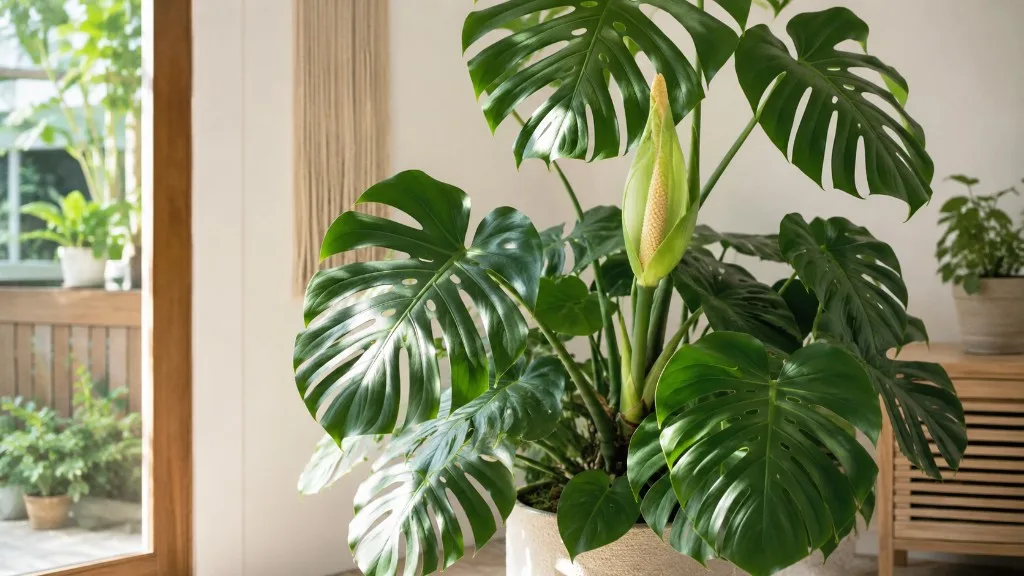
1. Monstera deliciosa — Monstera is the plant people actually mean when they say “foliage plant,” and it earns the slot. NC State Extension describes it as a woody, perennial climbing vine in the arum family, native from Mexico to Panama, capable of reaching 70 feet in habitat but staying between 6 and 8 feet in most home environments. Give it bright, indirect light — moderate brightness without direct sun — and it will fenestrate, splitting its leaves into the perforated Swiss cheese form that people recognize. Variegated cultivars need more light than the dark green ones; in a dim corner the white will not just fade, it will reverse and the plant will grow back green.
Light: bright indirect, a few feet from an east or south window. Size indoors: 6–8 ft. Water: let the top quarter to a third of the pot dry. Difficulty: easy. Pets: toxic to dogs, cats and horses (low severity per NC State; listed by the ASPCA among the philodendron-family oxalate plants).
Choose it if you have room to climb or a pole for it to grip. Skip it if you want something you can forget for two weeks in a dark hallway — monstera is forgiving about water and unforgiving about light.
Trailing vines and cascading habits
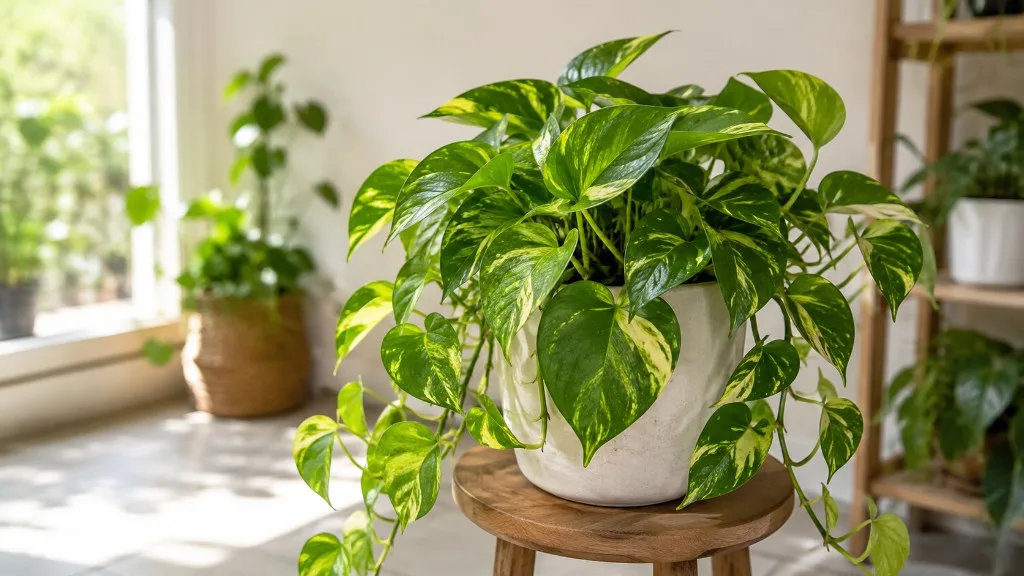
2. Golden Pothos — Pothos is the most forgiving plant in this entire article, which is exactly why its pet-safety rating is the most common thing readers get wrong. NC State Extension calls it very easy to grow, preferring bright indirect light and surviving long periods in low light, with vines that can trail 40 feet. As a container plant it retains its juvenile leaf shape, so it will not grow into the huge split leaves of a mature outdoor vine no matter how long you keep it — set that expectation before you buy.
One behavior to expect: over time, leaves yellow and drop and the plant concentrates most of its foliage at the ends of the stems. That is normal maturation, not a problem to solve, and pruning the stems back keeps the habit bushy. The ASPCA lists golden pothos as toxic by insoluble calcium oxalates, with oral irritation and drooling. If you have pets, pothos is the one to swap out, not the one to work around.
Light: bright indirect preferred; tolerates low light but grows long and sparse. Size: trails indefinitely indoors; NC State describes vines that can run 40 ft, and 6–8 ft is a realistic length once the plant is worked into the ground rather than hung. Water: dry out between waterings. Difficulty: very easy. Pets: toxic to dogs, cats and horses (medium severity per NC State).
Choose it if you are starting from zero and want a plant that will outlive your enthusiasm. Skip it if there is a cat in the house, or if you want a compact tabletop plant rather than a trailing one.
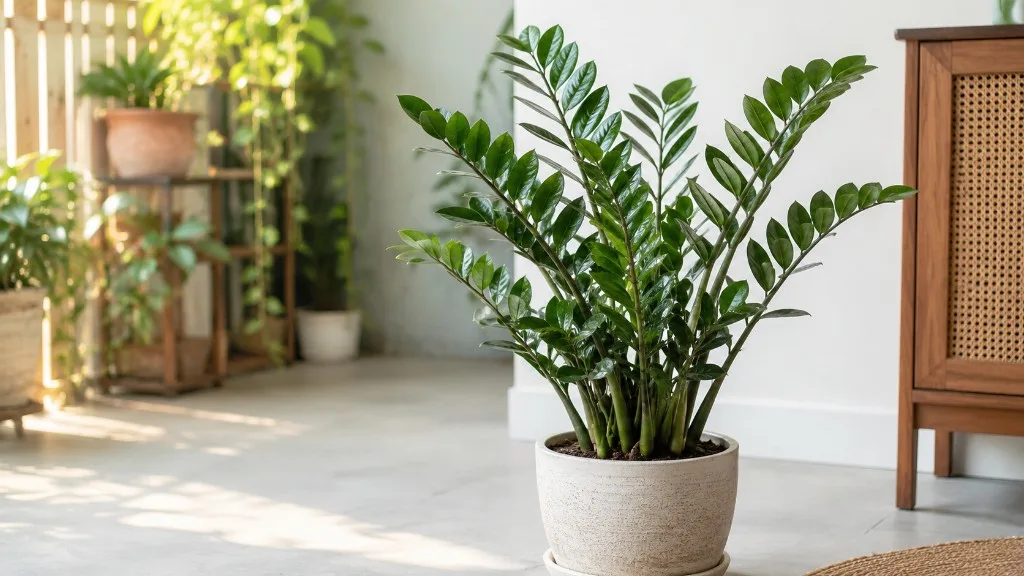
- ZZ Plant
The ZZ plant is the answer to “which foliage plant is hardest to kill,” and it is also one of the more toxic options in common indoor use. NC State Extension describes bulbous fleshy rhizomes that store water and make it highly drought tolerant, with a slow growth rate reaching 2 to 4 feet in height and width. It grows in very low light, even areas lit only by fluorescent tubes, but does best with bright indirect sunlight — and direct sun scalds and browns the leaves.
Two practical notes from the same profile. Water it once a month in winter when it is not actively growing, twice monthly in summer but only if the soil has dried out completely, and fertilize once or twice a year. It can be treated much the way you would treat a cactus. NC State explicitly states this plant has a medium toxicity to cats and dogs. That extension rating is the citation for ZZ plant’s toxicity, and it is the only one available: the ASPCA does not list ZZ plant under any name, on its cats, dogs, or horse lists. Treat it as toxic anyway — the mechanism is the same calcium oxalate one as the other aroids.
Light: low to bright indirect; will not thrive but will survive. Size: 2–4 ft tall and wide. Water: soak and fully dry; hates wet feet. Difficulty: very easy. Pets: treat as toxic to dogs and cats (medium severity per NC State Extension; not listed by the ASPCA).
Choose it for a dark hallway, a north window, or a room you heat in winter. Skip it if your household has pets, and skip it if you want visible progress — it is genuinely slow, and that is not a defect.
- Chinese Evergreen
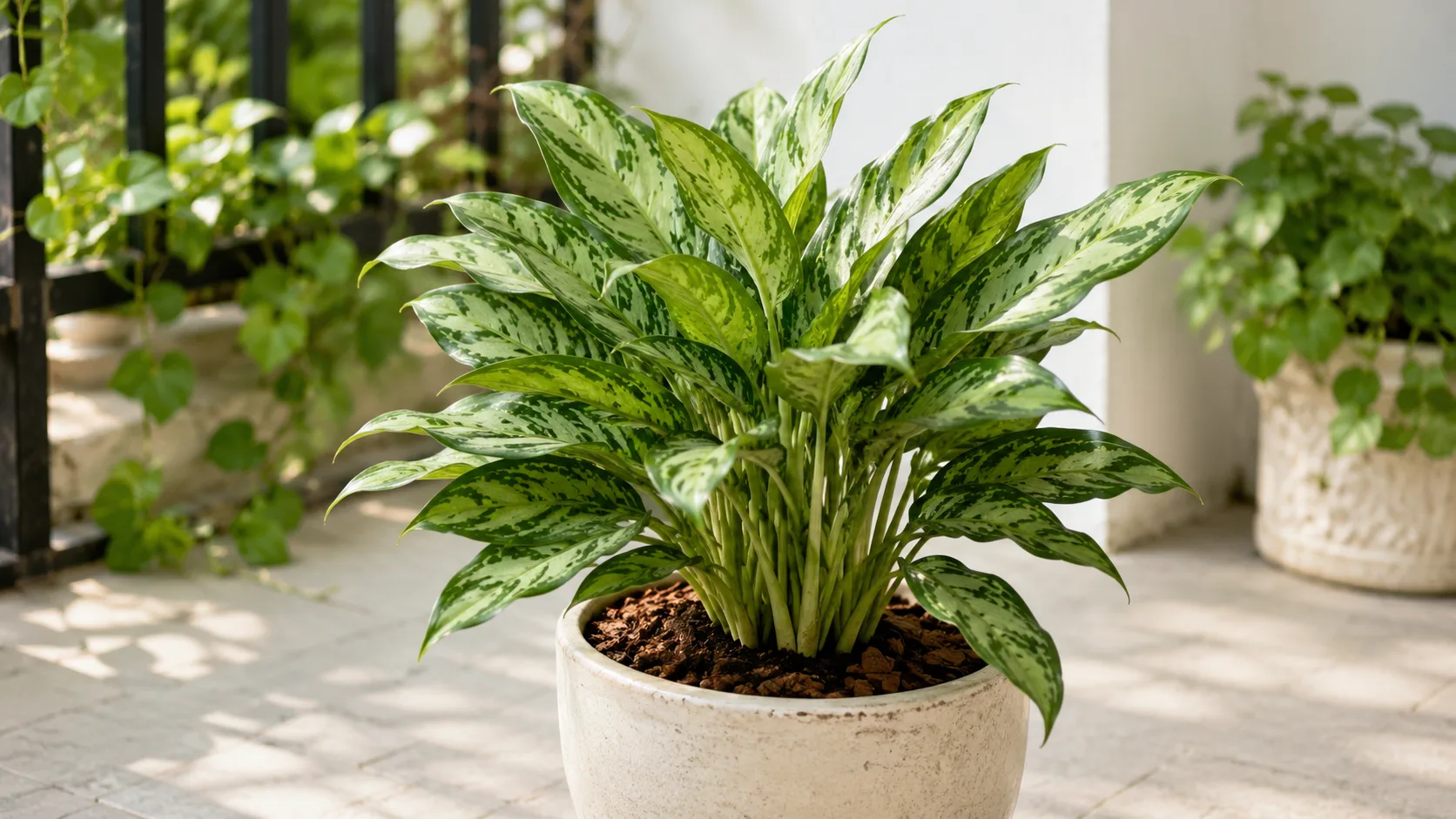
Aglaonema is the most underrated plant on this list, partly because NC State Extension is candid about its limitation: it tends to get leggy with age as the stem grows, so it looks best as a bushy young plant and degrades into a stretched cane after a few years. In exchange, NC State calls it excellent for low-light indoor locations and one of the easiest to grow in the home or office, with lance-shaped leaves 4 to 8 inches long that may be attractively variegated with white, silver, pink and/or red. It may not flower at all indoors if the light level is low, which is fine for a foliage plant.
Light: diffuse sun or good indirect light; tolerates low light. Size: ~1.5 ft, erect and bushy. Water: keep moist spring to fall, reduce in winter, no dormancy required. Difficulty: easy. Pets: toxic to dogs, cats and horses (insoluble calcium oxalates, per the ASPCA).
Choose it if you want the color range of a rex begonia with none of the fuss. It is a good match for a plant shelf where the pot can be raised as it grows, and for people who want silver or red foliage without buying two dozen cultivars.
- Rubber Plant
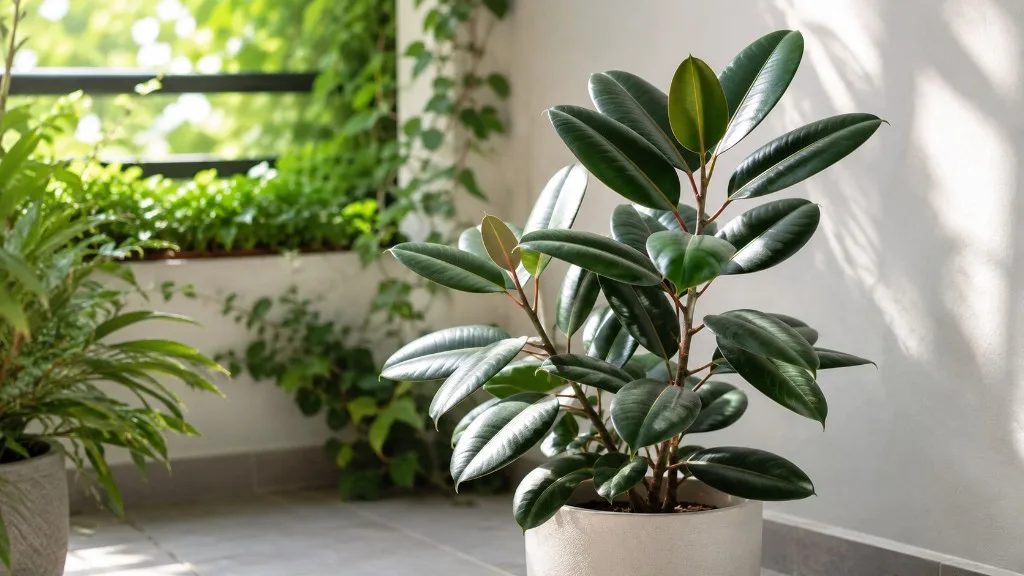
The rubber plant is the most under-rated entry here for a reason that has nothing to do with looks: the Clemson Cooperative Extension fact sheet calls it easy to grow, excellent for beginners, and adaptable, and gives unusually specific numbers. It grows best with the morning light from an east window. Ideal temperatures are 60–65 °F at night and 75–80 °F during the day. It tolerates dry indoor air, and the only real enemies are a soil mix that does not drain quickly and watering that is too frequent.
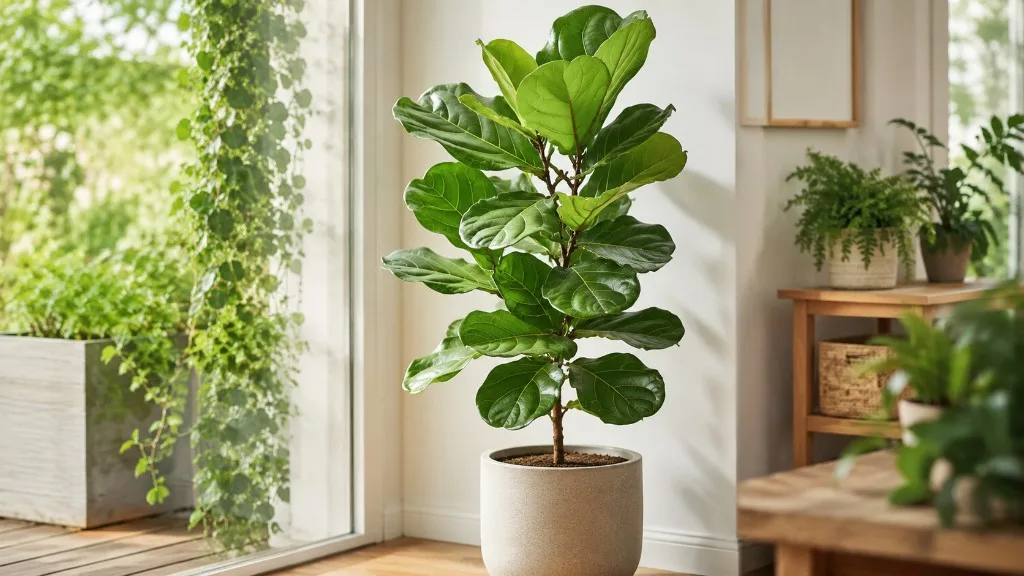
Clemson also names the risk plainly: the sticky white sap may irritate skin or the stomach if eaten, and recommends keeping the plant away from pets and young children that tend to eat plants. That is a judgment call, not a prohibition — this is a statement about a plant that is large, tempting, and slightly caustic when cut, not a plant that reliably kills. One attribution detail is worth flagging, because it is exactly the kind of thing these roundups get wrong: the ASPCA does not list Ficus elastica. Its fig and rubber-plant records cover Ficus benjamina and Ficus sp. under the names fig, weeping fig and Indian rubber plant. So the safety call here rests on Clemson, not on the ASPCA, and if you want a rubber plant in a home with pets, the non-toxic Peperomia obtusifolia is the one to buy.
Light: bright light, best from an east window; adaptable to low light. Size: 6–10 ft indoors. Water: water thoroughly, let soil dry slightly between waterings. Difficulty: easy. Pets: treat as unsafe around chewing pets; Clemson explicitly advises keeping it away, and the ASPCA does not list Ficus elastica specifically.
Choose it if you want a single dramatic plant for a corner rather than a collection. Its leaves run 8 to 12 inches long, and ‘Tricolor’ and ‘Doescheri’ give you pink and cream splotching that reads as a variegated plant without the fussy care of a begonia.
- Dracaena / Corn Plant
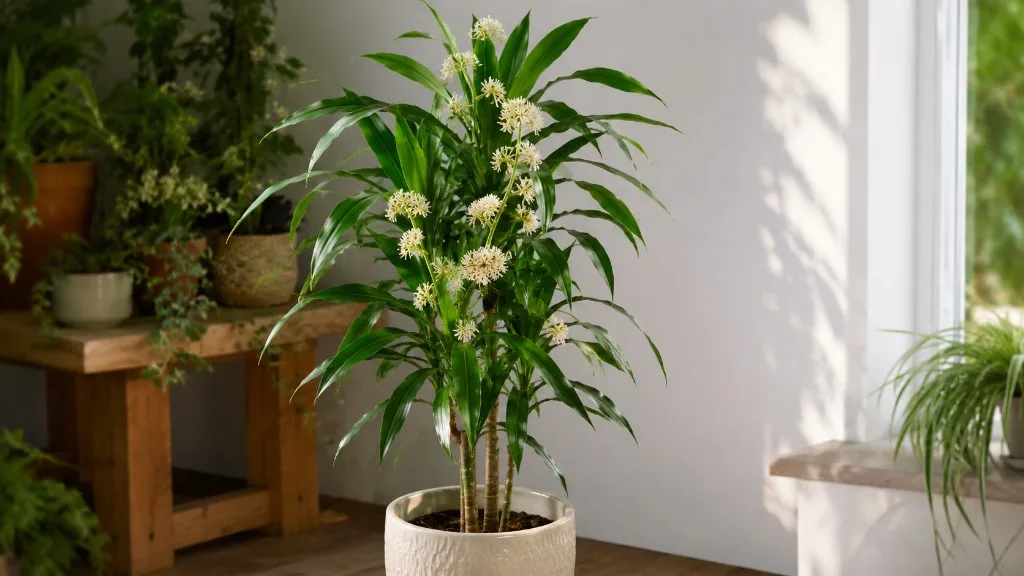
Dracaena fragrans is the classic “I killed every plant I’ve owned, except this one” story, and the NC State profile explains why: it is a slow-growing, broadleaf evergreen that tolerates low light better than it tolerates neglect. It wants bright to moderate filtered light, and the two failure directions are symmetrical — direct sun burns the foliage, but too little light makes the leaves narrow. Keep soil moist in the growing season, cut back in winter, and expect brown leaf tips if your indoor humidity is too low, especially in a heated house.
One quirk worth knowing: the flowers are nocturnal and their fragrance is strong enough to fill a room in the evening. If that is a problem for you, live with the plant, not the bloom — or pick a different dracaena.
Light: bright to moderate filtered; avoid direct sun. Size: 2–6 ft indoors. Water: moist in growth, reduced in winter. Difficulty: very easy. Pets: toxic to dogs, cats and horses (saponins, per the ASPCA).
Choose it for a dim hallway or a north window, or if you want vertical height without a climbing plant. The indoor plants guide on low light is worth reading if that’s your situation.
- Dieffenbachia
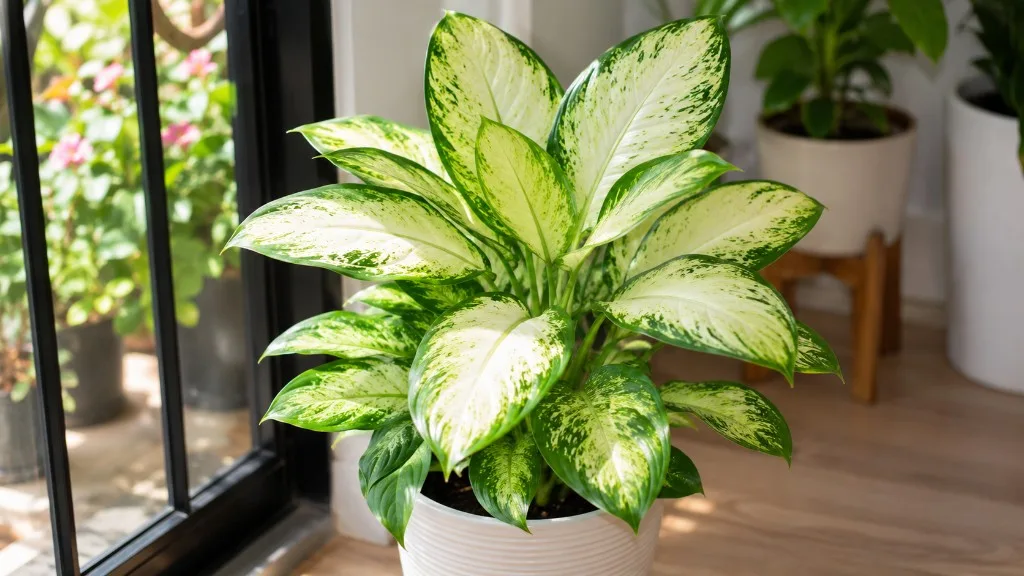
Dieffenbachia is worth including precisely because its reputation is complicated. It is often called dumb cane, and it delivers on that: it grows fast, tolerates a range of conditions, and is genuinely handsome with its cream-and-green mottled leaves. The ASPCA record lists it as toxic to dogs and cats by insoluble calcium oxalates plus a proteolytic enzyme, with intense burning and irritation of mouth, tongue and lips and difficulty swallowing.
The honest read is that this is a beautiful plant that requires an honest household. If you have a cat that chews houseplants, an aggressive chewer will find a dumb cane within reach and the experience is unpleasant for the animal. NC State makes a useful taxonomic point too — aglaonema is frequently sold as a “dieffenbachia,” and the two can be told apart by the number of main lateral veins, so the plant you actually bought may not be the one you think it is.
Light: medium to bright indirect. Size: 2–6 ft. Water: let top inch or two dry. Difficulty: easy. Pets: toxic to dogs, cats and horses (the ASPCA record covers the genus; the horse list includes it too).
Choose it for a fast, forgiving plant with strong pattern and no interest in attaching to a moss pole. Skip it if you have a known plant-chewing pet.
- Heartleaf Philodendron
The heartleaf philodendron is pothos’s near-relative and looks like a slightly more formal version of it. NC State Extension notes the genus contains over 600 species, prefers bright indirect sunlight and warm temperatures, and splits into climbing and self-heading types. Heartleaf is the climbing one, so it wants a support — a pole, a trellis, or the wall. It is also notably more light-hungry than pothos, and the long internodes you get in a dim room are a sign it is stretching, not thriving.
The ASPCA lists the philodendron genus as toxic via insoluble calcium oxalates. NC State Extension adds a practical warning that philodendrons are very sensitive to cold and that drafts should be avoided, which is worth taking seriously in a room with a winter window.
Light: bright indirect, no direct sun. Size: vining; can trail or climb indefinitely. Water: moist, well-drained, high in organic matter. Difficulty: easy. Pets: toxic to dogs, cats and horses.
Choose it if you want pothos’s ease with a more upright, sculptural habit. Skip it if the spot is a drafty window or a dim corner.
- Snake Plant
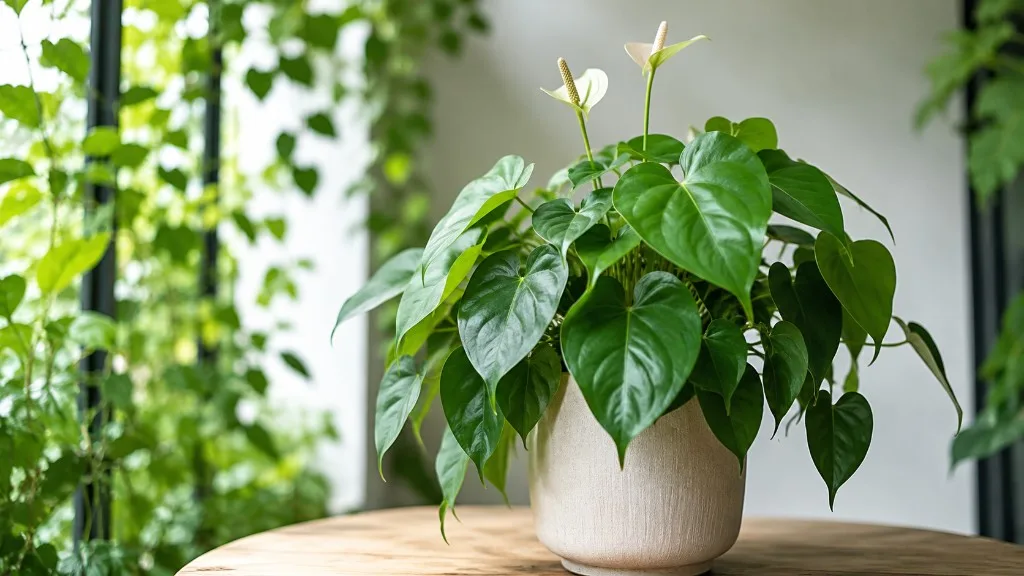
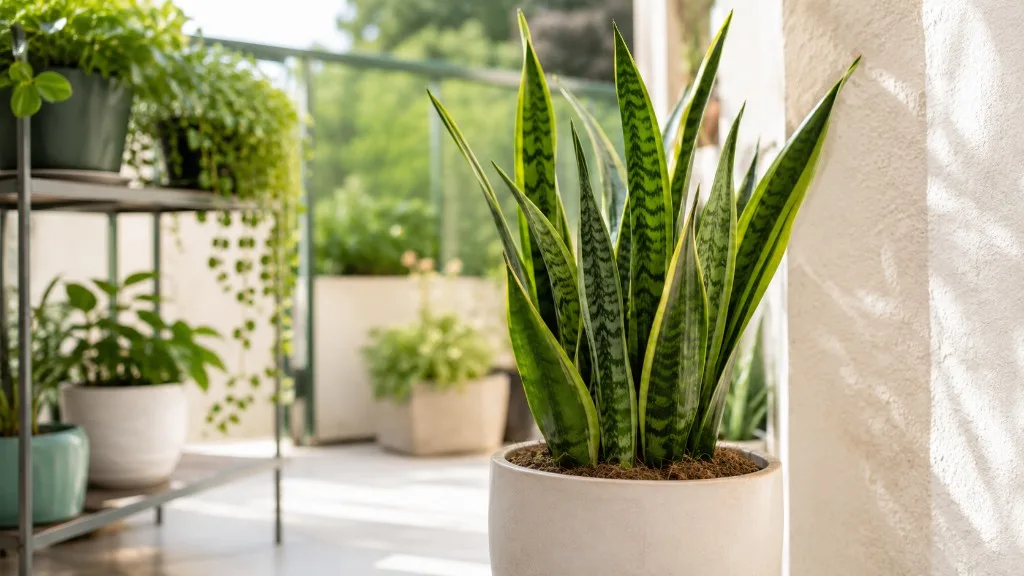
Snake plant sits in an uncomfortable position on this list: it is one of the best-known “impossible to kill” houseplants and it is on the ASPCA’s toxic list for both dogs and cats, by saponins. The tolerance and the toxicity are the same fact seen from two sides — a plant tough enough to survive a chewed leaf is a plant that will be chewed. If you are keeping it, put it on a high shelf, not the floor.
What you get in return is real: architectural, near-indestructible vertical blades that work in a bathroom, a dim hallway, or a corner nobody else wanted. NC State notes it wants direct sunlight only part of the day, two to six hours, and will tolerate very low light, but that well-drained soil and careful watering are a must because the roots will rot. The ‘Laurentii’ with gold margins is the classic, but the bird’s nest form is more compact.
Light: low to bright indirect; the most light-tolerant plant here. Size: 1–4 ft depending on form. Water: let soil dry fully; overwatering is the only real killer. Difficulty: very easy. Pets: toxic to dogs, cats and horses (saponins, per the ASPCA).
Choose it for the darkest, most neglected corner, or as a floor plant in a rental. Skip it if you have a pet at floor level. The snake plant care page covers the overwatering failure mode in detail.
Patterned and painted foliage
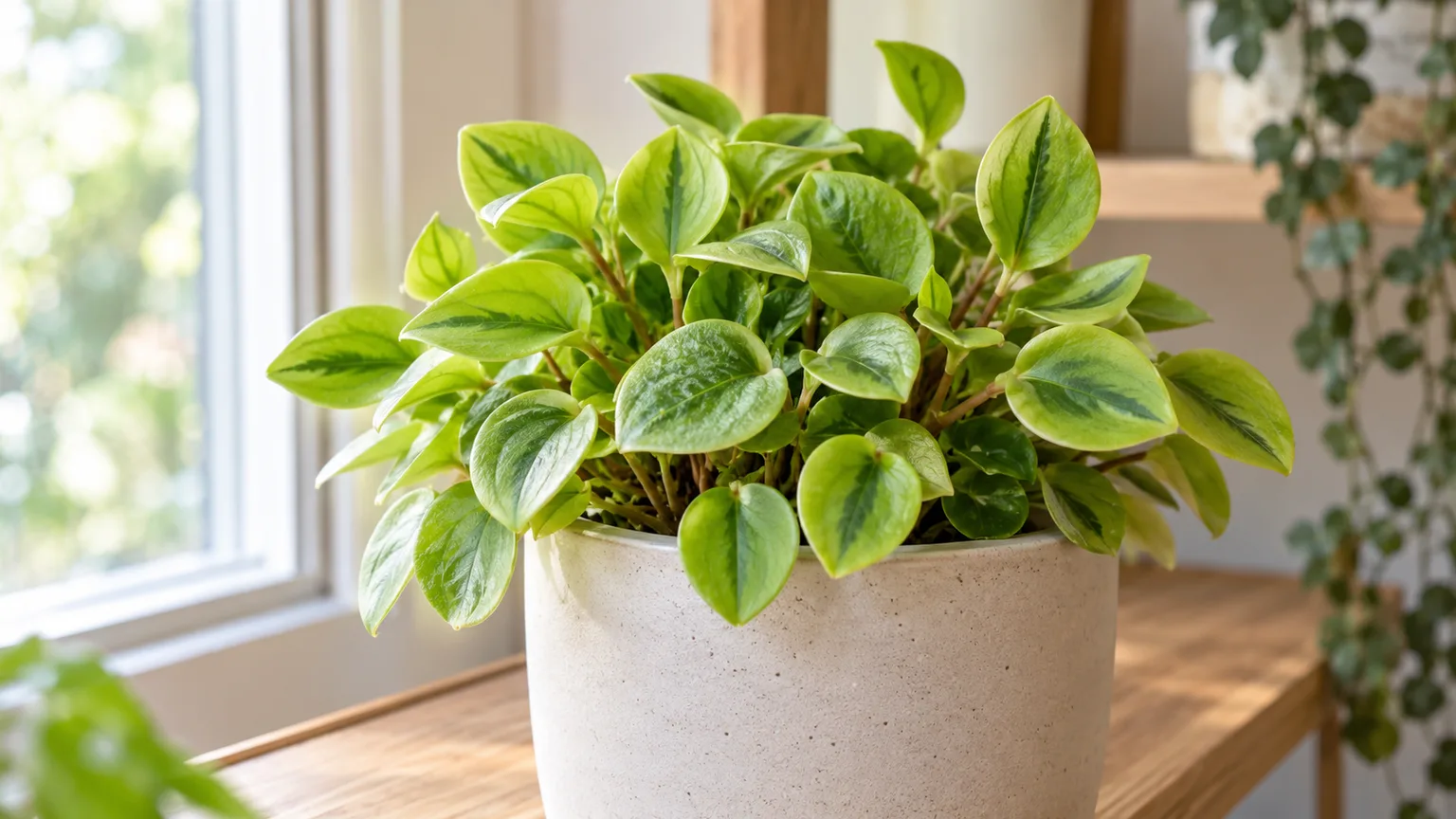
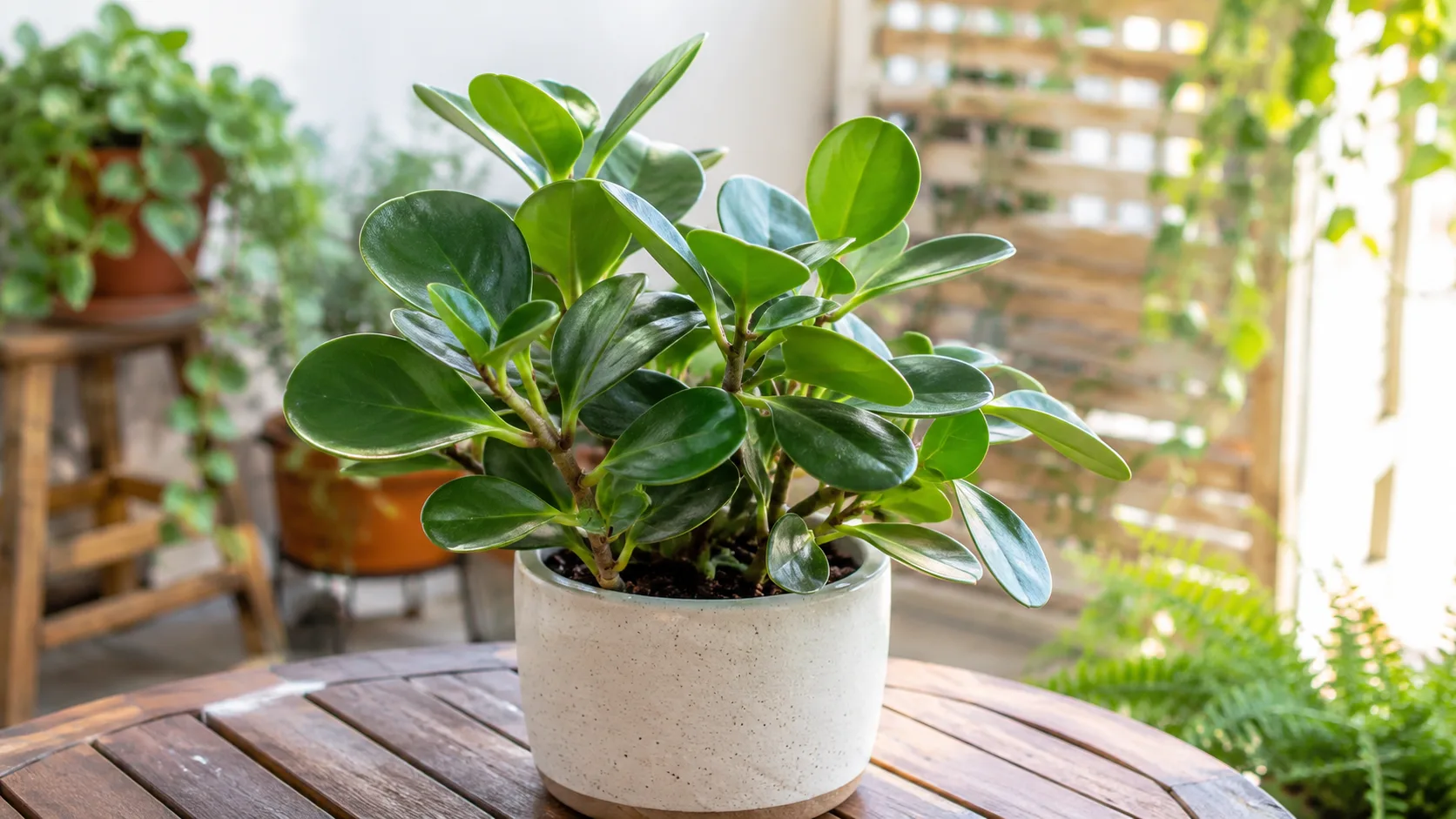
10. Baby Rubber Plant — This is the plant people should buy when they want a peperomia and don’t know it. Peperomia obtusifolia — baby rubber plant, American rubber plant, pepper face, blunt-leaf peperomia — is the species the ASPCA lists as non-toxic to both dogs and cats under several of those names. It is a small, dense, glossy green plant that looks like a miniature rubber plant, which is exactly where the confusion with the toxic Ficus elastica comes from. The scientific name is the only reliable way to tell them apart at the shelf.
NC State describes the genus as over 1,000 species of small herbaceous perennials, typically 6 to 12 inches high and wide, many of them succulent, preferring bright indirect light while tolerating low light, with a moist well-drained mix of loam and sand. They are slow-growing and rarely need repotting, which makes them ideal on a desk.
Light: bright indirect; tolerates low. Size: 6–12 in. Water: let top half dry; semi-succulent. Difficulty: easy. Pets: non-toxic to dogs, cats and horses, per the ASPCA.
Choose it as a desk plant, a bathroom plant, or a small-space plant where a 12-inch plant is the realistic maximum. The peperomia profile is a good starting point for the genus.
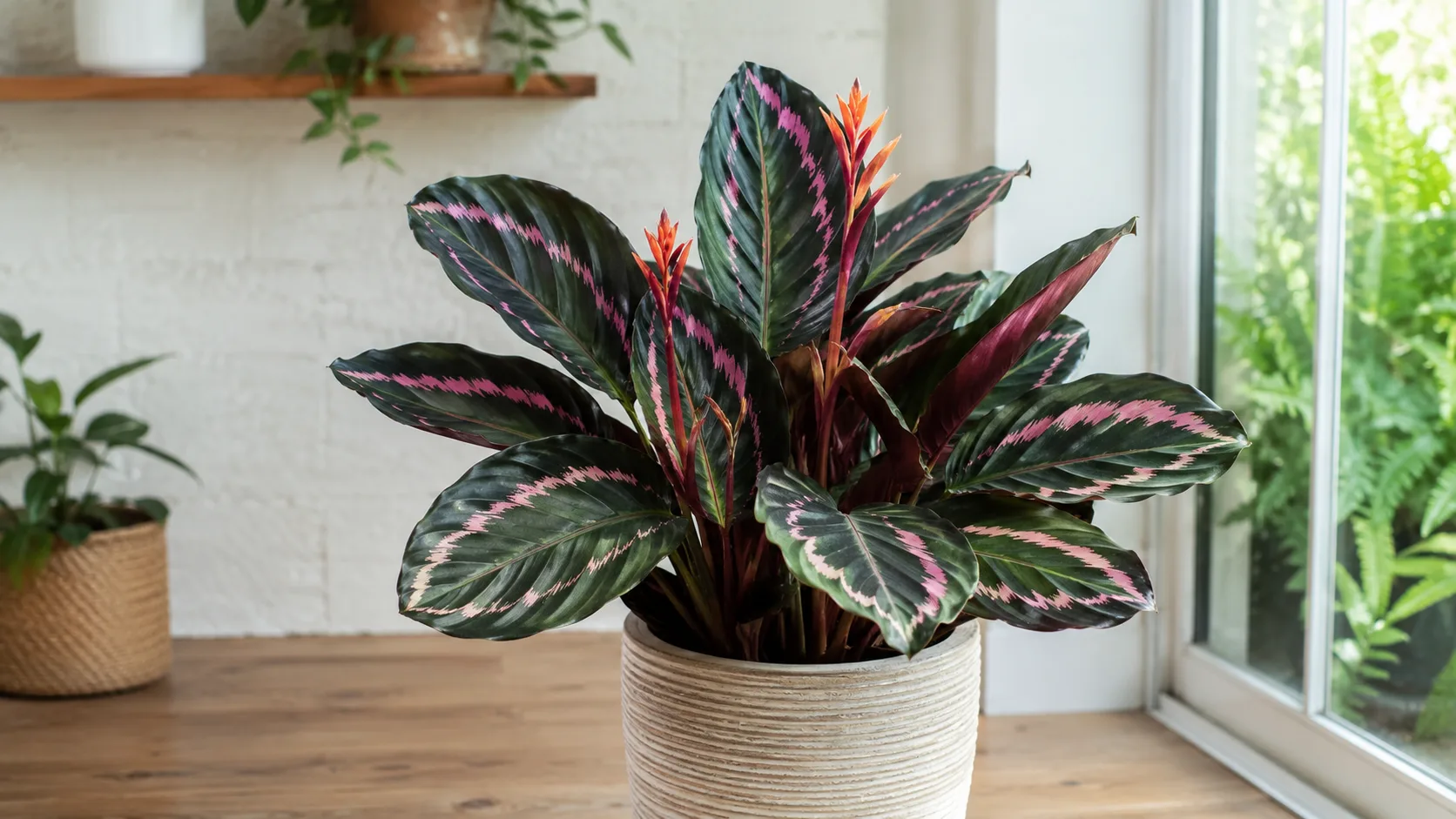
11. Calathea — Calathea — sold now mostly under Goeppertia, though NC State still files it under the old name — is the most beautiful plant in this list and among the least forgiving. Hand-painted ovals, rippled edges, undersides in purple, and a genuine daily leaf movement. It is also the plant most often returned to a shop within a month, and the reason is nearly always one of three things: low humidity, tap water, or inconsistent watering.
The species in cultivation (formerly Calathea, now Goeppertia) are not individually itemized on the ASPCA’s list under their current genus, but the ASPCA lists calathea as non-toxic to dogs, cats and horses, and NC State’s prayer plant profile documents the shared failure modes: leaves burn with high fluorides and with over-fertilization, and the plant is intolerant of low humidity. Do not buy it with the expectation that it will behave like a pothos. Light: medium to bright indirect, no direct sun — it bleaches. Size: 1–3 ft depending on species. Water: consistent moisture, filtered or rainwater preferred. Difficulty: hard. Pets: non-toxic to dogs, cats and horses. Choose it if you already have a humidifier or a bathroom with a shower and you will water on a schedule rather than by feel. Skip it if you are a forgetful waterer — our forgetful waterer list is the honest alternative.
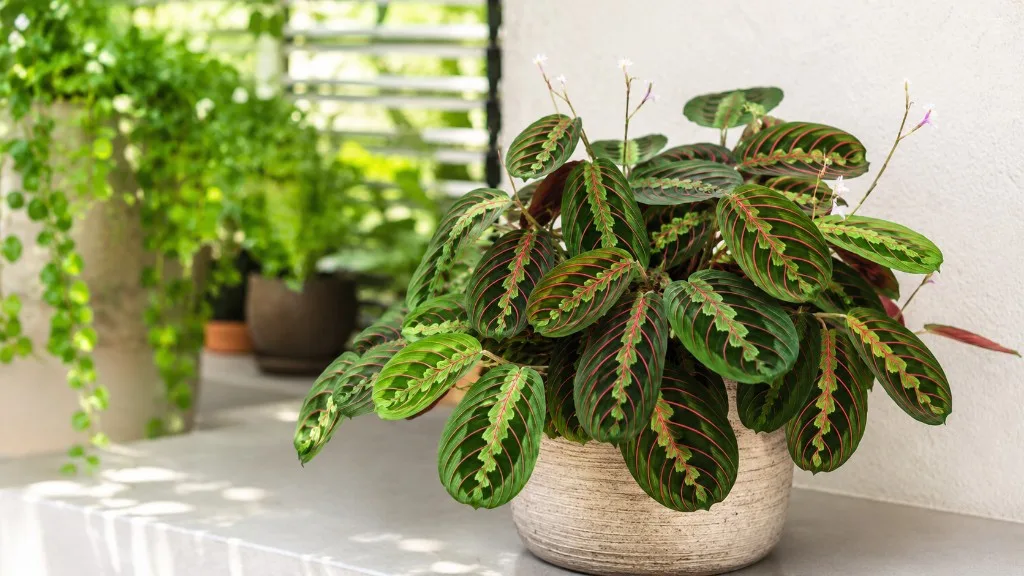
12. Prayer Plant — The prayer plant, Maranta leuconeura, is the closest thing this list has to a conversation piece. NC State describes leaves with prominent red fishbone-patterned veins that fold upward at night into a perpendicular “prayer” position, held parallel to the ground by day, with gray-green to purple-green undersides and new leaves emerging as a rolled tube. It wants bright indirect light and high humidity, is intolerant of direct sunlight, low humidity, and cold drafts, and it will burn with high fluorides and over-fertilization.
The critical operational fact: it tolerates low to medium light but loses color in both low light and low fertility. That is a real trade-off — the plant survives, but the pattern you bought it for fades. If the red veining is the point, it needs a bright window and regular feeding, and that makes it a medium-light plant with medium-light expectations.
Light: medium to bright indirect. Size: 6–12 in, spreads horizontally; good in hanging baskets. Water: evenly moist in growing season, drier in winter. Difficulty: moderate to hard. Pets: non-toxic to dogs, cats and horses, per the ASPCA.
Choose it for a hanging basket in a humid, bright room where you will actually watch it move. Skip it for a dry, dark hallway. The maranta profile covers the fluoride issue directly.
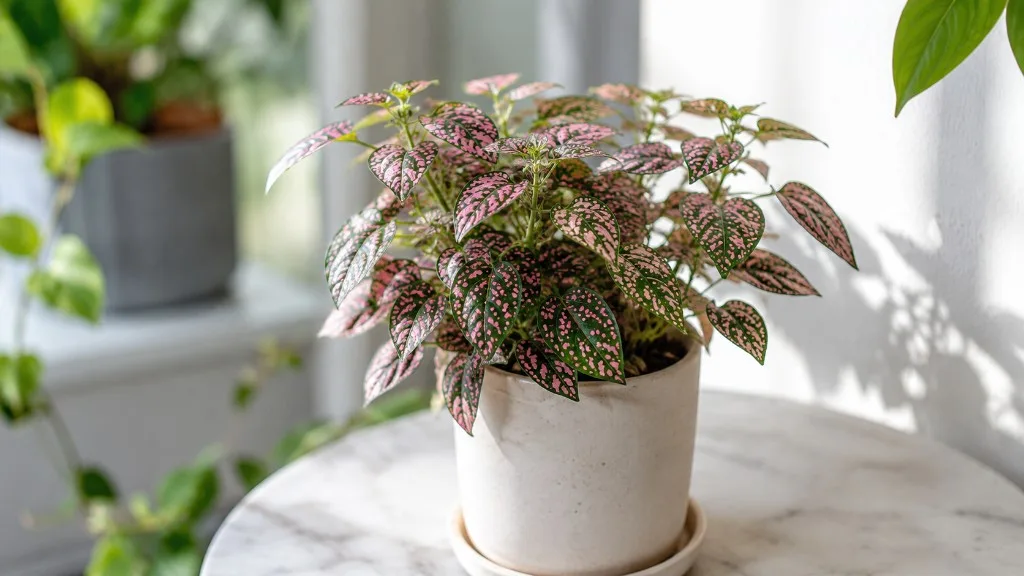
13. Polka Dot Plant — Hypoestes phyllostachya is a genuinely easy route into patterned foliage, and one of the few on this list that is non-toxic across the board — the ASPCA lists polka dot plant as non-toxic to dogs, cats and horses, along with its common aliases baby tears, freckle face, and pink splash. It is a fast, soft, bushy plant with pink-spotted leaves that looks good in a small pot and grows quickly enough that you can propagate it easily. NC State Extension notes it is grown for its foliage rather than its flowers, and that cutting off the small lilac blooms directs the plant’s energy back to the leaves.
The one honest caveat: polka dot plants get leggy and woody with age, and they are more vulnerable to pests, especially spider mites, than most of this list. Treat it as a plant you refresh every couple of years rather than a permanent specimen, and keep it in bright indirect light, which is what keeps the pink strong.
Light: medium to bright indirect. Size: 10–12 in, bushy. Water: moderate; avoid both soggy and bone dry. Difficulty: easy. Pets: non-toxic to dogs, cats and horses, per the ASPCA.
Choose it if you want a pet-safe plant with real pattern and fast results. It pairs well in a mixed planter with a fern or a calathea, though it needs a bit more light than either.
Palms, ferns and fine texture
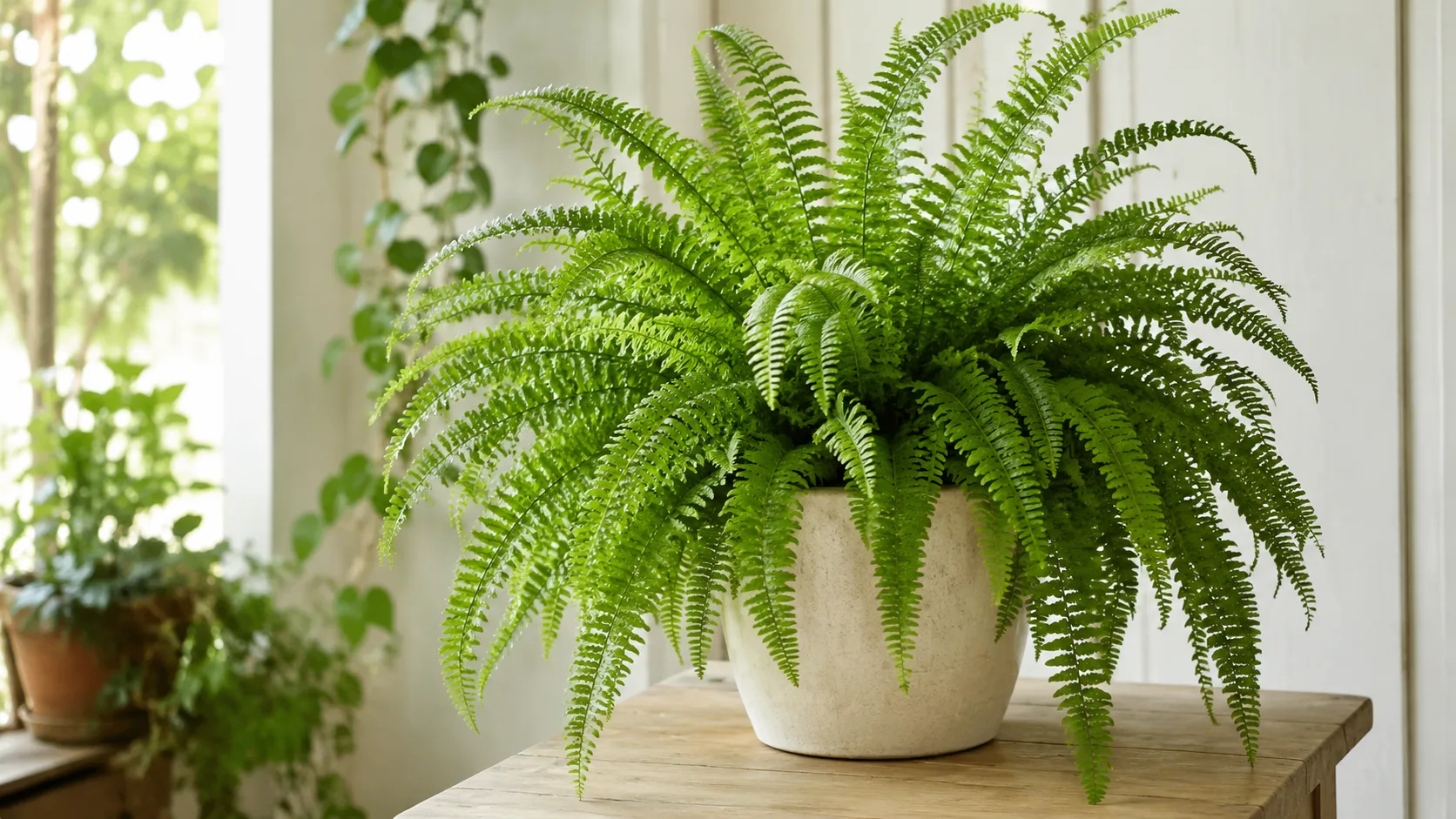
14. Boston Fern — The fern is the odd one out in a list of aroids, succulents and vines, and that is exactly what makes it worth including. It wants more consistent moisture and more humidity than anything else here, and it will reward you with the best pet-safe textural foliage available indoors. The ASPCA lists Boston fern as non-toxic to dogs, cats and horses. NC State Extension is specific about the conditions: bright indirect light, high humidity, and moist soil that should never be allowed to dry out, with watering reduced in winter because the plant is dormant and overwatering leads to root rot. It also notes the fern grows to 2 to 3 feet in height and width, and is resistant to heavy shade outdoors. A fern that crisps by February is reporting that your winter air is too dry, not that you have failed at watering.
Light: medium indirect; avoid harsh direct sun which scorches fronds. Size: 2–3 ft in height and spread, per NC State Extension. Water: consistently moist; the most demanding watering schedule on this list. Difficulty: moderate. Pets: non-toxic to dogs, cats and horses.
Choose it for a bathroom, a humidifier corner, or a plant stand where you can mist or water on a schedule. Skip it if your home is dry and heated and you plan to travel for two weeks.
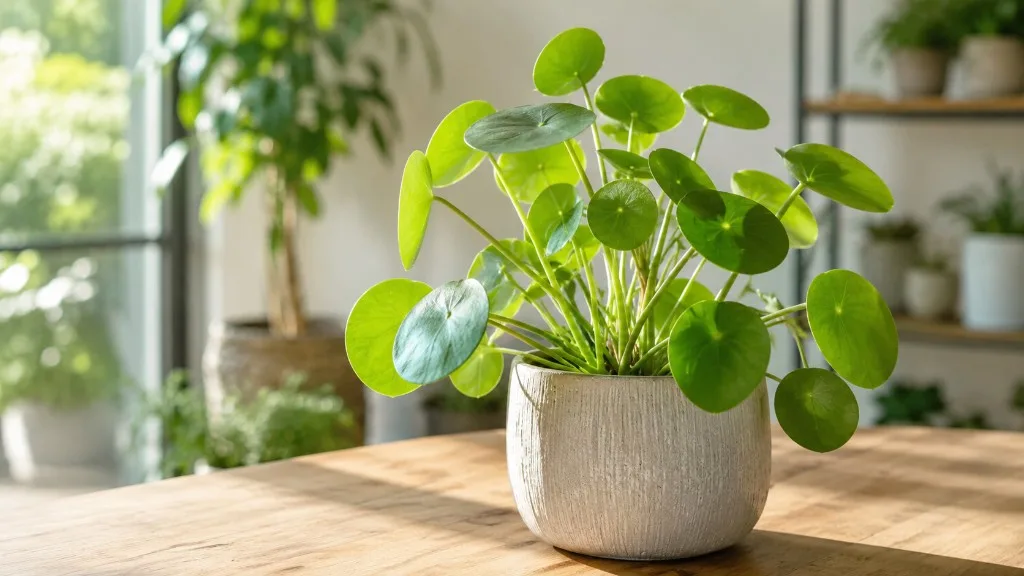
15. Chinese Money Plant — Pilea peperomioides is a small, round, button-leaved plant that is fast-growing and forgiving. Be precise about its safety status, because this one is routinely oversold: the ASPCA has no record for Pilea peperomioides under any common name, on either the toxic or the non-toxic list. What the non-toxic lists do contain are other Pilea species — aluminum plant and watermelon pilea (Pilea cadieri), artillery plant (Pilea microphylla) and clearweed (Pilea pumila) — and no Pilea appears on the toxic list for cats or dogs. “Not on the toxic list” is not the same as “listed as safe,” and for a plant that will sit on a low shelf, that difference is worth keeping in view.
The real risk with the money plant is not toxicity but sun. NC State Extension describes the fleshy, circular, peltate leaves attaching at their center on long stems, and notes the plant prefers bright indirect sunlight with cold drafts and heat sources to be avoided. Leaves that grew in a dim room are thin and pale, and moving a dim-adapted plant into direct sun scorches them overnight. Introduce it to brighter light gradually over a couple of weeks, and rotate it a quarter turn weekly for even growth.
Light: bright indirect; acclimate slowly from lower light. Size: 6–12 in. Water: moderate; let top inch dry. Difficulty: easy. Pets: Pilea peperomioides is not listed by the ASPCA; other Pilea species are listed non-toxic to dogs, cats and horses.
Choose it as a small, cheerful, pet-safe plant with a distinctive silhouette. Skip it if you are moving it straight from a dark shelf into a south window.
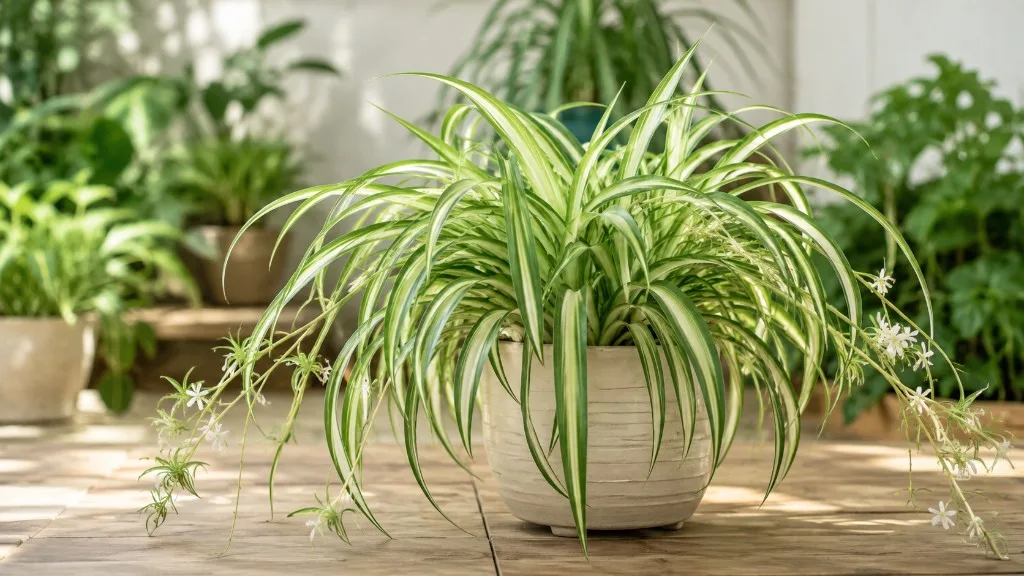
16. Spider Plant — The spider plant remains the most-recommended first houseplant for a reason, and the NC State profile gives three specific things most roundups skip. It prefers medium light and tolerates deep shade, but is intolerant of direct sunlight. It is tolerant of drought and dry soil. And it specifically advises against watering with tap water, because chlorine and fluorides cause leaf tip burn — a small detail that explains why so many people’s spider plants have brown tips.
It also has the best propagation story on this list: plantlets form on stolons, and NC State notes that stolon and plantlet development depends on short days and long uninterrupted nights of less than 12 hours of light for at least three weeks. If your spider plant has never produced babies, it is almost always because it gets too much light. One caution from the same profile: over-fertilizing decreases plantlet formation.
Light: medium to low; avoid direct sun. Size: trailing, 12–24 in. Water: moderate; use filtered or standing water. Difficulty: very easy. Pets: non-toxic to dogs, cats and horses, per the ASPCA.
Choose it for a hanging basket in medium light, a bookshelf, or a pet household — it is one of the safest good-looking options. The pet-safe houseplants guide covers the rest of that category.
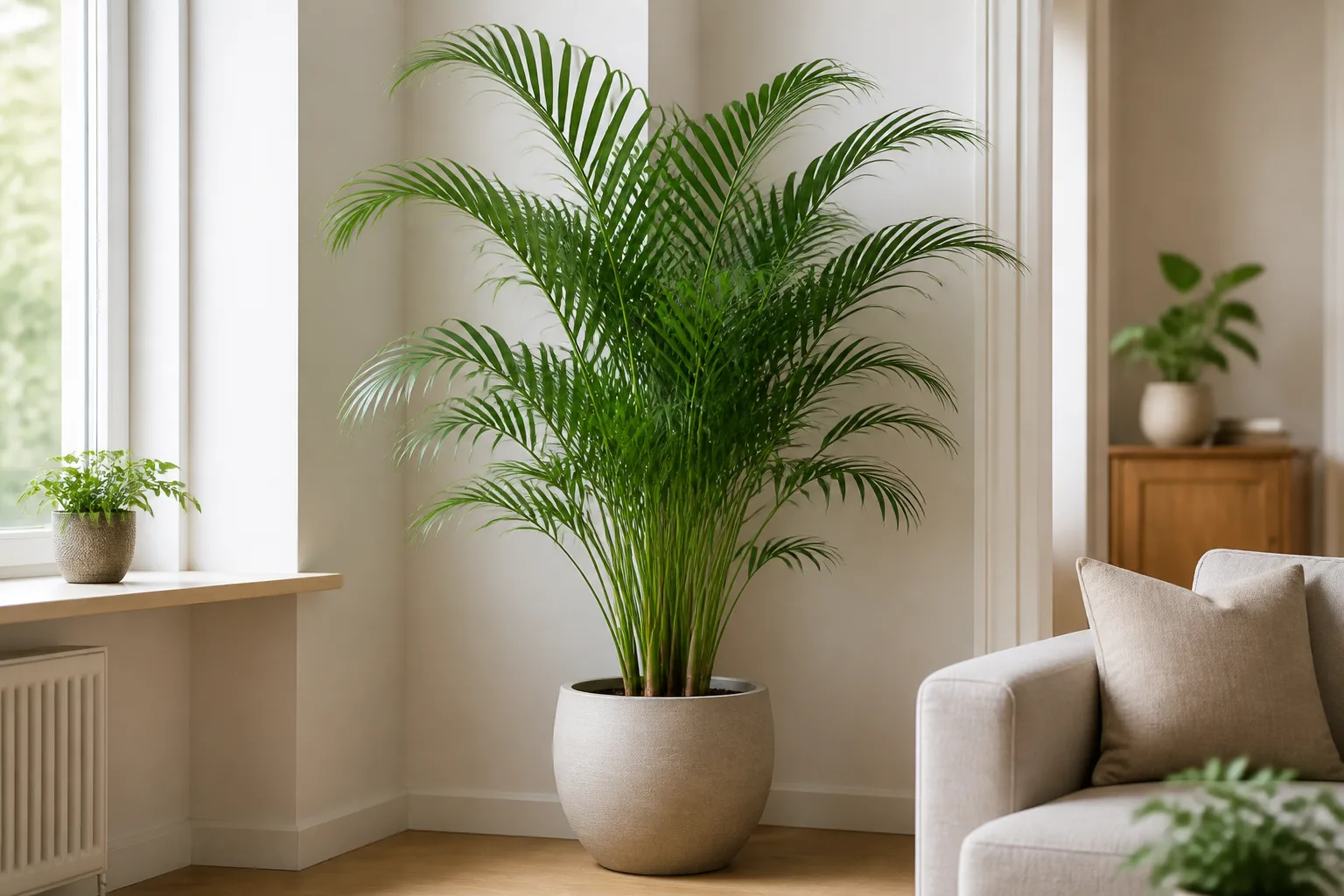
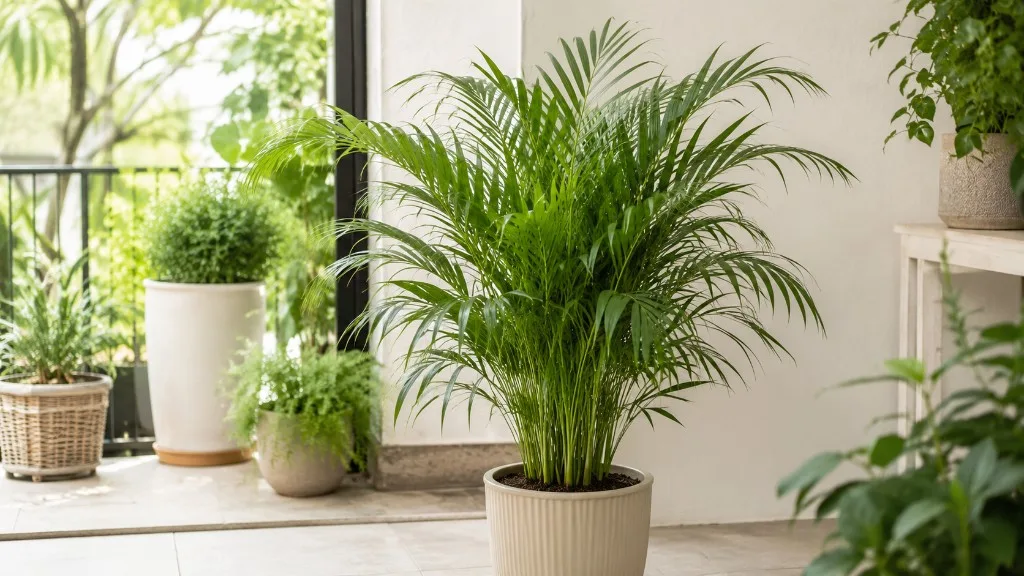
17. Parlor Palm — The parlor palm solves the “I want a tropical plant but my apartment is a cave” problem. NC State Extension calls it one of the most sought-after indoor palms specifically because it thrives in the dry air and dim light that other plants cannot tolerate, and it says outright that it is not hazardous for pets. That is a slightly awkward sentence and it is more or less the whole point: this is a palm you can put on the floor in a dark living room and still have it look like a palm.
Growth is slow and clump-forming — three or more plants are usually potted together for a fuller look, and NC State notes that over time some of those stems are out-competed and die. It tolerates drought and dry soil for short periods but grows more lushly in moist soil. When grown outdoors in a warm climate it can reach 6 or 7 feet with a 3-foot leaf spread, so buy it for indoor expectations.
Light: bright indirect preferred; tolerates low light. Size: typically 2–4 ft indoors, up to 5 ft. Water: let soil dry slightly between waterings. Difficulty: easy. Pets: non-toxic to dogs, cats and horses, per the ASPCA.
Choose it for a dim corner, a hallway, or a north window where nothing else looks good. Skip it if you want a fast-changing specimen — parlor palms are quietly, permanently slow.
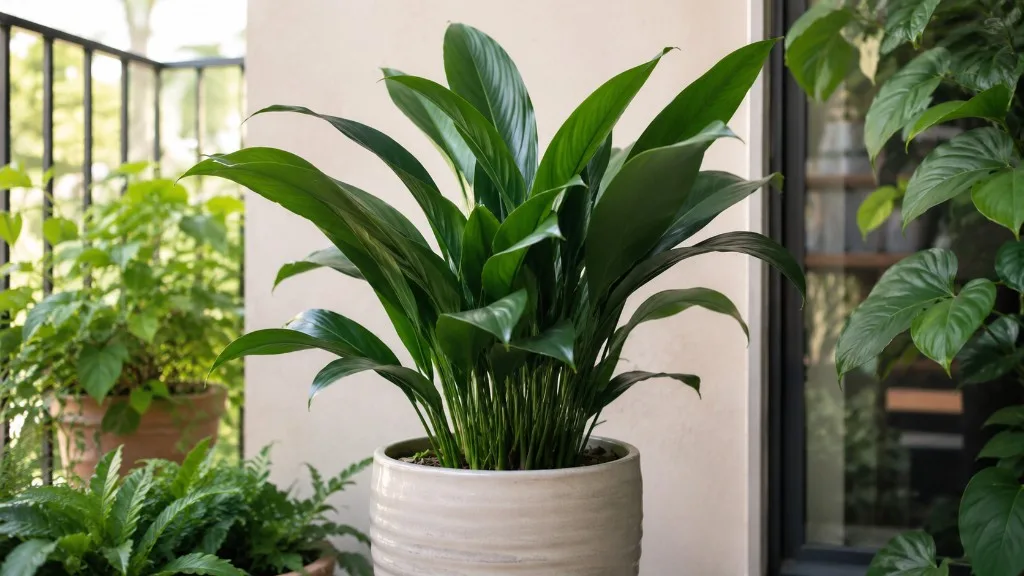
18. Cast Iron Plant — The cast iron plant is the tolerant plant that tolerates the least light and the most abuse, and NC State Extension’s description is almost a punchline: it is called barroom plant because of its ability to withstand spittoonish conditions and iron plant because of its ability to withstand neglect. It is a good specimen for planting in dense shade, it makes a good evergreen hosta substitute, and it is intolerant of direct sun — which is the entire care instruction.
Light: partial to full shade; do not put it in direct sun. Size: up to 2 ft in upright clumps. Water: regular spring to autumn, during droughts, sparingly in winter; drought tolerant. Difficulty: very easy. Pets: the ASPCA lists cast iron plant as non-toxic to dogs, cats and horses.
Choose it for the north side of the house, a dim hallway, or a genuinely neglected corner where nothing else will grow. It is the most genuinely indestructible entry here. Skip it if you want visible color — it is a deep green architectural plant, not a patterned one.
Full Comparison Table
| Plant | Light | Mature indoor size | Water tolerance | Difficulty | Pet safety (ASPCA) |
|---|---|---|---|---|---|
| Monstera deliciosa | Bright indirect | 6–8 ft | Top 1/3 to dry | Easy | Toxic: dogs, cats, horses |
| Golden pothos | Bright indirect (tolerates low) | Vines to 40 ft; 6–8 ft as groundcover | Dry between waterings | Very easy | Toxic: dogs, cats, horses |
| ZZ plant | Low to bright indirect | 2–4 ft | Soak and fully dry | Very easy | Toxic: dogs, cats (medium severity per NC State; not ASPCA-listed) |
| Chinese evergreen | Diffuse to good indirect; low tolerant | ~1.5 ft | Moist spring–fall, less in winter | Easy | Toxic: dogs, cats, horses |
| Rubber plant (F. elastica) | Bright, best from east window | 6–10 ft | Dry slightly between waterings | Easy | Keep away from chewing pets (Clemson; not ASPCA-listed) |
| Corn plant / dracaena | Bright to moderate filtered | 2–6 ft | Moist in growth, less in winter | Very easy | Toxic: dogs, cats, horses |
| Dieffenbachia | Medium to bright indirect | 2–6 ft | Top 1–2 in dry | Easy | Toxic: dogs, cats, horses |
| Heartleaf philodendron | Bright indirect | Vining | Moist, well-drained | Easy | Toxic: dogs, cats, horses |
| Snake plant | Low to bright indirect | 1–4 ft | Let dry fully | Very easy | Toxic: dogs, cats, horses |
| Baby rubber plant (P. obtusifolia) | Bright indirect; low tolerant | 6–12 in | Top half dry | Easy | Non-toxic: dogs, cats, horses |
| Calathea / Goeppertia | Medium to bright indirect | 1–3 ft | Consistent moisture, filtered water | Hard | Non-toxic: dogs, cats, horses |
| Prayer plant | Medium to bright indirect | 6–12 in, spreading | Evenly moist; drier in winter | Moderate–hard | Non-toxic: dogs, cats, horses |
| Polka dot plant | Bright indirect | 10–12 in | Moderate | Easy | Non-toxic: dogs, cats, horses |
| Boston fern | Medium indirect | 2–3 ft in height and spread | Consistently moist | Moderate | Non-toxic: dogs, cats, horses |
| Chinese money plant | Bright indirect (acclimate slowly) | 6–12 in | Moderate | Easy | Not ASPCA-listed; other Pilea spp. non-toxic |
| Spider plant | Medium to low; no direct sun | Trailing 12–24 in | Moderate; filtered water | Very easy | Non-toxic: dogs, cats, horses |
| Parlor palm | Bright indirect preferred; low tolerant | 2–4 ft | Dry slightly between waterings | Easy | Non-toxic: dogs, cats, horses |
| Cast iron plant | Partial to full shade | Up to 2 ft | Drought tolerant | Very easy | Non-toxic: dogs, cats |
Matching Plants to Your Window
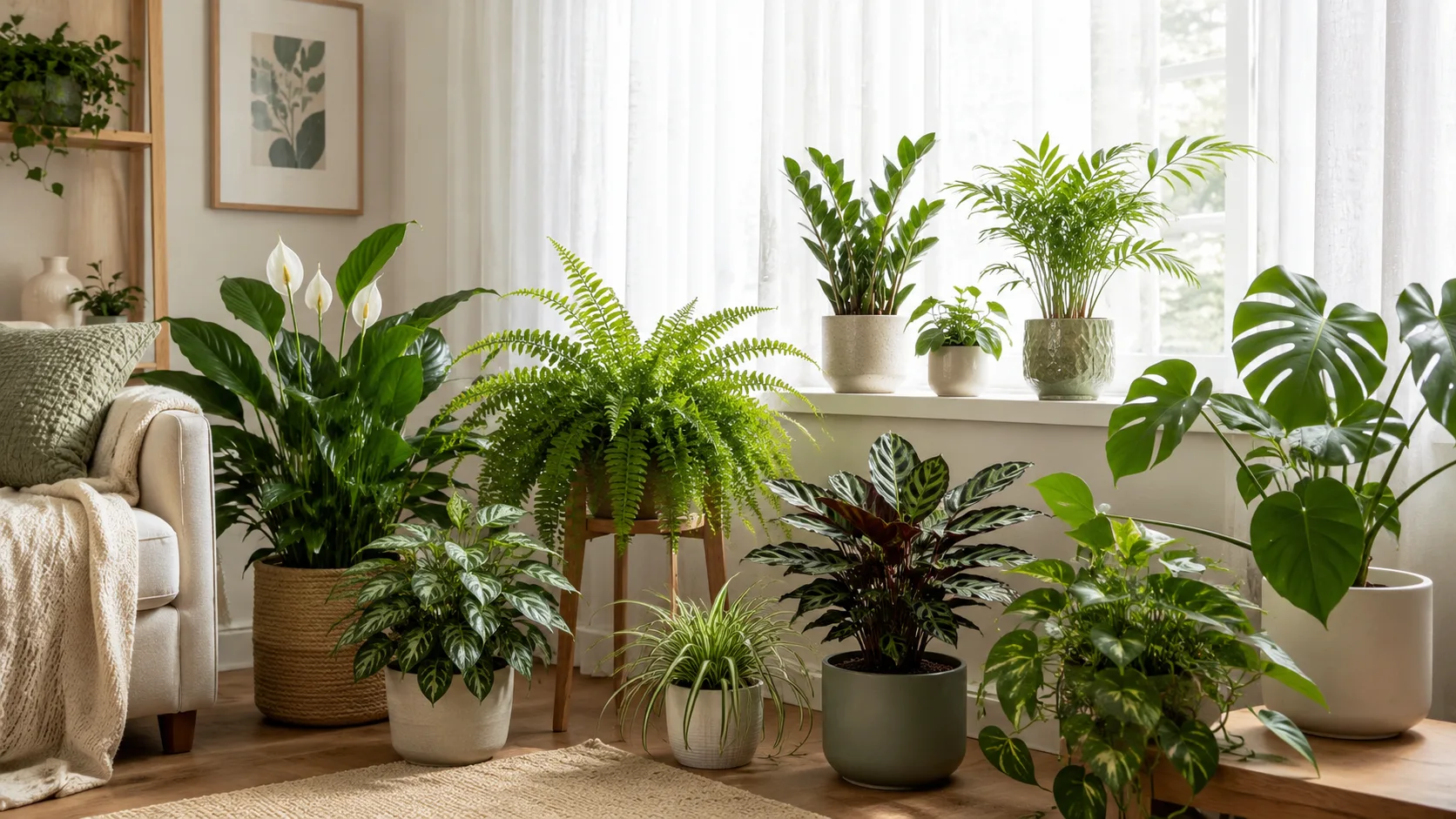
The single most useful thing you can do before buying is identify your light honestly, because a wrong answer here kills more foliage plants than any watering mistake. Measure it, don’t guess: a north window gives steady light but little or no direct sun, an east window gives a few hours of gentle morning sun, a south window gives intense all-day sun that will scorch most of this list, and a west window gives hot afternoon light.
North window or a dim corner: cast iron plant, ZZ plant, parlor palm, snake plant, spider plant, and Chinese evergreen. All six tolerate low light, and the first two will physically outlive most owners. The tradeoff is that color fades and growth stretches, so a variegated plant in a north window will slowly revert to green.
East window or bright indirect: this is the sweet spot, and most of the list belongs here — monstera, pothos, philodendron, peperomia, polka dot plant, rubber plant, dracaena, prayer plant, Chinese money plant, and Chinese evergreen. If you have one good east-facing window, that is where all your color lives.
South or west window with strong direct sun: almost nothing on this list wants it. Filter it with a sheer curtain, and if you refuse to, choose a cactus or succulent instead of a foliage plant. Moving a plant from a dim corner straight into direct sun is the fastest way to scorch it, so acclimate over two weeks. Our plants for bright light list covers the alternatives.
Bathroom or humid room: calathea, prayer plant, Boston fern, and cast iron plant. The humidity that makes a bathroom terrible for you is the reason a fern thrives there. A humidifier does more for these four than any fertilizer will.
Hanging basket or a high shelf: pothos, spider plant, heartleaf philodendron, and trailing calathea. Note that a hanging pot in a bright room is a different plant experience from a shelf — you see it from below, so pick trailing habits over upright ones.
The Hardest Plants on This List (And Why)
Three entries are genuinely hard, and pretending otherwise would make this list dishonest.
Calathea is the hardest. It needs high humidity, water free of fluoride and chlorine, and a watering cadence that does not slip. It will brown at the edges if humidity is low, yellow if the soil stays wet, and crisp if you use tap water straight from the tap. Every one of those is a normal homeowner condition, which is why so many calathea become expensive compost.
Prayer plant is nearly as hard, and for overlapping reasons. The NC State profile documents fluoride burn, over-fertilization burn, intolerance of direct sun, low humidity, and cold drafts. The distinguishing problem is that it also loses its pattern in low light — so the two things it needs most, brightness and humidity, are the two most often missing.
Boston fern is demanding in a narrower way: it needs consistently moist soil, more than any other plant here, and it is the most likely to suffer during a two-week absence. The pet-safety benefit and the humidity benefit are real, but the watering schedule is a commitment.
Everything else on this list tolerates a missed watering, a dry room, or a dim corner with some grace. If you are choosing your first plant and want the highest probability of success, start with a ZZ plant, a snake plant, a spider plant, or a cast iron plant — with the pet caveat that the first two are the toxic ones.
Common Mistakes That Kill Foliage Plants
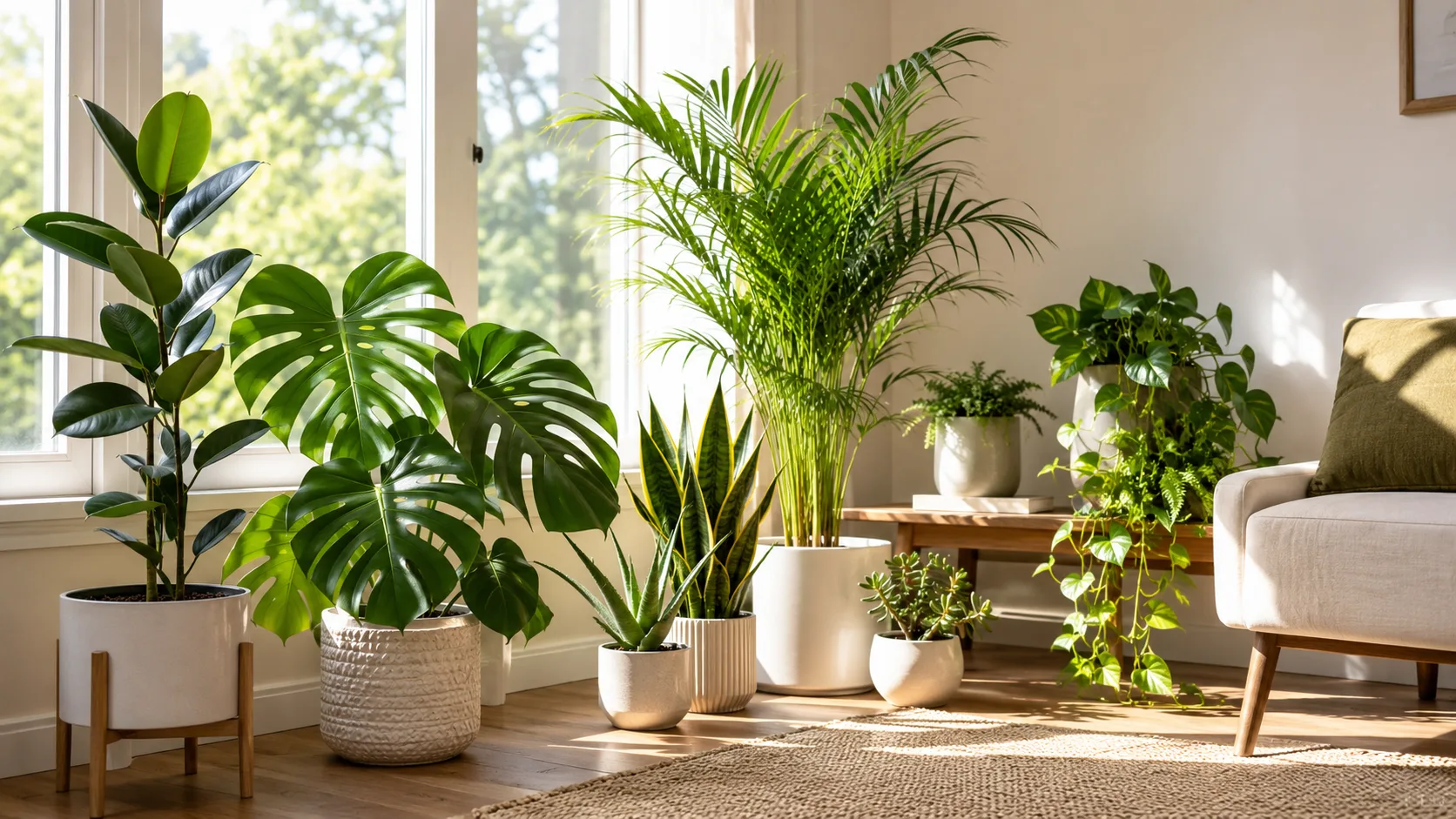
Overwatering is the number one killer, and it is not close. The symptom that gets misdiagnosed is yellowing leaves, which readers almost always read as “not enough light” or “needs more water.” The test is the soil, not the leaf: stick a finger two inches down. If it’s damp, do not water. Saturated root systems cannot take up oxygen, roots die, and the plant yellows while the soil is still wet. The watering and drainage explainer covers the drainage side.
Direct sun through glass is still direct sun. Many foliage plants are tropical understory plants that evolved beneath a canopy, and the light through a south window in summer is far stronger than any of their native conditions. Scorch shows up as bleached, papery, or brown patches on the side of the leaf facing the window — the leaf does not recover there, and it will not turn green again.
Confusing “survives” with “thrives.” ZZ plant, snake plant, dracaena, and cast iron plant all tolerate light levels well below what they actually want. A plant that is merely not dead in a dark hallway is not doing well — it is slowly losing its variegation, stretching its internodes, and declining. If you can give it more light, do.
Moving plants without acclimating them. A plant that has adapted to a dim shelf and is moved into direct sun will scorch within days, and a plant moved from a warm room to a cold window will drop leaves within a week. Change light and temperature gradually, and expect some leaf drop as a normal adjustment cost.
Trusting the nursery label on toxicity. As noted above, “rubber plant” and “prayer plant” each cover two different genera with opposite safety profiles, and the ASPCA lists common names rather than species for many records, so the label is not a safety record. If a plant is going into a home with pets, confirm the botanical name — and if a species is missing from the ASPCA entirely, as ZZ plant and Chinese money plant are, treat that absence as “unverified” rather than “safe.”
Growing outdoor zone labels as if they applied indoors. Nearly everything on this list is tropical and has no meaningful outdoor hardiness for most of the country. Hardiness zones describe whether a plant can survive a winter outdoors; they say nothing about whether it will be happy on your windowsill. Judge these plants by light, water, and temperature indoors, and treat zones as relevant only if you are actually planning to set one out over summer and bring it back before the cold.
Conclusion
The best foliage plant for your home is not the one with the most dramatic leaf or the longest entry in a listicle — it is the one that matches your light, your watering habits, and whether you have a cat. Work down that filter and the choice usually narrows to two or three plants before you leave the shop.
If your light is good and you want drama, start with monstera or a rubber plant. If your light is poor and you want it to survive anyway, start with a cast iron plant, a ZZ plant, or a parlor palm. If you have pets, work from the non-toxic end of the list: baby rubber plant, spider plant, polka dot plant, or Boston fern. If you want pattern and color, go with Chinese evergreen, polka dot plant, or calathea — with the understanding that calathea is the one most likely to test you.
And before you buy anything, decide honestly which of your plants will get watered when you say they will. Every plant on this list will forgive a missed week. None of them will forgive a sogged pot, and the cheapest way to guarantee good foliage is a pot with drainage holes and a watering habit you can actually keep.