Why Trees Bloom in January and What to Do
Winter tree blooms look wrong but rarely kill the plant. Expert-backed guide to chill hours, frost risk, and spring bloom expectations.
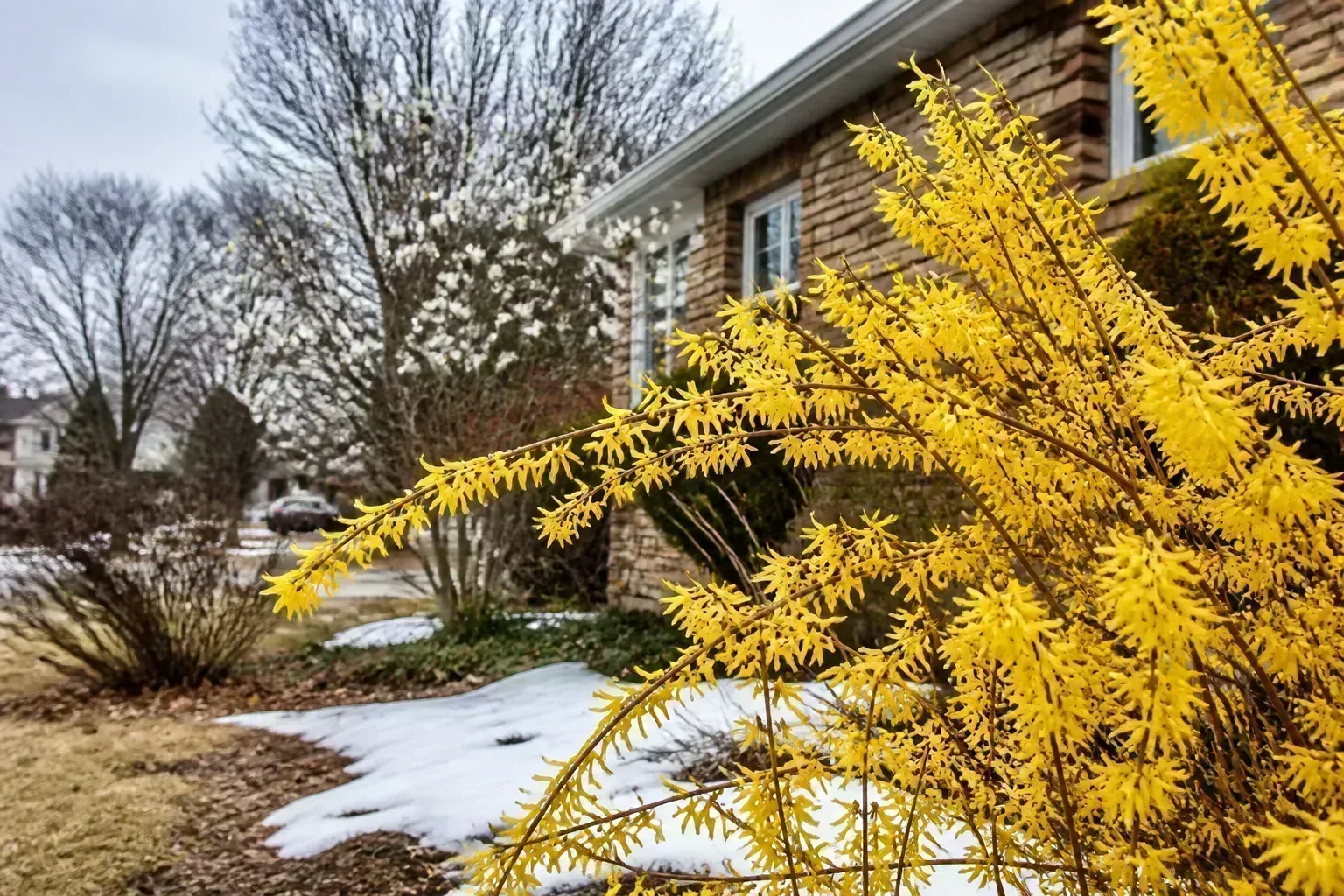
A forsythia hedge flashing yellow in January or a magnolia opening a few saucer flowers on bare branches can stop you mid-walk. It looks like spring arrived six weeks early — and the first question is whether the tree is confused, dying, or both. In most home landscapes, trees blooming in January are a weather response, not a death sentence. The flowers you see now are buds that were built last summer; a long warm spell simply convinced part of the plant that dormancy is over.
That reassurance comes with two honest caveats. Open winter flowers often freeze, so this spring’s display may be lighter. And if you are growing fruit trees for a crop, premature bloom is a much bigger deal than scattered color on an ornamental shrub. The sections below separate those cases so you know what to expect and what actually helps.
The Short Answer: Usually Not a Death Sentence
For healthy ornamental trees and shrubs — forsythia, azalea, witch hazel, magnolia, eastern redbud, ornamental cherry — scattered winter flowers are common after mild spells. Rarely does every bud on the plant open at once. More often you see random flowers along one branch, or blooms only on the side warmed by a south-facing wall or foundation. The plant is not “giving up”; it is responding to temperature and light cues out of sequence.
The old garden worry that out-of-season bloom means a plant is ready to die does not hold for these cases. NC State Extension describes forsythia as winter-hardy shrubs whose yellow flowers on bare wood are among the earliest spring signals — and in warm microclimates that signal simply moves earlier. Healthy wood, firm bark, and normal bud swell on the rest of the plant are what matter.
Scattered Blooms vs. Whole-Tree Flowering
Scattered blooms on an ornamental — a few flowers here and there — are low risk. The buds that opened early may brown after a freeze, but the plant keeps the majority of its flower buds for the normal season.
Whole-branch or whole-tree flowering in deep winter on a fruit tree is different. If your peach, plum, pear, or sweet cherry opens heavily in January or February, you are looking at potential total crop loss when the next hard freeze arrives. UGA Extension notes that premature bloom on plums and pears in north Georgia often ends with no fruit set when a cold snap follows — one reason commercial stone-fruit production is limited in marginal climates.
Ornamental Trees vs. Fruit Trees
| Situation | Typical risk | Spring bloom expectation |
|---|---|---|
| Scattered flowers on forsythia, azalea, magnolia | Low for plant health | Main show likely still happens; top buds may be thinner |
| Heavy bloom on ornamental cherry | Low for survival; moderate for display | Some branches may bloom twice weakly or skip |
| Heavy bloom on peach, plum, pear, sweet cherry | High for crop; moderate for tree | Flowers freeze; fruit may be none to light |
| One warm-side branch only | Very low | Rest of plant blooms on schedule |
Use that table before you panic or before you grab the pruners.
How Spring Trees Decide When to Flower
Understanding why January blooms happen makes the right response obvious. Spring-flowering woody plants do not make flowers on demand in March. They follow a calendar written in last year’s growing season.
Flower Buds Form Months Earlier
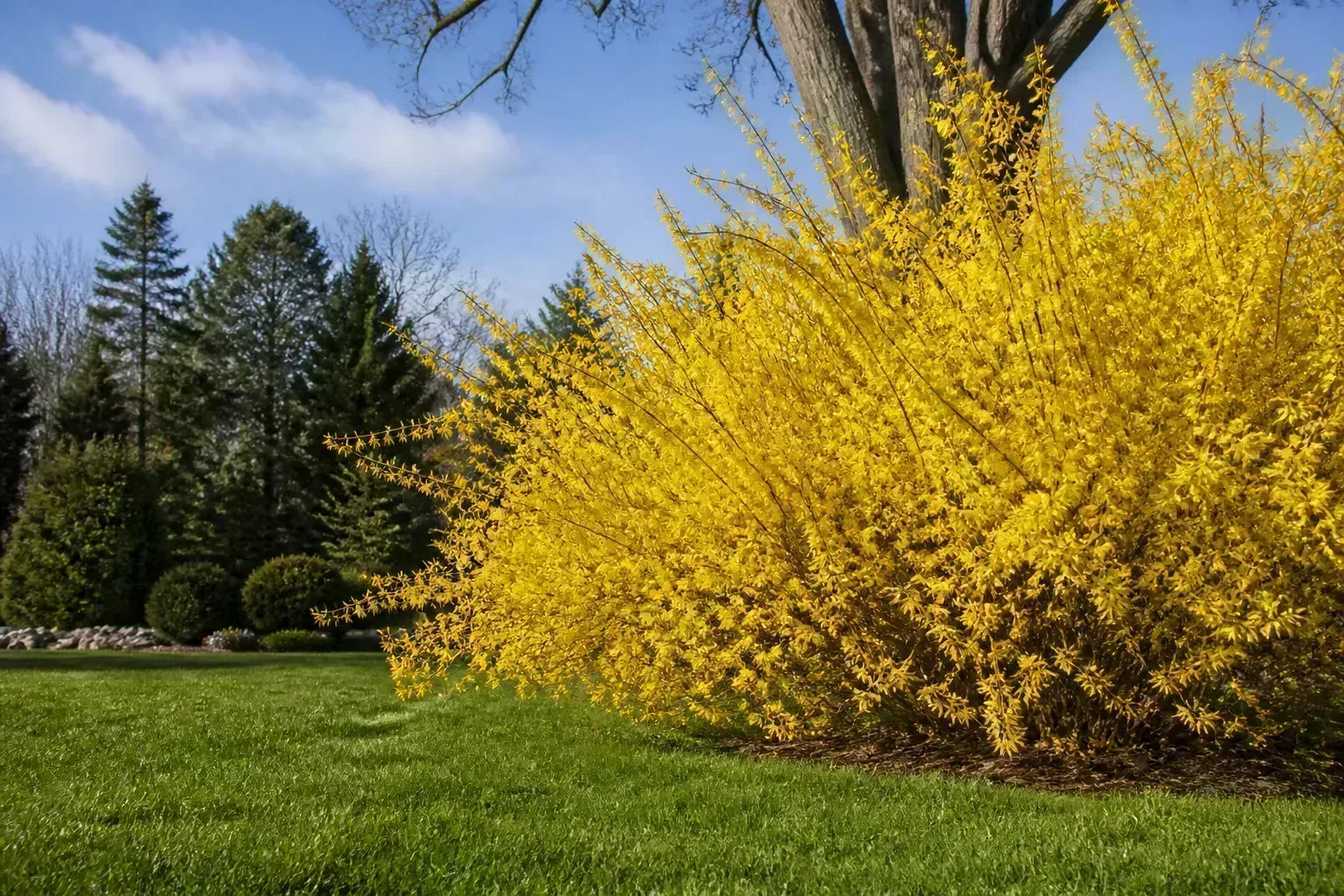
Spring-blooming trees and shrubs set next year’s flower buds in late spring and early summer, right after the current year’s bloom fades. Those buds sit dormant through fall and winter on old wood — the branches that grew the previous year. Forsythia, for example, flowers on stems produced before the current season; pruning after midsummer removes next spring’s buds, which is why timing matters so much on that shrub.
By the time you notice yellow or pink in January, the plant is not improvising new flowers. It is opening buds that were fully formed months ago. That is why a January warm spell does not “use up” the entire plant forever — unless a very large percentage of buds have already opened and frozen.
Chill Hours, Warm Spells, and Dormancy Break
Deciduous plants need a period of cold before they can resume growth. Growers measure this as chill hours — roughly the hours between about 34°F and 45°F (1–7°C) during late fall and winter, according to Gardening Know How’s chill-hour overview. Once a plant accumulates enough chilling for its genetics, it is vernalized: physiologically ready to grow when temperatures rise.
The problem in mid-winter is not always insufficient cold. It is often uneven weather: a cold autumn, then an extended warm spell in December or January, sometimes after fall drought stress. Warmth plus increasing day length can read as “spring” to buds that already met their chill requirement. A south wall, driveway radiating heat, or reflected light off windows accelerates that signal — which is why one side of a shrub blooms while the other stays quiet.
Fruit varieties differ sharply in chill needs. Low-chill peaches bloom earlier by design; high-chill apples wait longer. Matching variety to your climate matters more after a string of warm winters than it did twenty years ago.
Why January Blooms Happen More Often Now
You are not imagining more out-of-season flowers. Milder winters and longer warm spells between cold snaps give spring-blooming plants more chances to misread the calendar.
Microclimates Near Your House
Walk your yard before you blame the species. The warmest spots are predictable:
- South- or west-facing walls that absorb daytime heat and release it at night
- Foundation plantings above basements or crawl spaces
- Driveways and patios that radiate warmth
- Protected courtyards blocked from cold north wind
- Upper floors of sloped sites where cold air drains away
Blooms clustered on the house side of a magnolia or forsythia while the street-facing side stays bud-tight are a microclimate story, not a disease. Note which plants sit in those zones when you plan new beds — early bloom will repeat there.
Fall Drought and Temperature Swings
Dry, hot fall weather stresses plants that are still hardening off for winter. When cool, rainy weather follows, some spring-blooming species interpret the swing as completion of dormancy. Add a December or January thaw and scattered bud break is almost expected on precocious species like forsythia and witch hazel.
That stress history also matters for recovery. A tree pushed into early bloom after drought may have fewer reserves. Supporting it with consistent moisture the following spring matters more than chasing it with fertilizer in January.
Trees and Shrubs Most Likely to Bloom Early
Not every tree in your yard is equally likely to flower in winter. Precocious spring species — plants whose natural bloom window starts in late winter — are the usual suspects.
Forsythia, Azaleas, and Witch Hazel
Forsythia is the classic January surprise in mild regions. NC State Extension notes that plants in full sun flower earlier and heavier than shaded specimens, and that stems are often cut to “prove” winter is ending. A few January flowers on an otherwise bare shrub fit normal biology.
Evergreen and deciduous azaleas can show scattered florets after warm spells, especially near foundations. Flower buds formed last summer open sporadically; the main flush still waits for consistent spring warmth.
Witch hazel (Hamamelis spp.) is supposed to bloom in late winter — ribbon-like yellow or orange flowers on bare wood are its signature. If yours is flowering in January, you may simply be seeing its natural early end of the range, not a problem.
Magnolias, Redbuds, and Cherries
Star magnolia (Magnolia stellata) and saucer magnolia hybrids are famous for blooming before leaves emerge — and for losing open flowers to late freezes. A few precocious blooms in a warm January are common; a hard freeze turns those petals brown without killing the tree.
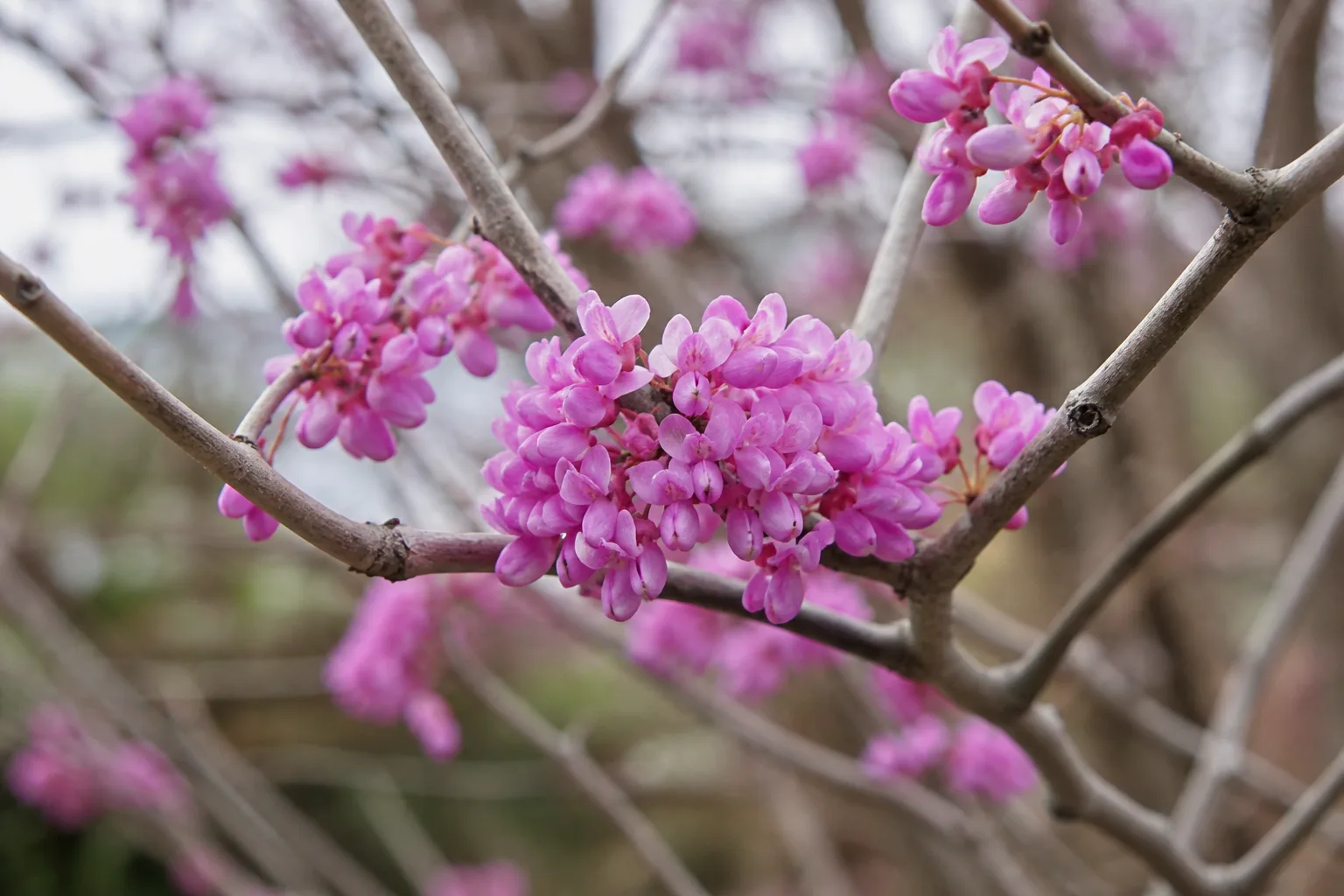
Eastern redbud (Cercis canadensis) normally flowers from late winter through early spring depending on region. Pink flowers on bare branches in a mild January match its phenology. The tree leafs out after bloom, as it would in a normal year.
Ornamental cherries (Japanese flowering cherry and related species) set buds on last year’s wood and are highly reactive to warm spells. Scattered winter flowers reduce the wow factor in April but rarely threaten the tree’s long-term health.
Fruit Trees: A Different Level of Risk
Peaches, plums, pears, and sweet cherries carry crop risk that ornamentals do not. UGA Extension describes flower buds swelling in February during warm years, followed by crop loss when April cold returns. Pears and plums in the Southeast also face disease pressure — fire blight on pears, brown rot on plums — when warm, wet weather pairs with early bloom.
If you grow fruit for harvest, treat January or February full bloom as a weather emergency for yield, not a curiosity. For a single ornamental magnolia, the same calendar date is mostly aesthetic.
What Happens to Flowers That Open in Winter
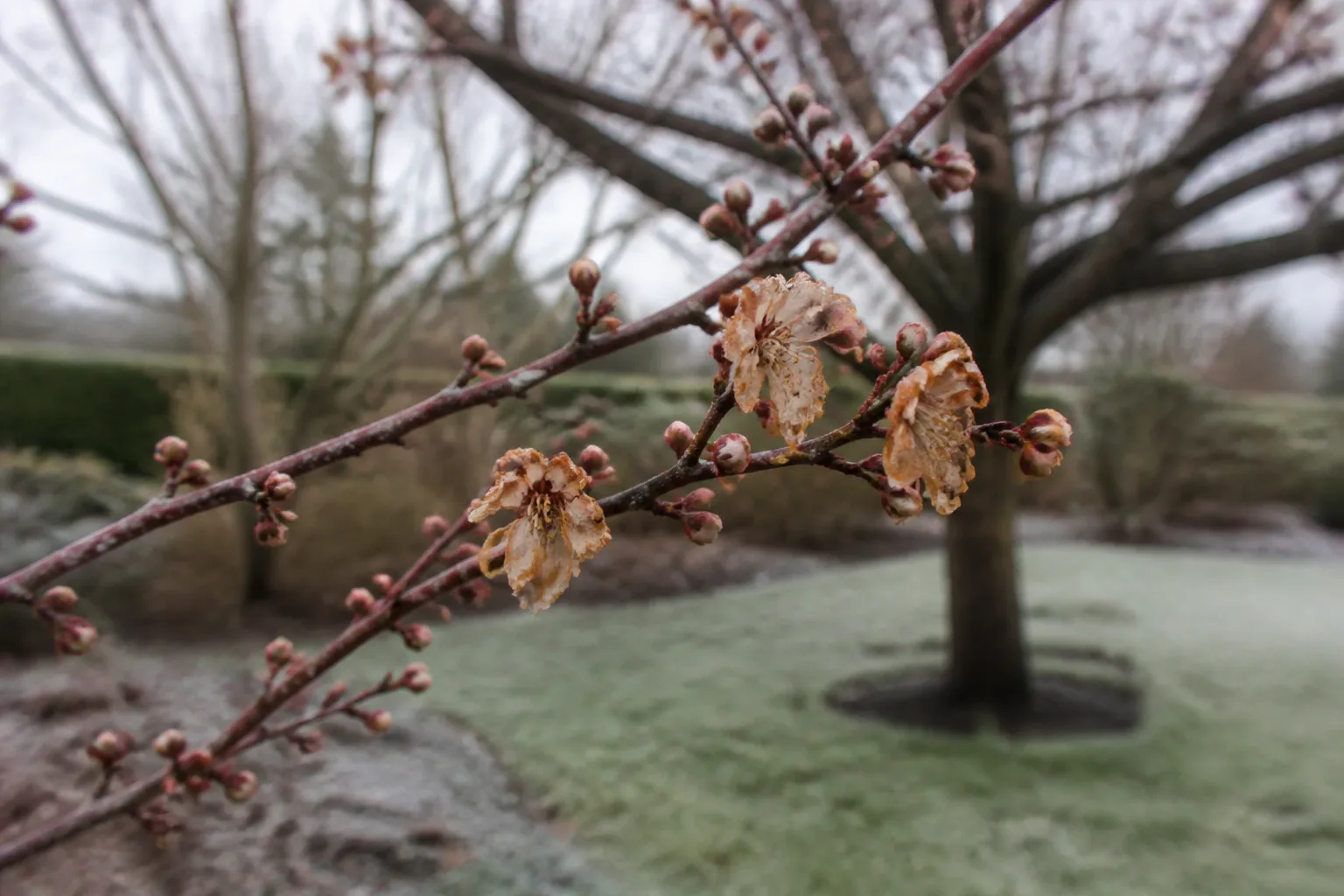
Open flowers are the most vulnerable tissue on the plant. Petals and reproductive parts contain water; when temperatures drop below about 28–30°F (-2 to -1°C) for several hours, open blooms freeze, turn brown or black, and do not recover. Closed buds one stage earlier often survive slightly harder cold, but a severe arctic outbreak can damage those too.
What you see after a freeze:
- Brown, mushy, or hanging petals on opened flowers — cosmetic on ornamentals
- Dead flower clusters on fruit spurs — no fruit from those sites
- Tip dieback only if extreme cold followed bloom and the plant was already stressed
Leaves that have not emerged are usually still protected by bud scales. The odd January forsythia flower sacrifices itself; the branch behind it is generally fine.
Will Your Tree Still Bloom Normally in Spring?
In most cases, yes — partially to fully. Because only a fraction of buds typically open during a winter warm spell, the majority remain closed and ready for the real spring. Expect:
- Full or near-full display if fewer than 10–20% of flower buds opened in winter and froze
- Patchy or lighter bloom if a whole side of the plant opened early or if repeated warm-cold cycles damaged mixed bud stages
- Bloom only on lower branches after very cold winters on marginally hardy forsythia hybrids — lower buds were insulated by snow while top buds froze, a pattern NC State Extension notes when temperatures drop below about -5°F
Fruit trees that bloomed heavily out of season may carry few or no flowers at the normal time because those buds already opened and died. That is a one-year crop issue, not necessarily a tree-health issue.
Do not judge the season in January. Wait until normal bloom time for your species and zip code before deciding the year is a loss.
When Early Bloom Is Actually Concerning
Most January flowers are benign. Flag these exceptions:
- Young, recently transplanted, or visibly stressed trees pushing heavy bloom while still establishing — bloom drains reserves; address watering and mulch first
- Fruit trees at full bloom ahead of your region’s last hard-freeze date — plan for crop protection or accept loss
- Sudden bloom on a tree that has declined for years — rare, but if the whole canopy flowers abnormally on a dying specimen, get an arborist inspection; bloom alone is not the diagnosis, but context matters
- Repeated dieback at the same height every year on marginally hardy species — consider a hardier cultivar or a better-sited replacement
If bark is tight, buds are plump elsewhere on the plant, and only flowers look bad after freeze, you are in the normal ornamental camp.
What to Do Now (and What to Skip)
The best January response is mostly patience and light support, not aggressive intervention.
Do:
- Water deeply if fall and winter have been dry and soils are not frozen — stressed plants benefit from root-zone moisture before spring growth
- Refresh mulch 2–3 inches deep, keeping it off trunks, to moderate soil temperature swings
- Photograph and note which plants and which sides of the yard bloomed — useful for future siting and variety choices
- Check fruit-tree chill-hour match if crop loss becomes a pattern; your extension office can suggest later-blooming cultivars for your zone
Skip:
- Heavy pruning of blooming branches now — you remove wood that may still bloom again and open wounds during freeze-thaw cycles
- Nitrogen fertilizer in winter — pushes soft growth at the wrong time
- Panic spraying without a diagnosed pest or disease; winter flowers are not a fungus symptom
Water and Mulch, Not Fertilizer
Commercial horticulture educators often recommend compensating for the environmental stress that triggered early bloom rather than treating the flowers themselves. If last autumn was hot and dry, several slow, deep waterings as soils thaw in late winter help roots refill before spring demand. Mulch reduces rapid freeze-thaw at the surface — the same swings that confuse buds.
Save balanced or low-nitrogen feeding for after normal leaf-out unless a soil test documents a specific deficiency.
Hold Off on Pruning Blooming Branches
On forsythia, azalea, and other old-wood bloomers, the buds you see in January are the same buds you would enjoy in March. Cutting them off now gains nothing. Schedule renewal pruning for immediately after the main spring bloom finishes, when you can see which wood flowered and which died back.
If broken branches are rubbing or storm-damaged, remove only the damaged section with clean cuts; leave the rest until proper pruning season.
Protecting Open Flowers Before a Hard Freeze
You cannot close an open flower, but you can moderate temperature for high-value specimens when a freeze is forecast:
- Water the root zone the day before — moist soil holds heat better than dry soil
- Cover small trees and shrubs with breathable fabric (row cover, burlap, old sheets) reaching the ground to trap ground heat; avoid plastic directly on blooms
- Move container plants into an unheated garage or porch for the night
- Accept limits on tall magnolias and mature cherries — ladders and covers are impractical; focus protection on young or fruit-bearing plants you rely on
Covers come off during the day so buds do not cook in sun. One night of protection may save a fruit set; ornamentals usually do fine without heroics.
Planning Ahead for Warmer Winters
If January blooms are becoming annual in your yard, plan structurally:
- Plant marginally early species away from south walls if you want bloom closer to normal calendar dates
- Choose later-blooming fruit cultivars with higher chill-hour ratings for your latitude
- Favor species already adapted to your USDA zone rather than borderline temptations from warmer regions
- Track last frost dates locally — not your grandmother’s memory of frost week — and compare to bloom dates on your property
Warmer winters are shifting phenology nationwide. Your yard’s microclimates will still matter more than national averages when you decide where to plant the next flowering tree.
Conclusion
Seeing trees bloom in January is unsettling, but for most ornamental species it is a predictable reaction to warm spells, finished flower buds, and cozy microclimates — not a sign the tree is giving up. A few scattered flowers may freeze and fall; the majority of buds usually wait for real spring. Fruit trees tell a sharper story: early heavy bloom often means little or no harvest when cold returns.
Your job is simple: tell ornamentals from crop trees, avoid winter pruning and fertilizer, keep roots moist if weather has been dry, and cover only what is worth saving when hard freeze threatens open blooms. Check the plant again at its normal bloom time before you judge the year. In most yards, the tree will still put on a show — maybe slightly shorter, but very much alive.