15 Trees With Heart-Shaped Leaves for Your Yard
Compare 15 trees with heart-shaped leaves by bloom, form, climate, and cleanup so you can pick a beautiful tree that fits your site—not just your wish list.
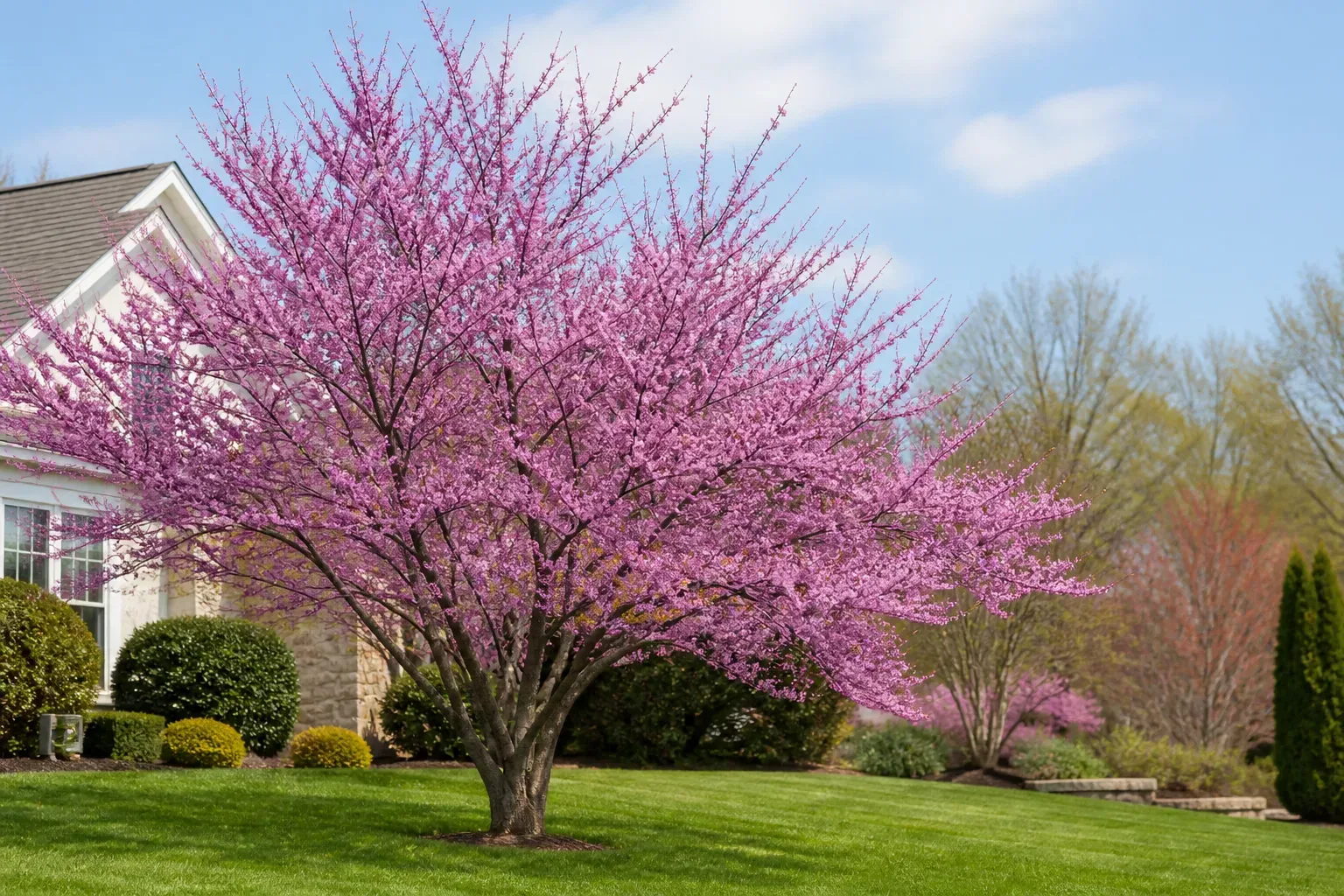
Few tree features are as easy to love as a cordate, or heart-shaped, leaf. But the outline alone is not enough to choose a good tree. A small redbud, a 60-foot basswood, a spreading catalpa, and a tropical sacred fig may all make the list, yet they suit very different yards.
The useful question is not simply “Which tree has heart-shaped leaves?” It is “Which tree has that leaf shape, plus the bloom, fall color, size, climate tolerance, and cleanup level I can live with?” The 15 choices below are organized around that decision. Mature sizes are approximate ranges from plant references; allow extra room where a tree has a broad or spreading crown.
What “heart-shaped” means in tree leaves
Botanists call a heart-shaped leaf cordate. The defining feature is the notch where the leaf stalk meets the blade: the base dips inward, and the two rounded lobes spread outward like the top of a heart. The tip can be pointed, rounded, or drawn into a long tail, so two cordate trees may not look alike at a glance.
Leaf shape is a helpful clue, not a complete identification. Check whether leaves are alternate or opposite on the twig, whether the tree has catkins, bracts, pods, or conspicuous flowers, and how large the mature crown becomes. Oregon State University’s leaf-identification guidance treats arrangement, margin, venation, and bud position as part of the ID process, which is a good habit when a “heart leaf” turns out to be a linden, redbud, or catalpa.
Dove tree (Davidia involucrata)
The dove tree, also called the handkerchief tree, is a collector’s choice for a sheltered garden. It grows roughly 20 to 60 feet tall, develops a rounded crown with age, and carries broad, heart-shaped leaves. Its most memorable feature is the spring display: two large white bracts hang around each small flower cluster, making the branches look as if they are carrying pale flags.
This is a tree to plant for the whole seasonal composition, not for instant gratification. NC State Extension notes that a seed-grown tree can take up to 10 years to flower and may not bloom reliably every year. Give it moist, organically rich, well-drained soil, afternoon protection in hot climates, and shelter from strong wind. The cultivar ‘Sonoma’ is worth asking about if flowering sooner matters. Choose dove tree when you have patience and a protected specimen spot; skip it for a dry, exposed front lawn.
Katsura tree (Cercidiphyllum japonicum)
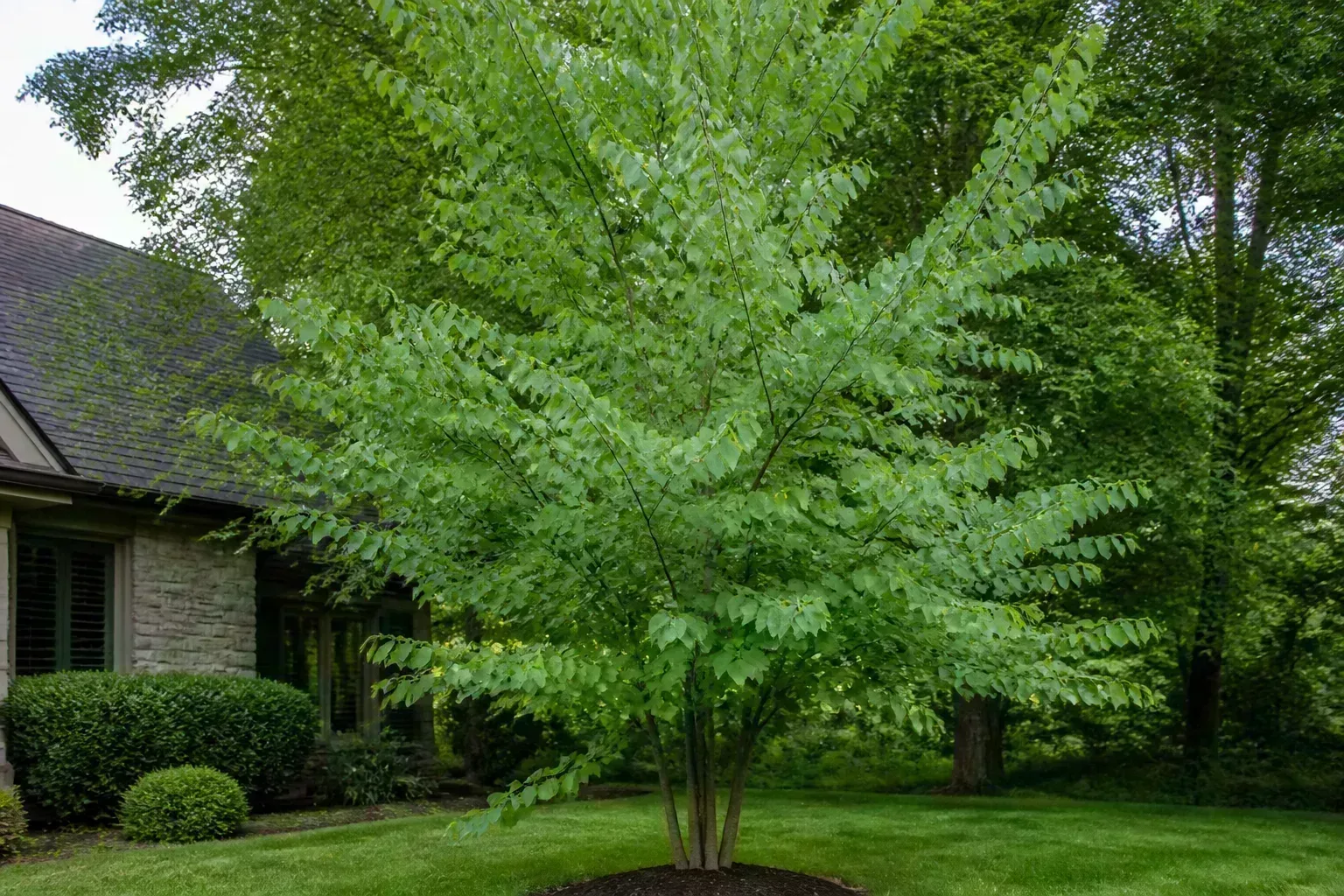
Katsura is one of the best heart-leaf trees for gardeners who care about foliage through several seasons. Its rounded, cordate leaves emerge reddish, mature to blue-green, and turn gold, orange, or red in fall. The fallen leaves can smell like caramel, burnt sugar, cinnamon, or ripe apples depending on the observer and conditions—a seasonal detail also noted by The Guardian’s gardening coverage.
In cultivation, katsura commonly reaches 40 to 60 feet and may be single- or multi-trunked. Missouri Botanical Garden recommends rich, moist, well-drained soil and a site protected from strong wind and hot afternoon sun, especially while the tree is young. Do not squeeze it into a narrow foundation bed. It is dioecious, meaning male and female flowers occur on separate trees; the flowers are subtle, while the foliage and mature shape do the ornamental work.
Quaking aspen (Populus tremuloides)
Quaking aspen combines small heart-shaped leaves with white bark and a shimmering canopy. The flattened leaf stalks let the foliage tremble in light wind, while fall color turns a clean yellow. It is a native tree of cool northern and mountain regions, commonly reaching about 40 to 50 feet in the NC State profile.
The important catch is underground spread. Aspens can send up new stems from a connected root system, so a grove may be beautiful in a naturalized setting but frustrating beside paving, lawns, or foundations. Heat and humidity are also serious limitations; NC State Extension specifically warns that quaking aspen does not tolerate them. Plant it in a cool climate with room to naturalize, or enjoy it in its native landscape rather than forcing it into a hot suburban yard.
Empress tree (Paulownia tomentosa)
Empress tree earns attention with enormous, velvety, heart-shaped leaves and fragrant lavender flowers that appear before or around the time of new foliage. It grows quickly and can reach roughly 30 to 50 feet, which sounds appealing when a new landscape needs height fast.
That speed comes with a substantial management problem. The tree produces many small, wind-dispersed seeds, can colonize disturbed ground, and may resprout after damage. NC State Extension lists it as invasive and weedy, with weak wood and high-maintenance tendencies. Local status varies, so check your state or county invasive-plant list before buying; a nursery’s availability is not proof that a tree is appropriate for your area. If your goal is a large leaf and purple bloom, compare non-invasive alternatives first. This is one of the heart-leaf trees to admire cautiously, not a default recommendation.
Littleleaf linden (Tilia cordata)
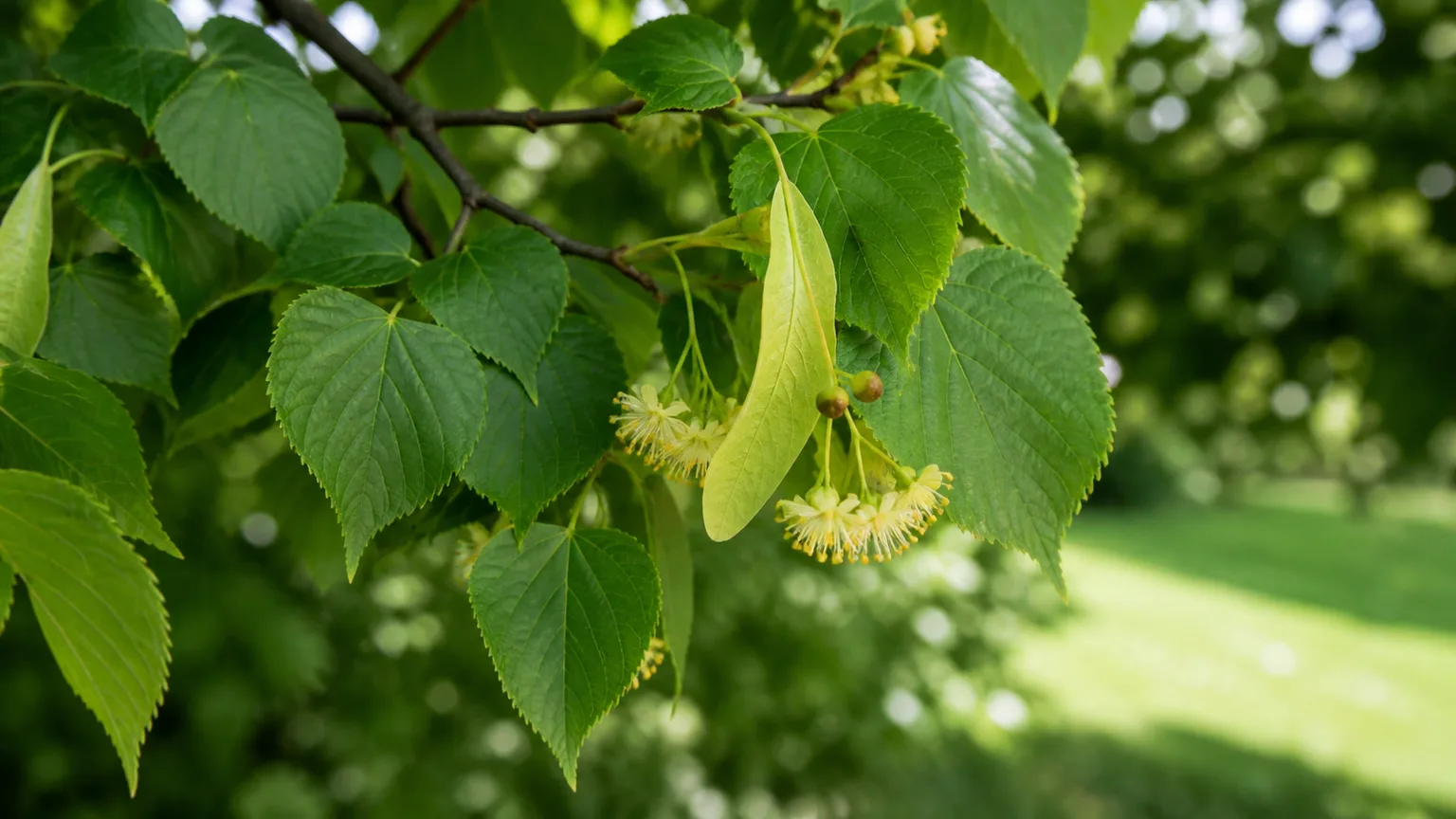
Littleleaf linden is a formal, pyramidal-to-oval shade tree with glossy, cordate leaves about 1.5 to 3 inches long and wide. It matures around 50 to 60 feet tall and 35 to 50 feet wide. In early summer, fragrant creamy-yellow flowers hang in clusters and feed bees, butterflies, and other visitors; the flowers are followed by small nutlets attached to wing-like bracts, details documented in the NC State Extension plant profile.
It is a strong choice for a spacious lawn where you want dense shade and a tidy silhouette, but it is not automatically a good street tree. NC State Extension warns that poor siting can lead to stunted growth, leaf scorch, and windthrow, and the species dislikes wet conditions, severe drought, pollution, and salt spray. ‘Greenspire’ is commonly selected where a more urban-tolerant form is needed. Give littleleaf linden steady moisture while young and enough root-zone volume to become the shade tree it wants to be.
American basswood (Tilia americana)
American basswood, also called American linden, is the larger, more wildlife-oriented relative of littleleaf linden. Its heart-shaped leaves can be about 6 inches long, the tree can reach 60 to 80 feet, and the broad crown provides significant summer shade. Fragrant, pale-yellow flowers appear in late spring or early summer and can attract so many bees that a mature tree may hum when in bloom.
This native eastern North American tree fits a large property, woodland edge, or spacious street-tree site better than a small suburban lot. NC State Extension notes that it tolerates clay and some dry, rocky soils once established, but it prefers fertile, moist, well-drained loam and can be sensitive to heat and soil compaction. The seeds feed birds and squirrels, while the flowers support pollinators. Choose basswood when shade and habitat matter more than compact scale; do not plant it where the mature canopy will conflict with wires or a narrow drive.
Japanese tree lilac (Syringa reticulata)
Japanese tree lilac is a useful bridge between a flowering shrub and a true shade tree. It usually grows about 25 to 30 feet tall and 15 to 20 feet wide, with a single- or multi-stemmed form, dark-green leaves, and attractive reddish-brown bark marked by horizontal lenticels. Its creamy flower panicles arrive in June, later than common shrub lilacs, and last for about two weeks.
Full sun produces the heaviest bloom, although the tree tolerates some partial shade. Plant it in well-drained soil with good air circulation; it handles heavy clay and urban conditions better than many lilacs. “Lilac fragrance” is not a guarantee here: NC State Extension describes the scent as more privet-like than the sweet perfume associated with common lilac. The leaves are broad and can read as heart-shaped at the base, but the tree’s real selling point is a relatively trouble-free small canopy with late-spring flowers.
Balsam poplar (Populus balsamifera)
Balsam poplar is a cold-climate choice with resin-scented buds, glossy leaves that can have a heart-shaped base, and a tall, upright habit. It is often associated with river margins, northern forests, and cool landscapes. Utah State University Extension lists it among the poplar and aspen group and highlights the identifying combination of aromatic buds, broad leaves, and poplar growth habit.
This is a tree for a large, moist site rather than a small ornamental bed. Poplars are fast-growing and can be useful for shelter or naturalized screening, but roots, brittle branches, and eventual size deserve more respect than a nursery container suggests. Before planting, look at the tree’s mature spread and keep it away from septic fields, underground utilities, foundations, and hardscape. Utah State University Extension places balsam poplar among the poplar and aspen group, a reminder that it belongs in a cool, roomy landscape. If you need a refined, compact heart-leaf specimen, Japanese tree lilac or a dwarf redbud is a better match.
Italian alder (Alnus cordata)
Italian alder has glossy, broadly oval leaves with a cordate base and an upright, ovoid-to-conical crown. Oregon State University describes it as a deciduous tree generally 30 to 50 feet tall, with sticky young growth, spring catkins, and small woody cone-like seed structures that persist after flowering. The species is hardy to about USDA zone 5.
Italian alder is interesting because it can handle a wider range of soils than its polished appearance suggests, including infertile, dry, high-pH ground, while also growing near water. Oregon State University lists it as hardy to about USDA zone 5 and describes a 30- to 50-foot tree with catkins and woody, cone-like seed structures. That flexibility does not make it a universal street tree: the eventual height, catkins, and formal shape need room. It is best for a gardener who wants an unusual, cool-climate specimen and is willing to confirm regional performance. In a hot, humid climate or a tight foundation bed, the tree’s attractive leaf shape is not enough reason to force the choice.
Sacred fig (Ficus religiosa)
Sacred fig, or bodhi tree, is the evergreen heart-leaf tree on this list—but only for climates warm enough to keep it outdoors. The Royal Horticultural Society describes it as an evergreen tree reaching about 30 meters in the tropics, with papery, heart-shaped leaves that end in long, tapering tips. New leaves flush bronze, and the species can be grown as a large conservatory or sunroom plant where winters are too cold.
In frost-free regions, give it full sun, warmth, room for a large root system, and a site where its eventual scale is realistic. In a container, the Royal Horticultural Society lists a much smaller maximum height of about 1.5 to 2.5 meters, but that is still a substantial indoor specimen. Do not mistake sacred fig for the edible common fig sold for backyard fruit; they are different species with different landscape expectations. Choose sacred fig for a tropical garden or protected collection, not for a cold-winter yard.
Eastern redbud (Cercis canadensis)
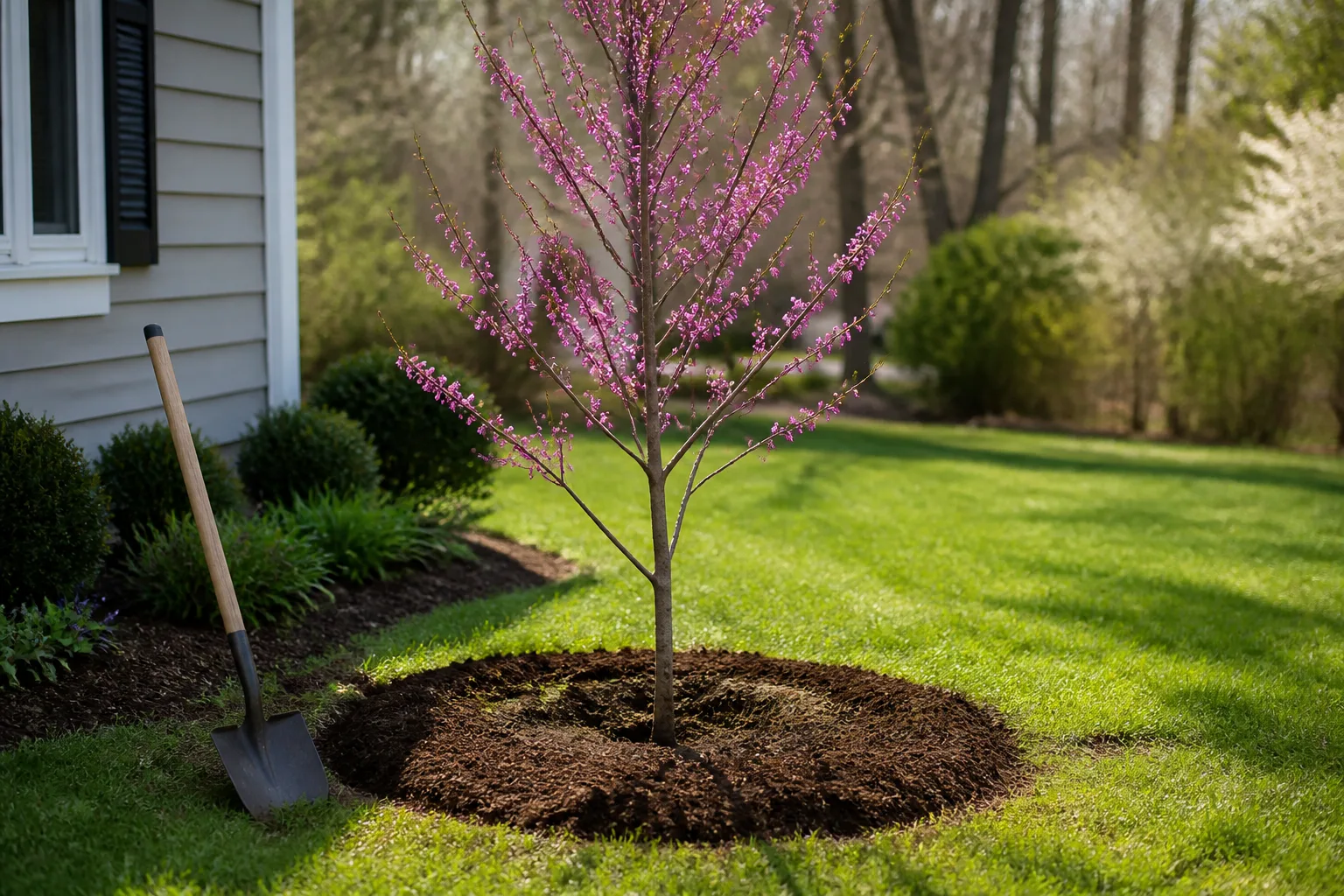
Eastern redbud is the most broadly useful heart-leaf tree for many North American home landscapes. It stays relatively small—about 20 to 30 feet tall and 25 to 35 feet wide—yet delivers several seasons of interest: rose-pink to light-purple flowers on bare branches in early spring, green heart-shaped leaves through summer, and yellow fall color. The flowers also provide early-season food for pollinators; the ORNL Arboretum describes redbud as especially valuable when few pollen and nectar sources are available.
The species handles full sun to part shade and a range of soil textures, but it is not tolerant of every bad site. NC State Extension warns that heat, drought, wet soil, root disturbance, and exposed wind can all reduce performance, while branches may break. Plant it in its permanent spot, keep new trees watered, and protect the trunk from mower or trimmer wounds. Redbud is a reliable choice for a woodland edge, pollinator garden, lawn specimen, or small group, provided you respect its mature width and moderate lifespan.
Ruby Falls weeping redbud
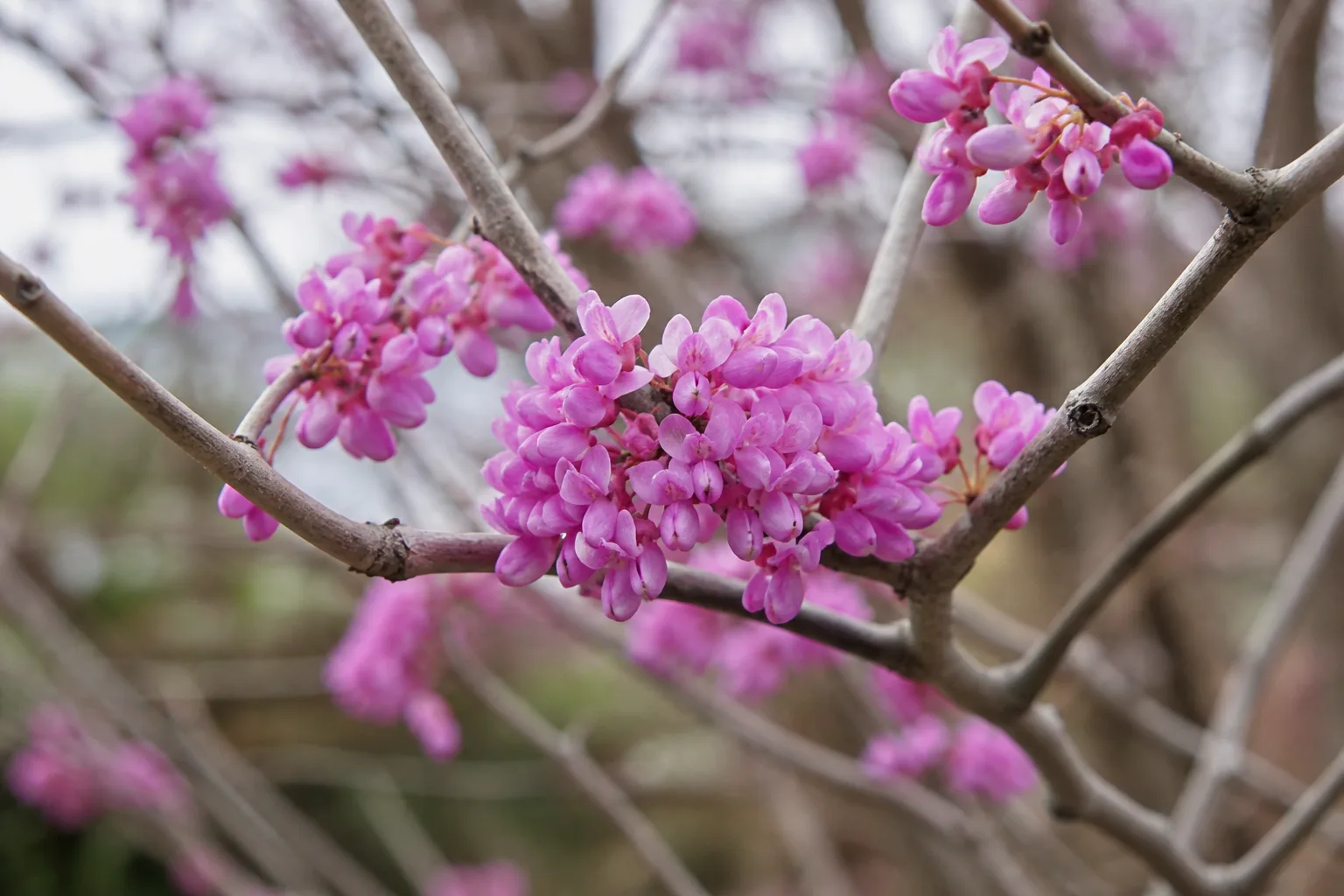
‘Ruby Falls’ is the compact, architectural version of the eastern redbud. It typically reaches only about 6 to 8 feet tall and 5 to 6 feet wide, with a weeping habit, rose-pink spring flowers, and maroon heart-shaped leaves that turn greener later in the season. Its form creates a focal point in a small courtyard, front-bed island, or mixed border where a standard redbud would outgrow the space.
Small does not mean maintenance-free. Weeping redbuds may need early staking or training so the trunk and canopy develop the intended shape, and the low branches need clearance from paths and mowing routes. Garden Design’s cultivar guidance places ‘Ruby Falls’ among the compact redbuds, but cultivar size can vary with graft height and growing conditions. Buy from a nursery that labels the cultivar clearly, confirm the local hardiness range, and avoid planting it in a wet pocket simply because its canopy is small.
Weeping white mulberry (Morus alba ‘Pendula’)
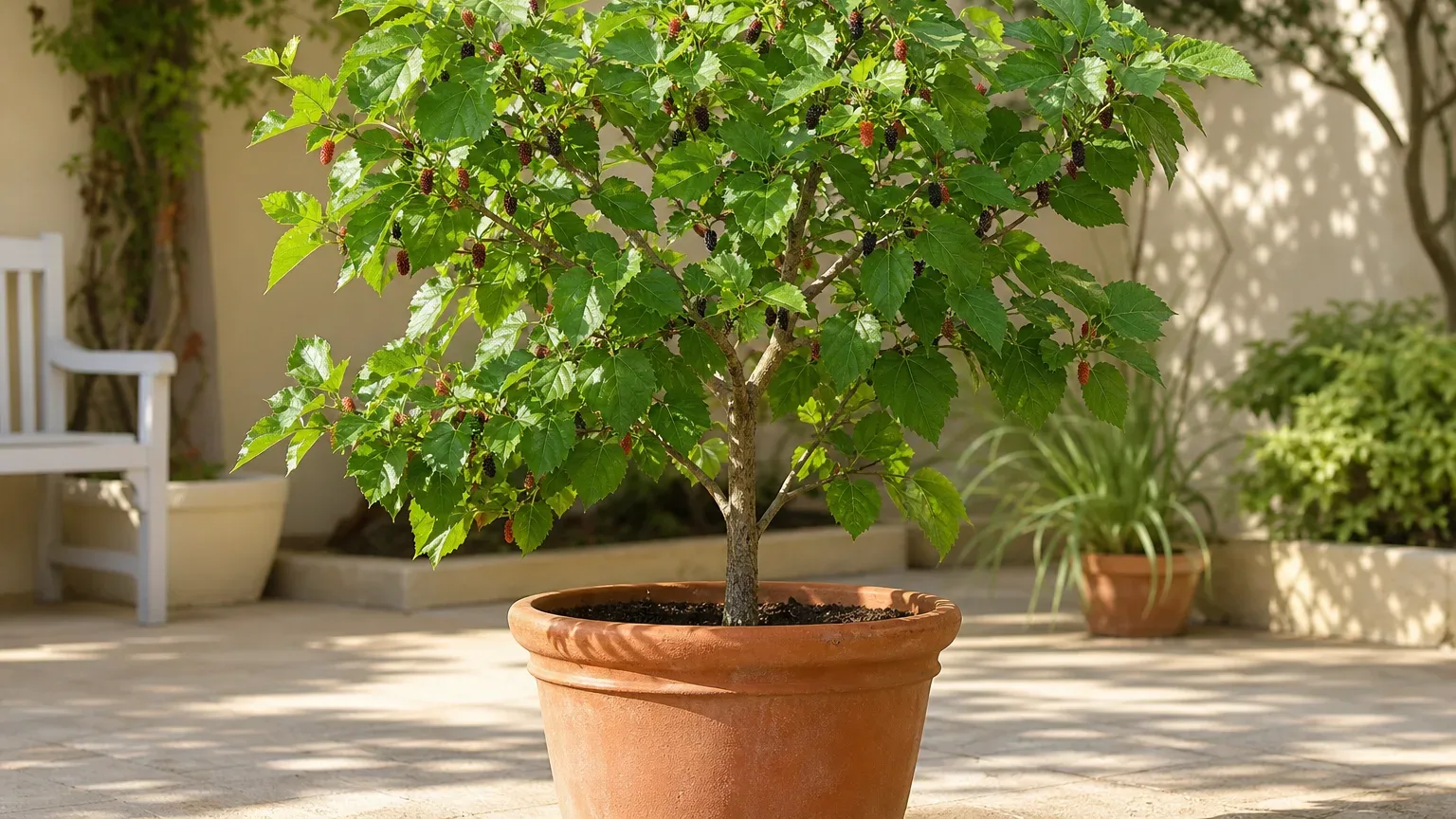
White mulberry has glossy, sometimes variably lobed leaves with a heart-shaped base, and the weeping ‘Pendula’ form turns the species into a compact ornamental. NC State lists ‘Pendula’ at roughly 6 to 10 feet high, much more manageable than the 50- to 60-foot species. Female trees can produce edible white, pink, or purple fruit that birds love.
Fruit is also the reason to be selective about placement. Ripe berries can stain patios, paths, and cars, and seedlings may become weedy; some jurisdictions restrict white mulberry because of its invasive behavior and ability to hybridize with native red mulberry, as NC State Extension explains. If you want the weeping outline without fruit cleanup, ask whether a sterile or non-fruiting selection is available, such as ‘Chaparral,’ and verify exactly what is being sold. This tree suits a sunny, open specimen spot—not the edge of a driveway or a patio where dropped fruit will become a daily chore.
Northern catalpa (Catalpa speciosa)
Northern catalpa is hard to miss. It produces very large, coarse, heart-shaped leaves, white flowers marked with yellow and purple in late spring or early summer, and long bean-like pods that can reach about 22 inches. The tree grows roughly 40 to 70 feet tall, with a rounded or pyramidal crown and broad, spreading branches.
It is a good candidate for a large native or wildlife garden, rain garden, or difficult location where soil may be moist or occasionally wet. The catalpa sphinx and tersa sphinx use it as a host, and the caterpillars can feed heavily without usually killing the tree. The trade-off is cleanup: leaves turn yellow, then black, and the long pods drop. NC State Extension also notes brittle wood and occasional leaf spot, mildew, twig blight, and wilt. Plant northern catalpa when shade, scale, and wildlife matter more than a neat lawn.
Southern catalpa (Catalpa bignonioides)
Southern catalpa resembles northern catalpa but is generally a shorter, broader, more irregular tree, reaching about 30 to 60 feet. Its large heart-shaped leaves, fragrant white flowers, and hanging pods give it a strong presence near streams, ponds, and roomy lawns. It is more tolerant of wet conditions and seasonal flooding than many ornamental trees, and its flowers support the same catalpa sphinx and tersa sphinx relationship.
The foliage can smell unpleasant when crushed, the branches may spread crookedly, and the pods and leaf drop create real maintenance. Southern catalpa also escapes cultivation through winged seed, so check local recommendations before planting near natural areas. NC State Extension distinguishes it from northern catalpa by its fetid foliage, more heavily purple-spotted flowers, and later bloom. Choose the southern species if you want a broad, informal, warm-climate shade tree and have space for its untidy charm.
How to choose the right heart-leaf tree
Start with five filters, in this order:
- Hardiness and heat: Match the species to winter minimums, summer heat, and humidity—not just the printed zone range. Quaking aspen prefers cool conditions; sacred fig needs tropical warmth; redbud cultivars vary in heat tolerance.
- Mature width: A 6-foot weeping redbud and a 60-foot basswood are not interchangeable. Measure from the trunk to the nearest structure, wire, pavement, and property edge using the mature canopy radius, not the container size.
- Moisture and drainage: Katsura, dove tree, basswood, and redbud want consistent moisture but still need drainage. Catalpa handles wetter ground. A dry, hot site points toward different choices than a low, damp one.
- The feature you actually want: Choose redbud or dove tree for spring flowers, katsura for fall foliage and scent, linden for shade and pollinator value, catalpa for huge leaves and pods, or sacred fig for evergreen tropical foliage.
- Cleanup and spread: Ask whether you can live with pods, blackening leaves, fallen berries, suckers, seedlings, catkins, or brittle branches. If the answer is no, remove catalpa, mulberry, empress tree, and spreading poplars from the shortlist before you fall for their photos.
For a typical small yard, start with ‘Ruby Falls’ redbud, Japanese tree lilac, or a properly selected dwarf cultivar. For a native pollinator garden, eastern redbud and catalpa bring more ecological value than a purely ornamental exotic. For a large property in a cool climate, katsura, basswood, or aspen can earn their space. A beautiful tree in the wrong setting is still the wrong tree.
Planting and maintenance checkpoints
Buy the youngest healthy tree that fits your plan and plant it where it can stay. This matters especially for redbud, dove tree, and other species that dislike root disturbance. Dig a hole two to three times wider than the root ball but no deeper; set the root flare at or slightly above grade, backfill with the soil you removed, water thoroughly, and apply a 2- to 3-inch mulch ring that stays several inches away from the trunk.
During the first one to two growing seasons, water deeply whenever the root zone begins to dry, adjusting for rainfall, soil texture, heat, and the tree’s actual response. A short daily sprinkle wets the surface without building a deep root system. Once established, many of these trees need little supplemental water in a normal rainy season, but drought-sensitive katsura, dove tree, redbud, and young lindens still benefit from irrigation during prolonged heat.
Prune for structure rather than size. Remove dead, crossing, or damaged branches with clean cuts, and learn the tree’s bloom timing before cutting live wood: a late-winter haircut can remove spring buds on species that flower on old wood. Inspect after storms, keep mowers and string trimmers away from the trunk, and monitor seedlings or suckers where a tree is known to spread. These small decisions determine whether heart-shaped foliage remains an asset or becomes the least important thing you notice about the tree.
Conclusion
The best tree with heart-shaped leaves is the one whose full-grown habits fit your yard. Eastern redbud is the versatile spring-flowering favorite; ‘Ruby Falls’ solves the size problem; katsura rewards a moist, sheltered site with exceptional fall character; lindens add shade and pollinator value; catalpas bring drama and wildlife but demand cleanup; and sacred fig belongs to frost-free climates rather than a temperate wish list.
Before buying, write down your hardiness and heat conditions, the available canopy width, soil moisture, preferred seasonal feature, and tolerance for pods, fruit, suckers, or leaf litter. That five-minute check is more valuable than choosing by leaf shape alone—and it is how a lovely heart becomes a tree you can enjoy for years.