Tips for Growing Tomatoes in Small Spaces
Short on space? Learn which tomato types fit pots and petite beds, how much sun and soil volume you need, and pruning, feeding, and watering rules that keep yields high.
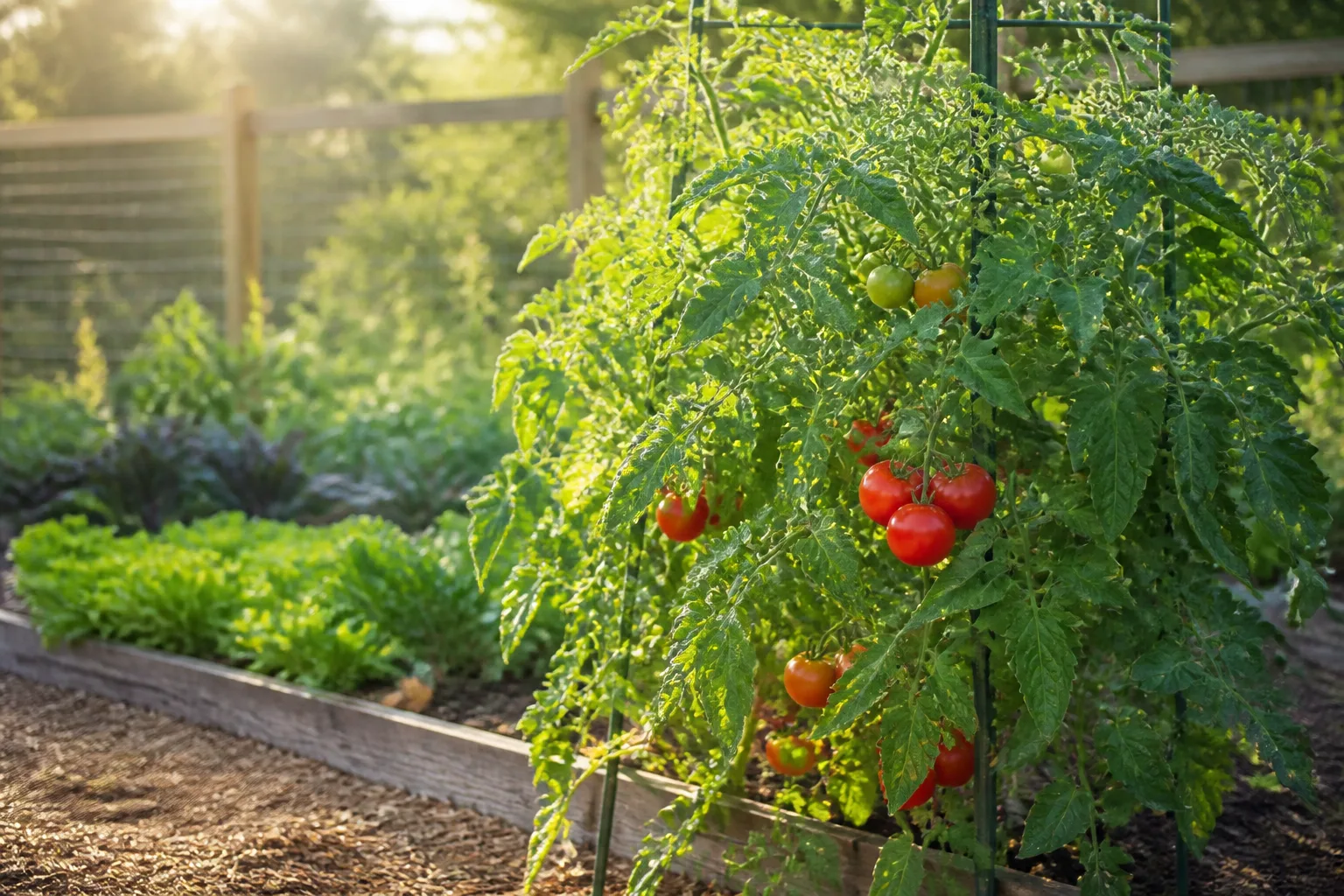
A productive tomato harvest does not require a quarter-acre plot. It requires honest math about square footage: how many hours of direct sun hit your balcony rail, how many gallons of soil your pot actually holds, and whether the variety on the seed packet will stop at three feet or try to climb the gutter. Small-space tomato growing fails when gardeners treat a patio like a farm row—same sprawling indeterminate vine, same undersized decorative pot, same hope that more fertilizer will substitute for root room.
The good news is that tomatoes are flexible if you match variety, container or bed size, support, and maintenance to the space you have. A single well-managed determinate in a 10-gallon pot can outproduce three stressed vines crammed into a narrow bed. This guide walks through the decisions that matter in tight quarters—before you buy transplants.
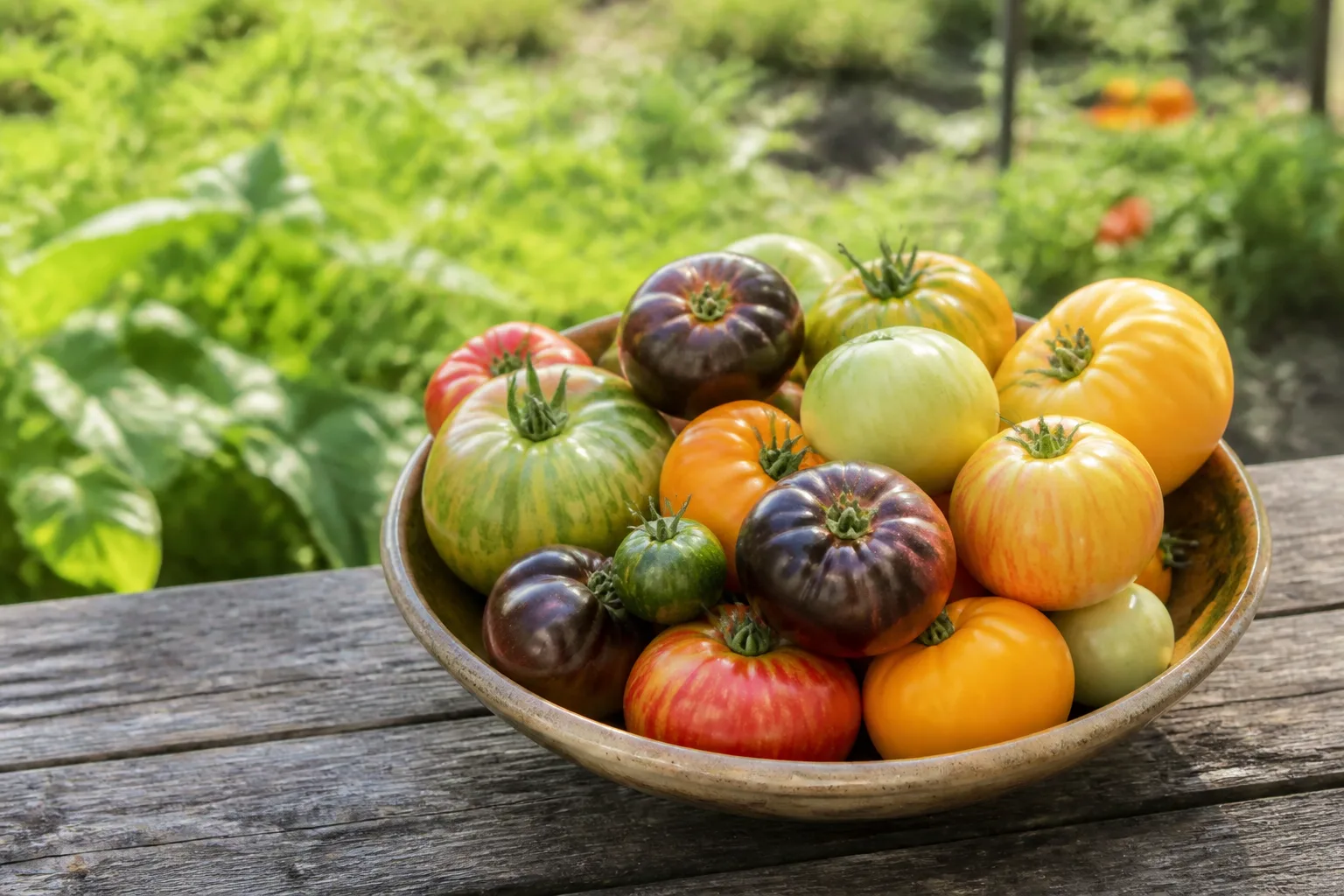
Match the Tomato Type to Your Actual Footprint
Tomato labels describe growth habit first: determinate (bush, finite height), semi-determinate (bushy but longer harvest window), or indeterminate (vine until frost). In a small garden, habit matters more than fruit color. Clemson Cooperative Extension notes that determinate plants grow to a set size, set fruit, then decline, while indeterminates keep growing and producing for an extended season (Clemson HGIC tomato factsheet). That difference is not academic on a 6-foot balcony—it is the line between a manageable plant and a green curtain blocking your door.
Determinate and patio varieties for pots and narrow beds
Start with determinate, patio, or micro-dwarf types when horizontal room is limited and you want predictable height. Determinate tomatoes—often labeled bush—flower and fruit on a compressed schedule, which suits containers, narrow raised beds, and gardeners who want a big harvest window for sauce or freezing. NC State Extension lists compact determinates such as Mountain series cultivars and Roma types as strong home-garden choices that fit cage support without sprawling (NC State growing tomatoes guide).
Look for labels that say patio, bush, container, or dwarf. True micro-dwarfs (often 12–18 inches tall) can live in 1–2 gallon pots on a sunny windowsill or tabletop outdoors; they produce snack-sized harvests, not pantry loads. Standard patio determinates in the 2–4 foot range are the sweet spot for most balconies: enough fruit for weekly salads, short enough for a 3–4 foot cage.
Cherry and grape types are popular in small spaces because fruit ripens steadily and tolerates uneven watering better than large slicers. Sungold, Super Sweet 100, and similar cherries are often indeterminate—read the tag. A determinate cherry such as Bush Goliath or Patio Princess keeps the small-fruit advantage without the 8-foot vine.
When a trained indeterminate vine still earns its square footage
Indeterminate tomatoes are not banned from small gardens—they are banned from small gardens without a training plan. Vining types can reach 10 feet or more on a trellis (NC State). In a tight bed or large container, an indeterminate cherry pruned to one or two leaders on a vertical stake or string trellis can occupy less horizontal space than an unpruned bush spilling over a cage.
Choose an indeterminate in a small space only when you commit to weekly sucker removal, sturdy vertical support anchored outside the pot, and a container of at least 10–15 gallons for a cherry vine. If you will not prune, pick a determinate. If you cannot provide 6–8 hours of direct sun, neither habit will rescue the situation.
For spacing math once you pick a habit, see our tomato plant spacing guide—the same 18–24 inch staked spacing applies in narrow beds, but containers are always one plant per pot.
Right-Size Containers, Soil, and Drainage
Small-space tomatoes live or die by root volume and drainage. A decorative 3-gallon pot dries to dust by noon and cannot buffer heat on a concrete patio. NC State Extension shows determinate and semi-determinate tomatoes in containers at least a foot deep with drainage holes (NC State). Depth matters, but width and total volume matter more for heat and drought stress.
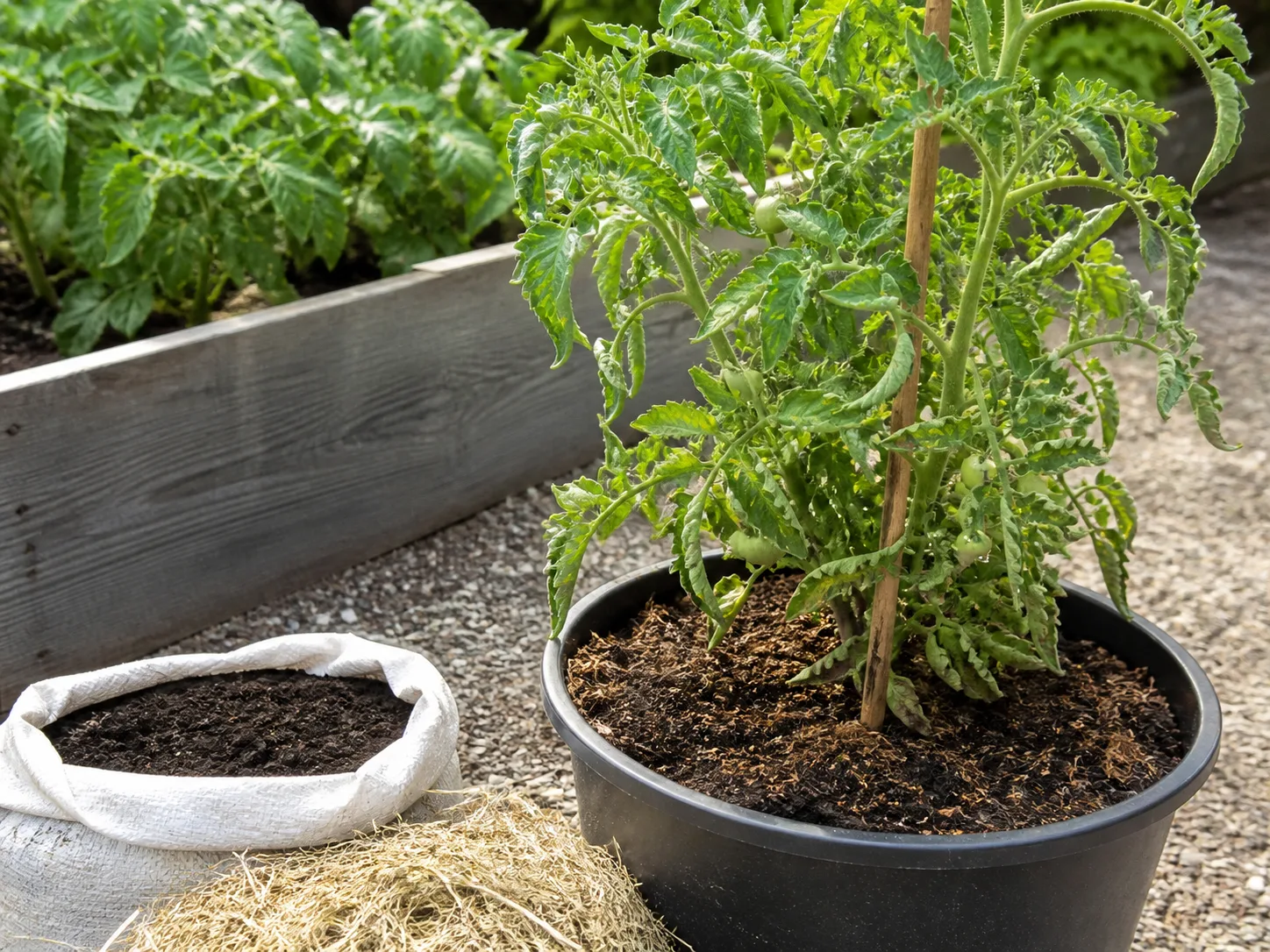
Minimum pot volume by tomato habit
Use this as a starting chart—bigger is almost always better on hot decks:
| Tomato type | Minimum container volume | Notes |
|---|---|---|
| Micro-dwarf | 1–2 gallons | Tabletop or railing; daily water checks |
| Patio / compact determinate | 5 gallons | One plant only; mulch the surface |
| Full-size determinate | 7–10 gallons | Add cage at transplant |
| Pruned indeterminate cherry | 10–15 gallons | Stake or string trellis required |
| Unpruned indeterminate in pot | Not recommended | Canopy and roots outgrow most balconies |
One tomato per container, always. Two seedlings in one pot compete for water, merge into one humid canopy, and make blossom-end rot more likely. Snip the weaker seedling at planting.
Check balcony weight limits before lining up 15-gallon pots. Wet soil plus mature plant can exceed 40–60 pounds per container. Use lightweight plastic or fabric grow bags on rails, and confirm lease rules about dripping water onto neighbors below.
Potting mix, amendments, and material trade-offs
Use a labeled vegetable or container potting mix—not garden soil alone. Garden soil compacts in pots, sheds water when dry, and stays soggy when overwatered. Mix in compost (up to one-third by volume) for moisture retention and slow nutrients. Perlite or coarse sand improves drainage in heavy blends.
Drainage holes are non-negotiable. Elevate pots on pot feet or a saucer with risers so water exits freely. Terra-cotta breathes well but dries faster on windy balconies; glazed ceramic holds moisture but is heavy. Dark plastic heats roots on south-facing concrete—mulch the soil surface with straw or shredded bark to reduce evaporation.
At transplant, bury the stem deeper than it sat in the nursery pot—tomatoes root along buried stems for stability. Add a pinch of balanced organic vegetable fertilizer in the planting hole if your mix is not pre-charged, following label rates. For glazed-pot drainage concerns on other crops, our glazed pots guide explains when material choice affects root oxygen—tomatoes are especially unforgiving of waterlogged soil.
Map Sun, Wind, and Heat on Balconies and Patios
Tomatoes are full-sun crops. Most extension guides recommend at least 6–8 hours of direct sunlight daily for strong growth and sweet fruit (Clemson HGIC). Less light means leggy plants, delayed ripening, and thin flavor—even if everything else is perfect.
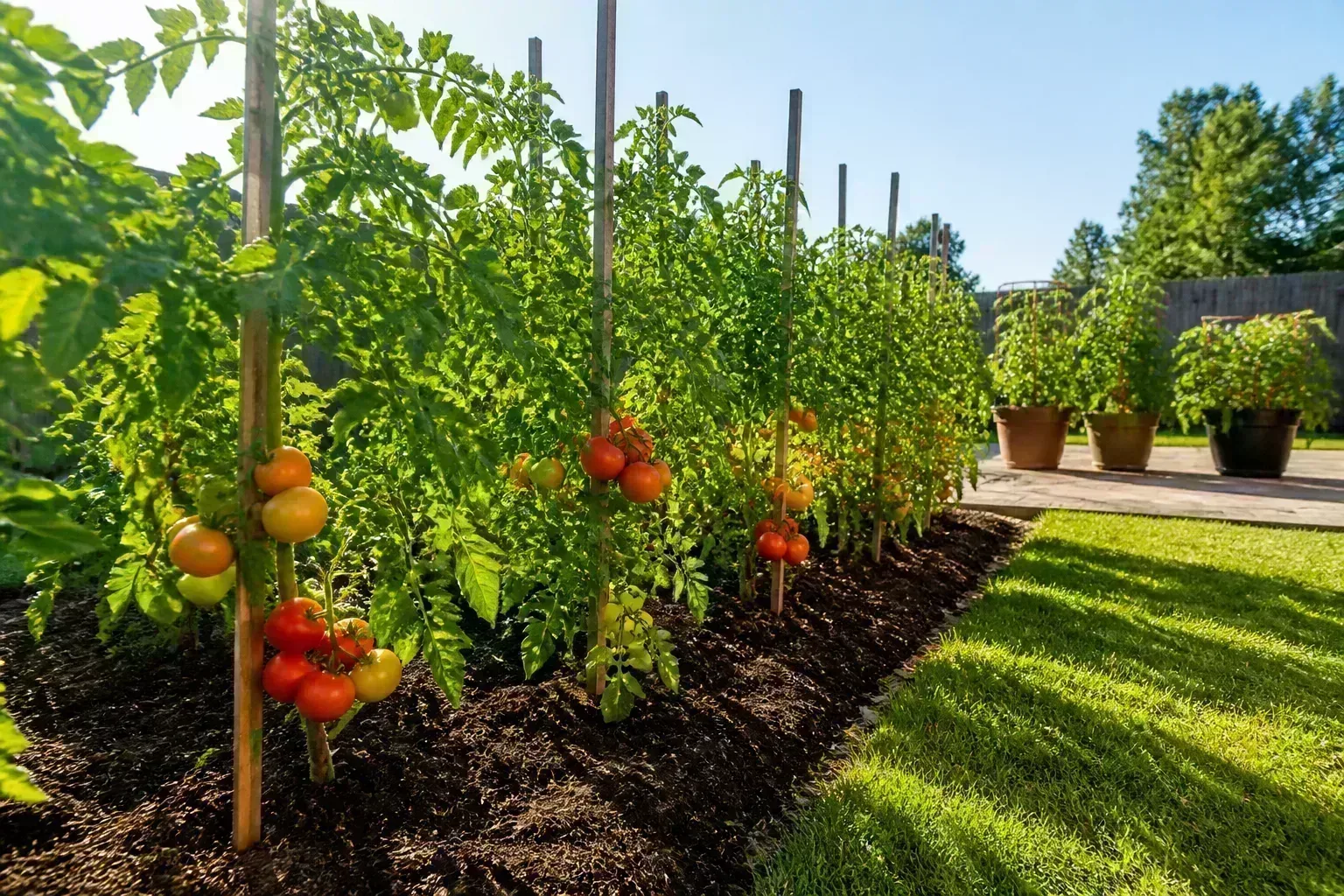
How to test whether your spot gets enough direct light
Sun-map before you buy plants. On a sunny weekend, note when direct sun first hits your chosen spot and when shade from walls, rails, or trees cuts it off. Repeat at summer solstice if you are planning in spring—deciduous trees that are bare in April may shade the deck by July.
South- and west-facing exposures usually win on Northern Hemisphere balconies. East-facing spots can work for determinates with an early fruit set. North-facing decks rarely support fruiting tomatoes without supplemental grow lights.
If no fixed spot clears 6 hours, use wheeled plant caddies to chase sun along the rail (secure against wind) or dedicate an indoor/outdoor setup with full-spectrum grow lights on a 14–16 hour timer. Lights must be strong close to the canopy—weak ambient room light is not enough. Our tomato sunlight guide walks through direct vs indirect definitions if your building label is vague.
Reflected heat, rail shadows, and seasonal sun shifts
Concrete and light-colored walls reflect heat, which speeds ripening but also dries pots and can cause blossom drop on extreme heat days. In hot climates, afternoon shade cloth during heat waves beats losing flowers to 95 °F afternoons—see our heat and blossom drop guide for timing.
Wind on high balconies desiccates leaves faster than ground-level gardens. Group pots to create a wind buffer, avoid funnel corners between buildings, and water in the morning so foliage dries before evening. Rail-mounted planters may sit in permanent shadow from the balustrade—raise or set pots forward where the rail does not block low afternoon sun.
Vertical Support That Fits Tight Quarters
Vertical growing is how small spaces multiply yield per square foot—but the support must be installed at transplant, not after the plant flops. Waiting invites broken roots and snapped stems.
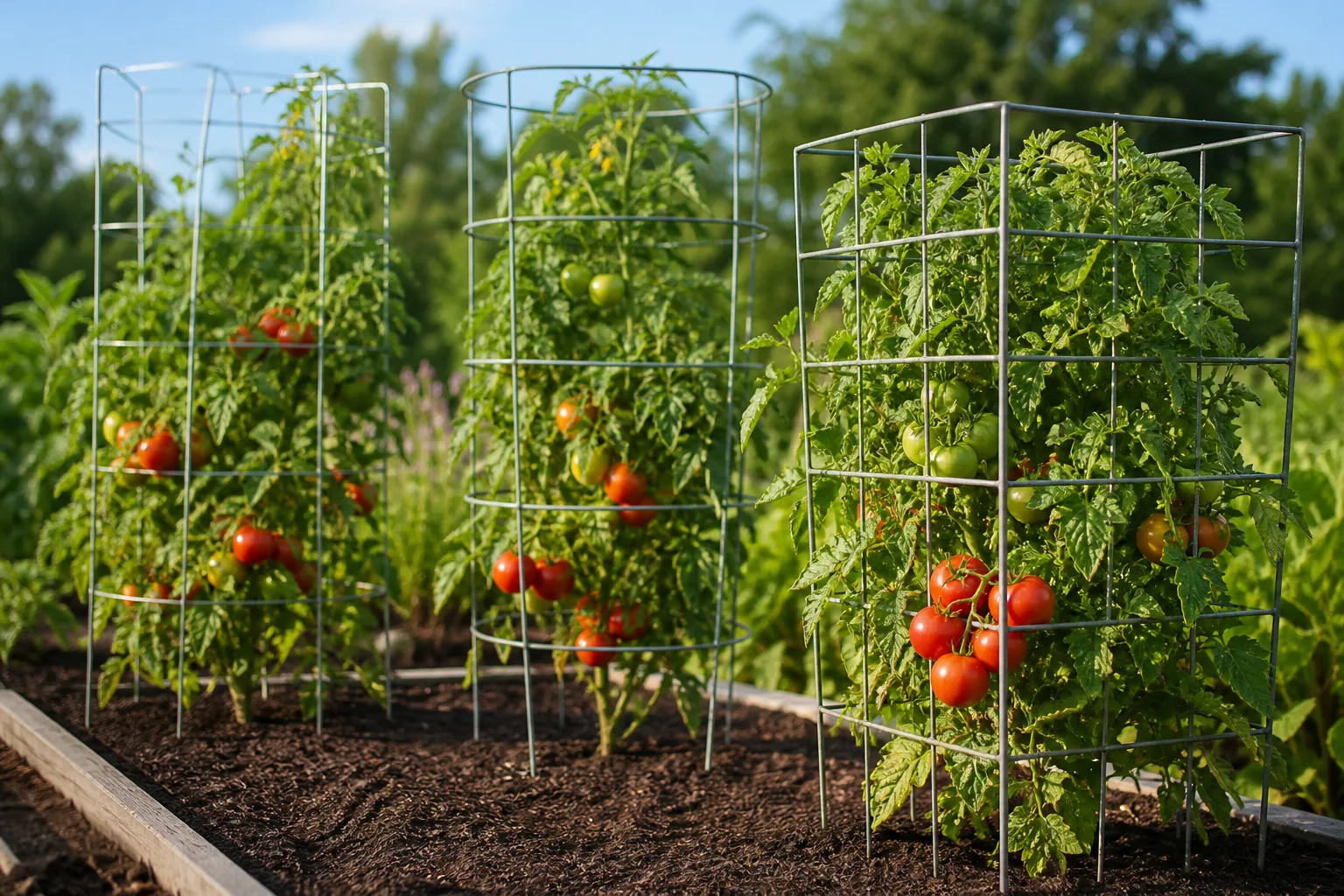
Determinate and patio tomatoes: use a sturdy cage 3–4 feet tall with openings wide enough to reach fruit (6-inch gaps minimum). Anchor the cage to the pot or bed with stakes—wind catches tomato foliage like a sail.
Pruned indeterminate vines: a single 6–7 foot stake or string trellis beside the pot trains one leader upward. Tie loosely every 8–10 inches with soft cloth or garden tape. This footprint is narrower than a cage and suits balcony corners.
Narrow in-ground rows: the Florida weave (stakes with horizontal twine on both sides of plants) supports multiple bush tomatoes in a line without individual cages (Clemson HGIC). It is efficient in a 3-foot-wide bed if you walk the row weekly to add string levels.
Match support to maintenance appetite. A cage with light pruning is lower effort than a stake with weekly sucker checks. Our stakes vs cages guide compares trade-offs; for wall-mounted growing ideas beyond tomatoes, see DIY vertical garden ideas.
Install supports the day you transplant. For containers, anchor outside the root ball so the pot and stake act as one unit—top-heavy tomatoes tip easily on hardscape.
Prune for Airflow Without Stealing Your Harvest
Pruning in tight spaces is about airflow and predictability, not aesthetics. Crowded leaves stay wet longer, which invites early blight and septoria in humid summers.
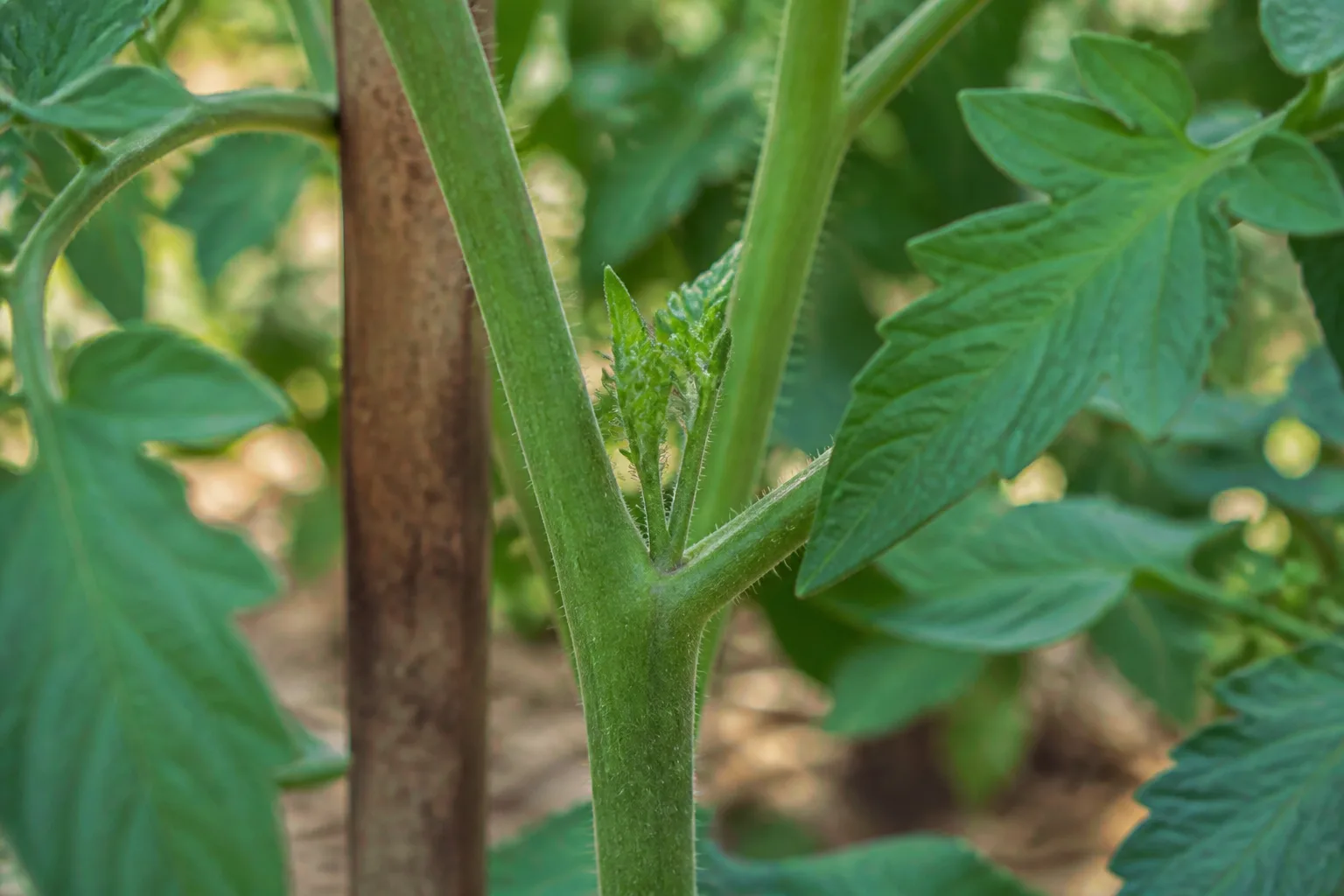
Indeterminate vines in small spaces: prune to one or two main stems. Pinch suckers when they are 2–3 inches long—suckers emerge between the main stem and leaf branches (Clemson HGIC). Weekly passes beat monthly marathons. Stop heavy pruning six weeks before your first frost date so the plant can ripen existing fruit.
Determinate bushes: prune lightly. Remove only suckers below the first flower cluster and any leaves dragging on soil. Aggressive single-leader pruning on a determinate removes fruiting wood.
Lower leaf removal: in cramped beds, trim the bottom 6–12 inches of foliage once fruit sets on lower clusters to improve airflow—our lower leaf removal guide explains timing without sunscald risk.
In a cage, tuck wayward branches inside rather than letting them escape horizontally into walking paths. Horizontal spread is what makes small gardens feel smaller.
Feed Container and Bed Tomatoes on a Confined Root Budget
Tomatoes are heavy feeders; container roots cannot forage beyond the pot. Nutrient depletion shows up as pale leaves and small fruit long before in-ground plants complain.
At planting, mix slow-release organic fertilizer or compost into the potting blend per label rates. Clemson HGIC recommends side-dressing in-ground tomatoes with calcium nitrate after fruit set (Clemson HGIC); container growers translate that to monthly balanced liquid feed (half-strength every two weeks is another reliable rhythm) once the first fruits are marble-sized.
Avoid high-nitrogen feeds mid-season—they push leaves at the expense of flowers. If lower leaves yellow while top growth stays dark green, nitrogen may be excessive; if everything is pale yellow, feed may be insufficient or pH may be off.
Flush pots occasionally if salt crusts appear on the soil surface—water until it runs freely from drainage holes. In petite in-ground beds, work compost between plants instead of broadcasting fertilizer against stems where burn occurs.
For variety-specific feeding mistakes, pair this section with things to know before growing tomatoes and our tomato fertilizer roundup if you are comparing product types.
Water on a Rhythm Containers Actually Forgive
Container tomatoes dry faster than bed plants—sometimes twice daily in July on a west-facing deck. The goal is even moisture in the root zone, not constant sogginess. Blossom-end rot ties to water stress more often than true calcium deficiency (NC State).
Water when the top inch of mix is dry, then soak until water exits drainage holes. Morning watering lets foliage dry before cool nights. Saucers can hold standing water—empty them after irrigating so roots do not reabsorb stagnant moisture.
Mulch the pot surface with straw or shredded bark to cut evaporation. Drip irrigation or ollas help if you travel weekends; a quick finger test still beats blind timers on heat-wave weeks. Our tomato watering guide details depth targets for in-ground plants; containers need frequency more than depth.
In narrow raised beds, avoid overhead sprinklers that soak foliage nightly. Direct water to soil, space plants for airflow, and see over-watered tomato plant symptoms if leaves stay wilted despite wet soil—root damage mimics drought.
Pollination, Airflow, and Neighbor-Friendly Balcony Habits
Tomatoes are self-fertile—flowers pollinate themselves with vibration from wind or insects. On still, enclosed balconies, fruit set can lag. Gently shake flowering trusses mid-morning a few times per week, or use a small electric toothbrush on the stem behind open blooms.
Avoid pesticide sprays during bloom hours if bees visit nearby window boxes. Whiteflies plague stressed container tomatoes; reflective mulch and companion flowers help—see companion plants for tomato whiteflies before reaching for broad sprays that harm pollinators.
Dripping fertilizer-laden water onto a neighbor’s patio is a fast way to end a balcony garden. Use trays, redirect runoff, and rinse rails after feeding. Good airflow between pots reduces fungal spores; cramming twelve containers into a corner trades photos for disease pressure.
Prep Small In-Ground Beds and Keep Weeds From Stealing Nutrients
Not every small-space tomato grows in a pot. A 3×6-foot bed or strip along a fence can host two well-spaced plants if soil is rebuilt yearly. Rotate nightshades—tomatoes, peppers, eggplants, potatoes—on a three-year cycle to reduce soil-borne disease (Clemson HGIC).
Clear weeds before transplant; in a petite bed, weeds steal the nitrogen tomatoes need within weeks. Loosen soil 8–12 inches deep, mix compost, and test pH if plants looked pale last year—tomatoes prefer roughly 6.0–6.5.
In heavy clay, add compost and coarse organic matter rather than sand alone. Raised sides even 6 inches high improve drainage on compacted urban soils. If your “bed” is mostly construction fill, containers may outperform fighting bad native soil—do not force in-ground planting where roots hit rubble in the first shovel depth.
Common Small-Space Failure Modes and Quick Fixes
Leggy seedlings, no fruit: insufficient sun or excess nitrogen—relocate or supplement light; switch to lower-nitrogen feed after transplant.
Wilting in afternoon on hot decks: pot too small or roots circling—upsize before mid-July; shade pot exterior, not leaves, during heat spikes.
Fruit with black leathery bottoms: uneven watering—stabilize moisture; our blossom-end rot guide covers the full prevention sequence.
Yellow lower leaves with spots: fungal disease from crowded, wet foliage—remove affected leaves, widen spacing next year, mulch soil surface.
Tiny fruit on cherry vines: overpruning or heat stress—ease sucker removal; add afternoon shade during heat waves.
One giant plant, no room for herbs: you chose an unpruned indeterminate in a 5-gallon pot—harvest what you can, then switch to determinate or patio types next season. Browse tomato varieties to try with your square footage in mind.
Conclusion
Growing tomatoes in small spaces is a matching problem, not a motivation problem. Pick determinates, patio types, or carefully trained cherry vines; give each plant enough soil volume and direct sun; install vertical support at transplant; feed and water on a container-realistic schedule; and prune for airflow instead of letting leaves fuse into a humid wall.
Measure your balcony or bed honestly before shopping. Two thriving plants in properly sized pots will beat six cramped survivors every time. Start with the variety label and gallon count, then build support and watering habits you can keep through August—and you will harvest more from less ground than most sprawling, neglected row gardens ever manage.