Vining vs. Bush Tomatoes: Growth, Support and Yield
Compare vining and bush tomatoes by growth habit, support, spacing, pruning, containers, harvest timing, and climate to choose a cultivar that fits your garden.
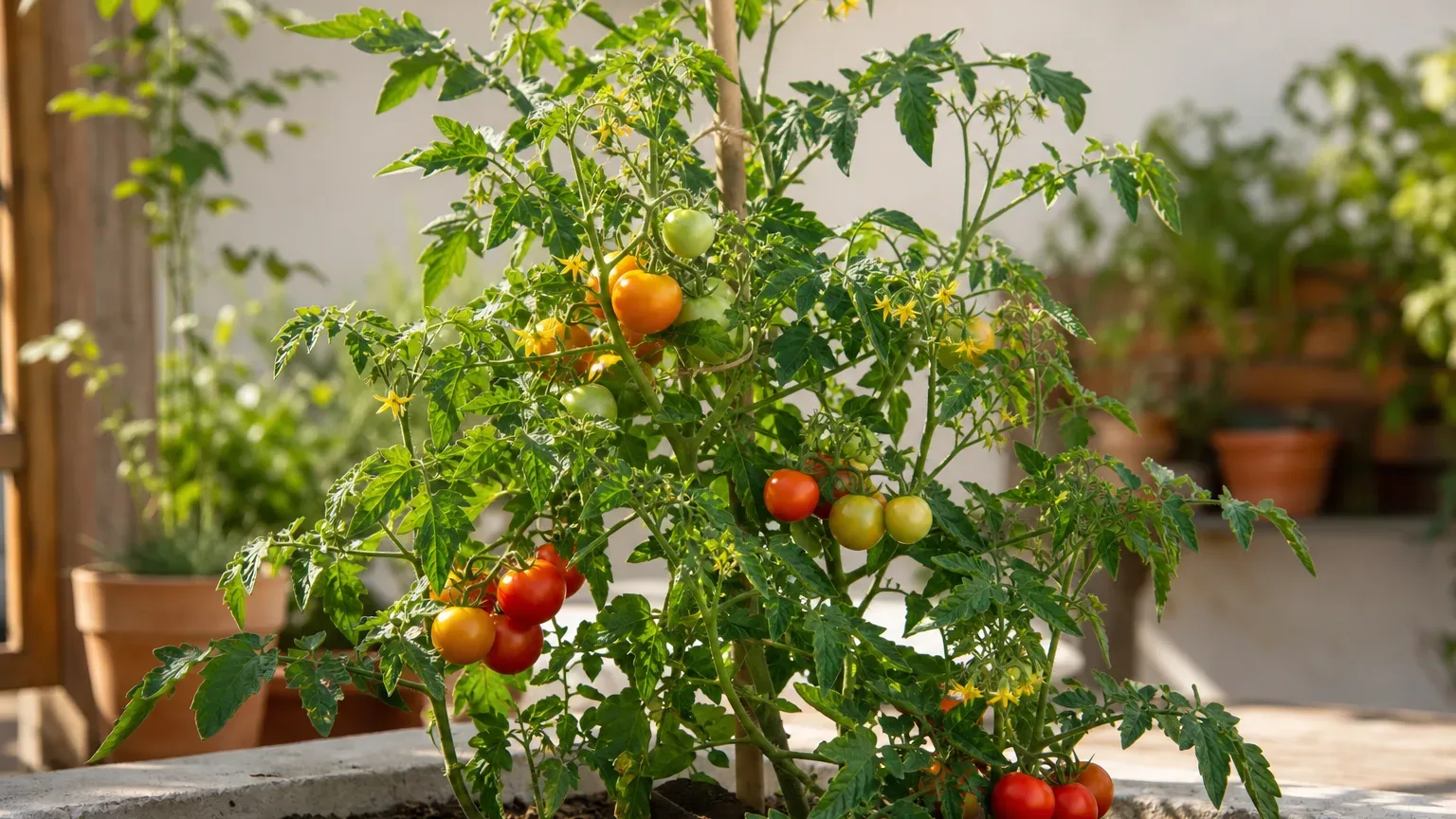
“Vining” and “bush” sound like two neat tomato categories, but the labels describe a plant’s shape more than a strict botanical divide. They are useful clues when you are choosing a seed packet, yet they do not tell you everything about mature size, support, or harvest. For those details, look for the cultivar’s growth habit—usually listed as determinate, indeterminate, or sometimes semi-determinate—along with its expected height and width.
That distinction helps prevent two common mistakes: assuming every compact tomato can be left unsupported, and buying a vigorous indeterminate variety without planning where its stems will go. The right choice depends on how much room you have, how often you want to pick, how much training you are willing to do, and what your local growing season can support.
Quick answer: choose by habit, footprint, and harvest goal
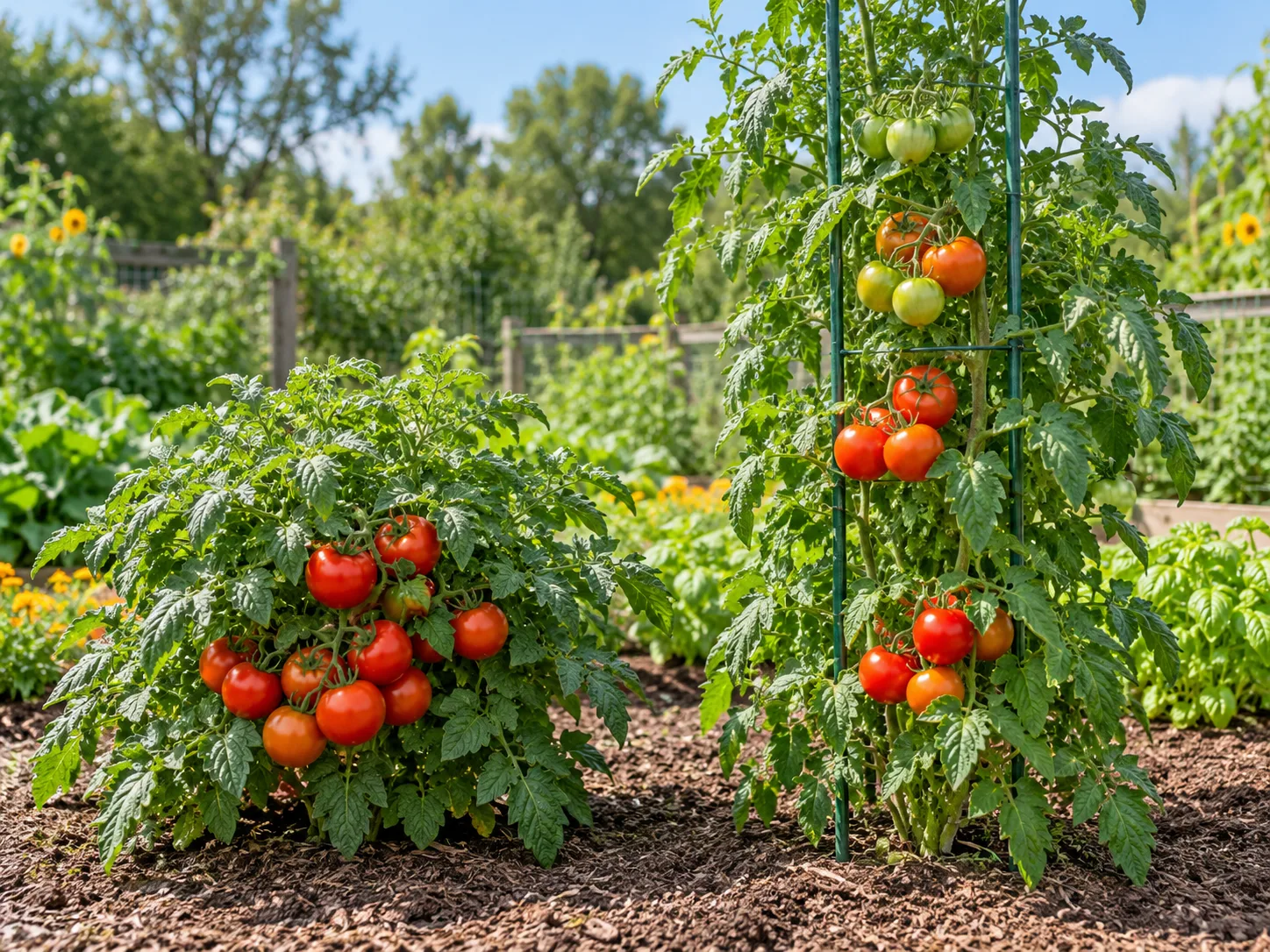
Most gardeners use bush tomato to mean a more compact, usually determinate cultivar and vining tomato to mean an indeterminate cultivar that keeps extending its stems. Determinate plants tend to set much of their crop over a shorter window; indeterminate plants tend to continue growing and ripening fruit over a longer stretch. Those are patterns, not guarantees: semi-determinate and dwarf cultivars blur the shorthand, and actual performance depends on the named variety and growing conditions.
| What matters | Compact or bush-style tendency | Vining or indeterminate tendency |
|---|---|---|
| Growth | Reaches a more limited mature size; many shoots branch from the base | Main stems continue extending while the plant grows and sets fruit |
| Support | A short cage or stake may be enough, but heavy clusters can still topple stems | Usually needs a tall, sturdy cage, trellis, stake, or other planned support |
| Picking | More fruit may ripen within a concentrated period | Picking is often spread across a longer part of the season |
| Pruning | Usually keep most suckers so the plant can carry its crop | Optional or selective pruning can make training and access easier |
| Best fit | Smaller beds, a planned preserving window, or less vertical training | Regular fresh picking and gardeners able to train a taller plant |
If you are choosing between two specific varieties, compare their label details before relying on the words “bush” or “vine.” A compact indeterminate cherry tomato may suit a pot better than a large determinate slicer, while a semi-determinate plant can offer a middle ground in both height and harvest pattern.
What “vining” and “bush” actually describe
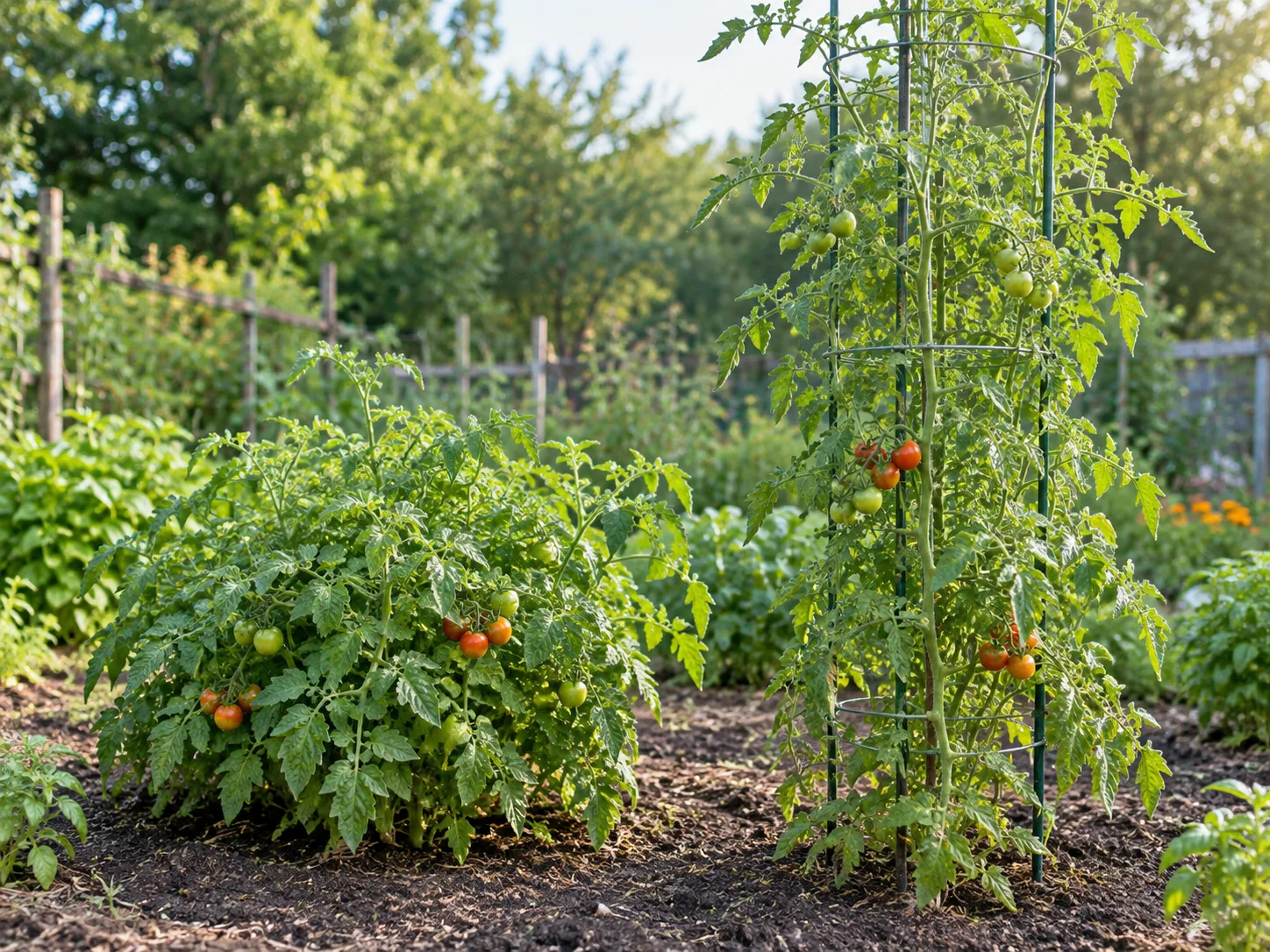
All cultivated tomatoes are related plants with flexible stems that can lean, sprawl, or climb when supported. “Vining tomato” is a familiar way to describe a tomato whose stems keep elongating; “bush tomato” describes a plant with a more compact, branched outline. Seed catalogs and gardeners often use these everyday terms as near-synonyms for indeterminate and determinate, respectively, but the match is approximate.
Determinate and indeterminate refer to how a cultivar’s growing shoots develop.
A determinate stem eventually ends in a flower cluster, limiting further extension from that tip. An indeterminate stem continues making new leaves and flower clusters as it grows. This difference influences how large the plant can become and how its fruiting period unfolds, but it does not prescribe an exact height or exact harvest date.
Rutgers Cooperative Extension also recognizes semi-determinate tomatoes: cultivars that are more compact than indeterminate types but can continue producing over a longer period. Its variety list includes named cultivars across determinate, semi-determinate, and indeterminate categories, which is a reminder to identify the actual variety instead of inferring habit from fruit type or appearance. (Rutgers Cooperative Extension’s tomato-growing guide)
Why growth habit and cultivar labels do not map perfectly
“Bush” is not a promise that a plant will stay tiny, and “vining” is not a promise that it will climb neatly on its own.
A tomato stem does not attach itself to a trellis like a pea tendril; you guide and tie it. Compact varieties can still spread sideways, and vigorous indeterminate plants can outgrow a short support. Breeders also select dwarf, patio, and semi-determinate types that complicate a simple two-column classification.
Treat the label as a starting clue, then check the named cultivar’s mature dimensions and support notes. Gardening Know How’s comparison explains the common determinate/bush and indeterminate/vining pairing, while also discussing semi-determinate tomatoes; for a particular seed purchase, the producer’s variety description is the deciding reference. (Gardening Know How’s tomato habit guide)
How to identify a plant before you buy it
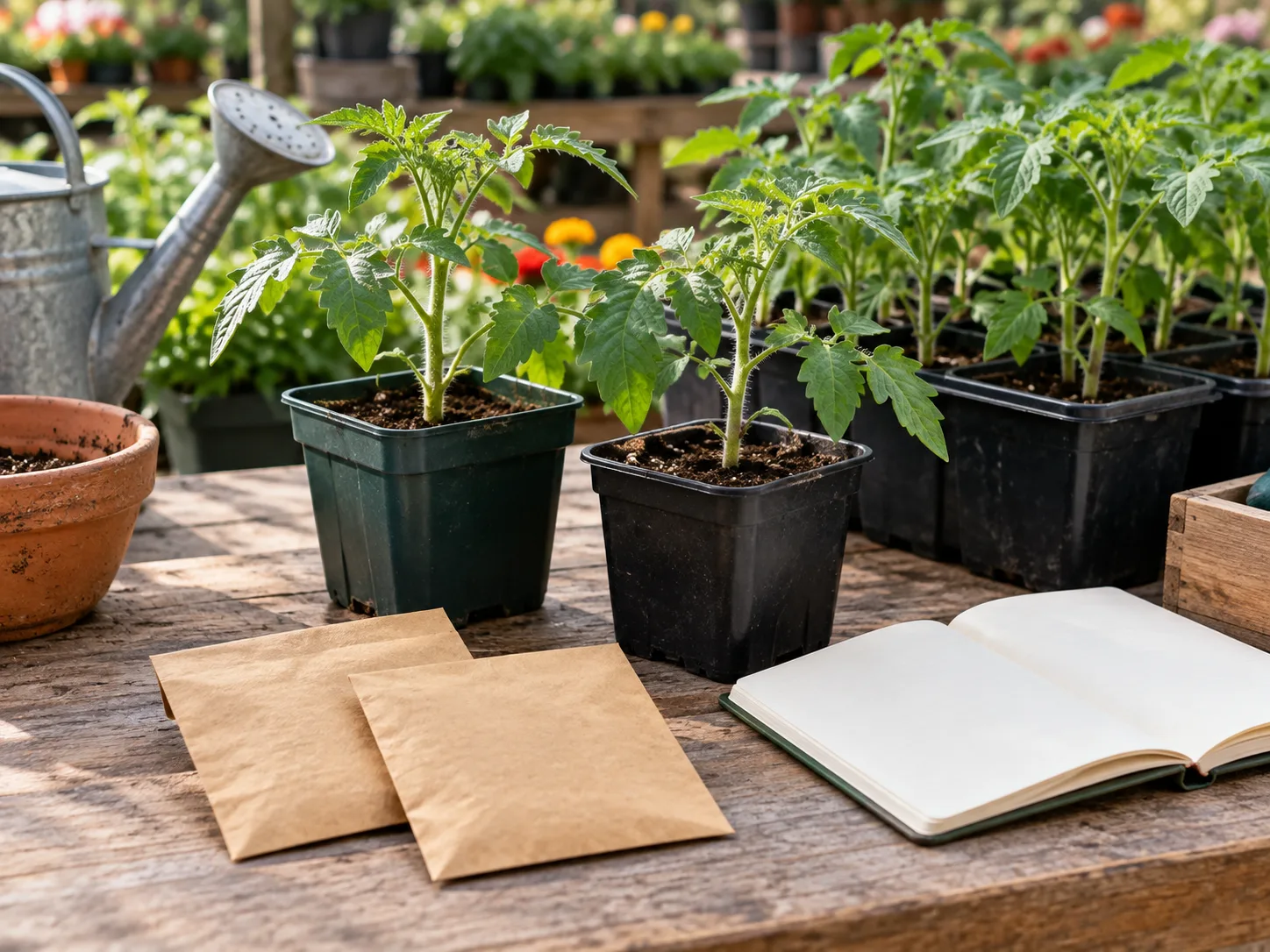
Start with the packet, catalog listing, or nursery tag.
Look for a line that says determinate, indeterminate, semi-determinate, dwarf, compact, or patio, then find the listed mature height and spread. If habit is not stated, search the exact cultivar name in the seed company’s description or a regional university extension variety database. Do not guess from a short label like “container tomato”: container suitability may refer to a compact cultivar, but some indeterminate cherries can also be grown in containers if the pot and support are adequate.
Next compare “days to maturity” with your season.
Rutgers notes that this number is an estimate counted from transplanting, not from sowing, and that actual timing changes with local conditions. A shorter listed maturity can help gardeners with an early frost, but it does not make a plant immune to cold nights or hot-weather interruptions. Check disease-resistance codes too if a disease has been a recurring problem in your garden.
Finally, match expected spread and training to your site.
A six-foot plant may be perfectly manageable against a sturdy trellis but frustrating on a narrow patio if there is no room to reach around it. Conversely, a low, branching determinate tomato may need more horizontal bed space than its height suggests. Decide where your hands, watering can, and harvest basket will go before you set the plants in the ground.
What the growth habit changes about support
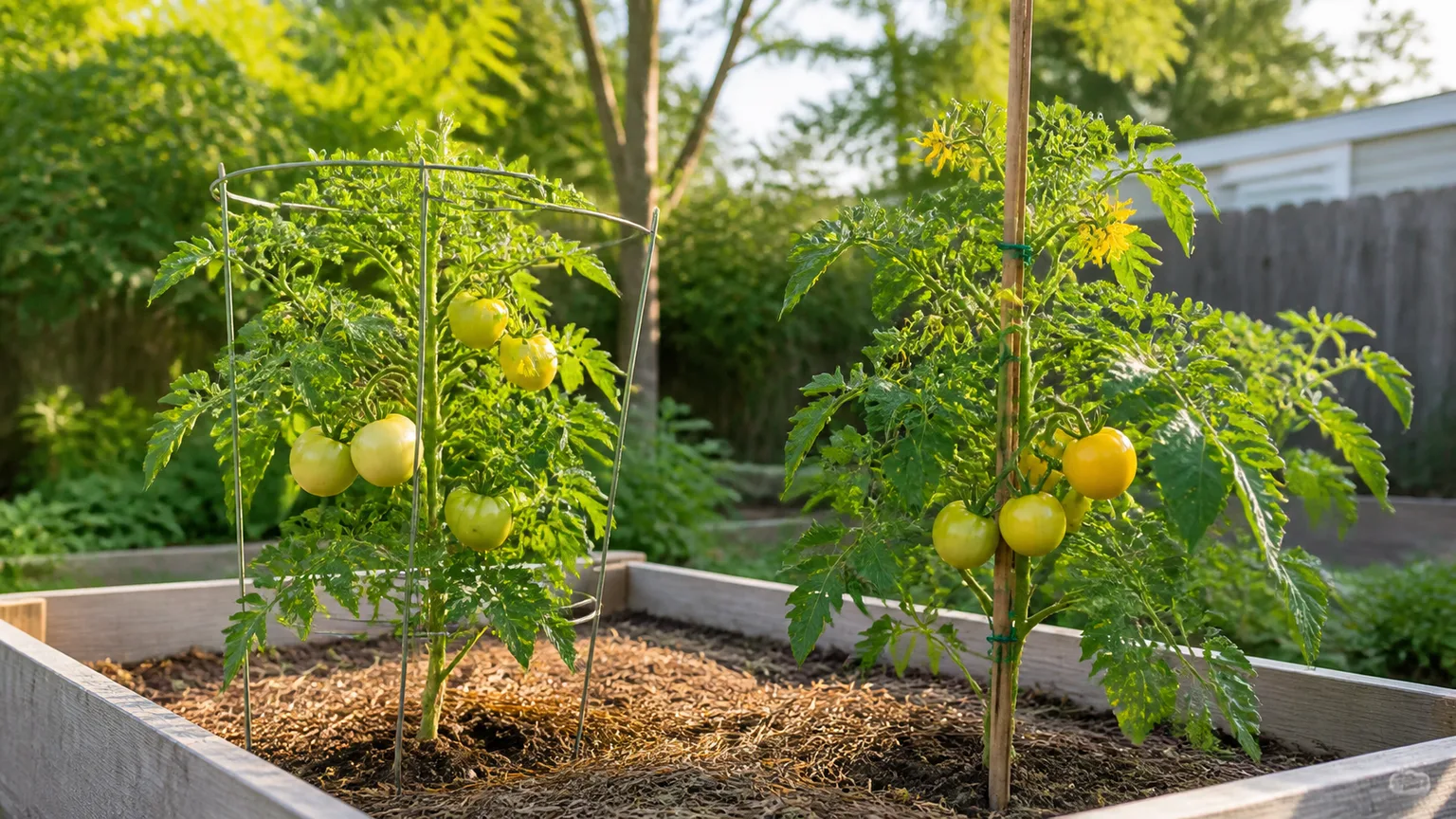
Support is the biggest practical difference for many gardeners. Indeterminate plants continue to extend and add fruit clusters, so a small decorative cage can become overloaded, lean, or tip as the season progresses. Choose a system according to the plant’s expected vigor and the length of time you will maintain it: a tall, anchored cage holds multiple stems; a trellis or panel keeps growth accessible from one side; and a stake works well when you plan to train a plant to one or two main stems.
Install the support at planting or while the plant is still small.
Driving a stake beside a mature tomato can slice roots, and forcing long, brittle stems through a cage later can snap branches. Use soft ties, garden clips, or strips of fabric around the stem with a little room for it to thicken. Check ties as the plant grows rather than cinching them tightly once and forgetting them.
Compact determinate plants usually need less elaborate equipment, but “less” does not mean “none.”
A fruit-heavy branch can bend toward the soil, and a gust can push over a shallow-rooted plant in a pot. A small cage or stake can keep fruit clean and make picking easier. Southern Living likewise recommends support as insurance for compact plants under wind or fruit load, while noting that indeterminate plants need a more extensive structure. (Southern Living’s determinate and indeterminate comparison)
Match the support system to the plant and your routine
Use a stake when you want a narrow, upright plant and are willing to tie it regularly.
That method often goes with deliberate pruning because the stake supports a limited number of stems. A large cage is better when you want several branches to grow with less tying; choose one that is tall and wide enough for the variety, with openings large enough to reach fruit. For a row, a trellis or stake-and-weave system can make several vigorous plants easier to manage, but you must guide new growth into the support as it extends.
Untrained sprawl is possible, especially with lower-growing types, but it takes a broad footprint and increases the chance that leaves and fruit will rest on soil. Rutgers cautions that ground-sprawling plants need more room and can face greater soil-borne disease and pest pressure; if you choose that system, mulch beneath the plant and select a variety whose size suits it. Think of support as a plan you choose with the cultivar, not a rescue task after branches begin to sag.
Give tomatoes enough space for access and airflow
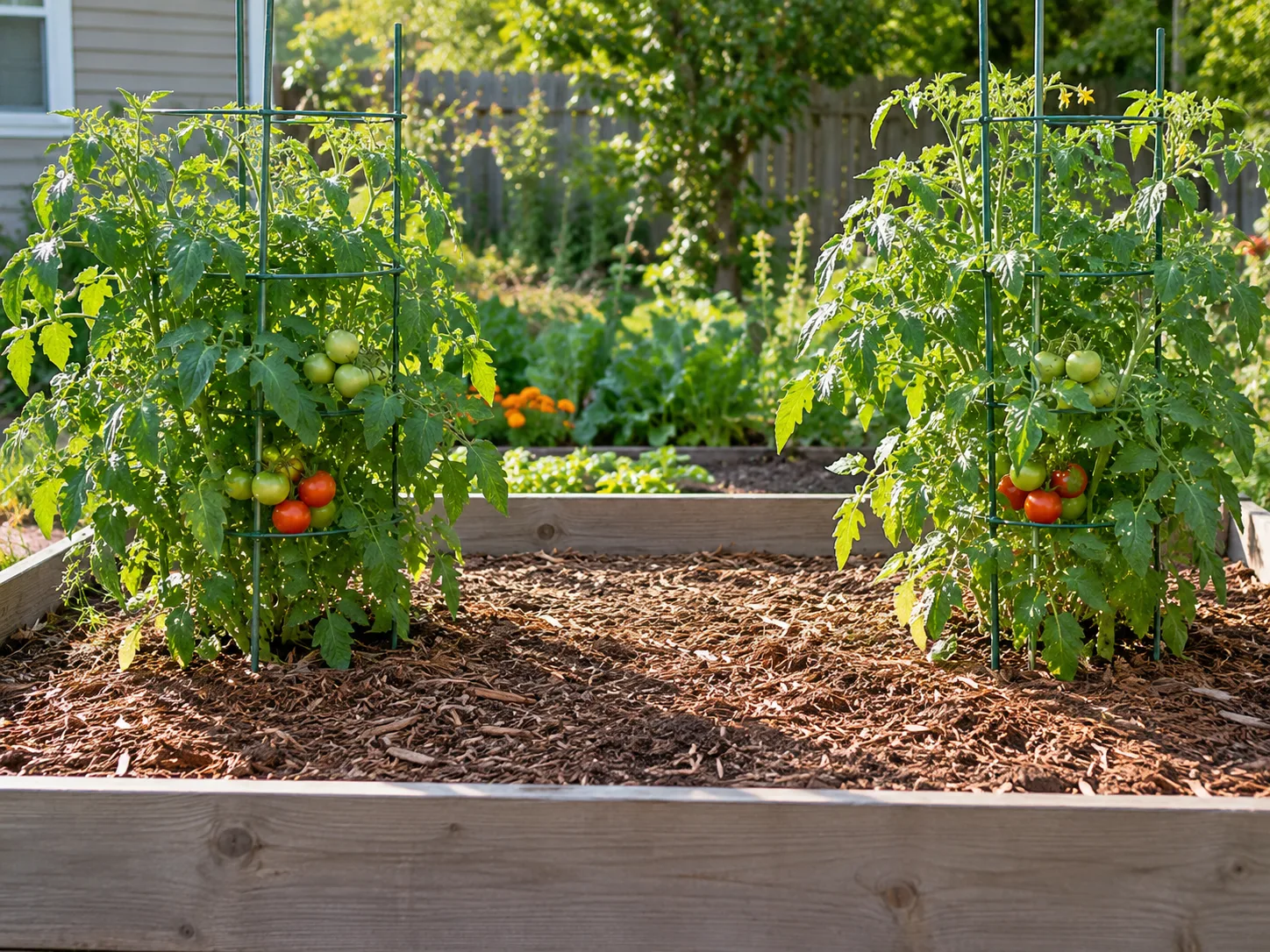
Spacing is not one number that belongs to every “bush” or “vine” tomato.
It depends on the cultivar’s spread, whether you leave multiple stems, how tall the support is, and whether you can reach the plant for tying and picking. Crowding saves bed space on paper but can create a dense canopy that is harder to inspect and harvest. It can also slow leaf drying after rain or overhead watering.
Use the seed supplier’s spacing guidance as your baseline, then account for your training method. As one regional example, Rutgers Cooperative Extension suggests placing caged or staked tomatoes 1½ to 2 feet apart within a row, with rows 3 to 4 feet apart; it allows 3 feet between plants when they sprawl on the ground. These are not universal measurements for every cultivar or climate, but they show how changing the support plan changes the footprint. (Rutgers Cooperative Extension’s planting and training guidance)
Leave enough clearance to walk or reach between rows, inspect the underside of leaves, and pick fruit without pulling neighboring stems.
In a raised bed, two plants may technically fit but block airflow and access when mature. In a narrow bed, one well-trained indeterminate plant may use vertical space efficiently; in a broad sunny bed, two compact plants with different maturity dates may give a more useful harvest. Plan for the full-grown canopy, not the small transplant you carry home.
Prune for the cultivar, not just a tidy shape
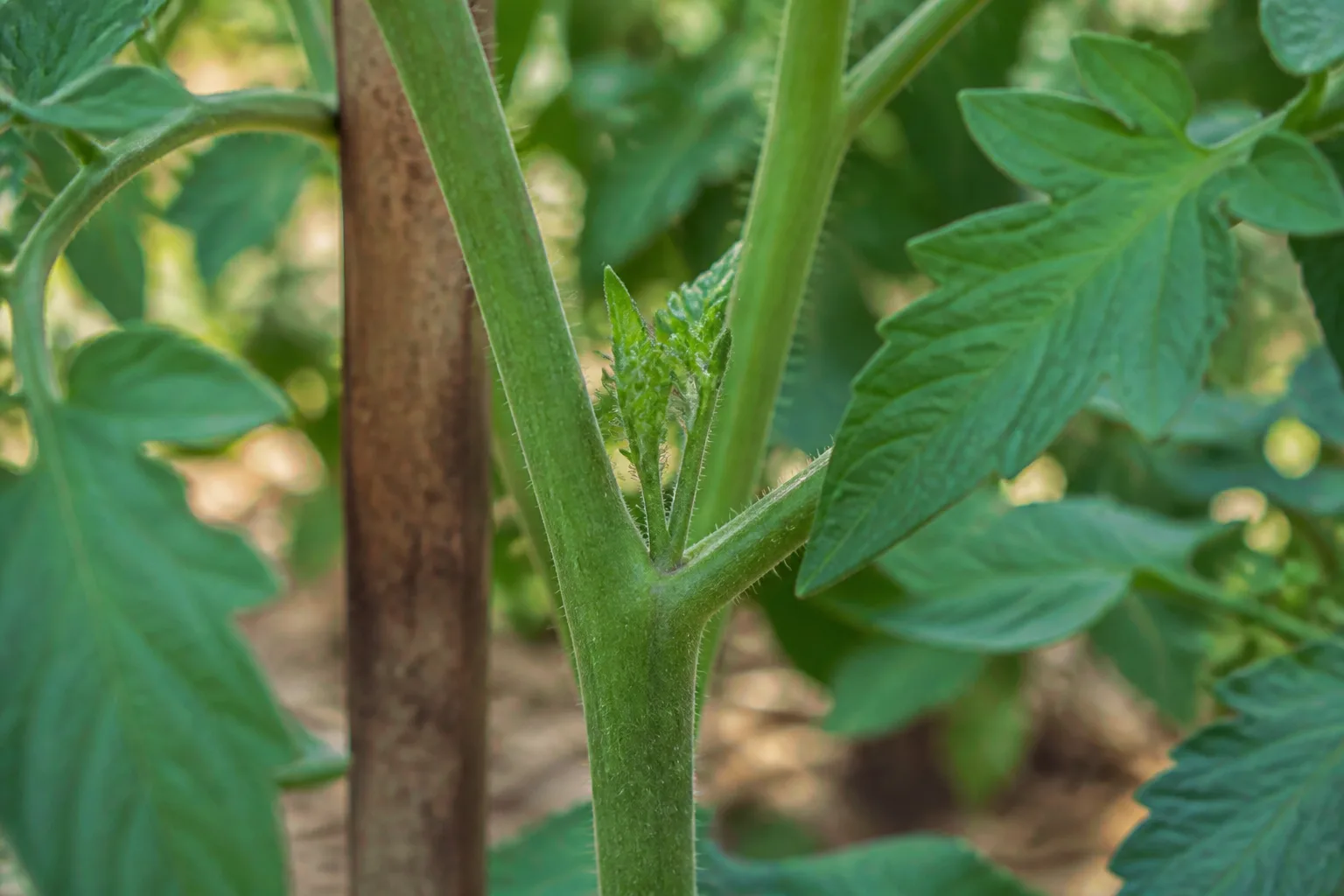
Pruning is not automatically beneficial.
Removing suckers from an indeterminate plant can keep a trained stem system manageable and open the canopy, but every sucker left to grow can also carry leaves, flowers, and fruit. A heavily pruned plant may be easier to tie and pick but can produce fewer tomatoes overall per plant and expose fruit to sunscald. If you are not using a stake or narrow trellis that requires a limited number of leaders, light or no pruning may be the better fit.
For determinate tomatoes, preserve the branching structure unless you have a specific reason to shape it.
These plants often set much of their crop on the branches you might be tempted to remove. University of Wisconsin–Madison Extension’s pruning guidance says to prune indeterminate tomatoes only; its method retains the strong sucker below the lowest flower or fruit cluster as a second stem, rather than stripping every side shoot from the plant. That is one clear training approach, not a universal requirement for every garden. (University of Wisconsin–Madison Extension on tomato pruning)
If pruning, identify a sucker where a leaf stalk meets the main stem.
Remove small shoots cleanly with fingers or a clean tool when they are easy to reach, and avoid stripping large amounts of leafy growth at once. Keep enough foliage to shade fruit from harsh sun and protect the plant’s ability to photosynthesize. If the goal is simply to keep fruit off the ground, add or improve support before deciding that aggressive pruning is necessary.
The trade-off is worth spelling out: training fewer stems can give you better access and a more controlled plant, while allowing more stems can increase the number of fruiting branches and the total plant yield. The best balance depends on whether you value easy maintenance, larger individual fruit, air movement, or the most fruit from the footprint. For a step-by-step look at sucker placement, see our guide to pruning a tomato plant.
Are bush tomatoes always better for containers?
Compact tomatoes are often easier to fit on a patio because they need less vertical reach and can be trained with a shorter cage. But the word “bush” alone does not tell you whether a variety will stay within the pot’s footprint or how much soil volume its roots need. Read the cultivar’s mature dimensions and container recommendations, and choose a pot with drainage and enough capacity for the plant to keep up with summer water demand.
Indeterminate tomatoes can grow in large containers too, especially compact cherries and cultivars bred for patio use, provided you have a stable support and can water consistently. A tall plant in a small pot can dry rapidly, become top-heavy, and require more frequent checks. It may still be a good choice if your balcony has room for a trellis and you want to pick a few fruits regularly; it is a poor fit if the pot must be moved often or left unattended through hot weather.
Make the decision in this order: confirm mature height and spread; choose a container that matches the variety’s instructions; decide where the support will anchor; then check whether you can reach all sides for watering and harvest. A determinate cultivar that is too wide can crowd a small patio, while an indeterminate plant on a well-designed trellis can use a narrow vertical area efficiently. Container fit is a relationship between plant, pot, support, and gardener—not a synonym for determinate.
Harvest timing and what you plan to do with the fruit
Determinate tomatoes tend to concentrate a larger share of their harvest into a shorter period, which can be useful when you want to freeze or preserve several pounds at once. Indeterminate varieties tend to keep setting and ripening fruit while conditions support growth, which suits fresh eating across a longer part of the season. Neither promise is exact: temperature, pollination, disease, watering, planting date, and cultivar maturity all affect when fruit arrives.
The difference is a rhythm, not a yield ranking.
A compact plant may give a useful batch but finish earlier; a vigorous vine may produce steadily but never deliver a large glut from one plant on the same weekend. A home gardener with only one or two plants might get more total fruit from whichever cultivar suits the season and receives consistent care. Compare both the harvest pattern and the cultivar’s expected productivity rather than assuming a certain habit means “more.”
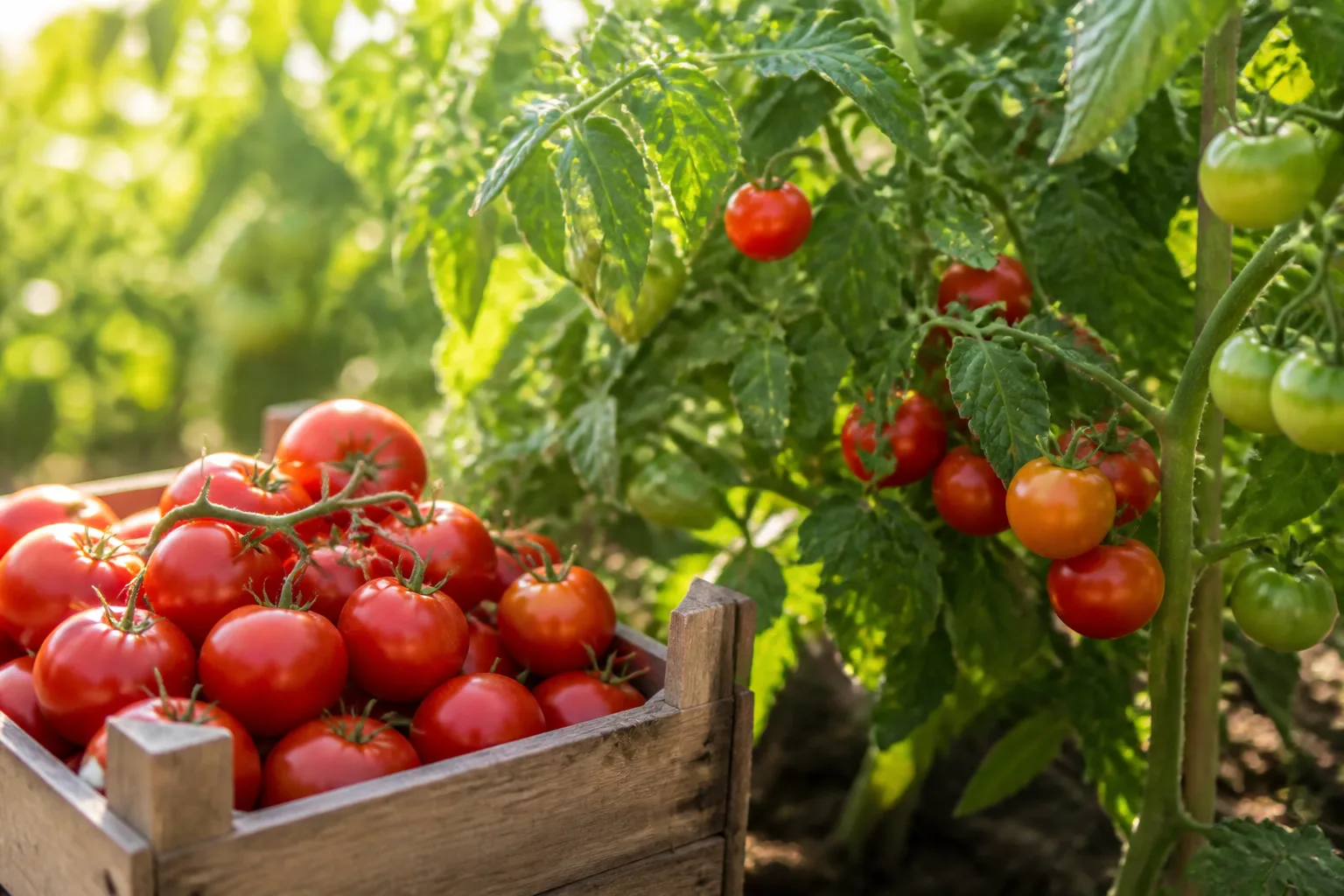
Planning a preserving batch
If you want sauce or canned tomatoes, a determinate cultivar may make it easier to collect a larger batch during a shorter window. You can also plant multiple determinate varieties with different maturity estimates or stagger plantings where your season is long enough, which spreads the workload instead of giving you every ripe tomato at once. A variety’s fruit type matters too: meaty paste tomatoes are convenient for sauces, but paste shape and determinate habit are separate traits, so check both on the label.
For salads, sandwiches, and daily snacking, an indeterminate plant can keep a bowl supplied over time.
You can still preserve its fruit by freezing small batches or growing several plants, and a determinate cultivar can also produce excellent fresh tomatoes. Decide what harvest cadence is practical for your household. The garden should match the way you actually cook and eat, not an assumption that one growth habit automatically makes better-tasting fruit.
Climate and season can outweigh the label
In a short-season garden, compare estimated maturity dates and local frost timing before selecting a long-season vine. A determinate or early-maturing cultivar can concentrate its crop sooner, but a slower determinate tomato may not beat an earlier indeterminate variety. Start by checking your frost-free window and local variety recommendations, then choose a cultivar that can set fruit before cold weather is likely to end the season.
In a long, warm season, indeterminate plants have more time to keep growing and producing, but heat can still interrupt fruit set. Rutgers notes that very high or low temperatures can cause flower abortion; a growth habit cannot overcome stressful weather. Gardeners in hot-summer regions may need to prioritize a cultivar suited to their climate and protect plants from prolonged heat, while gardeners in cooler regions should avoid planting outdoors before frost danger has passed.
Rain, humidity, and disease pressure also change the value of an open canopy.
A well-supported plant with room around it is easier to inspect and manage. That does not mean you should prune every tomato to expose all its fruit: removing too much foliage can leave tomatoes vulnerable to sunscald. Choose the structure and spacing first, then make modest adjustments based on what you observe through the season.
Shortcuts that lead gardeners to the wrong tomato
Do not choose by fruit size or color. Beefsteak, cherry, grape, and paste tomatoes can come in different growth habits; even a familiar cultivar name may have variants, so check the exact packet rather than relying on a general claim that all heirlooms or all cherries grow one way. The fruit category tells you more about what you harvest than whether the stems will stay compact.
Do not assume compact means no maintenance.
A bush tomato still needs sun, steady moisture, and room for airflow, and a heavy cluster can weigh down a branch. Likewise, a vining plant is not necessarily a high-yield choice if it is crowded, undersupported, stressed, or planted too late to mature fruit before frost. Habit informs your plan but does not replace good growing conditions.
Do not prune simply because suckers look messy.
A sucker becomes a productive branch; whether you remove it depends on your intended stem count and support system. Conversely, do not wait until vines collapse to add a cage or trellis. Most of the expensive decisions—spacing, support height, pot placement—are easier before planting than after stems interlace.
Fruit size and flavor are separate choices
There is no dependable rule that vining tomatoes taste better, are juicier, or have thinner skins than bush varieties. Flavor is shaped by the cultivar, ripeness, weather, growing conditions, and personal preference. Two varieties with the same growth habit can produce very different fruit, while two varieties with different habits can share a size or culinary use.
If flavor is your priority, select a named cultivar based on flavor descriptions and local performance, then check whether its growth habit suits your site. If storage or processing matters, look at firmness and intended use as well as ripening pattern. Southern Living lists multiple fruit types among both determinate and indeterminate examples; that practical variety range reinforces why habit and flavor should be considered as separate decisions. (Southern Living’s tomato comparison and examples)
Choose by your actual garden scenario
For a narrow raised bed with a tall fence or panel, consider a vigorous indeterminate tomato if you can tie it through the season. Leave working access, use a strong support, and check mature spread before fitting in companion plants. You get an extended picking window without needing the vine to sprawl across the bed.
For a small patio, look first for a compact or dwarf cultivar with explicit container guidance. Determinate varieties are often straightforward, but a smaller indeterminate cherry can work if its support is stable and the pot has enough capacity. Put the cage or trellis in place before the plant fills out, and plan for more frequent moisture checks during hot weather.
For a large preserving harvest, choose a determinate cultivar with fruit suited to your recipes, then consider more than one plant or staggered timing if you want a manageable batch rather than a single overwhelming glut. For fresh tomatoes over many weeks, choose an indeterminate or semi-determinate cultivar with a support plan and a season long enough for continued growth. In either case, a second variety with a different maturity window can spread risk and keep the harvest more dependable.
For a beginner who wants low training, a compact determinate tomato with a simple cage is often an easier first trial. “Low training” does not mean no checking: look for sagging branches, fruit touching soil, crowded leaves, and dry potting mix. If you already know you enjoy tying and shaping plants, try an indeterminate vine and keep notes on how its footprint and harvest compare in your own climate.
Conclusion
Vining and bush are useful descriptions, but the more dependable choice starts with the tomato’s listed cultivar habit and mature dimensions. Determinate plants are usually more compact and tend to ripen a larger share of their fruit over a shorter window; indeterminate plants usually keep extending and producing over a longer season. Semi-determinate and dwarf cultivars show why those tendencies should not be treated as hard rules.
Before planting, decide how much room you can give the mature plant, what support you can maintain, whether you want a concentrated or recurring harvest, and how long your weather allows tomatoes to grow. Then choose by the exact variety label, set the support early, leave access around the canopy, and prune only when the training plan calls for it. That method makes either growth habit a good fit when it matches the gardener and the site.



