How to Keep Mosquitoes Out of Your Home for Good
Learn how to keep mosquitoes out of your home with screens, weekly water checks, smarter traps, fan placement, and safe pesticide boundaries.
The most reliable way to keep mosquitoes out of your home is not one trap. It is a three-part system: block entry, remove water where mosquitoes can reproduce, and use targeted control only for the adults that remain. That order matters because a device can catch mosquitoes tonight while a forgotten saucer, clogged gutter, or torn screen keeps supplying the next wave.
Start with the obvious openings, then inspect water-holding containers indoors and outside the walls of the house. The CDC recommends repairing screens, keeping doors closed, using air conditioning when possible, and emptying and scrubbing water-holding items at least once a week. Its guidance also makes an important distinction: indoor insecticide may help after exclusion and cleanup, but insecticide alone will not keep a home mosquito-free. CDC mosquito-control guidance
This approach works whether you are dealing with one mosquito in a bedroom or repeated bites throughout the house. It also keeps you from spending money on a gadget that is poorly matched to the species, the room, or the actual source of the problem.
The lasting fix is exclusion + source reduction + targeted control
Think of indoor mosquito control as closing a loop. Exclusion stops new adults from entering. Source reduction removes the water that allows eggs and larvae to develop. Targeted control handles adults that are already inside or resting near the home. If you skip the first two, the third becomes an exhausting cycle of swatting and respraying.
For most houses, the best first-night sequence is simple:
- Repair or close the screen at the door or window that is used most often.
- Empty and scrub every indoor container that can hold water, then walk the exterior perimeter for the same problem.
- Use a fan, a physical removal method, or a properly labeled indoor product for immediate relief while the underlying work takes effect.
The order is more useful than the label on any trap. A CO2 device can attract host-seeking females, and a fan can make landing difficult, but neither one repairs a screen or drains a gutter. The American Mosquito Control Association warns that consumer traps vary with species, placement, wind, bait, and breeding pressure, and should be used alongside source reduction rather than as the sole control method. American Mosquito Control Association trap guidance
Why mosquitoes get indoors (and where to look first)
Mosquitoes usually enter through an open door, an unscreened window, or a damaged screen. They can also arrive when a garage door stays open, hide in laundry or clothing brought in from outside, or move through small gaps around poorly sealed frames and vents. A house with a healthy screen system can still have a problem if people prop open a back door during the evening.
Once inside, adults prefer sheltered areas rather than bright, breezy rooms. The CDC lists dark, humid resting places such as under sinks, in showers, closets, under furniture, and laundry rooms. Those locations are useful clues: if you are bitten in a bedroom but see no mosquitoes there, check the nearby bathroom, closet, hallway, and laundry area instead of assuming the insect lives in the bed. CDC guidance on indoor mosquito resting sites
Indoor breeding is possible when a mosquito finds water that sits long enough for eggs and larvae to develop. Inspect plant saucers, vases, buckets, pet dishes, mop pails, humidifier reservoirs, basement seepage, and condensate pans. Damp soil alone is not a mosquito pond, but water collected in a saucer or container is worth treating as a potential source.
A 10-minute indoor-and-yard audit
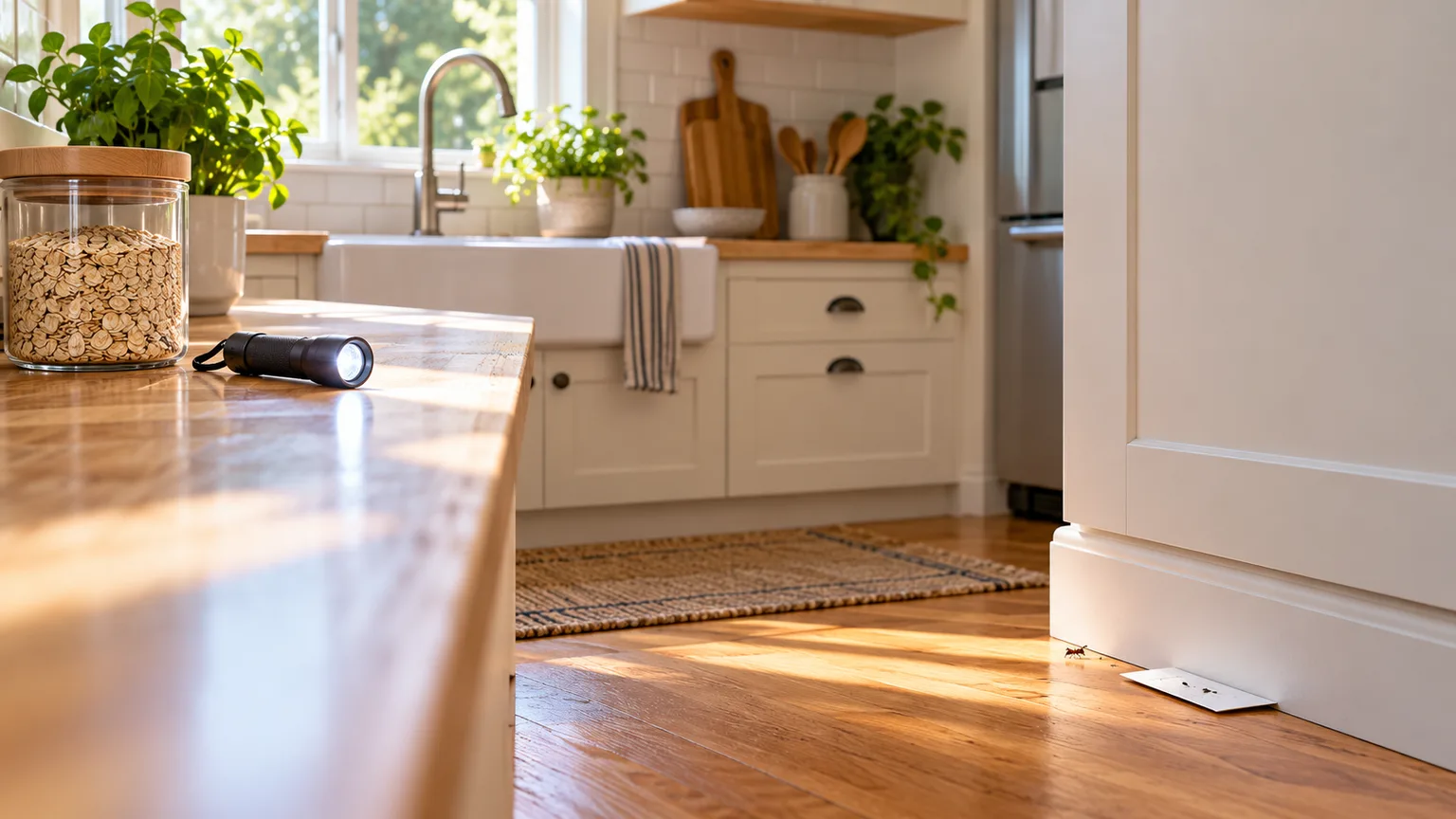
Do this inspection before you buy a trap. Carry a flashlight and start at the room where people are being bitten, then follow the path to the nearest exterior door or window. The goal is not to identify the species; it is to find the easiest route in and the nearest place where water or shelter is available.

- Check the bite room. Look under furniture, behind curtains, along closet walls, and in shaded corners. A quiet adult may rest there during the day and become active when the room is dark.
- Check nearby water. Empty plant saucers, vases, pet-water dishes, buckets, mop water, and humidifier or dehumidifier reservoirs. Scrub the container rather than only pouring it out, because eggs can remain attached to a wet surface.
- Check every opening. Close each door and look for daylight below it or at the latch side. Inspect window and screen-door mesh for tears, loose edges, and gaps where the frame meets the wall.
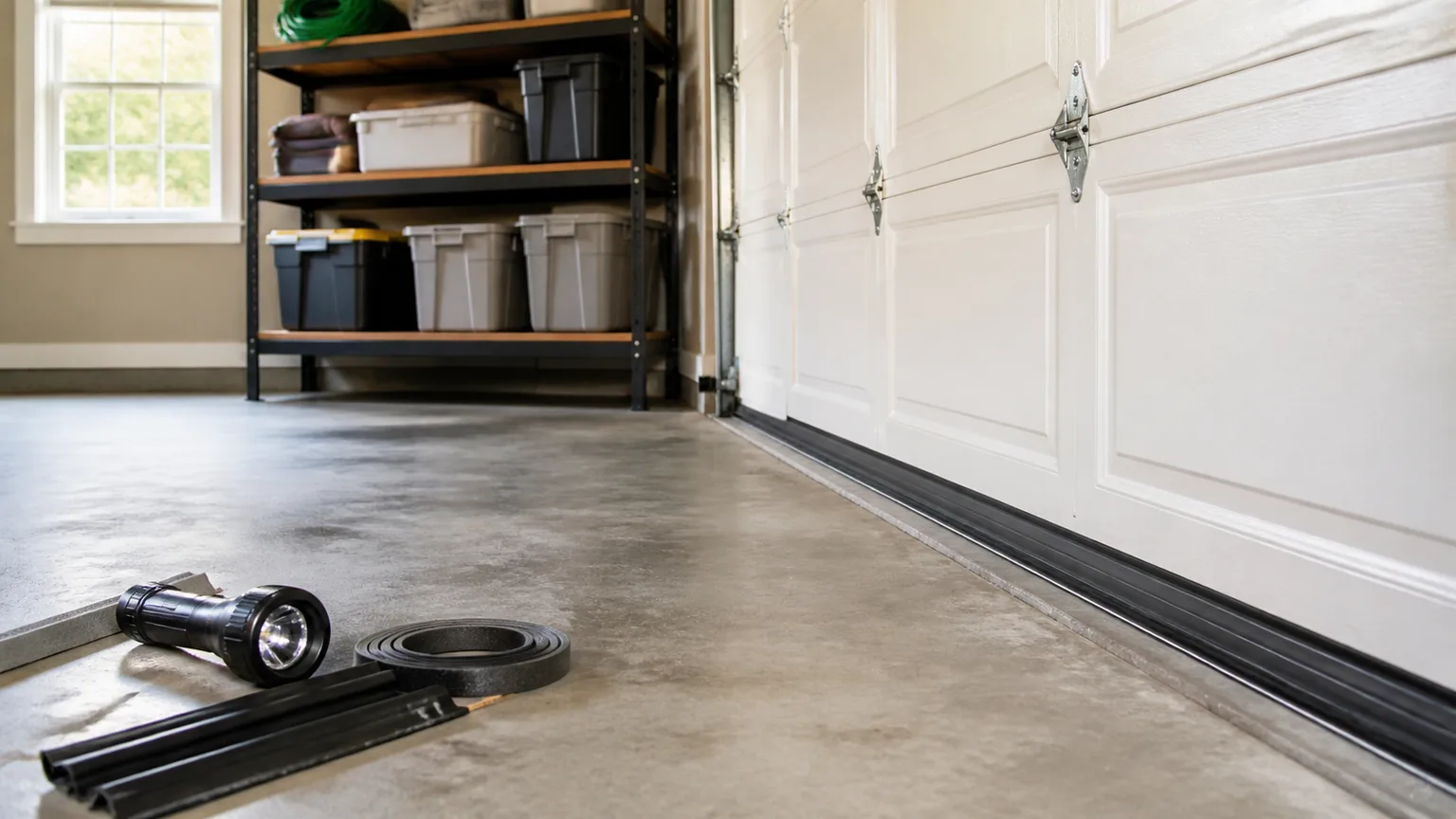
- Check the garage and utility areas. Look at the garage door seal, floor drains, utility sinks, sump areas, stored watering cans, and any container left beneath a leak. Keep the garage door shut when it is not in use.
- Walk the outside perimeter. Look within a few steps of the house for pot saucers, toys, tarps, wheelbarrows, clogged gutters, downspouts that discharge against the foundation, trash lids, birdbaths, rain barrels, and tree holes.
If you find several adults but no water or damaged screen, the mosquitoes may be coming from a neighboring property, a storm drain, a pond, or another habitat outside your control. Colorado State University Extension notes that adults can travel from larval habitat in search of a blood meal, so a clean yard does not always mean the source is on your lot. Colorado State University Extension mosquito-management FAQ
Seal the routes mosquitoes actually use
Repair the screen on the opening people use most, not just the one closest to the room where bites happen. A back door that opens onto a patio can supply more mosquitoes than a bedroom window if it is frequently left ajar. Replace torn mesh, tighten loose spline, and close gaps around the frame; a screen that looks intact from across the room may still have a lifted corner.
Add a properly fitted door sweep or threshold seal where daylight shows under an exterior door. Weather stripping helps around the latch and hinge sides, while a self-closing screen door reduces the time an opening is exposed. Do not leave exterior or garage doors propped open for ventilation; use a screened opening or air conditioning instead.
Treat vents, pipe penetrations, and foundation cracks as building-maintenance issues rather than places to spray. A fine mesh cover may be appropriate for a vent designed to be screened, but never block a required exhaust, combustion-air opening, or drain. If you cannot tell whether a gap is part of a safety system, ask a qualified professional before sealing it.
Break the breeding cycle once a week
Mosquito control improves when you manage the immature stages before they become biting adults. The CDC’s weekly routine is to empty and scrub, turn over, cover, or throw out items that hold water, including tires, buckets, planters, toys, pools, birdbaths, flowerpot saucers, and trash containers. A five-minute weekly reminder is more useful than a once-a-season cleanup because rain, irrigation, and condensation keep recreating small habitats. CDC weekly source-reduction routine
What to dump, scrub, turn over, and cover
Emptying is only part of the job. Scrub the inside of containers and the waterline of birdbaths, rinse dirty saucers, and store buckets, toys, and wheelbarrows upside down. Keep lids on rain barrels and storage bins; when a container must remain open, use mosquito-proof mesh that fits tightly around the opening.
Pay special attention to objects that are designed to collect water. A plant saucer under a container-grown plant, a grill cover folded into a low pocket, a recycling-bin lid, and a clogged gutter can all be easy to overlook. Pima County also recommends changing outdoor pet water daily and repairing leaky pipes and faucets, because a clean bowl is still a recurring water source if it is left untouched. Pima County mosquito-prevention guidance
When water cannot be removed
For an ornamental pond, stock tank, rain barrel, or drainage feature that cannot be emptied or tightly covered, use only a larvicide labeled for that exact water and follow its directions. Products containing Bti target mosquito larvae, but “natural” does not mean “use anywhere”: water type, fish, wildlife, irrigation, and drinking-water restrictions still matter.
Do not pour dish soap, bleach, oil, or an improvised chemical mixture into a pond, birdbath, drain, or rain barrel. If the water is connected to drinking, wildlife, or food-producing systems, ask the local health or vector-control agency which option is legal and appropriate. The CDC and Colorado State University both place larvicides after the basic steps of dumping, covering, or improving drainage, not ahead of them. Colorado State University on larvicides and Bti
Which trap fits the problem?
Traps can be useful when adults remain after you fix entry and water, but their job is narrower than many packages imply. Choose by the problem you are trying to solve: a single indoor adult, a recurring bedroom nuisance, a patio with evening activity, or a large outdoor area with nearby breeding habitat.
| Problem | First choice | What it can do | What it cannot do |
|---|---|---|---|
| One mosquito in a bedroom | Physical removal plus a fan | Ends the immediate nuisance without adding an attractant | Does not find the entry point or breeding site |
| Several adults in one room | Fan or enclosed trap placed away from the bed | Reduces landing opportunities or catches some adults | Does not prove the whole home is controlled |
| Outdoor patio activity | Source reduction, airflow, and personal protection | Makes the seating area less favorable | Cannot stop mosquitoes arriving from nearby property |
| Permanent outdoor water | Cover, improve drainage, or labeled larvicide | Prevents larvae where water must remain | Does not kill all adult mosquitoes nearby |
CO2 traps: a monitoring tool, not a force field
Female mosquitoes use cues such as carbon dioxide, heat, humidity, and odor to locate hosts. CO2-based attract-and-kill devices imitate part of that signal and can capture measurable numbers, which makes them more plausible than a light-only zapper for some outdoor situations.
That does not make a CO2 trap a guarantee for a house. The AMCA describes major differences by mosquito species, bait, location, wind, season, and breeding habitat. It also cautions that a trap may draw mosquitoes into an area and still fail to reduce biting pressure if it is poorly placed or cannot keep up with reinvasion. Use one only after screens and standing water are addressed, and place it according to the manufacturer’s label away from doors, windows, and the people you are trying to protect.
For indoor use, favor an enclosed unit that is explicitly designed and labeled for indoor operation. Keep it away from sleeping areas, children, pets, food, and water, and treat the catch as information: if the trap is full every night, look harder for an entry or nearby source rather than simply buying a larger trap.
Fan traps: useful for a concentrated room
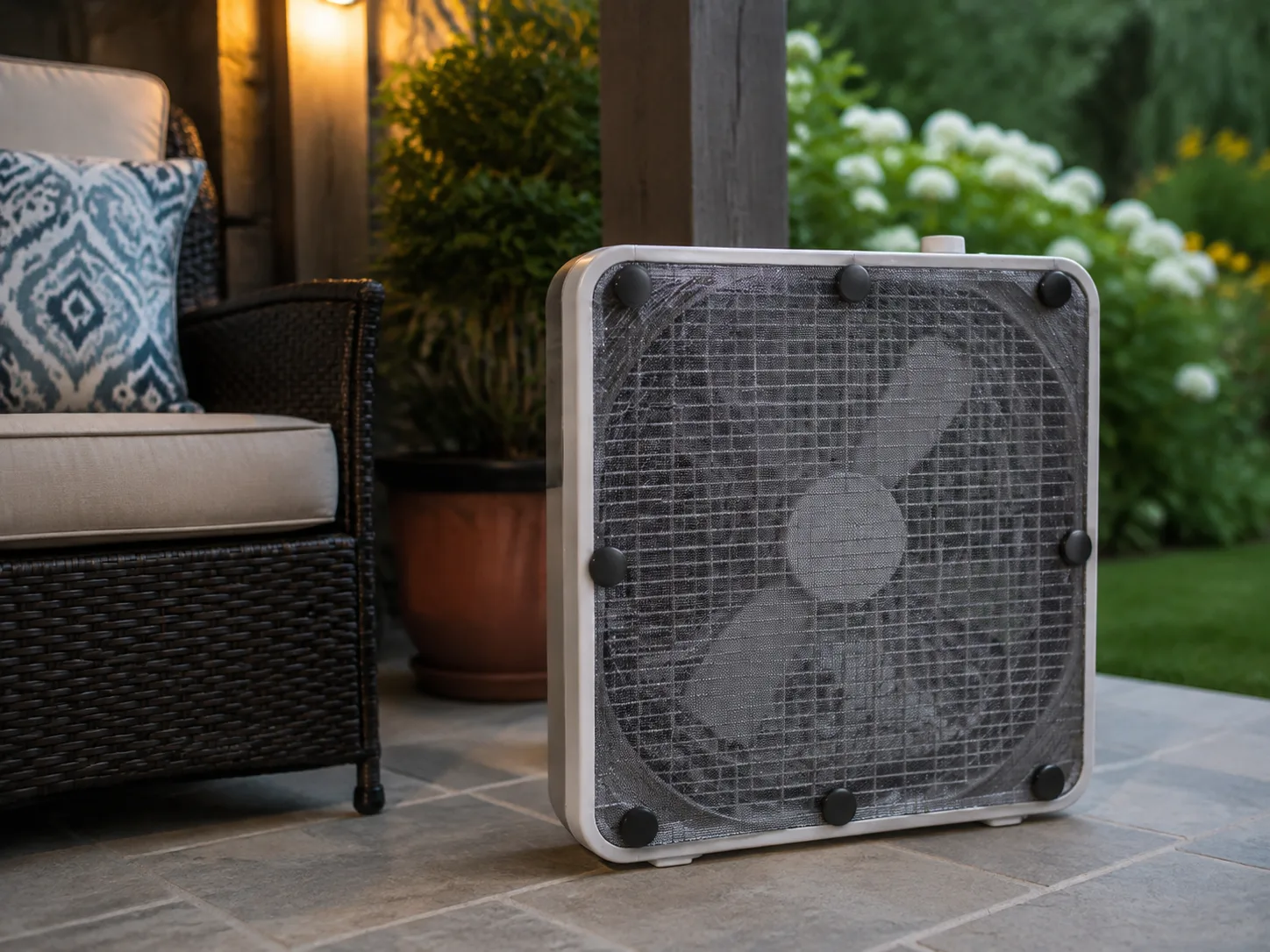
A box fan covered on the intake side with fine mesh can collect insects that are carried toward it, and a plain fan can make it harder for a mosquito to approach and land. The most useful placement is near the room’s active zone but not where the airflow blows loose papers, overheats a motor, or creates a trip hazard.
Use a fan trap as a short-term tool for a bedroom, porch, or screened room, especially while you repair a screen. Secure the mesh so it cannot touch the blades, keep the fan dry, and unplug it before cleaning or removing the mesh. A fan does not remove eggs, larvae, or adults resting in another room, so it belongs in the targeted-control part of the plan.
UV zappers and sonic gadgets: low priority
UV-only bug zappers are designed around light attraction, but mosquitoes rely heavily on host cues rather than light alone. Colorado State University Extension reports that UV bug zappers are ineffective at reducing mosquito biting rates and can kill many harmless or beneficial insects; it also reports no repellency from sonic devices in laboratory or field testing. Colorado State University on mosquito devices
That makes these devices a poor first purchase for a mosquito problem. If you already own one, do not mistake a dramatic crackle or a pile of insects for proof that it is reducing mosquito bites. Repair the screen and remove water first.
If one mosquito is already inside
When you hear one at night, do not turn the whole home into a chemical-treatment zone. Close the bedroom door, turn on the lights, pull curtains away from the wall, and check the ceiling, corners, behind the headboard, under furniture, and near the bathroom or closet. A handheld vacuum or swatter can end the immediate problem without leaving residue on bedding.
If you cannot find it, run a fan across the bed or seating area and keep skin covered while you inspect adjacent rooms in the morning. Empty nearby water containers and close the route you used to enter the room. One adult may be a one-off visitor, but repeated bites in the same location are a reason to audit the building rather than chase the insect each night.
Do not leave an open bowl or bottle of water beside the bed as a homemade “trap.” It adds a water-holding container and does nothing to seal the route. A deliberately placed, enclosed trap is a different tool from an unattended water container.
Why sugar-and-yeast bottle traps disappoint indoors
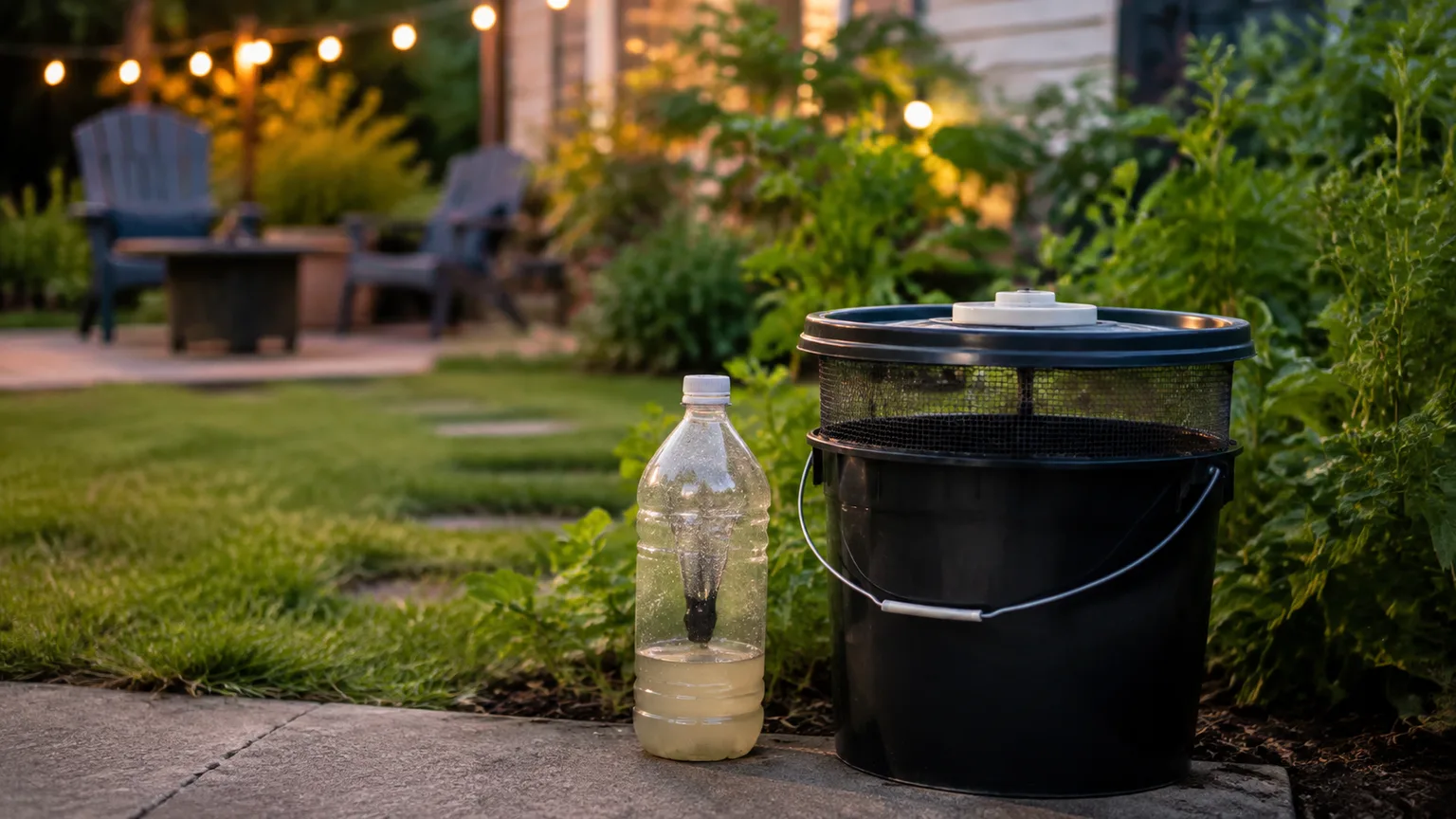
Sugar-and-yeast mixtures can produce carbon dioxide, which is why they are often presented as a homemade mosquito lure. The limitation is operational: a small bottle produces a modest, changing plume, has no dependable capture mechanism unless it is built correctly, and can become a forgotten water container.
Even if it catches a few insects, it does not tell you whether the mosquitoes are entering through a screen, emerging from a container, or arriving from a neighbor’s yard. That makes it a poor substitute for the audit and weekly cleanup. If you experiment with any DIY trap, keep it out of reach of children and pets, never place it near food or sleeping faces, and empty and clean it promptly instead of letting it sit as a breeding opportunity.
The better question is not “What mixture attracts a mosquito?” but “What allowed this mosquito to reach the room?” Answer that and the trap becomes optional.
Use airflow to reduce bites while you fix the cause
Airflow is one of the few immediate measures that can make a room more comfortable without putting a pesticide on skin or furniture. Aim a fan across the bed, desk, or seating area so the air moves over exposed ankles and arms. Keep the fan stable and away from water, curtains, and walkways.
A fan is not a repellent barrier for the whole house. It can reduce landing success in the small area it reaches, but mosquitoes can rest in a quiet corner and return when the fan stops. Pair airflow with a closed door, repaired screen, and inspection of nearby water.
If you are still being bitten outdoors, use loose-fitting long sleeves and an EPA-registered repellent according to its label. The CDC lists DEET, picaridin, IR3535, oil of lemon eucalyptus, para-menthane-diol, and 2-undecanone among EPA-registered active ingredients, and says not to use permethrin products directly on skin. CDC bite-prevention guidance
Mosquito-repelling plants and scents: what they can and cannot do
A pot of citronella-scented geranium, lemongrass, lemon balm, lavender, or another aromatic plant does not create an invisible mosquito-proof ring around a door. The plant’s scent is diluted outdoors, and an untouched pot is not releasing the same concentration as a tested repellent formulation.

The Farmers’ Almanac’s gardening coverage makes the useful distinction that aromatic oils are released more strongly when leaves are crushed, while also warning that crushed-leaf effects are short-lived and homemade preparations are not substitutes for EPA-registered repellents. Farmers’ Almanac on mosquito-repelling plants
Use fragrant plants for enjoyment and, if appropriate, as a convenient source of leaves near a seating area—not as a screen, larvicide, or medical protection. Never rub essential oils or crushed leaves on children, pets, or irritated skin without checking a reliable safety source; “plant-based” describes an origin, not a guarantee of safety or effectiveness.
Indoor insecticides and repellents: safer boundaries
Use topical repellent for exposed skin when you are being bitten, not as a treatment for walls, bedding, furniture, pets, or the air inside a room. Follow the product label, keep it away from eyes and mouth, and use the age restrictions on the label; the CDC specifically warns against oil of lemon eucalyptus and para-menthane-diol products for children under three.
For an indoor spray, fogger, plug-in, or other pesticide, the label is the boundary. The product must be labeled for indoor use and for the location where you plan to use it. Remove or cover food, keep people and animals out as instructed, ventilate or wait for re-entry as directed, and never exceed the application rate.
The CDC recommends considering an indoor insecticide only after screens are installed or repaired and water-holding items have been emptied and scrubbed. It notes that these products can work quickly but may need reapplication, and that using insecticide alone will not keep a home free of mosquitoes. For a child’s room, nursery, asthma-sensitive household, or uncertain product situation, call a licensed professional or local poison-information service before improvising.
Troubleshoot the pattern when mosquitoes keep coming back
The pattern usually tells you which part of the system is failing:
- Bites start after someone opens one door. Watch that doorway for a full evening. Repair the screen, add a closer or sweep, and keep the door shut between trips. A single high-traffic opening can outweigh several perfect windows.
- Mosquitoes appear every morning in one bathroom or laundry area. Recheck mop buckets, floor-level containers, sink cabinets, shower corners, humidifier reservoirs, and leaks. Scrub waterlines and fix the leak rather than relying on a trap.
- The problem returns after rain. Walk the yard within 24 to 48 hours and look for shallow water in lids, toys, saucers, tarps, gutters, and plant debris. Drainage defects and tree holes may need repair, filling, or agency guidance.
- A trap catches mosquitoes but bites do not decrease. The trap is catching some adults, not necessarily enough to change exposure. Reassess placement, species, nearby breeding sites, wind, screens, and whether the trap is pulling insects toward a doorway or seating area.
- Only one person seems to be bitten. Individual attractiveness and exposure differ, and one person may sit near a hidden route or resting area. Check clothing, bedtime routines, fan placement, and the room’s nearby openings before assuming the insect is “choosing” one person for a mysterious reason.
Colorado State University Extension notes that adults may travel well beyond the place where they developed, so a clean property can still experience pressure from nearby standing water. That is when neighborhood coordination, drainage repair, or vector-control surveillance may matter more than another household gadget.
When to call a professional
Call a licensed pest professional when mosquitoes persist after you have repaired screens, removed accessible water, and checked the obvious resting areas. Ask what they found, which life stage they are targeting, what product and application area they propose, and what you must do before people and pets re-enter.
Contact local public-health or vector-control authorities when you see repeated larvae in a drainage ditch, green pool, stormwater feature, large pond, neglected property, or other source you cannot safely manage. Public agencies may have reporting channels, surveillance data, or rules about treating shared or protected water.
Professional fogging or barrier treatments can provide temporary relief, but they do not stop reinvasion from untreated areas or repair a breeding site. Colorado State University Extension describes adult fogging as short-lived and emphasizes larval control and source reduction as the more durable foundation. Colorado State University on fogging and reinvasion
If anyone develops concerning illness after mosquito exposure, contact a healthcare professional and follow local public-health advice. Mosquito-borne disease risk varies by location and season, so the right response is local guidance plus bite prevention—not panic and not a promise that a home trap can eliminate health risk.
Conclusion: make the home boring to mosquitoes
To keep mosquitoes out of your home for good, make the building difficult to enter and the surrounding property unproductive for breeding. Repair the screen and door seal, use air conditioning or screened ventilation when possible, and empty and scrub water-holding items every week—daily for outdoor pet water in hot conditions.
Then use a fan, an enclosed trap, or a correctly labeled indoor product only for the adults that remain. Treat plant scents, UV zappers, and DIY bottles as limited or optional tools, not the foundation. The durable win is a home with fewer openings, fewer wet containers, and a clear routine for catching the next weak point before mosquitoes turn it into a habit.