Sustee Aquameter: The $20 Plant-Watering Fix
A practical Sustee Aquameter review covering blue versus white readings, probe placement, pot drainage, refill timing, and common watering mistakes.
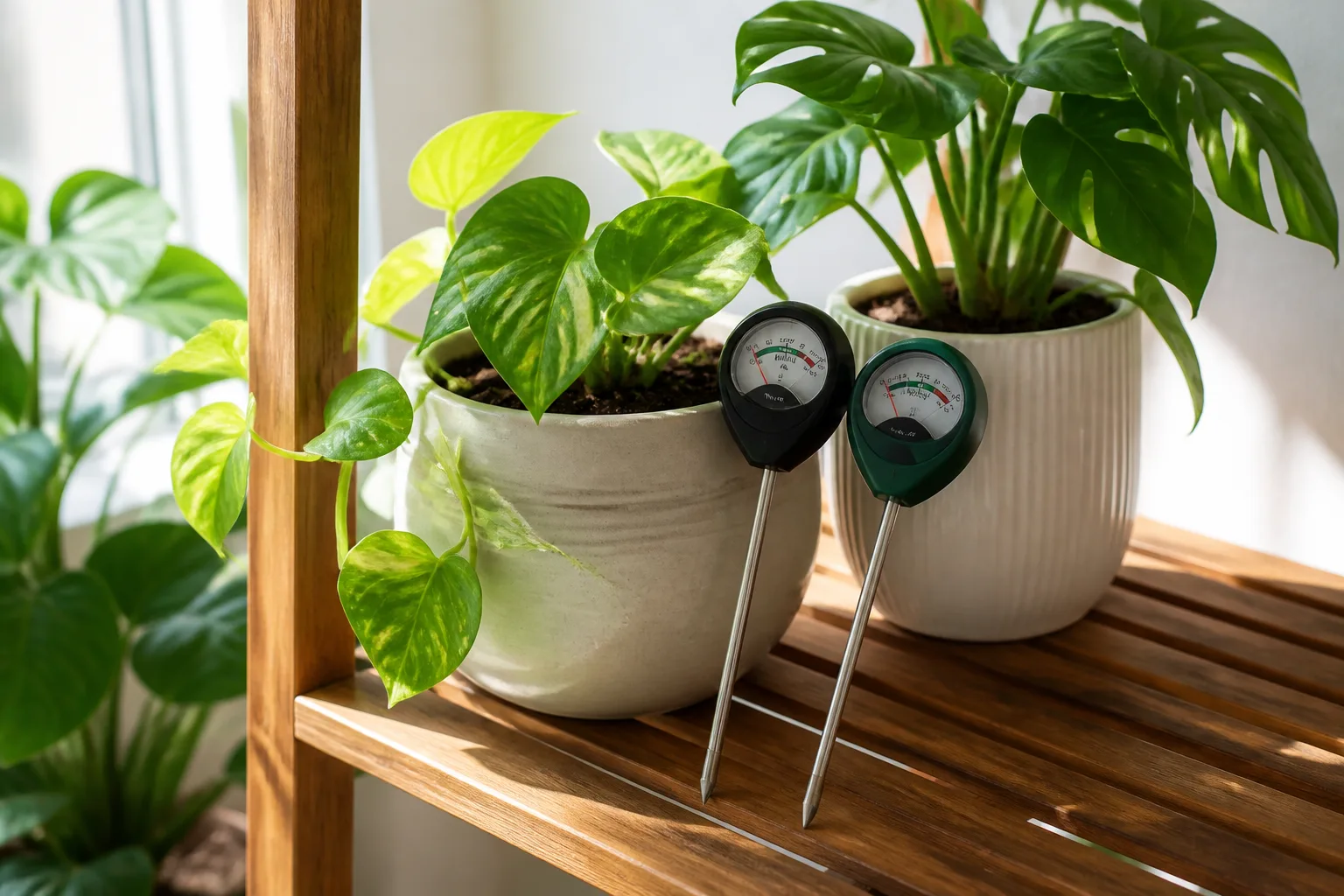
The best thing about a plant moisture meter is not that it makes watering automatic. It gives you a visible pause between “I think this pot is dry” and “I am about to pour in more water.” For people who forget the last watering, check only the surface, or panic when a plant droops, that pause can be the difference between a healthy wet-dry cycle and roots that never get air.
The four-pack that made this idea popular is the Sustee Aquameter, a small, battery-free, color-changing soil moisture cue. The current manufacturer information describes a blue indicator when the root zone has enough moisture and a white indicator when the medium has dried enough to signal another check; it also lists small, medium, and large sizes plus replaceable cores that last roughly six to nine months. Treat those as product specifications, not a promise that every pot or plant should be watered on the same color.
The more useful question is not “Does this gadget work?” It is “Can I use its reading with the right plant, pot, mix, and drainage?” The answer is yes for many indoor containers, especially when the tool helps you stop watering by calendar. It is no if you expect a color change to diagnose root rot, fix a pot without a drainage hole, or tell a cactus and a fern to follow the same threshold.
Why a simple watering cue can help
Houseplant watering fails because the visible surface is a poor diary. It can look dry while the center of a large pot is still wet, or look dark after a splash while the root ball below remains bone dry. Colorado State University Extension notes that watering depends on species, light, temperature, humidity, air movement, potting mix, and container—not a universal weekly interval. Its recommended checks include pot weight, soil feel, and color, which is exactly the context in which a moisture cue becomes useful.
The cue also interrupts two opposite habits. A chronic underwaterer can stop waiting for dramatic wilt before checking the pot, while a chronic overwaterer can see that a plant is still holding moisture and walk away from the watering can. USDA Climate Hubs’ soil-moisture education makes the broader point: measuring moisture can improve irrigation decisions, but growers can still over- or under-irrigate when a measurement is not connected to what the plant needs.
That is why the product is best understood as a reminder attached to the pot, not a robot gardener. It makes the status of one root zone visible during a busy week. You still decide whether the plant prefers even moisture, a partial dry-down, or a long dry interval, and you still have to deliver water thoroughly and let excess escape.
What the Sustee Aquameter actually tells you
The Sustee Aquameter answers one narrow question: has moisture reached the area around the sensor’s core? According to Sustee’s current product information, the visible cue shifts between blue after watering and white as the medium dries, with no battery or numeric scale to interpret. That simplicity is the appeal: you can scan a shelf without remembering whether the pothos was watered Tuesday or Thursday.
It does not tell you the plant’s name, the amount of water remaining in the whole pot, the oxygen level around the roots, or whether the plant is suffering from pests, cold, poor light, compacted mix, or salt buildup. It also does not tell you that a white reading means “pour immediately.” White means check whether this plant has reached its own watering point.
The distinction matters because moisture is not a single target. A fern or peace lily may be happiest when the mix is still slightly moist, while a snake plant, ZZ plant, or succulent generally needs more drying time. Even within one species, a bright window, a small terracotta pot, and a loose barky mix can create a much faster dry-down than a low-light corner in a large plastic pot.
Think of the meter as a traffic signal with missing road signs. Blue is a reason to pause. White is a reason to inspect. The plant, container, and potting mix provide the road signs that tell you whether to continue to watering.
Who should buy it—and who should skip it
This is a good tool for a specific kind of problem: you need a fast, low-effort reminder at the level of each pot. It is especially helpful when you have a collection, deep containers, dense foliage that hides the soil, or a habit of watering because a certain day of the week arrived.
Where the meter earns its keep
Use one when your finger cannot reach the middle of the root zone. A floor planter may have a dry-looking crust above a cool, damp center, and a shallow finger check can push you toward unnecessary water. The cue is also useful for hanging plants, pots tucked into decorative covers, and a group of plants with different drying speeds.
It can be a training tool for a new plant. For the first few weeks, record the color, pot weight, room conditions, and plant response instead of chasing a schedule. If the meter turns white after four days in bright summer light but takes twelve days in winter, you have learned the rhythm of that pot rather than memorized a generic interval.
The product can also reduce decision fatigue. A meter in each of five pots lets you scan for the one that needs attention while leaving the blue ones alone. That is more realistic for a busy plant owner than a care app that sends the same reminder to every pot regardless of species or weather.
Where the finger test wins
Skip the purchase for a few small pots that you can lift and reach easily. Your finger gives you texture, not just moisture: you can feel whether the mix is loose, crusted, compacted, or dry only at the surface. Pot weight adds another free signal, and a very light container after watering often tells you more than a vague gadget reading.
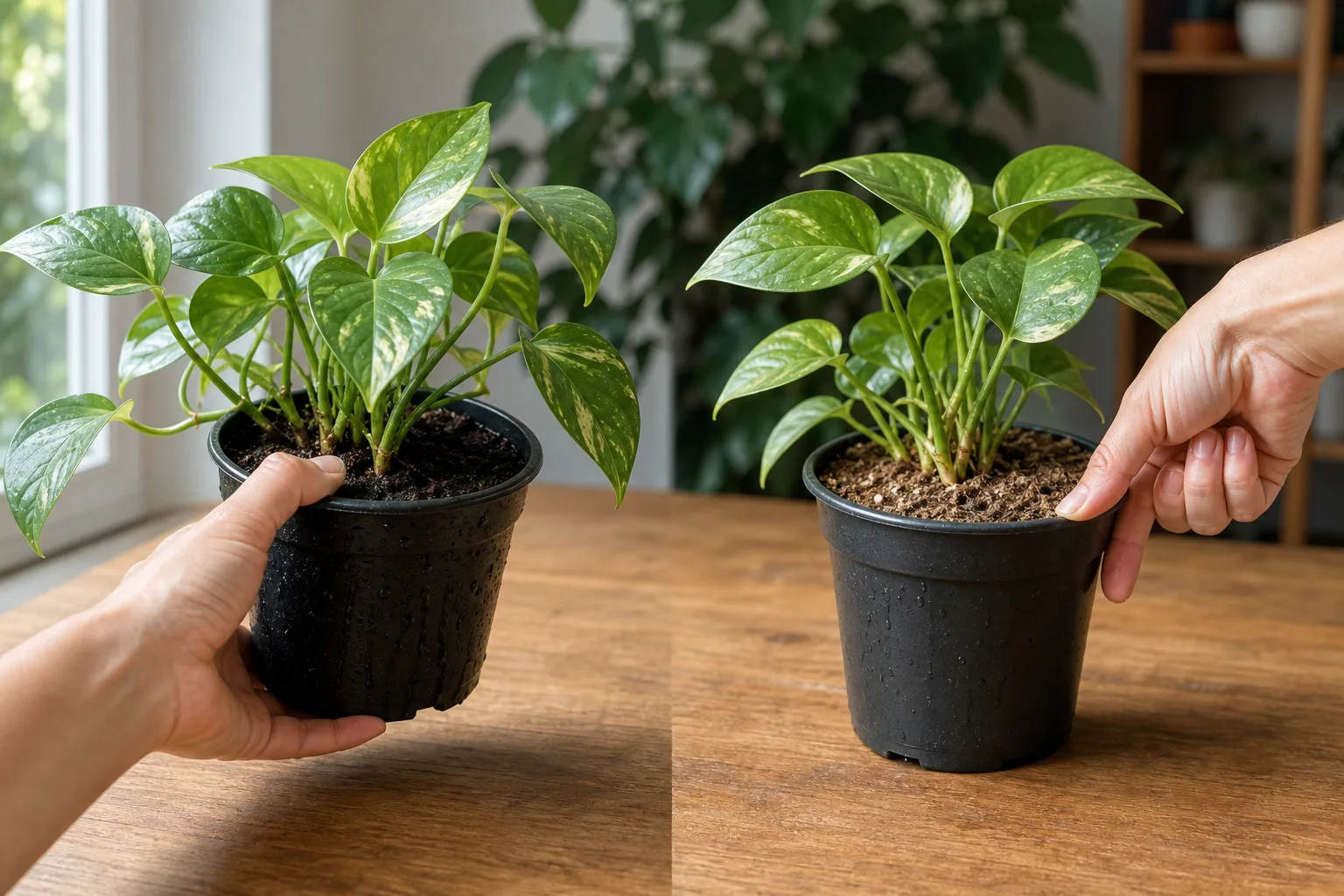
Your hands also win when a plant is in trouble. If leaves are wilting but the pot is heavy and the mix is wet, adding water because the plant “looks thirsty” can worsen root stress. Virginia Cooperative Extension explains that overwatering is about how often water is applied, not how much is used in one thorough session, and that roots need oxygen as well as water.
Use the meter as a backup rather than a verdict if the pot has no drainage hole, the soil has recently been fertilized, or you are growing in an unusual medium such as a chunky orchid mix, semi-hydro setup, or very dense garden soil. Those situations change how a simple cue should be interpreted.
| Situation | Best first check | Role for the Aquameter |
|---|---|---|
| Small nursery pot | Finger and pot weight | Optional reminder |
| Deep floor planter | Multiple depth checks | Helpful root-zone scout |
| Succulent or cactus | Mix dryness and pot weight | Confirmation, not a schedule |
| Wilted plant | Soil, roots, and drainage | Do not let color decide alone |
| Recently fertilized pot | Soil feel and plant context | Be cautious with the reading |
Pick the size and place it in the root zone
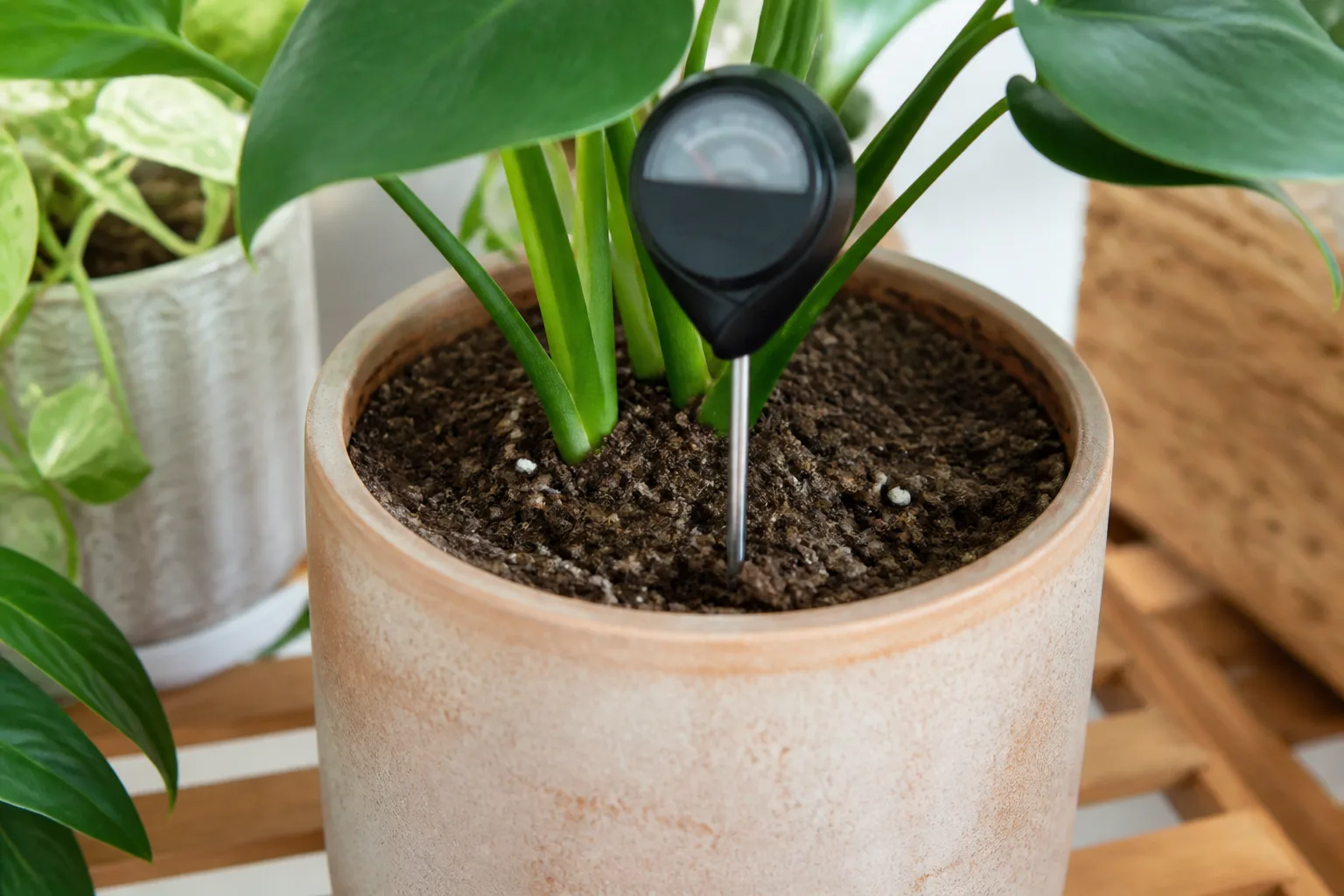
The right sensor is the one that reaches the part of the pot where active roots are actually using water. Sustee offers size options for different container depths, so compare the product’s size guidance with the pot you own rather than buying the smallest pack automatically. A short sensor sitting in the top layer of a tall planter can announce “dry” while the lower half remains wet.
Use the right depth and position
Place the meter near the plant but not directly against the crown or a thick cluster of roots. Insert it deep enough to sample the main root zone without striking the base of the container. For a small pot, that may be only a few inches; for a taller pot, the appropriate version should reach farther. The rule is sample where the roots are, not where the soil looks most convenient.
Do not force the stick through a stone, root mass, or hard dry plug. Choose another spot, loosen only the surface if appropriate, or hydrate the medium gradually first. Repeatedly stabbing the same point can damage roots and create a false sense that one tiny channel represents the entire pot.
If the container is wide, take readings in two locations during the first few waterings. One side may be dry because it faces a window or because the plant’s roots are unevenly distributed, while the other side remains damp. That pattern is a signal to improve watering coverage and pot placement, not permission to keep one half permanently wet.
Build a reliable watering routine
The meter works best when it is part of a short sequence. Check the color, confirm the pot and plant context, water the entire mix when it is ready, and then make sure the pot drains. That sequence is what turns a cheap cue into a safer habit.
Blue means pause; white means inspect
When the indicator is blue, leave the watering can alone unless the plant has an unusual requirement that calls for consistently wet roots. Check again later; do not “top up” the pot merely because you are already caring for nearby plants. A blue reading is especially valuable for overwaterers because it makes waiting visible.
When the indicator is white, touch the mix or lift the pot before watering. For plants that like even moisture, white may mean it is time to water. For a succulent, cactus, or other plant that needs a dry interval, white may be the point at which you inspect more deeply and still wait.
If you are learning a plant’s rhythm, note the date and outcome for a month. Record “white, watered, drained well” or “white, still damp at the center, waited two days.” A few observations create a better guide than any fixed houseplant watering calendar.
Water deeply, then empty the saucer
When the plant is ready, water the potting mix slowly and thoroughly from above, directing the stream onto the soil rather than the foliage. Apply enough to wet the whole root ball and allow excess to drain from the bottom. Virginia Cooperative Extension’s container-houseplant guidance recommends thorough watering followed by drainage and warns that pots should not sit in collected water for extended periods.
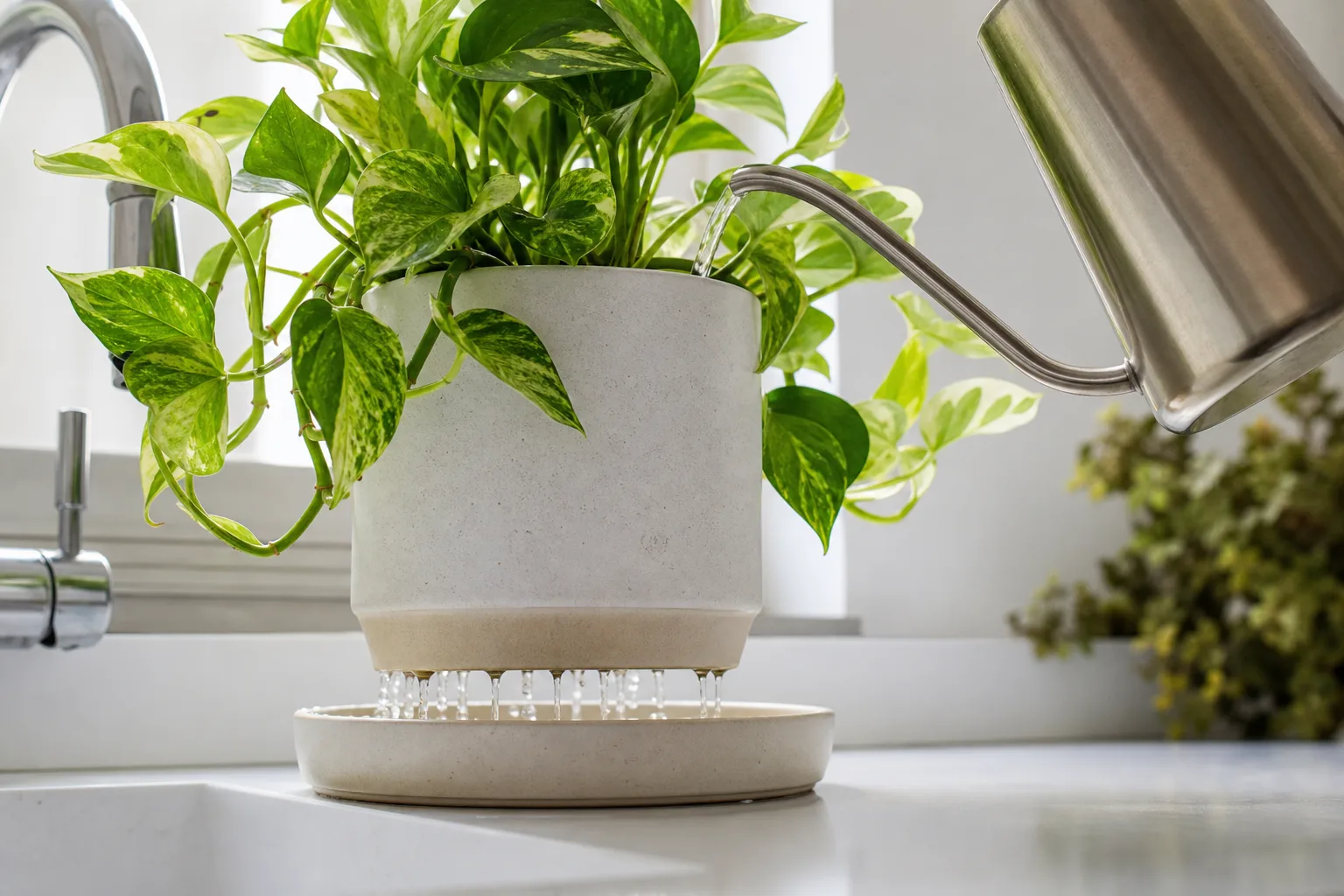
Empty the saucer once the pot has finished draining. A decorative cover pot should be checked too; water can hide in the bottom even when the top surface looks tidy. Colorado State Extension likewise advises catching excess, discarding it, and checking below the surface to make sure the mix became evenly moist.
If water immediately races down the sides and out the bottom, do not assume the root ball is hydrated. Very dry peat- or bark-based mixes can become hydrophobic and repel water. Use two or three slow applications, or carefully bottom-water a container with drainage holes until the center softens, then drain it completely.
Match the cue to the plant
A sensor can be consistent while the plants are not. The useful threshold is the moisture level at which a particular plant should be watered, not a color that every species must obey.
Plants that like even moisture
Moisture-loving houseplants such as many ferns, fittonias, peace lilies, and some calatheas usually should not be left bone dry for long. When the meter is white, check just below the surface and water if the root zone is beginning to dry. If the plant repeatedly wilts before the cue changes, look at light, root coverage, pot size, and air movement rather than simply watering more often.
These plants still need oxygen. “Likes moisture” does not mean “likes a sealed, waterlogged pot.” A mix that stays saturated for many days can reduce air in the pore spaces and damage roots even when the foliage appears lush at first.
Plants that want a drying interval
Snake plants, ZZ plants, jade plants, aloe, cacti, and many succulents are poor candidates for a color-only rule. Wait for a meaningful dry-down through much of the pot, then water thoroughly and let it drain. A white cue in the upper section may be normal, not an emergency.
Orchids and plants in airy bark mixes add another complication: water can move quickly through the container while the visible surface tells you little. Feel the mix, inspect roots when appropriate, and make sure the pot’s holes are clear. BBC Gardeners’ World’s houseplant watering guide makes the same plant-by-plant distinction, including sparing water for dry-region plants and different methods for orchids, bromeliads, and plants that dislike wet leaves.
Account for the room and the season
The same pot can need different attention in June and January. Bright light, warmth, moving air, low indoor humidity, and active growth usually increase water use; short days, cool windows, and dormancy can slow the dry-down. A color cue helps you see the change, but it cannot explain it.
Container geometry matters too. Small pots hold less water and can dry quickly. Unglazed terracotta loses moisture through its walls, while a glazed pot or plastic nursery pot usually holds moisture longer. Virginia Cooperative Extension notes that soil texture, pot material, container volume, and height all influence drying, so the same plant in two different pots should not receive identical reminders.
Use a new purchase cautiously. Nursery plants may arrive in a dense, already-wet mix inside a decorative cover pot. Wait for the actual root zone to dry to the plant’s preference, confirm that water can escape, and do not reset the cue by watering merely because the leaves are dusty or the calendar says it is time.
The RHS watering guidance offers a useful broader rule: avoid routine watering by date and check moisture below the surface instead. For indoor plants, adapt that principle to the pot and species, then use the meter to make the check faster.
When meter and plant disagree
Disagreement is not a product failure by default. It is information that the sensor may be sampling the wrong depth or that the visible symptom has another cause.
Dry cue, wet mix
First, reinsert the meter in a second spot at the correct depth. If the soil feels wet below the surface and the pot still feels heavy, wait; do not water to satisfy the white indicator. Check whether the core is seated correctly, whether the medium is unusually chunky, and whether the sensor is sitting in a dry air pocket near the wall of the pot.
Next, examine the mix. Water-repellent soil can be dry in the center even when a little water appears in the saucer, while a crusty top can be dry over a moist lower root zone. Virginia Cooperative Extension recommends slow repeated applications for hydrophobic mix; once the pot is properly hydrated, future readings should be easier to interpret.
Clean the sensor according to its instructions and avoid treating a single test as a measurement of the whole container. If the disagreement persists across several locations and waterings, use finger feel and pot weight as the deciding evidence and replace the core if its color change has become sluggish.
Blue cue, wilted leaves
Do not assume wilt equals thirst. Check the pot weight, mix moisture, drainage holes, leaf texture, recent temperature changes, and roots if the condition is serious. A heavy, wet pot with drooping or yellowing foliage points you toward poor drainage or root stress, not another drink.
A dry pot with crisp leaves and soil pulled away from the container is a different problem. Rehydrate slowly and thoroughly, sometimes with a short bottom-watering session for a pot with clear drainage holes, then allow it to drain before returning it to its spot. BBC Gardeners’ World also advises checking the compost first because wilt can accompany both dry and overwatered conditions.
If the soil moisture looks appropriate but the plant continues to decline, stop changing the watering routine blindly. Inspect light, pests, temperature, roots, and recent fertilizer use. A moisture meter can prevent one watering mistake; it cannot diagnose every reason a plant looks unhappy.
Keep the meter useful for months
The low-maintenance design is part of the value. The manufacturer describes the Aquameter as battery-free and refillable, with cores expected to last about six to nine months depending on the model and use. Check the current product instructions for the size you own, and treat that lifespan as an estimate rather than a warranty of identical performance in every pot.
Watch for a slow or unclear color transition. If the indicator stops responding after the soil dries and rehydrates, replace the appropriate core instead of changing your plant’s watering threshold to compensate. Keep spare refills with the tool so a worn insert does not quietly turn into months of bad decisions.
If you move the meter between pots, wipe it clean and let it dry as directed before using it again. Do not use it as a liquid tester, hammer it through hard material, or leave a handheld probe in the soil unless that model is specifically designed for continuous placement. The Sustee is designed as a leave-in cue, but the insert still needs to be replaced when its response weakens.
Most importantly, keep observing the plant. A meter earns its place when it helps you notice patterns: this pot dries faster after a move, that succulent stays wet too long, or the fern needs checking before the surface looks dry. The tool is doing its job when you need it less to guess—not when you stop looking at the plant.
Conclusion: a small tool that fixes one big habit
The Sustee Aquameter is worth considering if your biggest watering problem is forgetting, checking too shallowly, or treating every plant as if it followed the same calendar. Its blue-and-white cue is simple, battery-free, and easy to scan across a shelf, while the refillable core keeps the basic body in use longer.
It is not a substitute for drainage, a species-appropriate dry-down, or a root and soil check when symptoms look wrong. Use the color to decide when to pause or investigate, then water thoroughly only when the plant and root zone are ready. That modest workflow is what can keep plants thriving for months—and what makes the tool useful enough to recommend to a friend.



