How to Make Cut Tulips Last Longer
Learn how to make cut tulips last longer with a clean vase, fresh cuts, flower food, cool placement, and a simple routine for drooping stems.
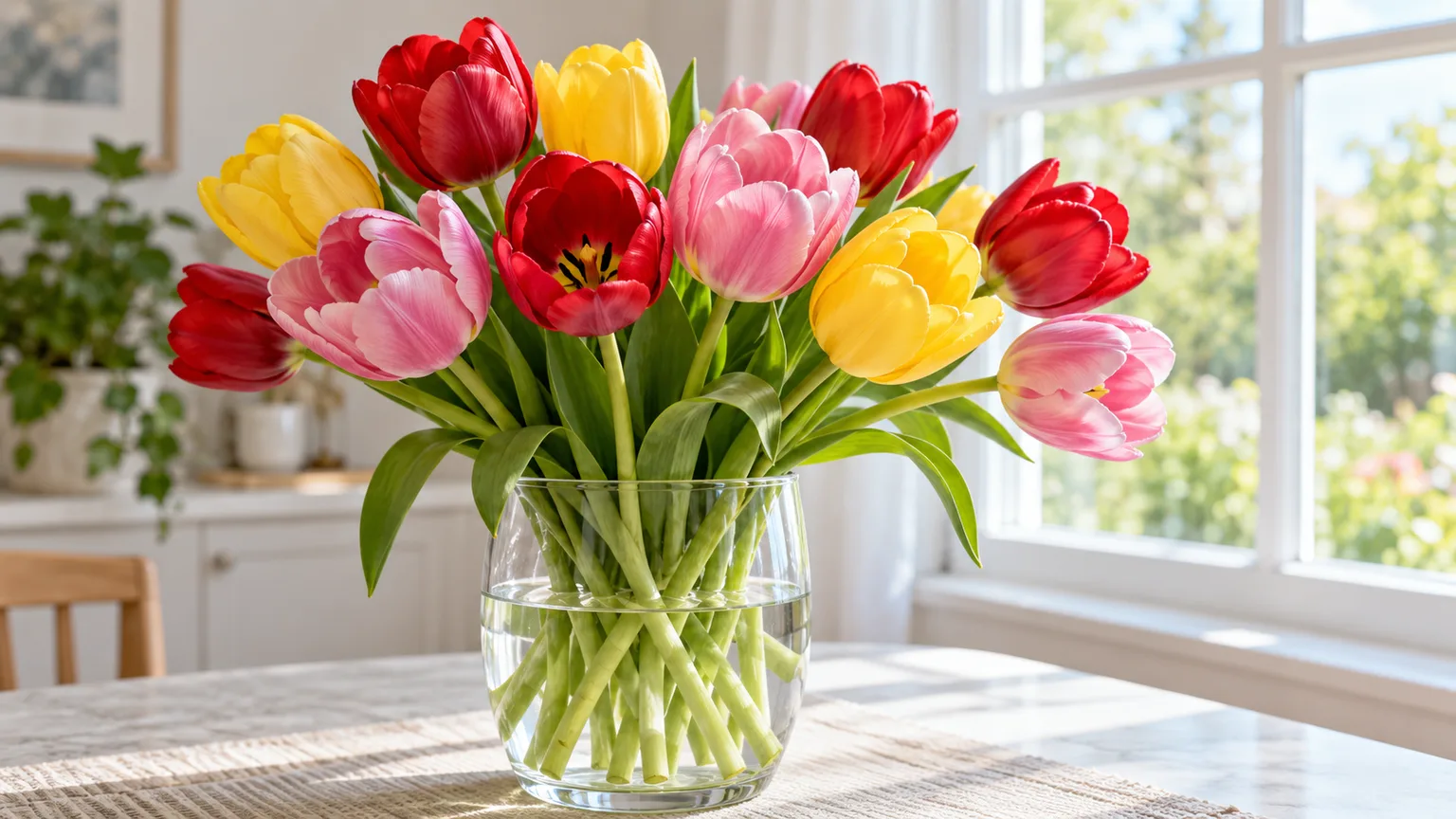
A vase of tulips is a moving arrangement: stems stretch, heads turn toward light, and flowers open wider as the days pass. That movement is normal, but dehydration, dirty vase water, heat, and already-aged flowers can shorten the display. Give cut tulips clean water, a freshly trimmed stem, and a cool place, then check the water every day.
For the best chance at a longer vase life, choose firm buds that are beginning to show color, wash the vase before arranging, remove leaves that would sit underwater, and use a properly diluted flower-food packet if you have one. Keep the bouquet away from direct sun, heaters, and ripening fruit. You cannot freeze the flowers in their first-day shape, but you can slow avoidable decline and make their natural growth easier to manage.
The quick routine that gives cut tulips their best chance
Start with a clean vase and fresh, cool tap water. Remove any leaves that would be submerged, trim a short section from each stem with a clean sharp blade, and place the tulips in water right away. Add the flower food packet at the dilution printed on it; if you have no packet, clean water is a sound fallback.
Set the vase in a cool room where the flowers get ordinary indirect daylight, not hot sun or a draft from a heater. Check the water the next morning because tulips can drink noticeably; refill with fresh water if the level has fallen, and replace it sooner if it looks cloudy or smells stale. This basic routine addresses the parts of vase care a home grower can control without trying to stop the flowers from opening.
How long cut tulips last in a vase
A reasonable home expectation is about five to ten days, with the exact result depending on how mature the flowers were when cut, how long they spent dry or warm before purchase, the cultivar, and the care they receive. Some bunches fade sooner because they were already far along at the shop; well-handled buds may keep opening for longer. A vase-life number is a useful range, not a guarantee.
A tulip can still look fresh while its shape changes. It may lengthen, arch, or open enough to look dramatically different from the day you arranged it, even though the petals remain firm and the stem is drinking. Judge remaining life by the condition of the petals, stem, and water—not by whether every flower is still vertical.
Choose tulips that are fresh enough to last
At a market or florist, look for buds that feel firm and show some color at the tips without being fully open. A completely green bud may be immature and take longer to show color; a flower already wide open has less time left as a tight, fresh-looking bloom. The ideal stage depends on whether you want to enjoy the opening process or need flowers to look fully open on a particular day.
Check the stem and foliage as well as the petals. Choose stems that are firm rather than limp, with leaves that are not yellow, slimy, or heavily bruised. Avoid bunches with brown or translucent petal edges, crushed heads, or a sour odor around the wrapping. If the stems are rubber-banded or sleeved, make sure they have not been crushed and kept warm for a long time.
Once you buy them, minimize the time they spend out of water. If the trip home is short, keep the bunch upright and away from a hot car; for a longer delay, ask the florist to wrap the stem ends or place them in water. At home, unwrapping and arranging them promptly is more useful than trying to compensate later with extra additives.
Condition stems as soon as you get them home
A vase is part of the care process, not just a display container. Wash it with dish soap, rinse away residue, and fill it with fresh water before preparing the stems. Clean tools and a clean vessel reduce the chance that microorganisms and old plant debris will contaminate the water; NC State Extension lists microbial contamination and water stress among the main postharvest threats to cut-flower quality. NC State Extension’s postharvest guidance also explains why correct temperature and properly mixed floral preservatives matter.
Make a clean fresh cut
Use a sharp knife or clean floral snips to remove roughly half an inch from the stem base, or enough to remove a dry, discolored end. A clean cut is more important than a precise angle: a slight diagonal can keep the cut surface from sitting flat against the vase bottom, but it does not need to be a dramatic 45-degree slice. Avoid crushing or sawing the soft stem.
Put each trimmed stem into water immediately. If tulips have been out of water long enough for their ends to dry, trim again before arranging. You do not need to cut the stems every morning on a fixed schedule; recut when ends look dried or slimy, water uptake stalls, or the flowers begin to wilt despite a full vase.
Keep leaves above the waterline
Remove only foliage that would sit below the waterline. Wet leaves break down and dirty the vase, while the healthy leaves above water still contribute to the arrangement’s appearance. Do not strip every leaf simply to make the stems look bare unless you prefer that style.
Keep the cut ends submerged, but do not fill the vase so high that leaves are soaking. A vase with several inches of water is usually easier to maintain than a nearly empty one, and it gives you a visible way to notice when the level drops. The practical test is simple: all stem ends stay underwater and no leaf is rotting in the vase.
Choose a vase that supports growing stems
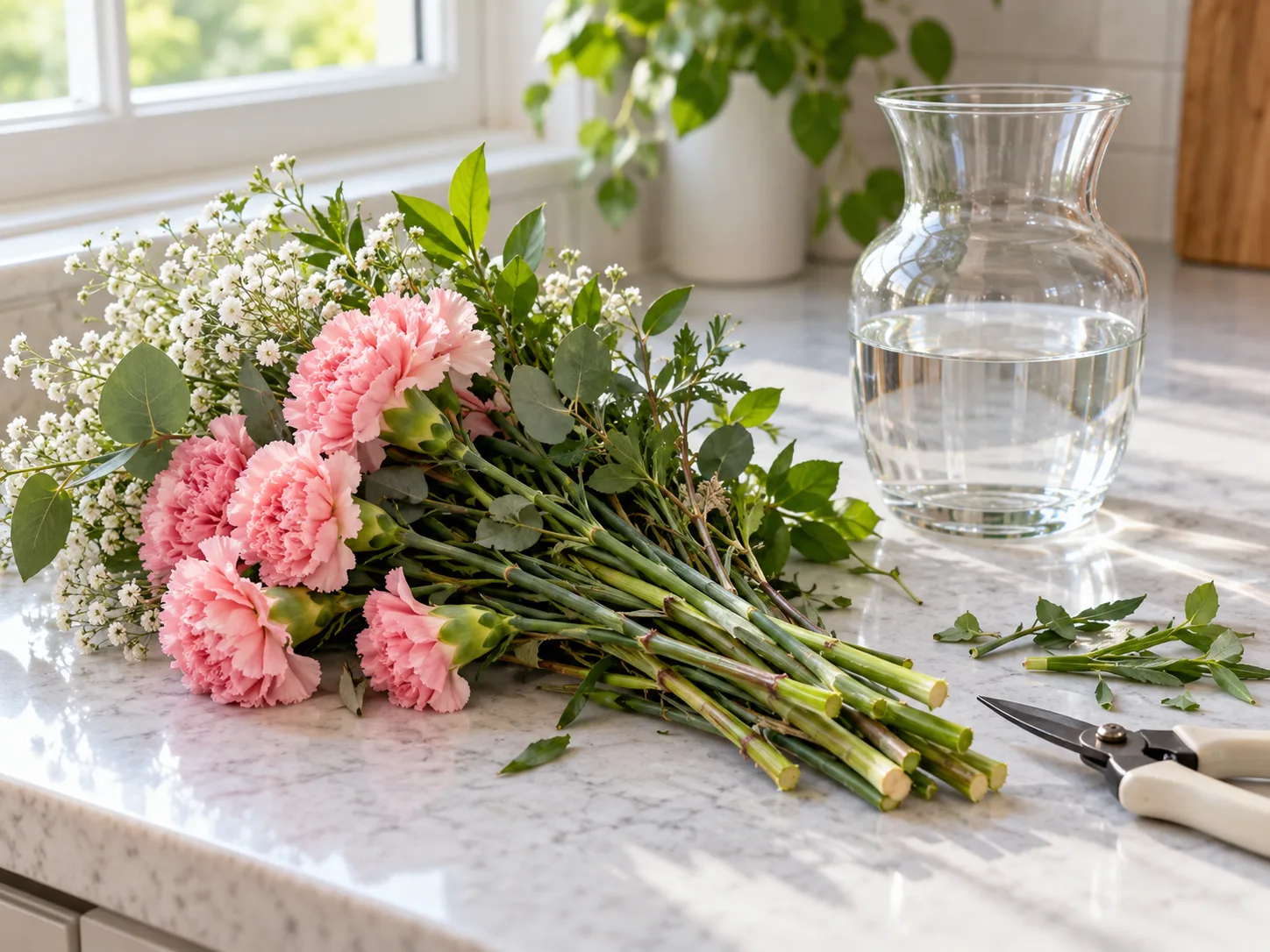
Tulip stems are flexible, and the flowers continue changing after harvest. A vase with a narrow neck or a gently tapered opening can support the stems better than a very wide bowl, especially if your tulips are already long or the heads are heavy. Choose a vessel tall enough to hold the stems without forcing the flower heads against the rim.
Do not pack the stems tightly. Crowding can bend them against one another and make it harder to remove a stem or change the water. Arrange them loosely, leaving a little room for each flower to turn and open. If you are combining tulips with other flowers, place the tulips slightly lower at first; their stems may lengthen and rise into the arrangement.
For an event, leave extra space above the blooms and arrange them closer to the date rather than expecting a tulip bouquet to stay frozen in one shape for several days. If the stems grow past the desired height, trim them again and reset the arrangement. A sturdy vase manages their movement; it cannot prevent it.
Use fresh water and flower food correctly
A commercially prepared floral preservative is useful when available, but it needs to be mixed as directed. Consumer flower food is typically formulated with a carbohydrate, an acidifying ingredient, and an antimicrobial compound. The balance matters: NC State Extension notes that preservatives can become ineffective or even damage flowers if the concentration is too high or too low. Use the full packet with its stated amount of water rather than estimating, splitting, or adding extra sugar.
Some florists sell crop-specific preservatives, including products designed for tulips. If the packet is labeled for tulips or for mixed cut flowers, follow its directions. Do not combine two packets or add household bleach, aspirin, soda, vinegar, or a penny to a prepared solution; improvised mixes can change the concentration without giving you a reliable preservation benefit.
A peer-reviewed study of 15 tulip cultivars found meaningful cultivar differences in stem length and curvature during vase life. The research tested controlled holding solutions in a laboratory, not household recipes, so it is evidence that tulips respond differently by variety—not a reason to copy experimental chemical treatments at home. The Scientific Reports study on postharvest tulip quality is also a reminder that no single additive erases the role of cultivar and handling.
If you do not have a flower-food packet
Use a clean vase and fresh water. Tulips can open and look good without homemade sugar mixtures, and clean water is safer than guessing at a recipe that may feed microbes or injure the stems. Change water daily or every other day, rinsing the vase if it becomes cloudy, and refill it so the cut ends remain covered.
If you later obtain flower food, start with a clean vessel and mix the packet into the exact volume of water specified. Do not add food to old, cloudy water. The goal is a fresh, measured solution—not making the water as sweet or as cold as possible.
Find a cool place away from heat and ripening fruit
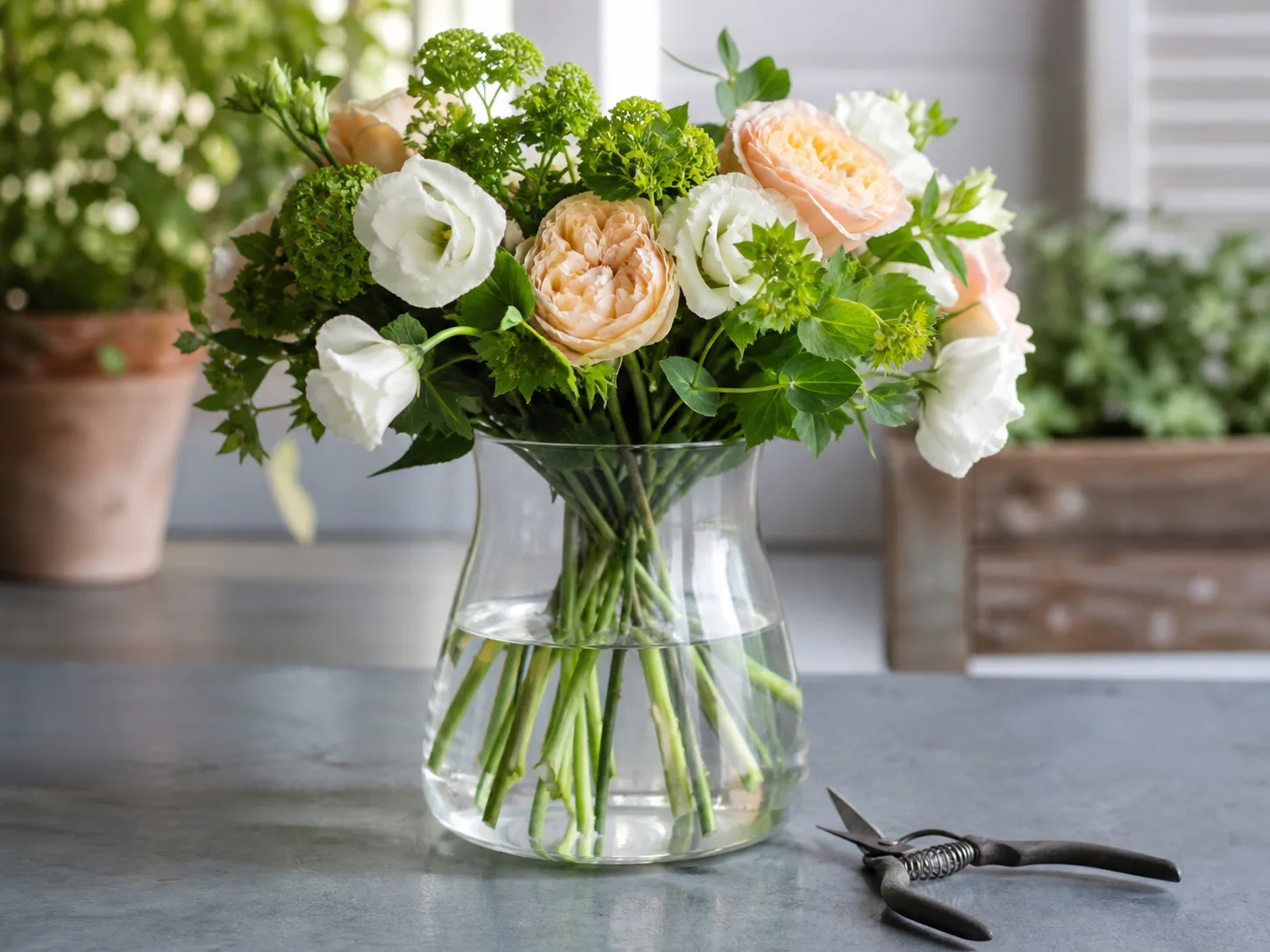
Tulips tend to last longer in a cool room than in a warm, sunny spot. Keep the vase away from radiators, heating vents, fireplaces, hot appliances, and direct afternoon sun. A bright room is fine; the problem is sustained heat and intense light that speed opening and drying.
Cut-flower handling guidance emphasizes cold storage, water balance, and avoiding ethylene exposure. Ripening produce and some combustion sources can release ethylene, a gas that contributes to flower aging in susceptible crops; placing tulips beside a fruit bowl or gas appliance is an easy risk to avoid. NC State Extension discusses ethylene as a postharvest concern, while Longfield Gardens also recommends keeping tulips away from warm spots and fruit. Longfield Gardens’ tulip-care guide explains that warmth also speeds the visible stretching that makes a bouquet change shape.
You do not need to put the vase in a refrigerator or drop ice cubes into it several times a day. A cool, stable room and clean water are simpler and less likely to cause spills or temperature swings. Avoid storing flowers beside produce in a household refrigerator; if you must chill them briefly, keep them away from fruit and do not let the petals press against a cold surface.
Why tulips bend, stretch, and keep moving
Tulips are unusual among common cut flowers because their stems can continue elongating after they are cut. In a controlled study, researchers tracked 15 tulip cultivars and found that stem length increased during vase life, with the amount of growth varying substantially by cultivar. This is not the same as the bulb continuing to grow in the vase: the stem and flower are using stored energy while remaining hydrated.
Tulips also respond to light and gravity. A vase left beside a bright window may lean toward that side, while the flower heads can arch as they open and become heavier. Longfield Gardens and the Floristry Trade Club describe this continued movement as a normal feature of cut tulips; it is why a bouquet can look different the morning after you arranged it. Floristry Trade Club’s explanation of tulip movement offers a useful overview of the behavior.
A bend by itself is not proof that the flower is thirsty or dying. If the stem is still firm and the petals are supple, the curve may simply be part of normal growth. If the stem is limp, the water is cloudy, or the flower head is collapsing, treat it as a care problem and check hydration and cleanliness.
How to keep the arrangement visually balanced
Turn the vase a quarter turn each day if you want the stems to receive light from different directions. This may distribute the lean more evenly, but it will not keep every stem perfectly straight. Move the arrangement away from a bright window if it is leaning sharply in one direction.
A taller vase or a narrow-neck vessel can give the stems support without tying them tightly. If you prefer a precise, formal shape for a dinner or celebration, arrange the tulips shortly before guests arrive and accept that the flowers will keep opening. If you prefer a looser, natural silhouette, let them move and adjust a few stems when you refresh the water.
A simple daily care routine
Once a day, look at the water level and the flowers rather than following a complicated schedule. Top up only if the water is clear and the vase is clean; replace it if it is cloudy, has debris, or smells off. When changing water, rinse the vase and remove any leaves or petals that have fallen into it.
Remove a fading flower if its petals are dropping into the water, but do not discard the whole bunch just because one bloom has opened first. Tulips do not always age in sync, especially in a mixed-color or mixed-cultivar bunch. Recut a stem if its base has dried, darkened, or become soft; leave sound stems alone.
A useful check takes less than a minute: are the cut ends still submerged, are the leaves above the water, is the water clean, and is the vase away from heat? If the answer to all four is yes, you have handled the main controllable factors. The remaining changes—opening, stretching, and gradual petal aging—are part of the flowers’ natural life.
Troubleshoot drooping or cloudy water
Use the symptoms to decide whether to change the setup or simply let the tulips move.
| What you see | Likely cause | What to do |
|---|---|---|
| Firm stem that curves toward a window | Normal growth and light response | Rotate or move the vase; do not keep cutting a healthy stem |
| Limp head and low water level | Dehydration or a dry cut end | Refill with clean water; recut the base if it looks dry |
| Cloudy water or submerged leaves | Microbial buildup and decaying foliage | Wash the vase, remove underwater leaves, and refill |
| Soft, slimy stem base or collapsing petals | Advanced deterioration | Remove the affected stem; the rest may still be usable if their water is clean |
Start with water whenever you are unsure: empty the vase, wash and rinse it, prepare fresh water or correctly diluted flower food, trim only dry or damaged stem ends, and return the flowers to a cool place. This resets the conditions without resorting to a list of additives. If the bouquet is already several days old, some flowers may continue while others reach the end of their vase life.
When a drooping tulip may recover
If a tulip has a flexible but firm stem and fresh-looking petals, restore water first. Recut a small amount from the base with a clean blade and place it in clean water in a supportive vase. You can loosely gather the stems so they stand upright while they rehydrate, but do not tie them so tightly that the stems are bent or bruised.
Give the arrangement a few hours in a cool location and reassess. Some fresh tulips regain firmness after water uptake, but this is not guaranteed; a stem that has become soft and slimy or petals that are translucent and collapsing are unlikely to recover. A curved but firm tulip may not need revival at all.
When the flowers are at the end of their vase life
Tulips eventually open fully, lose petal firmness, and begin dropping petals. That is a normal end point, not a sign that you failed to care for them. Remove individual flowers as they decline, keep the remaining stems in clean water, and enjoy the rest of the bouquet while it still looks fresh.
If several stems collapse at once, check whether the vase is dirty or has run dry, but do not expect a care reset to reverse advanced aging. The condition of the original flowers and their time in transit are outside your control. Buying fresher buds next time will usually have more effect than adding another ingredient after the bouquet has declined.
Harvest garden tulips without weakening next year’s bulb
If you are cutting tulips from your own garden, choose buds that are colored but not fully open and cut with clean, sharp shears. Take the stem while it is cool in the morning if convenient, then put it in water soon after cutting. Do not cut more foliage than necessary: the remaining leaves are still feeding the bulb after bloom.
Where the goal is to keep bulbs flowering in later years, leave as many healthy leaves on the plant as possible and avoid cutting the whole stem flush with the ground. A long stem may be useful in a vase, but removing most of the leaves reduces the plant’s ability to replenish the bulb. See our tulip growing guide for garden aftercare and bulb-care details.
Tulip-care tricks that are not worth relying on
Adding a penny, aspirin, a spoonful of sugar, or a splash of bleach to the vase is not a substitute for a clean vase and a measured floral preservative. A packet is formulated for a target dilution; household mixtures have no consistent concentration, and some can encourage microbial growth or damage stems. If you do not have flower food, use clean water and change it regularly.
Do not keep trimming healthy stems every day just because a tulip bent. Tulips naturally lengthen and lean, and each cut shortens the flower without correcting phototropism or gravity. Recut only when an end is dry or damaged, water uptake is poor, or you need to adjust the arrangement’s height.
Repeated ice cubes are also unnecessary. Cool water and a cooler room help control the rate at which flowers open, but constant temperature tinkering is less important than preventing the vase from drying out or becoming dirty. Choose a routine you can repeat reliably.
Conclusion
To make cut tulips last longer, start with firm buds, a clean vase, a fresh stem cut, and water that stays clean and covers every stem end. Use flower food according to its label, keep the bouquet cool and away from heat, and remove submerged leaves before they decay. These steps slow avoidable water stress and contamination, but they cannot stop tulips from opening, stretching, or turning toward light.
Check the arrangement once a day and respond to the actual problem: refill low water, replace cloudy water, and recut only dry or damaged ends. A firm curved stem is often just a tulip behaving like a tulip. When the petals soften and the stem turns mushy, remove that flower and enjoy the ones that are still fresh.



