Types of Mulch: How to Choose the Right One
Compare 9 types of mulch by cost, durability, weed control, soil benefits, and best use so you can choose the right material for every bed.
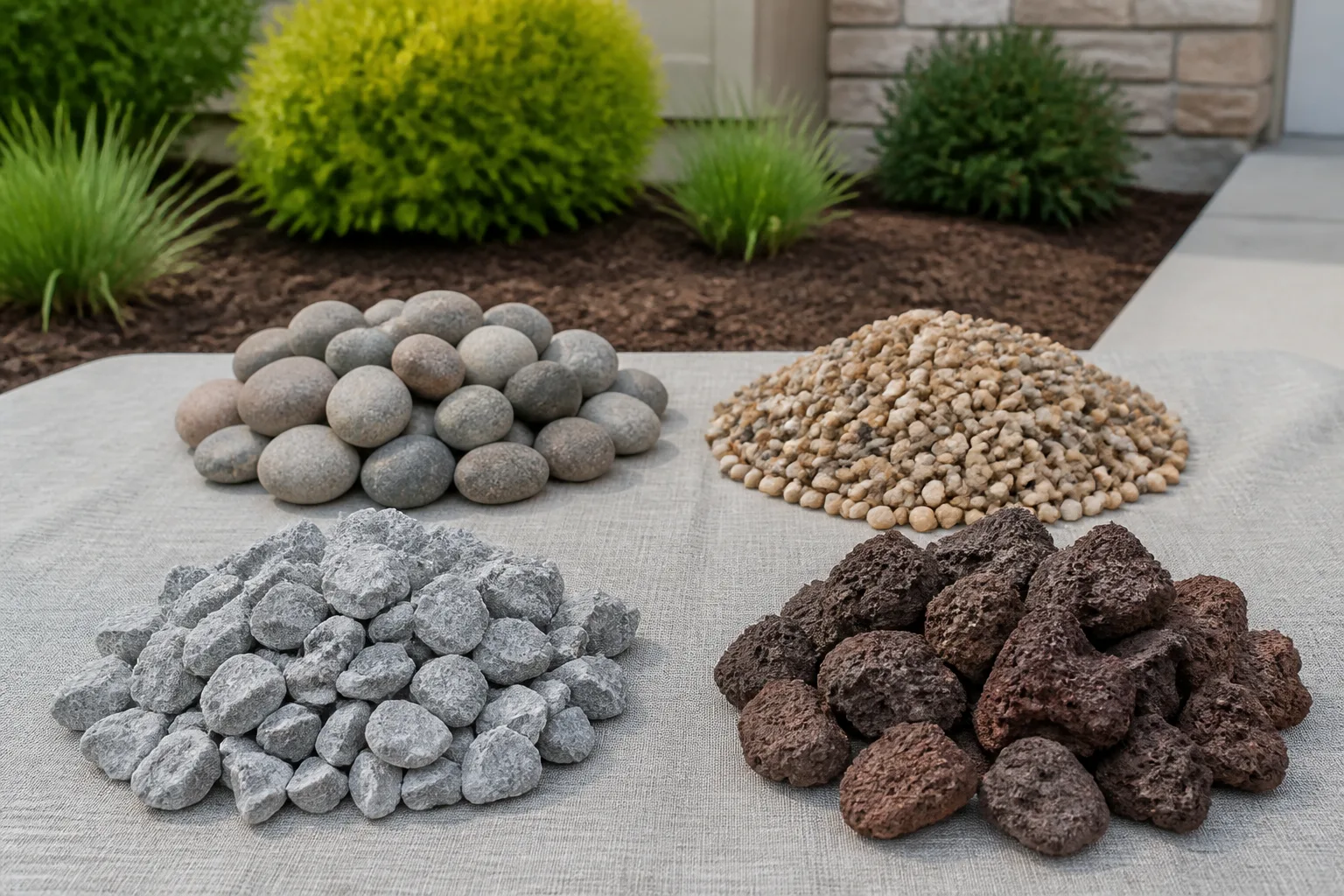
Mulch is a thin, protective layer placed over exposed soil. The right material slows evaporation, moderates temperature swings, reduces weed emergence, and makes a planting look intentional. It is not a cure-all: mulch cannot repair compacted soil, replace irrigation, or make a badly placed plant thrive. Its value comes from matching the material to the job.
The most useful choice is rarely the prettiest bag at the garden center. A vegetable bed needs a clean, breathable material that will not introduce weed seed. A young tree needs a wide, low layer that leaves the trunk and root flare visible. A dry, low-maintenance border may justify stone. A mixed perennial bed usually benefits from an organic mulch that gradually returns carbon to the soil.
This guide compares nine common types of mulch, then gives a practical way to choose, measure, apply, and refresh them.
What mulch does—and what it cannot do
Mulch shades the soil surface, so fewer weed seeds receive the light and temperature cues that trigger germination. It also creates a buffer between sun and soil, slowing water loss in hot weather and reducing rapid freeze-thaw changes around shallow roots. Organic materials feed soil organisms as they decompose, while mineral and synthetic materials mainly provide coverage and visual consistency.
Mulch works best on already weeded, watered, reasonably loose soil. Put it over a dense mat of perennial weeds and you may simply hide the problem until it grows through. Put it against a wet foundation or over poorly drained clay and you can preserve excess moisture rather than improve the bed. Think of mulch as a surface-management tool, not a substitute for site preparation.
Organic and inorganic mulch are different tools
Organic mulch comes from once-living material such as chips, bark, leaves, straw, or compost. It changes over time: it settles, darkens, and eventually becomes part of the soil. This is a benefit in most planting beds, but it also means periodic renewal.
Inorganic mulch includes gravel, stone, glass, rubber, and some dyed wood products. These materials last longer or hold a consistent appearance, but they do not build soil in the same way. Dark stone can raise surface temperatures, rubber can become hot and does not improve fertility, and gravel can make future planting or weed removal more difficult. Durability is useful only when it matches the bed’s future needs.
The quick comparison: choose by job, not color
| Mulch | Best use | Main advantage | Main drawback |
|---|---|---|---|
| Wood chips | Trees, shrubs, large beds | Excellent coverage and low cost | Can be bulky to move; quality varies |
| Pine bark | Borders and perennials | Attractive, slow breakdown | Can be costly or float on slopes |
| Straw | Vegetable rows and winter cover | Light, easy to spread | May contain seed or blow away |
| Pine straw | Acid-tolerant beds and slopes | Lightweight and easy to rake | Insulates less than a heavy chip layer |
| Shredded leaves | Fall beds and free soil building | Reuses local material | Whole leaves mat and shed water |
| Compost | Beds needing organic matter | Adds nutrients and biological activity | Poor weed barrier when finely screened |
| Dyed wood | Formal ornamental beds | Uniform color and easy coverage | Unknown feedstock and fading |
| Gravel | Dry landscapes and permanent paths | Long-lasting and tidy | Difficult to remove; weeds still arrive |
| Recycled glass | Small decorative zones | Bright, distinctive appearance | Expensive and not ideal for every bed |
| Rubber | High-wear decorative areas | Durable and slow to decompose | Does not improve soil; can heat up |
1. Wood chips for broad beds and trees
Wood chips are the practical default for many outdoor beds. They are heavy enough to stay in place, usually affordable in bulk, and coarse enough to leave air spaces while covering soil. Fresh arborist chips often contain a mixture of small branches, bark, and leaves; that diversity decomposes at different speeds and can be excellent for paths, shrub borders, and around established trees.
They are not the same as finely shredded wood. Coarse chips generally settle into a porous layer and can last more than one season. Fine material compacts sooner and may form a water-shedding crust. Ask where bulk chips came from, avoid loads contaminated with trash or treated lumber, and do not assume a free delivery is clean simply because it is free.
Wood chips are especially useful where you want weed suppression without turning the bed into a permanent hardscape. They are less convenient in a tiny, formal bed where chunks look out of scale. Keep them off trunks, and do not mix a thick fresh layer into the soil; incorporation can temporarily alter nitrogen availability as microbes break down carbon-rich material.
2. Pine bark for tidy borders
Pine bark comes as nuggets, mini nuggets, or shredded bark. Large nuggets suit trees and shrubs; shredded or small bark pieces fit perennial borders and narrow beds. The reddish-brown color is natural, and bark usually breaks down more slowly than leaves or compost, so it can hold its appearance through much of a growing season.
Bark is a good compromise when you want an organic material with a neat texture. Nuggets can float or roll on steep slopes, and very light shredded bark may migrate during heavy rain. Use a coarser grade where water moves quickly, or install a modest edging that slows the material without trapping water against a building.
3. Straw and pine straw for vegetables and slopes
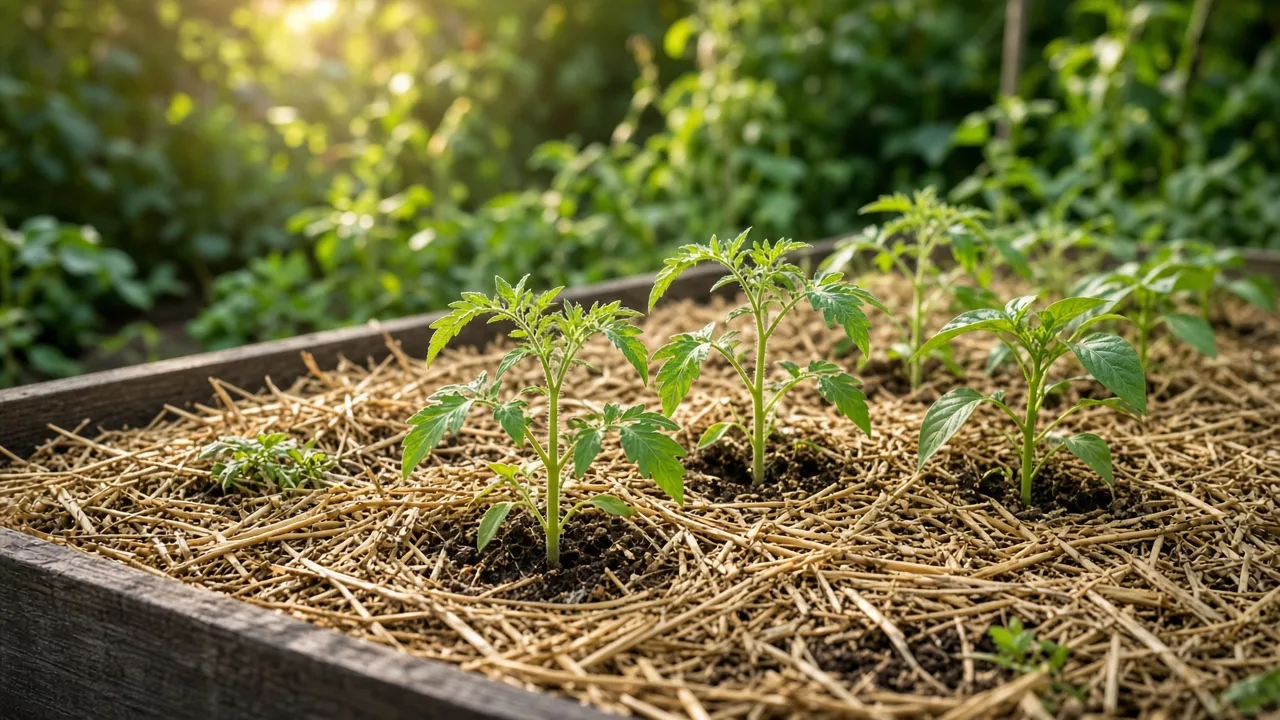
Clean straw is useful around vegetables, strawberries, garlic, and newly seeded areas because it is light and easy to pull aside for planting. It also keeps fruit and foliage off bare soil. Choose straw, not hay, when weed seed matters; hay is made from grasses harvested with seed heads and can introduce a new crop of weeds.
Straw decomposes fairly quickly and may need topping up after wind or rain. It is also less tidy around a front-door border. Before spreading, inspect the bale for mold, trash, and persistent herbicide concerns. If the material came from a pasture treated with a persistent broadleaf herbicide, residues can damage broadleaf garden plants even after composting.
Pine straw is a separate material made from fallen pine needles. It is lightweight, easy to rake into a shallow layer, and often useful beneath acid-tolerant shrubs or on gentle slopes. It does not reliably acidify an established soil profile; test soil rather than choosing it as a pH treatment. Pine straw is also flammable when dry, so follow local defensible-space guidance around structures.
4. Shredded leaves for a free soil-building layer
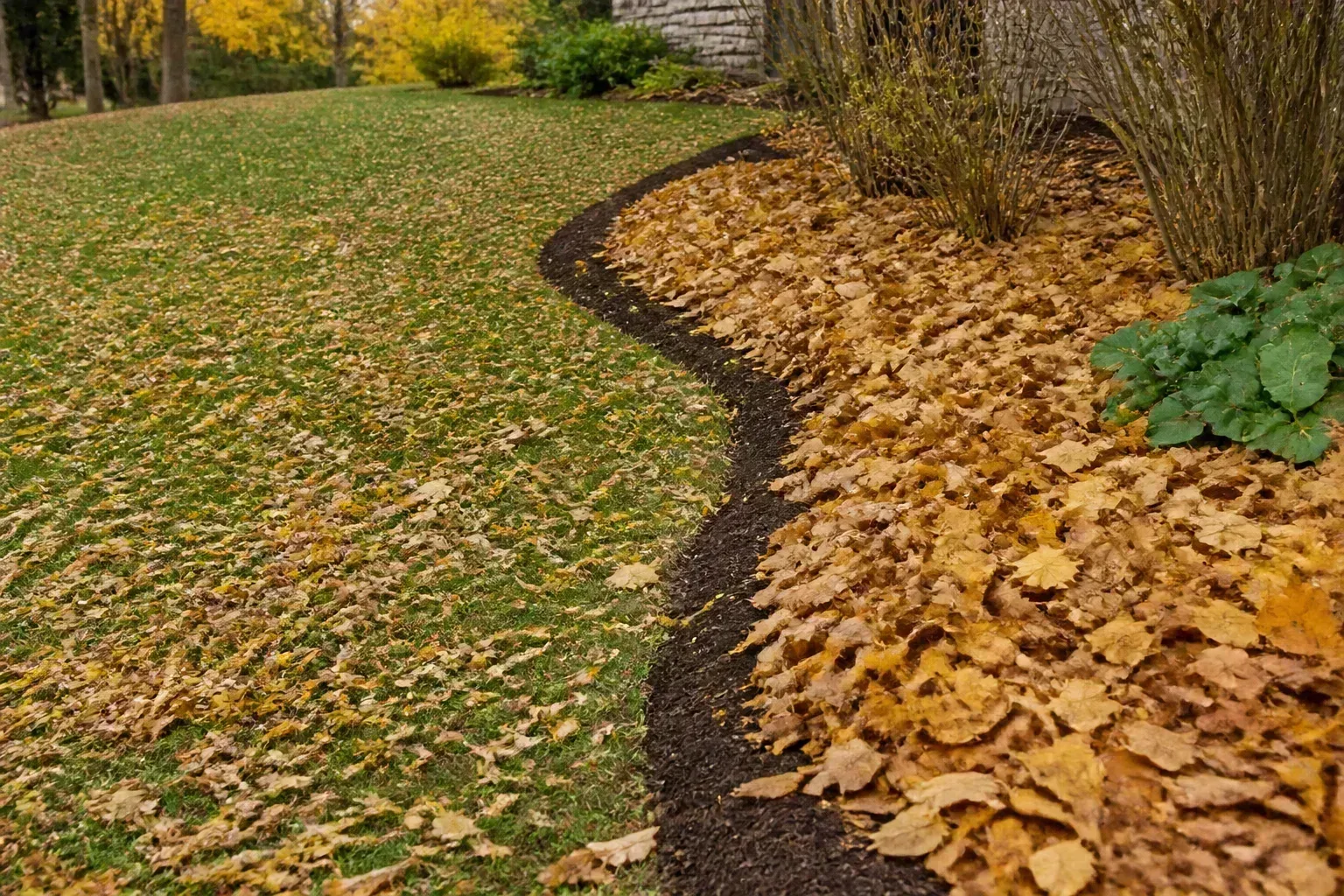
Shredded leaves are one of the best low-cost mulches for a fall garden. Run dry leaves over with a mower or leaf shredder until they are small enough to separate rather than form a waterproof mat. Apply them to perennial beds, under shrubs, or around dormant vegetables after the soil is moist but not saturated.
Whole leaves can pack together, block rain, and create a slippery surface. Shredded leaves allow more air and water through and break down into valuable organic matter. Keep diseased foliage out of a home mulch pile unless you can hot-compost it reliably, and do not use leaves collected from a roadside where salt, litter, or fuel residues may be present.
5. Compost when nutrition matters most
Finished compost is better thought of as a soil amendment and top-dressing that can also function as mulch. It adds organic matter and slow nutrient release, but fine compost alone does not suppress weeds as effectively as a two- to three-inch layer of coarse chips or bark. Use it beneath a more durable mulch when a bed needs both fertility and surface coverage.
Good compost smells earthy, looks dark and crumbly, and has no obvious fresh food scraps or heating pockets. Unfinished compost can tie up oxygen, attract flies, or damage tender roots. Manure-based compost deserves extra caution: ask about herbicide history when possible, especially if you plan to grow tomatoes, beans, peppers, or other sensitive crops.
6. Dyed wood mulch for a formal finish
Dyed mulch is usually wood fiber colored black, brown, or red. Its strongest case is visual: it produces a uniform, high-contrast surface around shrubs and ornamental plantings. It still suppresses weeds when applied deeply enough, but the color is not a plant-health benefit and will fade with weather.
Quality varies because the feedstock varies. Look for a transparent product label, a reputable supplier, and no visible construction debris. Avoid treating color as proof of safety or quality. If the bed is used for food crops, choose a clearly identified, untreated organic material instead. Dyed mulch may be reasonable in a decorative shrub border, but it is rarely the only sensible choice.
7. Gravel and stone for permanent, dry designs
Gravel is effective around drought-tolerant shrubs, rock gardens, drainage features, and paths where you want a durable mineral surface. It will not decompose, blow away easily, or need annual replacement. It can also make a small courtyard look cleaner and help keep foliage away from muddy soil.
Stone is not maintenance-free. Dust and leaf litter accumulate, weeds still germinate in the debris, and removing weeds from a deep gravel layer is awkward. Landscape fabric may slow mixing between soil and stone, but it does not stop windblown seeds forever and can complicate future planting. Choose a stone size you can rake and move, and avoid dark rock beside heat-sensitive plants or reflective windows.
8. Recycled glass for decorative accents
Tumbled recycled glass is a specialty top-dressing, not a universal garden mulch. Its colors can highlight a modern bed, container grouping, or dry creek detail. Use it where the visual effect justifies the price and where foot traffic, pets, and children will not turn the pieces into a hazard.
Glass provides little organic benefit and may reflect or concentrate heat depending on color and exposure. It is best used in a shallow, contained area over prepared ground, not mixed through an active vegetable bed. Wear gloves when handling it and inspect the installation after severe weather.
9. Rubber mulch for durability—with limits
Rubber mulch is made from shredded tires and is marketed for longevity and impact-absorbing play areas. It can suppress weeds when installed as a continuous layer and is less likely than light straw to blow away. Those traits can appeal in a high-wear ornamental zone.
Rubber does not feed soil, and it can become hot in full sun. It is difficult to remove once small pieces work into the soil, and it is a poor fit for a bed you expect to amend, replant, or convert to vegetables. Check local fire and playground guidance before using it near structures. If soil improvement is part of the goal, choose an organic mulch instead.
How to choose mulch for trees, vegetables, shrubs, or perennials
Start with the plant community and the maintenance you will actually perform. Around established trees and shrubs, coarse wood chips or bark usually give the best balance of coverage, moisture buffering, and soil improvement. In vegetable beds, use clean straw, shredded leaves, or coarse compost, and pull mulch aside when the soil needs to warm for early-season sowing.
Perennial borders can use bark, chips, shredded leaves, or a compost-plus-chip combination. Use gravel when the planting is genuinely suited to a dry, permanent design—not because you hope stone will eliminate weeds. On slopes, favor heavier chips, a fiber mat, or contour-conscious planting; a loose layer of pine straw can move after one storm.
Climate changes the decision. In hot, dry regions, a light-colored organic layer can conserve water without the heat absorption of dark stone. In wet climates, keep the layer modest and preserve airflow at the crown of plants. In fire-prone regions, consult local defensible-space rules before choosing any combustible mulch near buildings.
How deep to apply mulch and keep it away from trunks
For most organic mulches, start with about two to three inches after settling. Coarse chips can be closer to three inches; fine compost may need to remain thinner so the surface does not seal. Gravel often needs enough depth to hide the soil, but a deep stone layer is not automatically better and makes planting harder.
Clear a donut-shaped ring around every trunk. The root flare should remain visible, and mulch should not touch bark. A volcano of mulch holds moisture against the trunk, encourages decay and pest problems, and can conceal girdling roots or damage. Around shrubs, keep the crown and lower stems uncovered as well.
Measure before buying. One cubic yard covers about 324 square feet at one inch deep, 162 square feet at two inches, or 108 square feet at three inches. Bags vary in volume, so calculate from the label rather than counting bags by eye. Spread in a thin layer, water if the material is dusty, and check depth again after a week of settling.
When to mulch and how to refresh it
Mulch after the soil is workable and weeds are removed. Spring application gives a clean start, but waiting until the soil has warmed can help heat-loving vegetables establish. Summer renewal is useful before a heat wave if the existing layer has thinned. Fall organic mulch protects roots from rapid temperature shifts, especially for shallow-rooted perennials, but do not bury dormant crowns.
Refresh by inspection, not by calendar. If the old mulch still covers soil, smells clean, and has settled to an effective depth, rake it level and leave it. Add only enough new material to restore coverage. Repeatedly adding a fresh layer without checking the old one raises the bed, buries edging, and can suffocate crowns. Mineral mulch may need raking and leaf removal rather than topping up.
Common mulch mistakes and how to fix them
The classic error is piling mulch against a trunk. Pull it back until bark and root flare are visible. The next is using whole leaves or fine compost as a thick blanket; break up the layer, add coarser material, and confirm water can penetrate.
If weeds are already growing through, remove the weeds before adding more mulch. For annual weeds, a shallow cultivation followed by cardboard and a coarse organic layer can help; overlap cardboard, wet it into place, and keep it away from perennial crowns. Do not use glossy, heavily inked paper or cardboard with plastic tape.
If a bed stays wet, reduce mulch depth and solve drainage before adding more. If mulch blows away, choose a heavier grade, shorten the exposed area, or use living groundcovers and edging. If soil beneath stone becomes unbearably hot, switch to a lighter material or redesign with plants that tolerate the reflected heat.
Conclusion
The best mulch is the material that performs the job your bed actually needs. Choose wood chips or bark for broad woody plantings, clean straw or leaves for vegetables, compost when soil needs organic matter, and stone only when a durable mineral design makes sense. Apply a measured layer, keep it off trunks and crowns, and refresh only when the existing mulch has truly thinned. Once you choose by plant, climate, maintenance, and future plans—not by color alone—mulch becomes one of the simplest ways to make a garden more resilient.