10 Types of Strawberries to Grow in Your Garden This Year
Compare 10 strawberry varieties by harvest season, flavor, fruit size, climate, and container performance before you plant this year.
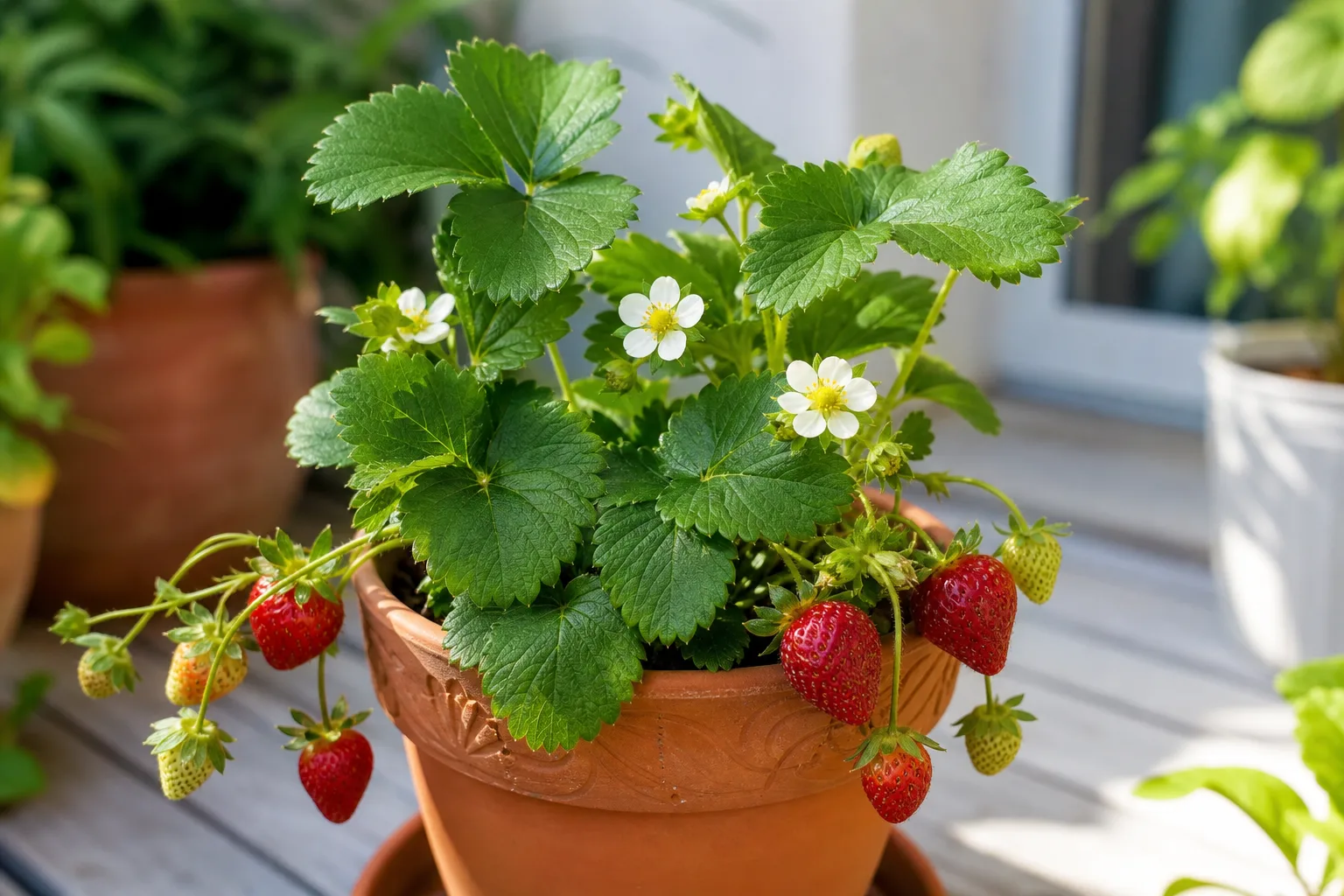
The best types of strawberries for your garden depend on one question: do you want one generous early-summer harvest, or berries in smaller waves over a longer season? Add the realities of your site—winter cold, summer heat, available space, and whether you eat berries fresh or turn them into jam—and the choice becomes much clearer.
Strawberries are often sold as if one plant can do everything. It cannot. A June-bearing plant may fill a bowl quickly but finish early. A day-neutral plant can keep flowering for months but slow down during extreme heat. A variety that makes perfect dessert berries may be less useful than a firm, tart cultivar if your goal is jam or freezing.
The ten varieties below are a decision guide, not a ranking. Each has a reason to earn space, along with a limitation worth knowing before you buy it.
Start With the Harvest You Actually Want
Choose your harvest pattern before choosing a name on a plant label. If you want to preserve a large batch, June-bearing strawberries are usually the most efficient choice: the plants concentrate their energy into a substantial crop over a few weeks. That makes picking, hulling, freezing, and jam-making easier.
If you want berries for breakfast or snacking from late spring into fall, look at everbearing or day-neutral types. Their harvest is spread out, which is convenient for a household that prefers a handful of ripe fruit at a time. The trade-off is that the total crop may arrive in smaller flushes, and hot weather can interrupt flowering.
Space changes the decision too. A traditional bed can accommodate vigorous runners and a renewing patch. A pot, hanging basket, or narrow raised bed is better suited to compact plants with restrained runner production. In a small garden, a plant that stays manageable can be more productive than a theoretically heavier producer that outgrows its container.
The Three Strawberry Types in Plain English
June-bearing strawberries
June-bearing strawberries are short-day plants. They form flower buds as days shorten in fall, then bloom and ripen a concentrated crop the following spring or early summer. “June” is a convenient label, not a promise that every garden will harvest in June; the date shifts with climate and spring weather.
These plants commonly make many runners. That is useful if you want to establish a matted row or replace older plants, but it requires management. If every runner is allowed to root, the bed can become crowded, fruit may get smaller, and air movement suffers. Remove unwanted runners or root only the strongest ones in a planned direction.
Everbearing and day-neutral strawberries
Everbearing strawberries generally produce two main crops, one in late spring or early summer and another in late summer or fall. They may make a few berries between those periods, but they are not necessarily fruiting at full speed every week.
Day-neutral strawberries respond less strongly to day length. They can flower and fruit through much of the growing season when temperatures are favorable, usually with few runners. They are an excellent fit for containers and small gardens, but prolonged heat can pause production. If daytime temperatures climb above roughly 90°F, flowers and fruit set may decline until conditions moderate.
The names overlap in garden catalogs, so read the plant description rather than relying on the label alone. Ask whether the variety makes one crop, two main crops, or repeated smaller flushes, and whether it is known for runners.
How to Choose a Variety That Fits Your Site
Match climate, space, and use
For cold-winter gardens, prioritize varieties described as winter-hardy for your region and protect the crowns with loose mulch after the plants go dormant. For hot-summer gardens, choose a variety with a track record in warm conditions, provide consistent moisture, and accept that even a heat-tolerant plant may pause during the worst weather.
Full sun and fast drainage matter more than a clever companion planting scheme. Strawberries have shallow roots, so they need regular moisture, but saturated soil can weaken crowns and encourage root problems. A raised bed or container is helpful only if it has adequate volume and a drainage path; a tiny pot that dries twice a day is not an upgrade.
Flavor also depends on harvest timing. A berry picked fully red and eaten immediately can taste much sweeter than one harvested slightly early for transport. Firmness is valuable for freezing, baking, and short storage, while exceptionally soft fruit may be best reserved for the garden gate.
10 Strawberry Varieties Worth Growing
1. ‘Allstar’: a dependable June-bearing choice
‘Allstar’ is a strong all-purpose June-bearing strawberry for gardeners who want a reliable crop of large, attractive fruit. The berries are typically bright, firm, and sweet, with a classic shape that works for fresh eating and simple desserts. The plants are vigorous and known for useful resistance to several common strawberry diseases, although resistance is not immunity.
Choose ‘Allstar’ when you want a dependable main-season crop across a range of conditions. It is especially useful as the backbone of a bed that will also include a later or day-neutral variety. Give it room for runners, or remove them if your goal is larger fruit from established crowns.
Best for: a dependable main crop, mixed beds, and gardeners who value plant vigor.
Watch for: a concentrated harvest and runner management.
2. ‘Earliglow’: an early, flavor-forward berry
‘Earliglow’ earns its place when early harvest and excellent flavor matter more than maximum berry size. The fruit is often medium to large, deep red inside and out, and especially satisfying straight from the plant. It produces many runners, so a small planting can expand quickly when the runners are rooted deliberately.
This is a good choice for gardeners who want the first ripe berries of the season and do not mind that later varieties may produce larger fruit. Use the early crop fresh, or combine it with a firmer late-season type to spread out desserts and preserving.
Best for: early picking, fresh eating, and establishing a traditional patch.
Watch for: vigorous runners and a shorter main harvest window.
3. ‘Jewel’: large fruit with useful firmness
‘Jewel’ is a late-midseason June-bearing variety with large, glossy berries and a balanced sweet flavor. Its firm texture gives it more flexibility than an especially soft dessert berry: it can be eaten fresh, arranged on a plate, frozen, or used in preserves without collapsing immediately.
The plants establish readily and can produce a long, productive season within the June-bearing window. It is a practical variety for a gardener who wants fruit that looks good in a bowl but still has enough structure for kitchen use.
Best for: large berries, fresh eating, and a multi-use harvest.
Watch for: it still produces one main crop, so pair it with a day-neutral plant for fall berries.
4. ‘Honeoye’: an early berry for cooking and freezing
‘Honeoye’ is an early June-bearing strawberry valued for vigorous plants and a productive harvest. The fruit can be firmer and more tart than the sweetest dessert varieties, which is not a flaw if you are choosing strawberries for jam, pies, sauces, or freezing. Its color holds well in cooked preparations.
This variety suits northern gardeners who want a hardy, practical crop rather than a berry chosen only for sweetness. Taste a few ripe berries before deciding how to use the harvest; the same tartness that seems sharp at breakfast can add welcome structure to a cooked filling.
Best for: jam, baking, freezing, and early-season harvests.
Watch for: a brighter, tarter flavor than dessert-focused varieties.
5. ‘Camarosa’: a firm choice for warm regions
‘Camarosa’ is a June-bearing strawberry often selected for warm, dry regions and a long early-season harvest. The berries are large, wedge-shaped, bright red, and firm enough to handle wet weather better than very soft fruit. It can be a strong option at the warmer edge of strawberry-growing conditions when paired with irrigation and afternoon heat management.
Do not treat a warm-climate variety as a drought plant. Strawberries still need even moisture during flowering and fruit enlargement. In a hot site, use mulch to keep the root zone cooler, water at the soil line, and provide air movement rather than packing plants into a tight raised bed.
Best for: warm climates, firm fruit, and an extended early crop.
Watch for: heat stress, which no cultivar can eliminate during severe weather.
6. ‘Ozark Beauty’: a productive everbearing option
‘Ozark Beauty’ is an everbearing strawberry with a reputation for producing a substantial crop over a long season. The plants are relatively compact but vigorous, and they can make runners, an unusual advantage for gardeners who want both repeat harvests and replacement plants.
The fruit is large, red, and sweet enough for fresh eating while remaining useful for freezing and preserves. It is a good bridge between the convenience of an everbearing habit and the desire for a bed that can renew itself. Remove some flowers during the establishment period if your plants arrive small; a stronger crown can pay you back with better production later.
Best for: repeat harvests, productive everbearing beds, and gardeners who want runners.
Watch for: runners can crowd a compact bed if they are not directed.
7. ‘Albion’: dessert-quality fruit from an everbearer
‘Albion’ is a popular day-neutral or everbearing-style choice for gardeners who prioritize large, symmetrical, intensely red berries and strong fresh-eating flavor. The fruit is firm and conical, with red color inside and out, so it looks as good sliced over breakfast as it does eaten warm from the plant.
It can also handle freezing, preserves, and pies. The plants are relatively tolerant of heat and humidity and have useful resistance to several diseases, but good drainage, clean planting material, and prompt removal of diseased leaves still matter. Choose ‘Albion’ for quality and a long season, not because the label guarantees nonstop production.
Best for: fresh eating, containers, and a long season of dessert berries.
Watch for: yields are often moderate rather than one enormous June flush.
8. ‘Fort Laramie’: a cascading choice for containers
‘Fort Laramie’ is an everbearing strawberry suited to containers, hanging baskets, and small garden spaces. Its runners can flower and fruit while they cascade, so you do not always have to wait for a new rooted plant to mature before getting berries. The fruit is large, bright red, sweet, and juicy.
Use a container at least large enough to buffer moisture swings, and keep the crown at the correct depth. A hanging basket dries more quickly than ground soil, so inspect it often during flowering and fruiting. This variety is also valued for cold hardiness, making it useful where a pot can be protected from the worst winter exposure.
Best for: hanging baskets, strawberry pots, patios, and compact gardens.
Watch for: containers need more frequent watering and winter protection than beds.
9. ‘Tristar’: a compact day-neutral with notable flavor
‘Tristar’ is a day-neutral strawberry often chosen for its excellent flavor and compact growth. It can produce a generous spring crop, slow during intense summer heat, and resume with a fall crop. The berries may be smaller than those of ‘Albion’ or ‘Jewel’, but the flavor can make the difference irrelevant for a gardener who eats fruit directly from the plant.
The compact habit suits containers and narrow beds. Keep the plants picked regularly because ripe strawberries left in a humid container attract pests quickly. If production dips during a heat wave, maintain moisture and wait for cooler nights rather than overfertilizing in an attempt to force flowers.
Best for: containers, small gardens, and flavor-first fresh eating.
Watch for: lower yield and a summer pause in very hot weather.
10. ‘Seascape’: a long-season, heat-tolerant day-neutral
‘Seascape’ is a prolific day-neutral variety for gardeners who want berries in several waves from spring through fall. The plants are compact, the fruit is large and conical, and the berries are bright red, sweet, and juicy. It is a flexible choice for a garden bed or container, particularly where summers are warm but not continuously extreme.
Because its harvest is spread out, ‘Seascape’ rewards regular picking more than a single weekend harvest. Pinch off damaged fruit, remove overripe berries, and keep the foliage dry when watering. Those small habits protect the harvest quality that makes a long-season variety worthwhile.
Best for: repeated harvests, containers, and warm sites with irrigation.
Watch for: heat-related pauses and the need for consistent picking.
Build a Better Mix for a Longer Harvest
You do not need all ten varieties. For most home gardens, a thoughtful mix of two or three is easier to maintain and more useful than a crowded collection. Try one early or midseason June-bearer, one later June-bearer, and one day-neutral plant. That combination gives you a large preserving crop plus fresh berries later without turning every week into a harvest emergency.
For a small patio, choose ‘Tristar’ or ‘Seascape’ for repeated picking and add ‘Fort Laramie’ if you want a cascading basket. For a family that freezes fruit, build the bed around ‘Allstar’, ‘Jewel’, or ‘Honeoye’, then add a few ‘Albion’ plants for dessert berries. In a hot region, consider ‘Camarosa’ or ‘Seascape’, but place them where you can water deeply and protect the root zone with mulch.
Plant more than one cultivar when you want a longer season or different uses, not because strawberries generally require a pollinator partner. Most garden strawberries are self-fruitful, but bees and other insects still improve flower visitation. Avoid placing every variety in one dense clump; leave enough room to identify labels, remove runners, and pick without crushing nearby fruit.
Planting and Harvest Tips That Protect Flavor
Set each plant so the crown sits level with the soil surface. Buried crowns can rot; exposed crowns dry out. Use a clean, airy mulch such as straw or chopped leaves to keep berries off wet soil, but do not pile mulch directly against the crown. Water the root zone consistently while plants establish and during fruit swell, then reduce splashing on leaves and fruit.
Feed according to a soil test or a fertilizer label for strawberries rather than assuming more nitrogen means more berries. Excess nitrogen can push lush leaves and soft fruit at the expense of a balanced crop. Remove diseased leaves and overripe berries promptly, and rotate the bed’s location when practical if strawberries have suffered recurring disease.
Harvest when berries are fully colored and detach easily. Pick in the cool part of the day, handle fruit by the cap, and refrigerate it promptly if you will not eat it immediately. Do not wash the entire harvest until you are ready to use it; extra surface moisture speeds deterioration. For freezing, hull and freeze firm, dry fruit in a single layer before packing it.
The right strawberry variety is the one whose compromises fit your garden. A heavy June crop is not better than a long trickle if your household cannot preserve it. A large berry is not better than a small one if flavor is your priority. Choose the harvest pattern first, then the climate fit, then the fruit qualities you will actually use.
Conclusion
Start with one clear goal: a big preserving crop, fresh berries over many months, containers, or reliable fruit in a challenging climate. ‘Earliglow’, ‘Honeoye’, ‘Allstar’, ‘Jewel’, and ‘Camarosa’ cover useful June-bearing roles, while ‘Ozark Beauty’, ‘Albion’, ‘Fort Laramie’, ‘Tristar’, and ‘Seascape’ extend harvests or fit smaller spaces. A two- or three-variety mix usually gives a home gardener more flexibility than a single “best” strawberry. Plant crowns at the right depth, protect the shallow roots from drying out, and pick fully ripe fruit often; those basics will influence your harvest at least as much as the name on the label.