How to Grow and Care for Washington Hawthorn
Learn how to grow Washington hawthorn, from choosing a sunny, well-drained site to watering young trees, pruning thorny branches, and spotting fire blight.
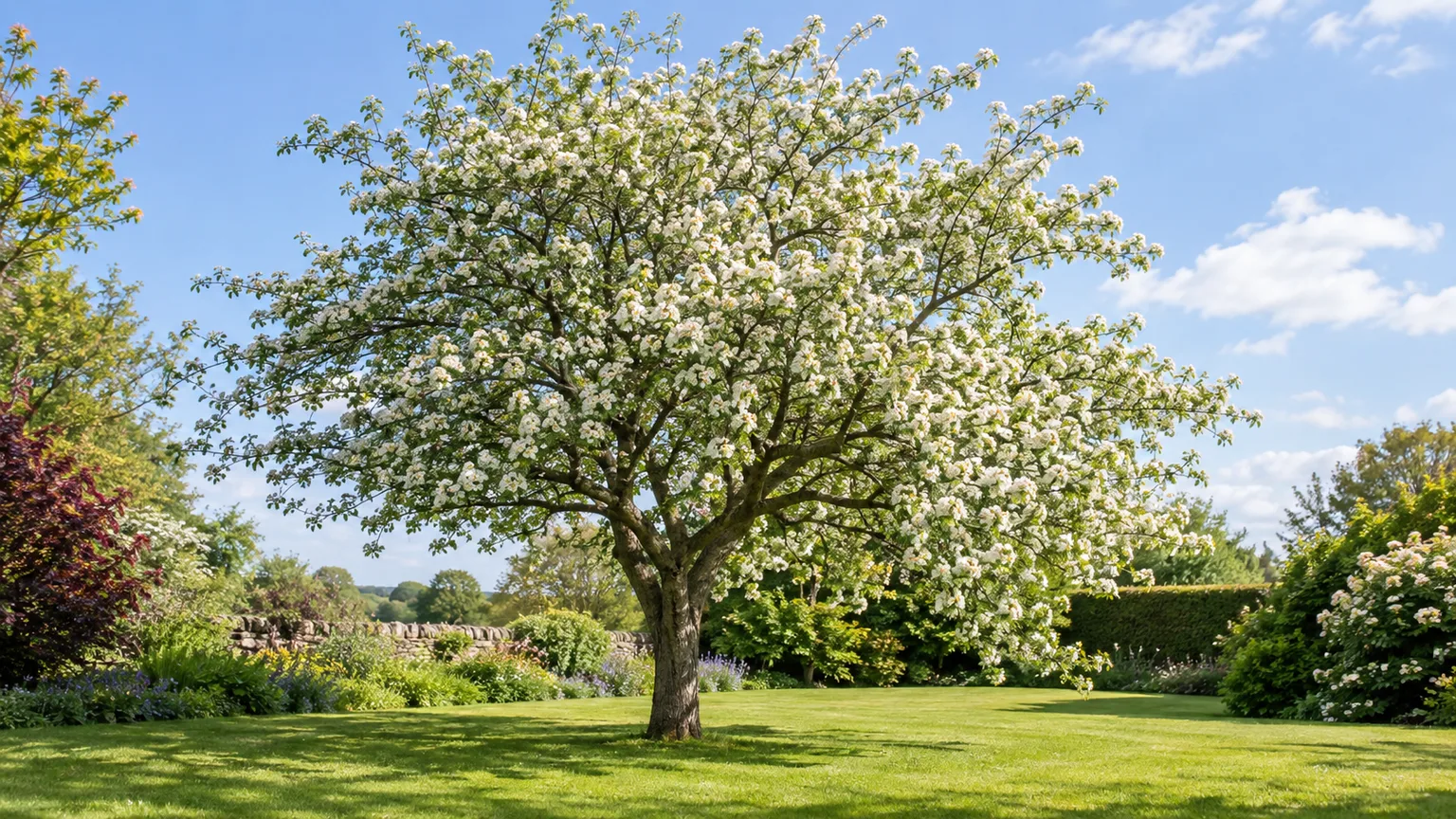
Washington hawthorn is a small deciduous tree with a rounded canopy, white late-spring flowers, glossy red fruit, and fall leaves that can turn orange, scarlet, or purple. It also has hard thorns, so its best location is one where people can enjoy the seasonal display without brushing against the branches. Plan around the mature tree and its sharp points first; the basic care is straightforward once the site is right.
The botanical name is Crataegus phaenopyrum. A healthy tree can work as a specimen, a wildlife planting, or a carefully placed barrier, but those uses call for different spacing and pruning. The guide below focuses on how to choose the right role, establish roots without keeping them waterlogged, and maintain the tree without turning routine care into constant cutting.
Washington Hawthorn at a Glance
Expect a medium-growing tree that commonly reaches about 25 to 30 feet tall and 20 to 25 feet wide. NC State Extension lists it for USDA hardiness zones 4a through 8b and notes that it tolerates full sun or partial shade, a range of soil textures and pH, and urban conditions. Full sun is the better choice if you want the fullest flowering and fruiting; shade can keep the tree alive but may make the display thinner. NC State Extension’s plant profile is a useful reference for the species’ size, cultural conditions, and cultivar notes.
Its compact scale can be misleading. The canopy is broad enough to need real clearance, and the branches carry straight thorns commonly described as 1 to 3 inches long. Treat the mature width as a landscape requirement rather than a number to prune away later, especially near a path, driveway, play area, or gate.
What to Expect Through the Year
In late spring to early summer, clusters of small white flowers open among the lobed leaves. The fragrance can be strong and is not pleasant to everyone, so avoid placing the flowering canopy directly beside a frequently opened window or outdoor dining table if fragrance-sensitive family members will notice it. The blooms give way to small red pomes that color in fall and may remain into winter.
The tree’s seasonal value extends beyond flowers. Green summer foliage becomes orange to scarlet or purple in fall, while lingering haws feed birds and other wildlife when fewer food sources are available. Towson University’s Glen Arboretum describes the tree’s fruit and dense, thorny branching as wildlife resources, not merely decorative features. Towson University’s Washington hawthorn profile also notes its late-spring to early-summer bloom and persistent fruit.
Is This Tree a Good Fit for Your Yard?
Choose Washington hawthorn when you want a small shade tree with more than one season of interest and can give it open space. It is particularly useful in a sunny front or side yard, a native planting, or the outer edge of a larger garden where birds can use the fruit and the thorns do not create a daily hazard. Its tolerance of urban pollution and varied soil makes it a flexible choice, but that does not mean it thrives in every cramped or poorly drained spot.
Think through access before buying. The thorns can snag clothing and puncture skin; even a cultivar sold as nearly thornless may retain occasional sharp shoots. Keep the trunk and mature branch spread away from narrow walkways, children’s play zones, dog runs, frequently used seating, and places where someone must reach through the canopy to retrieve a ball or maintain a fence.
It can be trained as a dense hedge or screen, but thorny hedging is not a low-maintenance shortcut. A hedge requires repeated pruning, creates a difficult work zone, and can block access to utilities or neighboring property. For a small yard, one well-sited specimen usually delivers the best balance of flowers, fall color, and wildlife value with less pruning pressure.
Pick a Site With Room for Roots and Canopy
Use the mature dimensions on the plant label as a minimum planning guide, then add extra clearance where people or equipment pass. A 25-foot-wide crown is not a narrow ornamental accent; its lowest branches may spread across the space you wanted to use as a walkway or lawn edge. If you are planting more than one tree, space them according to the cultivar’s mature width and the look you want, rather than squeezing them together and relying on severe shearing to hold the line.
Check the site after rain as well as on a dry day. Washington hawthorn adapts to clay, loam, sand, and different soil pH levels, but roots still need oxygen. A low pocket that stays saturated, compacted fill around a new house, or runoff from a downspout can undermine establishment even when the tree is described as adaptable. Correct drainage or choose another spot instead of trying to compensate with extra fertilizer.
Light, Soil, and Drainage
Give the tree at least six hours of direct sun if flowering, fruiting, and fall color are priorities. It can tolerate partial shade, but more shade usually means less bloom and fruit, and a crowded canopy may hold moisture longer. Before planting, look up and outward: buildings, mature trees, and utility wires matter just as much as the sunny patch on the ground.
The soil can be acidic, neutral, or alkaline, and clay is not automatically a reason to reject the tree. What matters most is that water does not sit around the root zone for long periods. If your soil is heavy, do not turn the planting hole into a small pocket of rich potting mix; a sharp transition between amended soil and native clay can hold water around the root ball. Improve broad-area drainage when possible, or plant on a modest raised grade if that fits the landscape.
Planting a Washington Hawthorn
Plant a container tree in a cool, mild season when you can water consistently, usually fall or spring in regions where the ground is workable. Avoid planting into frozen soil or during a heat wave. A balled-and-burlapped tree is heavier and more demanding to handle; if the root ball is large or the tree is tall, arrange delivery and help rather than dragging it by the trunk.
Before you dig, check for underground utilities and confirm the tree’s mature spread against paths, walls, rooflines, and overhead wires. Find the root flare—the point where the trunk broadens into the uppermost structural roots. Nursery soil often covers it, so brush away excess medium before you set the tree. The flare should end at or slightly above the finished grade, not several inches below it.
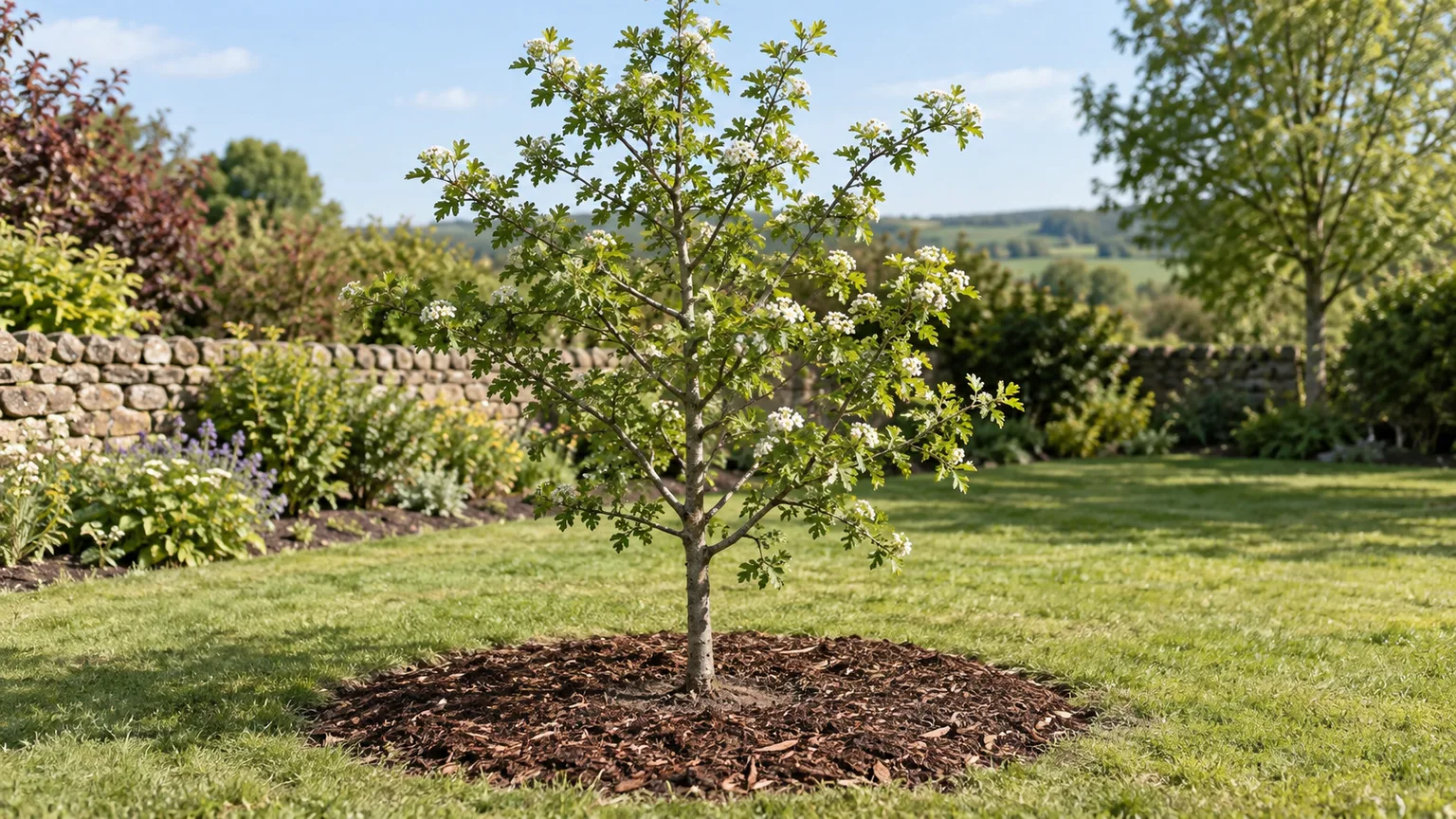
A Root-Flare-First Planting Checklist
- Dig a hole two to three times wider than the root ball, but no deeper than the distance from its bottom to the exposed root flare. Keep the bottom firm enough that the tree will not sink after watering.
- Remove the container and inspect the outer roots. Gently loosen roots circling the perimeter; if they form a tight mat, make a few shallow vertical cuts or ask the nursery how to correct that root system before planting.
- Set the tree upright and orient its best side toward the main viewing area. Backfill with the soil you removed, breaking large clods and firming gently to eliminate large air gaps without stomping the soil hard.
- Water slowly to settle the soil through the root ball and surrounding backfill. Recheck that the root flare remains visible and that the trunk is straight; reset the tree now if it has tilted.
- Spread an organic mulch layer over the root zone, ideally as a broad, shallow ring. Keep mulch several inches away from the trunk so the bark stays dry and visible.
Garden Design’s general hawthorn planting guidance also stresses a sunny, well-drained site, a wide planting hole, and a root ball set slightly above surrounding soil. Those steps are useful across hawthorns, but always follow the nursery’s directions for a specific root type and avoid burying the flare. Garden Design’s hawthorn growing guide adds practical notes on watering during the first growing season and fitting a tree to its eventual landscape use.
Staking is not automatic. A tree that stands upright with a stable root ball usually does not need support; if wind rocks it or the site is exposed, use two flexible stakes outside the root ball and allow slight trunk movement. Remove the supports once roots hold the tree securely, rather than leaving straps in place until they rub or girdle the trunk.
Watering and Mulch During Establishment
During the first growing season, water the entire root ball deeply whenever the upper few inches of soil begin to dry, adjusting for rainfall, temperature, and soil texture. The aim is moist soil around new roots, not a permanently wet root ball. A weekly check is more useful than a fixed weekly watering rule: sandy soil can dry quickly, while clay soil may stay wet much longer after rain.
Apply water slowly at the root zone so it penetrates rather than runs off. A hose on a gentle trickle or a soaker hose can wet the planting area evenly; sprinkling the canopy for a few minutes rarely supplies enough water to the roots. In year two, taper irrigation as new growth and soil moisture show that the root system is expanding. During a prolonged hot, dry period, give even an established tree a deep drink if the root zone has dried out.
Keep a two- to three-inch mulch layer over as much of the root zone as practical, without piling it against the trunk. Mulch moderates soil temperature, reduces competition from turf and weeds, and slows moisture loss. A mulch volcano hides the root flare, keeps bark damp, and invites damage from rodents or string trimmers, so preserve a clear gap around the trunk.
Fertilizer: Keep It Modest
Do not fertilize automatically because the tree is new or because its growth seems slow in its first season. A recently transplanted hawthorn is rebuilding roots; fertilizer does not replace water, correct planting depth, or solve poor drainage. If leaves look healthy and the tree makes steady annual growth, leave it alone and maintain the root zone.
If the canopy is pale, sparse, or declining, first look for a more likely cause: buried root flare, standing water, drought, root damage, or a pest or disease pattern. A soil test can tell you whether a nutrient is actually low. When a test or local extension recommendation supports feeding, use a modest amount of a balanced tree-and-shrub fertilizer in spring and follow the label rather than applying extra for faster growth.
Excess nitrogen can push soft, vigorous shoots that are more susceptible to fire blight infection. Washington State University Extension recommends moderate nitrogen and emphasizes sanitation when fire blight is present, so feeding should be conservative—especially if the tree has shown blighted shoots. WSU Extension Hortsense lists Washington hawthorn as a resistant choice, not an immune one, and describes the disease’s entry points and management.
Pruning: Shape Without Fighting the Thorns
Start with a clear purpose: remove dead, broken, rubbing, or badly placed branches; develop a stable framework while the tree is young; or reduce a branch that obstructs access. Washington hawthorn can tolerate pruning, but repeated shearing produces dense twig growth and may reduce flowers and fruit. A tree that has been planted with room needs much less corrective cutting.
For routine structural pruning, work in the dormant season or just after flowering, depending on whether branch visibility or that year’s bloom matters more. Dormant pruning makes the framework easier to read, but any cut that removes flower-bearing wood can reduce spring display and later fruit. Limit cuts to what is needed, cut just outside the branch collar, and avoid leaving stubs or topping the central stem.
If the plant has been neglected, do not remove a large share of the canopy in one session just because the tree can survive hard pruning. Rebuild the structure over several seasons, taking out crossing or inward-growing branches first and preserving well-spaced scaffold limbs. Large limbs, overhead work, or a thorny branch over a path are good reasons to hire an insured arborist with the right equipment.
Make Pruning Safer
Wear thick, puncture-resistant gloves, long sleeves, eye protection, and sturdy footwear; thin gardening gloves do little against hawthorn spines. Keep the cut branch under control as it comes away, because hidden thorns can snag sleeves or puncture the other hand while you carry debris. Do not reach blindly into the canopy or work from an unstable ladder to avoid a thorn.
Clean tools between healthy-tree cuts if disease is suspected, and keep routine shaping separate from removing infected tissue. For confirmed fire blight, WSU Extension advises cutting at least six inches below affected tissue, sterilizing tools between cuts, and disposing of diseased material; follow current local extension guidance for exact sanitation and disposal practices. The infected tissue removal is a disease response, not the same as ordinary winter shaping.
Flowers, Haws, and Wildlife Through the Seasons
The spring flowers are small, white, and clustered, usually appearing after many early-blooming trees. A tree can be healthy and still flower lightly if it is young, shaded, overfertilized, or pruned heavily before bloom. If the flowers have an objectionable scent in your yard, the solution is usually a better placement decision for future trees rather than repeated pruning of a mature canopy.
After flowering, red haws develop and can remain on the branches into cold weather. Birds such as cedar waxwings, quail, and wild turkeys, along with small mammals, use the fruit; dense, thorny branches can also offer nesting cover. That wildlife benefit changes how you manage fallen fruit: leaving some berries is useful in a naturalized corner, while collecting them near a patio may make sense if the surface becomes slippery or messy.
NC State Extension lists the fruit as edible, but Washington hawthorn is not a high-yield orchard tree. The fruit is small, with modest flesh, and has a different culinary value from larger cultivated fruit; if you plan to taste it, positively identify the tree first and use a preparation method suited to hawthorn fruit. For most landscape owners, the haws are more valuable as a winter food source for birds than as a harvest.
Cultivars and Placement Choices
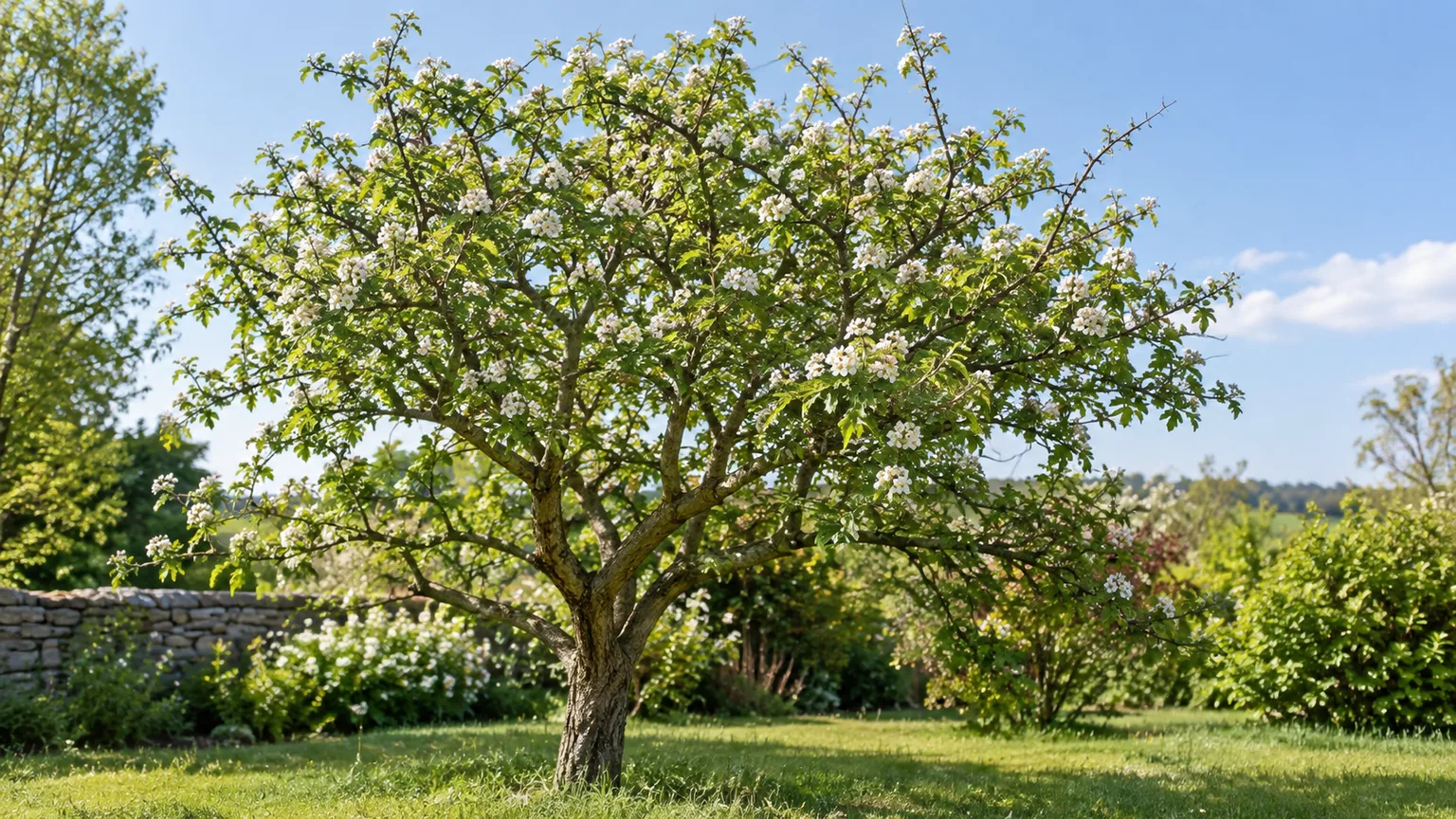
The straight species is the best choice when you want the naturally rounded form and do not mind thorns. NC State Extension lists ‘Princeton Sentry’ and ‘Fastigiata’ as nearly thornless selections; “nearly” is the key qualifier. If a thorn-free path edge is essential, inspect the actual nursery plant and confirm its mature dimensions instead of relying on the cultivar name alone.
Choose a cultivar for the job, not just for its label. An upright selection may suit a narrow space better than the broad species, but it still needs room for roots and mature branches. Nursery pages sometimes mix names across related hawthorn species, so check that the botanical name is Crataegus phaenopyrum if Washington hawthorn is what you intend to buy. Ask whether the plant is grafted, how large the named selection becomes locally, and whether it has the thorn trait you need.
For screening, use a row only where the mature branches can grow without pressing into a sidewalk or neighboring property. Planting closer can fill a screen faster, but closer spacing also means more competition and more pruning; planting farther apart leaves visible gaps longer but usually gives each tree a stronger natural form. Your maintenance tolerance should decide the spacing, not an urge to make a living wall look finished in its first year.
Pest and Disease Watch List
Washington hawthorn is not pest-proof. Aphids, scale, borers, caterpillars, lace bugs, and leafminers can appear, and the symptoms vary: honeydew or distorted tips, stippling, mines within leaves, chewing, or isolated branch decline. Start with the pattern and the underside of leaves before treating. A few damaged leaves on a mature tree are often less harmful than an unnecessary broad-spectrum spray that also affects pollinators and beneficial insects.
If a small pest population is active, a firm water spray may dislodge soft-bodied insects from reachable foliage. For larger trees, avoid trying to solve canopy problems from a ladder with a hose or pesticide. Identify the pest first, assess whether the damage is increasing, and use local extension advice or a qualified arborist if the tree is declining or the symptoms are widespread.
Disease possibilities include fire blight, leaf spots, powdery mildew, cankers, apple scab, and rust. Washington hawthorn is regarded as resistant to cedar-apple rust, but resistance is not the same as immunity, and other hawthorn diseases can still occur. The difference that matters most to a homeowner is speed: fungal leaf spots may build gradually, while fire blight can make new shoots and blossoms collapse quickly.
Recognize Fire Blight Early
Look for blossoms that turn brown or black, shoots that suddenly wilt and blacken, and leaves that remain attached to a curved, scorched-looking tip. A canker may form lower on the affected branch. Fire blight is bacterial and can spread in wet or warm conditions through rain splash and pollinating insects; drought stress, mechanical damage, and other dieback can look similar, so do not diagnose solely from one dry twig.
Washington hawthorn is reported to have useful resistance, but WSU Extension still includes the species in its hawthorn fire-blight guidance. If the pattern fits, prune infected parts promptly in dry weather when feasible, cut well below visible symptoms, sanitize tools between cuts, and avoid wounding the tree. Do not do routine shaping at the same time as disease sanitation. For a large tree, a recurring infection, or uncertainty about the diagnosis, consult a local extension office or certified arborist rather than making extensive cuts or reaching for a pesticide.
Propagation: Buy a Cultivar or Start From Seed?
Buy a nursery tree if you want a named cultivar, a predictable form, or flowers and fruit sooner. NC State Extension notes that seed-grown trees may take five to eight years to bear fruit, while grafted trees can flower heavily earlier. A seedling also may not reproduce the ornamental traits of its parent, so seed is better for patient experimentation or a naturalized planting than for a specific thornless or upright form.
The species can be propagated from seed or grafting, but each method has a different goal. Grafting preserves a selected cultivar and is best left to a nursery with the appropriate rootstock and technique. For a home seed attempt, collect ripe fruit in fall, remove the pulp, and sow the cleaned seeds in a protected outdoor pot or seedbed; label the container and leave it in place through at least two springs. Plants for a Future notes that some seeds germinate the first spring while many take another year, and stored seed can be slow and erratic. Keep seedlings evenly moist but not saturated, protect them from weeds and rodents, then pot them individually once large enough to handle. Plants for a Future’s Washington hawthorn profile describes the species’ seed timing and slow germination.
Softwood or hardwood cuttings are less dependable for home propagation than purchasing a grafted or seed-grown tree. If you are trying cuttings, treat the attempt as an experiment rather than a guaranteed way to clone a selected tree. Do not move soil or plant material from a diseased tree into a propagation tray.
Troubleshooting Weak Flowering, Berries, or Branch Tips
If a Washington hawthorn has little bloom, check light before feeding it. A tree receiving only a few hours of direct sun may survive but set fewer flowers, and recent hard pruning may have removed flowering wood. Also consider age: a new tree may need time to establish, while seed-grown trees can take years to reach first fruiting.
If the tree flowers but sets little fruit, late frost, poor pollination, or heavy pruning around bloom can interrupt fruit set. Washington hawthorn is not usually grown for a dependable harvest, so a healthy tree with some fruit variation from year to year is normal. Avoid overwatering or high-nitrogen fertilizer in an attempt to force more fruit; correct light and establishment conditions first.
Brown tips need a closer look. Uniformly crispy edges after a dry spell suggest moisture stress, while sudden blackened shoot tips and blighted blossoms point more strongly toward fire blight. If only one branch is affected, inspect the bark below it for a canker and compare neighboring growth; if several branches decline or the trunk is involved, get an expert diagnosis before pruning extensively.
Conclusion
Washington hawthorn earns its place when you want spring flowers, fall color, winter fruit, and a compact tree that can handle a range of landscape conditions. Give it sun, a well-drained planting site, and the full room its crown needs; water consistently while it establishes, then irrigate during prolonged drought rather than on autopilot.
The main trade-off is the thorny canopy. Put the tree where the spines add habitat or screening without putting people in their path, and choose a nearly thornless cultivar only after verifying the exact plant and its mature shape. With thoughtful placement and light, careful pruning, Washington hawthorn needs far less correction than a tree planted too close to the places you use every day.