How to Remove Plant Suckers From Trees and Shrubs
Use this practical guide to remove tree and shrub suckers, protect grafted plants and parent roots, troubleshoot repeat shoots, and spot when expert help is needed.
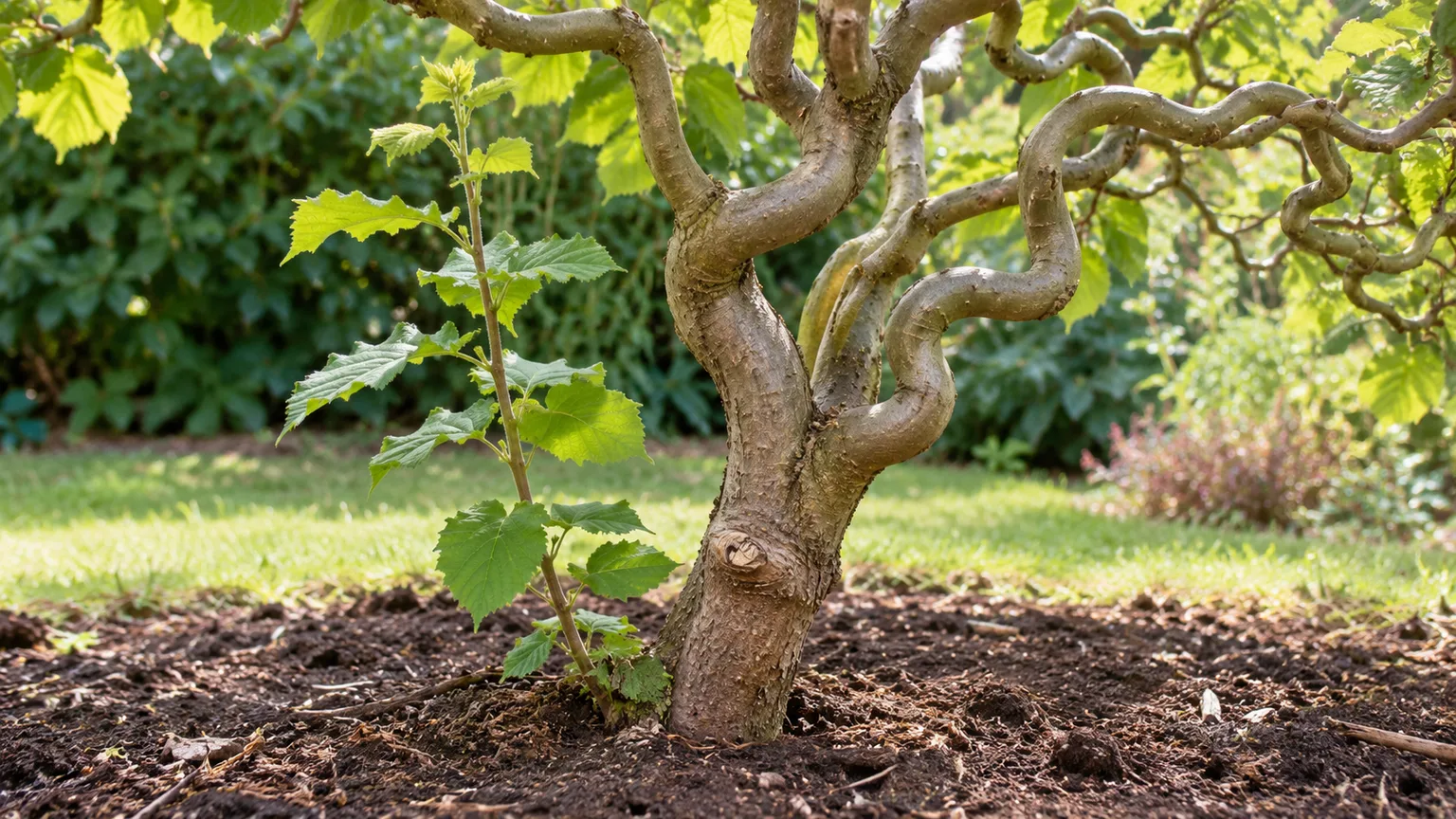
Before you pull or cut a shoot rising beside a tree or shrub, find exactly where it begins. A shoot growing from a root can belong to a spreading, own-root plant; one emerging below a graft union may be unwanted rootstock; and a shoot at the trunk base may be a useful replacement stem. The right choice depends on origin, plant type, and the shape you want—not on the word “sucker” alone.
For most woody plants, remove an unwanted sucker while it is young and flexible, cutting or rubbing it off as close to its point of origin as you safely can. If a sucker is established or emerging from a major root, expose only enough soil to identify its connection, then remove the shoot without cutting into the parent root. Some species naturally spread this way, so repeated monitoring is often more realistic than expecting a permanent one-time fix.
The Quick Answer: Find the Origin Before You Cut
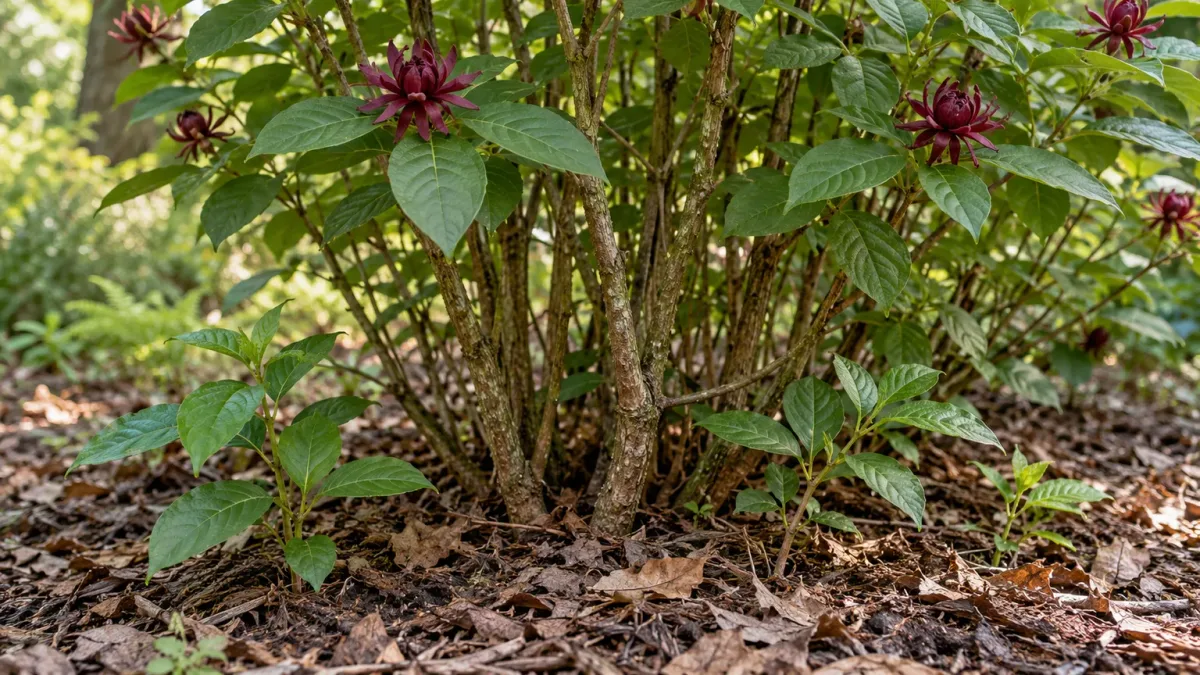
Plant suckers are vigorous shoots that arise from roots or the crown near the soil line. They can be unattractive in a formal tree or rose bed, but they are not automatically harmful: lilacs, sumacs, aspens, and other clump-forming or colony-forming plants use suckers to renew themselves and spread. In a shrub border or wildlife thicket, that growth may be part of the plan.
First trace the shoot down to the soil and look for a graft union if the plant may be grafted. Keep healthy shoots that belong to an own-root plant and improve its form; remove shoots from an unwanted rootstock, a crowded trunk base, or a root that is spreading into a path. The University of Connecticut Home & Garden Education Center describes suckers as shoots from roots and distinguishes them from water sprouts arising from a tree crown; it also notes that either can be part of natural renewal or a response to stress.UConn Home & Garden Education Center
Identify the Shoot by Where It Starts
Leaves and vigor can offer clues, but location is more reliable. A sucker may look like a small version of the parent plant—or, on a grafted plant, it may look noticeably different—so follow the stem to its base before choosing a tool. If you cannot see its origin, do not pull hard; loosen a little soil or mulch first.
Root suckers
A root sucker emerges from a root, sometimes close to the trunk and sometimes well beyond the canopy. The parent root may run just below the surface, which is why a new shoot can appear in a lawn, flower bed, or between paving stones. Utah State University Extension distinguishes crown suckers around the trunk from root suckers that emerge farther away and notes that fruit-tree rootstocks differ in their tendency to produce them.Utah State University Extension
Some plants use underground roots to form colonies. A grove of quaking aspen, a patch of sumac, or a spreading lilac is not necessarily a single tree with a problem; it may be a connected network of stems. If the new shoots are unwanted, cutting each one at the surface can tidy the area, but it will not remove the parent root system or stop a naturally spreading plant from sending up more shoots.
Basal and crown suckers
A basal shoot rises from the plant’s crown or from the lower trunk near soil level. Gardeners may use “basal sucker” loosely for any shoot at the base, while extension sources sometimes reserve “crown sucker” for growth immediately around a tree trunk. The useful distinction is whether the stem comes from the crown/trunk tissue or a separate root, and whether it sits above or below a graft union.
On a multi-stem shrub, a young basal stem may be a normal replacement for an older branch. On a single-trunk ornamental tree, the same location may produce an unwanted cluster that hides the trunk’s shape. A rose can send up healthy canes from its own roots, while a grafted rose can send shoots from the rootstock below the bud union. You need the plant’s growing habit before deciding whether to remove every shoot.
Watersprouts and seedlings are different
Watersprouts grow from buds on the trunk or branches above ground, often as vigorous vertical shoots near a pruning wound or damaged area. They are not root suckers, even though both can form a crowded, upright thicket. Pruning decisions for watersprouts depend on the tree’s structure; if many appear after severe pruning or a wound, assess the cause instead of simply cutting everything back repeatedly.
A seedling starts from a seed, not from the parent’s root. It may be close to the tree because a bird or wind dropped the seed, but it will not be physically attached to the parent root. The Royal Horticultural Society’s guide separates root suckers from seedlings and notes that both can spread into lawns and borders; seedlings are generally easier to dig out because they are not connected to a mature plant’s roots.RHS Advice If the shoot’s identity matters—particularly where rootstock growth could replace a named ornamental—compare leaves, thorns, and later flowers or fruit before removing it.
Find the Graft Union Before Removing a Shoot
Many roses and fruit trees are grafted: the desired flowering or fruiting variety, called the scion, is joined to a different root system or rootstock. The graft union is often a swollen, bent, or slightly knobby junction low on the stem, though its exact appearance and height vary. Soil or mulch may hide it, so gently clear the base rather than digging deeply around the trunk.
A shoot arising below that union belongs to the rootstock. It may grow more vigorously than the named cultivar and can eventually dominate the plant; its leaves, thorns, flowers, or fruit may differ. UConn Extension gives the example of a rose whose rootstock produces flowers in a different color, while the RHS cautions that suckers from grafted plants are rootstock rather than the named cultivar.UConn Home & Garden Education CenterRHS Advice
Do not assume that every shoot near soil level is rootstock. On an own-root rose or a shrub propagated from cuttings, basal shoots are genetically the same plant and can replace old stems. If the union cannot be found, the tree appears to be failing above it, or the “sucker” has become a substantial second trunk, ask a knowledgeable nursery professional or certified arborist to identify it before making a large cut.
Decide Whether to Keep or Remove the Sucker
Keep a sucker when it serves a clear purpose: filling an open area in a multi-stem shrub, renewing an aging clump, extending a deliberately spreading colony, or providing a rooted division from an own-root plant. Remove it when it crowds the selected trunk, obscures the plant’s natural form, grows from below a graft union, appears in a lawn or paved area, or competes with a structure or path.
Check three things before acting: origin, plant habit, and design. A sucker from a rootstock is usually a removal candidate; a well-placed shoot on an own-root shrub may be valuable. A colony-forming plant can be attractive in a naturalized border but frustrating in a small formal bed, so prevention begins with choosing a plant whose mature spread fits the site.
Keep selected shoots for renewal or propagation
Some shrubs benefit from keeping a few vigorous young stems while older, declining stems are removed. Red-twig dogwoods and lilacs, for example, can be managed as multi-stem plants; retaining carefully chosen shoots can preserve a full habit. For berry bushes, a new cane may replace an unproductive or damaged stem. Keep only the number and placement that suit the plant’s eventual size, then remove the rest near their origin.
Suckers can also provide inexpensive new plants, but only when you know what they are. The RHS recommends propagation from suckers of non-grafted plants and advises lifting a shoot with associated roots while disturbing the parent as little as possible; it specifically warns that grafted suckers are rootstock, not the named cultivar.RHS Advice A shoot without its own roots is not yet a ready-made division. If you lift one, do so when the plant is actively growing, replant promptly, firm the soil, and water carefully while its roots establish. Greenstreet Gardens also points to retaining selected suckers as a way to renew an aging berry bush or create a denser shrub thicket—choices that make sense only when the plant’s spread and future form fit the site.Greenstreet Gardens
Remove a Tender Sucker While It Is Small
Young shoots are easier to manage and less likely to require a large pruning wound. UConn Extension recommends rubbing or twisting off a tender sucker as growth begins in spring, then using clean, sharp pruners once it reaches about pencil thickness; it also advises against leaving a stub that can regrow.UConn Home & Garden Education Center The RHS similarly recommends removing close to the point of origin and exposing soil if necessary.RHS Advice
Use this sequence for a small sucker:
- Move mulch or loose soil away until you can see whether the shoot starts at the crown, trunk, or a root.
- Hold the parent stem or root steady so the shoot does not peel bark as it comes away.
- If the shoot is soft and releases with a gentle rub or twist, remove it at the base. If it resists, use a sharp bypass pruner rather than yanking.
- Check the junction for torn bark, a long stub, or a second bud, then return the soil or mulch without packing it against the trunk.
Hand removal is not a rule for every plant. It can work on a tiny, flexible shoot, but pulling a thick stem or levering a sucker away from a root can create a larger wound than a clean cut. Keep blades sharp and clean; disinfect tools between plants if you are working around known disease. For a thorny rose sucker, wear sturdy gloves and make a controlled cut instead of reaching blindly into the crown. Master Gardener Stephanie Rose’s Garden Therapy example of repeated sucker removal from a shaped ornamental tree illustrates the practical point: a tidy form may take follow-up visits, so use a tool you can control and protect the trunk rather than cutting into it for a perfectly flush finish.Garden Therapy
Cut an Established Sucker Without Harming Parent Roots
Once a sucker is woody, use a tool that can cut it cleanly at its base: hand pruners for small stems, loppers for a larger accessible shoot, and a pruning saw only when the size and position require it. Support the sucker while cutting so its weight does not strip bark. Aim to remove the sucker close to its attachment, but do not cut into the trunk, crown, or parent root to chase a perfectly flush surface.
For a root sucker away from the trunk, expose only a small area around its base. If it is attached to a thin lateral root, cut the shoot at the point where it emerges; preserve the root if it is part of the tree’s structural root system. Do not dig a trench toward the trunk or sever a substantial root simply to remove one shoot. Trees need roots for stability and water uptake, and root pruning adds risk; if the root is large, close to a building, or repeatedly producing shoots, stop and consult an arborist.
The RHS advises scraping soil away to reach the point of origin, while Utah State Extension notes that repeated mechanical cutting in orchard settings can sometimes trigger multiple shoots from one sucker and may require more than one pass per year.RHS Advice Utah State University Extension For a home landscape plant, that means a clean cut is a safe starting point—not a guarantee that the root will stop sprouting. Avoid indiscriminate hoeing, digging, or cutting into the parent root; check the spot again after the next flush of growth.
Manage Suckers in Lawns, Borders, and Spreading Colonies
When shoots appear in turf, between paving stones, or far from a tree, do not assume the parent plant is directly below them. The root can travel several feet, and the visible shoot may be emerging through a thin layer of soil. If the plant is known and you can expose the sucker’s connection with little disturbance, remove the shoot at that point; if you cannot trace it safely, cut it at soil level as a temporary tidying measure.
Mowing or clipping surface growth can keep a path clear, but it generally manages the visible shoots rather than eradicating a connected root system. That approach may be acceptable for an aspen grove or shrub colony intended to spread. If a plant is invading a small bed, repeatedly emerging through hardscape, or threatening a nearby landscape feature, identify the species and plan for root-zone management rather than repeatedly digging near the parent trunk.
Some colony-forming plants are poor fits for compact yards unless you can contain or accommodate their spread. A root barrier may redirect growth in some situations, but installing one near a mature tree can require excavation that injures roots. Choose a site-appropriate plant before planting, and seek professional advice before attempting deep barriers around established trees.
Why Suckers Return After Cutting
The shoot may regrow because buds remain at its base or along the root from which it emerged. A cut above those buds removes the visible stem but leaves the growth point intact. Root suckers can also arise from separate buds along a spreading root, so even a careful cut may be followed by a new shoot several inches or feet away.
Some plants are genetically inclined to spread, and older shrubs or trees may produce more basal growth as they renew themselves. Other suckers follow root injury from digging, paving, mowing, construction, or soil compaction. UConn Extension also identifies drought, disease, pest pressure, deep planting, and overly severe pruning as possible stressors; those factors can contribute, but a sucker alone does not diagnose a specific problem.UConn Home & Garden Education Center
If regrowth is isolated, remove it again at the origin and monitor. If suckers suddenly multiply across a mature tree, appear with dieback or bark damage, or grow vigorously after the canopy has been cut back, inspect the whole plant and its site. A change in vigor is more useful evidence than the presence of a single shoot.
Reduce Unnecessary Sucker Flushes
You can often reduce stress-related shoots, but you cannot make every naturally suckering plant stop. Keep the root flare visible and avoid piling soil or mulch against a tree trunk. Water newly planted trees and shrubs during dry weather according to their establishment needs, protect trunks from mower and string-trimmer injury, and avoid compacting soil over their root zones.
Prune with a clear structural goal and avoid removing too much canopy at once. UConn’s guidance cautions that drastic pruning can stimulate vigorous unwanted growth; the appropriate amount and timing also depend on the species and whether it flowers on old or new wood.UConn Home & Garden Education Center Do not respond to suckers by topping a tree or repeatedly cutting back all its branches. That can create additional wounds and leave the plant with fewer healthy leaves.
Look at the timing and pattern of new shoots. A handful appearing every spring may reflect the plant’s normal habit; a sudden burst after excavation may point to root damage; growth concentrated below a graft union may mean the rootstock is taking over. Correct the cause when it is known, then remove only the shoots that do not belong in the plant’s design.
Special Cases: Roses and Fruit Trees
On a grafted rose, find the swollen graft or bud union near the base. Shoots below it are from the rootstock and usually will not produce the named rose. If the rose is own-root, however, a basal cane is the same cultivar and may be useful for renewal; a nursery tag, plant history, or expert assessment can help if you are unsure.
Fruit trees are commonly grafted, and a rootstock sucker may not match the fruit variety above the union. Utah State Extension notes that crown and root suckers occur on fruit trees and that some rootstocks are more prone to them than others; in commercial orchards, control methods are chosen for the crop and equipment, and chemical treatments have specific labels and risks.Utah State University Extension Home gardeners should not copy orchard herbicide or plant-growth-regulator recipes. Do not spray a live tree’s sucker with a nonselective weed killer: drift or uptake can injure the tree and nearby plants, and a product must be labeled for the exact use.
Lilacs, sumacs, aspens, and some other ornamentals may sucker as part of their natural spreading habit. Selectively thin them only if you want a neater edge, maintain a particular number of trunks, or need to keep a path open. If you want a single-trunk specimen, remove young basal growth consistently and make sure the selected cultivar is suitable for that form.
Tomato Suckers Follow a Different Pruning Decision
Tomato “suckers” are side shoots that form in the angle between a leaf and the main stem. They are not woody root suckers or rootstock shoots, and many can develop into flowering, fruit-bearing stems. Whether to prune them depends on tomato growth habit, support, climate, and the harvest you want; removing every tomato sucker is not the same decision as removing a shoot from below a graft union.
For that separate choice, see our guide to whether you should prune out tomato suckers. This article’s removal advice applies to basal and root suckers on trees and shrubs.
When to Call an Arborist
Ask a certified arborist to assess the plant if many suckers appear suddenly on a mature tree, the main crown is declining, a grafted tree seems to be losing its scion, or removing the shoots would require cutting a major root. Professional help is also appropriate when shoots come from a tree too large to reach safely from the ground or when they grow high on the trunk or branches.
Do not climb a ladder with a saw to remove a high shoot. A tree-care professional can distinguish a rootstock problem, structural defect, wound response, or natural growth pattern and recommend whether pruning is appropriate. If the plant is a shrub or small ornamental, a local cooperative extension office or a reputable nursery can often help identify the species and graft status before you cut.
Conclusion
The safest way to control plant suckers is to identify their origin before choosing what to do. Keep useful shoots on own-root shrubs or spreading plants you want to renew; remove unwanted growth below a graft union or outside the intended planting area while it is young, and cut established shoots carefully without injuring the parent root.
Some trees and shrubs will keep producing suckers because that is how they grow. Monitor them, correct avoidable stress, and treat repeat removal as routine maintenance when the species calls for it. If a shoot’s identity is uncertain or removal would mean cutting into a large root or mature tree, get expert help before making a damaging cut.