6 Underrated Spring Flowers for a Longer Bloom Season
Explore six underrated spring flowers by light, soil, bloom timing, and garden role, with practical notes on dieback, self-seeding, and plant pairings.
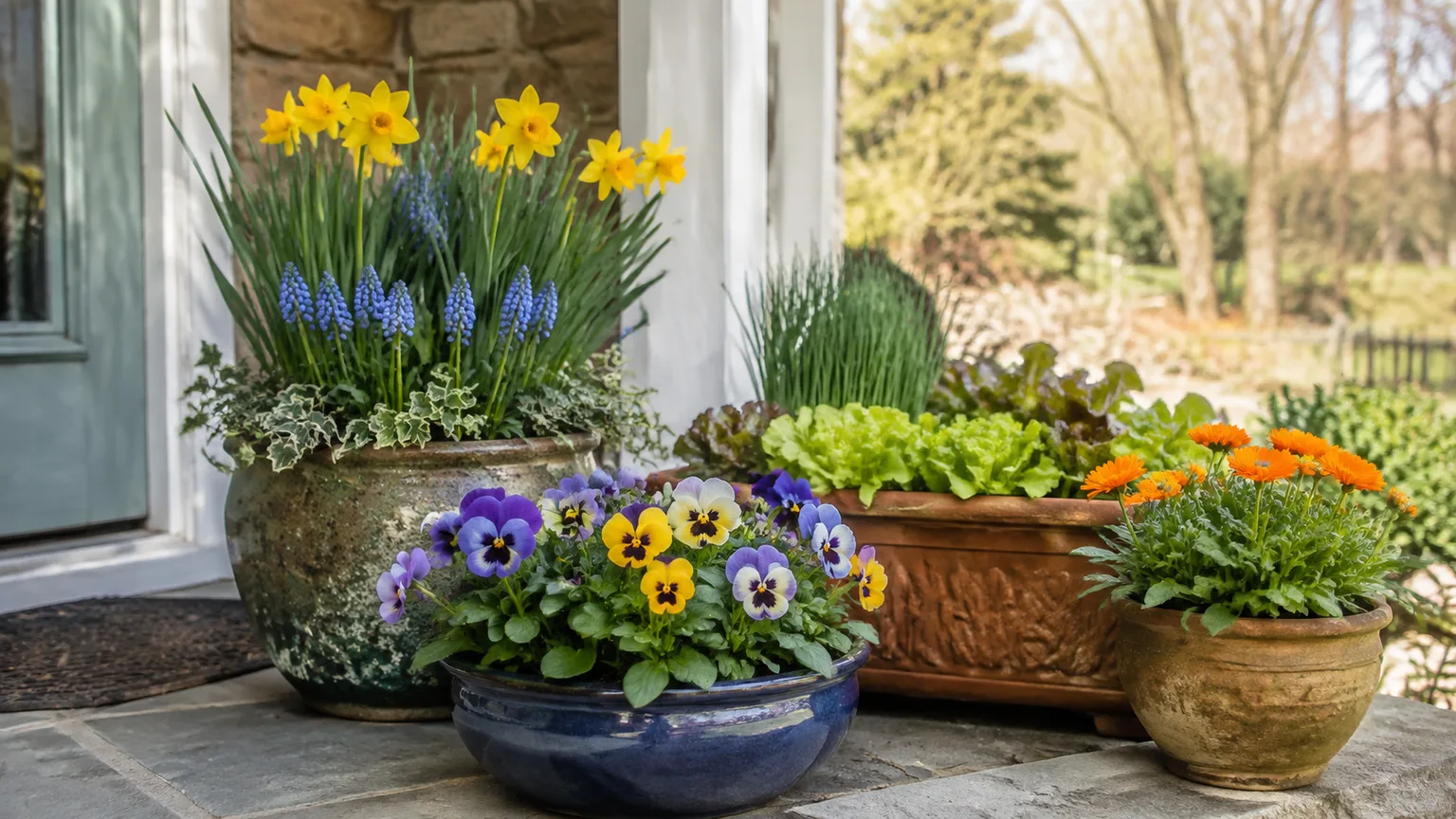
The most useful spring flower is not always the one with the biggest bloom. A small, early perennial can fill a bare patch beneath a tree, a late-spring bloomer can carry a sunny border past the bulb show, and a plant with handsome leaves can keep a shaded bed attractive after its flowers are gone. These six lesser-used choices do different jobs, so the best one depends on the conditions you can offer.
There is also a timing catch: not all six are early-spring flowers. Geum often reaches its stride in late spring and summer, while many verbascums flower later still; that makes them useful bridges rather than substitutes for snowdrops or crocuses. Treat local bloom dates as a sequence to plan around, not a calendar promise—latitude, winter temperatures, cultivar, and spring weather all shift the show.
Start with the site, not the flower color
Before buying, watch the planting area for a day and check how long it receives direct sun. A “bright shade” bed under a deciduous tree can become much sunnier before the tree leafs out, while a spot beneath a dense evergreen may stay shaded and dry all year because the canopy intercepts both rain and light.
Then test drainage after a good rain. These flowers are not interchangeable: some geums want moisture-retentive ground, pulmonaria prefers cool, rich soil that drains, and verbascum is a poor choice for a winter-wet bed. If the area is dry under a tree, epimedium may be a better starting point than lungwort; if it stays soggy, improve the site or choose a different plant rather than trying to compensate with extra fertilizer.
Geum adds a long bridge from late spring into summer
Geums produce flowers on slender stems above low clumps of foliage. Depending on the cultivar, the open flowers may be red, orange, yellow, peach, pink, or pale cream; the airy stems work well at the front or middle of a border, where they can rise through neighboring leaves without making a solid visual wall.
Unlike a short-lived bulb display, many geums flower from late spring through summer, and some continue into autumn. The exact length is not guaranteed for every variety or region, but geum is a strong choice when you want to hand off from early bulbs to summer perennials. The RHS geum growing guide notes both the extended flowering window and the importance of choosing a type for the site.
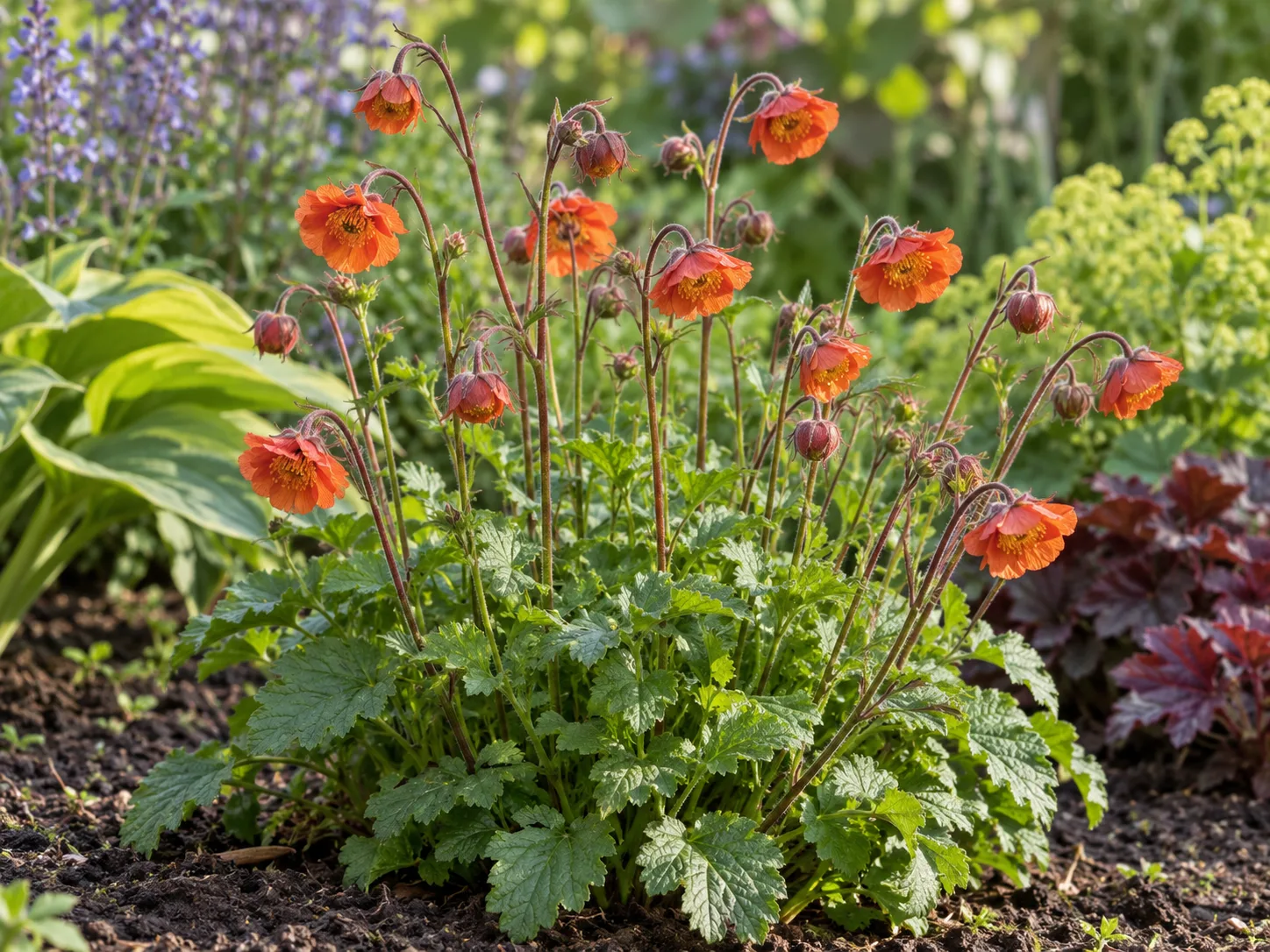
Choose the right geum for your soil
For a typical border, give geum an open, sunny position and soil that holds some moisture without staying waterlogged. Keep new plants watered during dry spells while they establish; once rooted, they still perform better when the soil does not bake completely dry. A thick, rich mulch against the crown is unnecessary and can keep the base too wet.
When deadheading, follow the spent flower stem down and cut it back without removing the whole leafy clump. This keeps the planting neater and may encourage more flowers, while healthy basal leaves continue feeding the perennial. If the plant gets fewer flowers despite good light and moisture, check whether the center has become crowded before reaching for fertilizer; a tired, congested crown is a division problem, not a nutrient diagnosis.
Do not assume every geum wants the same bed. Some alpine species prefer sharply drained ground, while water-avens types such as Geum rivale suit cooler, damper conditions than many border cultivars. When a label lists a named cultivar, use its stated mature size and site preference rather than applying one broad rule to the entire genus. If a clump becomes open in the center or flowers less after several years, divide healthy rosettes in spring and replant them into prepared soil; deadheading spent stems can extend the display, but it cannot correct a plant that is in the wrong place.
Bleeding heart makes a woodland bed feel established
The familiar old-fashioned bleeding heart, Lamprocapnos spectabilis (formerly Dicentra spectabilis), sends arching stems of pendant, heart-shaped flowers above divided leaves. It gives a woodland edge or part-shade border a strong focal point in late spring, especially when paired with lower plants that flower earlier around its base.
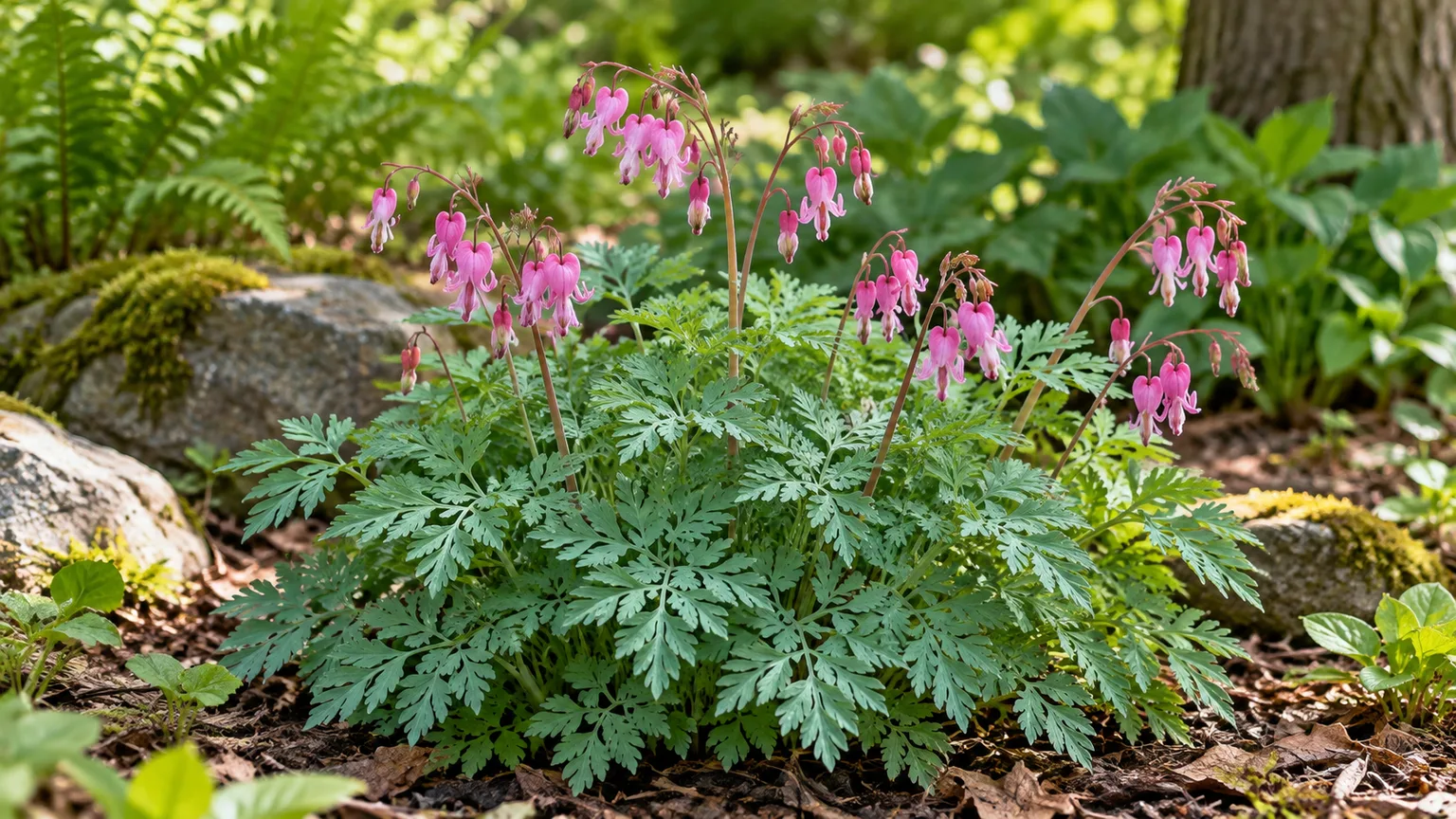
Choose light shade, ideally with morning sun and afternoon protection in warmer regions. The University of Wisconsin–Madison Extension profile says the plant grows best in light shade and needs well-drained soil; it may tolerate sun in cool, moist conditions, but that exception is not a reason to put it in a hot, dry bed.
Plan for its summer rest before it starts
Old-fashioned bleeding heart can yellow and disappear above ground in summer, especially where heat or dry soil arrives early. That is its seasonal cycle, not proof that the crown has died. Put it behind hostas, ferns, hardy geraniums, or later-growing shade perennials so the neighboring foliage takes over as the bleeding heart rests.
The name covers plants with different habits. Dicentra eximia, the fringed bleeding heart, is shorter and often retains foliage longer than Lamprocapnos spectabilis, according to Wisconsin Extension. Check the botanical name and cultivar on a nursery label if a longer leaf season or compact size matters; a photo of one kind does not predict the behavior of every plant sold as “bleeding heart.”
The old-fashioned type can make a generous clump, so give it room instead of squeezing it between small edging plants. Its fleshy roots are brittle; if you need to divide or move it, do so while it is dormant or just emerging, handle the crown carefully, and water the new planting until it reestablishes. A well-placed clump is usually more attractive than frequent division.
Epimedium handles the hard-to-plant shade beneath trees
Epimedium, also called barrenwort, is most valuable where the ground is shaded and ordinary flowering perennials struggle. Its heart-shaped leaves form a low, spreading groundcover, and its small, spurred flowers appear on wiry stems in spring. The flowers are subtle at a distance, but the foliage can make a difficult patch look intentional through more of the year.
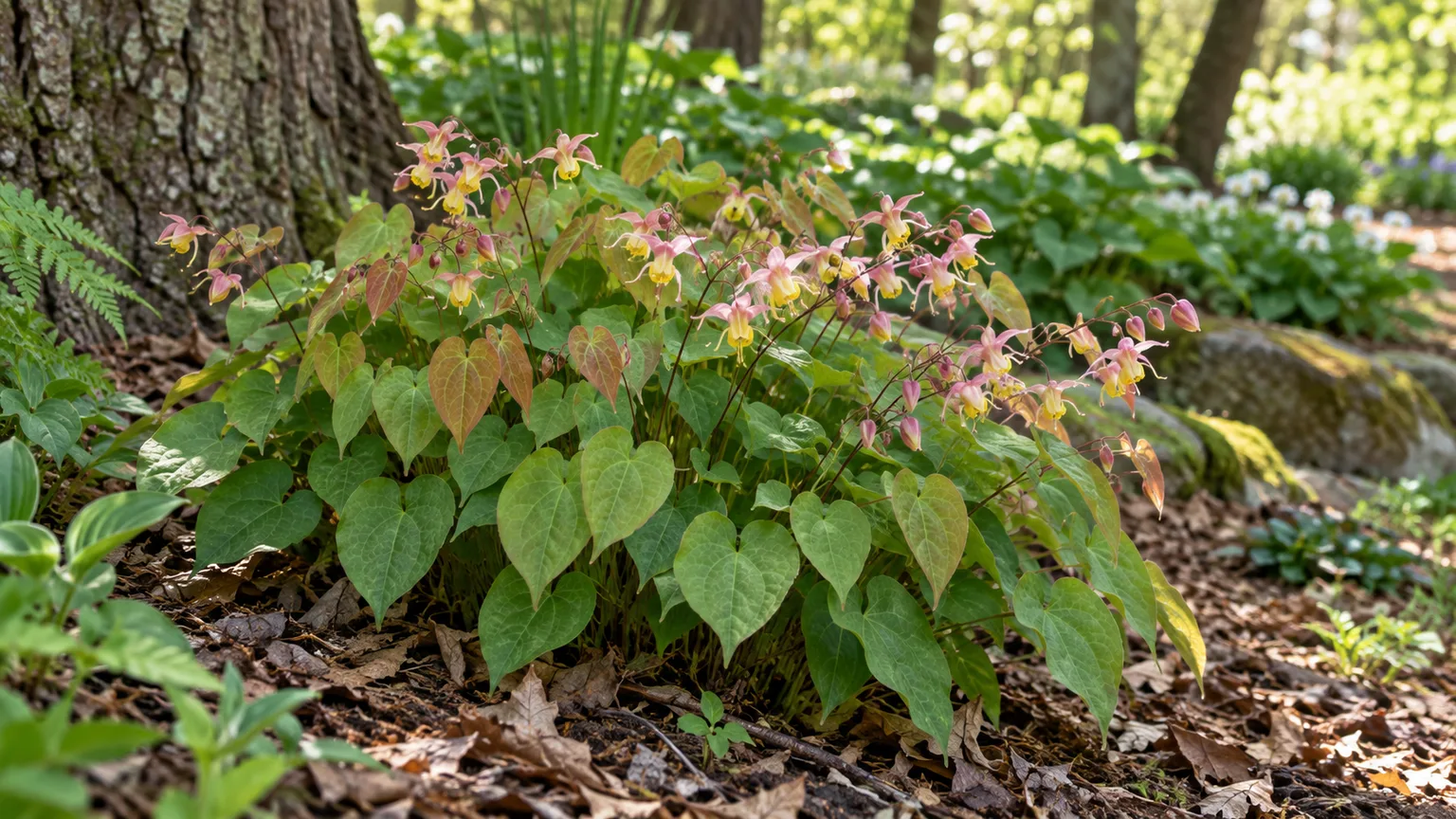
Many epimediums tolerate dry shade once established, making them useful beneath trees where roots compete for water. The RHS plant guide describes epimediums as plants for dappled or deeper shade and notes that some prefer moist soil while others accept drier conditions. That variation matters: “epimedium” is not a guarantee that every selection will thrive in the driest corner of a yard.
Match the selection to dry or moist shade
If the bed receives little rain because a canopy blocks it, ask a nursery for a selection known to tolerate dry shade and water the new planting during its first growing season. If soil stays evenly moist, more choices may be available. Avoid open, hot sun, particularly when the soil dries quickly; leaf scorch or weak growth is a sign to reassess exposure rather than simply adding more feed.
Epimedium spreads by rhizomes, usually gradually, and can form a useful ground layer without the height of a shrub. Its pace and mature spread differ among species and hybrids, so leave room and check the label before planting several close together. Use it where evergreen or semi-evergreen foliage is part of the design, not just for a brief burst of flowers.
New plantings still benefit from a careful start. Loosen the planting area rather than digging isolated holes into compacted soil, water the root ball before planting, and settle it at the same depth it grew in its nursery pot. A light layer of leaf mold or compost can help a woodland bed, but do not bury the crowns under a deep mulch that hides new shoots.
Pulmonaria offers flowers and patterned leaves in cool shade
Pulmonaria, commonly called lungwort, is a low perennial for a shaded border where spring color and foliage both matter. Depending on the cultivar, bell-shaped flowers may open pink and deepen toward blue or violet, while the leaves can be plain green or patterned with silver spots. That makes the plant useful after its flowers fade: the foliage still gives the bed texture.
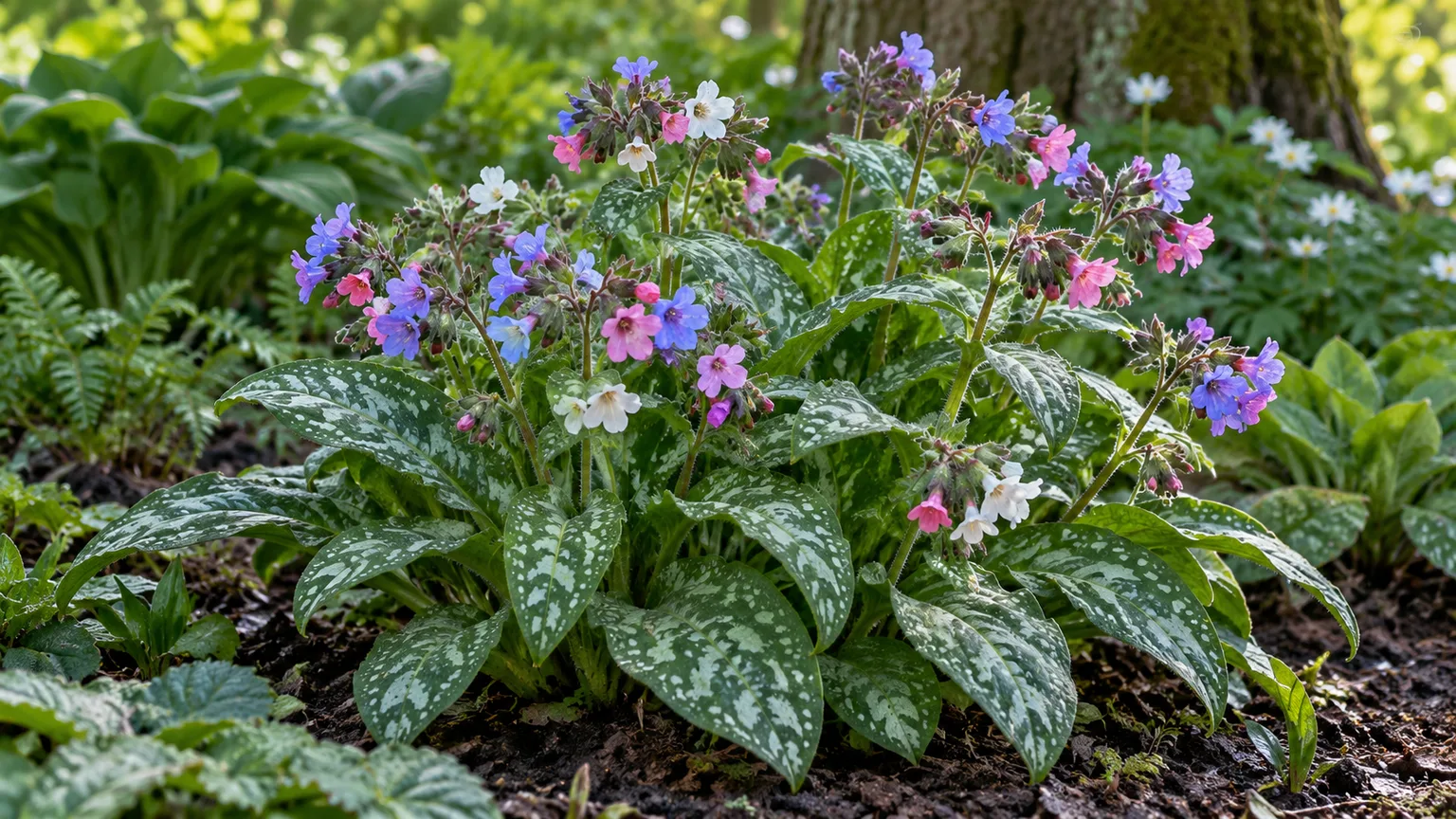
Give pulmonaria bright or partial shade and rich, moist but well-drained soil. NC State Extension’s lungwort profile notes that the plant struggles with direct sun, heat, and dry soil, and that poorly drained ground can lead to root rot. Its spring flowering can run across several weeks, but climate and cultivar affect when it begins and how long it lasts.
Keep the root zone cool without keeping it soggy
Use compost to improve soil structure before planting, then water during dry spells rather than on a fixed calendar. A thin organic mulch can help buffer moisture, but keep it off the crown. If the bed is under a tree, remember that tree roots may make the site much drier than it looks; check the soil below the surface before deciding that the lungwort needs more water.
Heat can leave pulmonaria foliage tired or scorched by midsummer. NC State Extension notes that foliage can be cut back during hot, dry periods to encourage fresh growth as conditions cool, but that is a recovery option, not a reason to site the plant in baking sun. If the location repeatedly dries out, move it to a cooler pocket or choose epimedium instead.
If a clump becomes crowded, division after flowering or in fall can refresh it and create additional plants. Do this only when you have a place ready with the same cool, moisture-retentive conditions; a division placed into a sunny, dry bed may survive briefly but will not show the foliage that made lungwort appealing in the first place.
Verbascum brings height after the earliest spring display
Verbascum, or mullein, earns its place for vertical flower spikes and a strong basal rosette of often woolly leaves. The genus includes annuals, biennials, and short-lived perennials, with different heights and flower colors. Many varieties flower from late spring into summer; others are best thought of as a second-year or summer feature, so buy for the stated cultivar and timing rather than expecting every plant to bloom immediately.
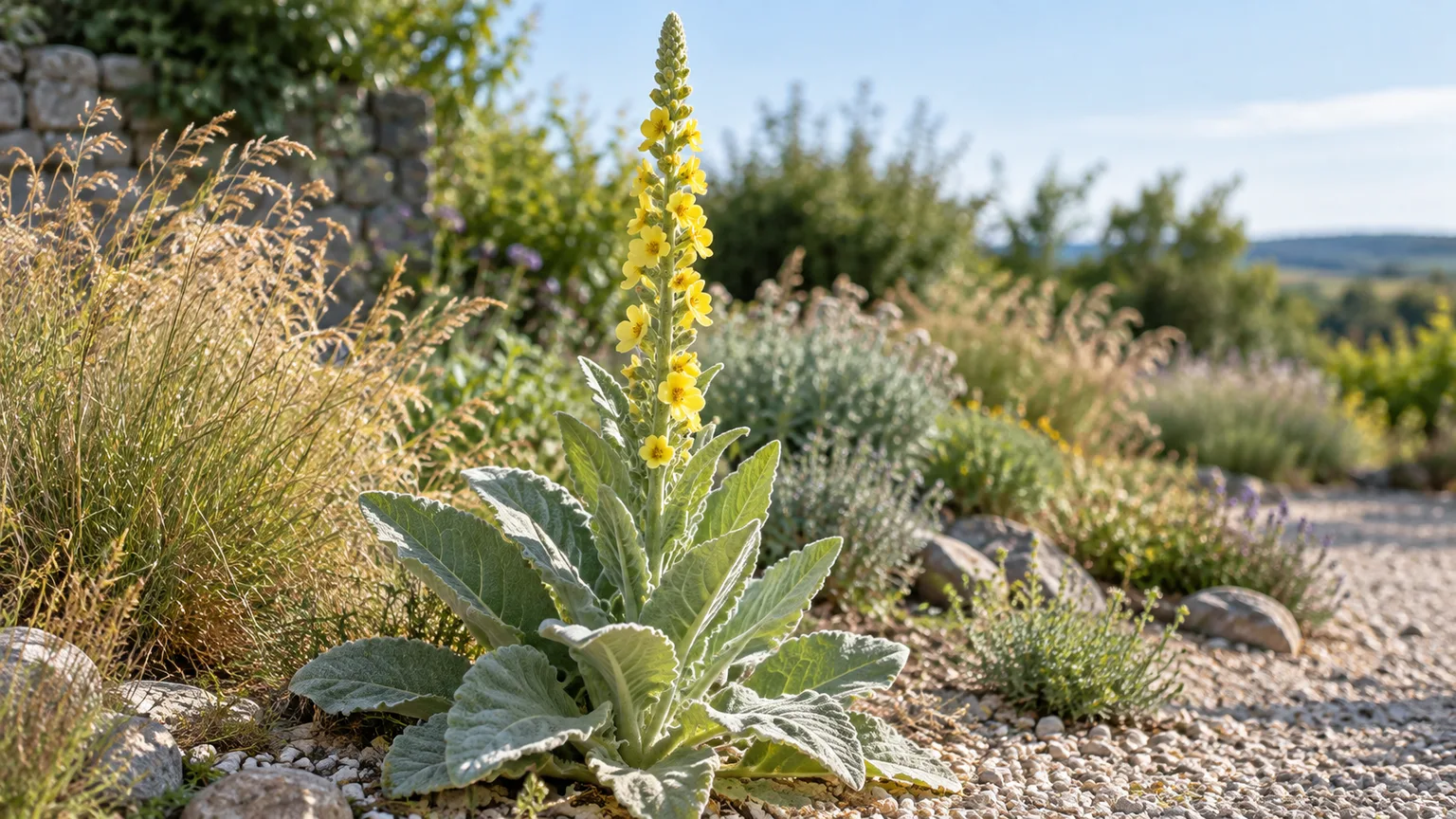
This is the sun-and-drainage choice in the group. The RHS verbascum guide recommends full sun and well-drained soil, and warns against heavy shade, rich wet ground, and winter waterlogging. Once established, many verbascums cope with dry conditions better than pulmonaria or geum, but young plants still need water while their roots settle in.
Treat its life cycle and self-seeding honestly
Some verbascums make a leafy rosette first and send up flowering stems the following season. That can disappoint a gardener who buys a small plant expecting an immediate tall display, but it also means the foliage has a role in the border before flowering. A spring-planted nursery perennial may flower sooner than a seedling; the cultivar label is the best guide.
The flower spikes can self-seed, which may help replace short-lived plants. Remove spent spikes before seed matures if you want to limit volunteers, or leave one or two where you want seedlings. GrowVeg’s verbascum guide notes that seedlings can establish in suitable sites and that some verbascums tolerate dry conditions after developing a taproot. Avoid moving an established plant casually: the Missouri Botanical Garden’s profile of ‘Southern Charm’ describes a deep-rooted plant that dislikes wet soil and can persist through self-seeding. In areas where common mullein is considered invasive, choose a well-behaved ornamental selection and remove unwanted seedlings promptly.
For a tidy border, place the rosette where its broad leaves will not smother small neighbors, and put the flower spike behind lower plants if the cultivar grows tall. Some hybrids have shorter stems and suit containers, but containers dry faster than beds; check the mix often during active growth and make sure excess water drains away. Stake only if a specific tall cultivar leans in an exposed spot rather than staking every plant by default.
Corydalis solida gives the front of a shade bed early color
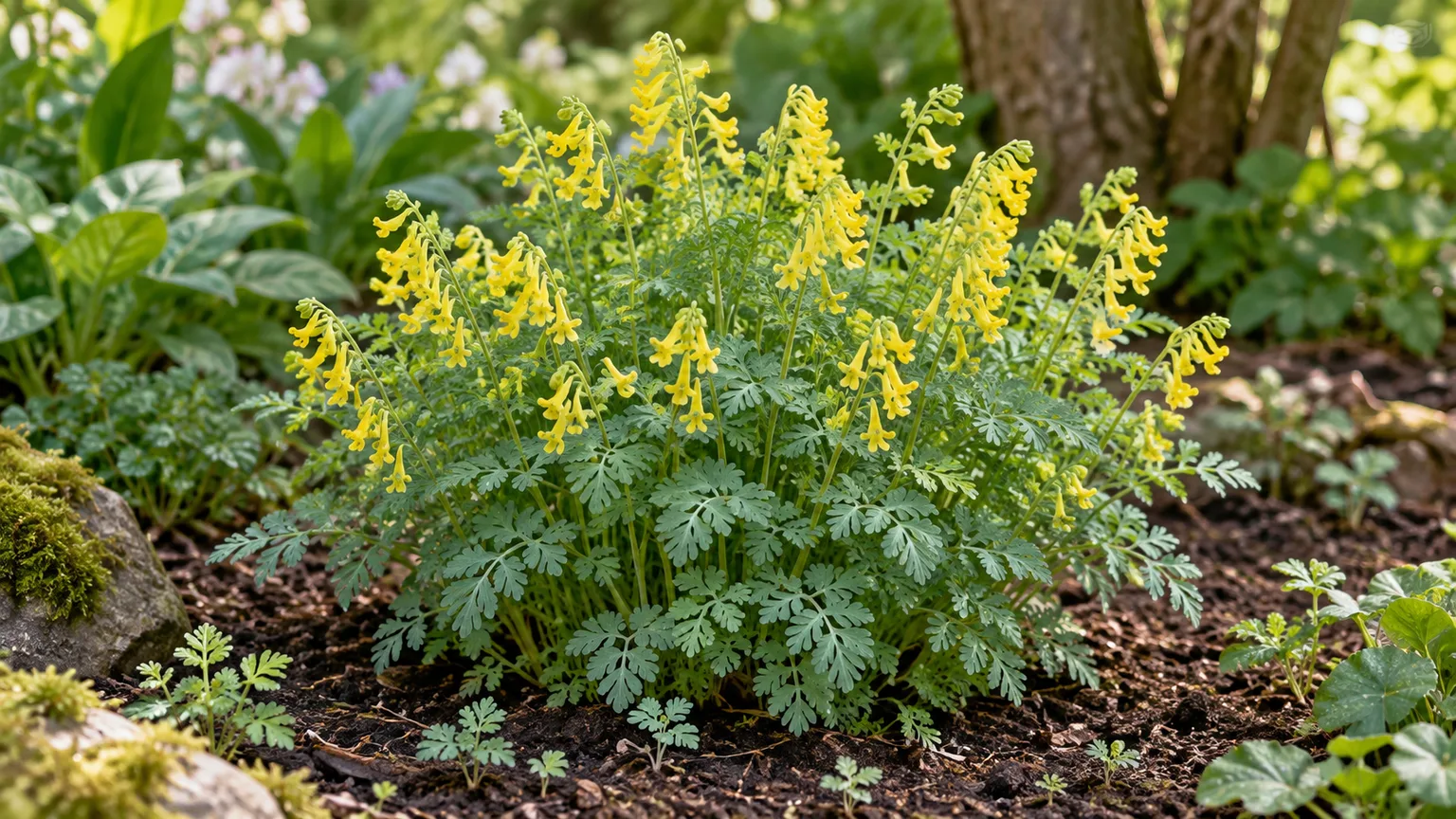
For a true early-spring accent, choose Corydalis solida, a compact tuberous perennial with finely divided, fernlike leaves and clusters of tubular flowers. The Missouri Botanical Garden profile lists spring bloom, part to full shade, and rich, moist, well-drained soil among its preferences. At roughly ten inches tall, it works near a path or along the front of a woodland bed, where smaller flowers can be seen without being swallowed by taller plants.
Mark its place when the foliage fades
Like many spring ephemerals, Corydalis solida can lose its foliage by midsummer, especially in hot, dry weather. The underground tuber may still be alive while the visible leaves have disappeared, so do not dig into the spot or replace it immediately. A discreet plant marker prevents accidental disturbance, and later-growing ferns or hostas can cover the open ground.
Give the soil even moisture while foliage is active, but do not confuse “moist” with waterlogged. The species suits a woodland edge with humus-rich soil, not a dry sunny border. Check that a plant is labeled C. solida if you want the short spring display described here; other corydalis species can differ in flower timing, persistence, and tendency to seed around. The image here is yellow-flowering C. lutea, included to show why the botanical name matters: C. solida has purplish-red spring flowers, while other species can produce a noticeably different display.
Match each flower to light, moisture, and garden role
This quick comparison is more useful than choosing by color alone. It also shows why all six should not be crowded into one bed if that bed has a single light and moisture pattern.
| Flower | Best garden job | Light and moisture fit | Main trade-off |
|---|---|---|---|
| Geum | Border color from late spring into summer | Usually sun; soil that retains some moisture; select alpine or damp-site types separately | Needs the right species or cultivar for unusually dry or wet ground |
| Old-fashioned bleeding heart | A focal clump in a woodland edge | Light shade; moist but well-drained soil | Foliage often fades in summer |
| Epimedium | Low groundcover under trees | Shade; some selections tolerate dry shade | Tiny flowers are subtle, and dry-shade tolerance varies |
| Pulmonaria | Spring color plus patterned shade foliage | Bright shade; cool, evenly moist but draining soil | Heat and drought can damage leaves; soggy soil can rot roots |
| Verbascum | Vertical accent for a sunny, dry border | Full sun; sharp drainage | May flower in its second year and can self-seed |
| Corydalis solida | Small early color at a woodland-bed edge | Part to full shade; moist, well-drained soil | It may go dormant by midsummer |
If the site offers only one reliable condition, let that decide the shortlist. For dry shade under mature trees, start with a suitable epimedium and consider whether you can irrigate during establishment; for cool, moist shade, pulmonaria and bleeding heart are more natural partners. A sunny border with drainage is where geum and verbascum make sense, but they need different moisture expectations and mature heights.
Build a bloom sequence that does not leave a gap
Think in handoffs. Corydalis solida and pulmonaria can start the shade-garden display; epimedium adds spring flowers and persistent leaf texture; bleeding heart takes over later in spring, then makes room for ferns or hostas. In a sunnier bed, early bulbs can finish as geum begins, and a taller verbascum can carry the eye toward summer.
The goal is not to make every plant bloom at once. That can create a brief crowded peak followed by a quiet bed. Instead, vary flower height and foliage persistence: use a low ephemeral at the edge, a medium perennial behind it, and a later plant or leafy companion where an early bloomer will rest. In a small garden, repeat two or three kinds in a group rather than buying one of every choice; repetition reads as deliberate planting and makes the seasonal changes easier to follow.
Plant with mature size in mind. Nursery pots hide the eventual width of epimedium clumps, geum rosettes, and bleeding hearts, while verbascum flower spikes can rise well above their first-year leaves. Check the cultivar label, leave room for air around foliage, and resist filling every gap with a new plant before you know how quickly the first ones establish.
Avoid the planting mistakes that shorten the display
The first mistake is treating all shade as one condition. A bed that gets morning sun and summer moisture is very different from dry shade beneath a large tree; pulmonaria may struggle in the second, while certain epimediums are better suited to it. Conversely, putting a plant that wants moisture into heavy, wet clay can be as damaging as letting it dry out.
The second is assuming “perennial” means evergreen or long-lived. Bleeding heart and Corydalis solida may disappear above ground after flowering, and many verbascums are short-lived even when they return by self-seeding. Mark dormant plants, plan companions to cover their gaps, and avoid watering a dormant patch heavily just because it looks empty.
Finally, do not overfeed in pursuit of larger flowers. These perennials need a suitable site more than a high-nitrogen boost: excess fertility can encourage soft foliage, weak stems, or a shorter-lived plant where drainage is already poor. Improve compacted soil before planting, use a light annual layer of compost where appropriate, and check the exact species and cultivar before dividing, pruning, or expecting repeat bloom.
When buying, look past the largest pot. A compact plant with healthy leaves, a firm crown, and no sour-smelling or saturated root ball is a better bet than a root-bound plant already pushed into flower with heavy feeding. If you are buying online, compare the mature width and species name with the conditions in your garden; a cultivar photo shows a possible display, not the size or bloom date every garden will get.
Conclusion
Geum, bleeding heart, epimedium, pulmonaria, verbascum, and Corydalis solida each solve a different spring-garden problem. Choose by site first: sun and moisture for geum, light shade for bleeding heart, dry shade for selected epimediums, cool shade for pulmonaria, sun and drainage for verbascum, and a moist woodland edge for Corydalis solida.
Then plan beyond the flower. Geum and verbascum can extend color toward summer, while bleeding heart and Corydalis solida may rest as warm weather arrives; epimedium and pulmonaria contribute foliage after bloom. With those differences in mind, a small planting can look intentional through more of the season—and each flower has a better chance of thriving where you put it.