How to Style a Coffee Table Like a Designer
Learn how to style a coffee table with 17 designer ideas for trays, books, flowers, color, scale, and everyday function—plus mistakes to avoid.

The best coffee table styling is not a pile of beautiful objects. It is a small, edited composition that gives the eye somewhere to land while leaving enough room for a mug, a book, a remote, or the snack bowl that will inevitably appear later.
Start with the table’s job, then make the decoration support it. A tray can corral loose pieces, books can add color and height, a bowl can soften a stack of rectangles, and a branch or plant can bring life to a room that already has plenty of hard surfaces. The finished effect should look considered, not precious.
Start With the Empty Table
Take every object off the coffee table before you style it. This is faster than trying to improve an arrangement that has accumulated one remote, three coasters, an old magazine, and a decorative object that no longer relates to anything else in the room.
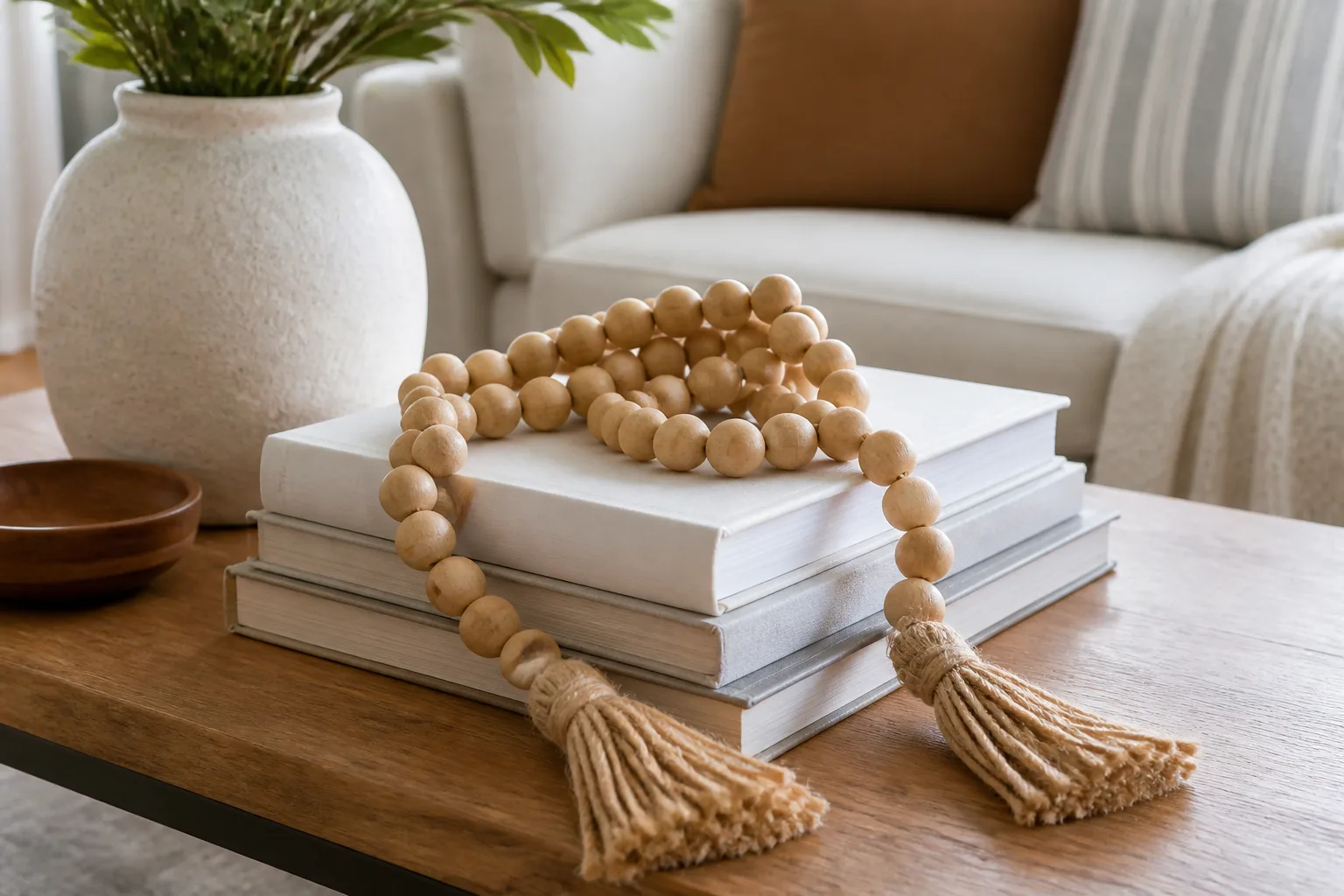
Wipe the surface, then stand back and look at the table with the sofa, rug, chairs, media console, and main walking route in view. A coffee table is part of a conversation group, not an isolated display plinth. Its size, finish, and visual weight already do some of the decorating work.
Now decide what the table must do every day. If it is where you eat, work, play games, or keep reading material, reserve that function before you add accessories. A beautiful arrangement that has to be dismantled twice a day is not a successful arrangement; it is a storage problem wearing a stylish hat.
Measure Before You Decorate
Decor can make a poorly proportioned table feel even more awkward, so check the furniture first. Better Homes & Gardens gives common coffee-table dimensions as roughly 17–19 inches high, 24 inches deep, and 36–48 inches wide, while noting that tables vary widely. It also recommends a table about two-thirds the sofa’s length, around 18 inches between the sofa and table, and a top that is level with or 1–2 inches below the sofa seat. See its coffee table sizing guide for the full furniture-selection context.
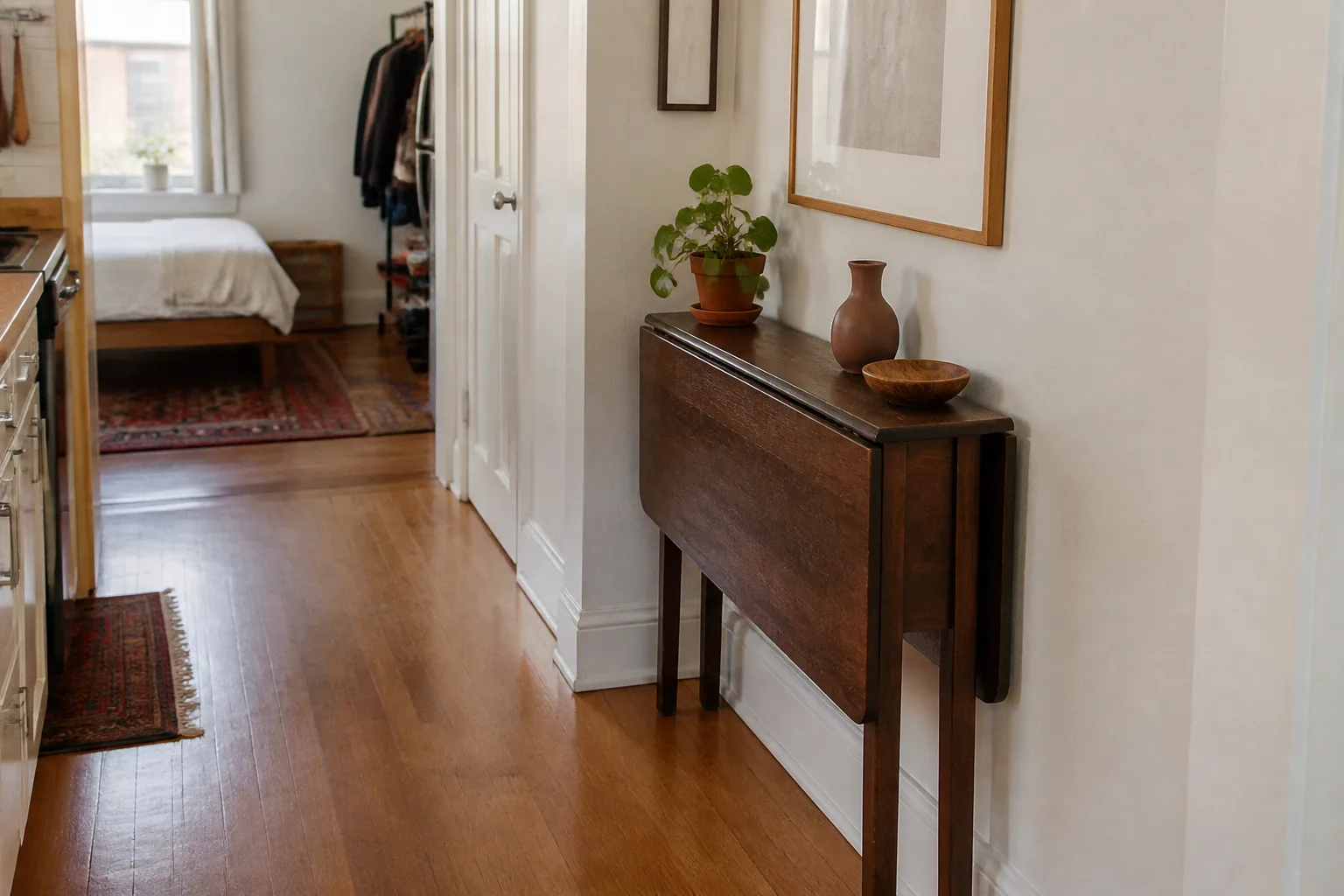
Treat those numbers as starting points, not commandments. A deep sectional may need more than 18 inches for knees and movement; a compact apartment may need less if the table is light and the route remains safe. Measure the actual seat height, table width, rug boundary, and clearance to every passage before deciding how much decor the surface can carry.
For styling, use a second measurement: the clear working zone. Leave a visibly open area where people naturally reach from the sofa. On a long table, that may be the end closest to the main seat; on a round table, it may be a crescent around the arrangement. If the tabletop looks full from every angle, it will feel full in use.
Choose One Visual Anchor
Every strong arrangement needs a first piece that establishes scale. Choose one substantial anchor: a wide tray, a stack of large books, a low bowl, a substantial vase, or a sculptural object with enough presence to read from across the room.
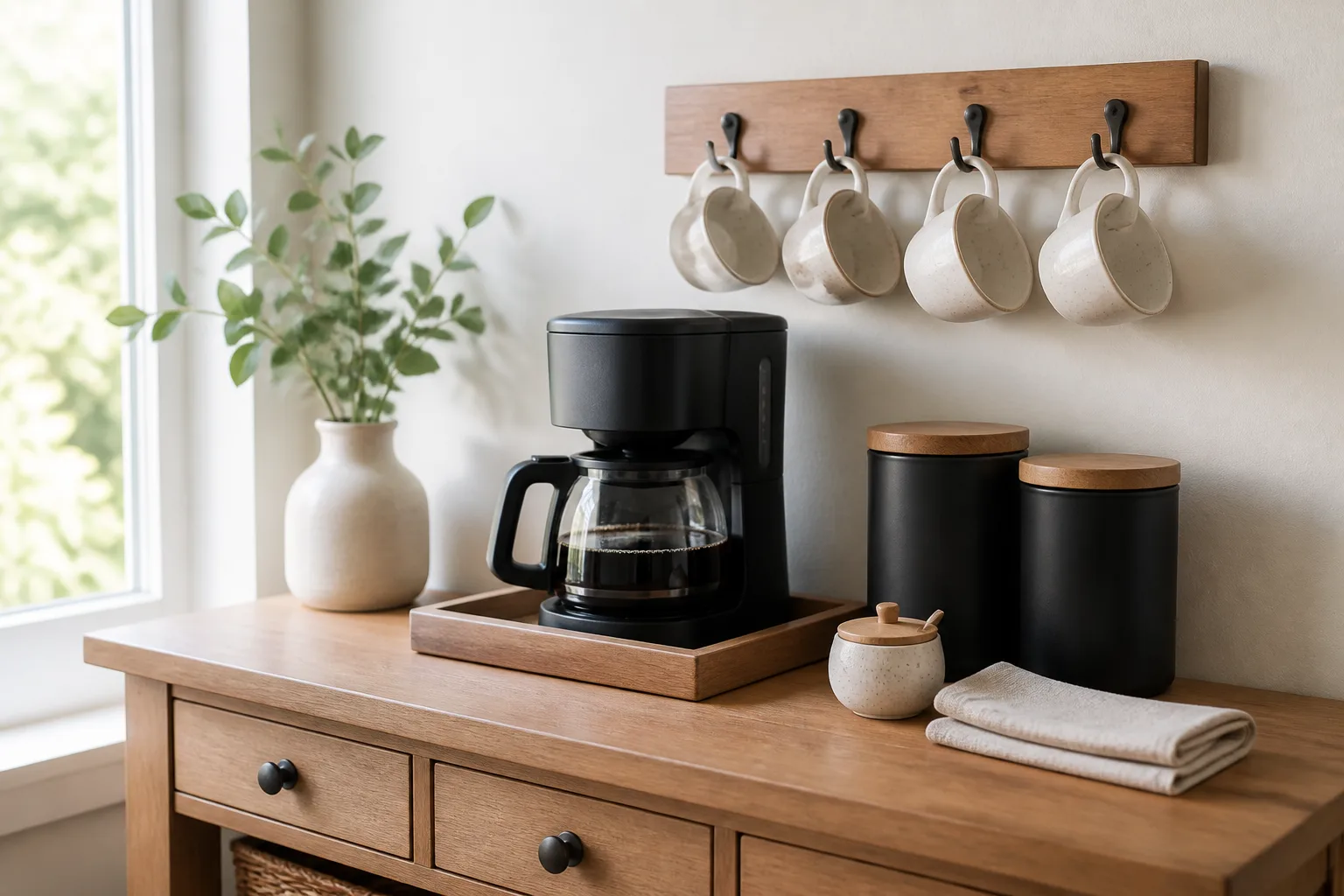
The anchor is not always the tallest item. On a long rectangular table, a tray or book stack can establish a horizontal base while a vase supplies height nearby. On a small table, one generous bowl may be the entire composition. The right anchor makes the rest of the decisions easier because you are adding support, not searching for a centerpiece after the fact.
House Beautiful’s recent designer advice describes a useful baseline of a decorative tray, art or design books, an organic element, and one or two additional objects. Its coffee table styling guide also emphasizes placing smaller vignettes in zones instead of scattering pieces across the middle. Use that as a menu, not a shopping list: a small room may need only two of those ingredients.
Build a Simple Height Triangle
Once the anchor is down, add contrast in height. A reliable starting composition has one tall element, one middle-height element, and one low element. The eye moves between them, which makes a small grouping feel designed without requiring a dozen accessories.
You can make the triangle with a vase, a bowl, and books; a candleholder, a box, and a tray; or a plant, a low dish, and a reading stack. The “triangle” does not have to be mathematically perfect. It can be an asymmetrical rise and fall, as long as the objects do not all form a flat line.
Houzz makes the same point in its coffee table decorating guide: books or trays create a base, circles interrupt a field of rectangles, and three different heights add energy. If the arrangement feels stiff, shift the tallest piece off-center. If it feels chaotic, lower one object or remove it rather than adding another item to “balance” it.
Let the Table Shape Guide Placement
The tabletop gives you a compositional clue. A rectangular table can handle separated zones or a long asymmetrical line. A round table usually benefits from a central cluster or an off-center grouping with generous negative space around it. An oval table can take either approach, depending on whether you want to emphasize its length or its soft outline.
On a square table, avoid automatically placing four matching objects in four corners. Two opposing groups—a tall vase in one corner and a stack of books in the other—often feel more relaxed. For an organic or irregular table, repeat the softness with a rounded bowl, a curved vase, or leafy stems instead of filling the top with more sharp-edged pieces.
Shape contrast matters just as much as color contrast. A round tray on a rectangular table softens the grid; a square box on a round table gives the eye a crisp counterpoint. The goal is not to eliminate repetition, but to keep the arrangement from becoming a collection of identical outlines.
Repeat Colors and Mix Materials
Choose a small color story before you choose the final objects. Pull one or two tones from the rug, upholstery, art, curtains, or nearby shelving, then let the coffee table echo them in small doses. A warm wood bowl, caramel book jacket, and brass detail can connect a neutral room without making every piece match.
Material contrast keeps a restrained palette from looking flat. Pair smooth glass with rough ceramic, woven rattan with polished stone, matte paper with reflective metal, or a soft upholstered ottoman with a rigid tray. West Elm’s round coffee table styling advice similarly recommends mixing textures while keeping room for actual drinks and coasters.
Do not confuse contrast with accumulation. If the table is glossy marble, two or three tactile materials may be enough. If the room already has patterned upholstery and a busy rug, keep the tabletop quieter and repeat only one accent color. The room should look connected when you glance up from the table.
17 Genius Coffee Table Styling Ideas
These ideas work best as interchangeable moves. Pick three or four that solve your room’s actual needs; do not try to use all 17 at once.
-
Use a tray to give loose objects a boundary. A tray creates a visual “room” for coasters, a candle, a bowl, and the remote. Choose a finish that repeats somewhere else in the room, and leave a clear rim around the grouping so it reads as intentional instead of crammed.
-
Stack books that people might genuinely open. Choose large-format books about art, architecture, travel, food, gardens, or a personal interest, then place the heaviest book on the bottom. Two or three books usually provide enough lift; a book stack should add personality and structure, not become a tower that blocks conversation.
-
Leave one book open to a strong page. An open book makes the table feel lived in and invites browsing. Use a page with a calm composition rather than a spread full of tiny text, and rotate the book occasionally so the display does not become permanent scenery.
-
Bring in fresh flowers or a branch. A small arrangement gives a hard-surfaced room movement, color, and a changing focal point. Keep the vessel stable and proportionate to the table; if a tall vase blocks the television or the person opposite you, use lower stems or a wide, shallow bowl instead.
-
Use a houseplant when you want lasting greenery. A compact plant can replace weekly flowers and add a natural shape to books and boxes. Set it on a saucer, protect wood and upholstered surfaces from moisture, and choose a stable pot that will not tip when someone reaches for a drink.
-
Put a sculptural bowl at the center of the composition. A bowl fills visual space while remaining useful for wrapped sweets, remotes, matchbooks, or nothing at all. Look for a profile that contrasts with the table: a rounded ceramic bowl on a rectangular wood top is an easy pairing.
-
Mix an old piece with a new one. A vintage bowl, brass magnifying glass, inherited box, or travel find keeps the arrangement from looking like a showroom bundle. Balance one distinctive object with quieter books or a simple tray so the story is legible rather than visually noisy.
-
Use odd numbers as a starting point, not a rule. Three visual groups often feel balanced because they create a beginning, middle, and end. Five can work on a large table, but two strong pieces can look better than five weak ones; group pairs together so they read as one unit.
-
Create negative space deliberately. Empty tabletop is not unfinished when it protects a sightline, a landing spot, or a comfortable reach. Place the arrangement slightly off-center on a long table and let the open area do useful work rather than filling it with small filler objects.
-
Repeat one metal finish. A brass candleholder, bronze bowl, or blackened metal base can tie the table to a lamp, frame, or hardware elsewhere in the room. Repeat the finish once or twice, then stop; too many shiny accents can turn a calm composition into a display of samples.
-
Use a round object to break up rectangles. Books, remotes, trays, and most tabletops create hard lines. Add a circular candle, bowl, paperweight, or coaster stack to soften the arrangement and give the eye a different path through the vignette.
-
Turn useful storage into part of the decor. A lidded box or low basket can hide remotes, reading glasses, game pieces, or charging cables while keeping them reachable. Pick one container large enough to be useful, rather than several tiny boxes that multiply the clutter.
-
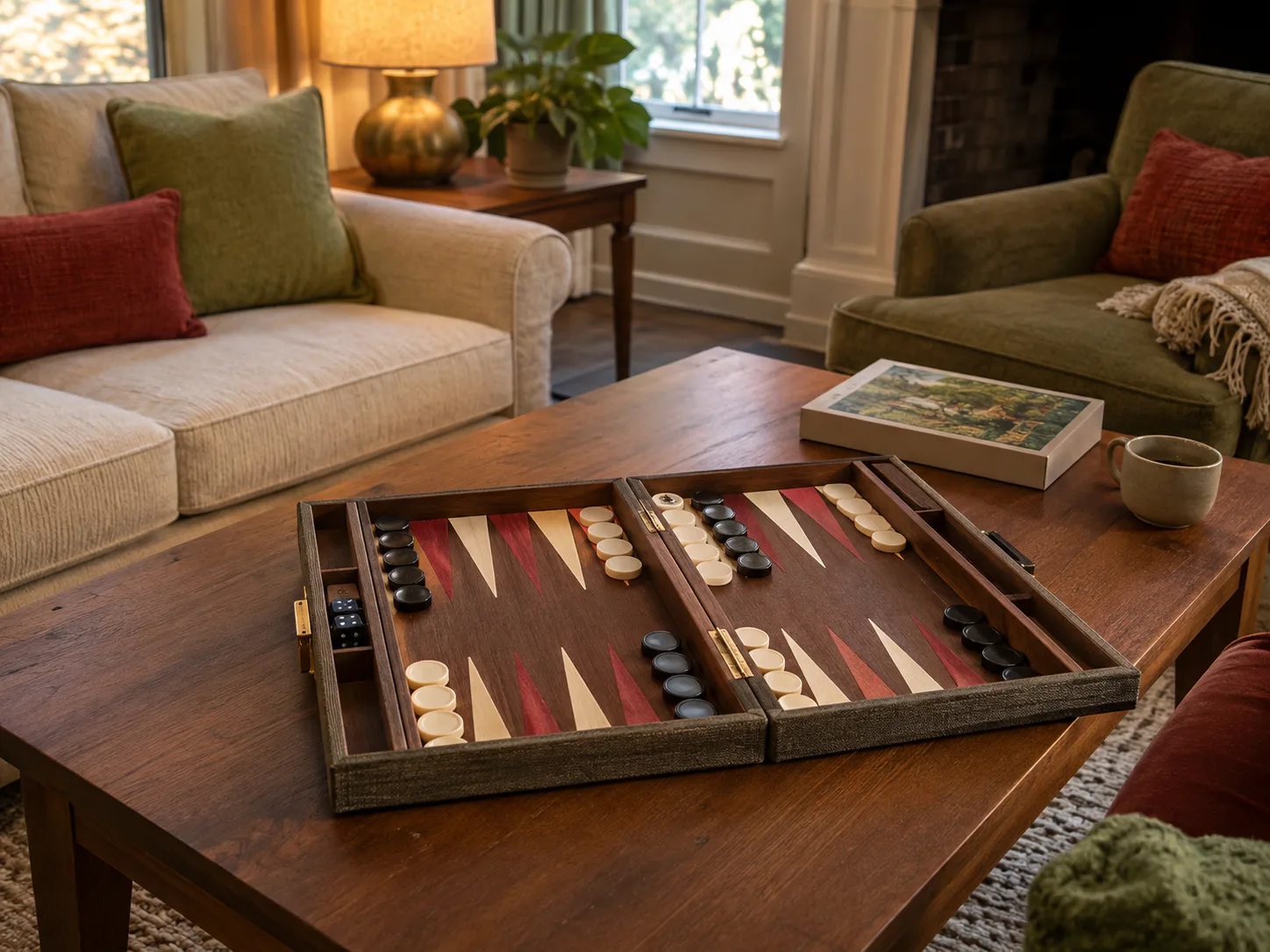
Leave out a beautiful game. Chess, backgammon, dominoes, or a compact card set can make the table feel social instead of purely decorative. Choose pieces that close securely and do not sprawl into the main drink zone; the best game display can be played without a full rearrangement.
-
Style a low table with low objects. On a low platform table or a low sofa, oversized tall decor can dominate the room and interrupt sightlines. Try a broad book stack, a shallow tray, a low bowl, and short stems so the arrangement follows the furniture’s relaxed profile.
-
Use one oversized object on a large table. Tiny objects disappear on a deep table and make the surface look peppered with clutter. A large bowl, generous floral arrangement, or oversized stack of books gives the table a clear visual weight, then leaves you room to add only one or two small accents.
-
Make a glass table visible with contrast. Clear glass disappears when it holds clear glass. Use ceramic, wood, stone, or a darker book cover on top, and pay attention to the rug beneath because the lower layer is part of what the table displays.
-
Choose a seasonal swap instead of a seasonal pile. Replace the flowers, open book, fruit bowl contents, or one small accent when the season changes. Keeping the tray and main anchor in place makes the refresh inexpensive, faster, and more coherent than replacing every object every few months.
Make the Arrangement Work for Real Life
A coffee table lives in the most frequently used part of many homes, so durability and access matter as much as appearance. The furniture-selection guidance from Better Homes & Gardens distinguishes formal spaces from harder-working family rooms and recommends choosing materials and features around the room’s traffic and daily activity. That principle applies to the objects on top, too.
For children, pets, or frequent guests, use stable pieces with rounded edges, heavier bases, and finishes that can tolerate a wipe. Replace fragile ceramics near the edge with a low wooden bowl, lidded box, or flameless candle. If you use a real candle, keep it in a stable holder, away from anything that can catch fire, and never leave it burning unattended; a warm LED candle gives you the mood with fewer constraints.
Keep coasters where a hand can find them. If the remote is part of daily life, put it in the tray or box instead of pretending it will vanish. The most polished coffee table is the one that makes the useful item easy to put away.
Match the Formula to Your Table Type
Round table: Start with one centered or slightly off-center cluster, then build the tallest piece toward the back or side. A round tray, circular bowl, and curved vase reinforce the silhouette; a rectangular book stack adds enough contrast to keep the grouping from becoming a circle of circles.
Rectangular table: Think in zones rather than one crowded center. A tray or book stack can occupy one-third of the length, a vase or bowl can occupy another, and the remaining section can stay clear for drinks. If the table is narrow, use one long low arrangement instead of multiple bulky piles.
Square table: Two diagonal groupings often look more natural than four evenly spaced corners. Keep the center or the edge nearest the sofa open if that is where people reach, and use one tall object opposite a low, horizontal stack to distribute visual weight.
Glass table: Give the surface something opaque and textural to frame. Place books, ceramic, stone, or wood where the shapes will read clearly, and treat the rug and lower shelf as part of the composition rather than ignoring what shows through the top.
Ottoman or upholstered table: Use a tray with enough weight and footprint to stay stable, ideally with a discreet non-slip layer underneath. Keep sharp, top-heavy, or spill-prone objects away from the edges, and remember that the tray may need to move when someone wants to put up their feet. Houzz’s upholstered-table guidance makes the same case for a simple tray topped with a vase or dish.
Two-tier table: Let the upper level carry the visual focal point and use the lower shelf for controlled storage. A basket, box, or a small stack of magazines can fill the lower level, but leaving it partly empty gives the table more breathing room and makes cleaning easier.
Style Around the Rest of the Room
The coffee table should sound like the rest of the living room. Repeat a color from the artwork, a wood tone from the shelving, or a material from the light fixture, but do not copy every finish. House Beautiful’s designer interviews make the useful point that a table should connect to the sofa, rug, or shelving; otherwise, the styling can feel like it belongs to a different room.
Look at the arrangement from the sofa, the doorway, and the chair across from it. A vase that looks perfect head-on may block the room from the side. A dark bowl may disappear against a dark table but look strong against a pale rug. Styling is a three-dimensional decision, so move around before you decide that the layout is finished.
If the room is already maximalist, let the coffee table be the quiet pause. If the room is mostly neutral, use the table for one vivid book cover, a colorful vessel, or flowers rather than introducing six unrelated colors. Contrast is strongest when it has a calm background.
Refresh It Seasonally Without Starting Over
Seasonal decorating works best as a controlled edit. Keep the everyday base—tray, books, bowl, or box—and swap one living or colorful element. Spring may call for fresh stems; summer can use a bowl of citrus; autumn can bring in a single sculptural gourd; winter can use evergreen clippings or a candleholder.
Use real food only if it will not attract pests or become a nuisance, and protect porous surfaces from damp stems, condensation, and spilled water. Faux greenery is a practical choice when the table is far from a window or when pets and children make a delicate arrangement unrealistic. The point is a small change in mood, not a new layer of stuff.
The Ten-Minute Styling Reset
When the table feels wrong, do not shop first. Use this sequence:
- Remove everything and wipe the surface.
- Return only the items used daily, such as coasters, a remote box, or the current book.
- Add one anchor that matches the table’s size.
- Place one tall, one middle, and one low element, changing shape or texture between them.
- Reserve the easiest reach zone for drinks, snacks, or feet.
- Photograph the table from the sofa, then remove the least useful or least connected piece.
The photograph is helpful because a layout can feel balanced from standing height but look crowded from the seat where you actually see it. If the arrangement still feels busy after one edit, remove half of the small pieces. If it feels empty, add one large object rather than a handful of tiny ones.
Common Mistakes That Make a Table Look Off
Everything is in the center. Centering a single bowl can work, but centering every object creates a dense island and empty corners. Break the grouping into two zones or shift the composition slightly so the negative space feels intentional.
Every object is the same height. A line of low bowls and boxes has no rhythm, while a line of tall vases blocks the room. Use books, a tray, or a small pedestal to create height, then lower anything that competes with conversation.
The table is full but not useful. If there is no clear place for a cup, the styling has gone too far. A tray can organize the decorative pieces, but it should not become an excuse to cover the whole surface.
The finishes match too perfectly. A full set of identical objects can look flat and overly deliberate. Keep the palette related, then introduce one different texture or shape so the arrangement has some tension.
The centerpiece is too delicate for the household. A thin glass vase at the edge of an ottoman or a sharp sculpture in a toddler’s reach is a mismatch, not a styling challenge. Choose weight, scale, and placement around the people who use the room every day.
The table ignores its surroundings. A brightly colored arrangement can look stranded if no other element in the room acknowledges it. Echo one color or material nearby, then let the coffee table be a supporting note rather than the room’s only statement.
The rule of three becomes a cage. Odd numbers and visual triangles are useful because they help a beginner start. They are not more important than scale, safety, access, or the object you actually love; two meaningful pieces with space around them can be the most sophisticated choice.
Conclusion
To style a coffee table like a designer, begin with the empty surface and decide how the table needs to work. Measure the clearance, choose one anchor, build a loose triangle of heights, mix shapes and textures, repeat a color from the room, and stop before the tabletop loses its breathing room.
Then make the arrangement yours: an open book you will read, a bowl from a trip, a plant you can care for, or a game that brings people to the sofa. The strongest coffee table is not the one that stays untouched. It is the one that looks good, works hard, and can be reset in ten minutes when real life takes over.



