How to Get Rid of Chiggers on Skin and at Home
Chigger bites after yard work? Learn what to do for skin and clothes, how to reduce yard hot spots, and when a clinician or licensed pest pro is needed.
If you need to get rid of chiggers, handle three separate jobs in order: remove any unattached larvae from skin and clothing, calm the skin reaction, and reduce the outdoor hot spot that caused the exposure. A chigger rash does not mean the mites are living under your skin, and itchy bumps alone are not a reason to spray a mattress or fog the house.
The most useful plan is deliberately split. Skin care is a same-day hygiene and symptom-control problem. Home control is usually a laundry and entryway problem. Yard control is a habitat-management problem, with targeted pesticide treatment or licensed professional help reserved for persistent, confirmed areas.
What Chiggers Are and Why They Reach Your Clothes
Chiggers are the tiny, six-legged larval stage of mites in the family Trombiculidae. They are arachnids rather than insects. The larva climbs grass or low vegetation, transfers to a person or animal that brushes past, and looks for a protected place to feed. Tall grass, weeds, woodland edges, leaf litter, shrubs, and damp shade are common exposure settings, which matches the habitat description from MedlinePlus and NYC Health.
The first important distinction is between an attached larva and the itch it leaves behind. A larva can be brushed or washed away, but the skin reaction may begin hours later and continue after the mite is gone. That delay is why people often keep searching the bed, applying harsh substances to the rash, or assuming every new itch is a new bite.
Only the Larval Stage Bites
Only the larval stage feeds on people. It does not burrow into the skin, drink blood, or lay eggs in a person. The clinical review indexed by PubMed explains that the larva attaches at the skin surface and secretes digestive enzymes; the resulting inflammation can cause intense itching even after the larva has dislodged.
The central practical point is simple: treat the exposure and the inflammation, not an imagined mite under the skin. Nail polish, bleach, alcohol, gasoline, essential oils, and other “smother it” tricks can irritate already-inflamed skin and do not make a delayed welt disappear. If the skin is broken, harsh chemicals also make it harder to judge whether a secondary infection is developing.
Why the Yard, Not the Mattress, Is the Main Problem
Chiggers need an outdoor life cycle. Adults and nymphs live in soil and feed on other small organisms; the larvae wait on vegetation for a host. A person can carry a few larvae inside on clothing or skin, but that is temporary transport, not the same thing as a bed-bug infestation. Homes & Gardens similarly distinguishes fabric carried indoors from a self-sustaining infestation in furniture or bedding.
That distinction changes what you do. Wash clothing worn through tall grass, shower before sitting on upholstered furniture, and wash an outdoor blanket if it was used in a suspected hot spot. Do not apply lawn insecticide to a mattress, sofa, child’s play area, or your skin. If people continue developing unexplained bites indoors despite no outdoor exposure, stop assuming chiggers and ask a clinician or pest professional to help identify the cause.
The First 30 Minutes After Outdoor Exposure
If exposure is fresh, act before the delayed itch becomes your only clue. The goal is to remove larvae that have not firmly attached, keep them from traveling through the house on fabric, and avoid turning a minor exposure into a prolonged scratching cycle.

Wash Skin Before the Itch Arrives
Take a normal shower or bath with soap as soon as practical after leaving a suspected area. Wash the waist, ankles, sock line, behind the knees, groin folds, and any place clothing pressed against the skin. A washcloth can help lift particles from the surface; scrub firmly enough to clean, not so hard that you abrade the skin.
NYC Health recommends prompt washing and notes that chiggers remaining on the body can be removed with repeated soapy washing. Use comfortably warm water rather than scalding water, especially once bumps have appeared. Hot water may feel briefly soothing, but excess heat can increase irritation and drying.
Afterward, put on clean clothes. If the skin is already itchy, do not keep re-washing it every few minutes; move to gentle symptom care. Wash the affected area once more with mild soap if it is dirty, then use a cool compress for short intervals and avoid scratching.
Launder Clothing and Outdoor Fabrics
Remove exposed clothing before you settle into bed or sit on a sofa. Place it directly into the washer or a closed hamper that can be emptied into the washer, rather than shaking it through the bedroom. Use detergent and the hottest wash and dry settings that the garment’s care label allows; NYC Health specifically advises hot laundering after known exposure.
Pay attention to socks, cuffs, waistbands, shoes, towels, blankets, and gardening clothes. Wash a picnic blanket or pet-free outdoor mat if it was laid in tall grass or leaf litter. Hard shoes can be left outside to dry and brushed clean; do not spray a repellent onto footwear unless its label allows that use.
If a garment cannot tolerate hot water, follow the care label and use the dryer if permitted. Do not mix pesticide, bleach, essential oils, or household cleaners into laundry. Those additions create a chemical exposure problem without improving ordinary washing.
How to Read a Chigger Bite Pattern Without Overdiagnosing
Chigger bites are often recognized from the combination of exposure, delay, location, and clustering—not from a single distinctive mark. Many other bites and rashes can look similar, so use the pattern to decide what to do next rather than treating it as a laboratory diagnosis.
Clues That Fit Chigger Exposure
Common clues include intense itching that begins several hours after time in tall grass or brush, clustered red bumps near sock lines or waistbands, and welts in skin folds or other places where clothing fits tightly. MedlinePlus describes severe itching and red pimple-like bumps, while NYC Health notes that bites often occur where clothes fit closely or skin is delicate.
Location is useful but not definitive. Mosquitoes, fleas, contact dermatitis, scabies, bedbugs, and other causes can produce itchy bumps. A family that develops similar ankle or waistband irritation after the same outdoor activity has a stronger exposure story than one person with a rash after changing detergent.
Most reactions are managed by controlling itch and protecting the skin from scratching. MedlinePlus lists antihistamines and corticosteroid creams or lotions as possible symptom treatments and says antibiotics are not needed unless a skin infection develops. Follow the product label and ask a pharmacist or clinician before using medication on a young child, during pregnancy, on broken skin, or alongside other medicines.
When a Clinician Should Take Over
Contact a healthcare professional when the rash is getting worse, the itching is very severe, or symptoms do not improve with reasonable treatment. Seek help sooner if scratching has broken the skin and you notice increasing warmth, spreading redness, drainage, or fever; those findings need assessment rather than more home remedies.
Do not wait for a yard treatment to solve a medical question. A clinician can consider other explanations when there was no likely outdoor exposure, the pattern is unusual, new lesions keep appearing in a way that does not fit the activity, or the reaction is not following a typical course. For emergency symptoms such as trouble breathing, fainting, or swelling of the face or throat, call emergency services; New York State Department of Health lists those as signs of a serious reaction to insect bites or stings.
Decide Whether Your Home Actually Needs Treatment
Most homes do not need indoor pesticide treatment after one walk through chigger habitat. Start with the exposure chain: where were you, what clothing or blankets came inside, did you shower, and are new symptoms continuing after the laundry was handled?
If the answer is one outdoor exposure followed by prompt washing and laundering, stop at hygiene. Vacuuming the entryway is reasonable if grass or leaf litter came indoors, but do not spray the floor, mattress, or upholstery with a lawn product. Keep children and pets away from any treated surface according to the product label, and remember that “natural” does not mean safe for skin, lungs, or animals.
A Simple Yard Hot-Spot Check
When bites repeat after time in the same property, look for a consistent place rather than treating everything. Mark shady lawn edges, untrimmed fence lines, dense ground cover, brush piles, leaf litter under shrubs, and damp areas near downspouts or irrigation. The Gardening Know How guide emphasizes that habitat reduction—closer mowing, trimming low shrub cover, and drying moist areas—is more useful than assuming broad pesticide treatment will solve the problem.
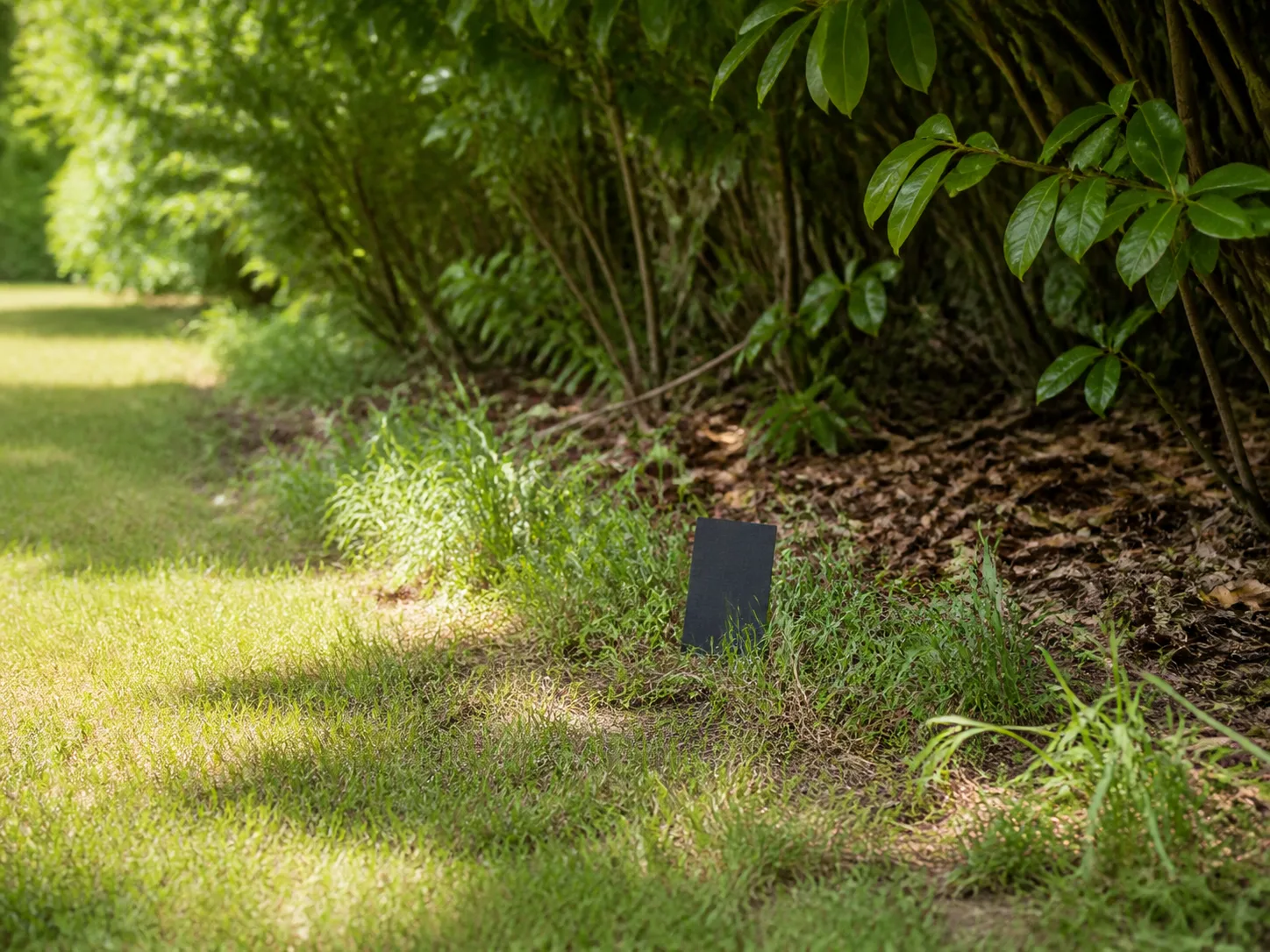
You can also use a simple black-cardboard check in a suspected area. Stand a piece of black cardboard or dark card upright in the grass for about 10 to 15 minutes, then inspect it with a hand lens for tiny moving reddish or pinkish specks. NYC Health describes this approach. A positive result tells you that mobile mites are active at that spot; a negative result does not prove that the whole yard is free of them.
If you test, record the exact location and conditions. A damp, shaded border after a warm afternoon is a more informative sample than a sunny center lawn checked at dawn. Do not kneel or handle suspect vegetation with bare skin while testing; wear shoes, long pants, and socks.
Reduce Yard Pressure With Habitat Changes
The yard response should be small, targeted, and repeatable. Chiggers are patchy, and a maintained lawn next to a brushy woodland edge can have a very different risk from the open middle of the same property. The aim is to make the places people use less favorable without stripping every bed of plants or wildlife.
Mow, Trim, and Open the Edges
Mow on the normal schedule for your grass and keep the areas around play spaces, paths, patios, and seating open enough that grass does not form a tall, humid fringe. Trim weeds and low branches that touch those routes. A transition zone of shorter, sunlit turf between a dense woodland edge and a play area is more useful than scalping the entire lawn.
Do not mow an infested strip in shorts or sandals. Wear long pants tucked into socks, closed shoes, and a shirt that closes the gap at your waist. Shower and change clothes after the work. This protects you while the habitat change is being made; it does not imply that mowing instantly kills every larva.
Remove leaf piles, brush piles, and unused lumber from high-use areas. Stack firewood off the ground and keep dense ground cover from touching outdoor cushions or the foundation. The practical guidance from LawnStarter also stresses short grass, trimmed vegetation, and debris removal as the first line of yard control.
Dry Moist Patches and Limit Shelter
Check irrigation overlap, leaking hoses, clogged gutters, and downspouts that keep the soil surface damp. Shorten watering in shaded areas when the plants and turf do not need it, and correct low spots that stay wet after rain. Do not deliberately dry a plant bed to the point of harming the plants; focus on the path, lawn edge, and seating zone where people are being exposed.
Reduce shelter for small mammals without trying to eliminate normal wildlife. Seal gaps beneath sheds or decks, store pet food and trash securely, and move a bird feeder away from a doorway or play lawn if spilled seed is attracting rodents. A wildlife-friendly yard can still have chiggers; the useful decision is whether a host-rich, shaded corridor is positioned right next to the place people sit or walk.
Repeat the maintenance after storms and during the warm season. Habitat changes lower pressure over time but may not stop larvae arriving from a neighboring field, woodland, or unmanaged lot. That is when personal protection and a targeted professional plan matter more than trying to make a property permanently sterile.
Use Repellents and Pesticides as Targeted Tools
Repellents protect the person doing the yard work; pesticides, when justified, act on a defined outdoor area. Those are different jobs. A repellent on clothing does not prove the yard is clear, and a yard treatment does not replace a shower or medical care.
Protect Skin and Clothing Before Yard Work
Choose an insect repellent whose label specifically includes the use you need, and follow its directions for age, application site, reapplication, and washing. MedlinePlus identifies DEET-containing repellent on skin and clothing as a prevention option. New York State Department of Health cautions that some repellents are intended for clothing rather than skin, so never infer that one product can be used both ways.
Wear long sleeves, long pants, socks, and closed shoes in tall grass or brush. Tucking pant cuffs into socks reduces openings at the ankles; it is uncomfortable in hot weather, so choose the protection you can actually keep on. Do not put a lawn insecticide, concentrated essential oil, vinegar, or undiluted repellent on skin.
Essential-oil and vinegar recipes are especially easy to overtrust because they smell strong. Homes & Gardens notes that essential-oil mixtures may be unsafe around freely roaming pets. They are not a substitute for a tested, labeled repellent, and they can irritate skin or damage plants.
What to Know About DE and Labeled Treatments
Diatomaceous earth is a dry abrasive dust, not a magic barrier. It may kill soft-bodied arthropods that crawl through a dry deposit, but rain and irrigation remove its usefulness. Dust can irritate eyes and lungs, and broad application can affect non-target insects. If you use a product, choose one labeled for the intended site and pest, apply only to a confirmed hot spot, avoid blooming plants, and keep people and animals away as the label directs.
If habitat work and personal protection do not stop repeat exposure, ask a local extension service or licensed pest operator about a labeled outdoor treatment. NYC Health recommends contacting a licensed pest control operator when chiggers are around a home. A professional can select a product registered for the site, target likely harborages instead of the whole yard, explain re-entry timing, and tell you whether a retreatment is actually warranted.
Never mix pesticides, use a product on a surface missing from its label, or assume a treatment safe for lawns is safe for vegetable beds, pets, children, pollinators, or skin. Avoid spraying when wind or rain will move the product. If the problem is a strip along a property boundary, a professional may also tell you honestly that incoming pressure cannot be eliminated without changing the boundary habitat.
Know When Professional Help Is Warranted
Professional help is appropriate when a large or repeated hot spot prevents normal use of the yard, when several habitat changes have not reduced exposure, when you cannot safely apply a labeled product, or when children, pets, pollinator beds, waterways, or neighboring properties make mistakes costly. It is also reasonable when the suspected source is outside your property and you need a boundary plan rather than another home recipe.
Before hiring anyone, ask what evidence they will use to choose treatment zones, which pest and surface the product label covers, how long people and pets must stay out, what plants or water features need protection, and what maintenance must follow. A promise of permanent eradication is a warning sign: chigger pressure depends on weather, vegetation, hosts, and nearby habitat. The professional’s job is to reduce exposure safely, not to guarantee that a living landscape will contain no mites.
Keep the medical and property decisions separate. A pest operator cannot diagnose a rash, and a clinician cannot map a lawn hot spot. When both problems are present, use the skin-and-laundry plan today, then document where exposure occurs so the yard decision is based on a pattern rather than panic.
Conclusion
The fastest way to get rid of chiggers is not one dramatic household treatment. Shower with soap after exposure, remove and launder the clothing that touched grass or brush, and treat the itch with gentle, label-directed care. Do not dig for a mite under the skin or put lawn chemicals on a bed, sofa, or person.
For repeat exposure, map the shaded, damp, overgrown places where people actually walk. Mow and trim those edges, remove debris, correct moisture problems, protect your skin during the work, and use a labeled spot treatment or licensed professional only when the evidence says the yard needs more. Seek medical care when symptoms worsen, fail to improve, or show signs of infection, and remember that a persistent rash can have a cause other than chiggers.



