What Is Cactus Soil? Cactus Mix vs Potting Mix
Learn what cactus soil is, how it differs from regular potting mix, which ingredients improve drainage, and how to test or make a better mix.
The quick answer
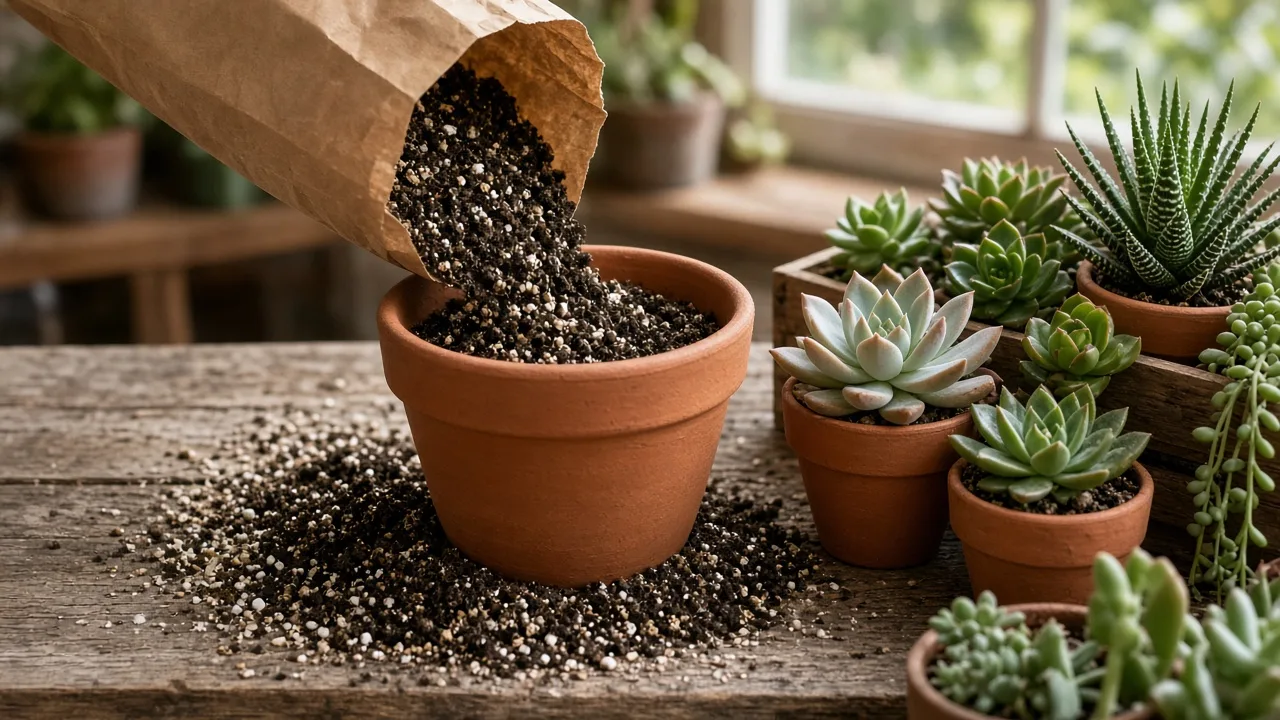
Cactus soil is a container-growing medium formulated to drain excess water quickly, keep air around roots, and hold less moisture than a general-purpose potting mix. It is usually a blend of organic material—such as peat, coir, bark, or compost—with mineral particles such as perlite, pumice, lava rock, grit, or coarse sand.
The practical difference is not that cactus soil contains a magical ingredient. It is that the mix is built around a different margin for error. A desert cactus stores water in its body, so the root zone needs to become airy again after a thorough watering instead of staying wet for days. General potting mix is usually designed for plants that need a more consistently moist root environment.
That does not mean every bag labeled cactus mix is ideal, or that every cactus wants the same recipe. A small cactus in a plastic pot on a dim windowsill may need a more mineral, faster-drying blend than a large plant in a porous terracotta pot beside a bright window. A Christmas cactus is a further exception because it is a forest cactus, not a desert cactus, and its roots generally tolerate more organic matter.
What cactus soil is made to do
Think of potting mix as a root-zone climate. The ingredients determine how quickly water moves through the container, how much air remains between particles, how long the mix stays damp, and how quickly the structure collapses. Cactus soil aims to keep those conditions predictable enough for a plant that prefers a deep drink followed by a drying interval.
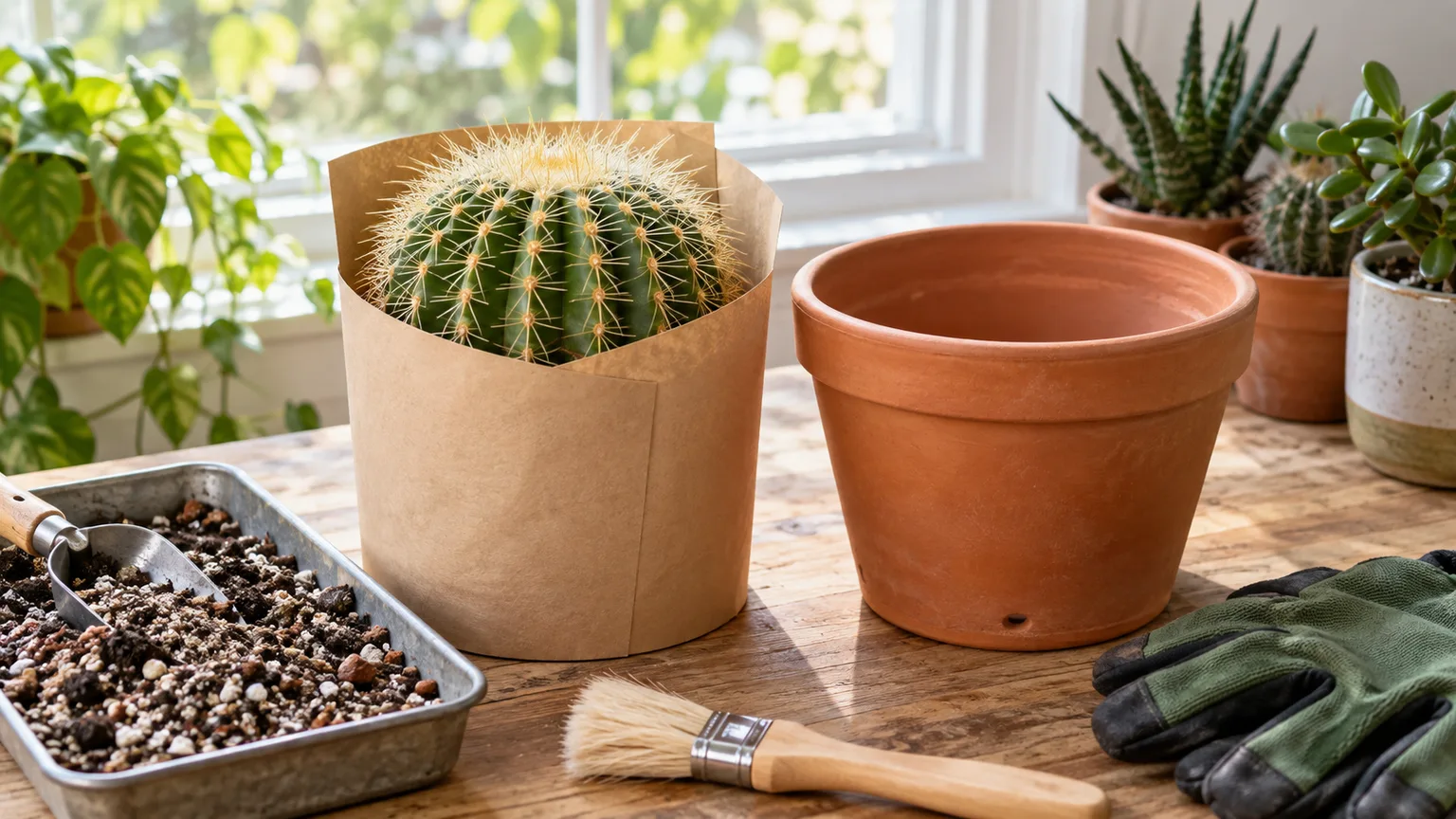
The University of Minnesota Extension describes cacti and succulents as plants that generally grow best in well-drained, sandy soil and need only modest water and fertilizer. That broad guidance is more useful than copying a desert image: the goal is not to recreate a pot of dust, but to provide a container medium that drains, anchors the plant, and does not suffocate the roots.
Drainage and air space
Drainage is the first job. When you water a cactus, excess water should be able to leave through the root ball and the pot’s drainage hole instead of collecting around the lower roots. But drainage does not mean water should race down the sides while the center stays dry. A good mix wets throughout, then releases the surplus.
Air space is the second job. Large, stable particles create pores that remain open after watering, while fine organic material and dust-sized particles can settle into those spaces and make the mix dense. Roots need oxygen in those pores; a mix that stays saturated for too long can turn a watering mistake into root decline even when the plant has been placed in bright light.
This is why “add sand” is incomplete advice. Coarse mineral grit can create useful structure, but very fine sand can fill gaps between larger particles and make the blend more compact. If a handful turns into a sticky ball when wet, the particle size and organic content need attention before the mix goes into a valuable plant.
Moisture and nutrient balance
Cactus soil should hold a little moisture and some nutrients. A completely inert jar of stones may drain quickly, but it will not anchor roots well or offer a useful reservoir for a normal potted plant. The better target is a mineral-forward mix with enough organic material to retain a modest amount of water without becoming a long-lasting sponge.
Fast drainage also has a limit. If a cactus is in a tiny pot, a very hot room, and an extremely porous mix, it may dry before the roots can use the available water. That does not automatically mean the mix is wrong; it may mean the watering interval, pot material, light, or pot size needs to change. The right question is how the root ball behaves in that particular setup.
Cactus soil vs regular potting mix
Regular potting mix is made for a wider range of foliage, flowering, and edible container plants. It often contains a larger share of peat moss, coir, compost, or other organic matter because those materials help the mix hold water and nutrients between waterings. That is useful for many houseplants, but the same moisture-holding behavior can be too slow for a desert cactus in an indoor container.
Cactus soil shifts the balance toward mineral structure. Perlite, pumice, lava rock, crushed granite, calcined clay, coarse grit, and appropriately sized sand can create larger air spaces and faster water movement. The mix may still include peat, coir, bark, or compost, but those ingredients are usually a smaller share than they would be in an all-purpose blend.
The New York Botanical Garden’s Mertz Library says a cactus mix should drain in less than a minute after watering and should dry between waterings; it also cautions that many commercial mixes rely too heavily on peat. Use that as a prompt to inspect a product rather than as a stopwatch rule for every pot. A shallow terracotta container and a deep plastic container will not dry at the same speed, even if they contain the same bag of mix.
Composition and structure
The simplest comparison looks like this:
| Property | Cactus soil | Regular potting mix |
|---|---|---|
| Mineral material | Often a substantial share of perlite, pumice, grit, or similar particles | May be present, but usually not the main structural component |
| Organic material | Enough to hold some water and anchor roots | Often the main body of the mix |
| Water behavior | Drains and dries faster | Holds moisture for longer |
| Root-zone air | More open when particles are appropriately sized | Can become dense as fine organic material settles |
| Best starting use | Desert cacti and many drought-adapted succulents | Most foliage plants, seedlings, and moisture-needing container plants |
These are tendencies, not guaranteed product specifications. Some “cactus and succulent” mixes are nearly as peat-heavy as regular potting mix, while some premium gritty mixes contain very little organic material. Read the ingredient panel and feel the product when possible; the word cactus on the front of a bag is not a recipe.
Aeration, nutrients, and how the mix behaves
Regular potting mix is not bad soil. It is simply designed to solve a different watering problem. A pothos, fern, or seedling may benefit from a medium that stays evenly damp, whereas an arid cactus can struggle when the same medium remains wet around a small root system.
The nutrient difference is also easy to overstate. Cacti are not plants that need zero nutrition, but a newly repotted plant usually does not need a heavily fertilized medium. Rich compost or built-in fertilizer can encourage lush, soft growth when light is inadequate, and concentrated fertilizer in a dry root zone can be harsh. A clean starting mix lets you control feeding later, during active growth, instead of making the potting medium do every job at once.
The best mix is therefore not the one that drains fastest in isolation. It is the one that drains excess water, retains enough to wet the roots, remains open after repeated watering, and dries on a schedule you can manage. HGTV’s guidance for succulent mixes makes the same broader point: growers adjust the share of mineral material for plant type, local conditions, container size, and watering habits rather than using one universal blend.
Choose a mix by cactus type and setting
Before changing soil, identify the kind of cactus and the conditions around it. A recipe that is excellent for a desert barrel cactus can leave a forest cactus unnecessarily dry, while the same bag can behave very differently in a humid monsoon-season room and a heated winter apartment.
Desert cacti versus forest cacti
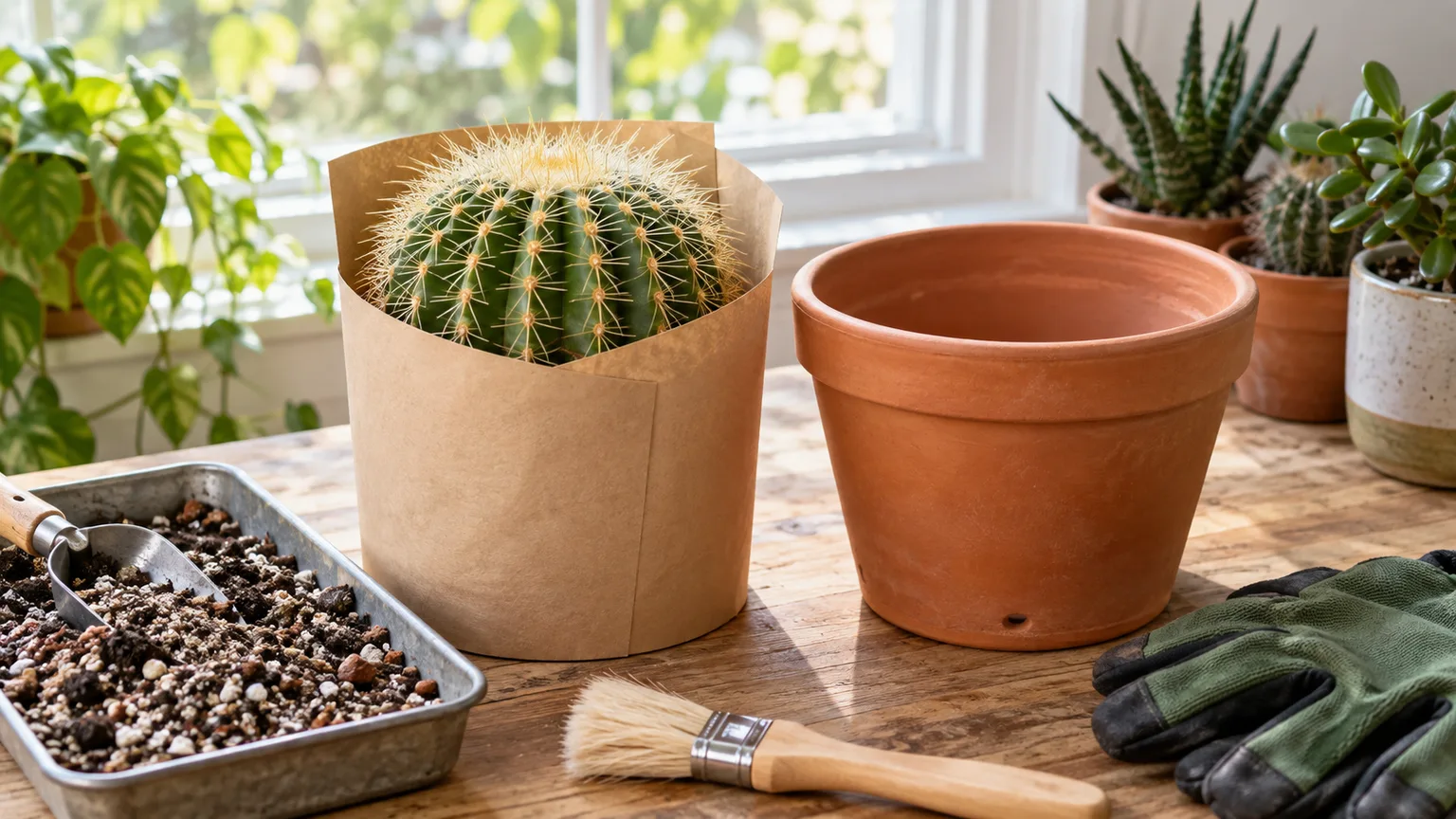
For true desert cacti—including many barrel, columnar, Mammillaria, Echinopsis, and Opuntia types—start with a gritty, porous medium containing a modest organic fraction. Their thick stems store water, and their roots benefit from a wet-dry cycle rather than continuous dampness. A mix with roughly half or more mineral material by volume is a reasonable starting point, then adjust after observing dry-down.
Do not transfer that rule blindly to Christmas, Thanksgiving, Easter, or orchid cacti. These forest types grow in humid environments and often use roots adapted to leaf litter, bark, and other organic debris. They still need a drainage hole and an airy mix, but a chunky houseplant blend with bark and more organic material is usually more sensible than an extremely dry desert mineral mix.
Succulents occupy the middle ground. Aloe, haworthia, jade, echeveria, sedum, and euphorbia vary in root size, season of growth, and tolerance of moisture. A commercial cactus mix may suit many of them, but the plant’s actual behavior matters more than the label. A succulent that stays wet for ten days needs more mineral structure or a faster-drying setup; one that shrivels while the pot is otherwise healthy may need a little more moisture-holding material or a smaller adjustment in watering.
Adjust for the pot, room, and season
The container is part of the soil system. Unglazed terracotta can lose moisture through its walls and is often a useful choice for a desert cactus, especially if the plant is top-heavy. Plastic and glazed ceramic hold moisture longer, which is not inherently wrong, but they give you less room for overwatering and may call for a more open mix.
Pot size matters just as much. A small root ball surrounded by a large volume of damp mix dries slowly even if the recipe is technically gritty. Use a pot only slightly larger than the root system when repotting, and choose a stable base for a tall cactus. The Mertz Library advises moving up only one pot size rather than creating a large, wet moat around the roots.
Light, temperature, humidity, and season change water use. A cactus in bright light and active growth may dry faster than one resting in a cool, dim room. A home in a humid climate may need a more mineral blend than a dry, well-ventilated room, while a plant moved indoors for winter may need less frequent watering even though the soil has not changed.
How to choose a bagged cactus mix
Buying a premixed product is often the best choice when you only have a few plants. It saves time, avoids sourcing dusty materials, and gives you a repeatable baseline. The goal is to choose by texture and ingredients, not by the brightest packaging.
Look for a mix that visibly contains mineral particles and feels loose rather than smooth and compost-heavy. Perlite, pumice, grit, lava rock, calcined clay, or bark are useful signs, but ingredient order matters too: a small sprinkling of perlite on top of a mostly peat-based bag will not turn it into a mineral-forward mix.
Read the label for moisture-retention claims. A product marketed to keep soil wet for a long time may be excellent for another plant and a poor starting point for a desert cactus. If the bag is very fine, mostly dark organic material, or already clumps when squeezed, plan to amend a small portion and test it before repotting the whole collection.
Avoid using garden soil as the main indoor cactus medium. It can compact in a container, drain unevenly, and carry pests or pathogens. Also avoid very fine play sand, beach sand, and ungraded dust; a clean horticultural grit with a range of useful particle sizes is safer for keeping air spaces open.
You do not need to chase a perfect pH number for an ordinary houseplant cactus if the mix is fresh and the plant is growing normally. Drainage, particle size, light, and a pot with a hole usually matter more than tweaking pH by guesswork. Investigate pH when a trusted species guide or a persistent nutrient problem gives you a specific reason.
DIY cactus soil recipe
For a practical desert-cactus starting mix, use:
- 2 parts commercial cactus mix or light potting mix
- 1 part pumice or perlite
- 1 part coarse mineral grit, horticultural coarse sand, or small lava rock
Measure all parts with the same container. A cup, scoop, or small bucket is fine; consistency matters more than the unit. This formula follows the useful structure of a base, a porous amendment, and a coarse mineral fraction, while keeping enough organic material to anchor roots and wet the mix evenly.
If you are starting with ordinary potting mix rather than a cactus base, a more mineral-heavy recipe can be appropriate: 3 parts light potting mix, 3 parts coarse sand or grit, and 2 parts perlite or pumice. Gardener’s Path and Get Busy Gardening both describe versions of this three-component approach, but their ratios also show why there is no single official cactus-soil formula. The starting materials differ, so the ratios must be tested.
Ingredients and sensible substitutions
The organic base supplies structure and a small moisture and nutrient reserve. Choose a light, fluffy potting mix that does not advertise prolonged moisture retention. For forest cacti, you can use more organic material and add fine-to-medium bark for a chunky root zone.
Perlite is lightweight and creates air space. It is a good option when you need to loosen a dense bagged mix, but it can float or shift toward the surface after repeated watering. Pumice is heavier, porous, and tends to stay distributed in the pot; it is often useful in tall or windy containers. Either can work, and the best choice may be the one that is clean, affordable, and available in a suitable particle size.
Coarse grit provides weight and durable structure. Horticultural grit, small lava rock, crushed granite, or appropriately sized poultry grit can serve this role. Coarse sand is acceptable when it is genuinely coarse and clean; fine sand can do the opposite of what you want by filling pore spaces and compacting the mix.
Pine bark or coco coir can be used in small amounts when the base is too fine or dries into a hard crust. Bark adds chunk and coir is easier to re-wet than peat after it becomes very dry, but either organic ingredient will eventually change as it breaks down. Do not add a large quantity simply because the mix looks too gritty at first.
Leave fertilizer and compost out of the basic blend unless you have a clear reason to include them. A cactus can be fed in a controlled way during active growth; baking nutrients into every handful makes it harder to separate a soil-structure problem from a feeding problem.
Mixing and testing steps
- Put on a dust mask if the mineral materials are dry and dusty, and mix outdoors or in a well-ventilated workspace. Keep the bucket, scoop, and storage container clean and dry.
- Measure the organic base, mineral grit, and perlite or pumice. Break apart compressed clumps, but do not pulverize the mineral pieces into dust.
- Stir the dry ingredients until the coarse material is evenly distributed. Pockets of pure grit or pure peat can create uneven wetting inside the same pot.
- Run a squeeze test. Moisten a handful thoroughly, squeeze it, and open your hand. It should hold together just enough to be handled, then crumble readily rather than forming a dense mud ball.
- Run a water-through test in a small pot with a drainage hole. Fill it with the mix, pour slowly until the whole surface is wet, and watch whether water exits freely while the mix actually darkens throughout.
- Let the test pot dry in the same type of light and room where the cactus will live. The mix should not remain cold and wet for an extended stretch, but it should not become bone-dry immediately after every watering unless the plant and setup call for that speed.
Epic Gardening’s cactus-soil guide recommends combining the ingredients dry and testing a small pot before using a homemade blend. That small trial is a powerful quality check because it exposes a heavy base, an overly fine mineral amendment, or a pot that is too large before roots are involved.
The pot and watering are half the system
Even a well-made cactus mix cannot rescue a sealed container. Use a pot with at least one open drainage hole, place a saucer underneath, and empty the saucer after water stops draining. A cachepot without a hole can still be useful as an outer cover, but the cactus should live in a draining inner pot that can be removed for watering.
Do not put a thick layer of gravel in the bottom and assume it creates drainage. The root ball still sits above a perched zone of water in the finer mix, and the plant loses valuable root volume. A hole at the bottom plus an airy mix throughout the container is the more dependable arrangement.
Water thoroughly enough to wet the entire mix, then wait until the root zone has dried to the level appropriate for the plant and season. Do not water because a calendar says it is Tuesday, and do not water only because the top looks pale. A wooden skewer, pot weight, or careful check below the surface is more informative than color on the top centimeter.
Remember that drainage and dry-down are different measurements. Water may exit the hole quickly while the center of a deep pot stays damp; a shallow pot may dry rapidly even when it drains perfectly. If the plant is declining, evaluate the mix, pot, light, temperature, and watering pattern together rather than blaming one ingredient.
Fix common cactus-soil problems
The mix stays wet for many days. Check for a pot that is too large, a blocked hole, low light, cool temperatures, or a peat-heavy product before adding more grit. If the plant is healthy but the medium is consistently slow, repot during active growth into a smaller draining container and a more open blend. If the base is soft or smells sour, treat it as a possible rot problem rather than waiting for the mix to improve on its own.
Water runs straight through and the center stays dry. A very dry peat-based mix can become hydrophobic, while an extremely coarse mix can leave too few fine particles to distribute water. Water slowly in two passes, or bottom-water briefly and then drain fully, but do not leave a cactus standing in water. If the pattern continues, add a small amount of moisture-holding material or move to a better-balanced mix at the next repot.
The mix becomes hard and compact. Fine sand, decomposed peat, excessive compost, or repeated compression can close the air spaces. Remove the worst of the compacted material, replace it with fresh mix, and use a coarser mineral amendment. Stirring the top layer only masks the problem if the entire root zone has collapsed.
Perlite floats to the top. This is mostly a distribution problem, not a plant emergency. Re-mix the dry ingredients more evenly, add heavier pumice or grit in the next batch, and avoid pouring water with enough force to wash the light particles upward. A stable mixture is easier to evaluate than one whose components separate after every watering.
The cactus shrivels in a gritty mix. First confirm that the roots are healthy and the plant is receiving enough light to use water. A root-damaged plant can look thirsty while being unable to absorb moisture. If the plant is healthy and the mix truly dries too quickly, reduce the mineral share slightly, use a less porous pot, or adjust the watering interval instead of flooding the pot repeatedly.
The plant grows tall, pale, or soft. Soil may be part of the story, but light is often the first thing to check. More fertilizer or richer potting mix will not correct a cactus that cannot photosynthesize adequately. Improve the growing conditions before increasing nutrients.
Can you use cactus soil for other plants?
Yes, but only when the plant and the setup can tolerate faster drainage. Many drought-adapted succulents, jade plants, ponytail palms, and some bonsai-style container plants can use a cactus or succulent blend. A moisture-loving fern, peace lily, calathea, or seedling usually needs more water-holding capacity and a finer balance of organic matter.
You can also use cactus mix as an amendment rather than a complete medium. Mixing a small amount into a dense general-purpose product can increase air space for a plant that needs better drainage, but the result still depends on the pot and how often it is watered. Do not assume that adding a cup of cactus mix automatically fixes a heavy container.
The same principle works in reverse. If a forest cactus is drying too quickly in a desert-style blend, add a modest share of chunky organic material and reassess. The goal is a root zone that matches the plant’s habitat and your home, not a permanent loyalty to one bag labeled cactus.
Conclusion
Cactus soil differs from regular potting mix because it is designed around faster drainage, more durable air space, and less prolonged moisture retention. The useful ingredients are not mysterious: start with a light organic base, add porous material such as perlite or pumice, and add a coarse mineral fraction that will not collapse into fine mud.
Choose the starting ratio by cactus type, pot size, pot material, room, and season. Use a more mineral-forward blend for many desert cacti, a chunkier and somewhat more organic mix for forest cacti, and test any bagged or homemade medium in a small draining pot before you repot a valuable plant. When you pair an appropriate mix with a drainage hole, sensible pot size, bright enough light, and a complete soak followed by a real dry-down, the soil becomes a tool for preventing problems rather than another source of guesswork.



