What Is Sod? Types, Uses, and Growing Advice for Lawns
Compare sod with seed, choose grass for your climate and yard, measure how much to order, prepare the soil, and help fresh turf root well.
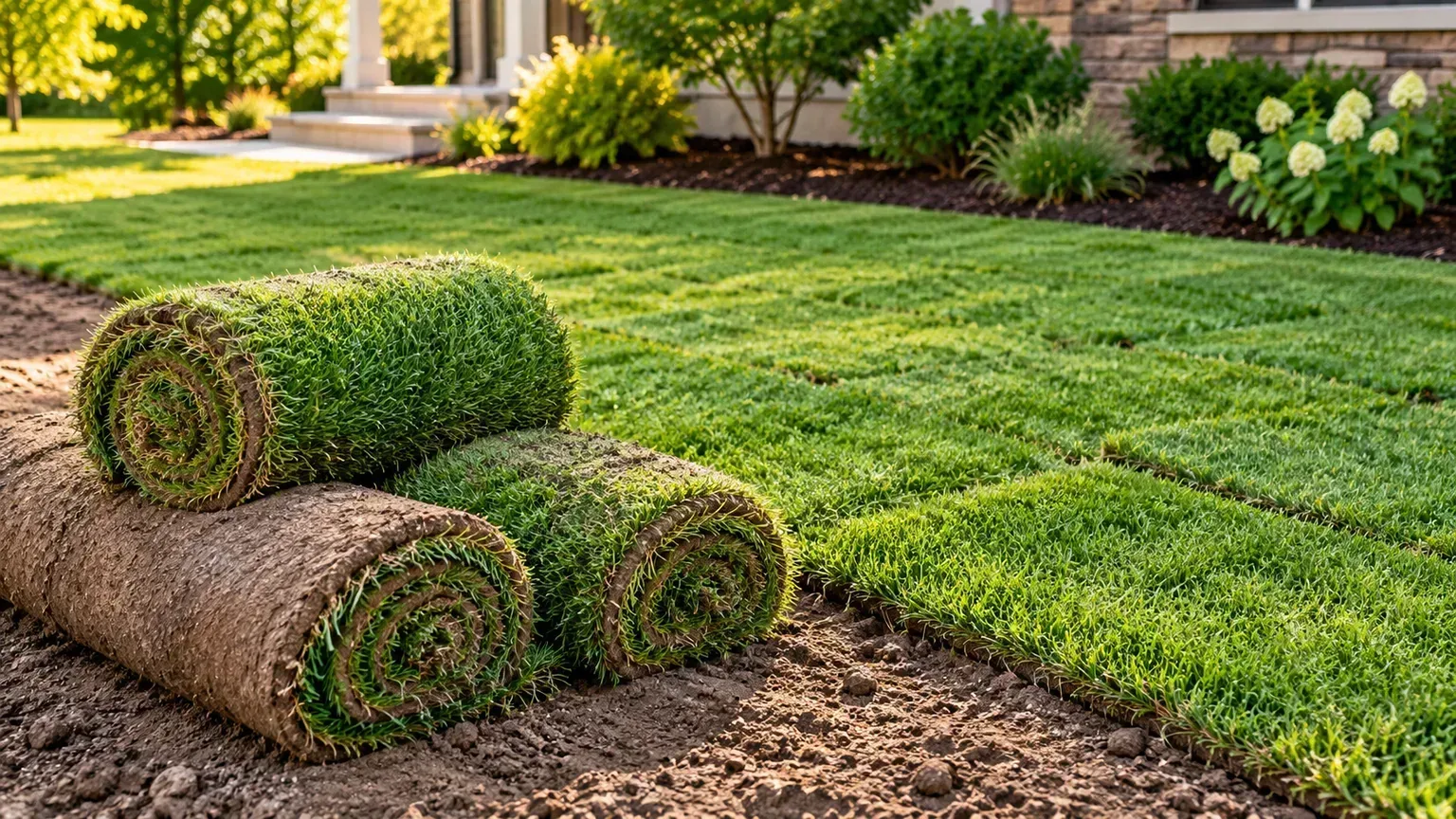
Sod is living grass harvested with a thin layer of soil and roots, then sold in rolls or slabs so it can be transplanted onto prepared ground. It gives a yard immediate green coverage, but it is not an instant, ready-for-football lawn: the roots still have to knit into the soil beneath it.
That difference matters when you choose between sod and seed. Sod costs more and limits you to grass varieties a nearby farm can supply, yet it can cover bare soil quickly, reduce the time a slope is exposed, and shorten the wait for a usable lawn. The best result comes from matching the grass to your climate and yard, preparing the site before delivery, and managing water until the new turf holds firmly.
What Sod Is—and How It Differs From Grass Seed
Think of sod as a shallow, portable layer of turfgrass. A sod farm grows grass until its roots and the soil around them form a liftable mat, cuts that mat into manageable pieces, and ships it to the site where it will grow. The pieces may be held together by the grass roots, a biodegradable backing, or a synthetic net; ask the grower which construction you are buying.
Sod is not a particular species. A roll might contain bermudagrass, tall fescue, zoysia, or a local blend, just as a packet of seed can contain different grasses. “Turf” is often used as a broad term for managed grass, while “sod” describes the harvested, transplantable form; neither term means artificial turf unless the seller explicitly says synthetic.
Because the grass is already mature, sod changes the appearance of a site on installation day. Its roots, however, have been cut and must grow into the native soil to take up water and nutrients there. Until that happens, treat the lawn like a newly transplanted crop: keep it moist, limit traffic, and check progress instead of assuming that green blades mean the job is finished.
Where Sod Works Best—and When It Does Not
Sod is useful when you need rapid, even cover and can prepare the ground before a delivery arrives. It is a practical choice for new construction, a lawn renovation timed around a move or event, or a damaged section too large to patch with seed. A healthy sod mat also covers exposed soil sooner than seed, which can help limit washout on a gentle slope while the roots establish.
It is less attractive when the site cannot support the grass being sold. A dark, heavily shaded yard may need a shade-adapted seed blend, groundcover, or another landscape treatment rather than sun-grown sod. The same applies where irrigation is unavailable during a dry period, the soil stays saturated, or the surface is too steep to maintain safely.
Sod is not a drainage repair. It can cover soil and help hold it after rooting, but it will not correct a downspout dumping water, a compacted subsoil layer, or a grade that directs water toward a foundation. Fix the source of the runoff first, then decide whether turf belongs on the corrected site.
For a small bare patch surrounded by healthy grass, seed or a carefully cut sod patch may both work. If weeds, unwanted grass, or dead turf dominate a large area, assess why the lawn failed before replacing it; repeating the same species and maintenance on the same unsuitable site often produces the same thin lawn.
Sod vs. Seed: Compare Speed, Cost, and Choice
Sod and seed are two ways to establish a lawn, not two kinds of grass. Sod shifts much of the growing work to the farm and raises the initial material and installation cost. Seed is slower and leaves soil exposed during germination, but it usually offers more cultivar choices and is easier to store until the right planting window.
| Decision factor | Sod | Seed |
|---|---|---|
| Appearance | Green cover on installation day | Gradual cover as seedlings emerge and fill in |
| Upfront cost | Higher; delivery and labor can add substantially | Usually lower for the same area, though prep still costs time |
| Variety choice | Limited to locally available farm-grown types | Wider selection of species, cultivars, and blends |
| Erosion exposure | Surface is covered immediately; roots still need to anchor | Soil remains exposed until seedlings establish |
| Timing | Must be installed promptly and rooted in suitable weather | Must be sown in the right seasonal window for the species |
| Main early-care risk | Mat dries out or fails to contact soil | Seed dries, washes away, or loses to weeds |
Choose sod when speed and immediate cover justify the premium and you can protect the turf while it roots. Choose seed when cost, a specific variety, or a site-adapted blend matters more than a finished-looking yard this week. Pennington’s comparison of grass seed and sod also emphasizes this trade-off between ready-grown turf, higher cost, and broader seed selection.
Neither method removes the need for soil preparation or water. Seed needs moisture to germinate; sod needs moisture to prevent the cut root mat from drying before it reconnects with the ground. If you cannot water reliably during establishment, postpone either project until you can.
Sod Types to Recognize
The first useful distinction is growing season. Warm-season grasses grow most actively in warm weather and may turn brown or go dormant in cold conditions. Cool-season grasses grow strongly in spring and fall and can struggle during hot summers. A local supplier’s inventory reflects regional demand, but availability does not prove that a particular sod will suit your yard.
Warm-Season Sod
Bermudagrass thrives in sun and heat, spreads quickly, and can handle frequent use; its vigorous runners can also creep into beds and edges. Zoysiagrass forms a dense lawn and often handles heat well, but it may take longer to recover from damage and can brown during cool weather. Both need enough sun for their cultivar, and neither is automatically a low-water choice in every climate.
St. Augustinegrass is common in warm coastal and southern landscapes, where it tolerates some shade better than many warm-season choices. It still needs light and a climate within its range, and local cultivars vary in cold tolerance and disease resistance. Centipedegrass and bahiagrass are other regional options; they can fit lower-input lawns in parts of the South, but their traffic tolerance, soil preferences, and appearance differ.
Cool-Season Sod
Tall fescue is a common choice across much of the transition zone and warmer parts of the cool-season region. Its bunch-forming growth can suit ordinary residential use, but damaged spots may not knit closed as rapidly as spreading grasses. Kentucky bluegrass has a fine texture and spreading rhizomes that help it fill small gaps, while it needs a climate and moisture supply that suit it.
Fine fescues can be useful in lower-traffic or partly shaded situations, depending on the species and cultivar. Perennial ryegrass establishes quickly in blends but is not a universal answer for long-term heat or cold stress. Ask what exact species and cultivars are in the roll, not just whether the tag says “cool-season sod.”
How to Choose Sod for Your Yard
Start with the site rather than the color of the sample. Write down how many hours of direct sun the area receives in summer, whether water drains after rain, how the lawn will be used, and whether you can irrigate during dry weather. Those details narrow the choices more reliably than a broad label such as “hardy” or a USDA zone by itself; hardiness zones describe winter minimums, not all the heat, humidity, shade, and water conditions turf faces.
Then ask local suppliers which cultivars they grow and whether their sod is recommended by your state’s Cooperative Extension or turf program. For a yard with trees, specify the amount of shade and ask for a shade-adapted product rather than assuming any dark green roll will thrive there. Many farms grow sod in open sun, so a sunny farm’s healthy turf can still thin after transplanting beneath a canopy.
Use the intended use as a filter, too. A play lawn needs a species and cultivar that can recover from wear; a decorative front strip may prioritize fine texture or uniform color; a bank may need a dense, spreading turf that can be installed and maintained safely. Check maintenance requirements before ordering: mowing height, irrigation needs, winter color, and how aggressively runners spread can matter for years after the installation crew leaves.
Florida’s UF/IFAS turfgrass selection guide illustrates why the label “drought tolerant” cannot settle the choice: species differ in shade, wear, soil, and water response, and a grass that survives drought may still need irrigation to stay green. Its ratings are specific to Florida lawns, so use the table to identify the factors to compare—not to select a cultivar for another state.
Finally, verify the supplier’s guarantee in writing. Confirm the variety, harvest and delivery timing, coverage per piece or pallet, whether netting is used, and what the warranty excludes. A guarantee often depends on prompt installation and documented watering, so clarify those conditions before—not after—the sod arrives.
How Sod Is Grown, Cut, and Sold
Sod farms establish turf in fields and maintain it with mowing, water, and other crop care until it can be lifted as a mat. A specialized harvester cuts beneath the root zone and divides the turf into slabs or rolls. The soil layer is intentionally thin enough to move, so it should not be mistaken for a deep, finished topsoil layer that can correct a poorly prepared yard.
Retail formats vary. Small rolls and slabs can be handled by a homeowner; large commercial rolls need equipment and experienced installers. Sellers may quote by square foot, roll, or pallet, and a pallet’s coverage depends on the dimensions of that supplier’s pieces. Ask for the species label and the actual square-foot coverage instead of assuming all pallets are interchangeable.
Some growers use plastic netting to hold sod together during harvest and shipping. The Royal Horticultural Society notes that mesh can complicate later lawn work such as scarifying and adds plastic to the garden, so ask whether a net-free option is available if that matters to you. If the sod is netted, learn what material it is and whether it is expected to remain in the soil.
Sod is perishable after harvest. Arrange for the site to be ready before the truck arrives, and plan to install the turf promptly; UF/IFAS Extension advises having the site prepared so sod can be laid within 48 hours of cutting. Better Homes & Gardens recommends same-day installation when possible and stresses watering immediately after placement. These are complementary cautions, not a reason to leave turf rolled for two days: heat trapped in stacked rolls can damage grass quickly.
How Much Sod to Buy and What Affects Price
Measure the actual lawn area, not the whole property. Divide an L-shaped yard into rectangles, multiply each rectangle’s length by width, then add the results and subtract patios, paths, beds, and other spaces that will not be grass. For a simple 20-by-30-foot rectangle, the base order is 600 square feet; confirm whether the supplier sells in increments that round that quantity up.
Add a modest cutting allowance for curves, narrow strips, and irregular borders. A simple rectangle needs less extra than a yard with many angles, and the seller can advise how much to add based on the piece size and layout. Avoid ordering a large surplus “just in case”: unused sod is heavy, perishable, and difficult to store, while a second batch may not match the first exactly.
There is no stable national sod price that predicts your delivered bill. Cost changes with species, cultivar, season, distance from the farm, order size, delivery access, and whether you pay for old-lawn removal, grading, soil amendments, or installation. Compare written, itemized quotes on a per-square-foot basis, including delivery and site work; “price per pallet” means little until you know that pallet’s coverage and what is excluded.
When to Lay Sod
The safest window is when the chosen grass is growing actively, the soil is workable rather than frozen or waterlogged, and the weather is moderate enough for careful watering. Cool-season sod is often installed in early fall or spring; warm-season sod generally roots best after the soil and nights have warmed. Local extension guidance should decide the calendar for your region and variety.
The RHS recommends laying turf in suitable weather from autumn into early spring in its UK guidance. That window reflects a different climate and cannot be applied unchanged to a warm-season lawn in the American South. The transferable rules are to avoid frozen or saturated ground, prepare the site in advance, and coordinate installation with the grass’s active growth and your ability to keep it watered.
Avoid scheduling delivery for a heat wave, a dry windy stretch, or a period when local water restrictions prevent establishment irrigation. In the hottest weather, fresh edges dry first and the root mat can heat while rolled. If the contractor proposes summer installation, ask which species and installation plan make it viable, how quickly the crew will lay each pallet, and what watering commitments are required.
Prepare the Ground Before Delivery
Preparation is the part that makes sod feel easy or turns it into an expensive cover-up. UCANR’s lawn installation guidance and UF/IFAS Extension’s turf-replacement steps both emphasize a weed-free, well-graded surface and close contact between the sod and prepared soil. Complete this work before you order a delivery slot, because a pallet cannot wait while you rent a tiller or rebuild a low corner.
Remove existing grass, weeds, roots, rocks, and construction debris from the area. Sod laid over living grass or a thick weed layer may look finished for a short time, but the new roots are separated from the soil they need to enter. Mark irrigation and utility lines before digging, and arrange drainage or irrigation repairs before final grading so equipment does not damage finished work.
Test and Improve Soil Without Over-Amending
A soil test is more useful than guessing from blade color or buying a generic “sod starter” product. A local Extension lab can report soil pH and nutrient levels and recommend amendments suited to the region; follow that report and the turf supplier’s instructions. Do not add a heavy topsoil blanket to hide compaction or low spots, because a sharp layer boundary can impede water movement and leave the new surface uneven.
If soil structure is poor, blend a suitable amendment into the existing soil rather than leaving a loose layer beneath the sod. The correct amendment and incorporation depth depend on soil texture, the test, and local recommendations. UF/IFAS’s site-preparation guidance includes loosening and amending Florida soils before turf replacement, but its depths and soil targets are not universal prescriptions for every yard.
Set the Grade, Moisture, and Final Surface
Shape the ground so water drains away from buildings and does not collect in shallow depressions. Preserve existing drainage routes and avoid directing runoff onto a neighbor’s property. On a steep bank, check both erosion control and mowing safety; sod is not a substitute for a stable slope or a safer groundcover where mowing would be hazardous.
Rake the surface smooth, then firm it lightly. It should support a footprint without becoming hard and sealed; an overly fluffy base settles unevenly, while a compacted base restricts roots. Set the soil slightly below walks and edging to account for sod thickness, and moisten dry soil before laying without turning the surface into mud.
Lay Sod in a Pattern That Protects the Seams
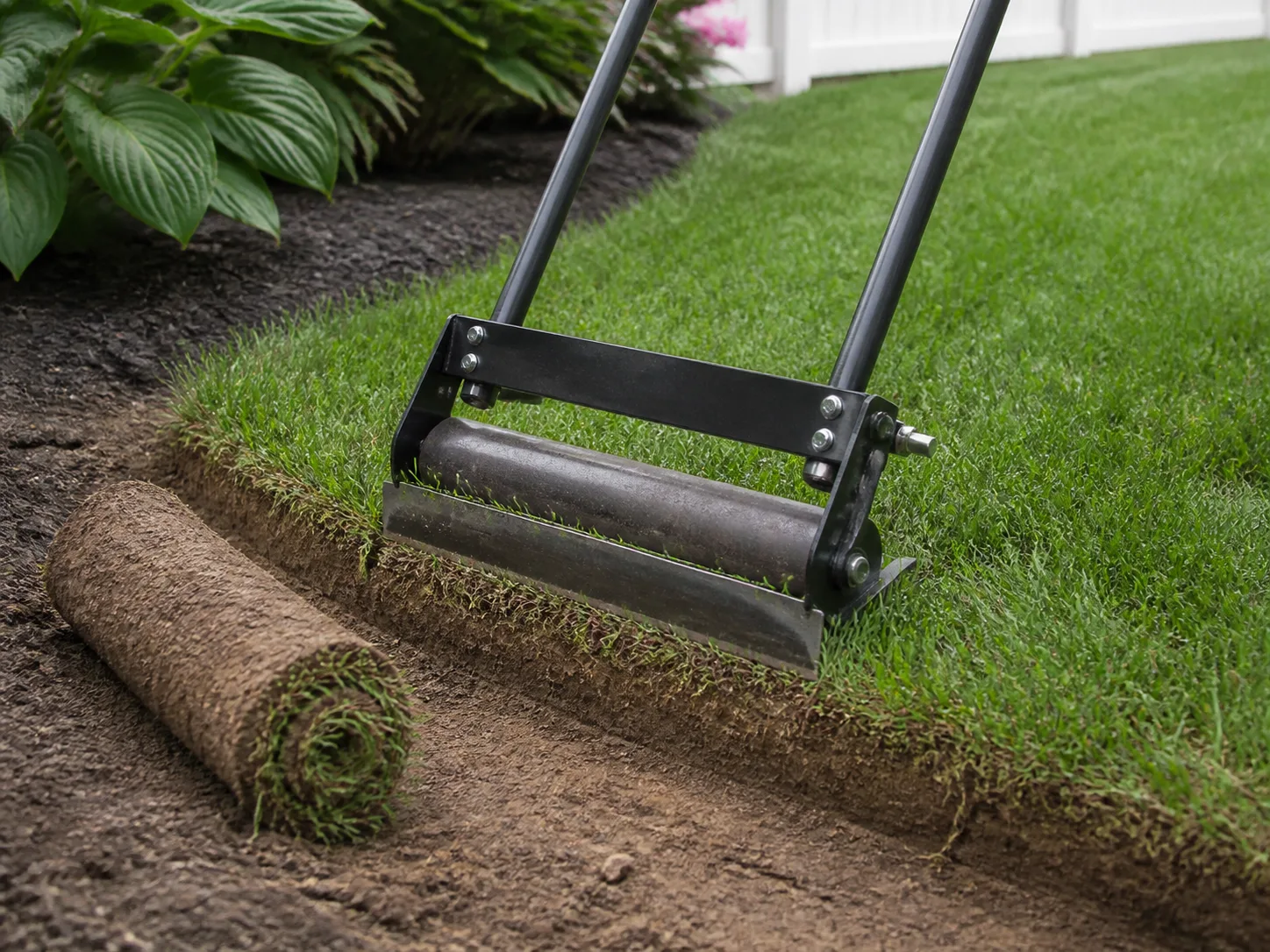
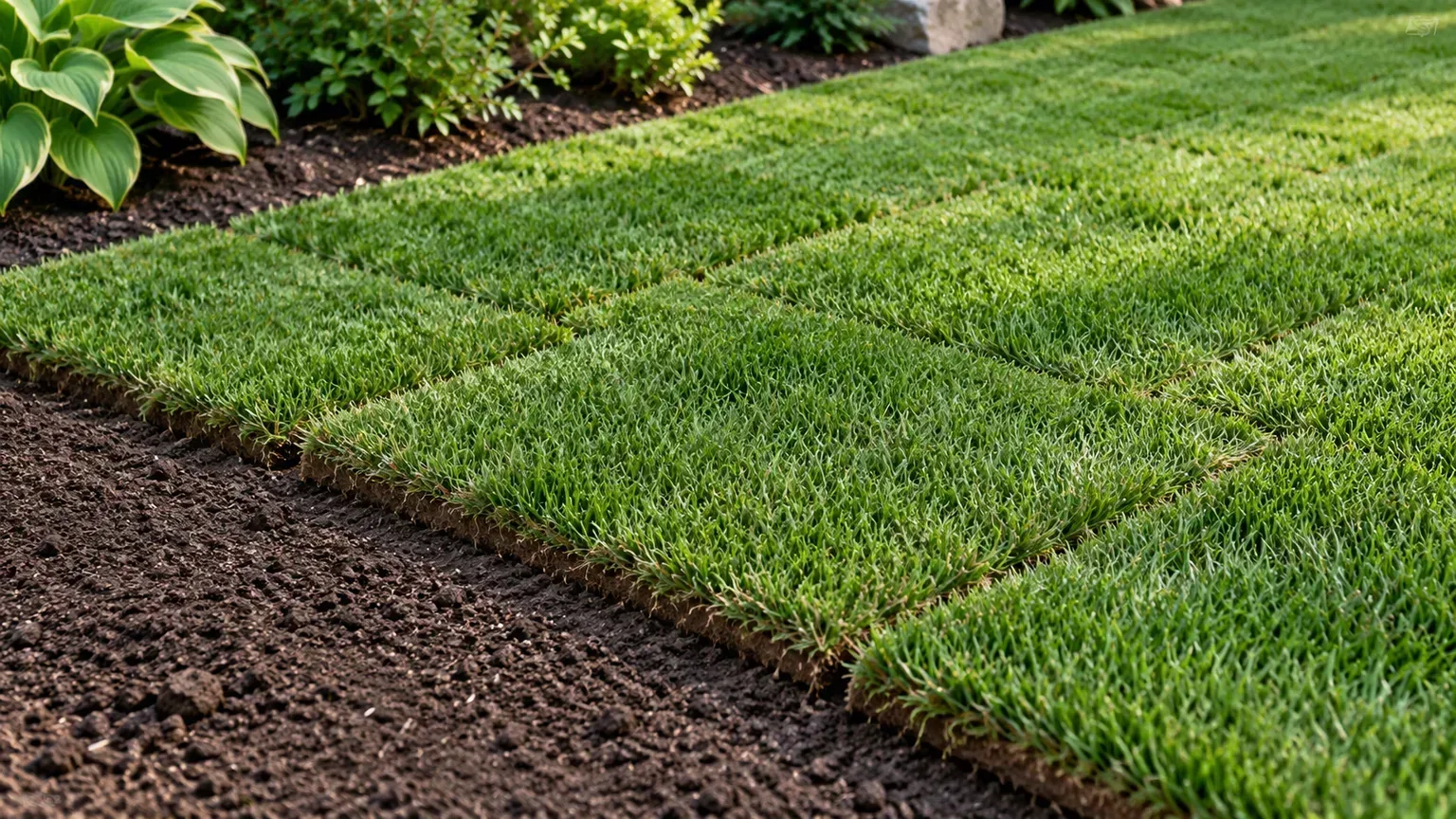
Set a straight starting line along a walk or the longest edge and work across the prepared area. Push each strip or slab tightly against the next without overlapping; stagger end joints like brickwork so four corners do not meet at one point. UCANR’s installation guide also recommends staggering pieces, keeping the soil level as you work, and rolling after installation to improve contact.
Use boards or a sheet of plywood to distribute your weight instead of kneeling or walking repeatedly on soft prepared ground. A sharp knife or masonry trowel makes cleaner cuts around curves, beds, and sprinkler heads than tearing the turf. Place large pieces toward the edges and avoid filling a visible gap with a tiny sliver that will dry out first.
If you are working on a slope, lay rows across the slope rather than running long strips straight downhill, and secure them where runoff or gravity could shift the turf. Once the area is covered, press or roll it lightly so the underside meets the soil. UCANR’s installation guide recommends staggering seams and rolling the finished sod to improve contact. A heavy roller on saturated ground can compact the base; use enough pressure to remove air pockets, not to flatten the lawn into a hard surface.
Water each completed section as you go, then water the whole area thoroughly as soon as installation is finished. Lift a corner in a few locations to check that the soil beneath is damp and the root layer has not stayed dry. The RHS guide to laying turf recommends brushing a fine soil-and-sand dressing into small joints where needed; use a compatible material sparingly rather than burying grass blades under a thick layer.
Water and Mow New Sod Until It Takes Root
For the first stretch, the goal is consistent moisture through the sod and the upper soil—not a puddle and not a fixed number of sprinkler minutes. Water immediately after installation, then inspect more than one area each day. Sun, wind, temperature, soil texture, slope, and sprinkler coverage all change how quickly a roll dries, so adjust the schedule to the condition under the turf.
Better Homes & Gardens’ new-sod watering guidance advises frequent morning watering for roughly 10 to 14 days, with extra attention during hot, dry, or windy weather, and recommends testing roots with a gentle tug. UCANR’s guide describes keeping sod moist until it roots, often around that same 10-to-14-day period. Use those as starting points, not a deadline: hot weather, cold soil, dormant grass, or poor contact can extend the rooting period, while local watering rules still apply.
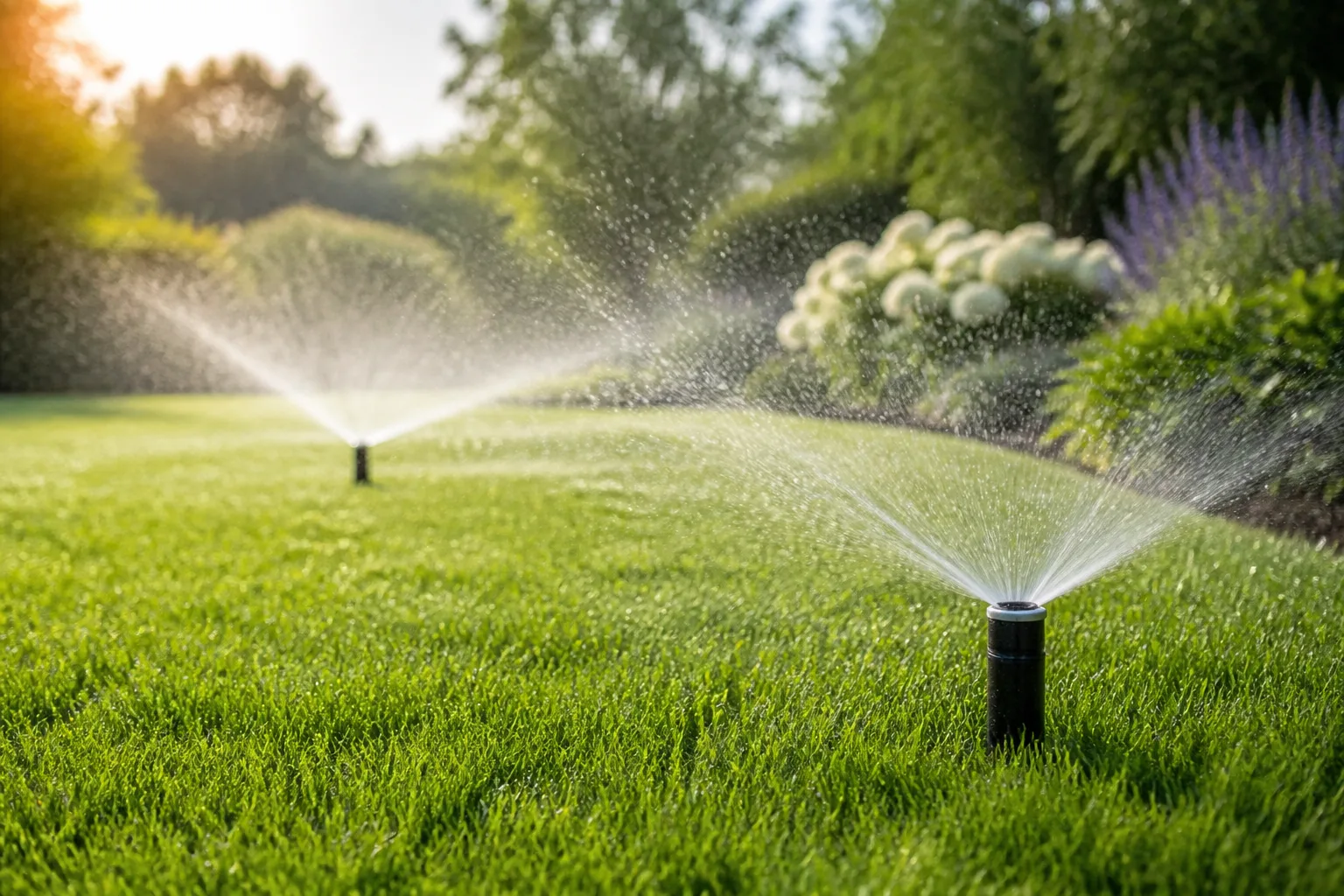
When the turf resists a gentle lift at several edges, reduce watering frequency gradually and water more deeply so roots follow moisture downward. Do not abruptly switch from frequent shallow watering to a dry week, and do not keep the surface saturated once rooting begins. A soggy, persistently wet mat can root slowly and develop other problems, so check the soil rather than running the controller on autopilot.
Keep foot traffic light until the sod holds in place, especially at seams and corners. Wait to mow until the grass is growing and a gentle tug does not lift the mat; set the mower high for the first cut and use a sharp blade. Avoid fertilizing on a calendar alone. Apply nutrients only when a soil test, local lawn guidance, or the sod grower’s instructions support it, and avoid feeding turf that is heat-stressed or not yet rooted.
Diagnose Gaps, Yellowing, and Poor Rooting
Start by checking the underside rather than treating a color change as a diagnosis. If a recently delivered roll is dry, brittle, hot, or smells sour, contact the supplier promptly and photograph the affected pieces. If installed sod is simply a little pale, compare it with the species’ expected seasonal color and inspect soil moisture before adding fertilizer or water.
Edges that curl or seams that open often point to drying or loose placement. Re-wet the root layer, press the edges back into contact, and fill a narrow joint lightly with compatible soil. Large gaps, sunken spots, or sections that move when tugged may need a small amount of soil underneath and a careful re-rolling; do not cover a whole lawn with topsoil to compensate for poor grading.
Yellowing in a low, wet area may signal drainage trouble or excess irrigation, while a dry patch under a tree may be missing sprinkler coverage. Check the actual soil beneath several pieces, the grade after rain, and whether water reaches the full zone. If there is no rooting after the expected period, contact the supplier with the sod type, delivery date, weather, and watering records so the issue can be assessed before a warranty window expires.
Remember that warm-season grasses can turn brown in cool weather without being dead. Check the grass type and season, and look for living crowns and roots before replacing turf. A dormant lawn and a dead, desiccated mat are different problems; more water will not revive grass that has died, and extra irrigation can worsen a yard that is already saturated.
Mistakes That Cause Sod to Fail
The most expensive mistake is ordering turf before the site is ready. Sod is a perishable crop, so delays leave it stacked and vulnerable to heat while the installer is still removing weeds or correcting grade. Book delivery only when the work area, access, water source, and installation crew are ready.
Other common failures begin with a mismatch: choosing sun-grown sod for dense shade, putting warm-season grass where winters regularly damage it, or selecting a high-traffic lawn for a low-tolerance species. Ask for an exact cultivar and region-specific guidance instead of assuming that a familiar grass name behaves the same everywhere.
Avoid laying turf onto existing grass, leaving air pockets, allowing open seams, or walking on a wet, unfinished base. Each mistake interrupts root contact or creates weak edges that dry out. Likewise, excessive watering is not a substitute for checking the soil: it can keep oxygen from reaching roots and obscure drainage defects.
Finally, do not treat new sod as a finished lawn the day it turns green. Protect it from repeated traffic, delay mowing until the mat resists lifting, and let its roots—not the installation date—tell you when to shift into routine care. If the site cannot meet those requirements, seed or a non-turf landscape may be a more sustainable fit.
Conclusion
Sod is a transplantable mat of mature grass, roots, and soil that gives a yard rapid cover. It is most useful when the site needs quick, even turf and you can pay for prompt delivery, careful preparation, and the watering period that follows.
Choose a grass that fits your local climate, sun, soil, water supply, and intended use; then prepare the ground before ordering. Lay fresh pieces tightly on firm, level soil, keep the root layer moist, and wait for resistance in a gentle tug test before returning to normal traffic and mowing. Those decisions—not the speed of the first green view—determine whether the lawn takes.



