Fall Lawn Care Before Winter: 6 Chores to Do Now
A grass-type-aware fall lawn checklist with timing, mowing heights, soil tests, leaf strategies, watering checks, and the mistakes that cause spring damage.
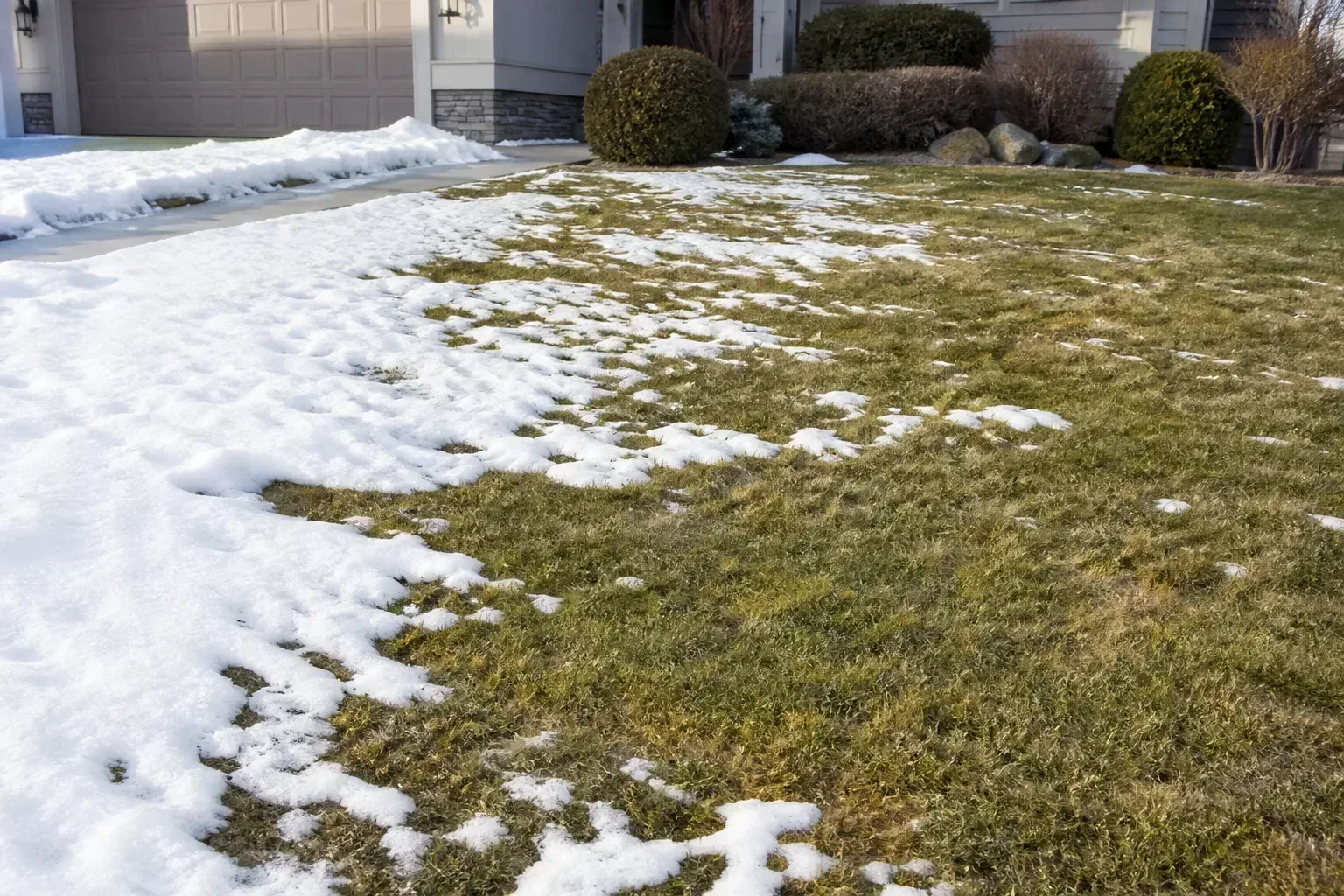
The best fall lawn care before winter is not a frantic last mow or a heavy dose of “winterizer.” It is a short sequence: identify the grass, work while it is still growing, protect the surface from leaf mats, and stop before cold or wet conditions turn a helpful chore into stress.
This guide is written for an established residential lawn. It covers the six jobs that have the biggest effect on winter survival and spring recovery: mowing, leaf cleanup, watering, aeration, overseeding, and fertilizing. The order matters, but so does knowing when to skip a job.
The Right Fall Lawn Plan Starts With Your Grass Type
Winter preparation begins with a question many generic checklists skip: What kind of grass is already in the yard? Kentucky bluegrass, tall fescue, fine fescue, and perennial ryegrass are cool-season grasses that generally grow best in the cool parts of spring and fall. Bermudagrass, zoysiagrass, centipedegrass, and St. Augustinegrass are warm-season grasses that slow as soil and air temperatures fall.
If you do not know the mix, look at the blade texture and growth pattern, check old seed or sod records, or ask your county extension office for help. A lawn can also be mixed, especially in a transition-zone yard. When in doubt, manage the section according to the dominant grass rather than applying one fall formula across every sunny, shady, wet, and compacted area.
Cool-season and warm-season lawns follow different clocks
Cool-season turf often gets a useful recovery window after summer heat breaks. That makes early fall the usual time for repair work, core aeration, overseeding, and a well-timed nitrogen application. The goal is to build density and roots while the grass is actively growing, then let it enter dormancy in a stable condition.
Warm-season turf is moving in the opposite direction. It is preparing to slow down, so fall care is mostly about finishing the growing season cleanly: keep mowing while it grows, irrigate during dry spells, and avoid copying a cool-season fertilizer or overseeding plan. UGA Extension advises making the final nitrogen application to bermudagrass, centipedegrass, or zoysiagrass in late summer and avoiding September nitrogen that could delay dormancy and increase cold-injury risk. UGA Extension’s warm-season lawn calendar also recommends continuing irrigation during dry weeks and returning the mower to the grass’s normal height.
Use weather and soil—not a calendar—to set timing
The first frost is a reminder, not a universal deadline. Start renovation tasks while grass is growing and the soil is workable; finish surface cleanup before persistent wet leaves, hard freezes, or snow. For a cool-season lawn, a reasonable sequence is to aerate and overseed first, keep new seed moist, continue mowing, then feed during the late-fall growth window.
The best signals are simple. Grass that is still putting on measurable growth can recover from mowing, core holes, and light dethatching. Soil that is slightly moist can accept aerator tines, while bone-dry soil resists penetration and saturated soil can smear or compact under equipment. Penn State Extension’s seasonal guidance emphasizes delaying practices when unusual drought, heat, or cold make the normal calendar a poor fit. Penn State’s lawn-management guide is a useful reminder to follow conditions rather than dates alone.
The Six-Task Sequence at a Glance
Use this order for most cool-season lawns, adjusting it to local weather and the condition of your grass:
- Keep mowing while the grass is actively growing. Lower the deck gradually if your summer setting left the lawn unusually tall, and make the last cut at an appropriate species height.
- Clear heavy leaf cover. Mulch a light layer; rake, bag, or move a thick, wet layer before it mats down.
- Water the root zone during dry fall weather. Measure irrigation instead of guessing from minutes on a timer.
- Aerate compacted areas and dethatch only when the layer is excessive. Neither job is an automatic annual ritual.
- Overseed thin cool-season turf early enough to establish. Match seed to the existing lawn and give it real soil contact.
- Fertilize according to grass type, growth stage, soil test, and the bag label. More product is not a shortcut to stronger roots.
Do not treat these as six isolated chores. Aeration helps seed reach soil. Leaf cleanup protects both established turf and seedlings. Watering keeps new seed alive but should taper back for established grass. Mowing and fertilizing both work best when the plant is still growing rather than already dormant.
1. Keep Mowing Until Growth Stops
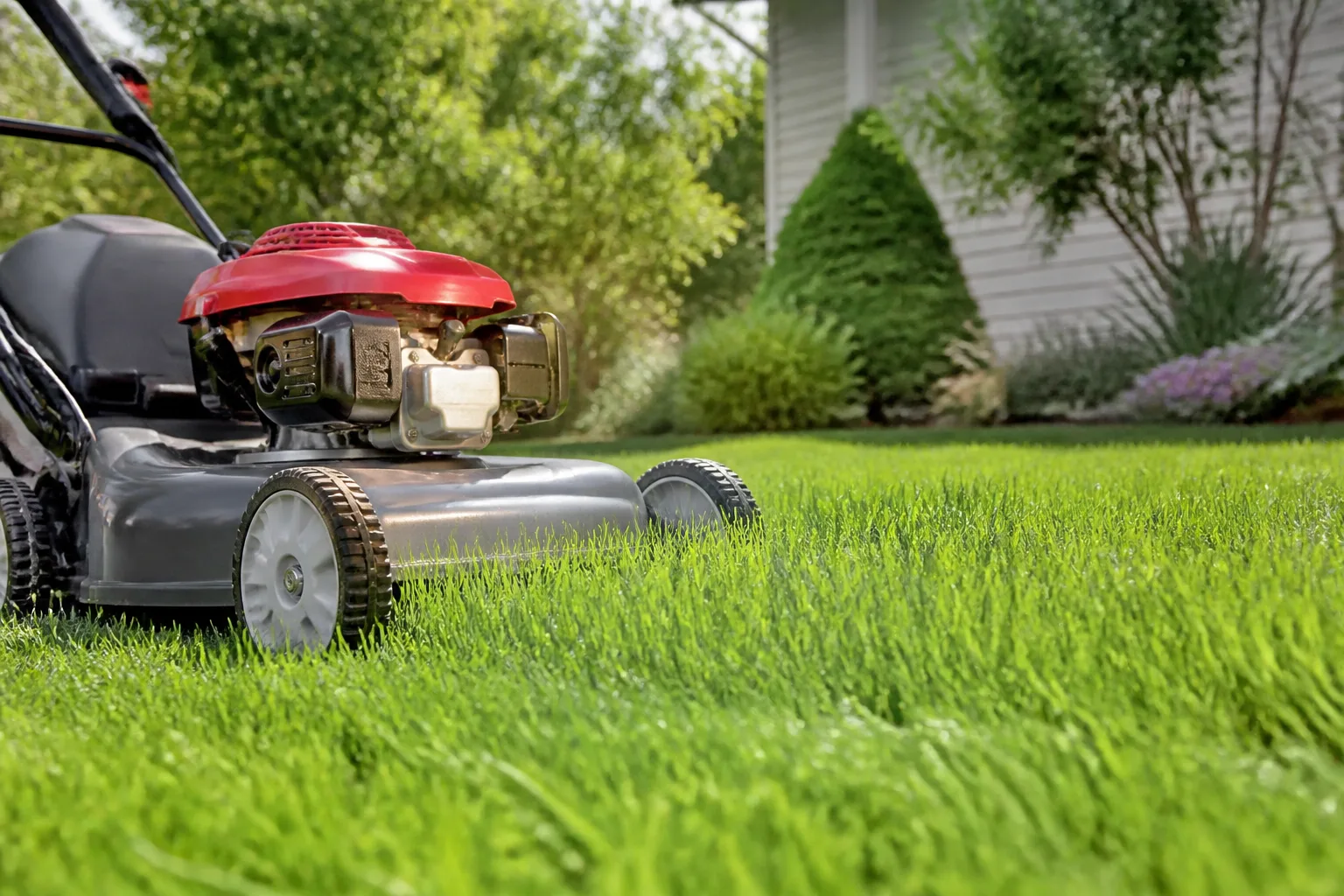
Put the mower away when the lawn stops growing, not when the calendar says fall has arrived. Cool nights may slow the turf while still leaving enough growth for another cut, and a mild autumn can keep the lawn growing well past the first cool morning.
Keep the blade sharp and follow the one-third rule: remove no more than one-third of the blade height in a single mowing. A dull blade tears the leaf instead of making a clean cut, and a sudden haircut removes too much photosynthetic surface just before the plant needs to build reserves. Penn State Extension advises mowing regularly at 2 inches or above while grass is growing, with the exact height driven by growth rate and grass type.
How low should the final cut be?
For many cool-season home lawns, about 2.5 to 3 inches is a sensible final-cut target, provided that range fits the species and your normal mowing program. Tall grass can bend and mat under snow and wet leaves, but cutting it extremely short exposes crowns and soil, removes useful leaf area, and can invite weeds or winter injury. If the lawn is currently 4 inches tall, lower the deck in stages over several mowings rather than scalping it once.
Warm-season grass may have a shorter normal range. UGA Extension lists 1 to 2 inches for bermudagrass, centipedegrass, and zoysiagrass, but do not apply that range automatically to St. Augustinegrass or a mixed lawn. Use the species’ established recommendation and keep the cut consistent; the key is a clean, non-scalping finish, not a universal number.
Never mow frost-covered grass. Frozen blades are brittle, and wheels or foot traffic can crush the plant tissue. Wait until the frost has lifted and the lawn is dry enough that the mower will not leave ruts. A final mowing on a dry afternoon is safer than forcing the job first thing on a frosty morning.
2. Clear Leaves Before They Form a Wet Mat
Leaves do not hurt a lawn because they look untidy; they hurt it when they stay in a thick, wet layer that blocks light, holds moisture against the blades, and reduces air movement. That combination can thin turf and create a better environment for winter disease, especially where tall grass and leaf debris lie together.
You do not need to chase every single leaf as it falls. Instead, keep the lawn from developing a continuous mat. A thin layer of dry leaves can often be chopped with a mulching mower until the pieces fall between the blades. If the leaf pieces remain visible as a blanket, if large leaves interlock, or if the coverage is wet and heavy, rake or collect them.
Match the method to the volume:
- Light coverage: Make one or two passes with a mulching mower, then check that the fragments are small enough to settle into the turf.
- Heavy or wet coverage: Rake, bag, or use a mower with a collection attachment so the lawn surface is open again.
- Leaves mixed with seed or young grass: Use a light touch. Pulling a hard rake through new seedlings can undo good seed-to-soil contact.
Shredded leaves can go into compost or a leaf-mould pile instead of the landfill. Savvy Gardening makes the useful distinction that leaves can remain in perennial beds, where they support soil and wildlife, while bulk leaf cover on the lawn should be chopped or removed. Its fall yard checklist also pairs leaf cleanup with a final mowing, which is efficient when the layer is light enough to mulch.
3. Water the Root Zone While the Ground Can Take It
Fall rain is not always reliable, and a lawn can enter winter drought-stressed even when the air feels cool. Established grass needs less frequent irrigation as growth slows, but it still benefits from moisture in the root zone during a prolonged dry spell, especially on sandy soil, slopes, exposed sites, or newly overseeded areas.
For an established lawn, use about 1 inch of total water per week from rainfall plus irrigation as a starting point during active fall growth, then adjust for your soil, weather, grass type, and local restrictions. The number is not a command to water every lawn on the same schedule. It is a measurement target that keeps you from running a sprinkler by the clock without knowing what reached the soil.
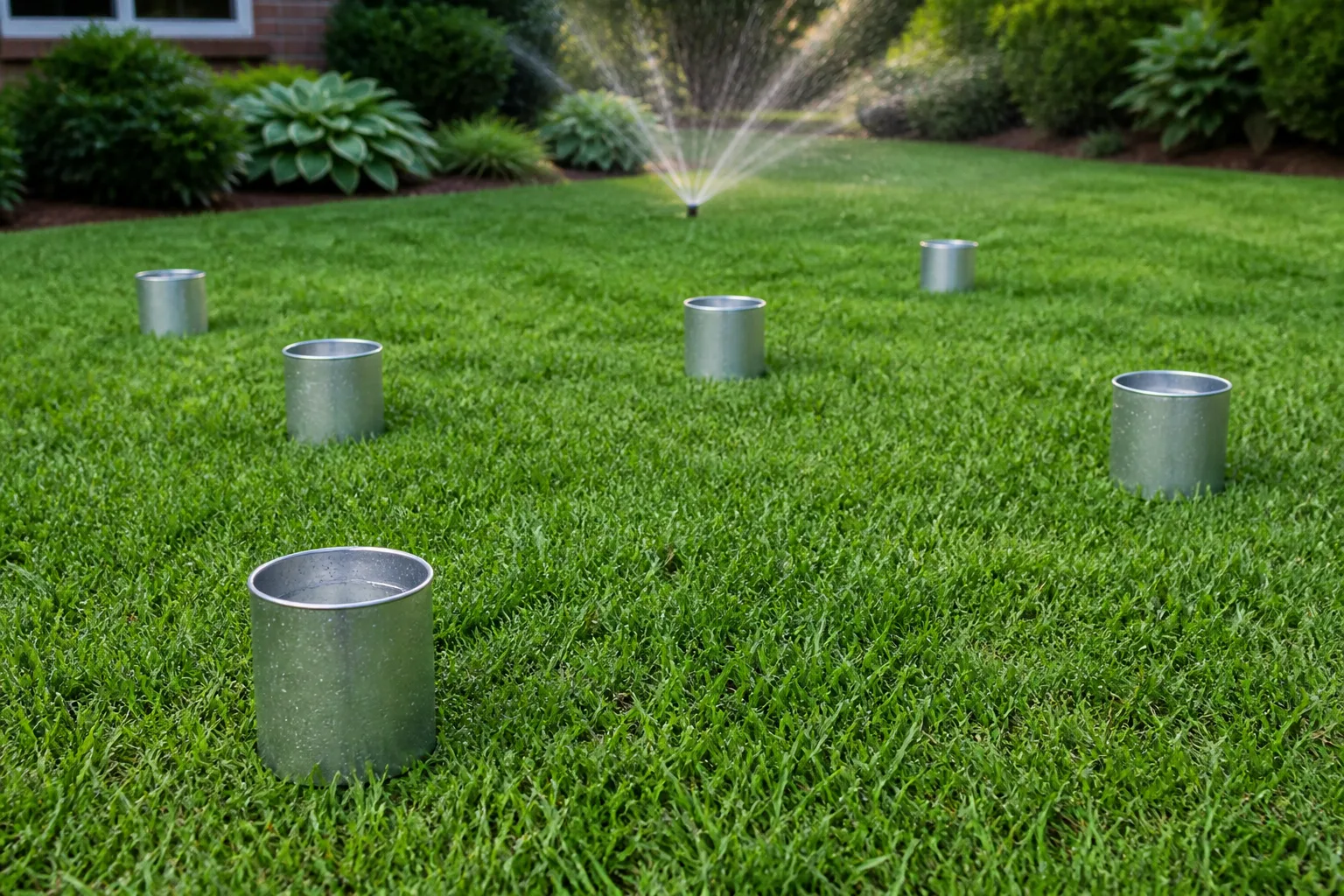
Set out several straight-sided catch cans or empty tuna cans in the sprinkler pattern. Run the system until the cans show the amount you intend to apply, note how long that took, and look for dry or flooded zones. Water early in the day when possible so leaves have time to dry, but prioritize even root-zone coverage over a rigid hour if a freeze is approaching.
Deep, less-frequent watering is usually better for established turf than daily surface sprinkles. Stop or shorten the cycle if water runs off a slope, pools in a low area, or leaves the soil spongy. A compacted or poorly graded lawn may need drainage correction rather than more irrigation.
New seed is different. Until it germinates, keep the upper seed zone consistently moist with light applications; do not blast it with a hose or allow it to crust dry. Once seedlings are rooted and tall enough to mow, gradually lengthen the interval and water more deeply. Savvy Gardening’s grass-seed guidance describes the same transition from frequent moisture for germination to deeper watering as the young lawn establishes.
4. Aerate Only Compacted Turf
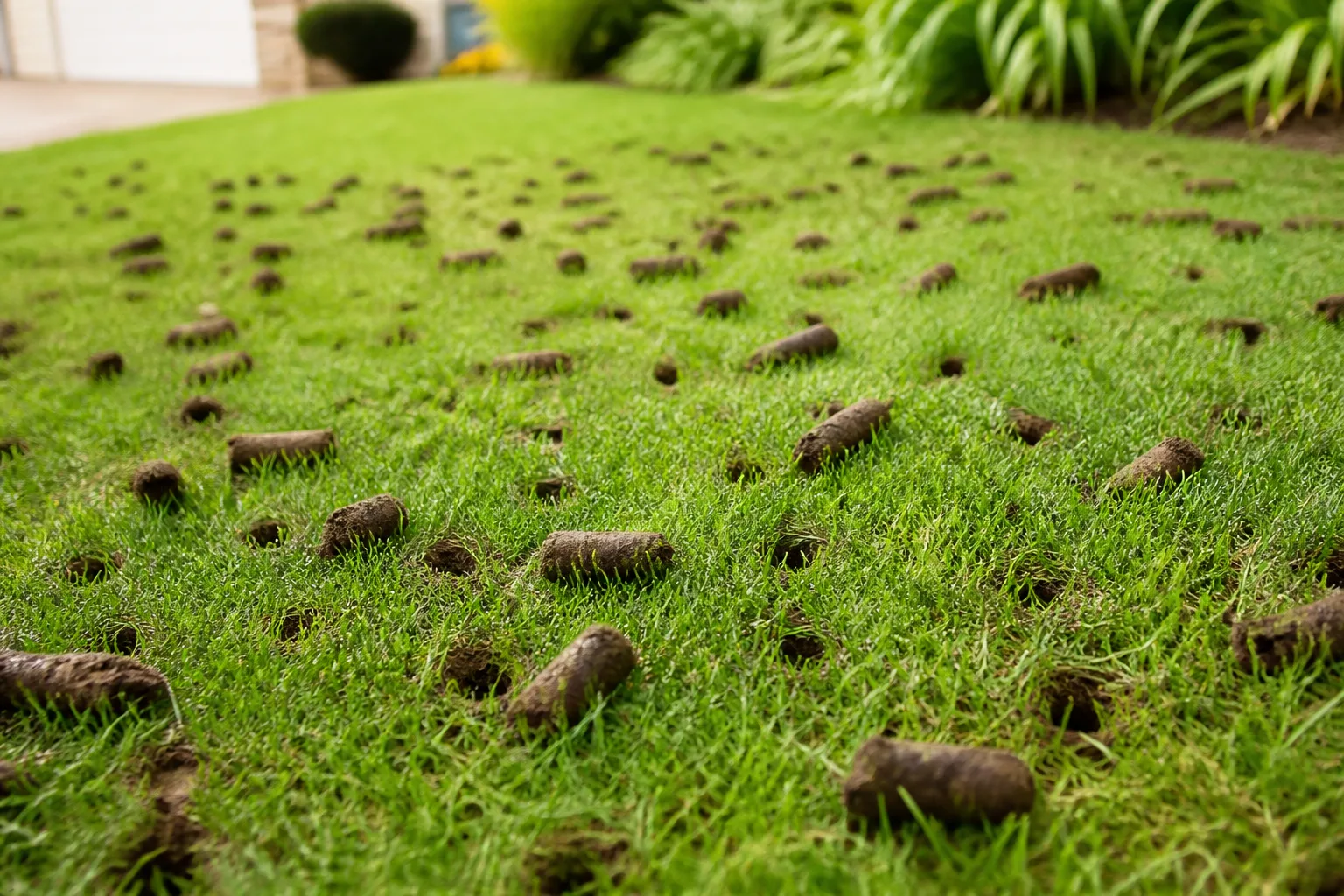
Core aeration is useful when summer traffic has squeezed the soil so tightly that roots, air, and water cannot move easily. It pulls plugs from the lawn and creates temporary channels through compacted areas. It is not a cosmetic treatment that every lawn needs every autumn.
Test first. After a moderate rain, push a screwdriver or soil probe into several parts of the yard. Compare an open lawn area with the worn route near a gate, play area, driveway, or dog path. If the tool enters fairly easily and water drains normally, skip aeration there. If it stops abruptly in hard soil, footprints linger, or water ponds, core aeration may help.
Use a core aerator with hollow tines, not a solid spike tool, when compaction is the problem. Work when the soil is damp enough to accept a plug but not wet enough to smear. Penn State’s fall guidance notes that a full-length core is more likely when moisture is right, and that lawns with serious compaction may need more effective coverage than one quick pass provides. In a small yard, focus multiple passes on the compacted strips instead of disturbing the entire lawn by habit.
Do not aerate drought-hard soil, saturated soil, newly frozen soil, or grass that is too close to dormancy to recover. For cool-season turf, early fall is usually the best window. Warm-season lawns generally recover from aeration during their active summer growth period, so a late-fall pass can be poorly timed.
When dethatching belongs in the plan
Thatch is a layer of partially decomposed stems, roots, and organic material between green blades and the soil. A thin layer is normal and useful. Dethatching becomes worthwhile when the layer is thick enough to feel spongy, block seed from reaching soil, or prevent water from moving into the root zone.
Cut a small flap through the turf with a knife or spade and measure the brown, fibrous layer—not the green blades and not loose leaves on top. Thresholds vary with grass and guidance, but a practical trigger is roughly three-quarters of an inch to 1 inch or more. If the layer is under about half an inch and water still enters the soil, aggressive power raking can do more harm than good.
Penn State advises removing thatch only during cool weather with adequate moisture and not during late fall when winter desiccation is close. If you need to dethatch, do it early enough for the lawn to repair, then remove debris and pair the work with overseeding only if you still have a viable germination window.
5. Overseed Thin Cool-Season Turf Early Enough
Overseeding is the fall job that can change how a cool-season lawn looks next spring, but only when the seed has time to germinate and establish. It fills thin areas before weeds claim the open soil and gives the lawn more plants to recover from winter wear.
Start with the cause of the thinness. If the same strip is bare because of shade, runoff, pet traffic, grubs, or standing water, seed alone is a temporary patch. Fix the cause first or choose a more realistic groundcover or hardscape solution. Penn State Extension also recommends selecting seed for the site rather than buying one blend for every yard; match species and cultivars to existing turf, sun, shade, and regional performance.
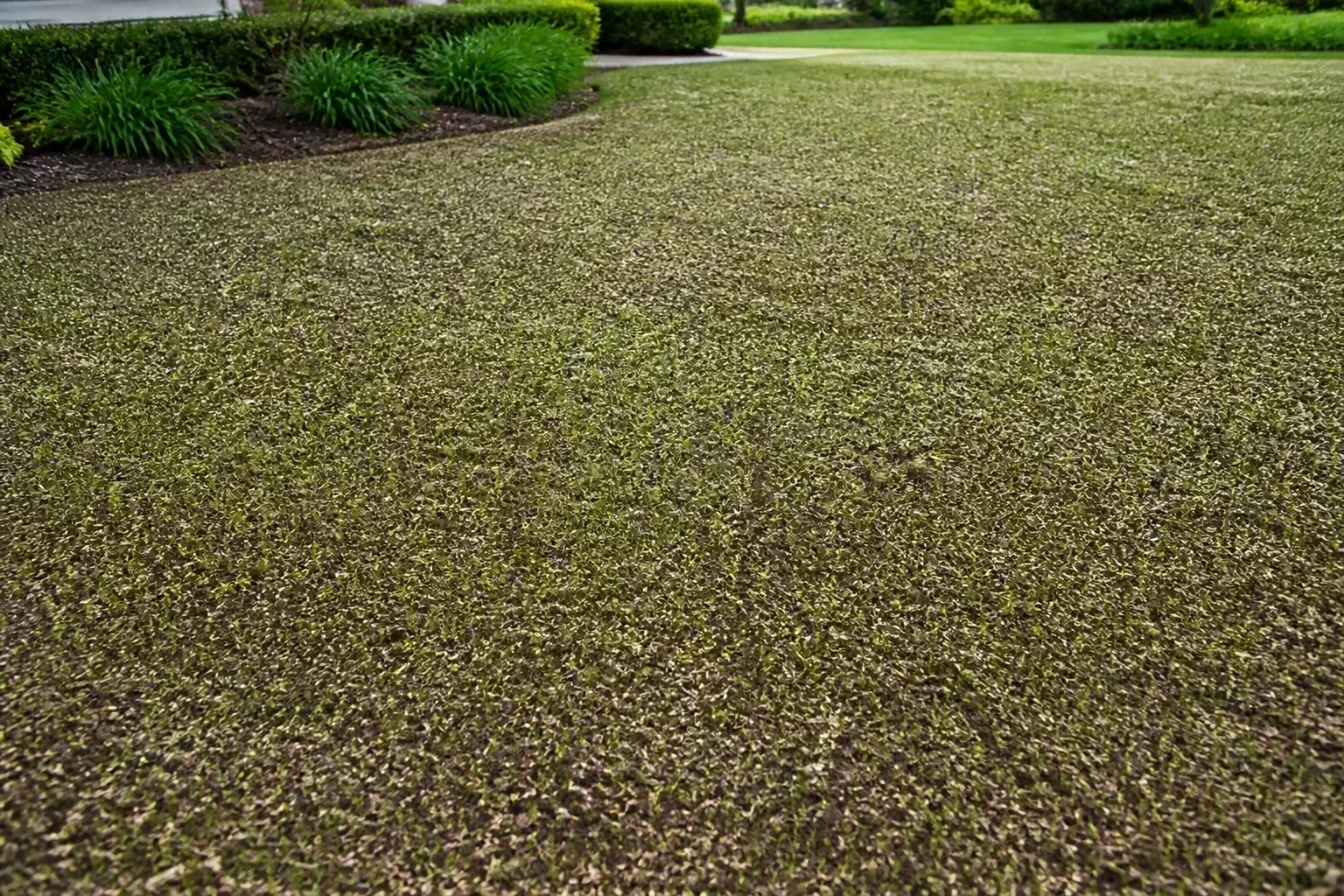
Prepare only as much as the site needs. Mow within the normal range, remove leaves and loose clippings, loosen compacted soil with core aeration when necessary, and make sure seed touches soil. Spread at the bag’s overseeding rate, using two light passes in different directions for even coverage. Too much seed creates competition for light, water, and nutrients; too little leaves the opening available to weeds.
For cool-season grass, a useful planning rule is to seed about six to eight weeks before the area’s expected first hard frost, when soil temperatures are roughly 50 to 65 degrees Fahrenheit and the grass can still grow. A calendar date that works in one state can be too late in another. The Lawn Almanac’s fall checklist uses the same establishment-window logic and cautions against waiting until seedlings have no time to root.
After spreading seed, keep the upper soil surface damp but not puddled. Protect the area from unnecessary foot traffic, and do not apply a weed-and-feed product unless its label explicitly allows use with new seed. Herbicides and starter products are separate decisions; read the label and follow local extension guidance rather than adding products automatically.
Know when to skip dormant seeding
If the normal fall window has closed, do not spread seed simply because the weather is cold. Seed that has not germinated cannot establish roots before a freeze, and a late attempt may wash, move, or sit until spring with uncertain results.
Dormant seeding is a different technique: seed is placed after soil is too cold for immediate germination so it can sprout when conditions improve in spring. It can be useful in some cool-season climates, but it is not a rescue button for every late lawn, and it should not be paired casually with a pre-emergent program that is intended to stop seed germination. If you are past the local window, either follow a dormant-seeding recommendation from your extension office or wait for the next reliable seeding season.
6. Fertilize According to Grass Type and Soil Test
Fertilizer is valuable when the grass can use it and the soil needs it. It is not a blanket “winter protection” coating, and applying more than the label calls for can push soft growth, waste money, and increase runoff or disease pressure.
For cool-season grass, the useful fall feeding window is usually while the lawn is still green and actively growing but after the worst summer heat has passed. Many lawns fit a window of roughly four to six weeks before expected hard frost, though local recommendations and the product label take priority. A soil test can guide lime, phosphorus, and potassium decisions. Nitrogen timing is primarily a growth-stage decision rather than something a basic soil test can prescribe precisely.
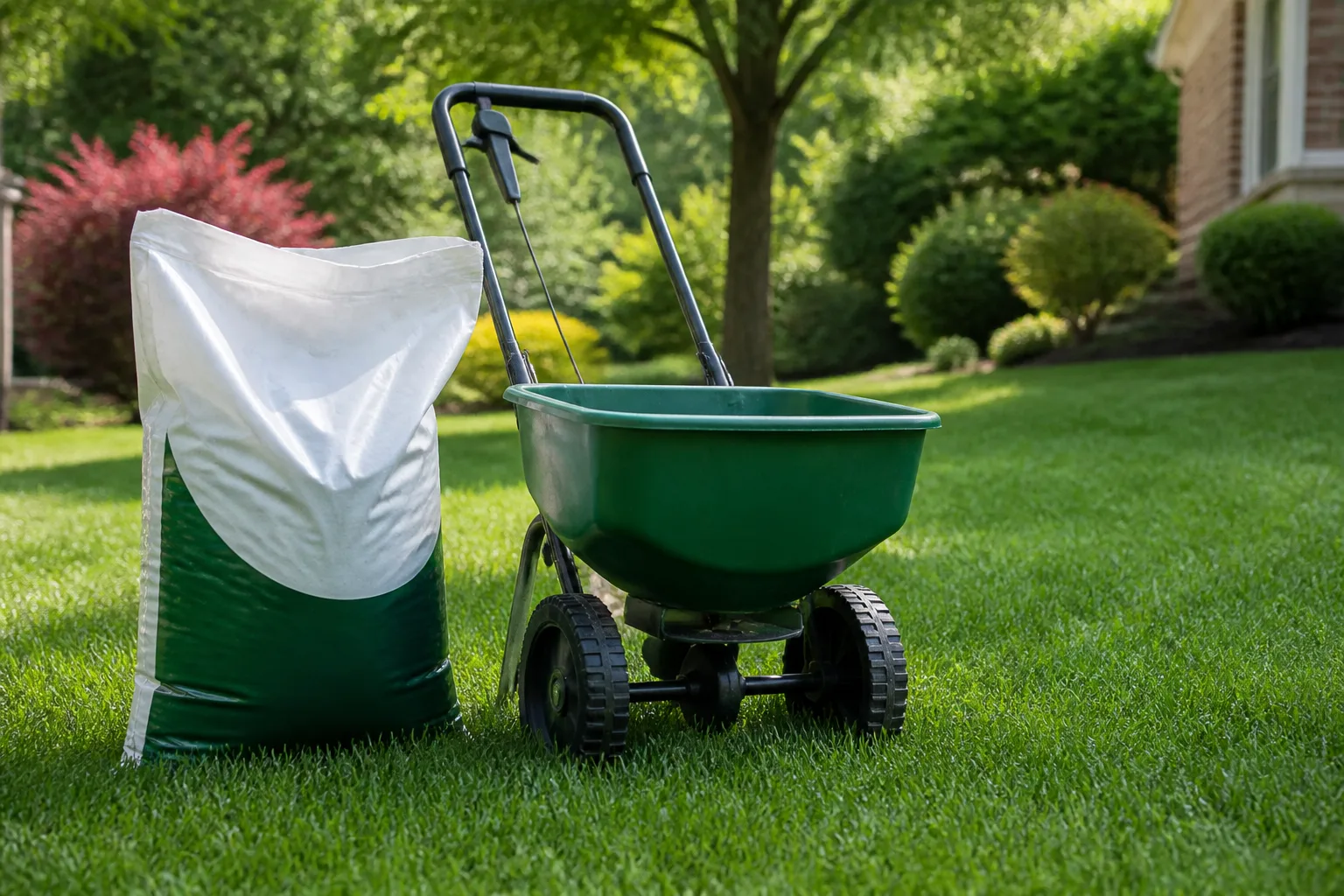
Read the N-P-K analysis and calculate the application from the label, not from the word “winterizer” on the front of a bag. If a report shows phosphorus and potassium are already adequate, do not add them for tradition. Apply granular products evenly with a calibrated spreader, keep fertilizer off pavement and waterways, and avoid spreading onto frozen or saturated soil.
Warm-season grass needs a separate rule. UGA Extension says to make the last nitrogen application in August for its bermudagrass, centipedegrass, and zoysiagrass guidance, then let the lawn enter dormancy naturally. A cool-season late-fall feeding plan can be wrong for a warm-season lawn. If you are in a transition zone, identify the turf and use the recommendation for that grass rather than the label’s marketing language.
Prepare the Mower and Irrigation System for Storage
Once the grass has stopped growing, give the equipment a short closing check. Scrape packed clippings from the underside of the mower deck, inspect the blade, and sharpen or replace it before spring. Clean, dry tools are easier to start with than a mower carrying a layer of damp debris into storage.
For gas equipment, follow the engine manufacturer’s winter-storage instructions. That may mean draining fuel, running the engine dry, or adding the specified stabilizer to fresh fuel. Battery equipment should be stored according to its battery maker’s temperature and charging guidance. Do not guess with fuel or batteries if the owner’s manual gives a different procedure.
If you have an in-ground irrigation system, arrange winterization before a hard freeze if your local system requires a blowout. Turn off the supply as directed, drain above-ground hoses and fittings, and store nozzles where trapped water cannot freeze them. A lawn does not need winter watering when the ground is frozen, but an irrigation system can still be damaged by water left in vulnerable components.
What to Do If You Have One Weekend Left
When time is short, protect the living surface first. Mow only if the grass is dry and still growing, and remove heavy leaf cover before rain or snow turns it into a mat. Those two jobs reduce immediate disease and smothering risk across the largest area.
Then use the lawn’s condition to choose one targeted improvement:
- Thin cool-season turf with enough time before frost: Overseed after light preparation and commit to keeping the seed zone moist.
- Hard, high-traffic soil: Core-aerate the compacted areas; do not waste the weekend dethatching a thin layer.
- Dry fall and no recent rain: Water deeply enough to reach the root zone, measured with catch cans.
- Healthy, actively growing cool-season turf: Apply fertilizer only if the timing and soil-test or label guidance support it.
- Warm-season turf heading dormant: Keep it clean and appropriately mowed, water only during meaningful dry periods, and skip late nitrogen and routine fall overseeding.
If you can complete only one thing, clear a thick leaf mat. If you can complete two, add the final appropriate mowing. If the lawn is already dormant, frozen, waterlogged, or covered in frost, waiting for a safe work window is better than forcing a job that the grass cannot recover from.
Mistakes That Make Winter Lawn Damage Worse
The most common errors come from treating a seasonal checklist as a race. Avoid these shortcuts:
- Scalping the lawn in one pass: Lower the deck gradually and keep the one-third rule.
- Mowing frost-covered grass: Frozen blades and compressed crowns are easily injured.
- Leaving a wet leaf blanket: Mulch light coverage, but remove heavy, matted layers.
- Watering by timer alone: Measure sprinkler output and watch for runoff or pooling.
- Aerating muddy soil: Wet equipment can smear and compact the soil instead of opening it.
- Dethatching every year: Measure the layer first; normal thatch does not need removal.
- Overseeding after the establishment window: Late seed is not automatically better than spring seed or a carefully planned dormant seeding.
- Using the same fertilizer plan for every lawn: Warm-season grass has different fall needs, and soil-test results matter.
- Applying a heavy nitrogen dose before dormancy: Tender late growth can be damaged by cold, while excess nutrients can be wasted or move off-site.
- Walking and driving on frozen or saturated turf: Wait for the surface to thaw and firm up before moving heavy equipment.
The aim is not to make the lawn look perfect on the last warm weekend. It is to send healthy, appropriately dense turf into winter without a leaf mat, drought stress, unnecessary compaction, or late-season growth that the grass cannot support.
Conclusion
Smart fall lawn care is mostly about timing and restraint. Keep mowing until growth stops, keep heavy leaves off the turf, water established grass when fall turns dry, aerate only compacted soil, overseed cool-season thin spots while they still have time to establish, and fertilize according to grass type and soil evidence.
Before you start, identify the grass and inspect the site. Before you finish, check the weather, leave the lawn at a sensible height, and store the equipment dry. A clean, well-timed finish gives the lawn a better chance to emerge evenly in spring—and saves you from trying to repair avoidable damage later.



