Exposed Tree Roots: What to Do and What to Avoid
Should you cover tree roots above ground? Get a clear answer, safe mulch depths, root-flare rules, and the warning signs that require professional help.
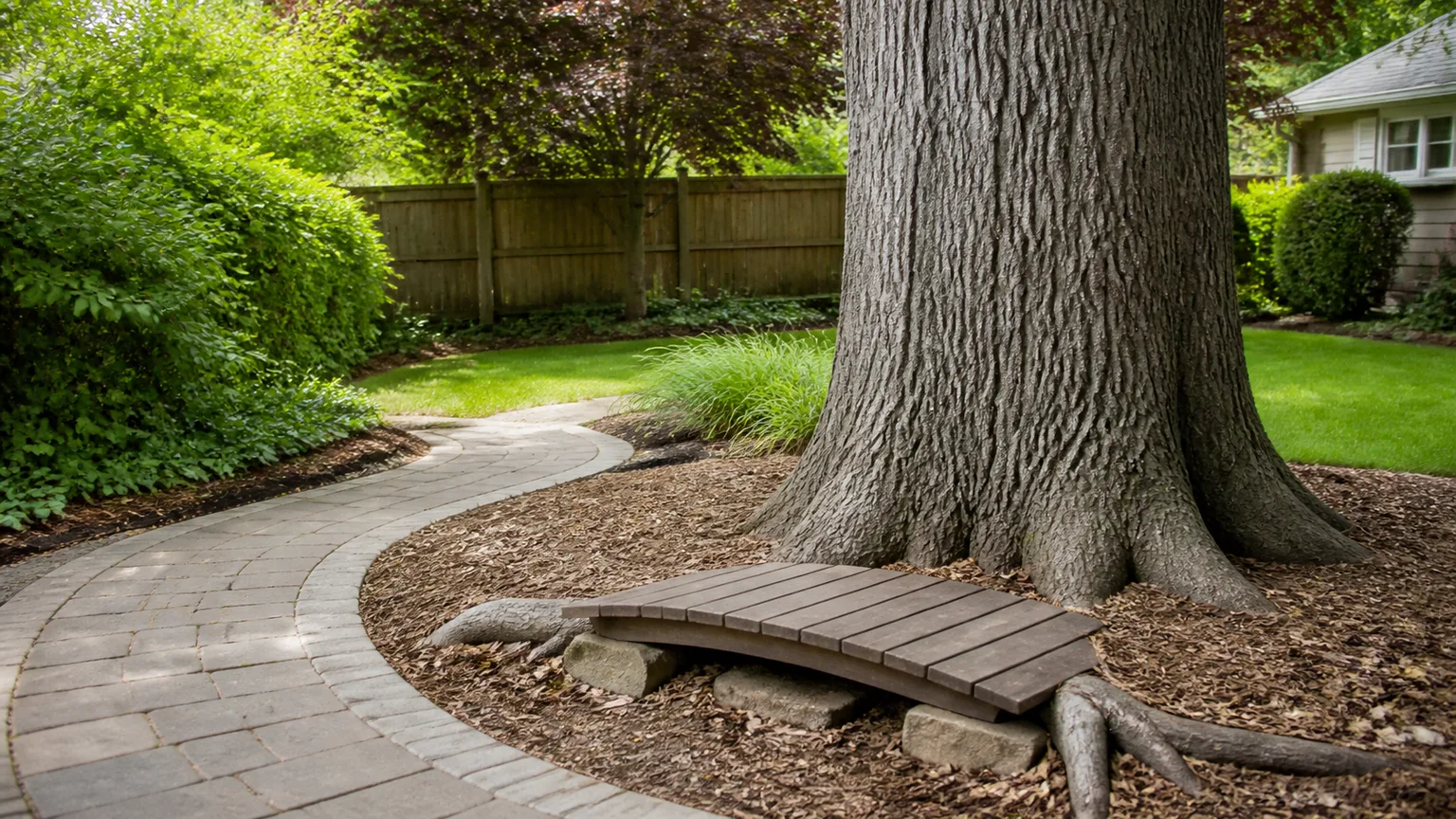
When tree roots appear above the soil, the instinct is understandable: cover them, cut them, or disguise them with lawn. None of those is automatically the right answer. Surface roots are often normal, especially in compacted urban soil or for trees adapted to wet ground, but newly exposed roots can also point to erosion, a grade change, drainage trouble, or damage from traffic and construction.
The safest first move is to stop treating the root as a landscaping blemish and identify what changed. A root that has always been visible is a different problem from a pale, fine root revealed after a downpour. A thick root crossing a path is different from a root flare widening gently from the trunk. The response should fit the cause.
Quick Answer: Do Not Bury or Cut Surface Roots Automatically
Do not cover tree roots above ground with a deep layer of soil, and do not cut them simply because they are visible. Most tree roots are concentrated in the upper soil, where they can access oxygen and moisture. Northern Virginia Soil and Water Conservation District explains that roughly 80 percent of tree roots occur in the top 12 to 36 inches of soil, not in a deep underground ball. Surface roots are therefore not proof that a tree is failing.
Instead, protect the area from compaction, use a broad shallow mulch ring if appropriate, and look for erosion or a recent change in grade. If a root is lifting a sidewalk, has been wounded, is soft or decayed, or seems to be destabilizing the tree, get an on-site assessment from a qualified arborist before altering it.
The Root-Flare Rule
The root flare is the point where the trunk widens and transitions into the major roots. It should remain visible or gently exposed at the soil surface. Never build a raised bed, pile compost, or mound mulch against the trunk to hide roots. Covering the flare keeps bark wet, reduces oxygen exchange, and can encourage decay or girdling roots.
There is an important distinction between covering a root zone and burying the trunk. A thin, airy layer of coarse mulch can protect roots from mowers and drying. Soil or mulch pressed against bark creates a different set of problems. When in doubt, find the trunk flare first, then keep the material away from it.
Why Tree Roots Grow at or Above the Soil Surface
Roots grow where the combination of oxygen, moisture, temperature, and resistance is most favorable. They do not always grow downward because deeper soil may be compacted, waterlogged, dry, rocky, or low in oxygen. Roots near the surface can be doing exactly what the site requires.
Natural Rooting Patterns
Some species and varieties are naturally prone to shallow roots. Ficus, mountain spruces, and trees adapted to flooding may keep a larger share of their roots near the surface. Trees in shallow soils over rock also have limited room to descend. A mature tree with a stable canopy, normal seasonal growth, and roots that have not recently changed may simply be expressing its species and site.
The visible root is not necessarily the root doing most of the absorbing. Fine feeder roots branch from larger woody roots and may occupy the surrounding soil. The large root you see can provide anchorage and a pathway, while the fine roots around it take up water and nutrients. That is one reason cutting a visible root can damage more of the tree than the cut suggests.
Erosion, Compaction, and Water Conditions
A root can become exposed after rain washes soil away from a slope or after repeated mowing removes the thin top layer around a tree. Construction, driveway traffic, and parking can compact soil so severely that roots remain close to the surface. A high water table can have a similar effect: roots cannot function well in oxygen-poor saturated soil, so the tree develops in the shallow layer that remains usable.
Look for clues around the root. Bare soil, small channels, exposed stones, puddling, tire tracks, and a hard crust point to a site problem rather than a tree problem alone. If the ground level rose or fell after landscaping, the roots may be reacting to a grade change. Soil added over existing roots can be just as stressful as soil removed from them because it changes oxygen and drainage.
Decide Whether the Roots Are Normal, Newly Exposed, or Damaged
Use a simple inspection before choosing a treatment:
- Trace the root to the trunk. Is it a normal flare that widens gradually, or is it a separate root exposed several feet away?
- Check the timeline. Has the root been visible for years, or did it appear after flooding, grading, construction, or a storm?
- Inspect the surface. Firm, intact bark is less concerning than soft wood, cavities, fungal growth, or a fresh wound.
- Look up at the canopy. Dieback, sparse leaves, dead branches, leaning, or new cracks increase the need for professional assessment.
- Check the use around it. Mowers, string trimmers, foot traffic, vehicles, and salt runoff can turn a manageable root into a recurring injury.
Do not scrape bark to make the root look cleaner. Do not probe decay with a knife. A visual inspection is enough to decide whether to protect the area or call for help; it is not a substitute for a tree-risk assessment.
What to Do With Tree Roots Above Ground
For a stable tree with intact roots, the most useful treatment is usually a change in the ground around it rather than a change to the root itself.
Protect the Root Zone From Traffic and Equipment
Move lawn traffic away from the roots. Repeated tire pressure compresses pore spaces, reducing the air and water roots need. Mowers and string trimmers are especially risky because they can remove bark in seconds. Raise the mower deck, use a hand tool around the root, or convert the area to a mulch ring so the machine does not have to pass over the root.
Do not park, stack building materials, or store a shed over the root zone. Temporary construction traffic can injure roots without leaving an obvious mark on the trunk. If work is planned near a mature tree, establish a no-traffic protection zone before equipment arrives; repairing compacted soil after the fact is slower and less certain.
Use a Wide, Shallow Mulch Ring
Coarse wood chips or another suitable organic mulch can reduce mower damage, slow erosion, conserve moisture, and keep foot traffic off the root zone. The ring should be wide enough to protect the visible roots and, when space allows, extend toward the drip line rather than stopping at a narrow circle.
Keep the layer roughly 2 to 4 inches deep, depending on the material and site. Rake it flat instead of creating a volcano. Leave a clear gap around the trunk and root flare. Fine mulch can mat and slow air and water movement, while repeated additions can quietly bury the flare. Check depth before adding more each season; refresh only what has decomposed.
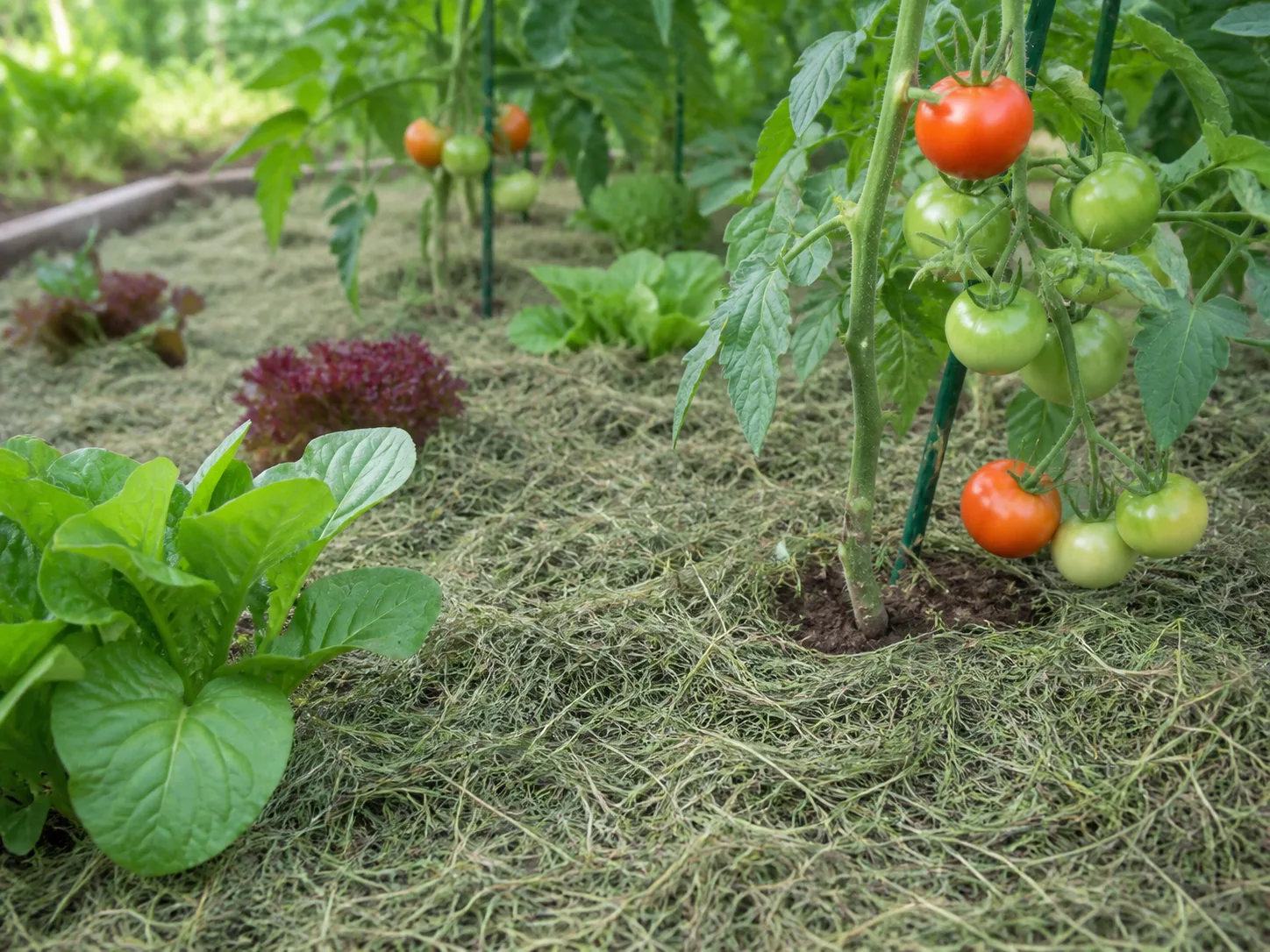
Mulch is not a structural repair. It will not stop a root from lifting a sidewalk, correct a leaning tree, or reverse decay. Its role is to make the existing root zone safer and more stable while you address the underlying site conditions.
Restore Eroded Soil Carefully
If rain has exposed fine roots on a slope, restore the soil gradually rather than dumping a truckload of fill over the entire root zone. Use a compatible, well-drained soil and place only enough to cover the newly exposed roots. Preserve the root flare, avoid compacting the material, and control the water path so the next storm does not remove it again.
For persistent erosion, solve the flow problem first. A level contour, planted ground layer, erosion-control fabric selected for the site, or a professionally designed drainage change may work better than repeated top-dressing. Do not trench across roots to install an edging or drain without knowing where the major roots are.
How to Mulch Around Surface Roots Without Suffocating the Tree
Start by removing litter and invasive turf by hand, not by scraping the roots. Mark the flare and any roots that arch above grade. Spread coarse mulch from the clear trunk ring outward. Where roots create high spots, do not force the mulch into a thick layer to make the surface level; let the natural contour remain visible.
The Princeton Shade Tree Commission describes the ideal tree mulch shape as a donut rather than a cone. It also warns that excessive mulch can keep moisture against bark, interfere with water penetration, and prevent deep supporting roots from developing. The practical test is simple: you should be able to see the trunk flare, the surface should not stay soggy, and the material should not form a dense mat. The USDA Natural Resources Conservation Service mulching standard treats mulch as a conservation practice for protecting soil and managing moisture, not as permission to bury a tree trunk. That distinction matters when the exposed root is part of an eroding slope.
Avoid piling compost, garden soil, manure, or decorative stone against the trunk. Stone can increase heat and does not solve compaction. Landscape fabric under mulch may also make future root inspection and renewal harder. A low-maintenance root zone is usually an open, mulched area with no digging or repeated disturbance.
Why Cutting Exposed Tree Roots Can Backfire
Cutting a root can remove absorbing capacity, reduce anchorage, open a wound to decay organisms, and disrupt the balance between roots and canopy. The risk depends on root size, distance from the trunk, species, soil, tree age, and the number of roots affected. A single small root is not equivalent to a large structural root close to the trunk.
The visible root may also be carrying loads that are not obvious from above. Roots become woody as they age and contribute to stability and energy storage. Removing one can leave the tree more vulnerable to wind even if the canopy looks unchanged for a season. Root damage can show up later as branch dieback, reduced growth, leaf scorch, or a lean.
If a root conflicts with a path, first consider moving or bridging the path, changing its grade, widening the planting area, or replacing turf with mulch. Root pruning should be a last-resort decision made by a qualified professional, not a weekend cleanup task. Never use herbicide, bleach, salt, or a power tool to make roots disappear.
Safer Options for Roots in Lawns and Along Paths
When a root is in the mowing route, remove the conflict rather than the root. A curved bed edge can give the tree room and make the root zone easier to maintain. A shallow path transition, stepping surface, or raised walkway can preserve the root while reducing trips. Keep the finished surface from pressing against the trunk flare and make sure runoff still moves away safely.
For a root lifting pavement, do not automatically grind it flush. Document the location and have an arborist and the property or path professional compare options. A small change in pavement alignment may cost less than replacing a declining tree. If the root is causing a confirmed safety hazard and no redesign works, the professional can explain the trade-off before any pruning.
Ground covers can be useful outside the flare, but do not dig planting pockets through major roots. Choose shallow-rooted plants suited to the light and moisture, plant between roots, and water them carefully while they establish. Turf is often the least forgiving companion because it invites mowing, irrigation competition, and traffic directly over the root zone.
When an Arborist Should Inspect the Tree
Arrange an assessment when exposed roots occur with a leaning trunk, soil heaving, a suddenly thinning canopy, large wounds, cavities, fungal conks, cracked soil, construction damage, or roots broken near the trunk. Call sooner if the tree is large, sits near a house or road, or has a target beneath it. Do not climb, use a chainsaw, or excavate around a mature tree to investigate.
Ask for a certified arborist or another credentialed tree professional who can explain the diagnosis and options. A good assessment should identify whether the issue is species-related, caused by erosion or compaction, or connected to decay and stability. Air excavation or an air spade may be appropriate for carefully loosening compacted soil around roots; it is not a reason to expose every root in the yard.
Be wary of anyone who recommends topping, indiscriminate root cutting, deep fill, or a guaranteed cure without inspecting the tree and site. Tree care is a risk decision, not a cosmetic prescription.
What Not to Do Around Exposed Roots
Avoid these common fixes:
- Do not bury the trunk flare. Soil and mulch against bark can keep it wet and hide future defects.
- Do not add a deep soil layer. Fill changes oxygen, drainage, and grade around roots.
- Do not cut every root that crosses the lawn. Visibility is not a sufficient reason for removal.
- Do not weed-whack the bark. A shallow wound can become a long-term entry point for decay.
- Do not compact the area to make it look finished. Hard soil is often the reason roots stayed shallow.
- Do not use salt to kill roots. Salt damages soil and nearby plants while contaminating runoff.
- Do not install edging by trenching blindly. A narrow trench can sever important roots.
- Do not assume a ground cover solves erosion. Plants help only when the drainage and establishment plan fit the slope.
The goal is not to make every root invisible. The goal is a stable tree, protected roots, safe circulation, and soil that still allows air and water to move.
A Seasonal Maintenance Plan for Surface Roots
In spring, inspect for erosion, frost heaving, mower wounds, and mulch that has settled against the flare. Re-establish the clear trunk gap and top up only if the mulch layer has thinned. Do not fertilize automatically; test or diagnose before adding nutrients.
In summer, water the surrounding root zone deeply and slowly during prolonged dry weather, following local conditions and the tree’s age. Avoid frequent shallow sprinkling that keeps only the surface wet. Watch for irrigation runoff that exposes roots or puddles over compacted soil.
In fall, mark roots and bed edges before leaves cover them, move equipment routes, and repair drainage or erosion while the ground is workable. If construction is planned, protect the root zone before materials arrive. In winter, prevent de-icer runoff and snow piles from repeatedly damaging the same area.
Photographing the roots once or twice a year can reveal change that is hard to remember. A root that is slowly becoming more exposed, a crack widening near the trunk, or a canopy thinning on one side deserves attention even when the tree still looks mostly healthy.
Conclusion
Surface tree roots are usually a message about how the tree and soil are interacting, not an instruction to reach for a saw. Leave healthy roots intact, keep the root flare visible, protect the area from mowers and traffic, and use a wide, shallow mulch ring when it fits the site. Restore erosion carefully rather than burying the whole root zone.
If roots are newly exposed alongside erosion, compaction, construction damage, decay, a lean, or canopy decline, address the cause and have an arborist assess the risk. The best solution may be a path redesign, drainage repair, careful soil treatment, or simply giving the tree more room. A visible root can be managed safely; an invisible root injury is much harder to undo.