When to Plant Mums So They Actually Thrive Through Fall
Learn when to plant mums for long fall color, how spring and fall timing differ, and how to choose, water, mulch, and overwinter garden mums.
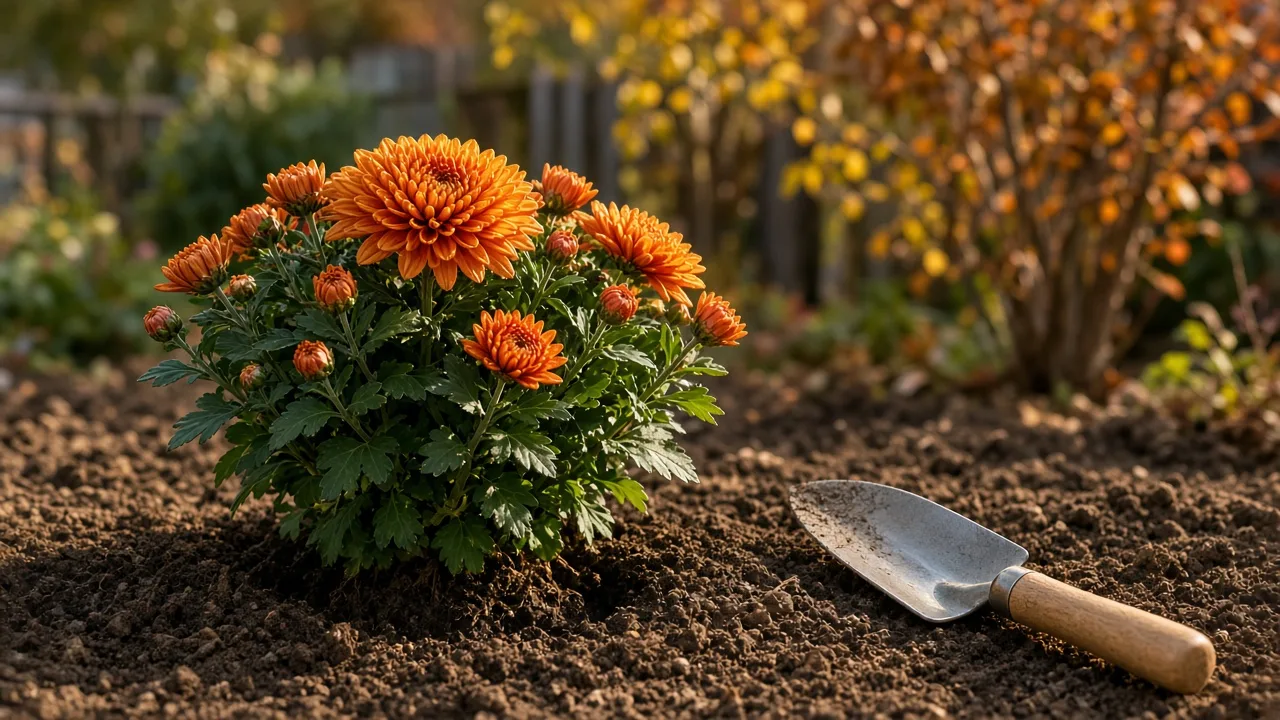
If you want hardy garden mums to return next year, plant them in spring after the last frost whenever possible. If you are planting a flowering mum you just bought for fall color, plant it as soon as you bring it home—but the best target for winter survival is still at least six weeks before your local first hard frost.
That two-part answer matters because “mums” covers two very different buying situations. A spring-planted garden mum has months to build roots before it flowers. A tightly packed pot sold in September or October has usually been grown for an immediate display, and it may be too late for the plant to establish before winter even if the label casually calls it hardy.
The Best Planting Date Depends on Your Goal
Start with the result you want, not the month printed on the garden-center sign. There are three sensible plans:
| Your goal | Best timing | What to expect |
|---|---|---|
| A perennial mum that returns and reblooms | Spring, after the last frost | The strongest root-establishment window and time to pinch for a full fall plant |
| Fall color from a plant you already bought | Immediately, ideally six or more weeks before first hard frost | Good seasonal color; winter survival depends on type, roots, drainage, and climate |
| Keep a late-season pot for another try | Cool, frost-free storage or immediate planting if the ground is workable | A rescue attempt, not a guaranteed perennial plan |
The Royal Horticultural Society’s chrysanthemum guide recommends planting young plants outdoors after the last frost and describes hardy garden chrysanthemums as perennials that go dormant and resprout. Better Homes & Gardens makes the same practical distinction for garden mums: spring planting gives roots the whole growing season to establish, while fall planting reduces the chance of winter survival. (RHS Growing Guide; Better Homes & Gardens)
That does not make fall planting pointless. It means you should use a different success standard. For an autumn purchase, success may be a long, healthy display through the first frosts, with a possible spring comeback as a bonus. For a spring purchase, success means a sturdy crown and enough branching to support the next fall’s flowers.
Spring, Late Summer, or Fall? A Quick Decision Table
Choose the row that matches your plant and your calendar:
- Spring after the last frost: Best for labeled garden mums, rooted cuttings, and anyone who cares most about winter survival. Plant once the soil is workable, the plant is growing strongly, and hardening off is complete if it began indoors.
- Early to mid-summer: A good window for established young plants. They can settle into the bed before short days trigger fall buds, but they need more careful watering during heat.
- Late summer: Works for a blooming nursery plant if your first hard frost is still at least six weeks away. Choose a plant with buds showing color and only a few flowers open if you want the display to unfold at home.
- Early fall: Plant immediately if the ground is still warm and workable, but calculate your frost cushion before buying several plants for overwintering. The later the purchase, the more you are buying seasonal color rather than a dependable perennial.
- After the first hard frost: If the soil is not frozen, you can still plant a healthy plant, but do not pretend the odds are the same. If a hard freeze is imminent, keep the pot cool and frost-free instead of forcing a rushed transplant.
The exact month changes with latitude, elevation, exposure, and the local weather pattern. A mum planted in early September in one town may be later than ideal in another town where the first hard frost arrives in early October.
Identify the Mum Before You Plant
The label and the plant’s production history tell you more than the flower color does. Both hardy garden mums and florist mums belong to the genus Chrysanthemum, but they are selected and grown for different jobs.
Garden Mums vs. Florist Mums
Garden mums are landscape plants. They are generally grown to branch, spread from a crown, and tolerate outdoor conditions, though “hardy” never overrides a poor site or a cultivar that is not suited to your climate. A Missouri Botanical Garden entry for the garden mum ‘Cathy’s Rust,’ for example, lists it as a zone 5–9 herbaceous perennial with a September-to-frost bloom period, full-sun needs, and consistently moist but well-drained soil. The same entry warns that winter hardiness varies from year to year and from place to place within a zone. (Missouri Botanical Garden Plant Finder)
Florist or pot mums are greenhouse-grown for a dense, highly timed display. They can be beautiful and perfectly healthy, but their small or crowded root systems, forced bloom schedule, and uncertain hardiness make them a poor bet for a cold winter. Better Homes & Gardens advises treating most florist mums as short-term potted or bedding plants rather than expecting them to survive outdoors.
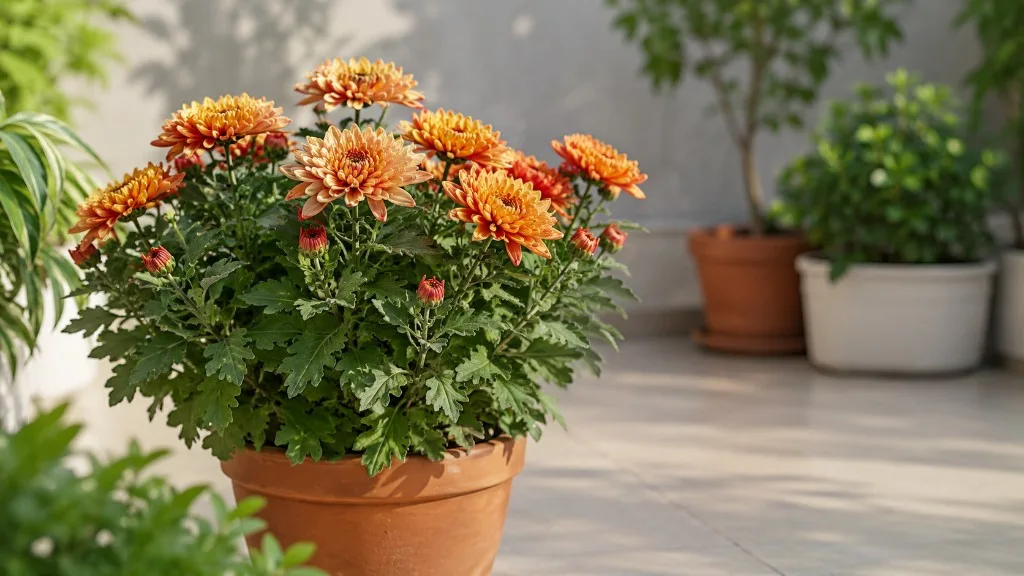
The distinction is not a moral one. A florist mum is doing exactly what it was produced to do: provide weeks of color. If that is your goal, enjoy it as a seasonal plant. If you want a plant to bank for next year, buy a named, zone-appropriate garden mum in spring from a nursery that can tell you how it was grown.
Read the Plant at the Garden Center
Look for a variety name, a hardiness range, and wording such as garden mum, hardy mum, or perennial. If the tag says only “mum,” gives no zone information, or presents the plant as a gift or seasonal décor item, lower your winter-survival expectations.
Then inspect the plant itself. Choose firm green foliage, multiple stems, and a root ball that is moist rather than bone-dry or sour-smelling. For a long fall display, a plant with mostly swollen buds and a few open flowers usually gives you more runway than one already covered in fully open blooms. Avoid a plant with collapsed stems, widespread yellowing, blackened crown tissue, or a pot that has been sitting in a sleeve of stagnant water.
You can slide the plant partway from its pot to check whether roots are circling densely. Rootbound does not mean “do not buy,” but it does mean the transplant needs attention. A tight root ball can shed water down the sides while the center stays dry, so rehydrating and loosening it is more important than simply digging a larger hole.
Use Bud Stage to Plan Fall Color
Mums do not all open on the same schedule. Cultivar, temperature, sunlight, and the stage at which the grower shipped the plant change the timeline. A plant with tight green buds may need weeks; one with buds just “cracking” color may open much sooner; a plant already at peak bloom may have only a few weeks before its earliest flowers fade.
That makes the prettiest plant at the store an imperfect choice if your event is still a month away. Good Earth Garden notes that tightly closed buds can take several weeks to show color, while warmer weather speeds opening. Garden Artisans similarly recommends buying mums with some color showing when you need to know the flower color and timing, rather than trusting a tag on a fully closed plant. (Good Earth Garden; Garden Artisans)
For a porch display, match bud stage to the date you want flowers. For an in-ground planting, prioritize plant health and frost cushion over a perfectly open mound. Flowers are temporary; roots are the part that has to survive the transition.
Mums are also short-day plants, meaning their flowering is influenced by longer nights. A 2024 study in BMC Plant Biology found that planting date changed bud formation and flowering timing in a production setting, but the work was done with cut-flower chrysanthemums in the mid-hills of India, not with every garden mum in every home landscape. The useful takeaway is not to copy its dates; it is to recognize that cultivar, day length, climate, and production goal interact. (BMC Plant Biology study)
If your bed sits under a bright porch light, streetlight, or landscape fixture, night lighting can also interfere with the dark period that helps many mums set buds. Move the plant or shield the light if it grows well but refuses to flower on schedule.
Count Back From Frost With a Cushion
For a fall purchase that you hope to overwinter, start with your average first hard frost date, then count back at least six weeks. That is a practical minimum for root contact and anchoring; eight or more weeks is a safer target when the plant is small, rootbound, or going into a cold and exposed site.
For example, if your first hard frost normally arrives around October 20, aim to plant by early September. If frost usually arrives around November 5, mid-September is a better target. If your first hard frost is normally November 20, early October may still give a healthy plant time to settle, but you should not delay a purchase until the plant is already fading.
Use the local date, not a zone label alone. USDA hardiness zones describe average winter minimums; they do not tell you the exact date your soil will cool, whether your garden sits in a frost pocket, or how many warm days remain after the plant comes home. A south-facing wall, raised bed, windy hill, low wet hollow, and shaded porch can all change the practical result.
When a plant arrives later than your window, decide whether you want flowers now or a perennial later. You may still plant a late mum if the soil drains and remains workable, but protect the crown and accept that a florist pot may not return. If the ground is frozen or a hard freeze is due within days, move to the late-season plan in the “What to Do If You Planted Too Late” section instead of damaging roots in frozen soil.
Give Mums the Site They Need
Mums flower best in full sun, usually at least six hours of direct light. In very hot climates, morning sun with some protection from the fiercest afternoon heat can help flowers last, but deep shade produces weak stems and fewer flowers. The RHS describes hardy chrysanthemums as suited to a warm, sheltered, sunny position; Epic Gardening gives a similar six-to-eight-hour light target. (Epic Gardening)
Drainage is the non-negotiable part. Mums like even moisture, but roots and crowns fail when soil stays saturated. If water sits after rain, fix the bed broadly with organic matter and better grading, use a raised bed, or keep the mum in a draining container. Filling one small planting hole with a loose amendment does not solve a surrounding layer of compacted clay.
Give plants enough room for air to move around the foliage. Eighteen to twenty-four inches is a useful starting range for many mounding types, while larger cultivars need more space. A crowded plant stays wet longer after rain and is harder to inspect for aphids, leaf spots, and damaged stems.
Planting Mums in the Ground: A Reliable Sequence
Plant on a cool day, ideally when the soil is workable and the plant will not go straight from a hot delivery truck into harsh afternoon sun. The goal is to reduce water loss while the roots make contact with new soil.

Prepare the Root Ball Without Drowning It
First, remove foil, plastic sleeves, and decorative cachepots. They can hide a full drainage hole and leave the root ball standing in water. Water the plant thoroughly from above, then let excess water drain; if the center is extremely dry and has pulled away from the pot, set the nursery pot in a shallow tub of water for about 15 minutes and drain it before planting.
Dig a hole about twice as wide as the root ball and no deeper than the potting mix around the crown. Loosen the surrounding soil so new roots can move outward, but do not create a deep bowl that collects water.
Slide the plant out and examine the roots. Tease circling roots gently with your fingers. If the lower third is a hard mat, make a few shallow vertical cuts with a clean knife and loosen the bottom; do not shred the entire root ball or pull apart a flowering plant more aggressively than necessary.
Set the Crown and Space Plants
Set the mum at the same soil level it had in its pot. The crown—the point where stems emerge—should not be buried under a thick layer of amended soil. Backfill around the roots, press lightly to remove large air pockets, and water slowly until the soil is evenly moist.
Apply a thin layer of compost or organic mulch over the root zone, keeping it a few inches away from the stems. Mulch should moderate temperature and slow moisture loss, not create a wet collar around the crown.
Do not add a strong nitrogen feed to a fall-planted mum. The plant is already carrying flowers, and soft late growth is not what it needs before cold weather. Save regular feeding for spring growth, and follow the product label rather than applying a “root booster” by habit.
Caring for Newly Planted Mums Through Fall
Check soil moisture at the root zone rather than watering by the calendar. Newly transplanted mums should never be allowed to wilt, but the top inch can begin to dry between waterings when drainage is good. Once established, roughly an inch of water per week from rain and irrigation is a reasonable starting point, adjusted for heat, wind, soil, and pot size.
Water at the soil line when you can. Wetting leaves and flowers late in the day keeps the canopy damp and can increase disease pressure. Container plants dry faster than bedded plants, so check them frequently during warm, breezy weather; daily checks do not mean daily watering.
Deadhead faded flowers if you want the plant to look tidy and to expose developing buds, but do not confuse spent petals with a dead plant. Flowers naturally brown as the display ends. Brown foliage, collapsing stems, a sour root ball, or a crown that stays wet are different signals and point toward water, drainage, cold, or disease trouble.
Container Mums Need a Different Calendar
A pot gives you mobility but removes the insulation of surrounding ground. The roots of a container mum can heat up in sun and freeze through thin plastic in winter, even when the same cultivar planted in a bed would have more protection.
For a fall display, choose a container with a real drainage hole and enough room to water evenly. You can keep the mum in its nursery pot inside a decorative cover pot for a short display, but empty collected water after storms. If you repot, use a fresh, well-drained potting mix and a container only modestly larger than the root ball; an oversized pot stays wet longer.
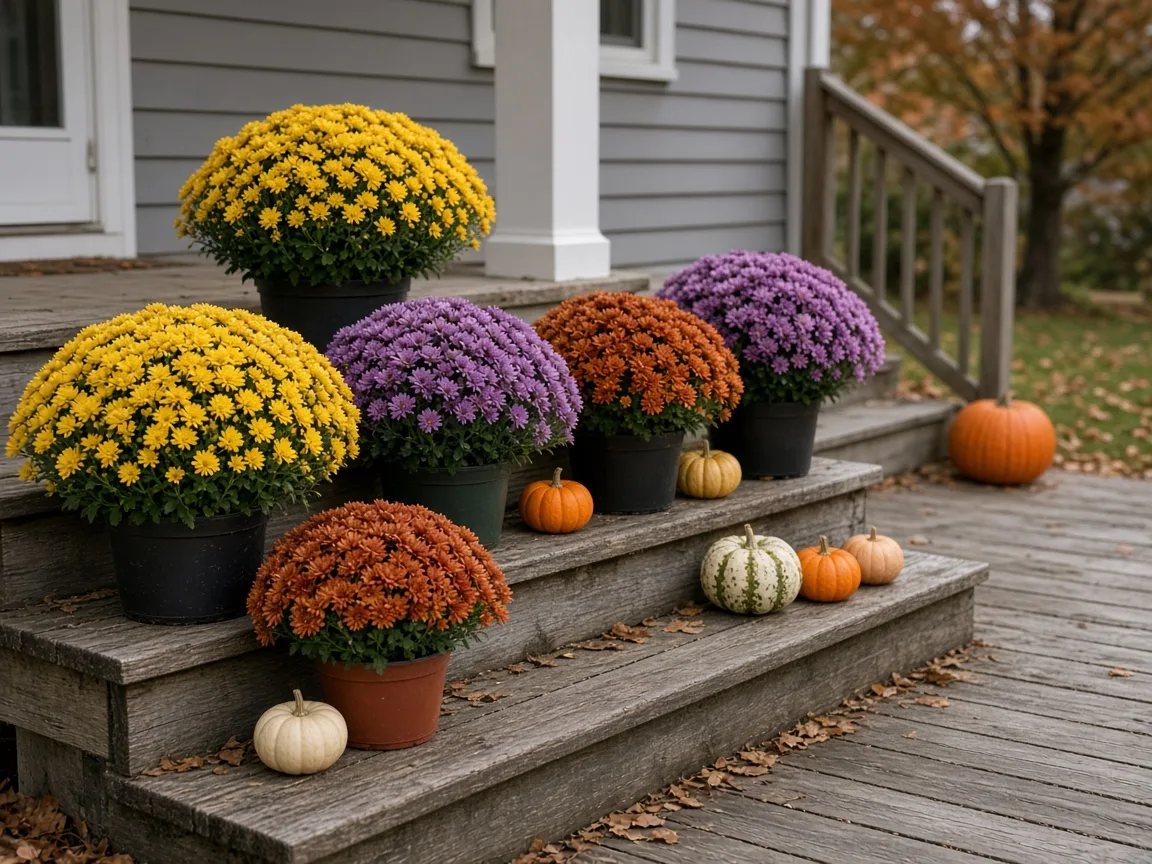
If you want to save a late pot, let flowers finish, remove dead blooms, and move the plant to a cool, dark-to-dim, frost-free garage or similar space. Keep the mix slightly moist, not wet. A warm living room encourages weak growth while an exposed porch may freeze the root ball repeatedly; dormancy is the middle ground.
How to Improve Winter Survival
Winter protection starts with placement, not a last-minute blanket. A sunny, sheltered bed with good drainage gives a mum a much better chance than a low spot that collects winter rain. The plant must enter winter hydrated, but it must not sit in saturated soil.
After a hard frost has finished the flowers and the ground begins to cool, apply about 2 to 4 inches of loose mulch such as shredded leaves, straw, or compost around the root zone. Keep the crown and stems from being buried under a wet mound. In an unusually cold or exposed site, a little more insulation may help, but piling heavy, airless material directly against the plant can create rot.
Leave the old stems standing through winter. They provide modest protection and mark where the dormant crown is located. Cut them back in late winter or spring only when new growth is visible or the local growing season is clearly starting.
Hardiness is not a guarantee printed on a tag. Missouri Botanical Garden notes that even garden-mum winter survival can vary by cultivar, year, and location within the same zone. In colder climates, poor drainage, late planting, exposed wind, and a root system that was already stressed can overwhelm a nominally hardy plant.
What to Do If You Planted Too Late
If the ground is still workable, plant now rather than leaving a dry, rootbound mum in a tiny pot for another month. Rehydrate the root ball, set it at the original depth, water deeply, mulch after the soil cools, and leave the stems intact. The plant may survive, but treat its return as uncertain if the calendar is already inside the six-week frost window.
If the soil is frozen, or if a hard freeze is forecast almost immediately, keep the plant in its pot. Remove decorative wraps, place it in a cool frost-free space, and water sparingly enough to prevent the roots from drying without keeping them soggy. Move it outdoors after the last frost in spring, acclimate it gradually, and plant it once new growth is underway.
Do not put a dormant mum in a heated room beside a bright window and expect it to behave like a houseplant. It may break dormancy, stretch, and use stored energy before outdoor conditions are safe. Cool and stable is more useful than warm and bright for a plant you are trying to carry through winter.
Will Mums Bloom Again Next Year?
A surviving crown is not the same as a repeat of the original retail mound. A fall-bought mum may live but bloom later, grow taller, open unevenly, or produce fewer flowers because it was forced into bloom, planted late, or never received the spring pinching that creates a dense plant.
When shoots appear in spring, remove winter mulch gradually so the crown can breathe. Cut away dead stems, feed according to the label once active growth begins, and pinch growing tips when shoots are about 6 to 8 inches tall. Repeat pinching every few weeks until midsummer, then stop so the plant has time to form fall buds.
That spring pinching is the step most fall display pots never receive. It turns a few long stems into many flowering branches, but it also changes the calendar: pinch too late and you may delay flowers; skip it and the plant may survive while looking open and leggy.
For the most dependable perennial result, start over with a spring-purchased garden mum that is labeled for your climate. The RHS recommends spring planting for young plants once they are well rooted and the frost risk has passed, while the Missouri Botanical Garden describes garden mums as useful in both perennial and annual roles depending on conditions. In other words, planting time is a major lever, not the only variable.
Conclusion
The best time to plant mums is spring after the last frost when your priority is a plant that establishes, survives winter, and blooms well again. For a fall-bought mum, plant it promptly and aim for six to eight weeks before the local first hard frost; choose a healthy, budded plant, use full sun and well-drained soil, water consistently, and mulch without covering the crown.
If the pot arrives late, you can still plant it while the soil is workable or overwinter it cool and frost-free. The honest measure of success is not whether every retail mum returns. It is whether you matched the plant, timing, site, and aftercare to the result you actually wanted.



