When to Put Out Birdhouses: Regional Timing by Species
Learn when to put out birdhouses by region and species, how early to install a box, and how placement, cleaning, and timing affect a safe nesting season.
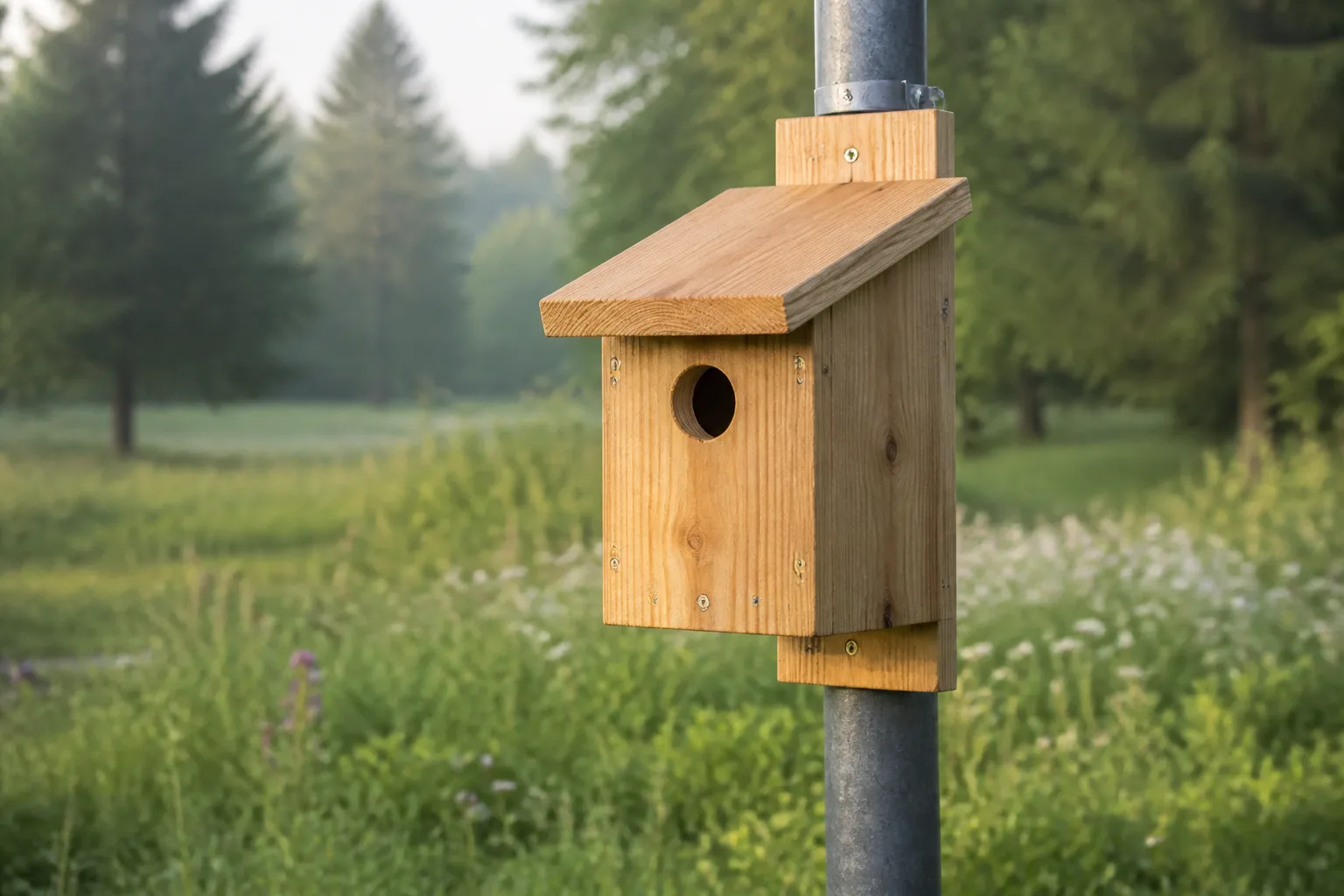
Quick answer: put up a birdhouse before local nesting begins
Put a birdhouse up before the cavity-nesting birds in your area begin choosing nest sites. In much of the United States, late winter is a practical target, but there is no universal date: species, latitude, elevation, weather, and migration all change the schedule. If the box is ready now and the site is suitable, installing it early is usually more useful than waiting for the first bird to appear.
Cornell Lab of Ornithology’s NestWatch guidance gives a broad U.S. rule of thumb: install boxes by February in the South and by mid-to-late March in northern regions. Those dates are a starting point, not a promise that nesting starts on a particular day in every town. For a species-specific project, check the local bird society, a nearby NestWatch group, or regional wildlife guidance, then aim to have the right box mounted and secure several weeks before the local nesting window.
The most helpful sequence is simple: decide which cavity-nesting species the habitat can support, confirm that the box is designed for that bird, then mount it ahead of its breeding season. If you do not have a target species yet, use local birding guidance to pick a common native cavity nester and place the box according to its habitat needs. An attractive wooden house in the wrong setting can stay empty no matter how early it goes up.
Why birds need time to discover a new nest box
Birds do not wait until eggs are ready to appear before evaluating nesting places. Adults may claim territories, court, visit possible cavities, and compete for nest sites ahead of egg laying. A box that goes up after birds are already defending territories may still be used, but it has missed the easiest discovery period for early nesters.
Installation also gives you a chance to fix practical problems before birds depend on the box. You can check that the mounting is stable, the entrance is unobstructed, rain drains away, the roof sheds water, and a predator guard is fitted where appropriate. Doing this work before breeding activity begins is less disruptive than trying to repair or move a box after adults have invested in it.
Birds can also take time to find an unfamiliar structure. Audubon’s nest-box guidance notes that a new box may not be occupied during its first year and can take several seasons to attract its first tenants. That is not necessarily evidence that the calendar was wrong; habitat, box dimensions, competition, food availability, and the number of natural cavities nearby all influence whether a bird chooses it. Think of the first season as an opportunity for birds to discover a safe option, not a guaranteed delivery date for a nest.
How birdhouse timing changes by region
Climate zones and state lines are imperfect guides because birds follow local conditions and species-specific schedules. A warmer coast, a mountain valley, and a northern inland town at the same latitude can have different weather and nesting patterns. Think in terms of broad windows, then adjust them to the birds that actually breed where you live.
The South and North cutoffs from Cornell NestWatch are useful anchors for North American yards. NestWatch says southern boxes should be installed by February and boxes in northern regions by mid-to-late March. A reader in south Florida, coastal Texas, or the desert Southwest may need a different schedule from someone in the Appalachian highlands, so do not use those broad labels as a strict dividing line.
Southern and mild-winter areas
In warmer parts of the United States, some resident birds and early breeders can begin nest-site activity while much of the country still considers it winter. Put the box in place by late winter, and earlier if your local bird group reports that your target species starts scouting in January or February. A well-prepared box can also be useful outside the main breeding window if local birds use cavities for shelter.
Mild winters do not mean every bird breeds early. Some species migrate in, others wait for seasonal changes in food or weather, and even nearby populations can differ. If you are targeting Eastern Bluebirds, Tree Swallows, chickadees, or another named species, use a species-specific plan rather than assuming the first warm week sets the date.
Northern, high-elevation, and colder areas
In colder northern areas, late winter through mid-March is often a sensible installation period, with the exact date moving earlier or later according to local breeding activity. Higher elevations can keep snow and cold weather longer than nearby lowland areas, but this does not mean it is wise to postpone installation until everything feels like spring. The box needs to be ready before the birds begin evaluating nesting sites.
For instance, Cornell’s All About Birds account for Mountain Bluebirds says to put a nest box up well before breeding season. The same advice appears in its Tree Swallow account. Both species use nest boxes in open habitat, and both demonstrate why an early-looking date on the calendar may still be appropriate when birds arrive or begin nesting early in a particular region. Use nearby birding records and local bluebird or swallow groups to make the broad calendar more specific.
Let your target species set the calendar
Birdhouse timing becomes more accurate when you start with a bird rather than a month. A house wren, bluebird, swallow, chickadee, owl, and wood duck do not share one universal box design, nesting habitat, or schedule. A “birdhouse” that suits one species may be unsuitable or even hazardous for another because entrance size, interior dimensions, mounting height, and surrounding habitat vary.
Begin by checking whether the species is native to your area, whether it uses a nest box, and what type of habitat it needs. Then look for its local breeding period and any regional installation advice. Cornell’s NestWatch placement table pairs species with habitat, box height, entrance size, and spacing, while its species profiles provide further context for birds such as Mountain Bluebirds and Tree Swallows.
Resident and early-arriving cavity nesters
Some birds remain in or near their breeding territory through winter; others return early, before leaves are fully open or insects are abundant. Both can investigate cavities well before an average gardener expects nesting to be underway. For such species, an early installation gives them a chance to discover the box during territory selection, rather than asking them to change plans after a mate and nest site have already been chosen.
Local birding organizations are especially useful for this group because observations can capture the timing of a particular population better than a continent-wide calendar. Ask when members first see the species prospecting for boxes, not merely when they first see adult birds in the area. The first arrival date is not always the nest-site selection date, and the moment an adult is visible may be later than the moment a box needed to be ready.
Migratory and later-nesting species
For a migratory cavity nester, install the box before the expected local arrival and breeding period, not on the day you spot the first individual. Birds may arrive over several weeks, and the first bird seen from the kitchen window may not be the first one to claim a territory. If you have historical observations for your yard, use several years rather than one unusually early or late spring as your guide.
Later nesting can create another opportunity, but it is not a reason to deliberately wait. Some species raise more than one brood, and a box that missed the first nesting attempt might be considered later. That is a possibility, not a guarantee: birds may use a different cavity, a second attempt may not occur, or the season may not allow one. The safest plan is to make the box available before the earliest plausible local nesting attempt and leave it undisturbed once it is active.
Is it too late to put up a birdhouse?
If the expected nesting window has started, it may still be worth installing a suitable empty box, particularly if local birds have not yet begun nesting or if a later brood is possible. A new box can be useful in another season even if no pair claims it this year. Install it only if you can do so without disturbing nearby birds or an active nest, and do not approach a house that is already being used just to improve its position.
Do not try to coax a family into a box by placing nesting material inside or by blocking the entrance of a box you believe is occupied. Most nest boxes should be empty when offered unless the instructions for a particular target species specify a suitable base layer, such as wood shavings for some cavity nesters. Species-specific guidance matters here; decorative hay, string, dryer lint, and other household materials can be inappropriate or unsafe.
If spring has passed, you can still plan for next year: choose the target species, verify its box plan, select a safe site, and install the box well before its next breeding season. Some cavities are also used for night roosting or shelter during poor weather, so an empty box can still provide value at other times. Because winter use varies, inspect and clean only when you can confirm there is no bird inside and follow local advice for the species.
Choose the site before the nesting season
The site should be ready at the same time as the box. Birds select habitat as well as a cavity, so a correctly sized box can be ignored when it is placed in the wrong landscape. Bluebird boxes, for example, are generally intended for open settings, while some wrens and chickadees use shrubby or wooded edges. Read the target species’ habitat guidance before drilling into a tree or setting a pole.
Mount the box firmly so wind cannot swing it, and use a location that lets you monitor and maintain it safely from the ground or a stable access point. Cornell NestWatch recommends sturdy mounting and highlights free-standing metal poles as a useful option for small boxes because they can be equipped with predator guards. Do not choose a spot that requires climbing a shaky ladder or reaching across a steep slope every time you need to inspect the house; a box that cannot be safely maintained is a poor long-term placement.
Consider rain, sun, and prevailing winds. The direction a box faces should follow species-specific recommendations and the exposure of the site; “face every birdhouse east” is too simple to be dependable. A roof that sheds water, drainage holes, ventilation, and an entrance protected from direct weather matter more than a compass rule followed without context. Avoid locations subject to frequent pesticide or herbicide use because many cavity-nesting birds rely on insects to feed young, and treatment can reduce that food supply as well as expose wildlife to chemicals.
Match the box to the bird you want to help
Use a nest box with dimensions designed for the target species, including an entrance hole that neither admits larger competitors nor prevents the intended bird from entering. Hole size alone does not make a box suitable: floor area, depth, ventilation, drainage, roof design, wall thickness, interior texture, and mounting method also affect safety. Cornell’s features-of-a-good-birdhouse guide provides a practical checklist for these details.
Choose sturdy construction from untreated materials, and make sure the house opens for monitoring and cleaning but also closes securely against weather and predators. Avoid exterior perches. Nestlings do not need a perch to reach the entrance, while a perch can help predators get a foothold. Where predators can climb the support, use a species-appropriate baffle or guard and keep nearby branches from creating an easy launch point.
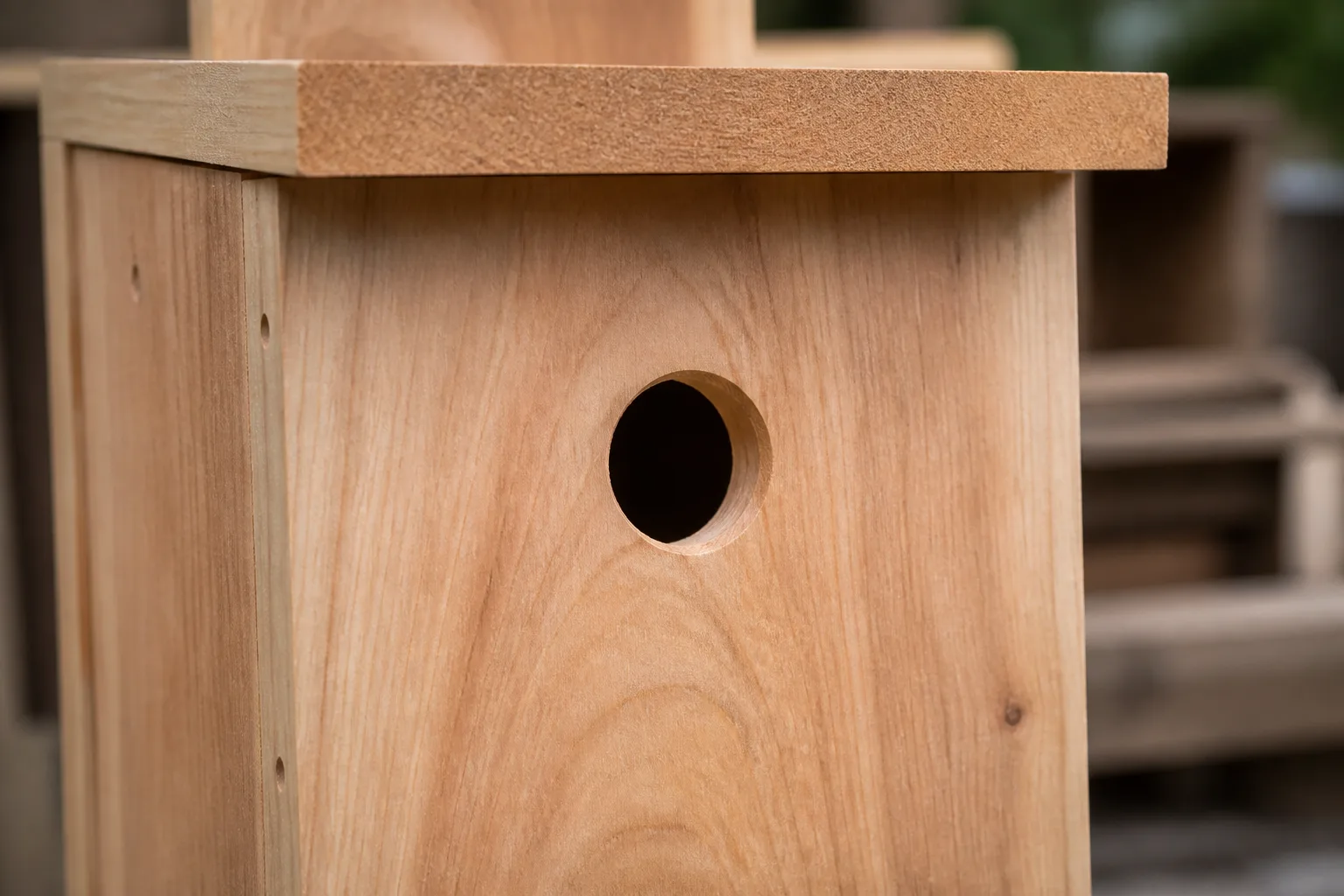
Do not buy a brightly painted novelty house simply because it looks charming on a fence. A box that lacks ventilation, drainage, shade, or access for maintenance may overheat, collect water, or become difficult to inspect. If a product does not list the intended species and dimensions, treat that as a reason to check its design carefully rather than assuming it is a universal birdhouse.
What to do if birds start using the box
Once a bird is carrying nesting material, entering repeatedly, or guarding the entrance, stop handling the box. Do not open it to see whether eggs have arrived, move it because the angle seems inconvenient, block the entrance to keep another species out, or clean it because a date on the calendar says the season should be over. The U.S. Fish and Wildlife Service explains that federal protections apply to many migratory birds and nests; its bird-nest guidance is a useful reminder to avoid disturbing eggs, chicks, and dependent young.
If you are intentionally monitoring a box, learn the local protocol before the season begins. A brief, planned check may be appropriate for a trained nest-box monitor, but casual repeated opening is not the same thing as responsible monitoring. Follow the instructions of a local bluebird society or NestWatch group, minimize time at the box, and do not check when young are close to fledging or adults are alarmed.
If you are unsure whether a box is occupied, leave it closed and observe from a distance. Repeated adult visits, food deliveries, alarm calls, or fresh nesting material are reasons to wait. When in doubt, contact a regional bird organization, wildlife rehabilitator, or the appropriate wildlife agency for advice rather than trying to solve the problem by opening the house.
Clean and maintain a nest box between seasons
For a box that hosted a brood, the safest general cleaning window is after breeding activity has clearly ended and before the next local breeding season. Cornell NestWatch says cleaning is optional in some circumstances and that species differ in how they handle old nests; its cleaning FAQ advises waiting if there is any sign the box is still active. Birds & Blooms’ cleaning guidance recommends cleaning after fledging for species that may produce another brood, but also emphasizes not disturbing a box that is still being used.
There is not one scientifically settled cleaning rule for every cavity nester. In a NestWatch review of the question, different studies found different responses: some bluebirds favored clean boxes, while results for other birds and locations varied. Old nest material can harbor parasites or make the next nest sit too close to the entrance, but in some circumstances birds cope with old material themselves. Cornell’s overview of nest-box cleaning explains why the right choice depends on species and local conditions.
For most backyard hosts, a practical default is to wait until late summer or fall, confirm the box is empty, remove old nesting material, and check for damage before the next breeding season. Some birds use boxes for winter roosting, so do not assume that a quiet box is vacant; a bird may be sleeping inside. If a box has rodents, wasps, or another unexpected occupant, use a cautious, species-aware response and avoid reaching blindly into the cavity.
A simple inspection routine
Before the season, inspect the house while it is definitely inactive. Tighten loose screws, replace cracked or rotted wood, clear blocked drainage and ventilation openings, confirm the entrance is unobstructed, and check that the support and predator guard are still secure. Repairing the box early is easier than discovering a loose roof or unstable pole after a bird has begun nesting.
When you clean, remove the old nest with a scraper or stiff brush while wearing gloves; a face covering can reduce dust exposure. Do not put your bare hand inside where you cannot see clearly, because insects or rodents may have used the box. Birds & Blooms’ cleaning instructions advise against soap because residue can harm birds; if washing is needed for a specific reason, follow an established nest-box protocol, rinse thoroughly, and let the box dry completely before closing it. Do not apply pesticides or scented repellents inside the house.
After cleaning, fasten the access panel so it cannot blow open, and make a note of the date and any repairs. A simple record of which species used the box, when activity began, and when the last brood fledged will make next year’s timing more precise. Do not treat the record as a reason to inspect more often than necessary; observation from a distance is usually enough for a backyard box unless you are following a trained monitoring plan.
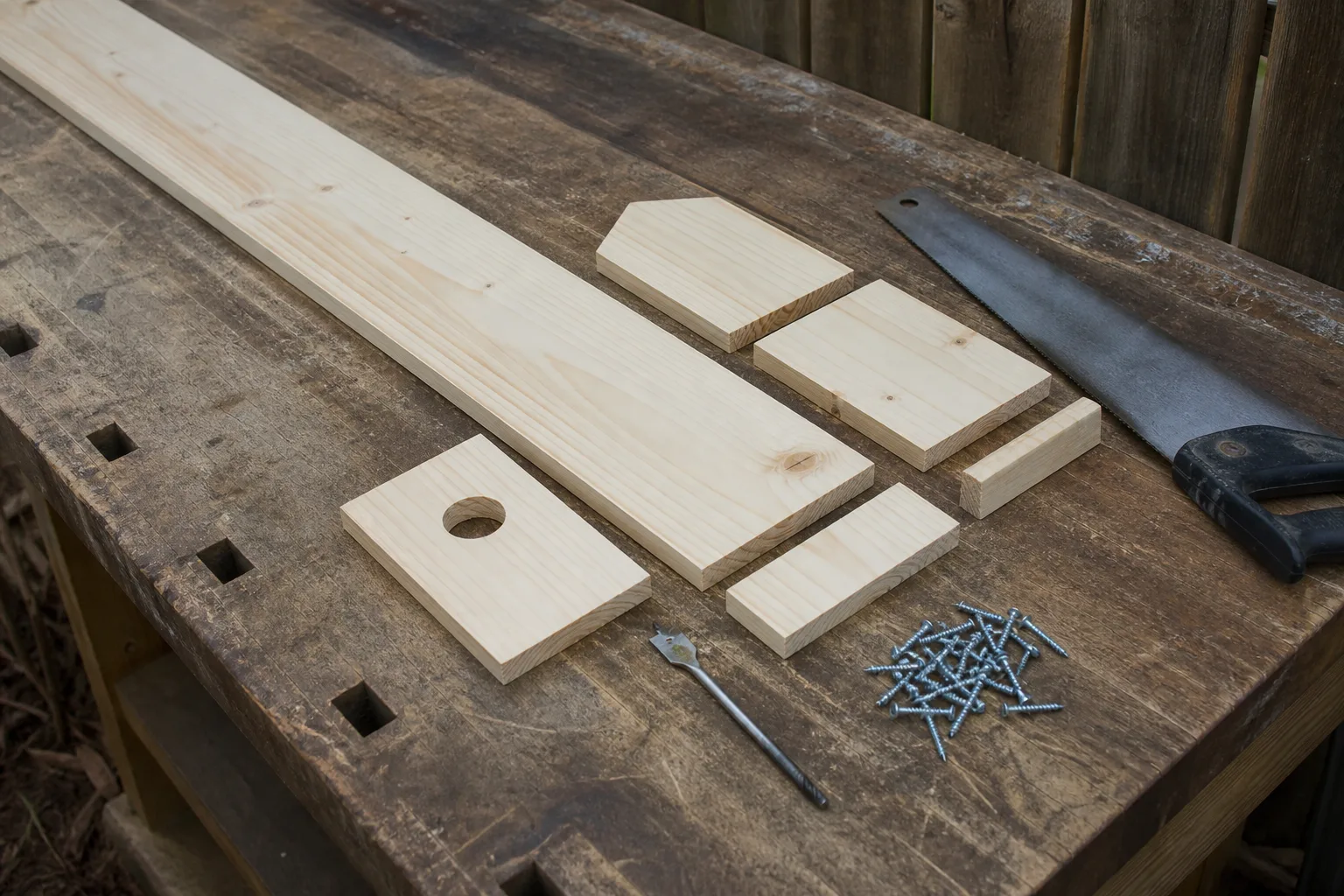
Timing mistakes that can make a good box less useful
Waiting for the first bird to appear is an easy mistake because it seems like the most reliable signal. By then, early residents may already have chosen a territory or cavity. Use local species calendars and install ahead of that activity rather than waiting for a visible nest.
Treating a regional date as a fixed deadline can also mislead. Cornell’s February South and mid-to-late March North windows are broad planning markers, not a forecast for every elevation or species. If a local conservation group gives more specific guidance, use it; if you cannot find a local date, err on the side of installing a safe, species-appropriate box early.
Assuming a birdhouse attracts every bird creates a mismatch between expectations and habitat. Many familiar yard birds nest in shrubs, trees, or open ledges rather than enclosed boxes. A nest box is for cavity nesters, and even among those birds, the right size and setting are selective.
Moving an active box to make it safer after a bird moves in can create more risk than it solves. Plan placement and predator protection before the nesting season; if there is a serious problem, get advice from a qualified local wildlife organization before intervening. A box should also be mounted where you can maintain it safely later, not just where it is easy to admire from indoors.
Cleaning by calendar instead of by activity risks disturbing a second brood, a roosting bird, or dependent young. Check for signs of use from a distance, be patient if the status is unclear, and postpone maintenance until you can confirm the box is vacant. An empty-looking entrance is not proof that no bird is inside.
Conclusion
Put birdhouses out before local nesting begins; in much of the United States, late winter is a practical goal, with Cornell NestWatch suggesting February in the South and mid-to-late March in northern regions. Refine that broad window with the target species’ local calendar, and remember that a birdhouse works only when its size, habitat, mounting, and maintenance fit the bird.
If the season is already underway, a safe box may still help later, but never disturb a house that is active. Once birds finish, clean and inspect only when there is no breeding or roosting activity, then leave the box ready before next year’s first nest-site search. Early preparation, careful placement, and restraint around active nests matter more than a perfect date on the calendar.