How to Grow and Care for a Wild Ginger Plant
Grow Canadian wild ginger as a low shade groundcover with practical planting depth, spacing, watering, seasonal care, propagation, and slug-damage guidance.
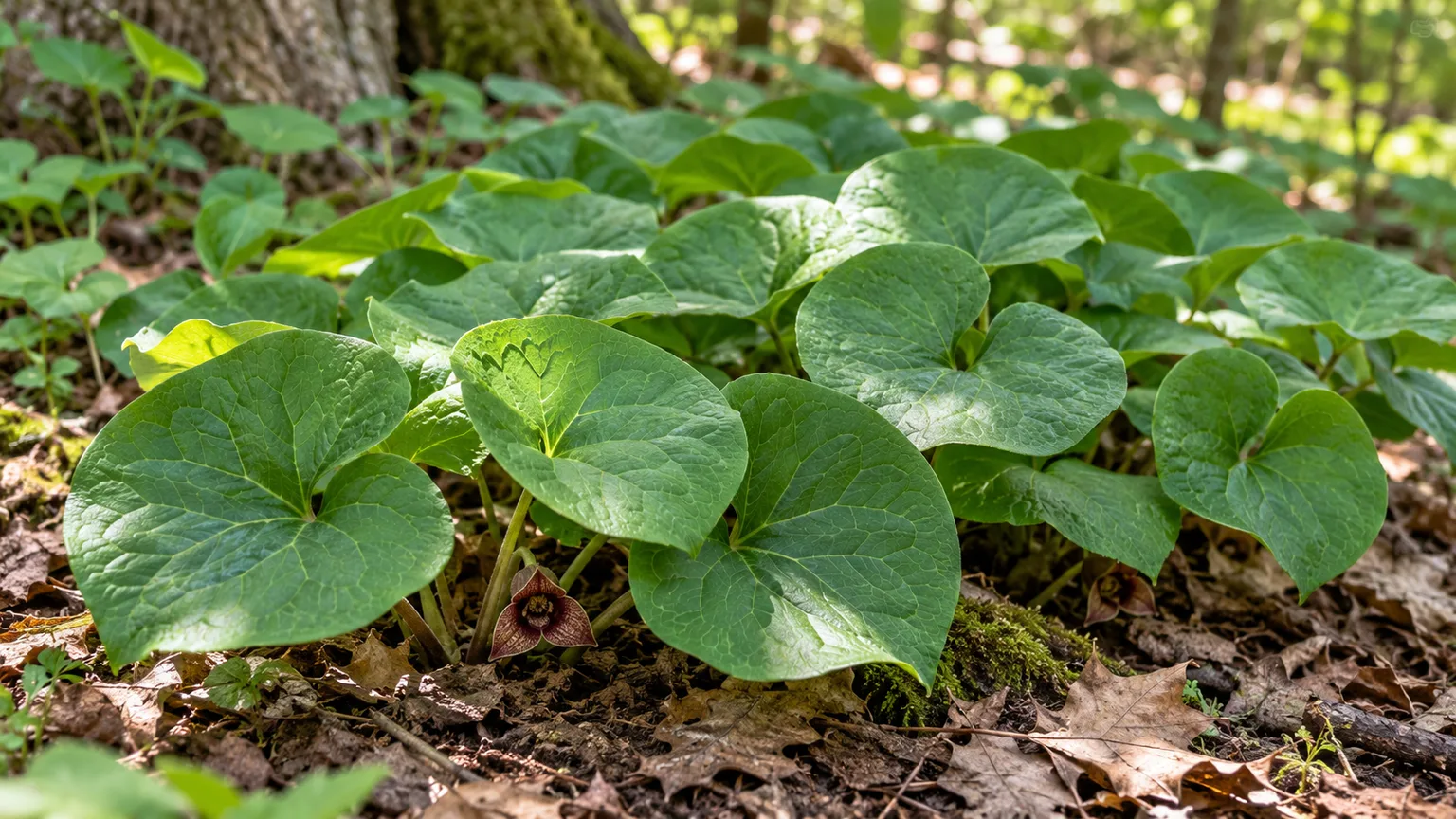
Wild ginger is easiest to grow where a woodland floor stays cool, rich in organic matter, and evenly moist. The plant most gardeners mean is Canadian wild ginger (Asarum canadense), a low, deciduous perennial that spreads by shallow rhizomes and makes a leafy groundcover in shade. It is not related to culinary ginger, and its root should not be eaten.
Start with the site rather than a fertilizer schedule: choose shade, make sure the soil does not dry out beneath tree roots, and plant the rhizome near the soil surface. Once established, wild ginger needs little routine work, but it is not a drought-proof carpet or a showy flowering perennial.
What “Wild Ginger” Means in the Garden
“Wild ginger” can refer to several woodland plants in the genus Asarum and related genus Hexastylis. This guide focuses on Asarum canadense, also sold as Canadian or common wild ginger, a native of eastern North America. It is a deciduous herbaceous perennial in the pipevine family, not a species of culinary ginger (Zingiber officinale). NC State Extension describes it as a shade-loving woodland wildflower with poor drought tolerance and a creeping rhizome.
A typical plant stays roughly 6 to 12 inches tall. Each rhizome sends up paired, broad heart-shaped leaves, often with a soft, downy texture; beneath them, a small brown-purple, cup-shaped flower opens close to the ground in spring. You may need to lift a leaf to find it. The flower is subtle, but the plant has ecological value: North Carolina State lists flies and beetles as pollinators and identifies the foliage as a larval host for the pipevine swallowtail butterfly.
Nursery labels matter because not every “wild ginger” has the same leaf habit, hardiness, or regional fit. European wild ginger (A. europaeum) is evergreen in some climates, while A. canadense dies back seasonally; some plants sold under wild-ginger names belong to Hexastylis. Confirm the botanical name before buying if you want a native eastern North American groundcover. The University of Wisconsin Extension profile and Horticulture magazine’s Canadian wild ginger profile both describe the low, heart-leaved, rhizomatous habit that makes this species useful in shade.
How to Decide Whether It Fits Your Site
Choose Canadian wild ginger when you want a low foliage carpet beneath deciduous trees, along the shaded edge of a border, or in a woodland planting where soil stays moist. It works best as a quiet ground layer among taller shade plants; it will not give you a tall screen, a bright flower display, or an instant replacement for lawn. A young patch takes time to knit together, so plan for a gradual fill rather than a one-season transformation.
The plant spreads by underground rhizomes, so a small planting can widen without being replanted every year. That is a benefit when the goal is to cover bare soil, but it also means you should allow room around paths and neighboring plants. Wisconsin Extension suggests spacing plants 12 to 24 inches apart for a groundcover; closer spacing closes gaps sooner but costs more, while wider spacing makes a slower, more natural patch.
Wild ginger is a strong fit for a cool, shaded yard with leaf-rich soil and regular rainfall. It is a weaker fit for a hot, sunny bed, a dry strip beneath thirsty trees, or a spot where you need the planting to remain precisely within a tiny footprint. If your site is shaded but dry, fix the moisture problem or choose a more drought-tolerant plant instead of expecting shade alone to solve it.
Wild Ginger Care at a Glance
| Care factor | Practical target |
|---|---|
| Botanical name | Asarum canadense |
| Light | Dappled to deep shade; partial shade can work if it stays cool and moist |
| Soil | Humus-rich, consistently moist, and reasonably well-drained; acid to neutral |
| Water | Keep new plants evenly moist; water established patches during extended dry spells |
| Mature size | About 6–12 inches tall, with rhizomes spreading outward over time |
| Spacing | 12–24 inches apart for a groundcover planting |
| Bloom | Small, hidden brown-purple flowers in spring |
| Winter habit | Deciduous; foliage dies back and returns from the rhizome |
| Hardiness | Often listed around USDA Zones 3–7; regional ratings differ, so check local guidance |
| Main risks | Drought stress, hot sun, slug or snail feeding, and toxic plant material if eaten |
The care profile is a starting point, not a promise that every plant will behave identically. Clemson Extension lists Canadian wild ginger as hardy in Zones 3–7, while regional plant references can give narrower ranges; winter hardiness also does not compensate for hot, dry summers. If the plant is new to your area, use local nursery or extension advice to choose a source and planting location.
Choose Shade That Stays Cool
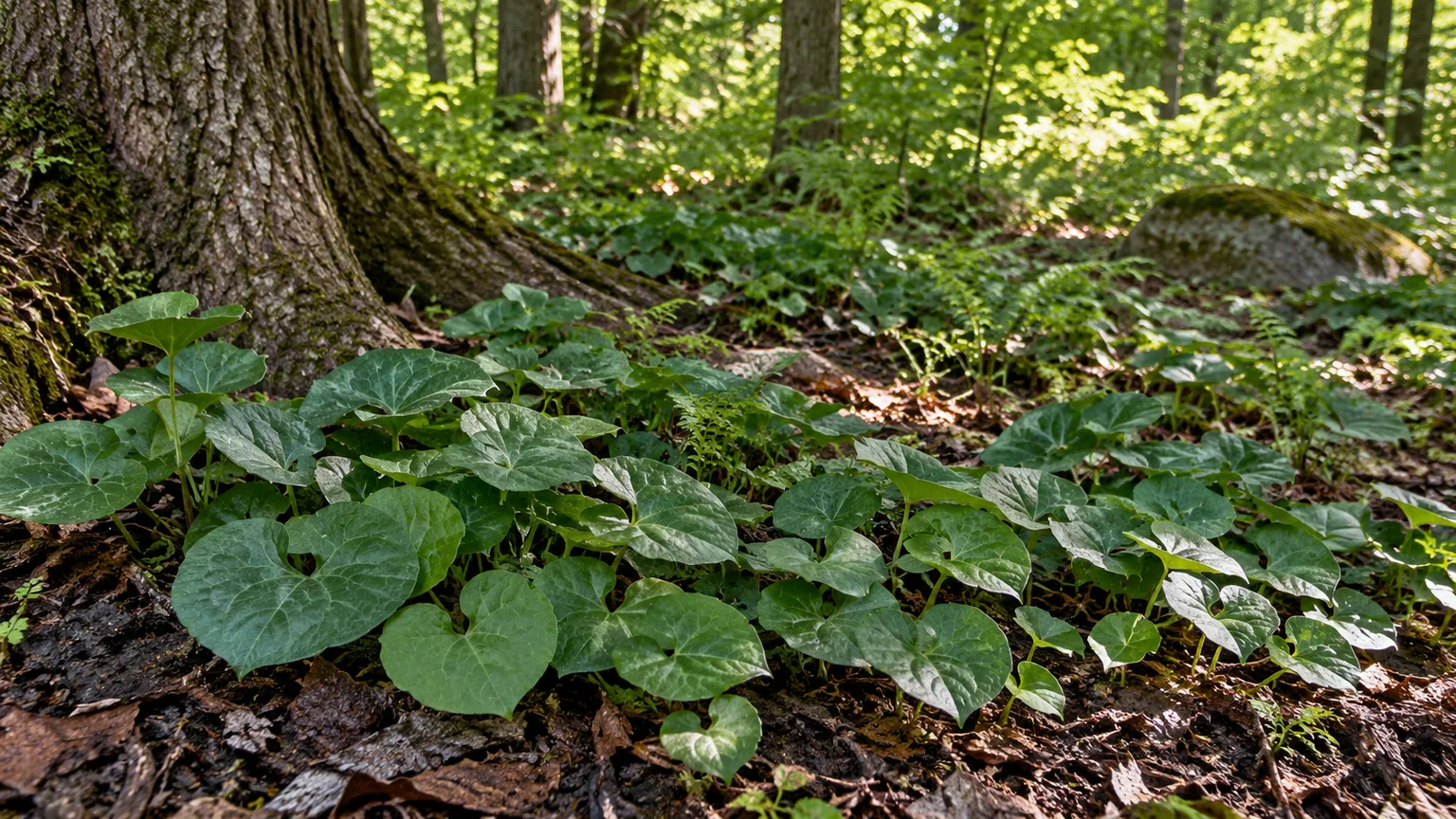
Dappled shade or steady deep shade suits A. canadense. It can tolerate partial shade, but direct hot afternoon sun can scorch its broad leaves and dry the shallow rhizome zone. The RHS plant profile lists full or partial shade, and NC State Extension notes the species’ tolerance for light to deep shade.
Look at the site at different times of day, not just when you visit the garden center. A bed that receives soft morning light and afternoon shade is different from one exposed to reflected heat off a wall or pavement; the latter loses soil moisture faster. If leaves bleach or develop dry brown edges after a sunny spell, check both the light and the soil before assuming the plant needs more fertilizer.
Check the Dry Zone Beneath Trees
The hardest planting location to judge is often directly beneath a mature tree. The canopy creates shade, but the tree’s fine roots may intercept rainfall and draw moisture before the wild ginger can use it. Check the soil a few inches below the mulch after several rainless days: if it is dry, the site is not as moist as it looks from above.
Plant toward the outer edge of the canopy if the area near the trunk is especially dry, and avoid cutting large tree roots to make a planting hole. Water the new groundcover slowly during dry periods and compare the soil near the patch with nearby open soil. A shaded site that remains damp after ordinary rainfall is usually a better starting point than the darkest possible corner.
Build a Moist, Humus-Rich Root Zone
Wild ginger grows best in soil with plenty of organic matter that stays moist without remaining airless. Clemson and Wisconsin Extension describe rich, moist, well-drained soil as the target; the RHS profile lists moist but well-drained soil with an acid or neutral pH. NC State also notes that the plant can tolerate clay and occasionally wet conditions, so heavy texture alone does not rule out a site.
Improve the root zone gently. In an open bed away from major tree roots, work a modest amount of mature compost or leaf mold into the planting area before planting. Under established trees, spread organic matter over the surface instead of digging deeply through the roots. Do not add lime or try to force a precise pH unless a soil test gives you a reason; wild ginger is more likely to struggle from drying or compaction than from a small pH mismatch.
Drainage and moisture are not opposites. The soil should hold enough water for the plant’s shallow rhizomes while still letting excess water move through; a low spot that stays saturated for long periods can weaken roots even though wild ginger tolerates wet soil better than many garden perennials. If water stands after rain, plant on a gently raised area or choose a species adapted to consistently waterlogged ground.
Plant at the Surface, Not Deep in the Hole
Spring is a convenient planting time because new growth makes the plant easy to locate and the soil is often naturally moist. Early fall can also work for nursery-grown plants where the ground remains workable long enough for roots to settle before winter. Avoid transplanting during a heat wave or when the bed is already drought-stressed.
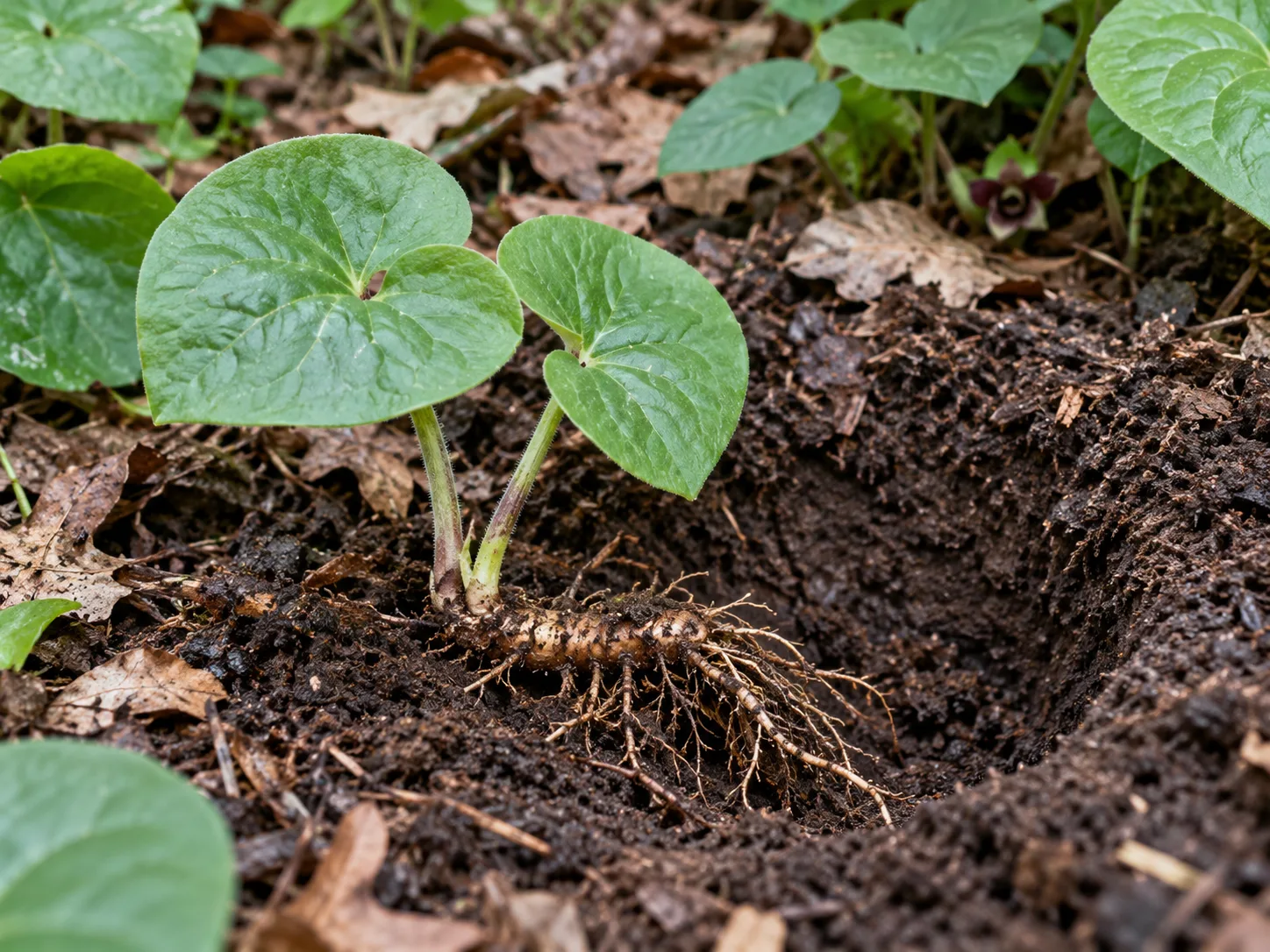
Set a potted plant at the same depth it grew in its nursery pot. For a division, keep the rhizome close to the soil surface and cover it lightly; burying the crown or rhizome deeply can delay shoots and leave the plant struggling to reach the surface. Water slowly after planting so soil settles around the roots without washing the shallow rhizome out of place.
Space plants 12 to 24 inches apart, following the University of Wisconsin Extension’s groundcover guidance. Use the shorter end if you want the patch to fill sooner and the longer end if you are comfortable waiting for a more open woodland look. A thin layer of leaf mold can help the bed retain moisture, but keep it loose and do not pack it over the crown.
Buy nursery-propagated plants or divisions from a reputable source rather than lifting a clump from a natural woodland. Wild populations are part of a local habitat, and digging up a patch can damage roots and nearby plants; ask the seller whether plants were propagated for sale and whether the species is locally appropriate. If you are moving an existing garden clump, take only a small outer division and replant it promptly.
Water Consistently While It Establishes
During the first growing season, keep the root zone evenly moist while the plant builds roots and begins to spread. Water deeply enough to wet the soil around the rootball, then check again before watering; a cool surface can hide dry soil beneath tree roots. The aim is reliable moisture, not a daily splash that wets leaves but never reaches the rhizome.
Once a patch is established, rainfall may be enough in a humid climate or in a naturally moist woodland bed. During a prolonged dry spell, water slowly at soil level and check the bed again a day later to see whether moisture reached the root zone. NC State describes A. canadense as having poor drought tolerance, so regular dry periods are a sign to add water or reconsider the site rather than wait for the foliage to collapse.
Overwatering is still possible in compacted soil. If the bed stays heavy and sour-smelling, stop adding water on a schedule and inspect drainage; wilting in wet soil is not a cue to water more. A simple habit helps: check moisture under the leaf litter, then water only when that layer is beginning to dry and rain is not expected soon.
Keep Mulch Light and Feeding Modest
A woodland floor already has a useful mulch system: fallen leaves break down into organic matter and soften swings in soil moisture. In a tidier garden, a thin covering of shredded leaves or leaf mold can imitate that layer. Leave the growing points visible and avoid piling mulch against the plant’s crown.
Wild ginger is grown mainly for foliage and does not need heavy feeding to flower well. A small spring top-dressing of finished compost is usually enough where the soil is poor; skip routine high-nitrogen fertilizer unless a soil test or clear growth pattern points to a nutrient problem. Excess fertilizer does not correct the basic causes of weak growth—wrong light, competition from tree roots, or dry soil.
Use mulch as a moisture buffer, not a blanket. In a damp garden, thick wet mulch and old leaf piles close to the crown create shelter for slugs and snails, which feed on new leaves. Pulling that material a few inches away during a slug-prone spring can reduce hiding places without stripping the entire woodland bed bare.
Follow the Plant Through the Seasons
In early spring, look for the first paired leaves and small flowers near the soil surface. Resist the urge to rake every leaf away from the patch; loose leaf litter protects the soil and adds organic matter, and aggressive cleanup can disturb emerging growth. If you want to see a flower, lift a leaf gently rather than cutting foliage away.
During spring and early summer, the patch is actively building leaves and rhizomes. Keep new plants moist, check for slug feeding after wet nights, and remove weeds before they become tangled through the spreading stems. The plant’s flowers are inconspicuous and often hidden; it is better valued for its foliage and groundcover role than for a long or showy bloom season.
In summer, watch the soil rather than assuming the shade keeps it wet. A dry patch may slow down or lose foliage, especially under a mature tree or during a hot drought; provide a deep drink when the root zone dries. A brief pause in growth is not the same as a dead plant, so avoid digging up healthy rhizomes simply because the leaves are less vigorous in heat.
By late summer and fall, seed may ripen and the leaves begin their seasonal decline. Mark the patch before foliage disappears if you plan to divide it the following spring. In winter, the aboveground leaves die back; the perennial rhizome overwinters in the soil, so no indoor protection or warm-climate treatment is needed in a suitable growing region.
Divide Rhizomes to Multiply a Patch
Division is the most predictable way to expand a planting. The rhizomes grow close to the soil surface, so a small section at the edge of an established clump can often be lifted with less disturbance than digging out the center. Wisconsin Extension recommends early spring as the best time to divide, before the patch has invested heavily in new growth.
Use this sequence:
- Water the patch the day before if the soil is dry, then locate a healthy outer section with leaves or visible growing points.
- Ease a hand fork into the soil around that section and lift enough to expose the shallow rhizome without pulling through it.
- Cut a small piece that includes a growing point and attached roots, using a clean sharp knife or spade.
- Replant it immediately at the same shallow depth, firm the soil gently, and water it in.
- Keep the division evenly moist while it settles, and leave the parent patch in place to fill its own gap.
Do not chop an entire clump into many tiny fragments just to multiply it quickly. Small divisions have fewer roots and stored resources, so they take longer to recover; a few well-rooted pieces usually establish better than a tray full of bare rhizome scraps. The same shallow-growing habit that makes division convenient also means garden forks and edging tools can damage a patch if you work through it casually.
Seed Propagation Takes More Patience
Wild ginger can be grown from seed, but it is a slower and less predictable route than division. Fresh seed ripens in summer, and Wisconsin Extension explains that it needs a warm, moist period followed by a cold, moist period to overcome dormancy; outdoor sowing in summer or early fall may lead to germination the following spring. The Gardening Know How growing guide also cautions that seed can take up to two years, so do not discard a pot just because it has not sprouted after a few weeks.
Sow seed promptly in a labeled pot of moist, well-drained medium and barely cover it, then leave it outdoors in a protected spot where natural seasonal temperatures can do the dormancy work. Keep the medium moist, not waterlogged, and guard it from animals and weeds. If you need a plant for a defined bed this season, buy a nursery-grown plant or divide an established clump instead of waiting on seed.
Control Spread Without Damaging the Plant
Canadian wild ginger typically spreads slowly to moderately, but the rate depends on moisture, soil, and how long the patch has been established. Clemson Extension describes it as a vigorous rhizomatous groundcover that can spread more quickly in favorable conditions, while the Horticulture profile describes a slow-spreading plant in a shade garden. That variation is useful to remember: do not expect every garden to fill at the same pace.
If you want a more continuous carpet, set plants closer and give them consistent moisture during establishment. If you need a clean boundary, inspect the edge once or twice a season and lift rhizomes that move beyond it; a spade cut at the border can sever a shallow runner before it takes hold on the other side. Avoid cultivating the whole bed because chopping rhizomes into fragments can make the patch harder to manage.
It is usually simpler to design around the mature planting than to keep cutting it back. Leave space between wild ginger and small, slow-growing neighbors, and use stepping stones or a defined edge where people need to walk. In a large woodland bed, the gradual spread is part of the plant’s value; in a narrow strip, a yearly edge check keeps it from crowding its neighbors.
Diagnose Slow Growth and Leaf Damage
Slow spread does not automatically mean the plant is failing. A new planting may spend its first season rooting, and a patch in deep shade may add leaves more slowly than one in a moist, organic-rich bed. Check the sequence before changing care: confirm the botanical name, check whether the rhizome is planted shallowly, look for dry soil under the leaf litter, and note how much hot sun reaches the leaves.
Use the symptom to choose a next step. Scorched or crispy leaf edges after bright weather point toward sun or drought; move a young plant to cooler shade or water the bed if the soil has dried. A patch that sits wet and shows soft, dark rhizome tissue needs better drainage, not more water. If leaves disappear in fall, that is normal seasonal dieback for this deciduous species; mark the area and wait for the spring return before disturbing the soil.
A lack of obvious flowers is also normal. The blooms sit near the ground and hide beneath foliage, so a plant can flower without the gardener seeing it. If the leaves look healthy and the clump is slowly widening, keep conditions steady rather than feeding or dividing it to force a faster result.
Recognize Slug and Snail Feeding
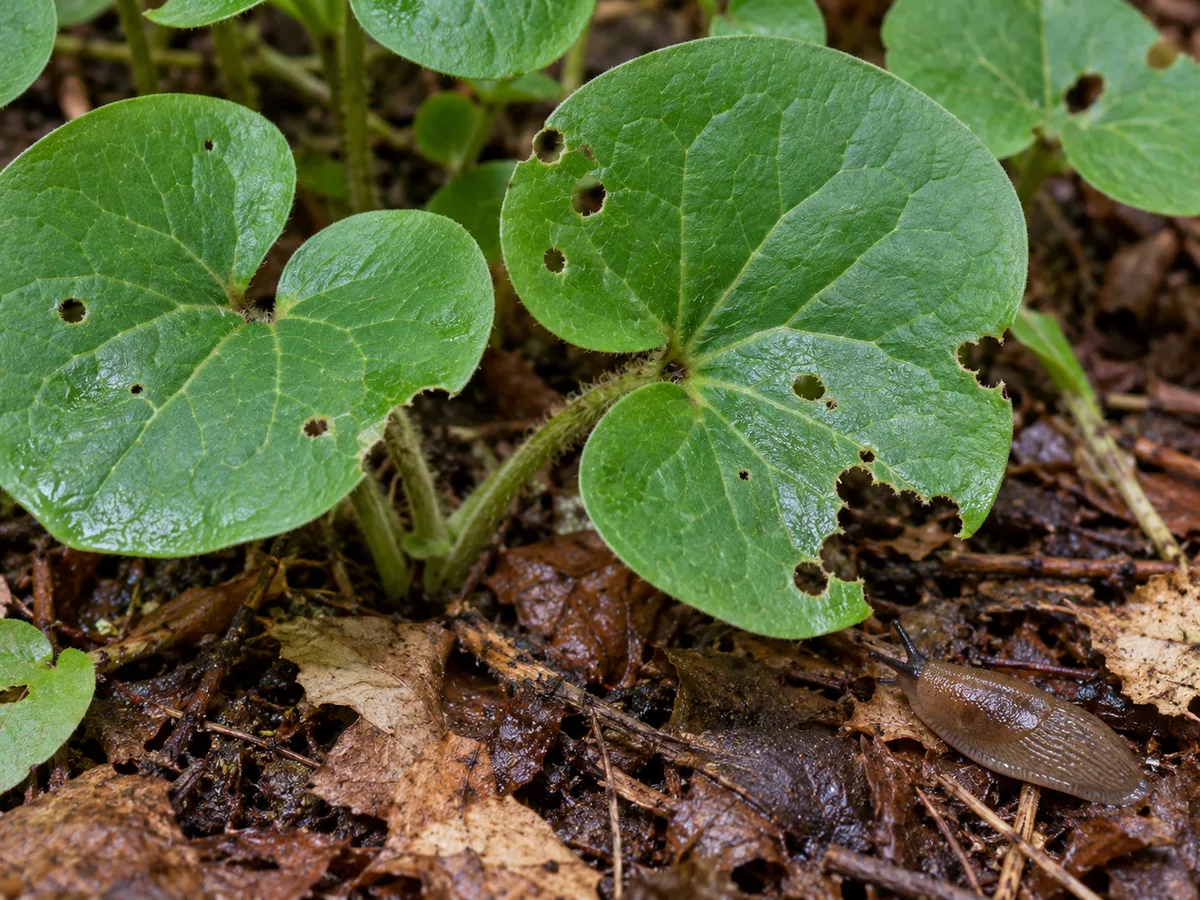
Irregular holes and a nearby slug are clues to inspect wild ginger for nighttime feeding.
Large, irregular holes in new leaves, ragged edges, and a slimy trail on nearby soil point toward slugs or snails. They feed at night and shelter in damp mulch, leaf piles, and containers during the day; Clemson Extension’s wild-ginger factsheet specifically flags early-spring damage on wild ginger. Inspect after dark with a flashlight or check beneath loose debris close to the patch before treating the whole bed.
Start with practical habitat changes: remove only the excess damp litter immediately around the damaged plant, hand-pick visible slugs, and avoid leaving boards or pots beside the crown. Keep enough leaf cover farther out to protect the soil; clearing the entire woodland floor would sacrifice moisture and organic matter that the plant needs. If you consider a pesticide bait, use only a product labeled for the site and follow its directions and precautions; do not assume a product is harmless because it is sold as an organic option.
Keep Wild Ginger Out of the Kitchen
Do not eat Canadian wild ginger or use it as a home remedy. It may smell like culinary ginger, but it is a different plant, and the resemblance is not a safety test. Wisconsin Extension says A. canadense contains aristolochic acid and advises against consumption; NC State Extension identifies the acid as nephrotoxic and carcinogenic and says not to consume any part of the plant.
The evidence is not limited to a warning based on the plant’s name. A published analysis of North American Asarum and Aristolochia rhizomes detected aristolochic acid I in multiple A. canadense accessions and reported highly variable concentrations, reaching 0.037 percent of dry weight (Europe PMC study record). Variable content makes taste, smell, cooking, or folk preparation an unreliable way to judge safety. Keep the plant separate from edible ginger in a garden or kitchen, and prevent children or pets from chewing it.
If someone or an animal eats any part of a wild ginger plant, contact a poison center or veterinarian promptly and provide the plant’s name or a clear photo. Wash tools and hands after dividing rhizomes, and label the planting clearly if edible ginger is also grown nearby. These steps keep an attractive native groundcover from being mistaken for food.
Conclusion
For dependable wild ginger plant care, choose cool shade, keep the shallow rhizomes in humus-rich soil that stays moist, and give new plants time to establish. Use nursery-grown stock, water during dry spells, divide a few outer rhizomes in early spring, and edge the patch only where its gradual spread matters.
Treat the plant as a woodland ornamental, not a culinary substitute. When the site matches its natural preference and the soil remains moist, Asarum canadense rewards patience with a durable low groundcover and spring foliage that returns year after year.