Which Houseplants Should You Keep Away From Each Other?
Which houseplants should you keep away from each other? Learn when light, water, humidity, or pest risks call for separate spots—and when they do not.
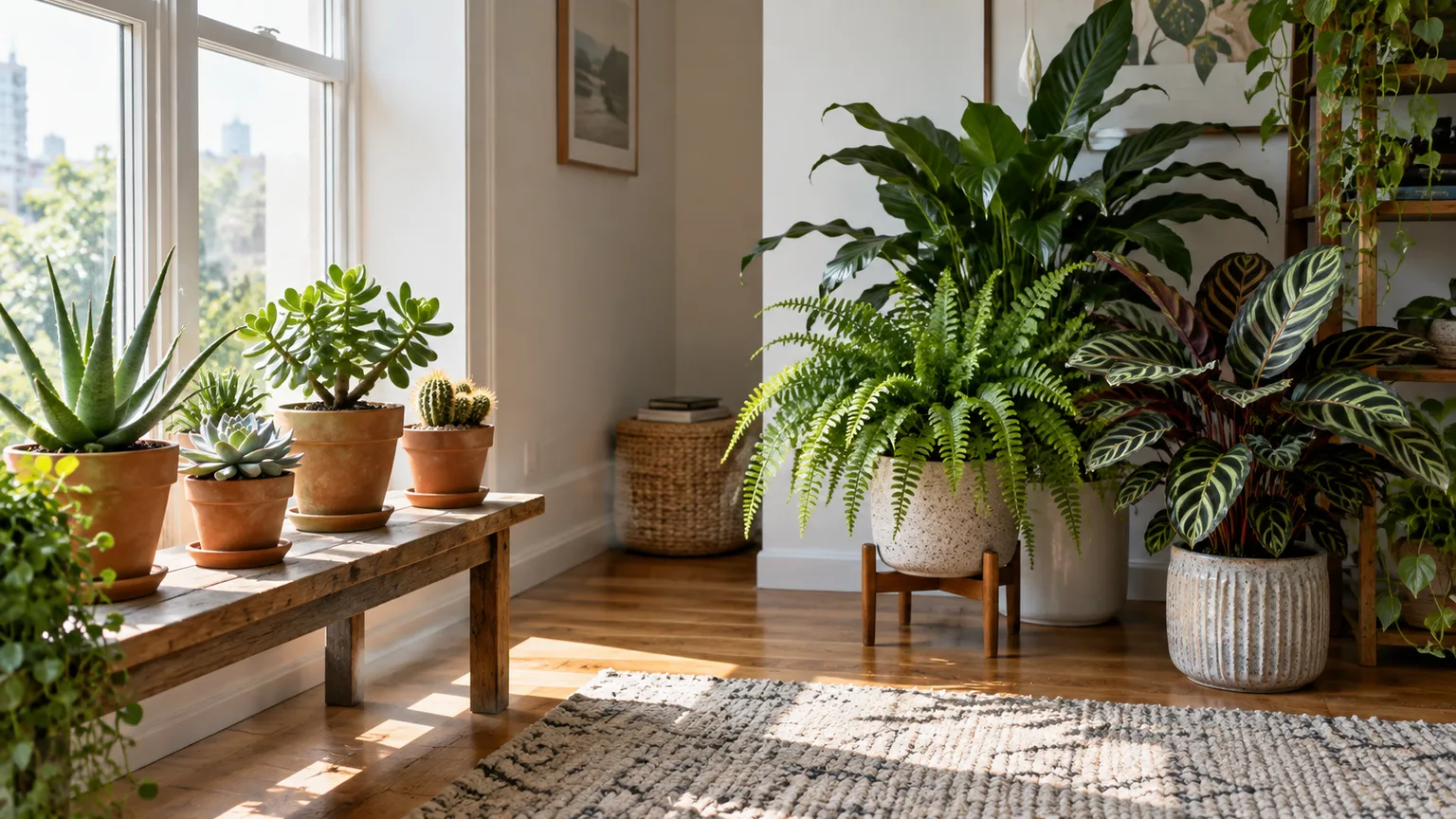
Most houseplants can share a room. The trouble starts when they are packed into one spot and treated as if they need the same light, watering rhythm, humidity, and pest response. “Keep away” usually means give the pots separate care zones—not move one plant to another floor.
Succulents beside a moisture-loving fern, a calathea beside a ZZ plant, and a rex begonia beside a flowering kalanchoe can all be awkward combinations if you water or place them as a unit. An Alocasia near a majesty palm is a different kind of concern: pest monitoring matters when spider mites are present. Those examples are reasons to adjust placement and care, not proof that either plant is harmed simply by being near the other.
The Quick Rule: Separate Care Zones, Not Plant Names
Before you split up a display, ask what the actual conflict is. Does one plant need bright direct light while its neighbor scorches there? Does one need its mix to dry substantially while the other declines when it dries? Is an active pest making it hard to protect nearby foliage? If none of those things is true, the plants may be perfectly comfortable on the same shelf.
Two pots in the same room still have separate root systems and separate potting mixes. That lets you water each when its own mix reaches the right moisture level. The harder cases arise when plants share a planter, a self-watering reservoir, a wet pebble tray, a fixed watering day, or a cramped spot where their leaves overlap and cannot dry or be inspected easily.
Think in terms of light first, root-zone moisture second, humidity and airflow third, and pests whenever you see evidence of them. A sunny window can contain several microclimates: the bright sill, a spot a few feet back, and a humid corner beyond the direct sun. Matching a plant to one of those conditions is more reliable than following a universal list of incompatible species.
Pairings That Can Be Hard to Manage Together
The pairings below are useful warnings because their needs can pull in different directions. They are not automatic bans. Pot size, growing mix, cultivar, season, and the distance from a window can change how quickly each plant dries and what light it actually receives.
Succulents and Moisture-Loving Ferns
Many common succulents are adapted to bright light and periods when their potting mix dries; many tropical ferns prefer gentler light, more even moisture, or more humid air. Better Homes & Gardens describes the contrast between desert plants such as cacti and succulents, which need dry intervals, and tropical foliage plants that use water more readily; it also notes that ferns are among the plants that can benefit from higher humidity. Better Homes & Gardens’ watering guide
That difference matters most when the plants share a watering routine or a very humid, dim position. A fern that is allowed to dry as far as an echeveria may develop crisp fronds, while a succulent kept continuously damp to satisfy a fern can lose roots. Increasing humidity to help the fern does not make low light appropriate for a sun-hungry succulent.
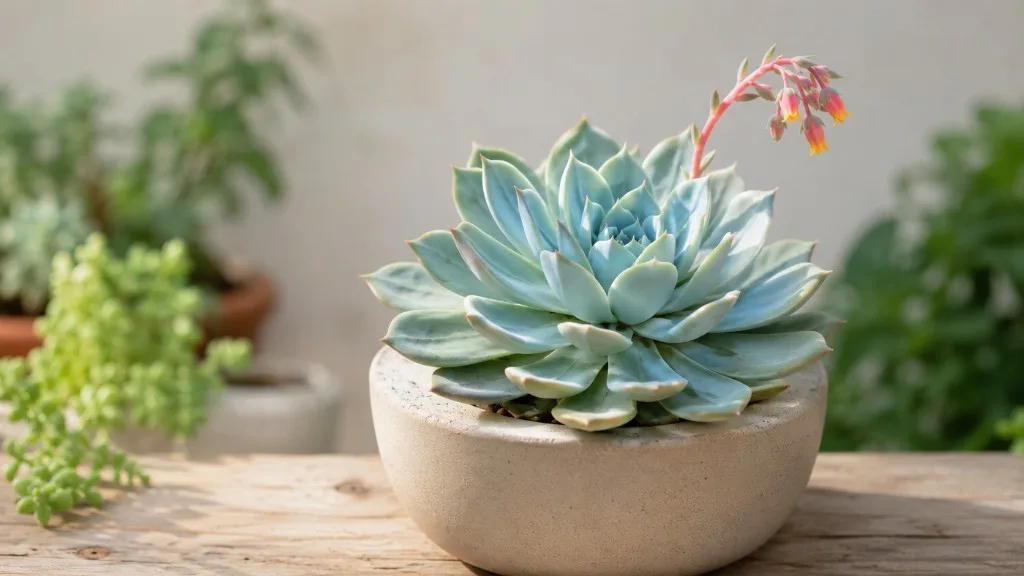
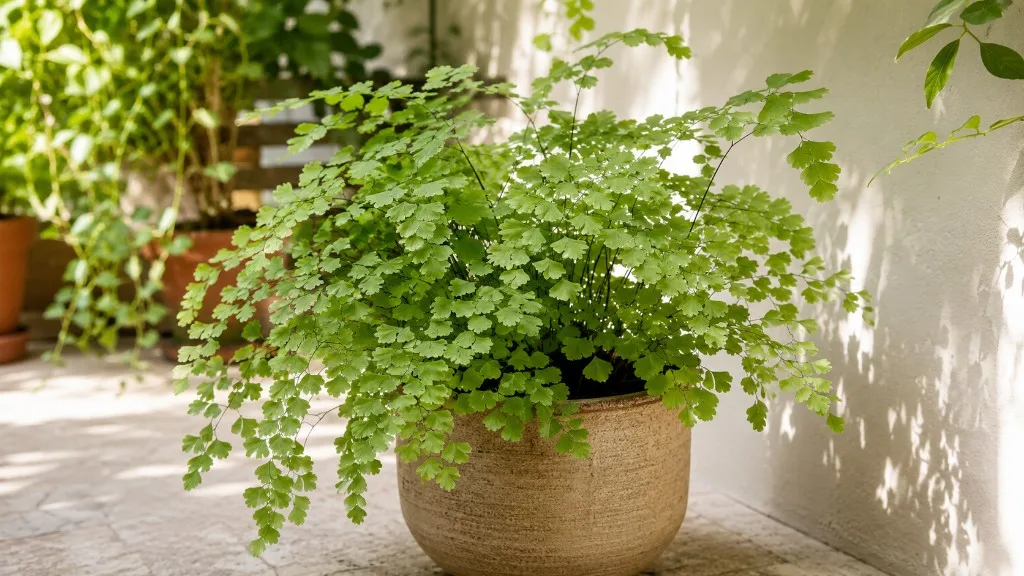
They can still share a room if the succulent gets the brighter, drier position and the fern sits in a protected spot with its own watering checks. A bathroom shelf with dim light and frequent splashing is a poor compromise for both; two nearby but distinct positions are often easier than trying to make one spot suit opposite preferences.
Calatheas and ZZ Plants
Calatheas, now often classified in the genus Goeppertia, generally prefer lower or medium indoor light, consistently moist but not saturated soil, and higher humidity. Costa Farms gives that same practical guidance for calatheas and warns that prolonged dryness can brown the leaf edges. Costa Farms’ Calathea profile
ZZ plants store water in thick rhizomes and are usually allowed to dry between waterings. Gardening Know How describes the ZZ plant as drought-tolerant and comfortable in lower light, with slower growth there. Gardening Know How’s houseplant overview A low-light corner may therefore suit both plants, but it does not make their root-zone moisture needs identical.
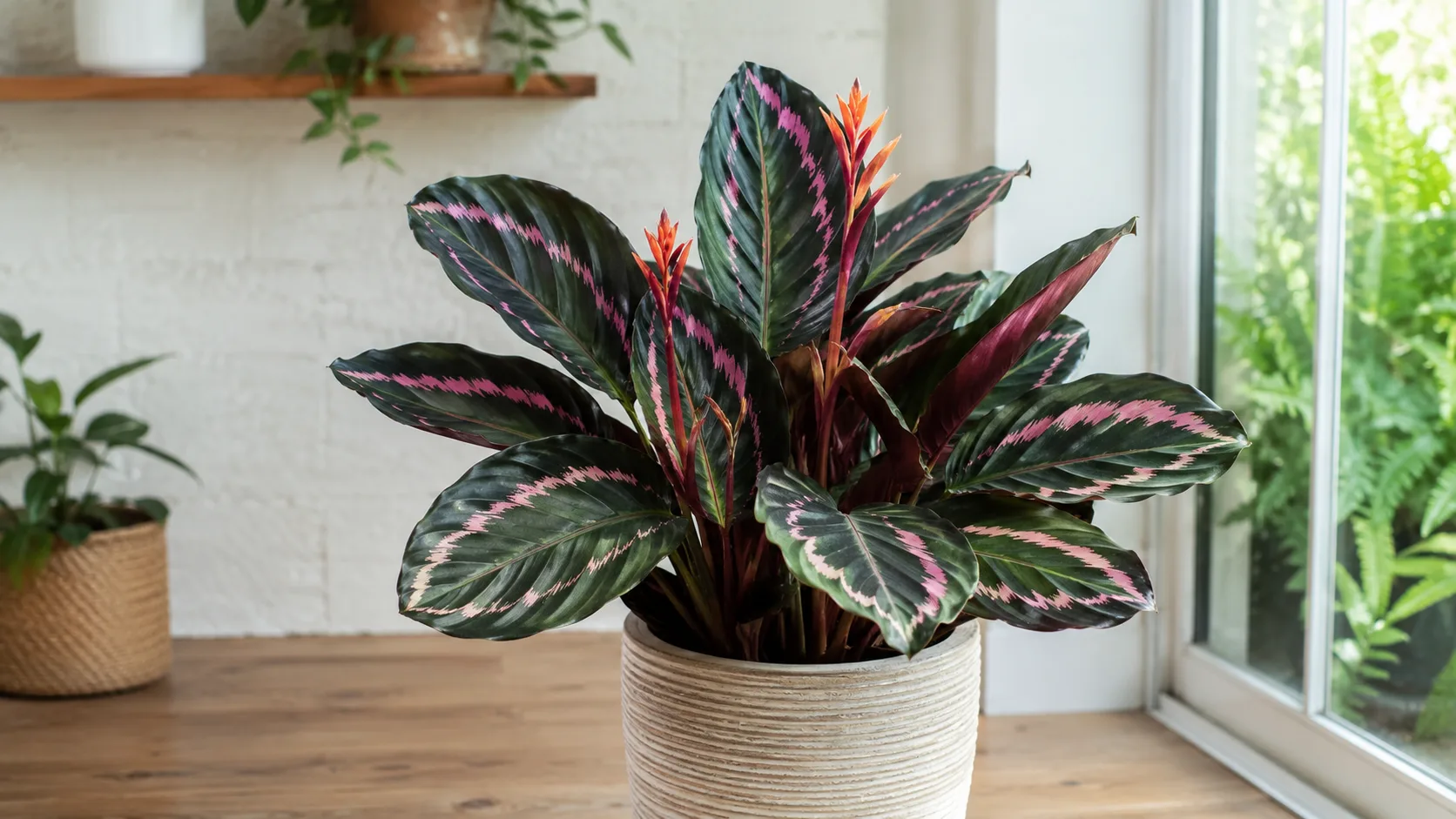
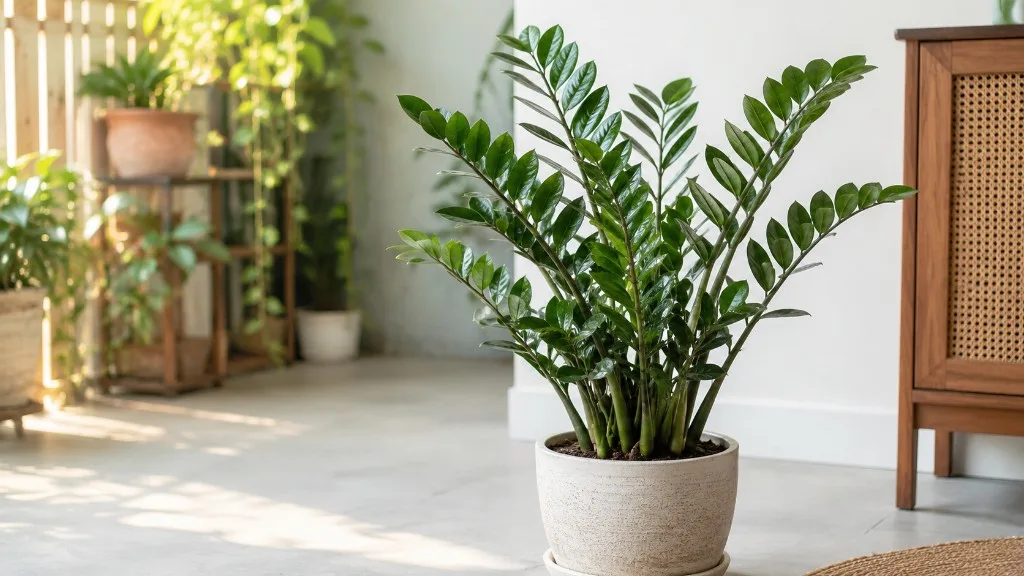
The mistake is to water both whenever the calathea’s surface looks dry or to keep the ZZ’s mix damp because its leaves stand beside a humid plant. Keep the pots separate, check each mix at the depth that matters for that pot, and let the ZZ dry more fully. If you want the two together for their contrasting foliage, put the calathea closer to the humidifier and the ZZ just outside its direct mist.
Rex Begonias and Flowering Kalanchoe
This is a particularly clear example of how different root-zone preferences can hide behind plants that both look good in a bright room. NC State Extension describes rex begonias as preferring bright indirect light, moist well-drained soil, and high humidity, while warning against misting and overwatering. It describes florist kalanchoe as a drought-tolerant succulent that does best when its well-drained mix dries between thorough waterings. NC State Extension’s Rex Begonia profile NC State Extension’s Kalanchoe profile
The light conditions may overlap more than the watering routines do. A bright room with filtered light can suit both; the problem is trying to keep both pots evenly moist, or moving the begonia to a dry, sunny sill simply because the kalanchoe is flowering there.
Keep each in its own drained pot and water by the condition of its own mix. The kalanchoe’s fleshy leaves and dry-down preference do not make it a watering model for the begonia. Likewise, the begonia’s preference for humid air does not mean the kalanchoe should sit in wet soil. If you cannot check two pots individually, place them in separate care groups or mark them with distinct watering reminders.
Alocasia and Majesty Palms When Pests Are Active
The caution here is pest movement, not a permanent incompatibility between an Alocasia and a palm. NC State’s Plant Toolbox lists Alocasia as prone to spider mites. UC IPM explains that spider mites feed on many kinds of plants, damage is more severe in hot, dusty conditions and on water-stressed plants, and females can disperse to other plants on air currents when a host becomes depleted. NC State Extension’s Alocasia profile UC IPM’s spider mite guidance
If you find webbing or fine pale stippling on an Alocasia, temporarily move it away from nearby foliage and inspect the leaves of surrounding plants—including palms. Do not assume every leaf mark is a mite, and do not spray every neighbor “just in case.” UC IPM recommends confirming mites before treatment because old damage can remain after mites have left.

Leave enough room between larger leaves to examine their undersides, and avoid letting infested foliage brush healthy plants while you move the pot. Once the affected plant is clear and nearby plants have been checked, there is no general rule that an Alocasia must live in a separate room from a palm forever.
When a Pairing Looks Wrong but Can Grow Fine
Not every “bad pairing” is a plant-health problem. A combination can clash visually, take up too much room, or make care inconvenient without one species actually damaging the other. Separate those design judgments from differences that affect growth.
Fittonia and Philodendron: A Visual Mismatch Is Not a Care Problem
Fittonia and a brightly colored philodendron may not be a color combination every collector likes. That is a matter of taste. The practical question is whether the exact plants can share the same light and whether you can meet each pot’s water needs separately.
Fittonia tends to wilt conspicuously when its mix dries too far, while philodendron varieties vary widely in leaf size, light tolerance, and drying speed. A small Fittonia in a warm, bright room may need checking sooner than a larger philodendron in a heavier pot. Place them together only if the position suits both; do not keep the philodendron in a dim, saturated corner simply to preserve a color pairing.
Why Sharing a Room Does Not Mean Sharing a Watering Schedule
Water use depends on more than the plant name. Light intensity, temperature, pot diameter, drainage, root mass, substrate, and season all affect how quickly a pot dries. Better Homes & Gardens recommends checking the mix rather than relying on a rigid calendar; its guide suggests testing about an inch below the surface and waiting if the mix is still damp. Better Homes & Gardens’ watering guide
That check is a starting point, not a universal depth for every container. A shallow succulent pot and a deep calathea pot do not dry evenly from top to bottom. A moisture meter can also give misleading readings in coarse mixes or when its probe only samples one location. Compare what the plant needs with the feel and weight of its own pot, and check more than one point when the container is large.
When plants are grouped, water them one at a time. Do not pour a measured amount into every pot because the calendar says “watering day.” If a plant needs a deeper dry-down, move its pot out of the way while you water nearby plants; never let its runoff sit in a shared tray. If a plant needs consistently moist mix, check it more often instead of keeping every pot in the group damp.
Season changes the rhythm too. Short winter days slow growth for many indoor plants, while heating can dry the air and speed moisture loss from foliage. A pot can dry more slowly in cool, dim winter conditions even as a heater makes the room feel dry. Check the pot, not the air alone, before adding water.
Make Separate Microclimates Inside One Room
You do not need a greenhouse with separate climate rooms. A few feet of distance, a change in window exposure, and control over which pots sit near a humidifier can create useful differences. The aim is not to engineer perfect humidity; it is to avoid making one group’s conditions needlessly wrong for another.
Build a Bright, Drier Zone
Put plants that need the brightest position near the window, while watching for harsh midday or afternoon sun through glass. Succulents and kalanchoe often fit this zone if the light is strong enough and their pots drain freely. The brightest spot is not always the hottest one: glass, radiators, and summer sun can overheat a pot or scorch leaves, so check the plant after moving it and acclimate it gradually.
Keep humidity trays, wet pebble dishes, and humidifier output away from plants that need their mix to dry. A pebble tray does not change a whole room’s humidity in a controlled way, and its water should never wick into a pot without intention. If you use a humidifier, point the plume toward the humidity-loving group rather than across an entire shelf.
Build an Indirect-Light, Higher-Humidity Zone
Calatheas, rex begonias, and some ferns can share a protected spot with bright indirect light and more humid air, provided their roots are not treated as identical. Costa Farms notes that calatheas favor abundant humidity and moist—not saturated—soil; NC State Extension describes rex begonias as humidity-loving but cautions against misting and overwatering. Costa Farms’ Calathea profile NC State Extension’s Rex Begonia profile
Use a small room humidifier if dry indoor air is clearly causing a problem, then measure the air near the leaves with a hygrometer. A humidifier across the room may not affect the shelf much, while direct mist on leaves can leave surfaces wet without correcting the root-zone problem. Leave gaps between pots so air can move around foliage and so you can turn each container to inspect it.
Do not try to force every plant into a high-humidity display. Succulents can stay in the same room as tropical plants, but place them outside the dampest pocket and keep their mix on its own dry-down cycle. If a plant only thrives when conditions are far outside the rest of the room’s range, a separate room or enclosed plant cabinet may be a better solution.
Leave Space to Inspect Leaves and Contain Problems
There is no single number of inches that makes every houseplant grouping safe. A compact Fittonia can sit close to another small pot without blocking much airflow; a broad Alocasia leaf pressed against a palm frond can hide pest activity and make both plants awkward to water. Use enough clearance to reach the soil, rotate the pot, and see the undersides of leaves.
Leaves touching briefly is not automatically harmful. Constantly compressed or tangled foliage is less useful: it can stay wet longer after watering, rub against neighboring leaves, and conceal early signs of mites or scale. Raise trailing plants, stagger pot heights, or turn leaves away from one another before you move an otherwise healthy plant to another room.
A little open space also makes maintenance more accurate. You can lift one pot to drain it, isolate one plant if a pest appears, and water without splashing the neighboring foliage. Place saucers so each pot drains independently and empty standing runoff rather than treating a shared tray as a reservoir for every plant.
Use This Four-Step Test Before Grouping Plants
- Compare the light where the leaves will sit. “Bright room” is not a measurement. Observe direct sun and shadows at the actual shelf during the hours you are home, then place the brighter-light plant closest to the window and move shade-tolerant plants back.
- Compare the desired dry-down. Look up each plant’s needs and note whether it wants evenly moist mix, a partial dry-down, or a longer dry interval. Keep them in separate containers and decide when to water each by checking its own mix.
- Compare the air they need. If one plant benefits from higher humidity, cluster compatible tropical foliage near a humidifier or in a suitable enclosed setup. Do not let the humidifier’s wet plume or a saturated tray reach a plant that prefers a drier environment.
- Check health and access. Inspect new arrivals and the undersides of leaves, then leave room to see stems and leaf joints. If a plant has confirmed pests, isolate it and inspect neighboring foliage before deciding whether to move the whole collection.
If two plants pass the first three checks but the grouping is difficult to water or inspect, they are still poor neighbors for your routine. Ease of care matters: a theoretically compatible pairing that you cannot reach is more likely to be neglected than one arranged with a clear path to each pot.
Mistakes That Make Mismatched Care Harder
The most common mistake is treating grouping advice as a fixed blacklist. Plant names do not tell you the light at your window, how airy the potting mix is, or whether the room becomes dry in winter. Use the pairings as prompts to compare conditions, not as a reason to discard a healthy plant or rearrange an entire collection at once.
Another common error is to split the difference. Keeping a succulent slightly too wet and a fern slightly too dry does not create a neutral compromise; it can leave both below their preferred conditions. Give them separate pots and positions instead of trying to invent one middle setting.
Do not mist every plant to raise humidity or to prevent spider mites. Garden Design recommends higher room humidity as a preventive measure; UC IPM emphasizes reducing plant stress, monitoring, and confirming mites before treatment. Garden Design’s spider mite guide UC IPM’s spider mite guidance Those recommendations are not a guarantee: humidity can help some tropical plants, but it should not override species needs, and unnecessary leaf wetting can create separate disease problems.
Finally, do not crowd pots until foliage becomes a wall. A display can look lush while making it impossible to water the back row, spot pests, or remove one sick plant without brushing it against all the others. A slightly looser arrangement is often easier to maintain and looks better as each plant grows.
A Practical Layout for a Small Home
Start with the window, not with the plant stand. Put the light-hungry plants on the sill or closest shelf, then place plants that prefer indirect light farther back. Create a second cluster for humidity-loving foliage near a humidifier if needed, but leave the ZZ plant and succulents beyond the humidifier’s direct output.
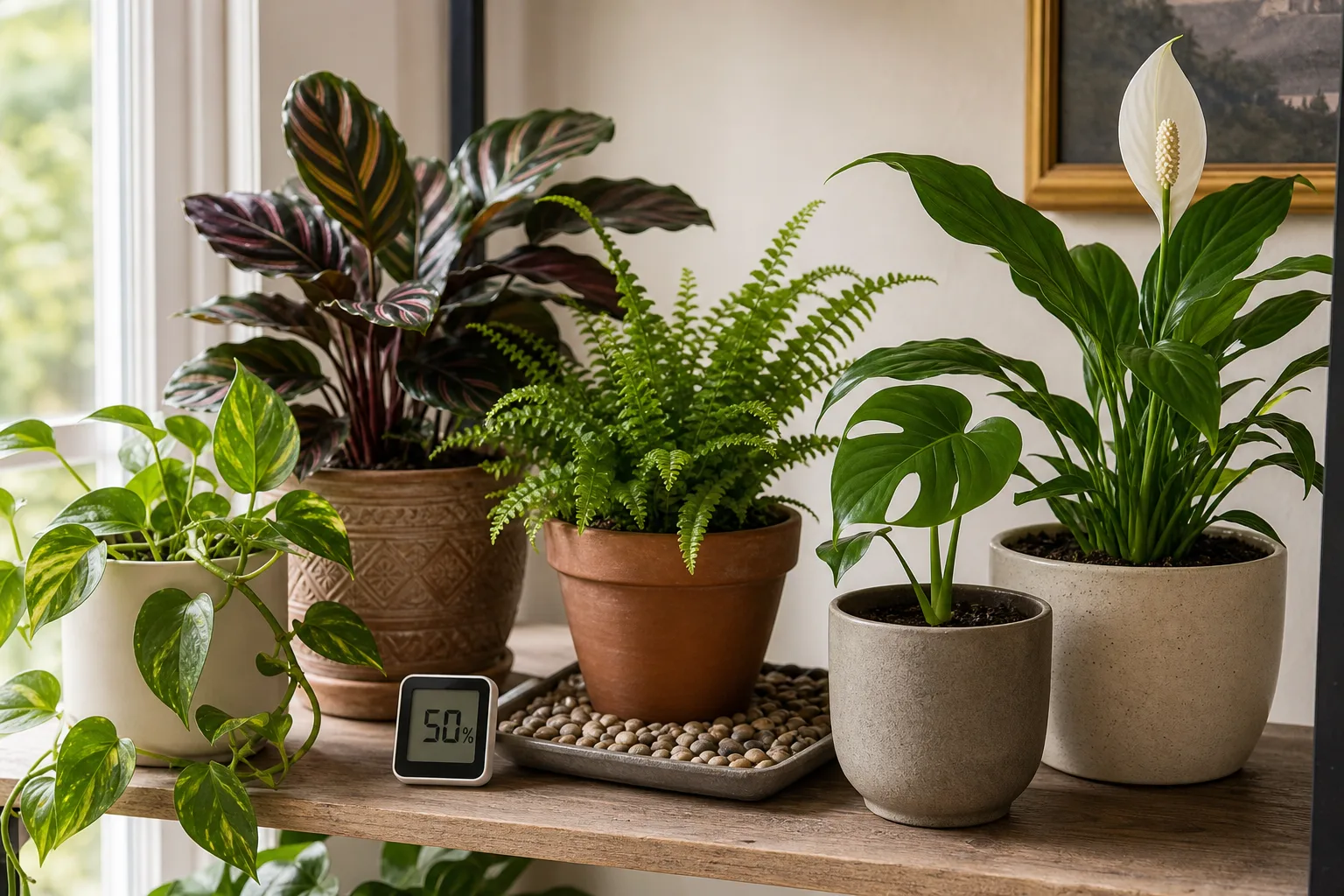
Use saucers that lift out, and keep each pot’s runoff separate. Put the thirstier plants where they are easiest to reach because they may need more frequent checks. Keep slow-drying pots away from dark corners where water use drops, and do not let tall foliage shade a small plant that needs brighter light.
For a one-window collection, a simple three-part layout works: bright end for succulents and flowering kalanchoe; middle shelf for plants that tolerate bright indirect light; and the side of the room with a humidifier for calatheas, rex begonias, and ferns. This is only a starting arrangement. A north-facing window, a hot west-facing window, and a grow-light shelf each create different conditions, so watch the plants for a week or two after moving them.
Label watering needs in a way that helps the person actually caring for the plants. A discreet color dot under the pot, a note in a plant app, or a tag that says “check when top inch dries” is more useful than one weekly reminder to water every plant. If someone else waters while you travel, group by task only when the plants truly share a dry-down pattern.
Conclusion
Keep plants apart when one shared spot forces a poor light or humidity compromise, when you cannot water each pot according to its own mix, or when a confirmed pest needs isolation. Succulents and ferns, calatheas and ZZ plants, and rex begonias and kalanchoe often need separate care zones even if they can remain in the same room.
For most healthy plants, space and individual care matter more than distance. Start by checking light at the leaf level, then compare each pot’s dry-down, humidity needs, and pest status. Move only the plants whose conditions actually conflict, and leave enough room to inspect and water the rest.