Should You Plant Bamboo in Your Yard? Read This First
Before planting bamboo in your yard, check local rules, identify the rhizome type, plan containment, and compare lower-maintenance privacy alternatives.
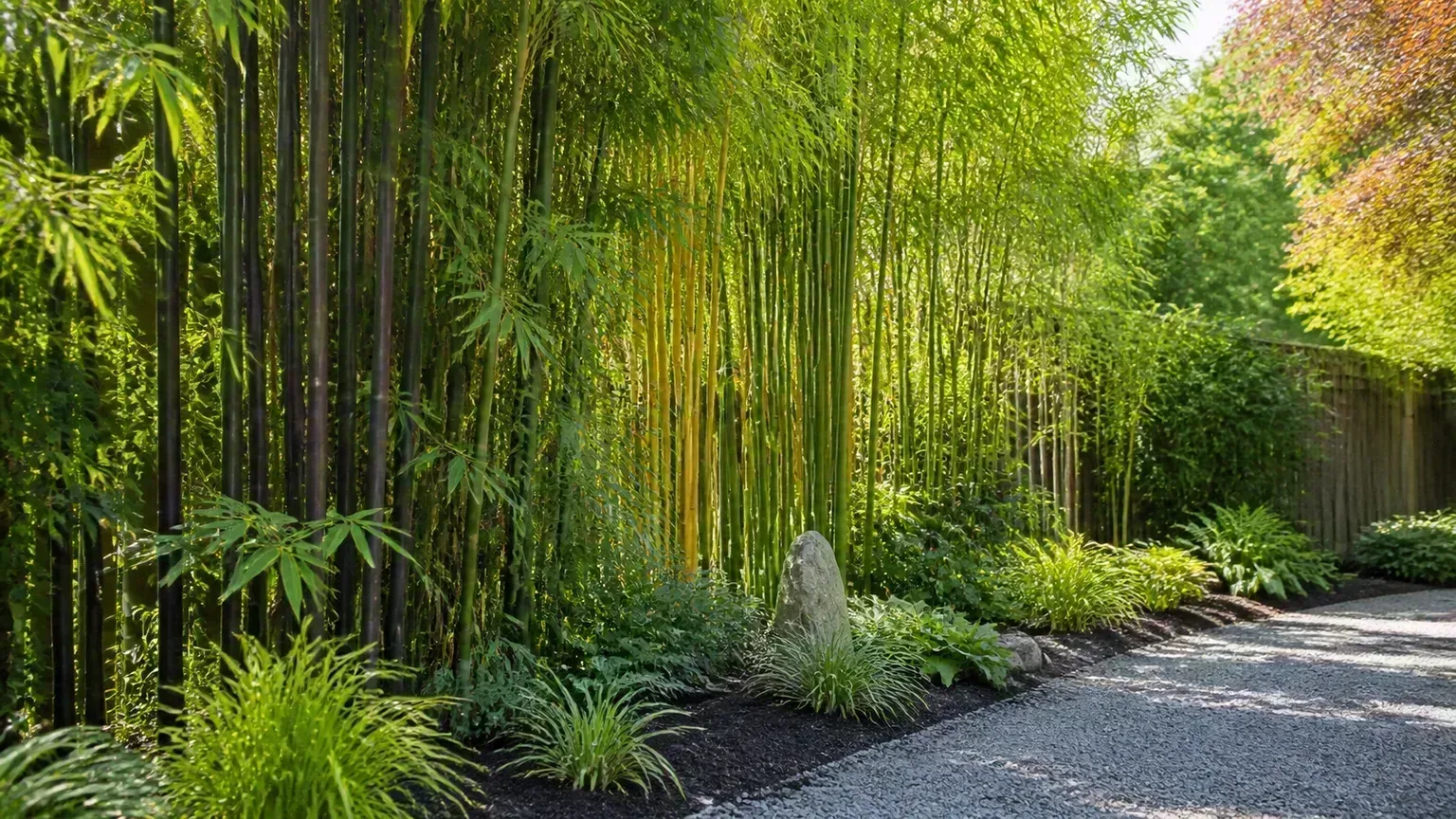
If you want a fast privacy screen, bamboo looks almost too good to pass up. It is tall, evergreen in many climates, visually dense, and capable of filling an empty boundary much faster than most shrubs.
The catch is that the visible canes are only half the plant. The more important half is underground. Many bamboos spread through horizontal rhizomes—modified stems that store energy and send up new shoots—so a planting that looks tidy in year one can become a recurring boundary, lawn, and removal problem later.
That does not mean every bamboo deserves a blanket ban. The crucial question is whether you are buying a verified running bamboo or a verified clumping bamboo, whether your local rules allow it, and whether the site can support the mature plant plus its containment system. If the seller cannot answer those questions clearly, do not plant it in the ground.
The short answer: fast privacy is not free privacy
Experts warn against yard bamboo because its speed is also its liability. A fast-growing screen does not only produce taller canes; in running types, it can also produce more underground growth to watch, redirect, cut, and eventually remove.
The Alabama Cooperative Extension System describes groves as connected systems of culms and rhizomes and notes that established bamboo can be difficult to control. Its guidance also distinguishes clumping bamboo, which produces little horizontal rhizome growth, from running bamboo, whose rhizomes travel outward and send up multiple culms. That distinction is more useful than a generic label such as “bamboo” or “noninvasive.”
The practical trade-off is simple: bamboo can solve a visual problem quickly, but it can create a management obligation that lasts as long as the planting does. A small yard, a shared fence, a paved edge, a drainage line, or a gardener who wants low maintenance all make that trade-off less attractive.
The bamboo decision starts underground
When you stand at a nursery, you see canes, leaves, and a pot. The decision you need to make concerns the plant’s rhizome architecture, mature width, cold tolerance, and behavior at the edge of your property.
Running vs. clumping bamboo
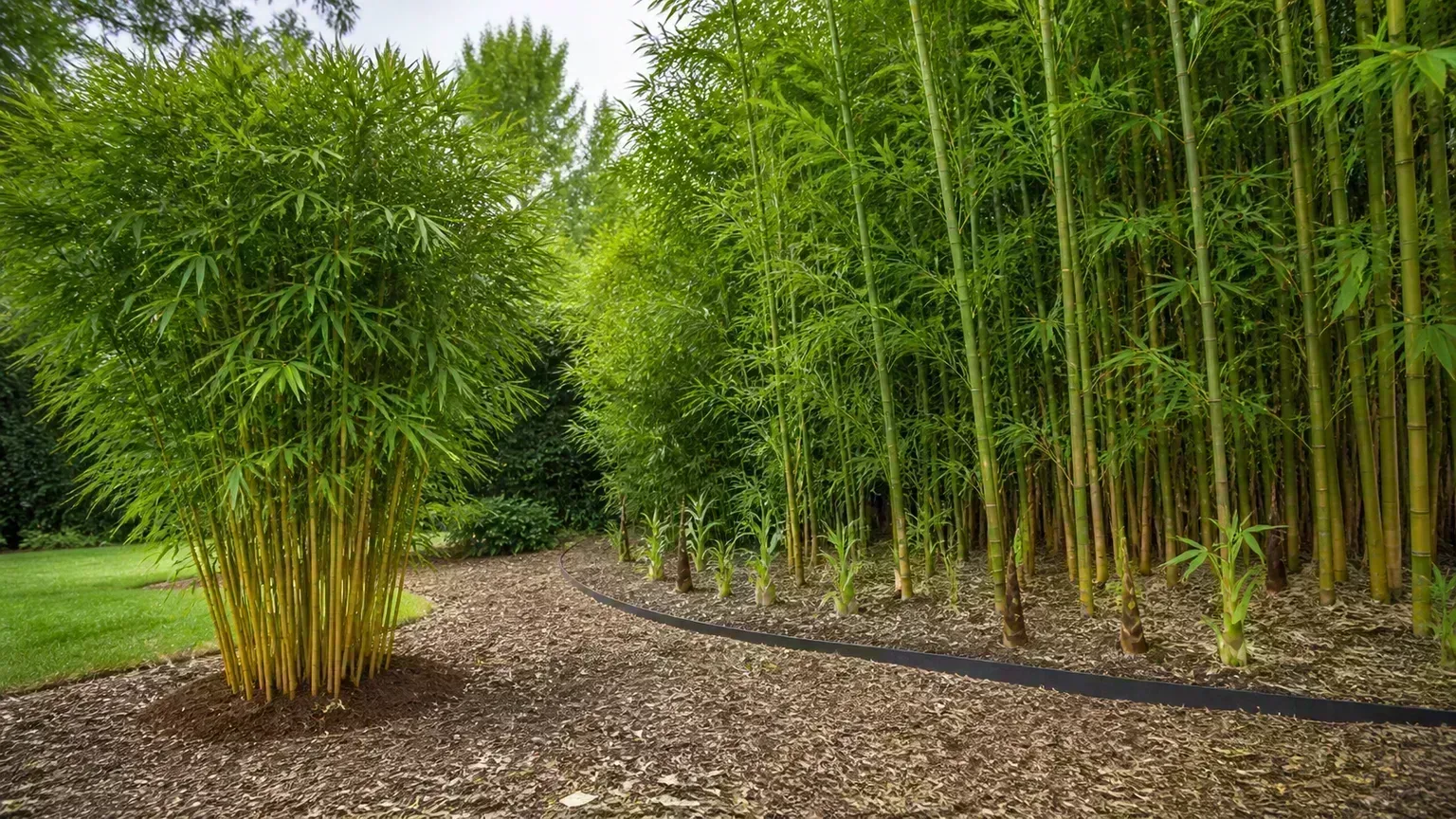
Running bamboo sends rhizomes horizontally before turning upward into new shoots. The rhizomes can travel in several directions at once, and new canes may appear away from the original clump. Many species in the genus Phyllostachys, including golden bamboo, are running types that need serious containment in residential landscapes.
Clumping bamboo produces short rhizomes that turn upward near the parent plant, creating a denser clump with much less lateral spread. Missouri Botanical Garden describes clumpers as generally expanding only a few inches per year, while running types can send rhizomes far from the parent. Clumping is the lower-risk category, not a promise that the plant will stay permanently inside a tiny circle.
Do not rely on common names. “Golden bamboo,” “black bamboo,” “timber bamboo,” and even “privacy bamboo” can refer to plants with very different mature sizes and growth habits. Ask for the botanical name, confirm whether it is running or clumping, and look up that exact plant through a university extension service or a local botanical garden before you dig.
Five reasons yard bamboo becomes a problem
The strongest case against bamboo is not that it grows. It is that the growth happens in ways a first-time buyer may not notice until the planting has crossed an edge.
Rhizomes travel before the screen looks full
Aboveground growth can give you a false sense of control. A young grove may occupy only a few feet while its rhizomes are exploring beyond the visible canes. University of Georgia Cooperative Extension guidance says running-bamboo rhizomes can grow up to about 5 feet in a year and that groves can double in size annually under suitable conditions. That is a planning warning, not a universal growth guarantee: climate, species, soil, water, and grove age all change the result.
This underground spread is why simply cutting tall canes does not solve the issue. The rhizome system stores energy, and the connected plants can use their leaves to keep replenishing it. You may make the planting look shorter while leaving the mechanism that produces the next wave of shoots intact.
Property lines and hardscape do not stop it
A fence marks ownership; it does not automatically block a rhizome. Running bamboo can move under or around a fence, emerge in a neighbor’s bed, and turn a friendly planting into a shared removal dispute. Missouri Botanical Garden guidance specifically recommends barriers, containers, or annual rhizome cutting because the underground stems can appear far from the parent plant.
Paved surfaces deserve the same caution. Rhizomes are usually shallow, but they are persistent and can exploit gaps, edges, cracks, and loose soil along patios, paths, driveways, and utility corridors. It is more accurate to say that bamboo can pressure vulnerable edges and complicate repairs than to promise that it will crack every foundation. The risk rises when the plant is placed close to hardscape with no inspection space.
The grove can outcompete more valuable plants
Some non-native running bamboos can move from an ornamental bed into woodland margins, roadsides, stream edges, or unmanaged corners. Alabama Extension notes that several non-native bamboos can spread into forested areas, outcompete native plants, and provide little wildlife habitat compared with the plant communities they replace.
That ecological concern is separate from whether a particular bamboo is formally listed as invasive where you live. A plant can be difficult to manage locally without appearing on every invasive-species list, and a legal status can change. The responsible question is not merely “Is bamboo legal?” but “What happens if this plant escapes my yard, and can I reliably prevent that?”
Check local rules before buying a plant
Bamboo rules are not uniform across the United States. A state may have one definition for running bamboo, a city may impose a setback or containment requirement, and a homeowners association may have its own landscaping restrictions. The University of Connecticut’s bamboo resource is a useful example of how specific a local framework can become, while also warning that legal information may change.
Before purchasing, search the current website of your city or county, state agriculture or environmental agency, and local extension office. Use the botanical name and the words “running bamboo,” “containment,” “ordinance,” and “property line.” Ask the nursery for the plant’s exact identification in writing; a vague tag that says only “bamboo” is not enough for a legal or landscape decision.
If a rule requires disclosure, a setback, a barrier, or responsibility for escaped growth, treat that requirement as the minimum standard. It does not remove the horticultural work. Keep a copy of the current rule and your plant identification with your garden records, especially if you rent, sell the property, or share a boundary with another homeowner.
Use this no-regrets planting test
Do not buy bamboo for the ground until every answer below is yes:
- The plant is identified. You know the botanical name and whether it is running or clumping.
- The planting is allowed. You checked current city, county, state, and HOA rules that apply to your property.
- The site has room. You measured mature height and width, setback from boundaries, hardscape, drains, utilities, and nearby beds.
- Containment is ready first. For a running type, the barrier or container is installed before the rootball goes into the soil.
- You accept the schedule. You can inspect the perimeter during the growing season, remove escaped shoots promptly, prune canes, and deal with repairs or removal if the plan fails.
If any answer is no, choose another screen. This is not an argument that bamboo is unattractive or useless; it is a way to prevent a fast purchase from becoming a slow, expensive project. The easiest bamboo problem to solve is the one that never gets planted.
Run the test again if the planting is being offered as a gift or a bargain. A free rootball can carry the same long-term obligation as an expensive specimen, and a discount does not make an unknown cultivar easier to identify. Before accepting one, ask where it has been growing, whether shoots have appeared outside its bed, and whether the owner has ever divided or contained it. If the answers are vague, keep it out of your soil and suggest a container or a different plant.
It also helps to price the whole project rather than the plant. Include the barrier, trenching, soil disposal, a walkable inspection strip, annual pruning time, watering during establishment, and the possibility of professional removal. You may still decide that bamboo is worthwhile, but you will be comparing it with a privacy hedge honestly instead of comparing a $30 pot with a finished screen.
When clumping bamboo can make sense
A verified clumping bamboo may be reasonable in a warm, suitable climate when the gardener wants its form and is willing to plan for the mature clump. It is often a better choice for a contained bed, a large tropical garden, or a carefully managed screen than a running type.
Still, “clumping” does not mean “small,” “native,” or “maintenance-free.” Missouri Botanical Garden notes that some clumping bamboos need several feet of space to reach mature height, and Bambu Batu’s practical guide points out that some clumpers can eventually become wide plants. A clumper next to a property line can still crowd a neighbor’s bed even if it never behaves like a runner.
Choose a clumper only after checking its mature spread, winter tolerance, sun needs, water requirements, and availability from a reputable local nursery. Bambu Batu’s bamboo guide is useful for seeing why clumpers vary in eventual width and why climate suitability matters, but local extension advice should decide whether a species belongs in your yard. A smaller, properly sized plant that survives your climate is more useful than a dramatic species that outgrows the site or suffers every winter.
If you still plant it, build containment first
For running bamboo, containment is part of planting—not an optional upgrade after the grove gets large. If you are not prepared to install the system before planting, do not put the bamboo in the ground.
Site, barrier, and inspection design
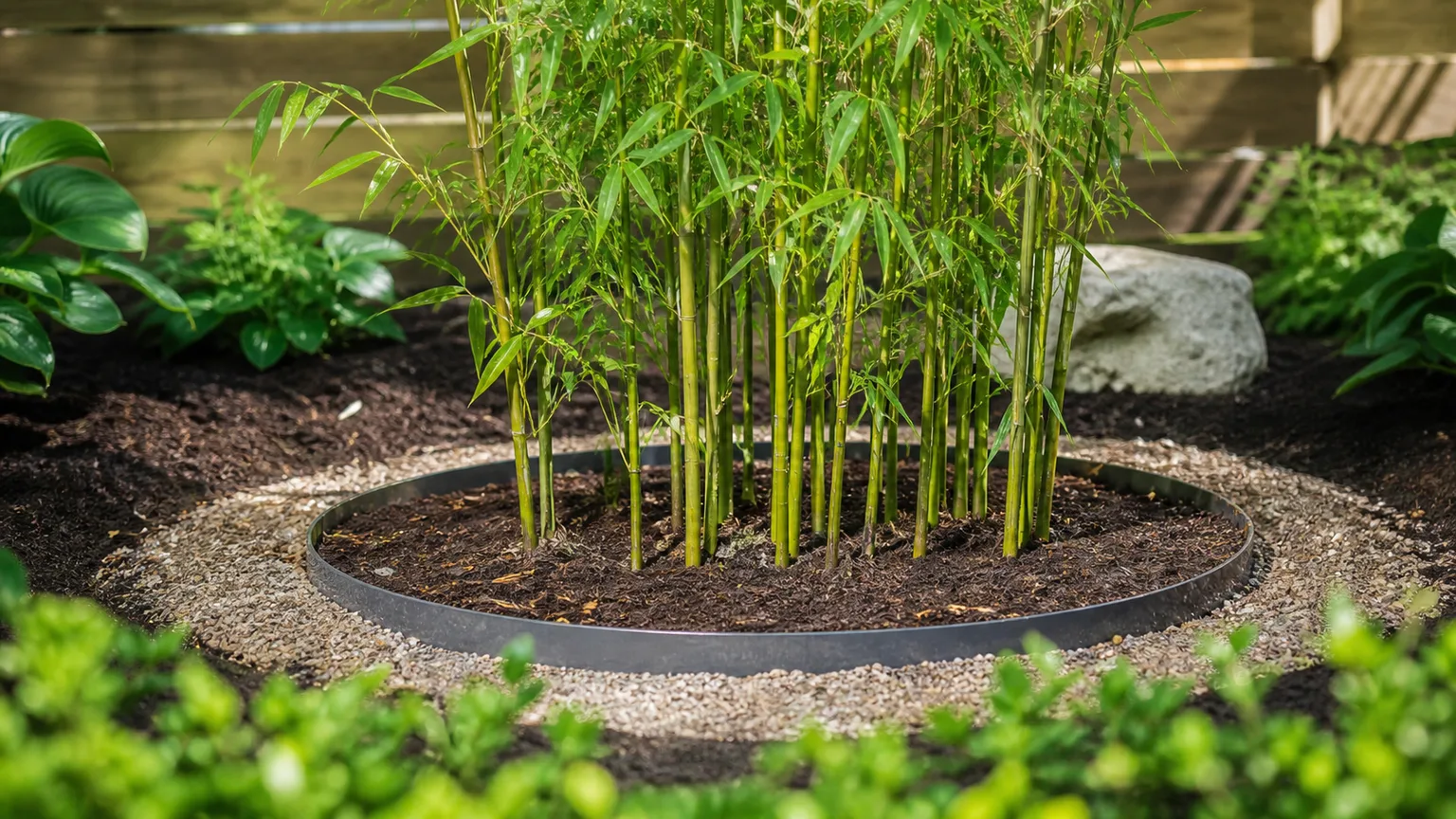
Start with a simple site plan. Mark the maximum area you are willing to manage, then add enough room outside the barrier for a person to walk, inspect, and cut new rhizomes. Do not bury the barrier tight against a fence, patio, shed, or dense shrub bed where you cannot see the edge.
Guidance from Missouri Botanical Garden and the University of Georgia describes a substantial underground barrier, generally around 2 feet or more deep, with a small lip above the finished soil line to discourage rhizomes from crossing over. UGA’s guide specifies a trench about 36 inches deep and leaving roughly 2 inches above grade, while other extension guidance describes barriers in the 22-to-30-inch range depending on the system. The exact specification varies with species, climate, soil, and local recommendations, so follow the strongest current guidance for your plant rather than treating one dimension as magic.
Use a purpose-made, durable polyethylene or HDPE rhizome barrier sized for the job. Overlap or join sections exactly as the manufacturer directs; a weak seam can become the escape route. Avoid assuming that a cracked concrete ring or rusting metal scraps are permanent containment, and never let finished soil or mulch bury the inspection lip.
The barrier redirects rhizomes; it does not stop the plant from producing them. Schedule a perimeter inspection at least once each growing season, and more often during active shooting in a warm climate. Remove rhizomes that rise over the top, pass around a joint, or appear in the inspection zone, then record where and when you found them. A barrier works because you maintain the edge it creates.
Why containers reduce risk—but add work
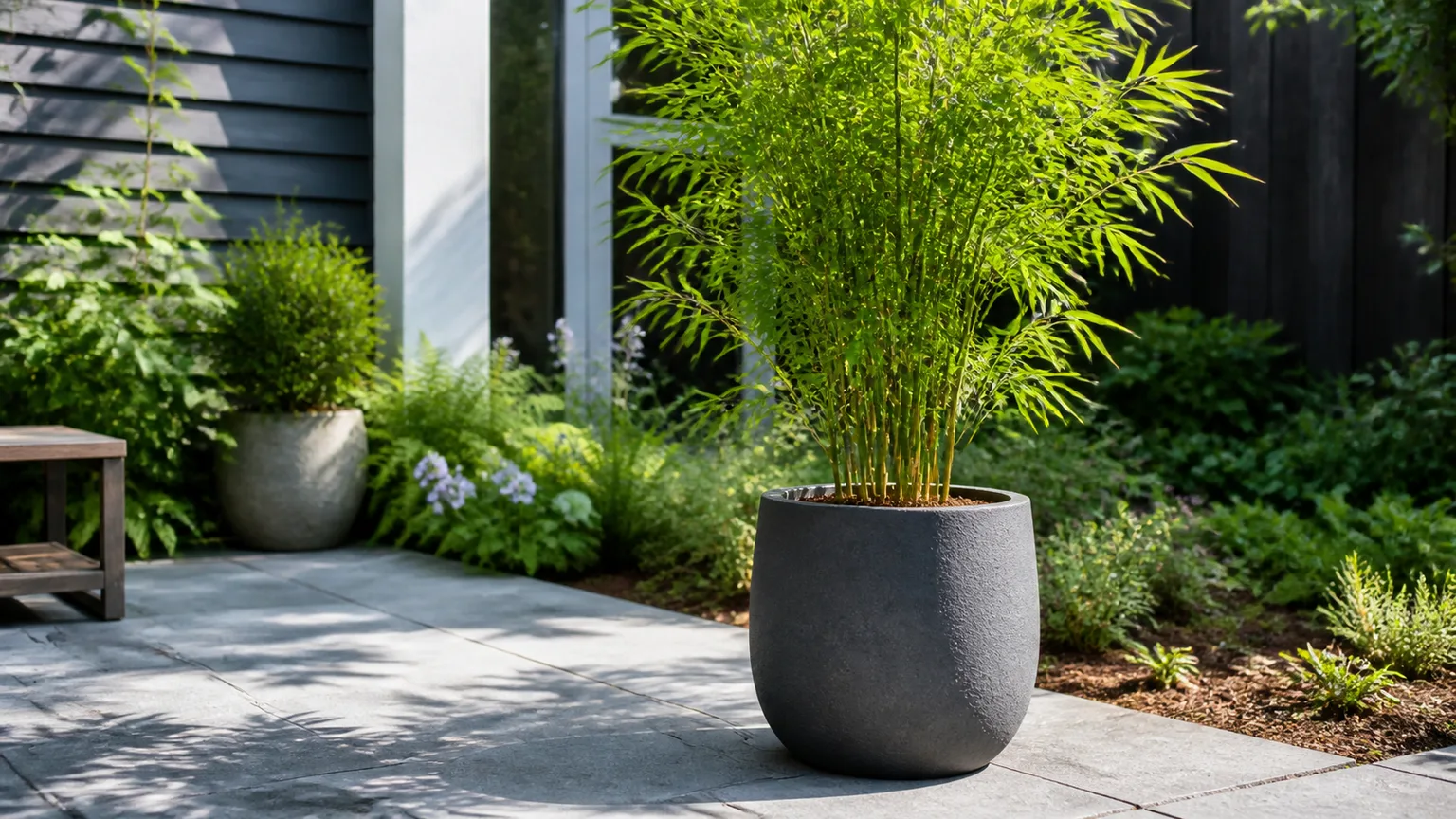
A large container, trough, or half-barrel keeps the rhizome system out of the surrounding soil, making it a sensible option when you want bamboo on a patio or need a reversible planting. It is safer than placing a runner directly beside a fence, but it is not a set-it-and-forget-it solution.
Container bamboo dries faster than in-ground bamboo and can become root-bound. Roots and rhizomes can circle the container, push against weak walls, escape through drainage openings, or make watering difficult once the mix becomes crowded. Choose a sturdy container with adequate drainage, keep it on a surface where escaped shoots are visible, and inspect the drainage area instead of assuming the pot contains every part of the plant.
Use a container size appropriate to the plant’s mature scale, protect it from extreme winter cold where relevant, and plan to divide or repot it before the root mass becomes solid. If you cannot lift, divide, water, and replace the container when needed, a non-bamboo screen will likely be easier.
Better privacy screens for most yards
The best replacement depends on what you actually need. Bamboo is often chosen for “privacy,” but privacy can mean blocking a second-story view, softening a fence, screening a patio, reducing a seasonal sightline, or creating a green background for a garden. Those jobs do not all require a fast-spreading grass.
Match the replacement to your site
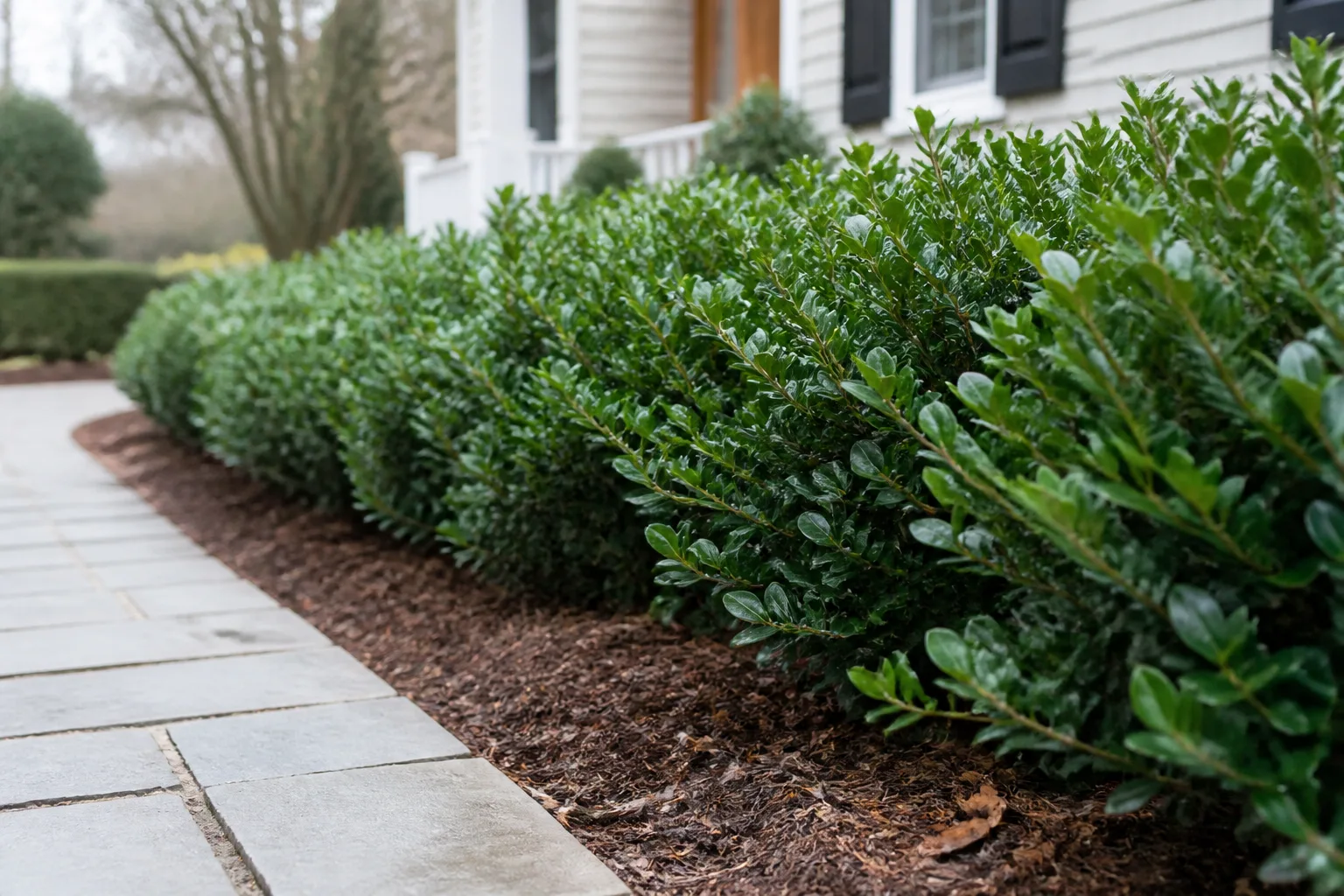
For year-round screening in a narrow bed, compare locally adapted evergreens such as arborvitae, inkberry holly, or other regionally appropriate conifers and broadleaf evergreens. Check the mature width before planting; a row of shrubs that naturally fits the bed is safer than a hedge that must be sheared back constantly.
For wildlife value, build a layered screen with native or well-adapted shrubs of different heights. Hollies, viburnums, serviceberry, wax myrtle, native dogwoods, and similar plants can provide structure, flowers, fruit, or cover depending on region. The right list changes with climate and soil, so use your local extension plant database rather than copying a national list blindly.
For a patio or rental, combine a fence or trellis with large movable planters, a clumping ornamental grass, or shrubs that can be replaced without digging out a rhizome network. For a temporary summer screen, tall annuals can solve the immediate sightline without committing the ground to a perennial colony. A mixed screen also avoids the single-species failure that leaves a whole boundary bare when one pest, disease, drought, or storm hits.
Think in layers rather than a solid green wall: a structural evergreen at the back, medium shrubs in the middle, and lower plants or grasses at the front. That arrangement may take longer to fill than bamboo, but it distributes risk, offers better seasonal interest, and gives you more options if one plant needs replacing.
Measure the view before you choose the plants. A screen needed for a seated patio may only need medium shrubs, while a second-story window may require a taller tree or a trellis above a hedge. Place the tallest layer where it will not shade the entire bed or drop leaves into a roof gutter, and leave enough space to prune from your side of the property line. Good screening design solves the sightline without creating a new access problem.
If bamboo is already growing, start with containment
Do not begin by cutting everything blindly. First determine whether the grove is yours, whether it is connected to a neighbor’s planting, where the visible shoots stop, and where the nearest beds, fence, pavement, drainage features, and natural areas lie.
Exhaustion, excavation, and disposal
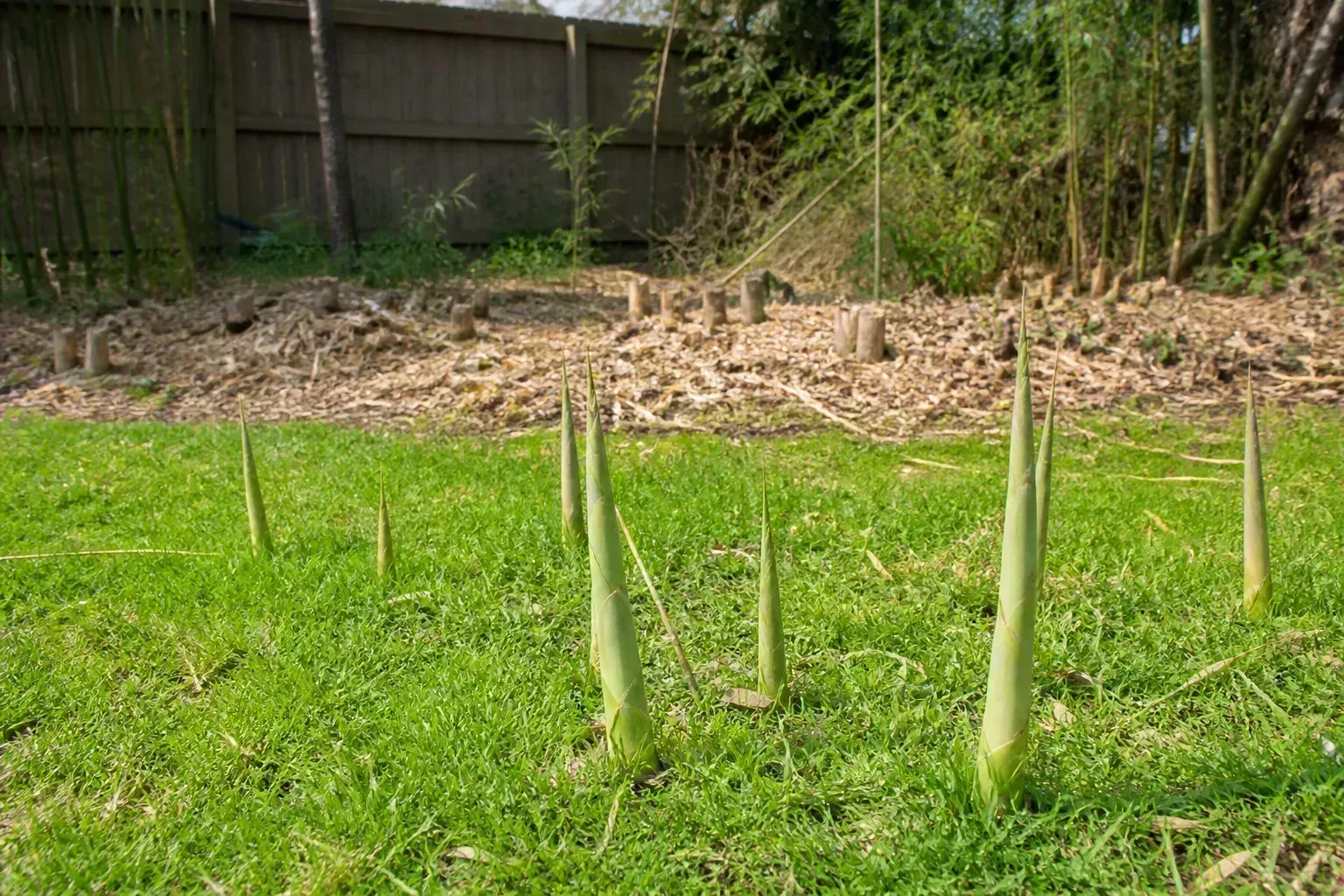
For a small patch, dig when the soil is workable and remove the rhizomes as completely as possible. Follow the underground stems outward rather than stopping at the original crown. Because even remaining fragments can resprout, rake and inspect the disturbed soil, then monitor the area for new shoots.
For a large or established grove, repeated cutting or mowing can gradually exhaust the rhizomes, but it requires persistence over multiple growing seasons. Missouri Botanical Garden describes this as slow, labor-intensive work; Alabama Extension likewise cautions that the time and frequency needed depend on the grove’s size, age, health, species, and weather. If a neighbor’s healthy bamboo remains connected underground, your cut section may be replenished from the other side, so severing or containing the connection matters.
Smothering with a durable, light-blocking cover can help on a small, accessible area after cutting, but it must be secured and checked for shoots escaping around the edges. It is not a good reason to cover a patch and walk away. For large groves near structures, utilities, mature trees, or property lines, get a qualified landscape or invasive-plant professional to assess excavation and disposal.
Do not compost running-bamboo pieces or toss them into a brush pile where they can root. UConn’s bamboo guidance warns that small fragments can spread and directs readers to its invasive-terrestrial-plant disposal information. Bag, dry, or transport the material according to your local waste rules, and clean tools and equipment before using them elsewhere in the yard.
What not to do
Do not plant an unlabeled “privacy bamboo” because the canes look attractive. Do not assume a pot sold at a big-box store is automatically a clumper, and do not accept “noninvasive” without a botanical name and mature-size information.
Do not rely on mowing alone if the rhizomes are still connected to a vigorous grove, and do not till or chip a patch in a way that distributes viable fragments. Avoid digging next to utilities without locating them first. A shovel can expose a rhizome; it cannot tell you whether a gas, irrigation, or electrical line is below it. For a useful explanation of why barriers redirect rather than eliminate rhizome growth, see Weekand’s overview of running-bamboo barriers.
Do not copy an herbicide recipe from a blog or use a nonselective product near desirable trees, waterways, edible crops, or a neighbor’s property. Extension guidance emphasizes that control products can injure other plants, that some active ingredients are not labeled for residential use, and that repeated treatment may still be required. If chemical control is appropriate, identify the plant, read the current label, follow local law, and use a licensed professional when the site or product is beyond your experience.
Finally, do not postpone the decision because bamboo looks manageable today. The visible grove is the easiest stage at which to measure, contain, replace, or remove it. Every season you wait can add underground growth that is harder to trace.
Conclusion
The warning against planting bamboo in a yard is really a warning against making an underground commitment without understanding the plant. Running bamboo can spread beyond the bed, cross property lines, crowd native vegetation, and demand years of inspection or removal. Clumping bamboo is more predictable, but it still needs an honest mature-size and climate assessment.
Before planting, verify the botanical name, check current local rules, measure the site, and decide whether you are willing to maintain containment for the life of the grove. If that sounds like too much work for a privacy screen, choose a layered hedge, locally adapted evergreen, native shrub mix, or temporary screen instead. A slower screen that stays where you planted it is usually the faster path to a yard you can enjoy.



