Why Do Houseplant Leaves Have Holes? (No Pests in Sight)
Holes in houseplant leaves can mean hidden spider mites, fungal shot-hole, caterpillars, or natural fenestration. Learn to read the pattern and fix the right cause fast.
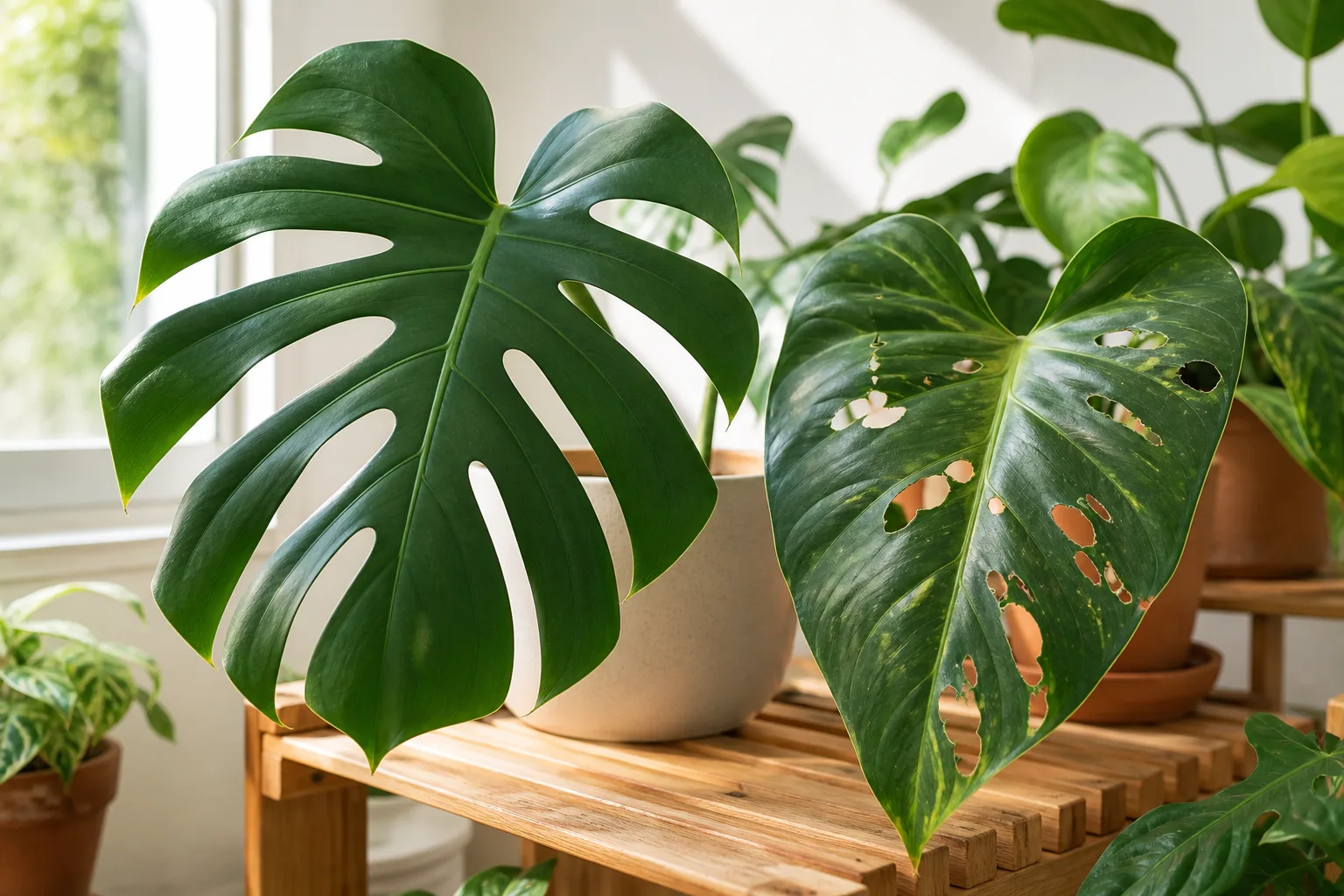
You checked the leaf twice, flipped it over, and still found nothing crawling—yet the tissue is perforated, tattered, or peppered with tiny voids. Holes in houseplant leaves are almost always a signal that something changed: a hidden feeder pierced the epidermis, a fungal spot dried and fell out, a caterpillar chewed while you slept, or—in a few celebrated species—the plant opened the leaf that way on purpose. The mistake most growers make is treating every hole like a pest emergency, or assuming “no visible bugs” means the plant is fine.
This guide is built for the indoor grower staring at damaged foliage in a bright kitchen or office corner. You will learn how to read hole shape, timing, and companion clues; how to flush out pests too small for naked-eye ID; and which fixes extension programs recommend for interiors. For the broader hole-reading framework across Monstera, Philodendron, and outdoor overlap, pair this page with our holes in leaves diagnostic guide.
Start With Three Questions Before You Treat Anything
Panic-spraying the whole collection is how mild problems become resistant ones. Before you reach for soap, alcohol, or fungicide, answer three questions. Your answers narrow the suspect list faster than scrolling pest photos.
Was this hole there from the day the leaf opened?
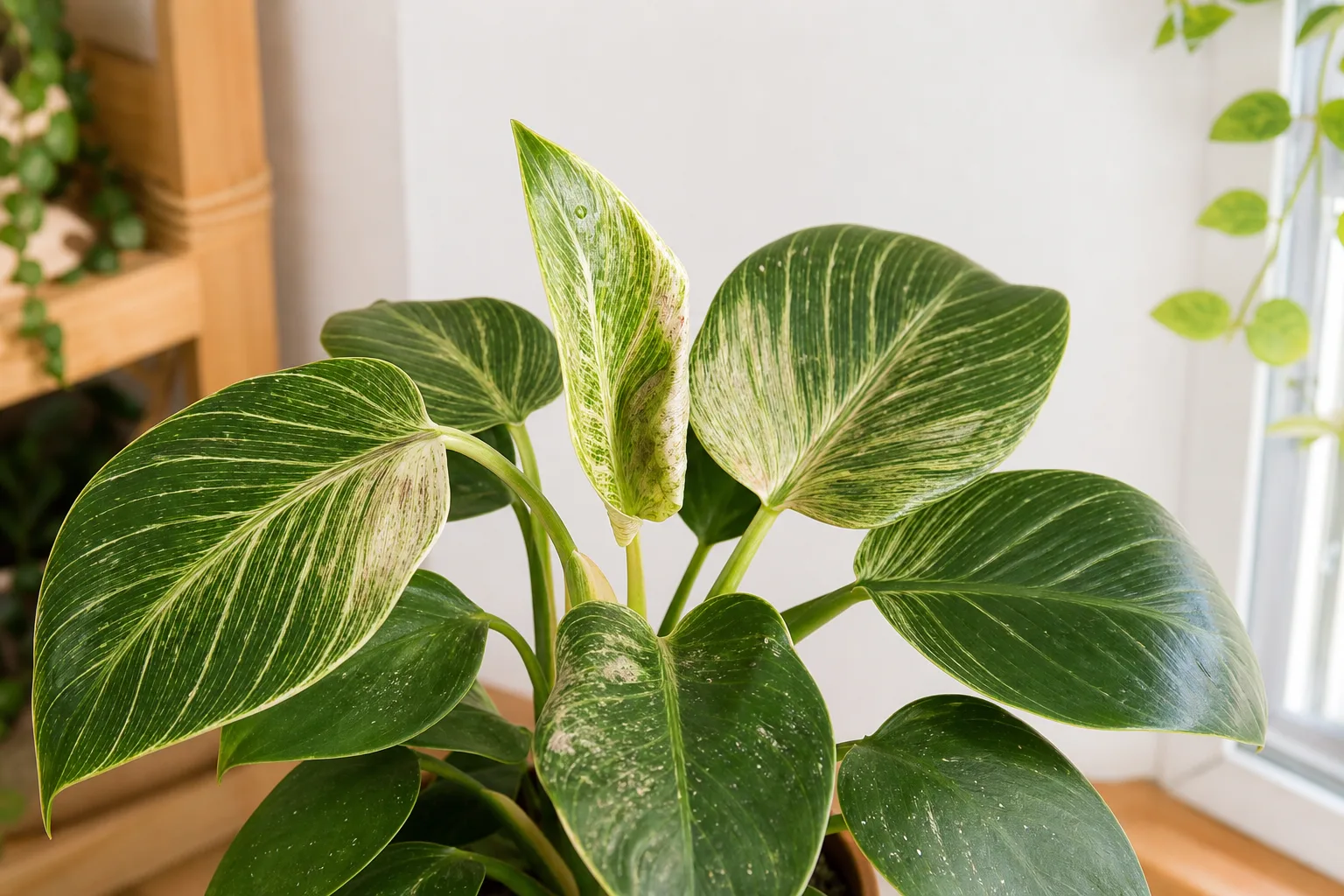
Fenestration—natural splits and windows in leaves—only appears as a leaf unfurls. Monstera, some Philodendron, certain pothos cultivars, and a few alocasias are bred to produce architectural holes and slits on new growth. Those openings look smooth, symmetrical, and intentional. They do not spread to older leaves that were solid when they hardened.
If a mature leaf that was intact last week now has a ragged bite or a round void with a dark ring, you are not looking at fenestration. You are looking at damage that needs investigation.
Do the holes have spots, halos, or webbing around them?
Companion clues separate categories quickly. Fine silk webbing between leaves and stems points to spider mites. Sticky, shiny residue (honeydew) suggests aphids, scale, or whiteflies—even when the insects themselves hide on undersides. Brown or tan spots with yellow halos that later drop out suggest fungal or bacterial leaf spot progressing to shot-hole symptoms. Black pepper-like specks (frass) under a chewed area support caterpillars.
A hole with none of those friends, sitting on a leaf edge after a windy draft or a pet bump, may be simple mechanical tearing.
Did the damage spread overnight or across several plants?
Timing tells you how urgent isolation is. Caterpillars, slugs that hitchhiked indoors, and active fungal spores can add new holes between dusk and breakfast. Spider mites and aphids colonize neighboring plants on air currents, tools, or your hands. If multiple pots in the same room show fresh damage within 48 hours, assume a mobile pest or airborne pathogen until proven otherwise—and move suspects away from the rest of the collection tonight.
How to Inspect Houseplants When the Culprit Is Too Small to See
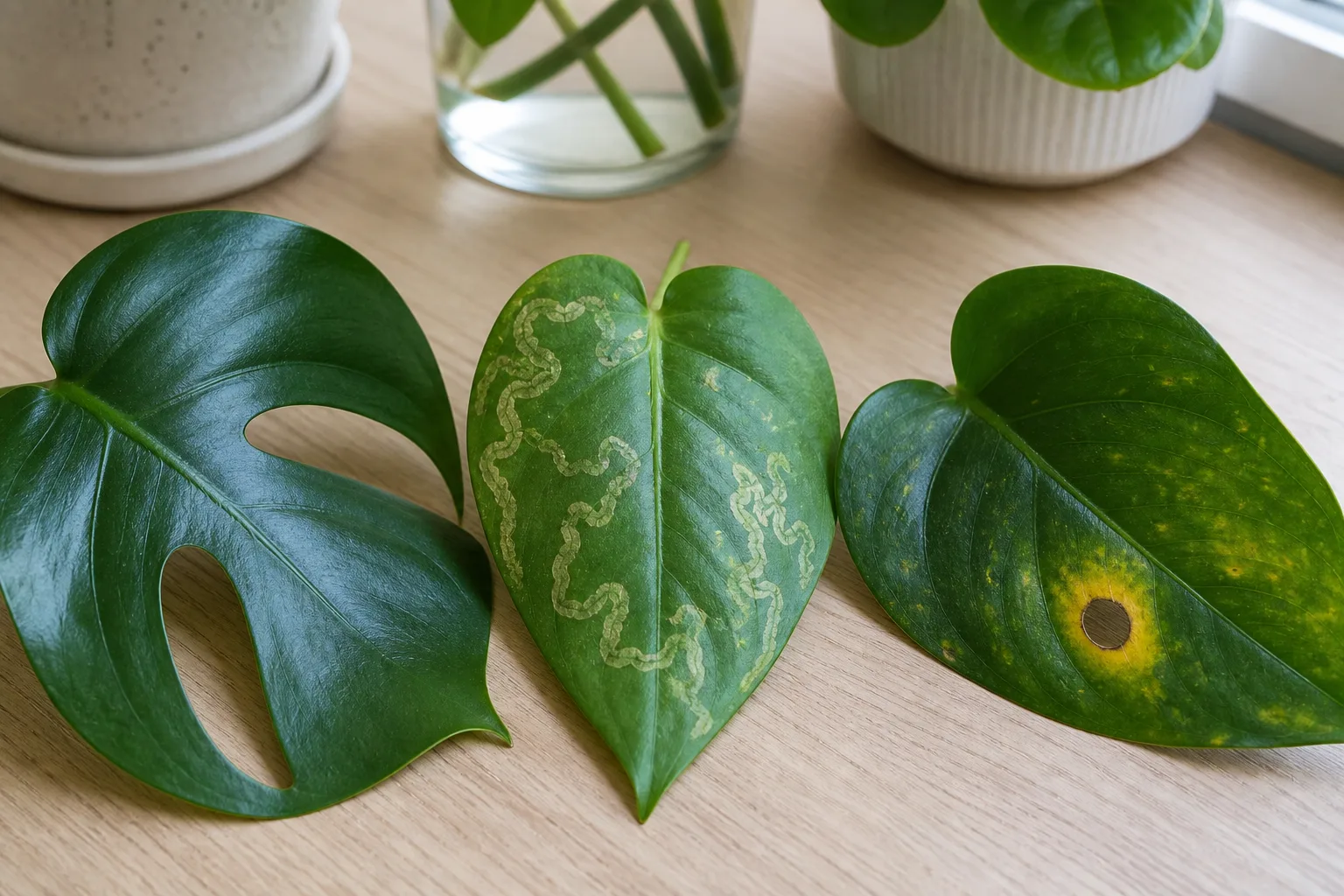
Many houseplant pests measure 1/50 to 1/8 inch. Twospotted spider mites, cyclamen mites, young aphids, and thrips routinely escape casual glances. Colorado State University Extension notes that spider mite feeding begins as pale flecks on the leaf underside near veins before bronzing and webbing appear—damage precedes easy visibility. (CSU Extension — Managing Houseplant Pests)
Schedule inspections when you are not rushed: bright daylight, a white surface, and ten minutes per plant.
The white-paper shake test for mites and thrips
Hold a piece of white paper under a suspect leaf and tap the stem sharply. Tiny moving specks that streak red-brown when crushed are likely spider mites. Pale, slender insects that dart quickly may be thrips. If nothing moves but you still see stippling, switch to macro inspection—populations can be low but growing.
What a magnifier or phone macro camera reveals on leaf undersides
Check new growth first, then vein axils and stem joints. Aphids cluster on tender shoots; mites concentrate on undersides; scale looks like immobile bumps; caterpillars and leafroller larvae hide in rolled or silk-bound leaves. Photograph suspicious areas and zoom in—growers often spot cast skins and eggs before live adults.
Repeat the check three mornings in a row. One clean pass does not clear a plant; it only tells you whether damage is active today.
Fungal and Bacterial Diseases That Punch Holes Through Leaf Tissue
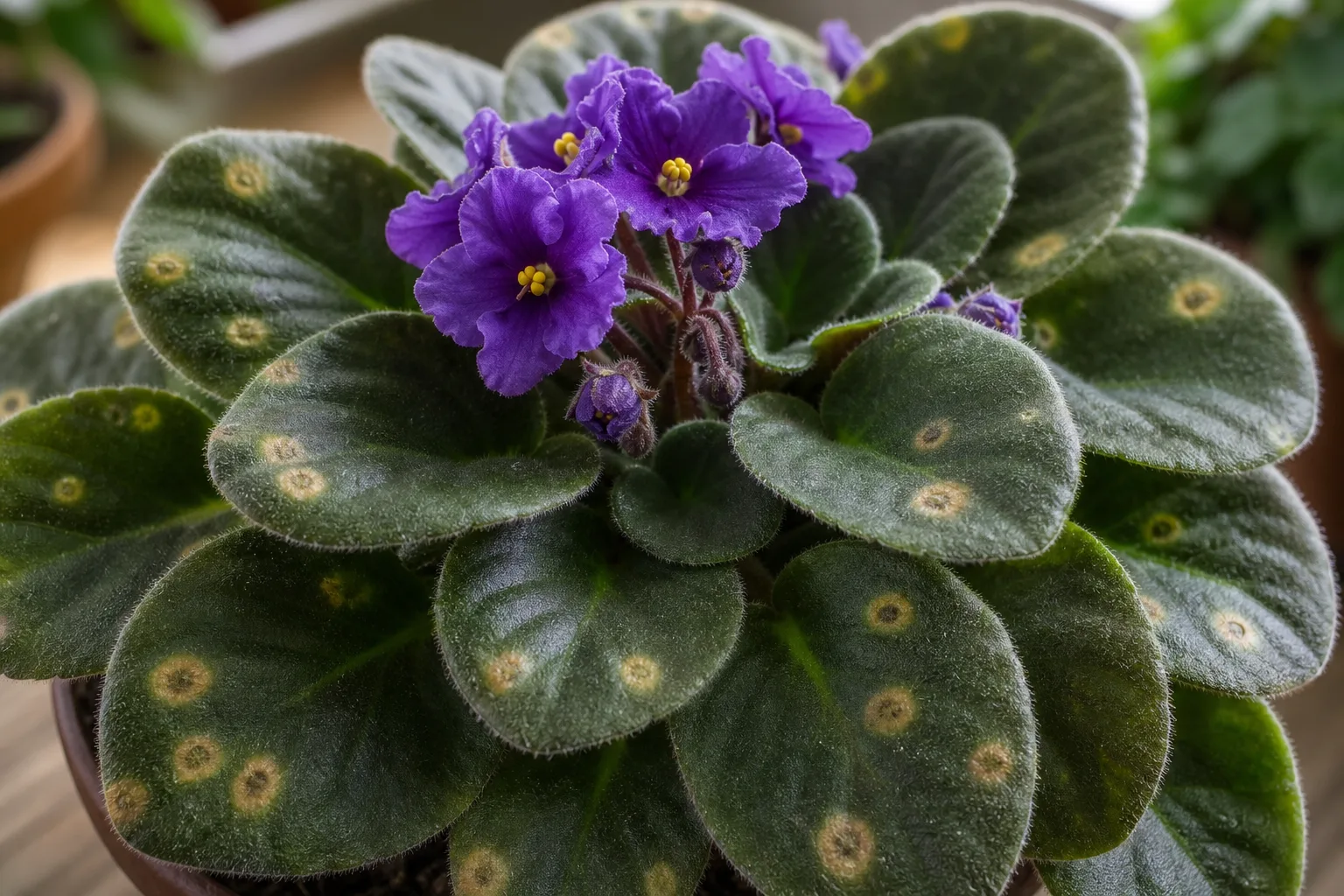
Not every hole starts as a hole. On houseplants, leaf spot diseases often begin as discolored flecks—brown, black, or yellow—that expand until the dead center dries and drops out. What remains looks like something chewed a clean round opening, sometimes called shot hole.
Common indoor-associated pathogens include anthracnose, Cercospora leaf spot, and various shot hole syndromes on Ficus, begonias, and moisture-stressed tropicals. Humidity trapped between crowded leaves, overhead watering, and poor airflow accelerate spread—exactly the conditions winter windowsill collections create.
Shot hole, anthracnose, and Cercospora patterns on indoor foliage
Fungal shot hole: Small tan or brown spots with darker borders; centers fall out leaving round holes; often on lower, older leaves first; may follow a period of wet foliage or cool damp nights.
Anthracnose: Larger irregular brown patches that can tear as tissue collapses; sometimes pinkish spore masses in humid conditions.
Cercospora: Angular gray-brown spots that follow leaf veins on some hosts; severe infections thin the canopy.
Bacterial spots tend to look water-soaked when fresh, with yellow halos and angular shapes bounded by veins. They are less common indoors than fungi but appear on overwatered, stagnant-air setups.
Cultural fixes that stop fungal holes from spreading room to room
Disease management indoors is mostly culture, not chemistry:
- Remove affected leaves with clean scissors; disinfect blades between cuts.
- Stop misting crowded shelves; water soil directly and keep foliage dry overnight.
- Increase airflow with a small fan on low—not blasting the plant, just moving stale humid air.
- Space pots so leaves do not touch; pathogens travel on contact and splashed water.
- Discard heavily infected plants if more than a third of foliage is compromised; they become spore reservoirs.
If spots keep advancing after two weeks of dry culture, a copper or sulfur fungicide labeled for ornamentals may help—but confirm the product is suitable for indoor use and test one leaf for 48 hours before full application. Missouri Botanical Garden guidance stresses using only pesticides explicitly labeled for the plant and site; indoor applications demand extra caution about ventilation and re-entry. (Missouri Botanical Garden — Indoor Plant Insecticides/Miticides)
Spider Mites: The Invisible Pest Behind Speckled, Tattered Leaves
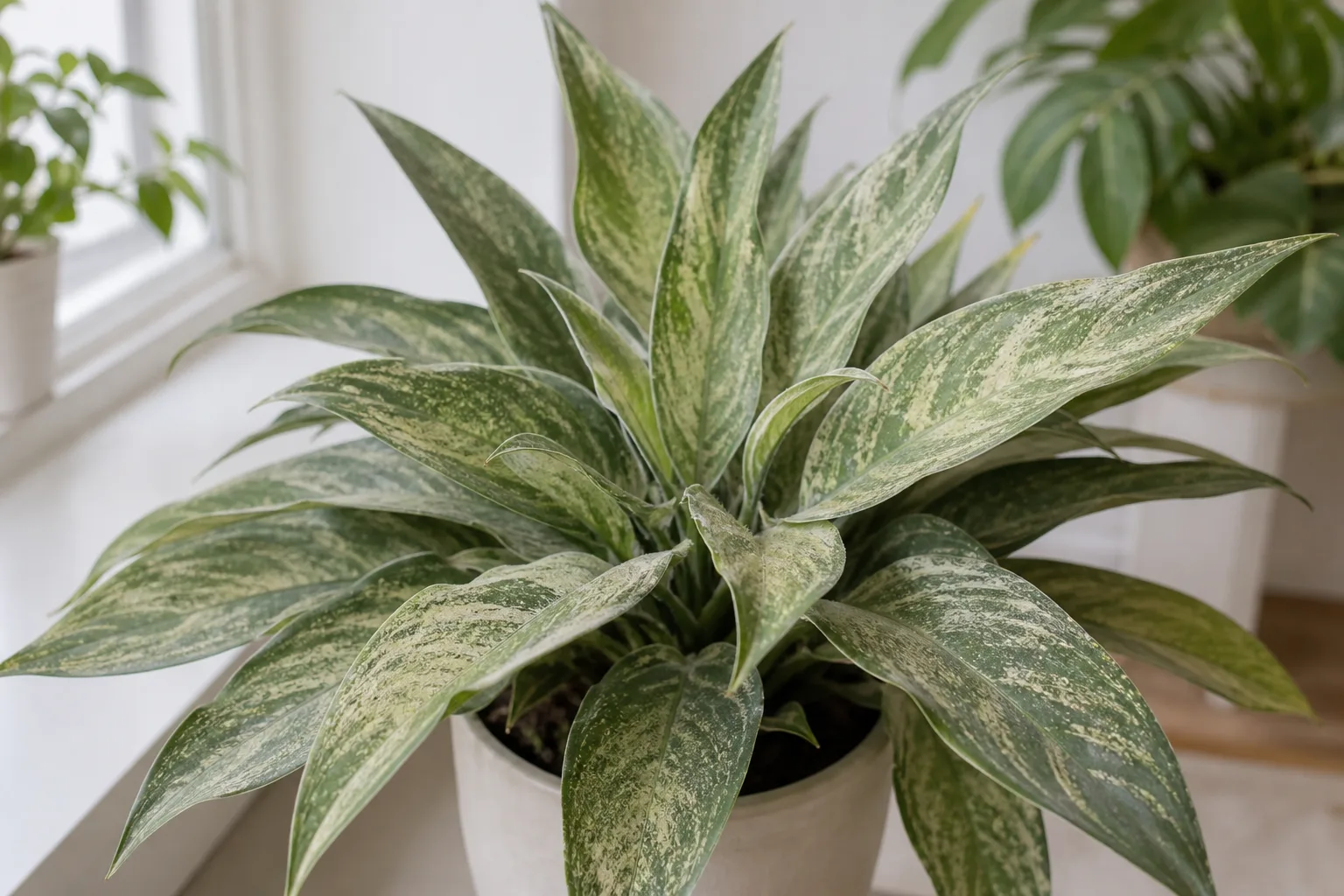
Spider mites are the classic “holes with no bugs” case. The twospotted spider mite sucks sap from individual cells, leaving tiny pale stipples that can coalesce into a gray or bronze cast. As feeding intensifies, tissue weakens and edges look chewed or lacy. Fine webbing on undersides and between petioles confirms mites—even when adults are scarce.
Hot, dry rooms favor mites. Plants near heating vents, radiators, or south-facing glass in winter are prime targets. CSU Extension lists ivies, dracaenas, figs, hibiscus, Norfolk Island pine, and scheffleras as common hosts, though mites attack many tropicals. (CSU Extension — Managing Houseplant Pests)
First response: Isolate the plant. Syringe leaves with a strong lukewarm water spray in the sink or shower, focusing on undersides—repeat every three to four days to knock down adults and eggs. Increase humidity around the plant (pebble tray or grouping) without leaving foliage constantly wet.
If populations persist: Horticultural oil or insecticidal soap sprays give good contact control when coverage is thorough. Bifenthrin appears in some houseplant-ready products and can be effective against mites where labeled. Expect multiple cycles; mite eggs hatch on a one-to-two-week rhythm indoors. Heavily webbed plants with widespread bronzing are often faster to discard than to rescue—they re-infest neighbors.
Aphids and the Sticky Honeydew Clue
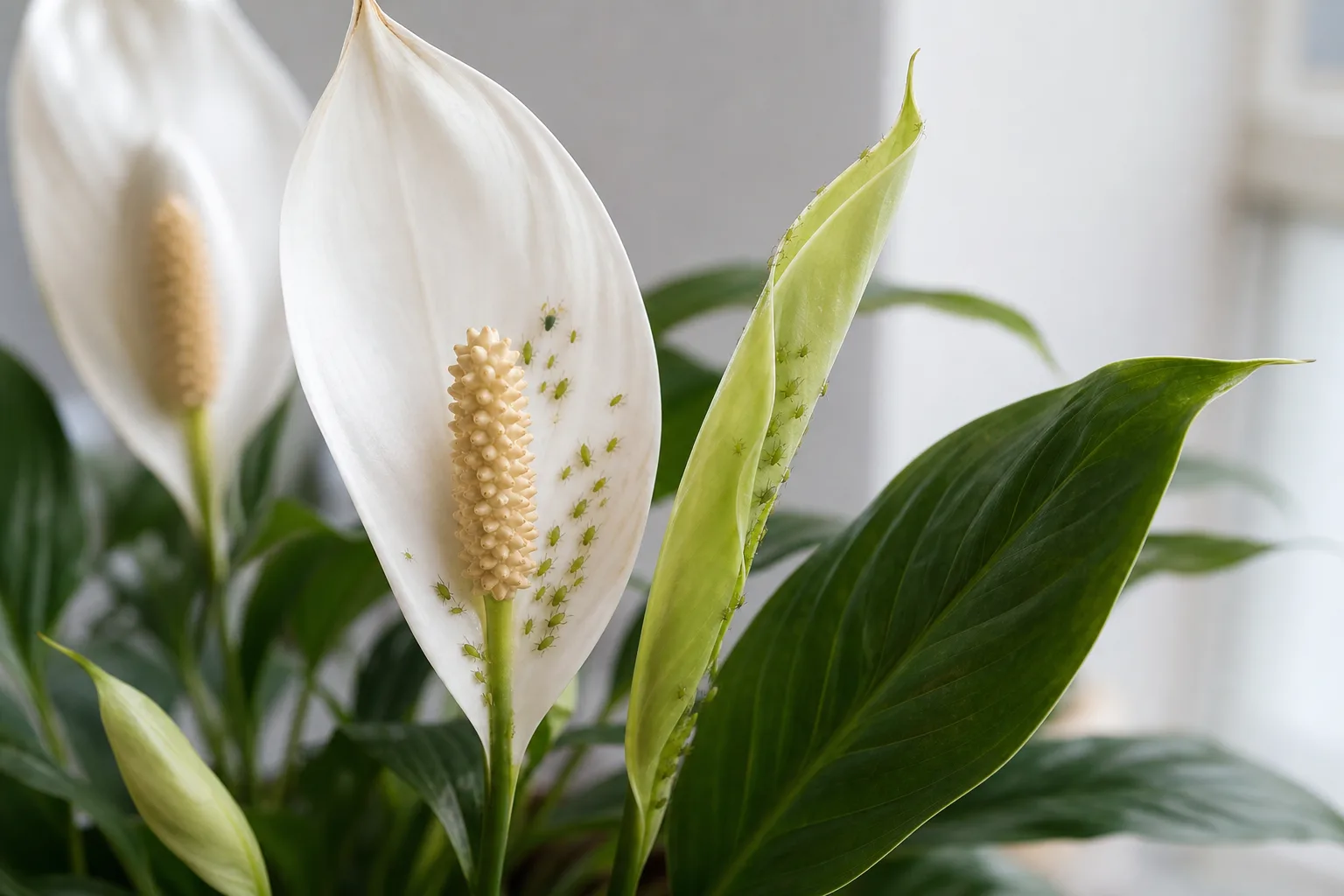
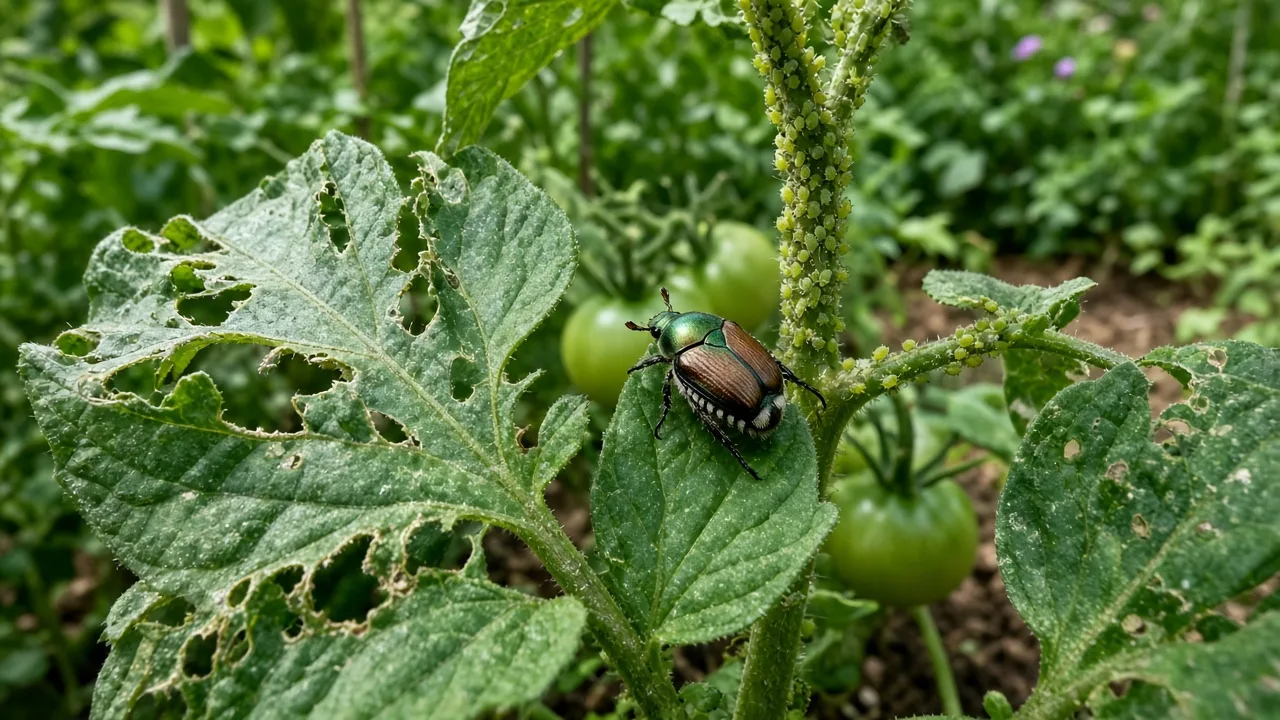
Aphids pierce phloem and drain new growth, leaving curled, puckered leaves and sometimes tiny puncture marks that look like pinholes. The giveaway is often honeydew—a clear, sticky film on leaves, pots, or the shelf below. Sooty mold growing on that residue turns surfaces black and dull.
Green peach aphid, melon aphid, and chrysanthemum aphid all appear on houseplants brought in from outdoors or purchased from busy greenhouses. Winged forms show up when colonies crowd, which is how aphids reach the pothos three feet away.
First response: Blast aphids off with water in the sink, or wipe clusters with a cotton swab dipped in diluted rubbing alcohol (test one leaf first). For recurring colonies, use insecticidal soap on a five-to-seven-day repeat schedule for at least three cycles. See our full aphid control protocol for indoor houseplants for the week-by-week schedule.
Aphids also vector plant viruses. If distortion persists after pests are gone, the plant may not recover aesthetically even when the aphids are cleared.
Caterpillars and Leafrollers That Hide During the Day
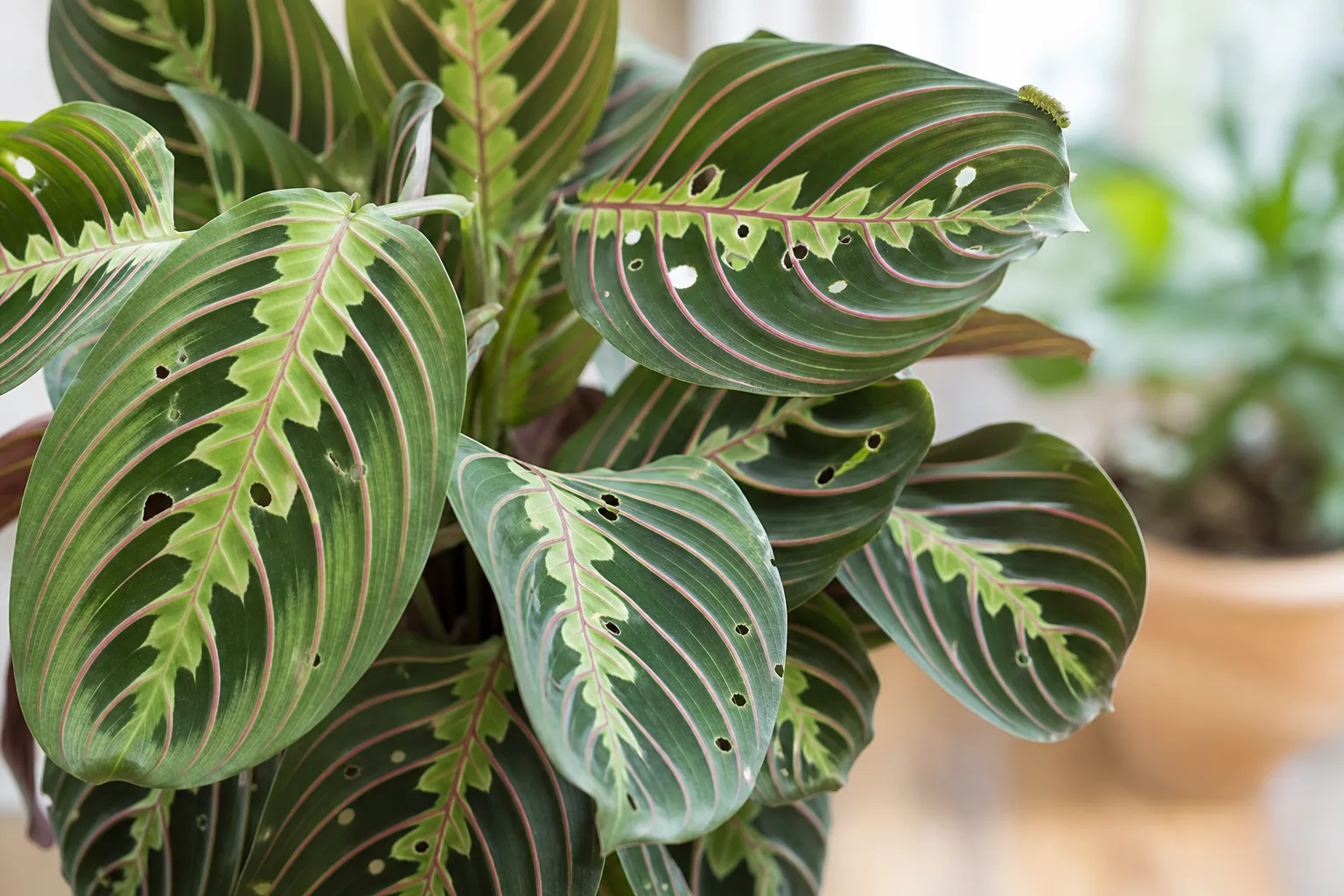
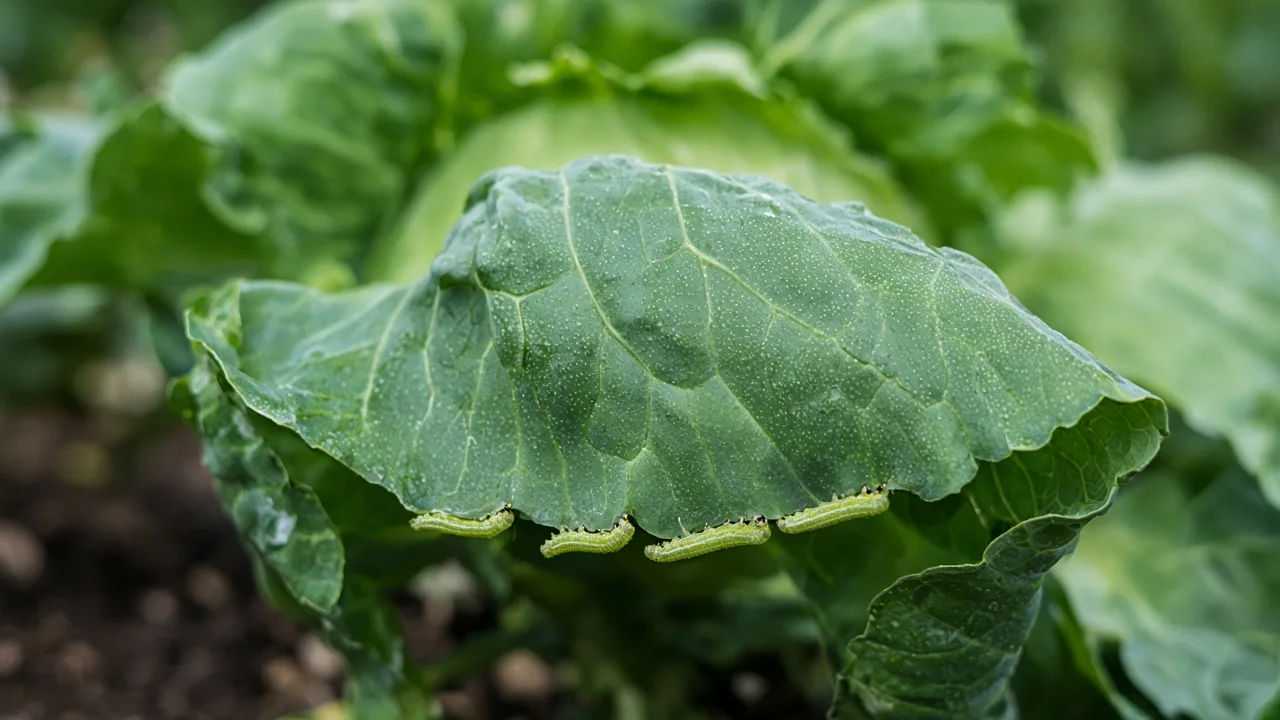
Caterpillar holes are usually larger and more irregular than mite stippling or aphid pinpricks. You may find dark frass pellets on leaves or soil. On houseplants, tortrix moth larvae—small green leafrollers—pull leaves together with silk and feed inside the roll. Other caterpillars arrive on plants summered outdoors or fly in through open windows at night.
Because larvae feed actively and can strip young foliage fast, hand removal is the best first step: unroll bound leaves, pick off worms, and bag discarded tissue. Check the plant at night with a flashlight if daytime searches fail.
For sustained infestations on non-edible ornamentals, Bacillus thuringiensis (B. thuringiensis kurstaki strain) is a targeted biological control that affects caterpillars when they eat treated tissue. CSU Extension notes Bt kurstaki is commonly sold for caterpillar control on ornamentals; follow label rates and avoid spraying beneficial insects you may be releasing elsewhere. (CSU Extension — Managing Houseplant Pests)
Bt does not control mites, aphids, or fungal disease—identify before you spray.
Other Indoor Pests That Chew or Scar Leaves
Thrips
Thrips scrape leaf surfaces, leaving silvery scars and small dark fecal specks. Damage can look like mite stippling but wounds are larger and more scratch-like. Flowers and buds may scar or fail to open. Blue or yellow sticky traps catch adults and help monitor population trends; sprays target nymphs on foliage undersides.
Fungus gnats and soil-level chewers
Adult fungus gnats do not chew leaves, but persistently wet soil that supports gnat larvae also favors fungal leaf spots and root stress—conditions that make foliage more vulnerable to perforation. If gnats swarm when you water, dry the top inch of soil between drinks and address drainage before chasing leaf holes with miticides.
Slugs and snails indoors
Rare but real: mollusks hitchhike in outdoor pots brought inside for winter. They leave smooth-edged holes and silvery slime trails, often on leaves touching soil or pot rims. Hand-pick at night, remove debris under pots, and keep the floor area dry.
When Holes Are Completely Normal: Fenestration on Monstera and Kin
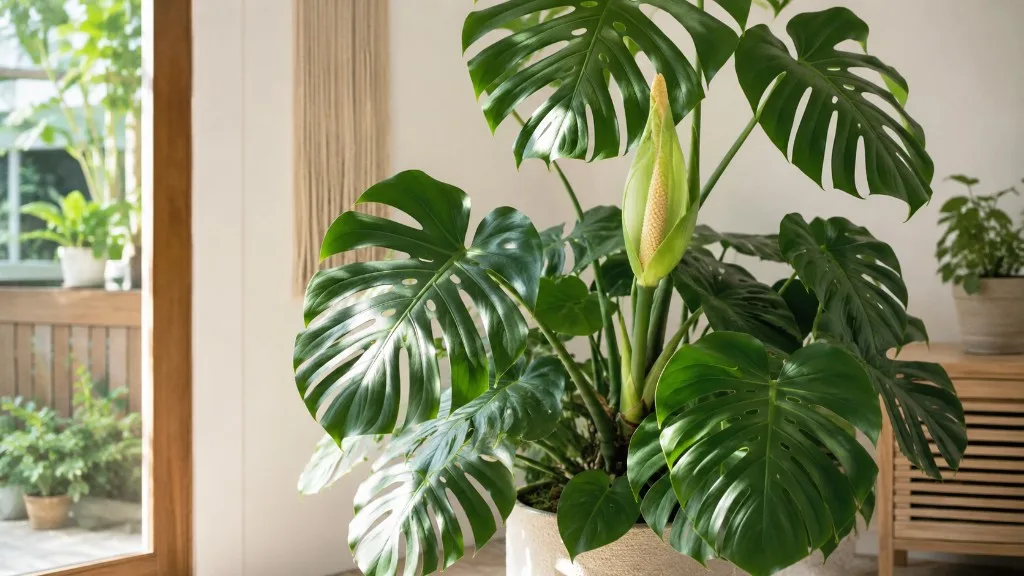
Some of the most panicked hole searches come from healthy Monstera deliciosa, Monstera adansonii, mature Philodendron species, select pothos cultivars, and certain alocasias doing exactly what they evolved to do. Fenestration lets wind pass through large leaves, increases light to lower foliage, and is a sign of maturity and adequate light—not infestation.
Rules of thumb:
- Holes appear on new leaves as they unfurl, not on old hardened leaves.
- Edges are smooth and architectural, not ragged.
- No webbing, stickiness, spots, or spreading damage on neighboring plants.
If your Monstera is not fenestrating but you want splits, brighter indirect light and a stable support often help the next leaf—see our Monstera care guide for light and support details. If splits appeared suddenly on leaves that were solid for months, return to the pest and disease sections above.
Physical Damage and Environmental Tears Indoors
Not every hole is biological. Mechanical damage happens when leaves snag on blind pulls, brush against rough window latches, or get punctured during repotting. Pets and curious children crush tissue; vacuum hoses and moving boxes do the same.
Mechanical tears have clean or straight edges, appear suddenly after a known event, and do not spread to other leaves. Trim ragged flaps with sterilized scissors if they hang and collect moisture—otherwise leave minor tears alone.
Hail does not happen indoors, but ice from a leaking window frame or cold draft damage can mimic spot death on tender tropicals. Fix the environment before treating for fungus.
A Step-by-Step Recovery Plan for Hole-Damaged Houseplants

Use this sequence the night you find damage:
- Photograph affected leaves with date stamps—you will compare progress across weeks.
- Isolate any plant with spreading holes, webbing, stickiness, or frass until identified.
- Run the diagnostic trio: fenestration vs spot-disease vs pest; shake test; macro undersides.
- Remove leaves that are more than half damaged, actively hosting pests, or covered in sporulating spots. Bag and trash them; do not compost indoors infestations.
- Apply the matching fix: water syringing for mites; soap repeats for aphids; hand removal for caterpillars; dry culture for fungal shot hole; nothing but better placement for fenestration.
- Re-inspect every five to seven days for three full cycles before declaring victory.
- Quarantine ended plants for another two weeks near—but not touching—the main collection.
Leaf tissue does not regenerate. Holes remain visible permanently. Success means new leaves emerge clean, not that old scars vanish.
For collection-wide prevention, adopt a weekly integrated pest management routine indoors: rotate which shelf you inspect, keep new purchases isolated for fourteen days, and wash tools between plants.
Conclusion
Holes in houseplant leaves are a diagnostic puzzle, not a single diagnosis. When you cannot see pests, suspect spider mites and thrips first, then fungal shot hole if spots preceded the voids, then hidden caterpillars if frass or rolled leaves appear. Sticky residue points to aphids even when the insects hide. Smooth splits on new Monstera growth are fenestration—celebrate those.
The growers who save collections act on pattern and timing, not on the first spray bottle they find. Inspect undersides, repeat checks across mornings, isolate early, and match treatment to the confirmed cause. Old holes will not heal, but the next leaf can open flawless if you stop the real culprit this week.