How to Control Aphids on Indoor Houseplants
Aphids multiply fast indoors with no predators. Learn identification, first-response steps, least-toxic treatments, and the repeat schedule that clears outbreaks.
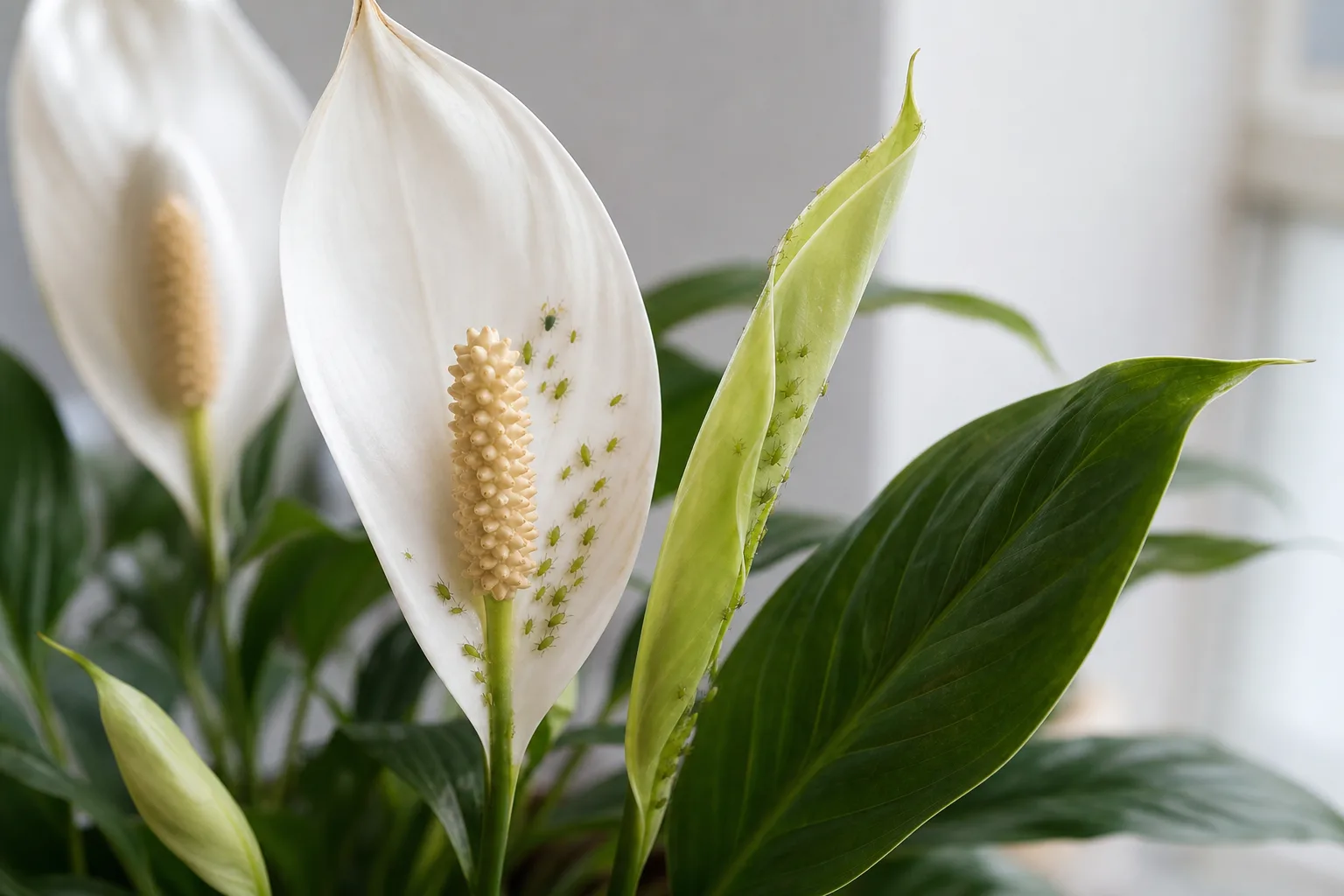
Stunted new leaves, shiny sticky patches on stems, and clusters of tiny insects on tender growth are classic aphids on houseplants—not a watering glitch you can fix with one extra soak. Aphids are soft-bodied sap feeders in the family Aphididae. They pierce phloem tissue, drain energy from fresh growth, and excrete honeydew, a sugary waste that makes leaves, pots, and nearby surfaces tacky. Indoors, with no lady beetles, lacewings, or rain to knock populations down, a few aphids on one plant can become a collection-wide problem in weeks.
This guide walks you through identification, the first hour after discovery, least-toxic treatments that extension programs recommend for interiorscapes, and the repeat schedule that actually finishes the job. For the broader pest workflow—weekly inspection, isolation rules, and when to escalate—pair this page with our Houseplant IPM schedule and the aphids pest hub.
What Aphids Look Like on Houseplants
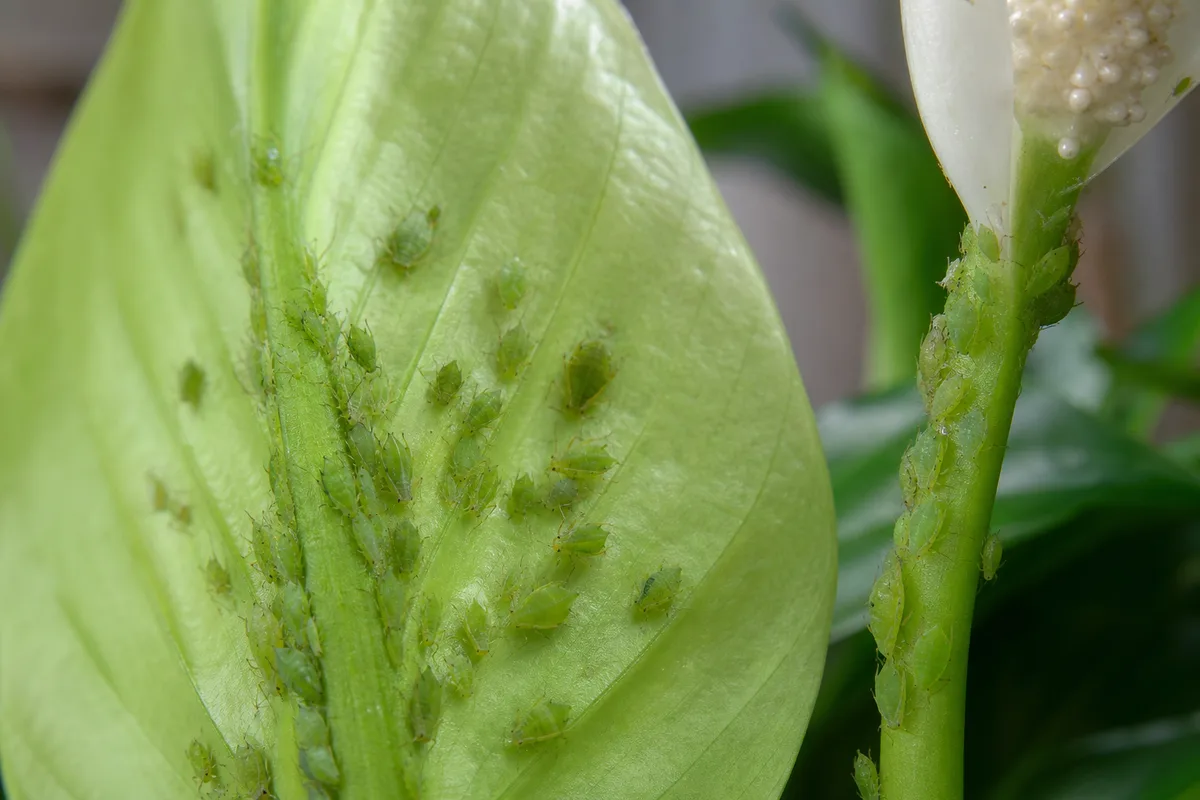
Adult aphids are small—often 1/16 to 1/8 inch—pear-shaped, and soft-bodied. Color varies by species and host: light green is common on many houseplants, but you may see pink, yellow, brown, gray, or nearly black individuals on the same plant. Most of the time adults are wingless and gather in dense groups on new shoots, flower buds, and the undersides of young leaves, where tissue is easiest to pierce.
Nymphs look like smaller copies of adults. Before you see moving insects, you might notice white flecks on leaves—cast skins left behind when nymphs molt. Up close, aphids show long legs, slender antennae, and two tiny rear projections called cornicles that help distinguish them from other pests. (UAF Extension)
When colonies get crowded or food quality drops, winged aphids appear. They can fly or crawl to neighboring plants—exactly why isolation matters the moment you find them.
Signs Beyond the Bugs Themselves
Sticky leaves are often the first clue. Honeydew feels tacky on foliage, pot rims, shelves, or the floor under a plant. Dark sooty mold can grow on that residue, leaving leaves dull or blackened even after the insects are gone. (RHS)
Growth symptoms follow feeding: curling, puckering, or stunting of new leaves; yellowing; and sometimes bud or leaf drop on heavily attacked plants. Ant activity around a pot is another red flag—ants harvest honeydew and may protect aphid colonies outdoors; indoors, ants near a houseplant should trigger a close stem and leaf check.
If leaves are sticky but you cannot find aphids, honeydew is not the only cause. Extrafloral nectaries, resin from injured tissue, or other pests can produce similar shine. Confirm live aphids, cast skins, or fresh honeydew before you commit to an aphid treatment plan.
Aphids vs. Mealybugs, Scale, and Whiteflies
Misidentification leads to wrong products and wasted weeks. Use this quick contrast before you spray:
| Pest | Body shape | Where they cluster | Sticky residue | Movement |
|---|---|---|---|---|
| Aphids | Soft pear-shaped | New growth, stem tips | Honeydew common | Crawl; winged forms fly when crowded |
| Mealybugs | Oval with white wax | Leaf axils, stems, sometimes roots | Honeydew + wax | Slow crawl |
| Soft scale | Fixed bumps on stems/leaves | Older stems, leaf undersides | Honeydew on soft scales | Immobile adults |
| Whiteflies | Tiny white moth-like adults | Leaf undersides | Honeydew | Adults fly when disturbed |
Mealybugs and scale often need longer oil or alcohol campaigns; whiteflies need underside coverage and repeats similar to aphids but on different life stages. Getting the pest right matters more than picking the strongest bottle on the shelf.
How Aphids Damage Indoor Plants
Aphids do not chew holes—they pierce and suck, pulling fluids from phloem. That theft diverts energy from roots and new tissue, so the plant looks tired even when soil moisture is fine. Heavy feeding distorts young leaves, slows internode elongation, and can cause wilting that mimics drought stress.
Chronic sap loss weakens a plant over time. Mature, well-rooted specimens usually survive moderate outbreaks if you intervene early; small seedlings, stressed plants, and those already fighting root rot are at higher risk. Some aphid species inject toxins that twist growth; others transmit plant viruses—rare on typical houseplants but a real concern on ornamental peppers, hibiscus, and chrysanthemums indoors. (UAF Extension)
Honeydew itself is not harmless. It feeds sooty mold fungi on leaf surfaces, blocks light, and makes plants look neglected. Cleaning residue after control is part of recovery—not optional cosmetic work.
Why Aphid Problems Explode Indoors
Outdoor aphid waves crash when predators arrive, weather shifts, or rain washes crawlers off leaves. Inside your home, those brakes barely exist. Warm, stable temperatures and continuous light extend feeding windows. Predators that would patrol a garden rarely wander your living room.
Colorado State University Extension notes that many houseplant pests arrive on newly purchased plants and spread before symptoms show. (CSU Extension) Aphids fit that pattern perfectly: a single infested herb, gift bouquet, or summer patio plant brought indoors can seed an entire shelf.
The Indoor Lifecycle Speed Problem
Outdoors, cold winters pause reproduction. Indoors, many aphid species reproduce asexually year-round—females give birth to live nymphs without mating (parthenogenesis). Nymphs molt about four times, maturing in roughly seven to ten days in warm interior conditions. Each adult can produce dozens of offspring per week; populations compound fast. (UAF Extension)
That math explains why a one-time rinse feels like success on day three and failure on day fourteen. Eggs laid outdoors overwinter on woody hosts; indoors, the cycle rarely stops. Winged migrants appear when colonies crowd a plant, then search for fresh shoots—often on the Monstera two feet away.
Where Indoor Aphids Come From
You may never learn the exact entry point, but these sources show up repeatedly:
- New houseplants from stores, swaps, or online sellers without quarantine
- Plants summered outdoors then brought back inside
- Fresh flowers, herbs, or produce from the garden or farmers market
- Open windows and doors—winged aphids are small enough to drift through screens
- Ants carrying or farming aphids on plants (more common near patio doors)
Cut flowers in water can host aphids briefly; herbs on the kitchen counter are frequent culprits. Treat every new green thing as a potential carrier until a three-week quarantine with twice-weekly inspection passes clean—a window CSU Extension recommends for new acquisitions. (CSU Extension)
Your First-Response Checklist
When you confirm aphids—not just sticky dust—move fast:
- Photograph clusters for comparison after treatment (optional but useful).
- Isolate the plant immediately—another room or closed grow tent, not beside siblings.
- Inspect neighbors within three feet and any plants you touched that day.
- Wash hands and wipe the shelf where the pot sat.
- Choose a treatment rung (physical first, then soap, then neem if needed) and schedule repeats before you close the toolkit.
Skipping isolation is how a single hoya becomes twelve infested shelves. The National Pesticide Information Center emphasizes combining monitoring with least-toxic steps before indoor pesticide use because homes are less ventilated than gardens. (NPIC)
Isolate Before You Treat
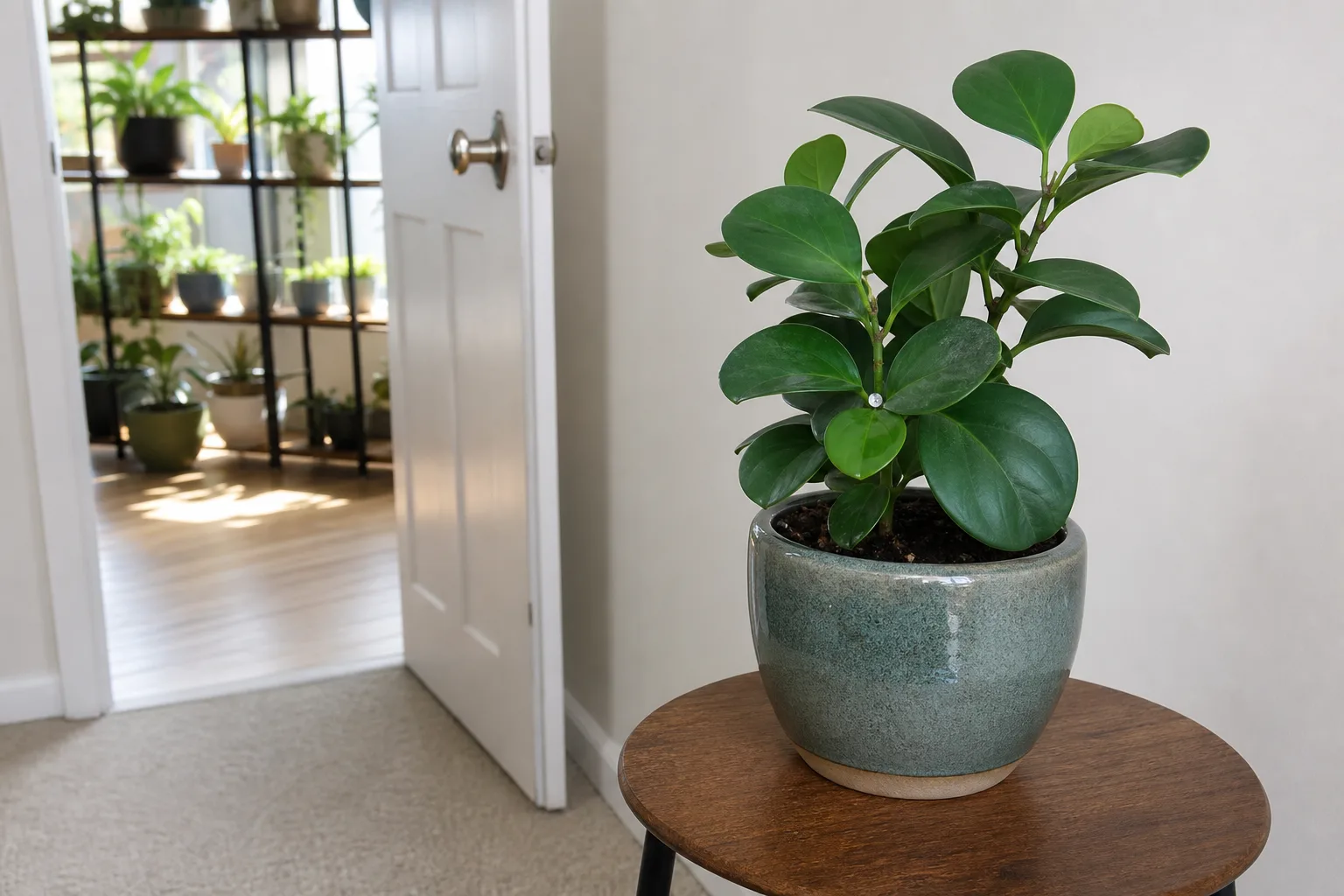
Isolation is not punishment—it is a firewall. Move the affected plant to a spare room, bathroom with a window, or enclosed shelf away from the main collection. Keep airflow around it; cramming infested plants into a dark closet can add stress and secondary fungal issues.
During quarantine, inspect the plant every two to three days and treat on your calendar regardless of whether you still see adults. Eggs and young nymphs hide under leaf curls and bud scales where sprays miss on the first pass. Do not return the plant to the display until you have two consecutive weekly inspections with zero live aphids and no fresh honeydew.
If space is tight, a large clear bag over the plant (with stakes so plastic does not touch foliage) can limit crawler drift for a few days while you clear a isolation zone—ventilate daily so condensation does not rot leaves.
Physical Removal Methods That Work
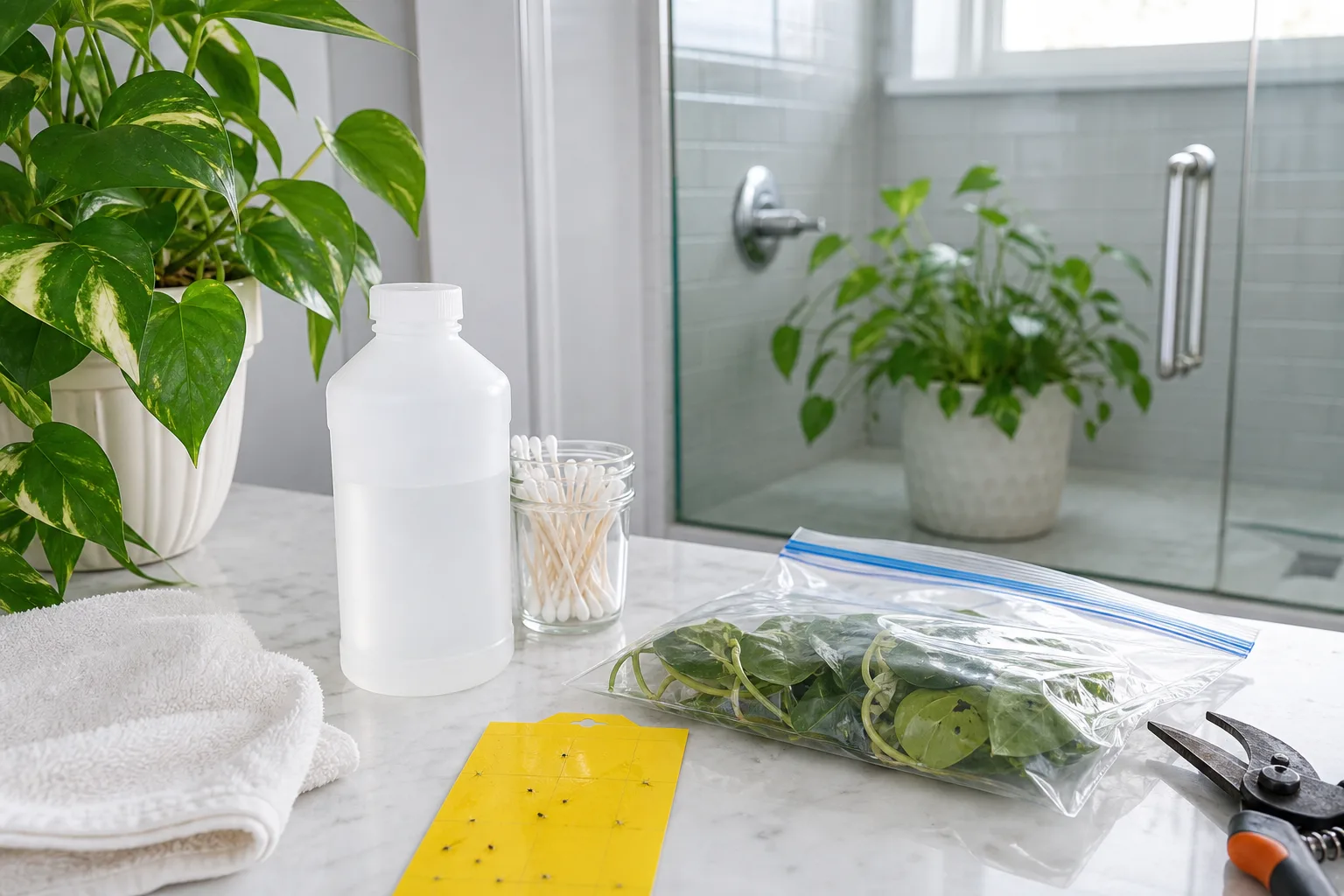
Extension guides list plain water as a legitimate first tool: aphids are fragile and many dislodge under a firm stream. (UAF Extension) Start here on sturdy plants before you open a bottle.
Shower or sink rinse: Support the pot, tilt if needed, and spray leaf undersides and growing tips for a full minute. Repeat twice weekly alongside other steps. Catch runoff so aphids do not wash into sink drains and crawl back.
Manual wipe: For light clusters on thick stems, crush or wipe aphids with a damp cloth, cotton pad, or gloved finger. Works on succulents and woody stems where soap might spot leaves.
Prune heavily infested tips: If one flower stalk or soft shoot holds 80% of the colony, cut it off into a sealed bag and discard outdoors. Less plant tissue means less habitat for the next generation.
Physical removal alone rarely ends an indoor outbreak because crawlers you miss mature in days—but it drops numbers before soap or oil and proves you are targeting live pests, not old honeydew.
Rinsing and Dunking Delicate Plants
African violets, ferns, and plants with fuzzy leaves may not tolerate aggressive spraying. For small specimens, invert the plant and dip foliage into a bucket of room-temperature water for thirty seconds, swishing gently—keep the pot above the waterline. Let the plant drain upright on paper towels afterward.
For fuzzy-leaved plants (some begonias, streptocarpus), skip dunking; use a soft brush or cotton swab on visible clusters instead. Never dunk succulents with powdery farina—you will mark leaves permanently.
Insecticidal Soap for Aphids
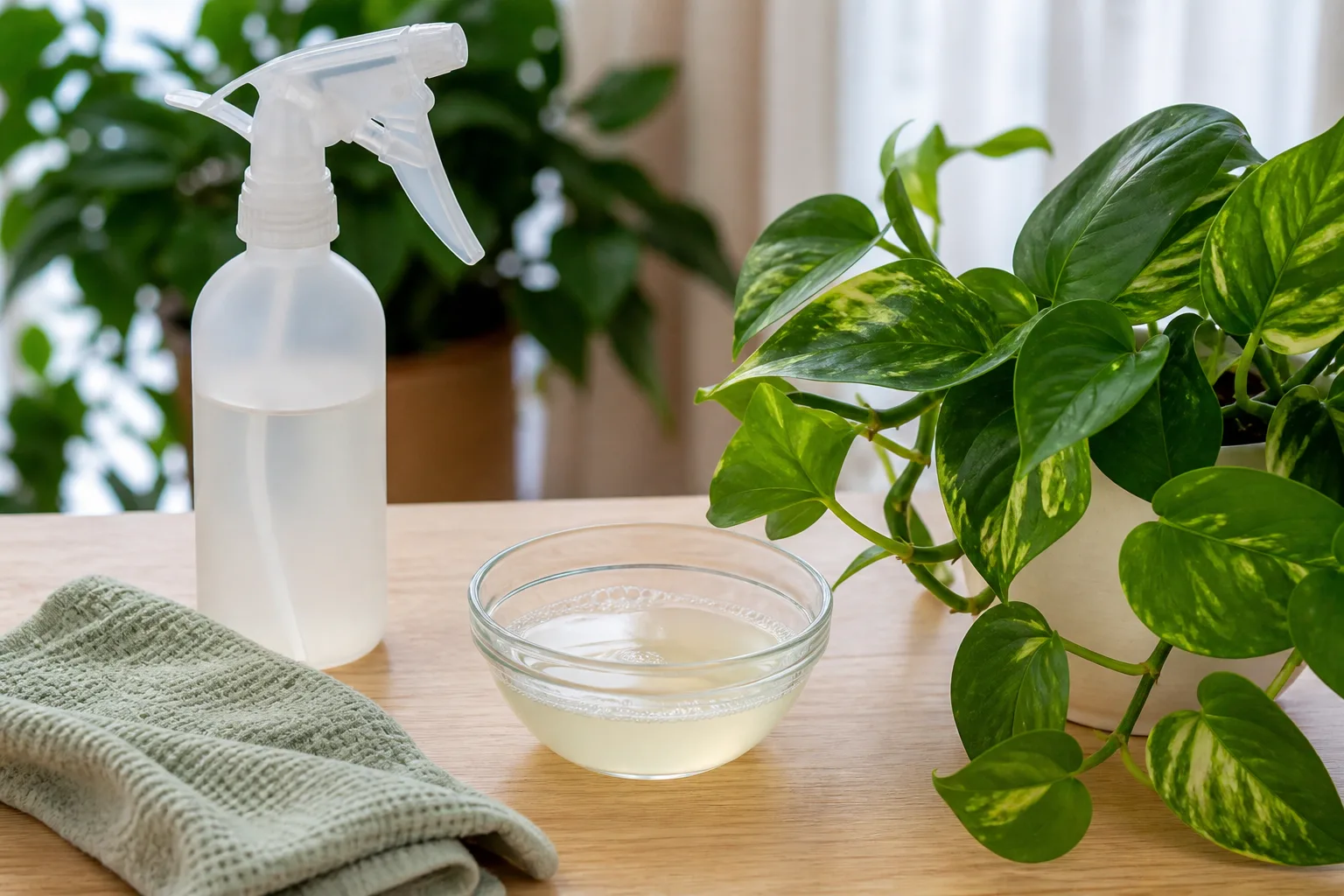
Insecticidal soap—potassium salts of fatty acids in a product labeled for houseplants or interiorscapes—is the workhorse for soft-bodied pests indoors. It disrupts cell membranes on contact; aphids have no shell to shield them. Clemson Cooperative Extension notes soaps must coat the insect directly and work best on soft-bodied species like aphids when coverage is complete. (Clemson HGIC)
Commercial soap: Follow label dilution. Spray until runoff, focusing on undersides and growing tips. Repeat every five to seven days for at least three cycles.
DIY caution: Some growers mix a few drops of plain dish detergent per quart of water. That can work in a pinch but carries more burn risk—detergents are not formulated for plants, and perfumes or degreasers harm foliage. If you DIY, use the mildest soap available, test one leaf for 48 hours, and prefer a labeled insecticidal soap for repeated campaigns.
Rinse soap residue off hairy or waxy leaves if the label allows—buildup looks worse than the aphids. Treat in evening so leaves dry before bright direct sun hits them the next day.
Neem Oil and When to Use It
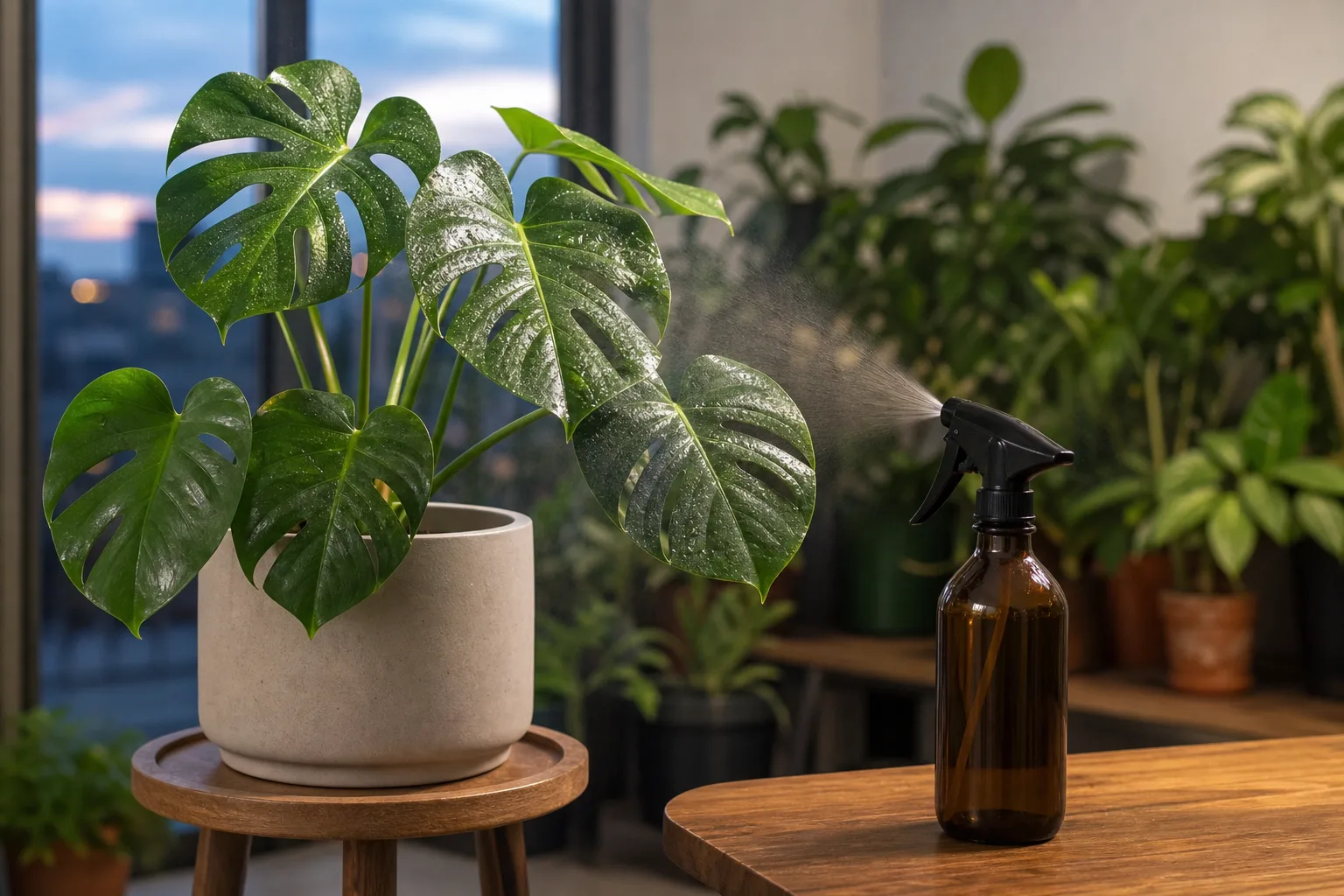
Neem oil (clarified hydrophobic neem or azadirachtin products labeled for indoor ornamentals) adds a second layer when soap alone leaves survivors. Neem interferes with feeding and development; some formulations leave a light residue that discourages new settlers. It helps on aphids, spider mites, and some scale stages when coverage is thorough.
Use neem when:
- You still see live nymphs after two soap cycles
- Winged migrants keep appearing on quarantined plants
- You want residual activity between scheduled repeats
Mix only what the label states—over-concentration burns leaves, especially on ferns, calatheas, and tender new growth. Spray undersides until glistening; neem that only hits the top surface misses where aphids feed. Missouri Botanical Garden notes many indoor growers alternate soap and oil in IPM programs rather than relying on one product. (Missouri Botanical Garden)
Skip neem on plants known to react to oils (some succulents, open blooms you want to keep, newly transplanted specimens). Test one leaf first.
Alcohol Swabs and Spot Treatments
70% isopropyl alcohol on a cotton swab kills aphids on contact—excellent for spot outbreaks on ten to twenty visible insects on a prized orchid or single stem. Dab each cluster; do not pour alcohol into soil.
You can mist a 50:50 alcohol-to-water mix on sturdy leaves, but alcohol strips wax and dessicates tender tissue. Use swabs on fuzzy, succulent, or thin leaves instead of broad sprays.
Alcohol has no residual effect. Check daily and re-swab new clusters until two clean weekly inspections pass. Pair swabbing with isolation; it is a precision tool, not a collection-wide strategy.
What Sticky Traps Actually Do
Yellow sticky traps hung near plants catch winged aphids and alert you that migrants are active. They are monitoring tools, not control. A trap full of insects does not mean the plant is clean—and an empty trap does not mean the plant is aphid-free.
Place traps at canopy height beside quarantined plants and near windows where winged pests enter. Replace when coated with dust or insects. Combine traps with leaf inspection; rely on traps alone and colonies on stems will keep reproducing unnoticed.
When Chemical Sprays Are the Last Resort
Synthetic pyrethrin, pyrethroid, or systemic products labeled for indoor ornamentals may be options when least-toxic repeats fail on a valuable plant—but they deserve caution indoors. NPIC reminds growers that pesticide exposure risk differs inside homes: less ventilation, pets chewing leaves, children nearby. (NPIC)
Read the entire label for indoor use, specific plant restrictions, and re-entry timing. Ventilate during and after application. Try pyrethrin-based sprays before broader-spectrum chemicals when the label allows—they break down faster than many synthetics but still require respect.
If three full IPM cycles with soap, oil, and physical removal fail, or the plant is already dying from combined pest and root stress, discarding may be safer than dragging a reservoir through your collection. CSU Extension notes seriously infested plants sometimes warrant disposal to protect the rest. (CSU Extension) Rare specimens can succeed with strict isolation and relentless repeats—but know when the math favors letting go.
The Repeat Schedule That Actually Clears Aphids
One treatment kills today’s adults and nymphs—not eggs and not nymphs that hatch Thursday. Schedule three full treatment cycles at five to seven day intervals, matching indoor maturation time. (UAF Extension)
Sample calendar for a moderate outbreak:
| Day | Action |
|---|---|
| Day 0 | Isolate; rinse; insecticidal soap spray |
| Day 3 | Inspect; swab or rinse any survivors |
| Day 7 | Second soap spray (or neem if nymphs persist) |
| Day 14 | Third spray cycle |
| Day 21 | Inspect; wipe honeydew; note zero live aphids |
| Day 28 | Second clean inspection → end quarantine |
Adjust if the label specifies shorter intervals. If you see live aphids on day 21, restart three cycles—do not declare victory because adults are hard to spot.
Success markers: No live insects, no new honeydew, no fresh white cast skins, and new growth opening clean. Old distorted leaves may never un-curl; judge success on fresh tissue.
Prevention After You Win
Winning one battle does not grant immunity. Build habits that keep aphids rare:
- Quarantine new plants three weeks minimum; inspect undersides with a phone macro lens
- Weekly collection walk—rotate plants, check new growth, note stickiness early
- Rinse outdoor-return plants before they cross the threshold indoors
- Control ants near entry doors if they interact with patio plants
- Avoid over-fertilizing nitrogen-heavy feeds that push soft, aphid-friendly shoots
- Keep airflow between plants so crawlers cannot bridge leaves easily
When you do spot a lone aphid on an otherwise healthy plant, immediate isolation and a soap rinse often end the story before neem enters the picture. That is IPM working as designed—not luck.
Conclusion
Stunted shoots and sticky leaves are aphids’ calling card indoors. Confirm soft-bodied clusters on new growth, isolate before you spray, start with rinsing and insecticidal soap, escalate to neem when repeats demand it, and run a three-cycle calendar instead of a single heroic afternoon. Extension data on indoor reproduction speed explains why patience beats potency: missing one week of nymphs replants the colony.
Pair this aphid-specific ladder with our integrated pest management indoors guide for inspection timing and our aphids hub for species-level context. Treat on schedule, verify with two clean weekly checks, and aphids become a manageable interruption—not the reason you quit growing indoors.



