Brown Spots on Cucumber Leaves: 5 Causes to Check
Diagnose brown spots on cucumber leaves by pattern, location, and pace, then prune, water, and treat the problem without guessing.
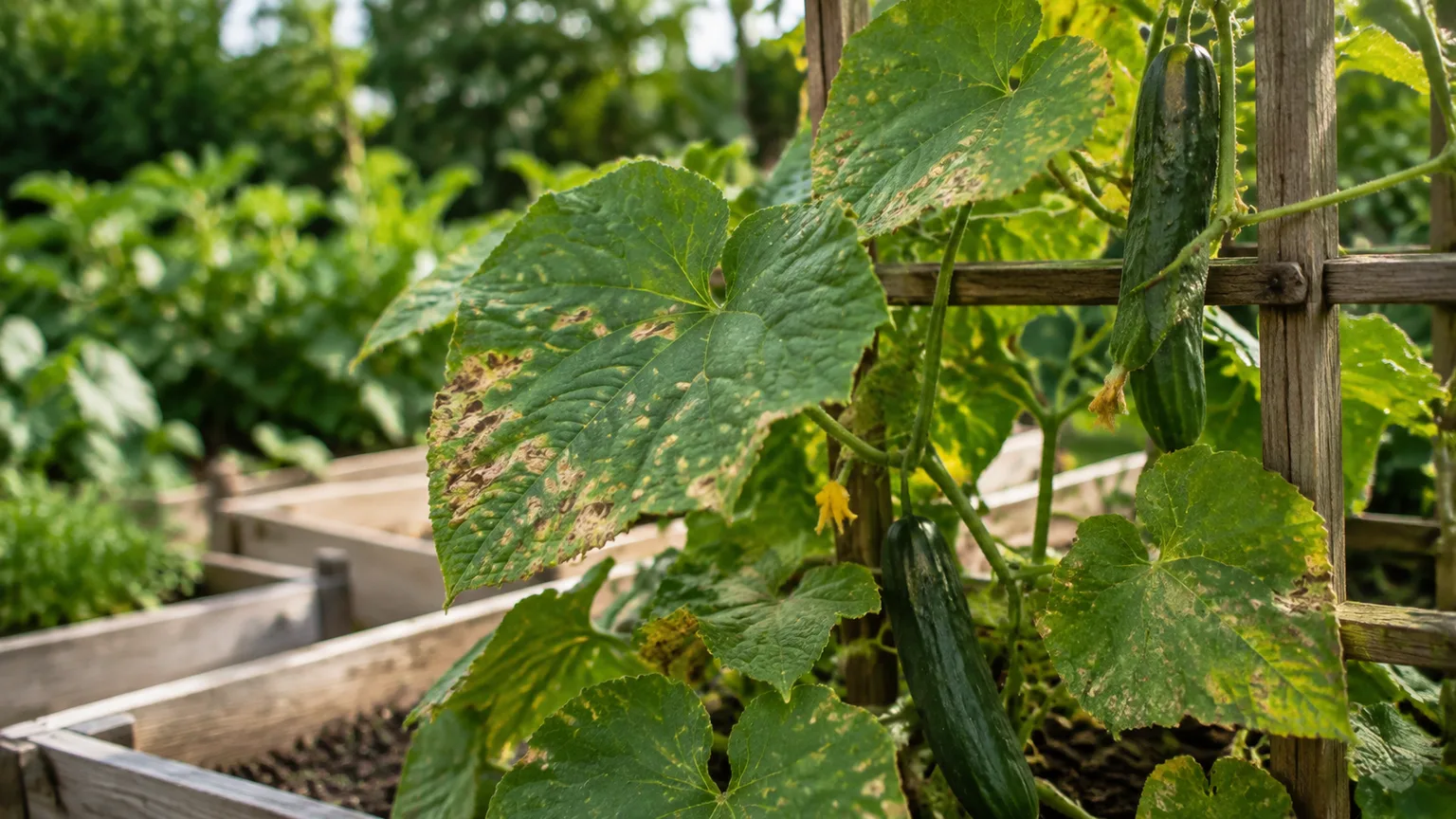
Brown spots are a symptom, not a diagnosis. A cucumber leaf with a few dry tan flecks needs a different response from a leaf with angular lesions, white powder, fine stippling, or a vine that wilts by noon.
Before you reach for fertilizer, fungicide, or insecticidal soap, inspect the shape of the spots, which side of the leaf is affected, how quickly the damage is spreading, and what is happening to new growth. That four-part check usually narrows the possibilities faster than the color alone.
The five cause groups below cover the problems most likely to turn cucumber leaves brown: downy mildew, powdery mildew, fungal or bacterial leaf-spot disease, cucumber beetles with possible bacterial wilt, and spider mites or environmental stress. A plant can also have two problems at once, such as beetle feeding followed by bacterial wilt or drought stress that makes mite damage worse.
Quick diagnosis: start with the pattern, not the color
Walk around the plant and inspect both sides of several leaves, including one healthy newer leaf and one damaged older leaf. Notice whether the marks are individual lesions or a general change in color, whether they stop at the veins, and whether the tissue is dry, soft, fuzzy, or missing.
| What you see | Most likely direction | First check |
|---|---|---|
| Angular yellow-to-brown patches bounded by veins; dark fuzz underneath when humid | Downy mildew | The underside of leaves after a damp night |
| White floury patches that spread across the leaf surface | Powdery mildew | Whether the white growth wipes or brushes off like powder |
| Round or angular brown lesions, yellow halos, shot holes, or water-soaked tissue | Anthracnose or bacterial/fungal leaf spot | Nearby leaves, fruit, stems, and recent rain or overhead watering |
| Chewed holes, ragged edges, yellow-green beetles, or sudden vine wilt | Cucumber beetles and possible bacterial wilt | The growing tips, flowers, leaf undersides, and other cucurbits |
| Fine pale stippling, webbing, crispy edges, or a dry root zone | Spider mites or environmental stress | Undersides of leaves, soil moisture, heat, and recent weather |
Do not treat every brown mark as a fungus. Older cucumber leaves can decline as the vine ages, especially late in the season, but normal senescence usually begins with an older leaf fading evenly rather than producing fast-expanding, sharply outlined lesions. New brown spots appearing on several plants after rain, or damage that is moving into young growth, deserves a closer diagnosis.
What brown spots look like on cucumber leaves
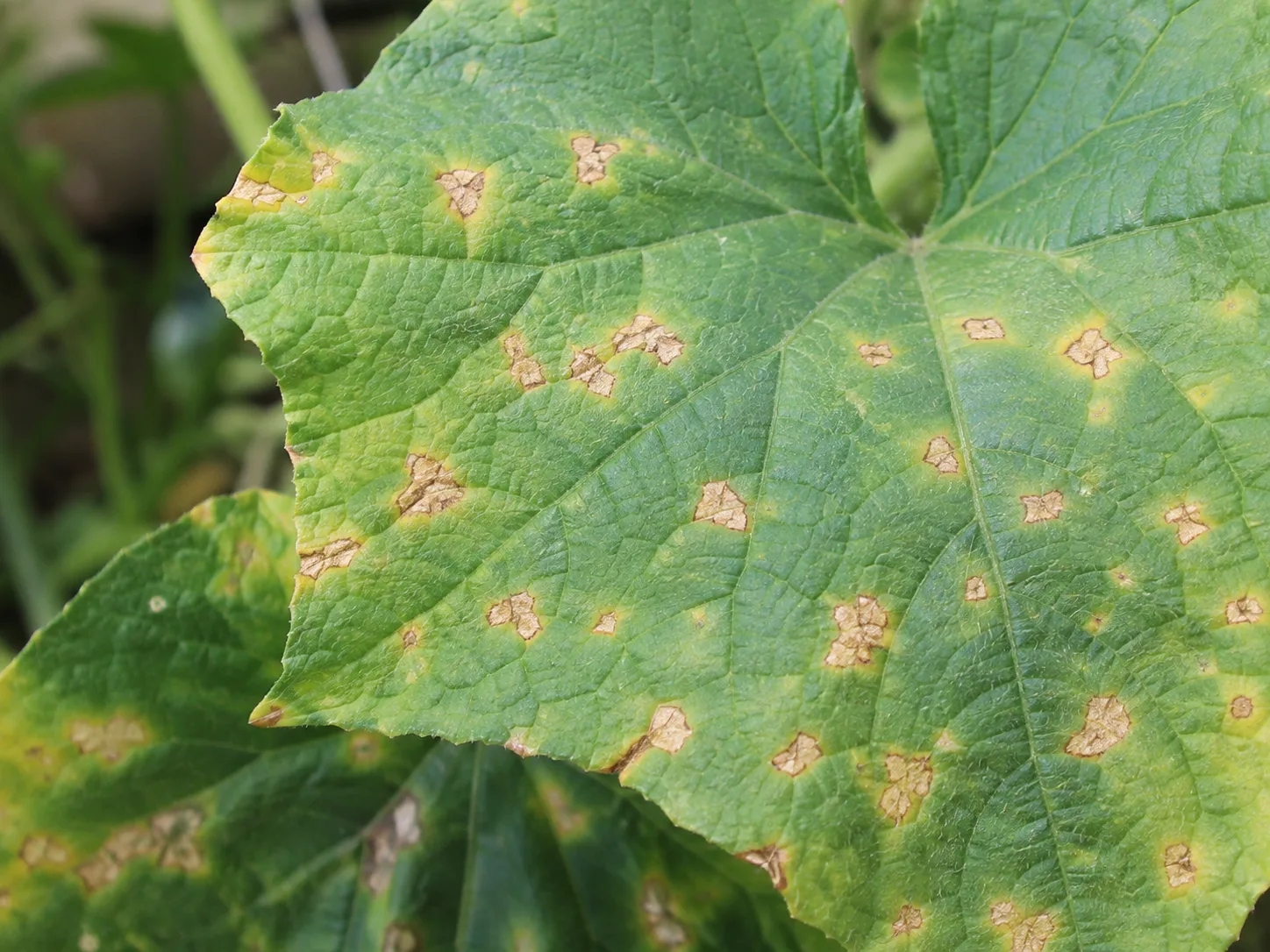
Tan-brown cucumber leaf lesions with pale halos are a useful visual clue, but the pattern still needs to be checked against the underside of the leaf, weather, pests, and new growth.
The University of Minnesota Extension cucumber diagnostic guide lists several different diseases and insects under “spots on leaves.” That is why a photograph or a description that says only “brown spots” is not enough to select a treatment.
White or gray growth points to mildew
Powdery mildew produces a visible white to gray coating on the leaf surface, often starting as separate patches. Downy mildew does not look like flour; it produces angular yellow-to-brown areas on the upper surface and may show dark gray or purplish growth underneath when humidity is high.
The two mildews behave differently: powdery mildew can develop in warm, relatively dry weather, while downy mildew spreads quickly when foliage stays damp and air movement is poor. The distinction matters because wetting the foliage or choosing a fungicide without identifying the disease can make the situation harder to manage.
Angular, water-soaked, or shot-hole lesions point to leaf-spot disease
Lesions that are boxed in by leaf veins are a strong clue for angular leaf spot or downy mildew. If the spots begin water-soaked, dry to a tan or brown color, and leave ragged holes as the dead tissue falls out, bacterial angular leaf spot is one possibility; the Gardening Know How guide to angular leaf spot describes this pattern on cucurbits.
Anthracnose more often produces somewhat circular, dry brown spots near veins. The centers can drop out, creating a shot-hole appearance, and the disease may also cause sunken lesions on fruit. Several diseases can overlap visually, so look for the combination of leaf pattern, fruit symptoms, weather, and whether the damage is appearing on neighboring squash or melons.
Stippling, webbing, holes, and wilt point to pests
Tiny pale dots spread across a leaf suggest a sap-feeding pest such as spider mites, especially when there is fine webbing on the underside. Large irregular holes, lacing, ragged edges, or missing flower tissue suggest chewing insects instead of a leaf-spot pathogen.
Wilt changes the urgency. A leaf that droops in the heat but recovers after the soil is watered may be stressed; a vine that wilts while the root zone is adequately moist, then progresses from one section to the next, raises concern about bacterial wilt or a vascular problem.
5 causes of brown spots on cucumber plants
1. Downy mildew
Downy mildew is a leading suspect when brown areas are angular and vein-bounded. Early spots may look pale green or yellow on the upper surface. In humid conditions, the underside can develop dark gray to purplish fuzz, and the lesions may merge until an entire leaf looks scorched or frost-killed.
The University of Minnesota Extension spot guide notes that cucumber downy mildew is especially damaging in wet or very humid conditions and that the disease can progress rapidly. Plantura’s cucumber mildew guide also distinguishes downy mildew’s yellow-brown angular markings from the white patches of powdery mildew.
Start by removing leaves that are heavily covered or already collapsing, especially when they are touching other foliage. Put them in the trash rather than the compost, keep irrigation at the soil surface, and thin or redirect vines so leaves can dry. These steps will not turn brown tissue green, but they can reduce the amount of infected foliage and preserve healthy leaves that are still feeding the crop.
Do not assume that a general “mildew spray” will cure downy mildew. Products and labels differ by country, crop, pathogen, and harvest interval, and some products protect new tissue without erasing established lesions. If you use a fungicide, choose one whose label specifically includes cucumbers and the disease you are trying to manage, then follow the label for rate, timing, protective equipment, re-entry, and harvest interval.
2. Powdery mildew
Powdery mildew starts with white, flour-like patches on the upper leaf surface, often on older or shaded leaves. As the coating spreads, leaves may yellow, dry, and develop brown areas at the edges or between the veins. Unlike downy mildew, you should not expect water-soaked lesions or a dark fuzzy underside as the defining clue.
Warm weather, crowded growth, and still air can help powdery mildew move through a cucumber patch, even when the soil is not especially wet.
Remove the worst leaves first, but keep enough healthy foliage to shade fruit and support continued growth. Tie or train the vine so leaves are not stacked on top of one another, avoid handling plants while they are wet, and water the root zone rather than spraying the canopy on a schedule. For established disease, a labeled fungicide may protect new growth, but it works best when used early and as directed; it cannot repair brown tissue that is already dead.
Home remedies are a common source of leaf burn. Dish detergent, concentrated oils, vinegar, and improvised copper or baking-soda mixtures can injure cucumber foliage or leave edible-crop residue. “Natural” is not a substitute for a crop label: test permitted products on a small area first, avoid heat-stressed plants, and respect pollinator and harvest instructions.
3. Fungal or bacterial leaf-spot disease
“Leaf spot” is a description that covers several different diseases, including anthracnose, angular leaf spot, Alternaria leaf blight, scab, and other problems that can affect cucurbits. They do not all respond to the same spray, which is why the most valuable first step is to identify the lesion pattern and the conditions that preceded it.
Anthracnose often appears mid to late season as circular or slightly irregular dry brown lesions near veins. The center may fall out, and fruit can develop sunken dark spots; in wet conditions, the lesion center may show salmon-colored spore masses. Remove infected foliage, clean up fallen leaves, and avoid carrying wet plant material through the garden.
Angular leaf spot behaves differently. It may begin as small water-soaked areas, become gray or brown, and stop at major veins. When the tissue dries, it can crumble out and leave angular holes. Recent heavy rain, overhead irrigation, working among plants while leaves are wet, and infected debris all increase the chance of spread.
For either pattern, cultural control is more dependable than guessing at a cure. Use a trellis or adequate spacing for airflow, water near the soil, remove diseased debris, rotate cucurbits with unrelated crops, and select resistant varieties when seed catalogs provide that information. The Gardening Know How cucumber leaf-spot guidance recommends dry-leaf practices, sanitation, resistant varieties, and crop rotation; those measures also reduce the opportunity for several other leaf diseases.
If spots are spreading quickly, fruit is developing sunken or water-soaked lesions, or a stem has a canker or gummy exudate, contact a local extension service or plant clinic with close-ups of both leaf surfaces, the whole plant, and recent weather and irrigation notes.
4. Cucumber beetles and bacterial wilt
Cucumber beetles cause direct damage first. Striped or spotted beetles chew holes in leaves, flowers, and fruit, leaving ragged tissue that can dry into brown edges. The University of Minnesota Extension cucumber beetle resource identifies these beetles as important cucurbit pests and a vector of bacterial wilt.
Look closely at growing tips, flowers, and leaf undersides rather than searching only the most damaged leaf. Striped beetles are yellow-green with black stripes; spotted types are yellow-green with black spots. Check nearby squash, zucchini, and melons too.
The more serious follow-on problem is bacterial wilt. Affected leaves may first look dull and wilt during the day, then recover overnight. The wilt eventually moves down the vine, and whole sections can turn brown even when the soil is moist. The Gardening Know How explanation of cucumber wilt describes the link between beetle feeding, vascular blockage, and the absence of a curative treatment once a plant is infected.
If you find beetles but the plant is otherwise vigorous, hand-pick them into soapy water, use an appropriate row cover on young plants where practical, and keep scouting. Row covers must be managed around flowering and pollination, and any insecticide used on an edible crop must be labeled for that crop and applied with care around flowers and beneficial insects.
If a cucumber vine is repeatedly wilting despite adequate root-zone moisture, has beetles present, and is declining from one section to the next, remove it promptly and bag it for disposal. Do not compost a plant you suspect has bacterial wilt, and do not keep taking cuttings or saving seed from a failing vine.
5. Spider mites, heat, water, or nutrient stress
Spider mites are easy to miss because the first damage is a fine stippling of pale yellow, bronze, or gray dots rather than a large, neat lesion. Heavy feeding can turn sections brown, and fine webbing becomes easier to see on the underside and between leaf veins. The University of Minnesota Extension cucumber diagnosis guide notes that spider mites are more prevalent in hot, dry weather and feed on the underside of leaves.
Try the white-paper check: hold a sheet of white paper beneath a suspect leaf, tap the leaf, and look for tiny moving specks. Rinse the undersides of leaves with a firm but not damaging stream of water, then reassess after a day or two. If mites are confirmed, an insecticidal soap or horticultural oil can help when the product is labeled for the crop and the spray thoroughly contacts the pests; eggs and sheltered mites mean repeat applications may be needed. Never apply an oil or soap to a heat-stressed plant or during conditions the label excludes.
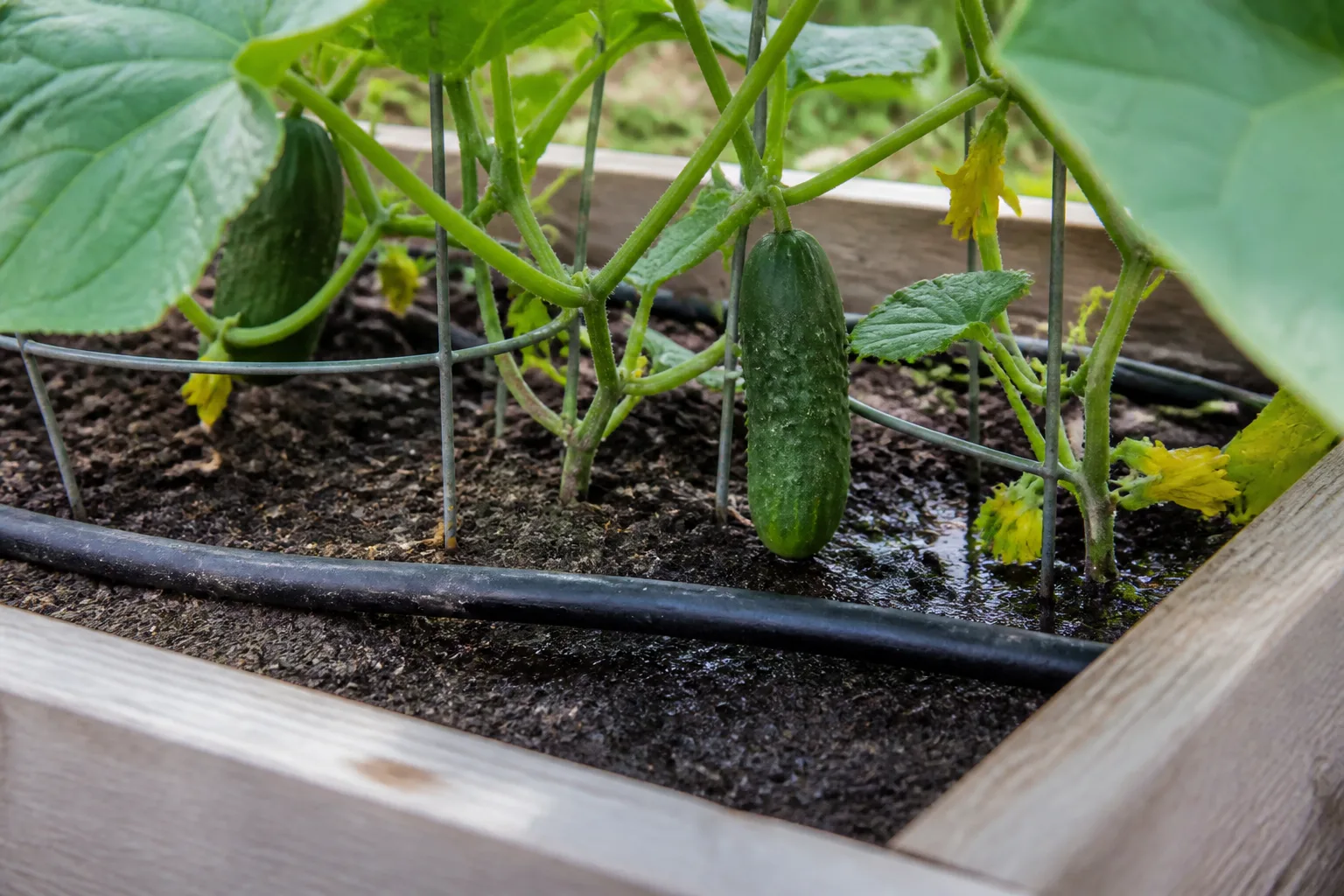
Check root-zone moisture and irrigation placement before interpreting every yellow or brown leaf as a disease.
Heat and inconsistent water can make leaves crisp at the margins, especially when soil dries rapidly in a container or raised bed. Check moisture below the surface, water slowly at the base when the root zone is dry, and use mulch to reduce swings between very dry and saturated soil.
Cold can also discolor cucumbers. The University of Minnesota Extension discolored-leaf guide associates cucumber injury with cold, wet weather below 50°F and cold, damp soil below 62°F. Cold injury is more likely to produce generalized edge browning, dull color, wilting, or damaged new growth than a set of sharply defined spreading lesions.
Nutrient deficiency is frequently blamed, but isolated brown spots are a weak reason to add fertilizer. Nutrient problems more often cause broad paling, slow growth, or interveinal chlorosis across similar-aged foliage. Test the soil before adding fish fertilizer, potassium, or a high-nitrogen product; excess fertilizer can damage roots and force soft, crowded growth.
What to do in the first 24 hours
The goal of the first day is to stop accidental spread and gather enough evidence to choose the next step:
- Photograph the plant before pruning. Take one whole-plant photograph and close-ups of the top and underside of affected leaves. Include a ruler or coin only for scale in your own reference photo; keep the visual record with the date and weather.
- Check the root zone. Push a finger or a small trowel into the soil rather than judging moisture from the surface. Note whether the plant is dry, waterlogged, or evenly moist.
- Inspect for pests. Look under leaves, around growing tips and flowers, and on neighboring cucurbits. Search for beetles, webbing, stippling, aphids, and chewing damage.
- Pause blanket treatments. Do not stack fertilizer, fungicide, oil, soap, and insecticide before you know which problem you are addressing. A mixture can scorch leaves, harm beneficial insects, or make the symptom harder to read.
- Remove only the worst tissue. Cut leaves that are mostly brown, heavily covered, or touching healthy foliage. Keep useful green leaves; the plant needs them to keep filling fruit.
- Water the soil if it is genuinely dry. Apply water slowly to the root zone, then improve drainage or mulching if the moisture swings are extreme.
- Mark new growth. Check a healthy growing tip again in several days. New, clean leaves are a better measure of progress than old spots that cannot recover.
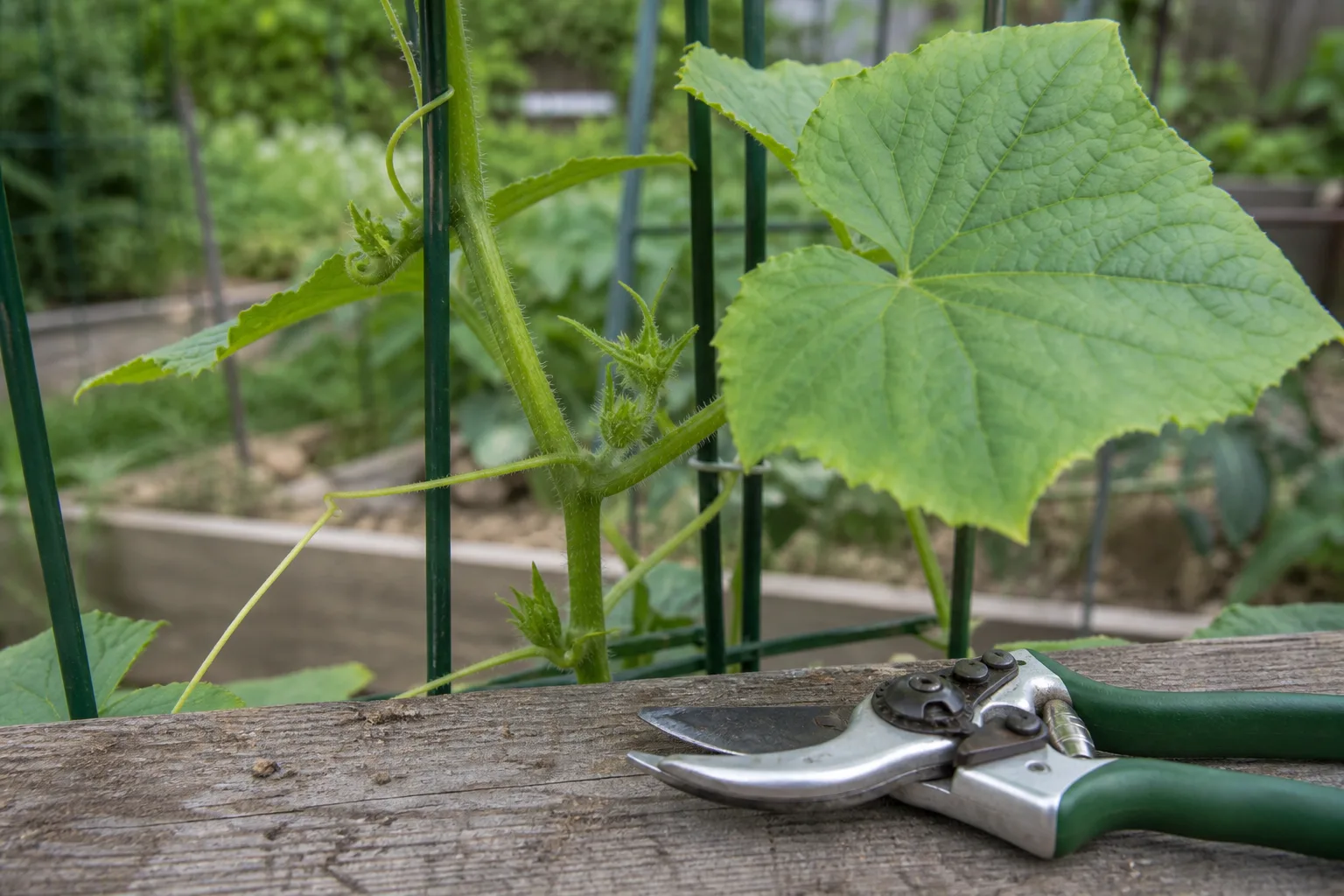
Selective pruning preserves healthy cucumber foliage while removing leaves that are clearly dead or heavily affected.
How to prune and dispose of affected leaves
Pruning is a sanitation step, not a way to make the plant look perfect. Use clean, sharp shears and remove the whole affected leaf at its attachment point when possible. If only a small edge is damaged by sun or drought, leave the leaf in place; cutting every brown margin creates wounds without removing a meaningful source of disease.
Work from the healthiest part of the plant toward the worst part, and avoid dragging diseased leaves across the vine. Between plants, clean the blades with a suitable disinfectant according to its label and allow them to dry. Do not prune through a wet canopy if you can wait for a dry morning, because water on foliage and wet hands make it easier to move bacterial and fungal pathogens.
Bag suspicious leaves and dispose of them with household waste rather than adding them to a backyard compost pile. Home compost does not reliably reach or maintain the conditions needed to destroy every plant pathogen, and finished compost may return contaminated debris to the next cucurbit bed.
Do not strip a cucumber vine bare. Healthy leaves are the plant’s solar panels, and removing too many at once can expose fruit to sunscald and add stress. If most leaves are affected, focus on diagnosis and removal when warranted instead of repeated severe pruning.
Treatment choices: when sprays help and when they do not
The right treatment depends on whether the problem is a pest, a surface pathogen, a vascular disease, or stress. Brown tissue itself is dead; no spray or fertilizer will restore its green color. Success means stopping new damage, preserving healthy growth, and harvesting what the plant can still produce.
| Confirmed direction | A reasonable next move | What not to expect |
|---|---|---|
| Spider mites | Rinse leaf undersides, then use a labeled soap or horticultural oil if needed; repeat only as the label directs | One spray will not reach every egg or sheltered mite |
| Cucumber beetles without wilt | Hand-pick, use an appropriate early row cover, and follow a cucumber-labeled pest product only if necessary | Killing beetles will not reverse holes already eaten |
| Powdery mildew | Improve airflow, remove severe leaves, and use a cucumber-labeled fungicide early if appropriate | Brown or yellow leaves will not become healthy again |
| Downy mildew or leaf-spot disease | Remove affected debris, keep foliage dry, improve spacing, and seek local diagnosis for a labeled control | A generic “fungus killer” is not automatically effective |
| Bacterial wilt, virus, or severe collapse | Remove and dispose of the plant; protect the next crop through sanitation and pest prevention | Fertilizer, oil, or fungicide will not cure a vascular or viral infection |
Follow the product label for every edible-crop spray. The label controls whether the product can be used on cucumbers, how much to apply, how often to repeat it, what protective equipment is required, how long to wait before harvest, and what precautions protect pollinators. If the label does not list cucumbers or the problem, do not improvise a rate from advice written for roses or houseplants.
Be wary of treating an uncertain diagnosis with several products at once. Oils and soaps can burn foliage in high heat, copper can injure leaves when misused, and broad-spectrum insecticides can remove predatory insects. If new growth stays clean after sanitation and improved watering, you may not need a spray.
How to prevent brown spots next season
Prevention starts before the first spot. Give cucumber vines room to climb or spread without forming a permanently wet mat, and inspect the canopy at least twice a week during warm, humid weather. A trellis makes airflow and scouting easier.

An open trellis setup makes it easier for cucumber leaves to dry and for a gardener to spot early damage.
Water at the base in the morning when possible, using drip irrigation or a low stream that does not splash mud onto leaves. Mulch the soil after it has warmed, leaving space around the stem, to reduce rapid drying and soil splash. Avoid watering by a fixed calendar when weather, soil, container size, and vine size change the plant’s needs.
Clean up cucumber vines and fallen leaves at the end of the season. Rotate cucumbers, squash, zucchini, and melons away from the same bed when you can, because related crops can share pests and pathogens. The exact rotation interval depends on the disease and your local climate, but even moving the crop and removing debris is more useful than replanting a diseased pile of vines in the same spot.
Choose varieties with resistance to diseases common in your area, and buy clean seed or transplants. Resistance lowers risk but does not make a plant immune. Young plants can sometimes be protected from cucumber beetles with a well-managed row cover, but covers need to be opened when pollination requires insect access.
Keep weeds and volunteer cucurbits under control, since they can shelter pests or disease between crop cycles. Avoid working among plants when leaves are wet, sanitize tools after a suspect plant, and wash hands before moving to a clean row.
Can you still eat cucumbers from the plant?
If the problem is limited to the foliage and the cucumbers themselves are firm, normally colored, and free of lesions, they are generally harvestable after washing. Plantura’s cucumber mildew guidance notes that mildew usually affects the foliage rather than the fruit, while also advising caution when fruit is discolored or the diagnosis is uncertain.
Do not eat cucumbers that are soft, water-soaked, sunken, visibly moldy, badly discolored, or leaking. Do not assume that a fruit is safe just because the leaves have a familiar-looking spot; bacterial and fungal problems can affect fruit differently. When in doubt, discard the affected fruit and seek a local diagnosis, especially if several fruits are changing at once.
Harvest healthy fruit promptly so the vine does not spend energy on overmature cucumbers while it is under stress. Wash produce under running water before eating, and follow any pre-harvest interval printed on a pesticide label if you treated the plant.
When to remove the whole cucumber plant
Remove the plant instead of trying to rescue it when it is collapsing from a persistently moist root zone, bacterial wilt is strongly suspected, a virus-like mosaic is accompanied by stunting and deformed fruit, or disease has spread through most of the canopy and new growth is failing. Bag the plant, clear fallen debris, and clean tools before touching a healthy cucumber or squash.
Removal is not automatically necessary for a few brown lower leaves late in the season. If the growing tip is green, the root zone is healthy, fruit is still forming, and the spots are not spreading, prune the worst leaves, correct the stress, and watch the new growth. A cucumber vine nearing the natural end of its productive cycle may simply be finishing, and repeatedly spraying or fertilizing it can add cost and damage without extending the harvest.
Conclusion
Brown spots on cucumber leaves are easiest to solve when you treat the pattern, not the color. Angular lesions with underside fuzz point toward downy mildew; white powder suggests powdery mildew; shot holes or water-soaked lesions suggest leaf-spot disease; chewing and wilt call for a beetle and bacterial-wilt check; stippling and webbing point toward mites, while crisp edges and evenly pale older leaves make environmental or nutrient stress more plausible.
Photograph first, inspect both sides of the leaves, check root-zone moisture, remove only clearly affected tissue, and keep suspicious debris out of the compost. If new leaves stay clean after those corrections, you are on the right track; if the disease keeps moving into new growth, the plant wilts despite moist soil, or fruit is affected, remove the plant or contact your local extension service before the problem reaches the next crop.