Will Petunias Bloom Again or Should You Replace Them?
Will petunias bloom again? Use stem, root, frost, bloom, and pest clues to decide whether to prune and revive your plant or replace it.
The Fast Answer: Inspect Before You Replace
Yes, many petunias will bloom again after a pause, especially when the stems are still green and firm, the roots are healthy, and the plant has not been hit by a killing frost. A leggy petunia with flowers only at the tips is usually asking for more light, steadier moisture, a trim, or a better-matched fertilizer—not a trip to the compost pile.
The important distinction is between a plant that is temporarily out of balance and one whose growing tissue is dead. Pull off one fading flower and look at the whole plant before you decide. If you can find green nodes, new leaves, unopened buds, or firm stems near the crown, there is still a route back to flowers. If the crown is black and mushy, the roots are mostly brown and slimy, or every stem is brittle after a freeze, replacing the plant is usually the kinder use of your time.
Petunias do not have a fixed “last bloom” date. They are warm-season plants that can flower from spring into fall when conditions stay favorable. N.C. Cooperative Extension notes that properly managed petunias can bloom through summer until frost, while the Royal Horticultural Society explains that tender annuals complete their display in one season and are killed by frost. That means a late-summer slump can be a reset point, not a final verdict.
First Separate Cold Damage From a Tired Plant
Weather can make a healthy petunia look finished overnight. Before pruning, check the recent temperature history and feel the stems. A plant that is merely tired usually has some flexible green growth left; a plant damaged by freezing weather often has a sharp boundary between living and collapsed tissue.
What Frost and Freeze Damage Looks Like
Petunias are tender warm-season plants. A chilly night may slow growth or turn a few leaves limp, but a freeze can make leaves and stems look dark, water-soaked, translucent, or suddenly mushy. A hard frost that reaches the crown is a replacement signal, particularly when the entire plant collapses instead of only the outer leaves.
Do not confuse a cold forecast with a guaranteed death sentence. If the stems are still green and springy after a light chill, move a container to shelter, remove only tissue that has turned soft, and wait several days for the living sections to declare themselves. For plants still in the ground, protect them before the next cold night with a breathable cover that does not rest on wet foliage. The RHS advises treating tender plants as frost-sensitive and waiting for reliably mild nights before moving them outdoors; the exact temperature threshold depends on the plant, local exposure, and whether it has been hardened off.
Once the stem is black, water-soaked, and collapsing all the way to the soil line, pruning cannot restore that tissue. You can cut down to a firm green section to check whether a small portion survived, but do not keep watering a dead crown in the hope that it will re-sprout.
What Heat, Drought, and Wet Roots Look Like
Heat and drought often produce a wilted petunia that perks up after a thorough watering. The leaves may be limp, the flowers may fade quickly, and the pot may feel unusually light, but the stems stay flexible and the soil accepts water. Containers can need attention more than once during a very hot spell because their limited root volume dries faster than a garden bed.
Overwatering has a different pattern. The soil stays wet for days, lower leaves yellow, growth becomes weak, and the plant may wilt even though the pot is damp. That apparent contradiction points to roots that are short of oxygen or beginning to rot. N.C. Cooperative Extension recommends consistent, even watering while warning that overly wet conditions can create disease problems; it also advises watering early enough that foliage dries before night when overhead watering is unavoidable.
If the problem is heat or drought, correct the root-zone conditions before you cut. If the problem is wet soil, stop watering, check the drainage hole, and inspect the roots before adding fertilizer or more moisture. Pruning a plant whose roots cannot supply water only hides the symptom for a few days.
The Signs of a Recoverable Petunia
A salvageable petunia usually shows at least two of these clues:
- Green, flexible stems: Scratch a small area of an older stem with a clean fingernail. Green tissue beneath the surface indicates living cambium; brown, dry tissue is dead in that section.
- Firm crown growth: New shoots emerging near the base are more valuable than a few tired flowers at the ends of long stems.
- Unopened buds: Buds prove the plant still has the capacity to shift from leaves to flowers once the stress is corrected.
- Firm roots: In a container, slide the root ball out gently. Healthy roots are generally firm and pale to tan; widespread brown, slimy, foul-smelling roots are a serious warning.
- A reversible cause: The plant has been shaded, allowed to dry repeatedly, pruned too late, or crowded in a container—but the tissue itself is not collapsing.
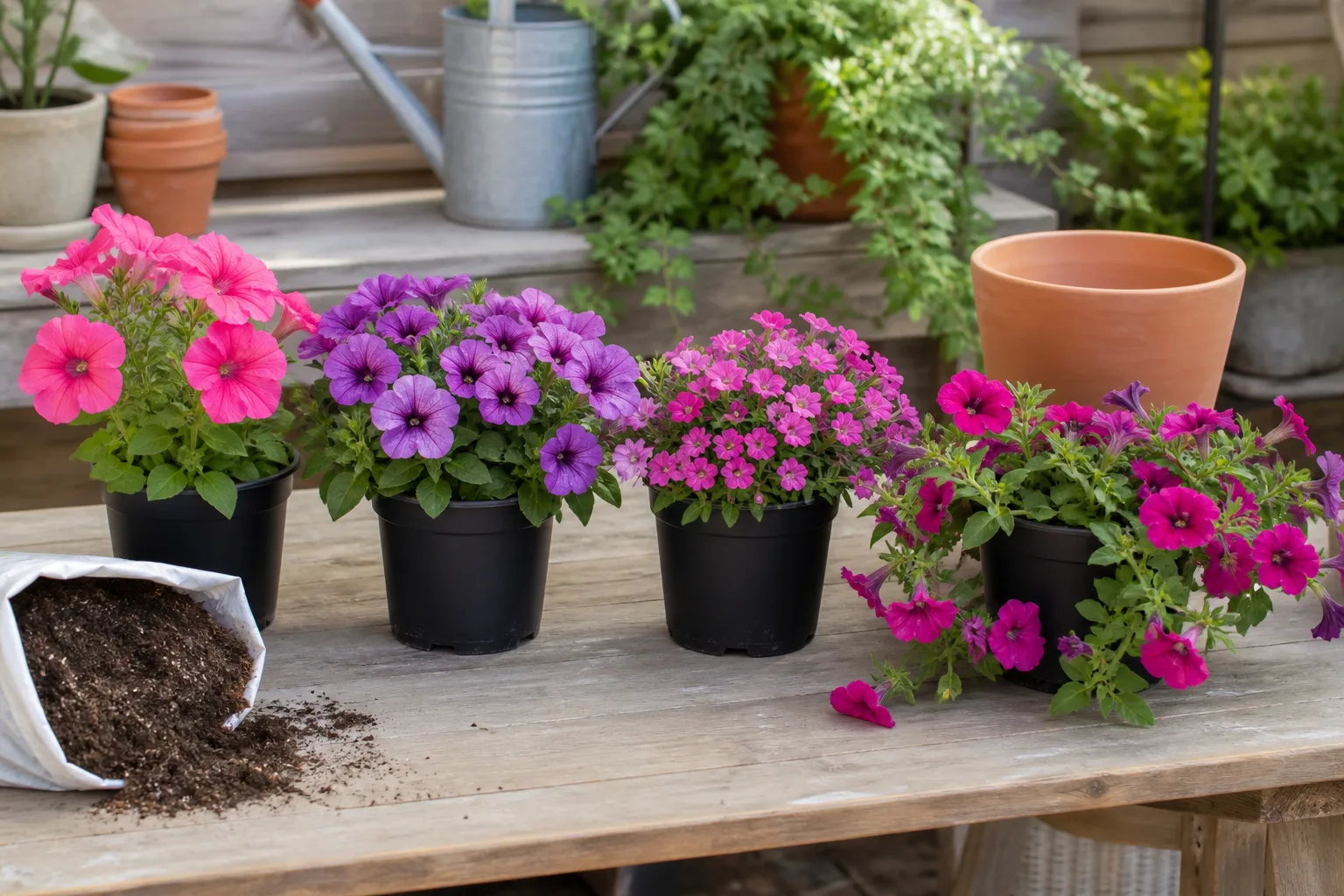
The scratch test is not a complete diagnosis, and do it sparingly. Petunia stems are soft, so a shallow scrape on one representative stem is enough. If the crown is firm but the upper growth is dead, cut back to living tissue and watch for new shoots instead of judging the plant by its old silhouette.
A plant with green leaves but no flowers is not automatically healthy enough to save indefinitely. It may be alive but stuck in a poor light, water, or nutrition pattern. The practical question is whether you can correct the cause within the remaining warm season. A healthy plant in June has more recovery runway than the same plant in late October after cool nights have already shortened the flowering window.
When Sparse Flowers Point to a Care Correction
Petunias can stop flowering while continuing to grow. That usually means the plant has enough resources to make leaves but not the combination of light, moisture, temperature, and reproductive timing needed to keep producing flowers.
Light and Variety Set the Bloom Ceiling
Start with the sun, not the fertilizer bottle. N.C. Cooperative Extension recommends at least six hours of sunlight per day for strong flowering; a plant that receives bright shade or only a few hours of direct sun may stay green and produce scattered blooms no matter how often you feed it. Move a container gradually into brighter exposure so a shaded plant does not go straight from low light to reflected heat against a wall.
Variety also changes the workload. Seed-grown petunias often need regular deadheading because the plant shifts toward making seed once a flower is pollinated. Many modern vegetative types are bred to bloom continuously or to be “self-cleaning,” meaning spent flowers drop away or do not interfere much with the next flush. Proven Winners describes Supertunia petunias as self-cleaning and says deadheading is not necessary for continued flowering, although not every petunia shares that trait.
That distinction matters when you judge a plant against a neighbor’s basket. A grandiflora with large flowers may look messy and pause after seed set; a spreading hybrid may keep pushing color with less intervention. Read the plant label if you still have it, but use the plant’s actual habit—flower size, trailing growth, and whether spent blooms remain—as the final clue.
Water, Drainage, and Feeding Keep the Plant in Motion
Water deeply when the upper soil has started to dry, then let excess drain freely. Avoid a cycle of a bone-dry pot followed by a saucer full of standing water. Petunias can recover from an occasional wilt, but repeated swings shorten flowers and stress roots. In a hanging basket or small container, check moisture with your finger and lift the pot when possible; weight changes faster than the calendar.
Containers also lose nutrients faster than garden beds. The RHS recommends regular watering for summer containers and notes that a potassium-rich liquid feed can boost flowering when applied according to the product label, often every couple of weeks. N.C. Cooperative Extension gives a more intensive feeding schedule for actively growing petunias, especially in containers. The safe takeaway is not “more fertilizer is always better”: feed a growing, well-watered plant at label strength, and do not fertilize a wilted, waterlogged, or freshly root-pruned plant until it resumes growth.
If leaves are lush and dark but flowers are scarce, excessive nitrogen may be contributing to the imbalance. If the plant is pale, small, and growing slowly, low fertility is more plausible. Neither diagnosis should override the light and root checks. A fertilizer cannot turn a shaded or rotting petunia into a flowering one.
Deadheading Prevents Seed Set in Some Types
Deadheading is more than pulling off colorful petals. Remove the faded flower and the small green structure behind it—the ovary—when working with a petunia that forms seed. N.C. Cooperative Extension explains that removing this seed-producing structure can redirect the plant toward another round of flowers. The RHS likewise lists regular deadheading as a way to encourage more flowers in annuals.
Self-cleaning petunias may not need this chore, but removing a few soggy or stuck flowers can still improve the plant’s appearance. If you are unsure which type you have, deadhead a small section and leave another section alone for a week or two. If the untreated stems develop obvious seed capsules while the cleaned stems keep budding, you have learned more from the plant than a generic rule could tell you.
How to Revive a Leggy Petunia Without Losing the Season
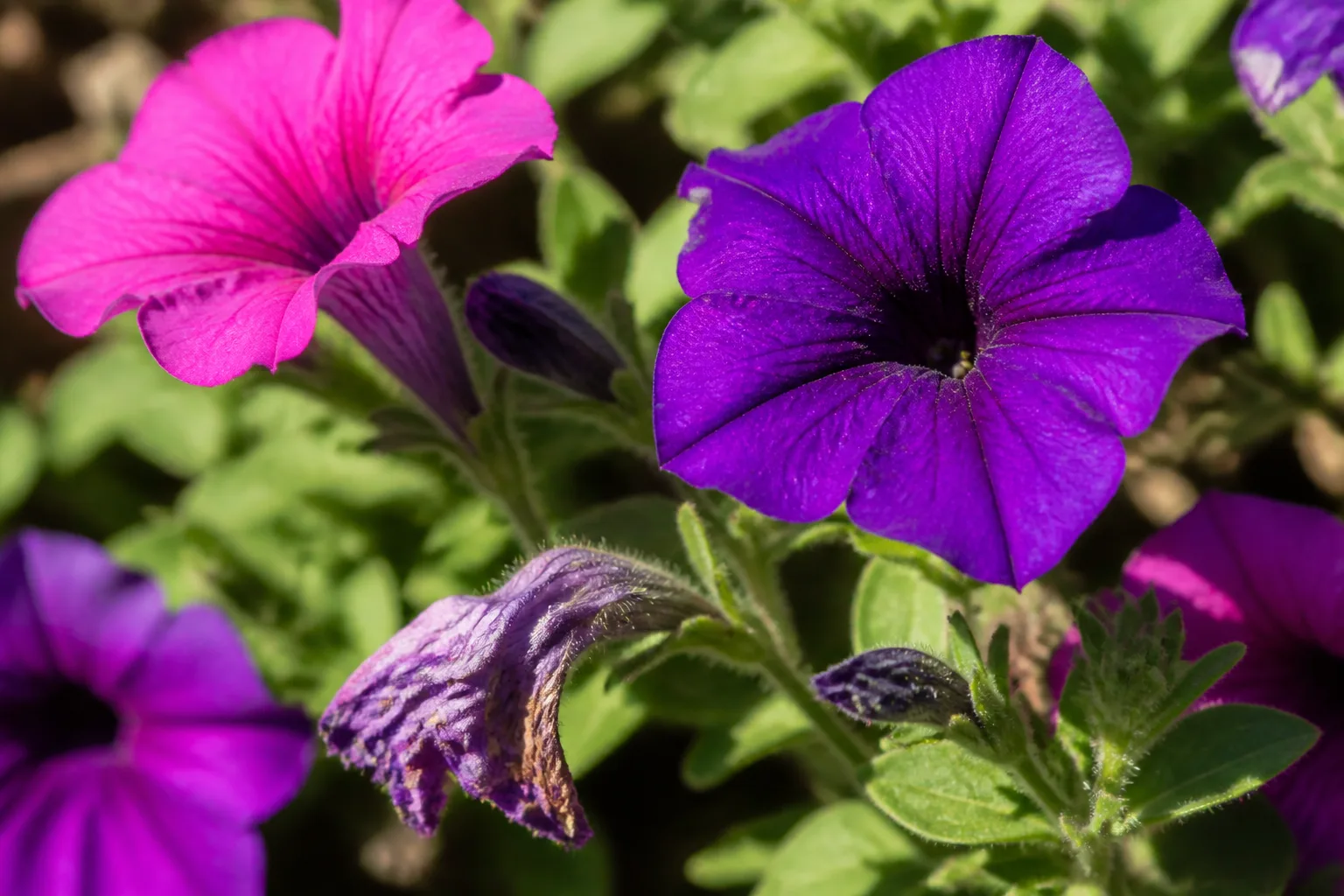
Leggy growth means the stems have stretched and the flowers have moved toward the tips. It is often caused by insufficient light, but even a sunny petunia can become sparse after months of fast growth, repeated drying, or a missed pruning window. Legginess alone is not a replacement reason when the lower stems are green and the crown is active.
Choose a Rolling Trim or a Full Cutback
Use a rolling trim when the plant still has flowers you want to keep. Every week, shorten the longest few stems by roughly one-quarter to one-third, cutting just above a healthy leaf node. Remove spent flowers on the remaining stems and keep the plant evenly watered. This method preserves some color while new side shoots develop.
Use a full cutback when the plant is mostly bare, tangled, or so large that the upper growth shades the center. Shear or snip the stems back to a compact framework with green nodes, but do not strip every leaf from the crown. N.C. Cooperative Extension recommends cutting long petunia stems back to a bud or node and reports that a substantial cut can take a week or two to produce new flowers. Plant Addicts similarly recommends removing about one-third of the plant at a time to encourage fuller growth.
Make clean cuts with sharp, sanitized shears. Do not hack through wet foliage, and do not prune immediately before a forecast of extreme heat if the plant will be unable to replace lost leaf area. If only one side is leggy, trim that side first rather than giving the entire plant a bald haircut.
Give New Growth the Conditions It Needs
Pruning is a reset button, not the whole repair. After the cut, give the petunia the brightest suitable light, water when the soil begins to dry, and keep the pot draining. Do not keep the soil constantly wet just because the plant has fewer leaves; reduced leaf area means reduced water use.
Wait for visible new growth before resuming regular feeding. Once shoots are extending, apply a complete flowering-plant fertilizer at the label rate rather than doubling the dose to force a faster result. Remove new spent blooms as they age, but do not keep shortening the same fresh shoots every few days. Let them build enough leaf area to support the next flower flush.
Expect the plant to look worse before it looks fuller. In warm, bright conditions, small side shoots may become obvious within one to two weeks, while a full flower display takes longer. If two to three weeks pass with no new growth and the stems are gradually drying back, revisit the roots, temperature, and light before pruning again.
When Disease or Pests Change the Decision
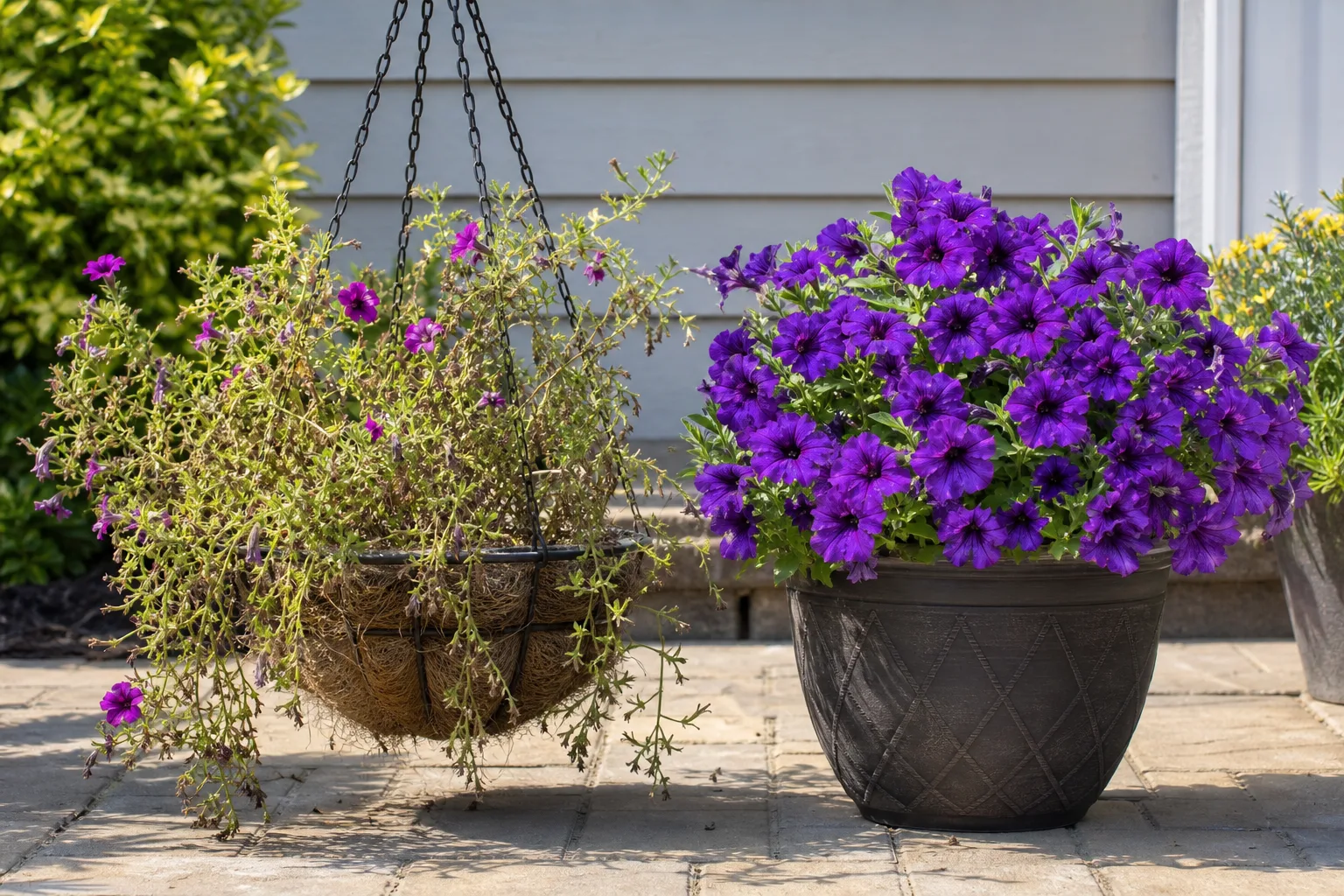
Pests and disease do not automatically mean “replace.” The deciding factor is how much healthy tissue remains and whether the cause can be stopped. Isolate a diseased container from nearby plants while you inspect it, and avoid spraying open flowers when pollinators are active.
Root Rot and Crown Collapse
Root rot is a root-zone failure, not simply a few yellow leaves. Tip the container out and look for roots that are soft, brown, or slimy rather than firm. If only a small portion is affected, remove the damaged roots with clean shears, repot into a clean container with drainage, and hold fertilizer until the plant begins to grow again. If most roots and the crown are mushy, the plant has little functional tissue left and replacement is more realistic.
Do not reuse contaminated potting mix around healthy petunias. Empty it, clean the container, and correct the drainage or watering pattern that allowed the problem to develop. A fresh plant will fail just as quickly if it returns to the same waterlogged pot.
Mildew, Aphids, Mites, and Bud-Damaging Pests
Powdery mildew looks like a white, dusty coating on leaves and can become worse when foliage is crowded and air movement is poor. Remove the most affected leaves, improve spacing, water the soil rather than repeatedly wetting the foliage, and follow a product label if a treatment is needed. A few affected leaves on a vigorously growing plant are a management problem; a plant covered in mildew with little healthy foliage left may not recover attractively before the season ends.
Aphids cluster on tender tips, spider mites cause stippling and fine webbing in hot, dry conditions, and budworms or other chewing pests can destroy flower buds before they open. Look under leaves and inside dense growth before assuming the plant “just stopped blooming.” Hand-pick visible pests where practical, rinse foliage early in the day when appropriate, and use only treatments labeled for the crop and pest. Avoid applying insecticidal products directly to open flowers when bees are visiting.
Replace a petunia when pests or disease have stripped most of the leaves, the crown is collapsing, or the plant continues to decline after the environmental cause is corrected. Removing one visibly sick plant can also protect a container grouping from becoming a shared problem.
Annuals, Tender Perennials, and Overwintering Reality
Petunias create confusion because they are botanically capable of living longer than one season in a warm, frost-free climate, but most gardeners grow them as annuals. The RHS defines annuals as plants that complete their life cycle in one growing season and identifies petunias among the colorful annuals used in containers and borders. In colder climates, frost ends the outdoor display even when the plant was perfectly healthy in September.
That is different from a petunia failing to rebloom after a summer cutback. Reblooming means producing more flowers during the current warm season. Overwintering means keeping living tissue through the cold season so it can grow again later. A petunia can be worth pruning for an autumn flush while still being a poor candidate for winter survival.
In a frost-free climate, or in a bright protected space where temperatures stay suitable, you may be able to carry a petunia through winter. Expect slower growth, fewer flowers, and a greater risk of pests or weak, stretched stems. Take healthy cuttings or start a fresh plant if keeping the original would require more space and pest management than it is worth. In a cold climate, move a container only before frost damage, not after the crown has frozen, and treat the plant as seasonal if you cannot provide bright light and appropriate warmth.
If you want a dependable display next year, collect a few healthy cuttings or buy a new plant at the start of the warm season rather than assuming an exhausted annual will return. For container-specific winter options, see the existing container petunia winter-care guide; for the basic conditions that keep new plants flowering, use the petunia care guide.
The Ten-Minute Petunia Triage Checklist
Use this order so you do not spend an hour pruning a plant whose roots or crown are already gone:
- Check the weather: Was there a hard frost or freeze? Black, mushy tissue to the crown usually means replace; green, flexible tissue means wait and protect.
- Feel the soil: Bone-dry means rehydrate gradually and correct the watering rhythm. Permanently wet means inspect drainage and roots before watering again.
- Inspect the crown: Look for firm green shoots, nodes, and new leaves near the base.
- Inspect one root section: In a container, firm pale roots are encouraging; widespread brown, slimy roots are not.
- Count the light: Aim for roughly six hours of sun for strong flowering, while easing shaded plants into brighter exposure.
- Read the plant’s habit: A self-cleaning spreading type may not need frequent deadheading; a seeded type may need the flower and ovary removed.
- Choose the smallest useful cut: Deadhead first, rolling-trim the longest stems, or make a fuller cutback only when the plant is mostly bare.
- Give it a recovery window: Look for new growth within about two weeks in warm, bright conditions before deciding the reset failed.
The best replacement rule is simple: start over when there is no firm green tissue to cut back to, the crown or roots are mostly rotten, or the growing season is ending and the plant has already suffered irreversible cold damage. Replace sooner when a diseased plant threatens neighboring containers. Keep trying when the cause is clear, the crown is alive, and you still have several warm weeks for new growth to flower.
Conclusion
Most tired, leggy petunias are not finished. If the stems and crown are green, the roots are functional, and frost has not killed the plant, correct the light and watering first, remove spent flowers when the variety benefits from it, and trim the longest stems back to healthy nodes. A rolling trim protects current color; a fuller cutback gives a bare plant the fastest route to a compact new flush.
Replacement is the right call when the crown is mushy, the roots are broadly rotted, pests or disease have removed most healthy foliage, or a hard freeze has collapsed the plant to the soil line. That decision is not a failure—it is the point at which a new, healthy petunia can give you more flowers than a declining one. Treat the plant’s living tissue and remaining warm-weather runway as your evidence, and you will know whether to prune, wait, protect, or start fresh.



