5 Causes of Yellow ZZ Plant Leaves and How to Fix Them
See five common causes of yellow ZZ plant leaves, when to inspect roots, how to adjust watering, and which yellowing leaflets can be left alone.
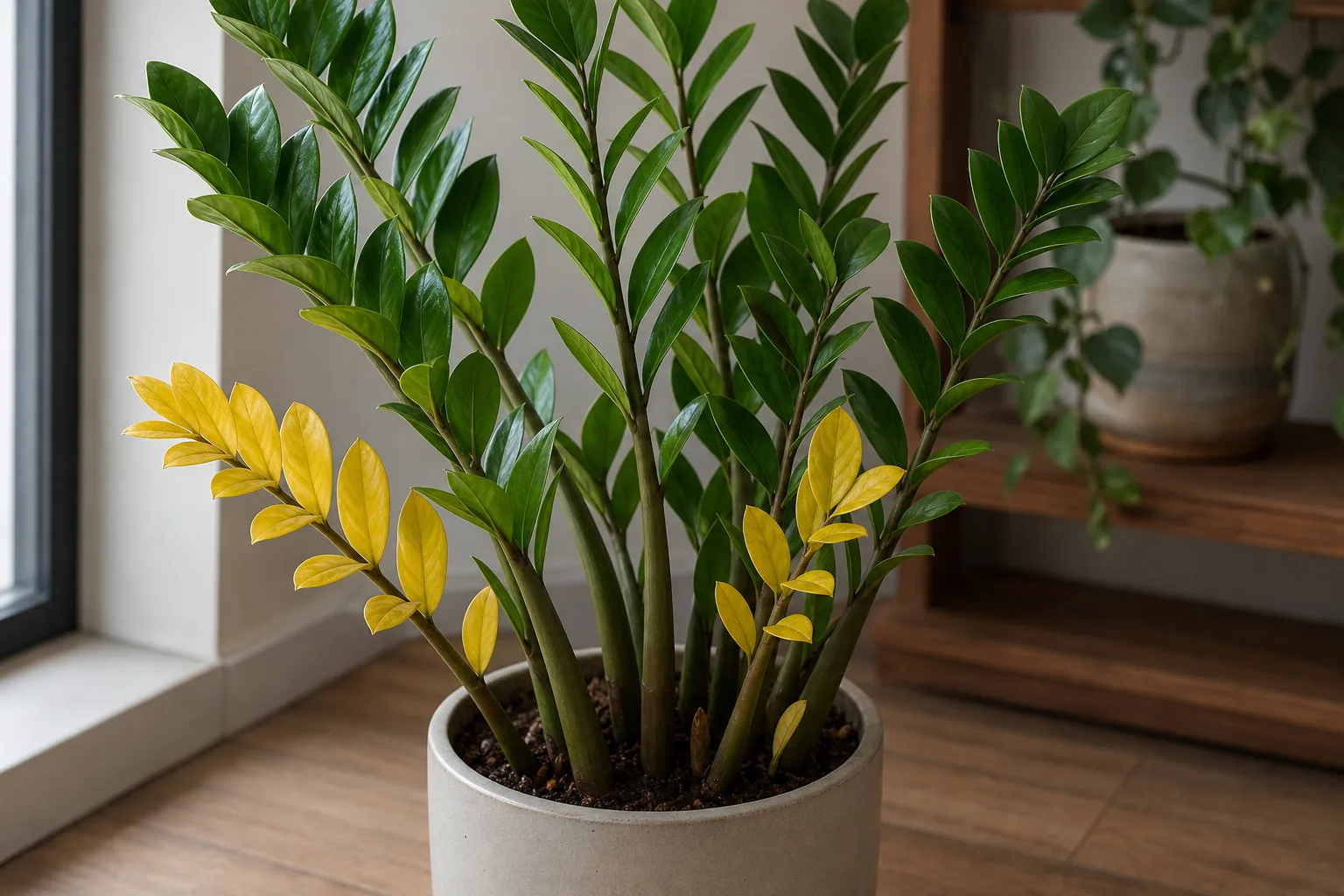
A yellow leaflet does not tell you by itself whether a ZZ plant is thirsty, waterlogged, sun-stressed, or simply shedding old growth. Start with the soil and the pattern of damage before you reach for the watering can or fertilizer: the same yellow color can sit above very different root conditions.
The ZZ plant (Zamioculcas zamiifolia) stores water in thick underground rhizomes and in its fleshy growth. That makes it forgiving of dry intervals, but it also means a pot that stays wet for too long can be slow to recover. Work through the checks below in order; if the plant has only one old yellow leaflet and otherwise looks firm, you may not need to treat it at all.
What yellow leaves can—and cannot—tell you
Yellowing is a symptom, not a diagnosis. The University of Florida IFAS Emerging Pathogens Institute makes the same point for houseplants generally: yellow leaves can follow both overwatering and underwatering, as well as disease and other growing conditions. Look at where the color starts, whether the tissue is soft or crisp, how wet the mix is below the surface, and whether one leaf or much of the plant is affected. (University of Florida IFAS)
A single aging leaflet near the base has a different meaning from several stalks yellowing in a pot that stays heavy. A leaf facing a hot window with pale, dry patches suggests a different problem again. No one clue settles the question; a useful diagnosis is the combination of leaf pattern, root-zone moisture, drainage, and what changed recently.
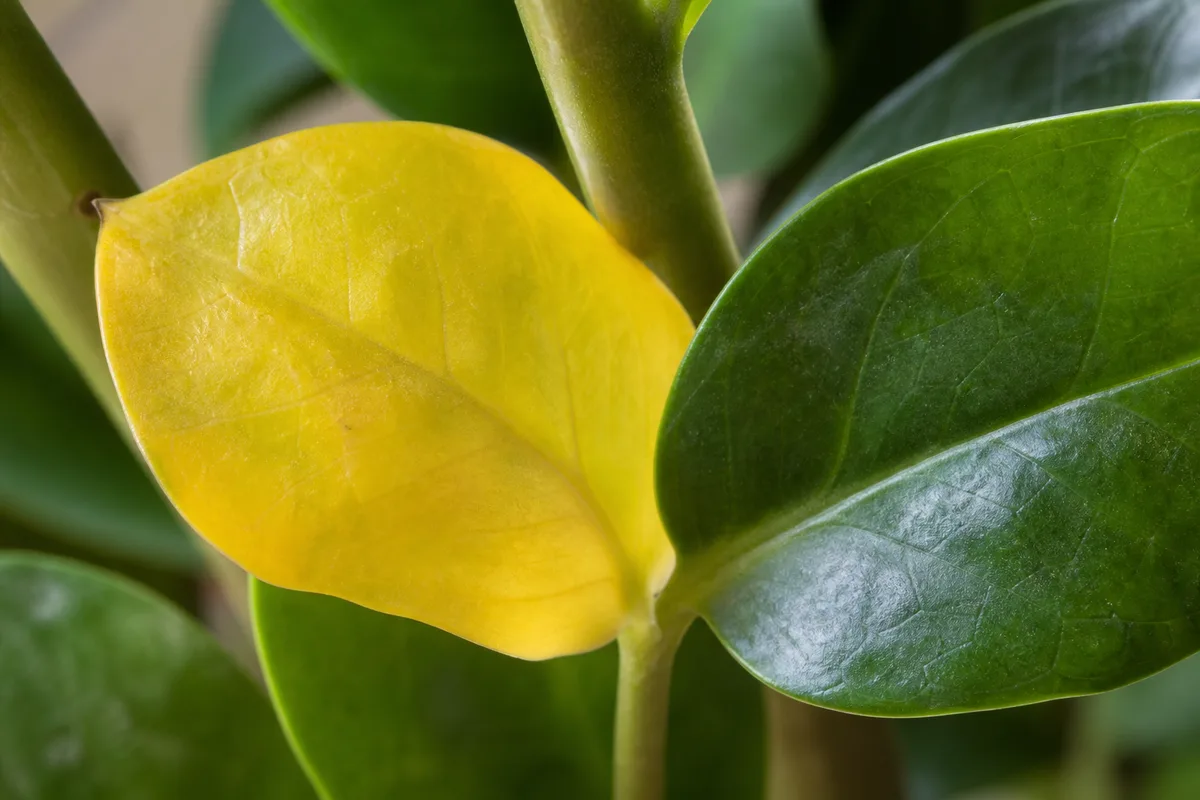
Read the whole leaflet pattern, not one spot
ZZ foliage is made of many leaflets arranged along a stout stalk. Check whether yellowing is limited to one or two of the oldest leaflets, appears across several stalks, or forms isolated spots with darker or water-soaked edges. A whole plant that is soft or fading at once often points to a growing-condition problem; sharply defined spots on one leaf make a localized injury or disease more plausible.
Texture helps narrow the possibilities but cannot identify a cause alone. Soft, limp yellow tissue together with saturated mix raises concern about root stress. Dry, papery patches on the window side fit scorch or prolonged drought better, while tiny pale stipples, webbing, sticky residue, or white cottony clusters call for a pest check. Take a photo before you change anything so you can compare the same stems later.
Check moisture, pot, and recent history in five minutes
Feel the mix a few centimetres down near the pot’s edge, then lift the pot. Surface dryness is a weak guide because the top may dry while the lower root zone is still wet; a heavy pot, plugged drainage hole, or water hidden inside a decorative cachepot can explain why it remains damp. If the mix is very dry and the pot is unusually light, that points in the opposite direction.
Next, check whether water can drain freely, whether the yellowing is spreading, and whether care changed recently. Think back to a move closer to a window, a cold draft, a repot into a larger container, a new fertilizer, or frequent watering as the weather cooled. Use this quick guide to decide what to inspect next, not as a substitute for checking the plant itself.
| What you notice | What it suggests | Best first check |
|---|---|---|
| One lowest leaflet fades slowly; the rest stays firm | Normal aging is possible | Watch for spread; confirm ordinary moisture |
| Several yellow or soft leaflets; pot stays heavy | Root-zone stress is more likely | Drainage, cachepot, and—if decline continues—roots |
| Dry mix well below the surface; light pot; limp or papery leaves | Prolonged drought may be involved | Rehydrate thoroughly, then let excess drain |
| Bleached or tan patches on the window-facing side | Direct sun or heat may be injuring foliage | Filter strong rays or move gradually to bright indirect light |
| Fine stippling, webbing, sticky film, cottony clusters, or raised bumps | Sap-feeding pests are possible | Inspect leaf undersides, stalk joints, and new growth |
| Distinct expanding spots with wet-looking edges | Leaf-spot disease or injury is possible | Isolate, keep foliage dry, and seek a closer diagnosis |
1. Wet soil and root or rhizome damage
For a ZZ plant, prolonged wetness is a more common suspect than lack of fertilizer. Its fleshy rhizomes store water, and NC State Extension recommends well-drained potting soil that dries between waterings; it also notes that the plant does not tolerate “wet feet.” A pot with no drainage, dense mix, cool low-light position, or water trapped in an outer coverpot can keep the root zone wet even when you think you are watering sparingly. (NC State Extension Plant Toolbox)
Watch for a cluster of clues rather than a fixed number of days: several leaflets yellowing, stalks losing firmness, mix that remains damp, and a pot that stays heavy. UF/IFAS explains that waterlogged roots can lose access to oxygen and that a plant may wilt or yellow while the soil is still wet, leading growers to mistakenly water again. Yellowing alone does not prove root rot, but yellowing plus persistently soggy mix warrants a closer look. (University of Florida IFAS Emerging Pathogens Institute)
When to inspect the root ball
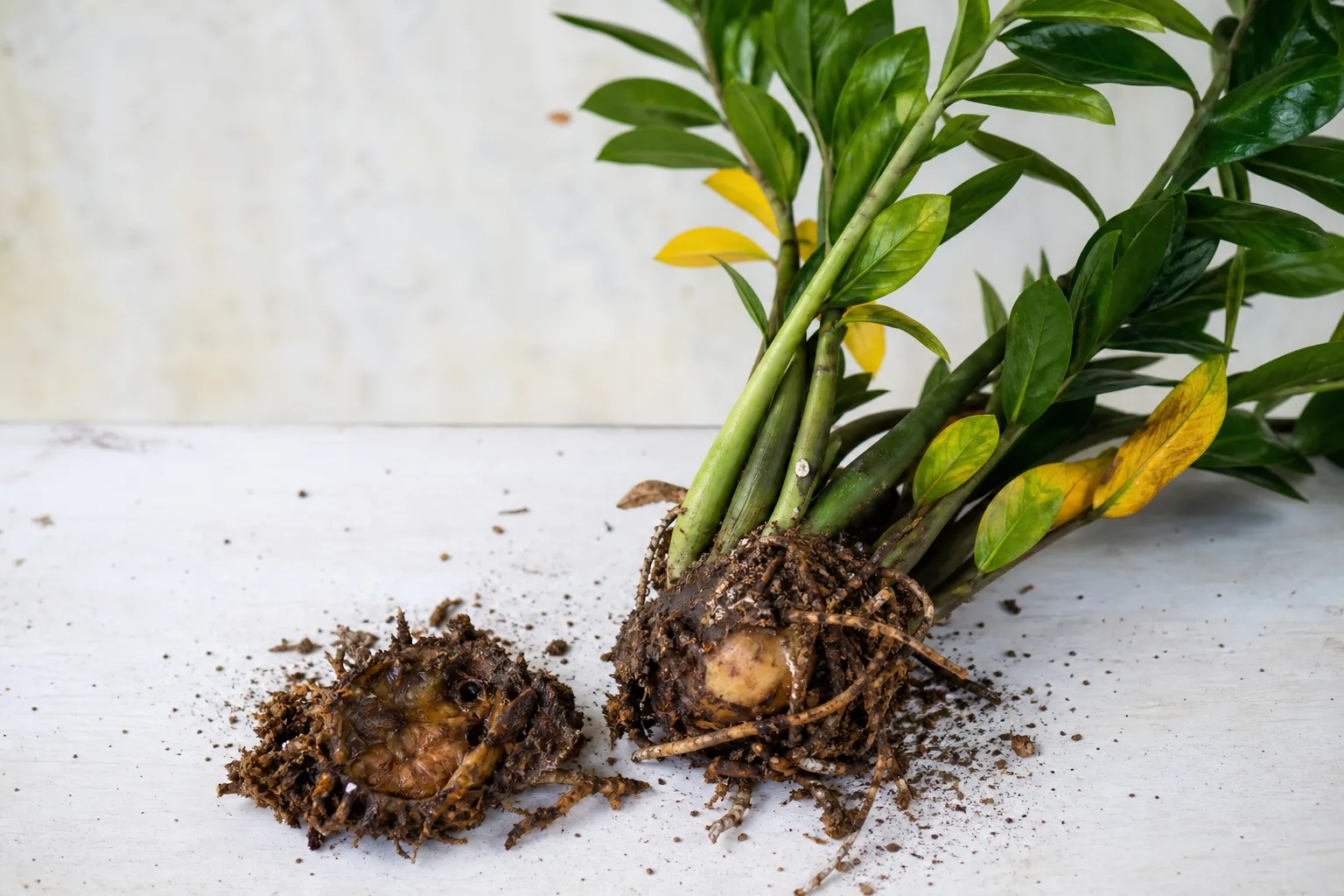
Do not unpot a firm, healthy ZZ plant because one leaflet has yellowed. Inspect the root ball when the pot remains wet for an unusually long stretch and the plant is declining, when a stalk base turns soft, when the mix smells sour, or when yellowing is spreading despite a pause in watering. Remove the nursery pot from any decorative coverpot first; water can collect out of sight underneath it.
When you slide the plant out, compare texture as well as color. Healthy rhizomes and roots feel firm; decaying sections are soft, mushy, or collapsing and may smell foul. Potting mix can stain sound roots brown, so color by itself is not a reliable test. If the root mass is firm and the mix is merely damp, put it back and correct the container’s drainage and watering conditions rather than cutting roots.
Fix wet soil without making recovery worse
First stop adding water and empty any saucer or cachepot. If the drainage hole is open and the mix is not sour or compacted, let it dry substantially before the next thorough watering; do not leave the pot in standing runoff. If the pot has no drainage, or the mix stays dense and wet, move the plant into a clean container with a drainage hole and a loose, fast-draining houseplant mix. Choose a pot only slightly larger than the sound root mass, because unused wet mix can prolong the problem.
If inspection confirms rot, use a clean blade to remove only tissue that is unmistakably soft and dead. Preserve every firm root and rhizome, then repot in fresh mix and let excess water escape freely. Avoid soaking a damaged plant in improvised hydrogen-peroxide mixtures or repeatedly disturbing it to inspect progress; those steps add stress without solving the conditions that held water around the roots. If most of the rhizome has collapsed, recovery is uncertain, so focus on keeping any remaining firm sections out of saturated soil.
For future watering, judge the mix rather than the calendar. NC State gives seasonal intervals as examples, while University of Maryland Extension advises letting the mix become fairly dry at least an inch below the surface; both approaches depend on the pot and room. The practical rule is to water thoroughly only after the root zone has dried substantially, then empty runoff. A small pot in bright warmth may dry much faster than a large pot in a cool, dim room.
2. A bone-dry root ball
Underwatering is possible, although the ZZ plant’s water-storing rhizomes make it less vulnerable to a missed watering than many tropical houseplants. After a long dry period, leaflets may wrinkle, curl, yellow, or drop, and the stalk may feel less firm. If the pot is light and the mix is dry well below the surface, drought is more plausible than root rot; do not assume a wilted plant always needs water without checking.
Water slowly and evenly until water exits the drainage holes, then let the pot finish draining. If water runs straight through a dry, shrunken root ball, pause briefly and apply another small round so the mix can rewet instead of letting the water bypass it. Never leave the pot standing in a bowl of water afterward. If the soil is wet already, this is the wrong treatment; return to the root-zone checks instead.
Do not try to compensate for a dry spell with daily sips. A thorough watering followed by a drying interval wets the root zone more evenly and lets excess drain, while frequent small pours can keep one part of the pot damp and another dry. University of Maryland Extension’s ZZ plant guidance recommends checking the mix at least an inch down instead of watering on a fixed schedule because light and household conditions change how fast the pot dries. (University of Maryland Extension, Ask Extension)
3. Direct sun, low light, or a sudden move
ZZ plants tolerate low light but grow best with bright, indirect light. If a plant sits in a dark corner, growth may slow and old leaves can be shed sooner; slow growth also means it uses less water, so a previous watering routine can become too frequent. Conversely, a sudden stretch of direct sun through glass can bleach, scorch, or brown the exposed leaflets. NC State Extension recommends bright indirect light for best growth and warns that direct sunlight can scald foliage. (NC State Extension Plant Toolbox)
Look for a directional pattern: leaves facing the window have pale or dry patches while shaded leaves remain green. That is more informative than a rule that every east-, west-, or south-facing window is safe; buildings, latitude, season, glass, and distance change how intense the sun is. Move the plant back from harsh rays or filter them with a sheer curtain, but keep it near enough to a window to receive useful indirect light.
A plant moved from a dim store to a bright window, or from a warm room to a cold sill, can react to the change even if the new location seems suitable. Let it acclimate over several days rather than shifting abruptly between deep shade and strong sun. Keep it away from cold drafts and heat vents, and adjust watering to the new drying rate. Once light is lower or temperatures cool, a pot may take much longer to dry than it did in summer.
4. Fertilizer, old mix, or mineral buildup
A nutrient shortage can contribute to pale or yellow growth, but it is not the first explanation to test on a slow-growing ZZ plant. The plant needs only modest feeding: NC State Extension recommends a balanced liquid houseplant fertilizer once or twice a year. A plant with wet roots may be unable to use nutrients well, and adding fertilizer to stressed roots can increase salt concentration rather than solve the underlying problem. (NC State Extension Plant Toolbox)
Leaf patterns sometimes offer hints—older leaves may respond to low nitrogen, while yellow tissue between greener veins may suggest other nutrient issues—but those patterns overlap with root damage, changing light, and natural aging. They are not a home test that tells you which bottle to buy. Gardening Know How describes these patterns as possible clues, which is a useful distinction: treat them as reasons to check the plant’s growing history, not as a certain diagnosis. (Gardening Know How) Before feeding, ask whether the mix has been exhausted for years, whether the plant has been regularly watered and drained, and whether roots are firm. If several other conditions are off, fix those first and wait for new growth to show whether the plant is recovering.
A white crust on the mix or pot rim, recent heavy feeding, or repeated use of mineral-rich water can signal salts accumulating around roots. If roots are healthy and the pot drains freely, a careful flush with plain water may help move soluble salts through the mix; let the container drain completely afterward. Do not flush a pot with no drainage or a root ball that is already saturated. In those cases, correct drainage or replace badly compacted, crusted mix instead. When you do fertilize a stable plant during active growth, follow the label and use a balanced houseplant product rather than increasing the dose to chase yellowing.
5. Pests or leaf-spot disease
Pests are less common than watering or light problems on ZZ plants, but they deserve a close inspection when yellowing appears alongside visible damage. Check both sides of the leaflets and the places where they meet the stalk. Mealybugs look like small white cottony clumps; scale may look like fixed tan or brown bumps and can leave sticky honeydew; spider mites often produce fine stippling and delicate webbing. Epic Gardening’s ZZ problem guide describes these clues and notes that these pests can cause yellowing or leaf drop when feeding. (Epic Gardening)
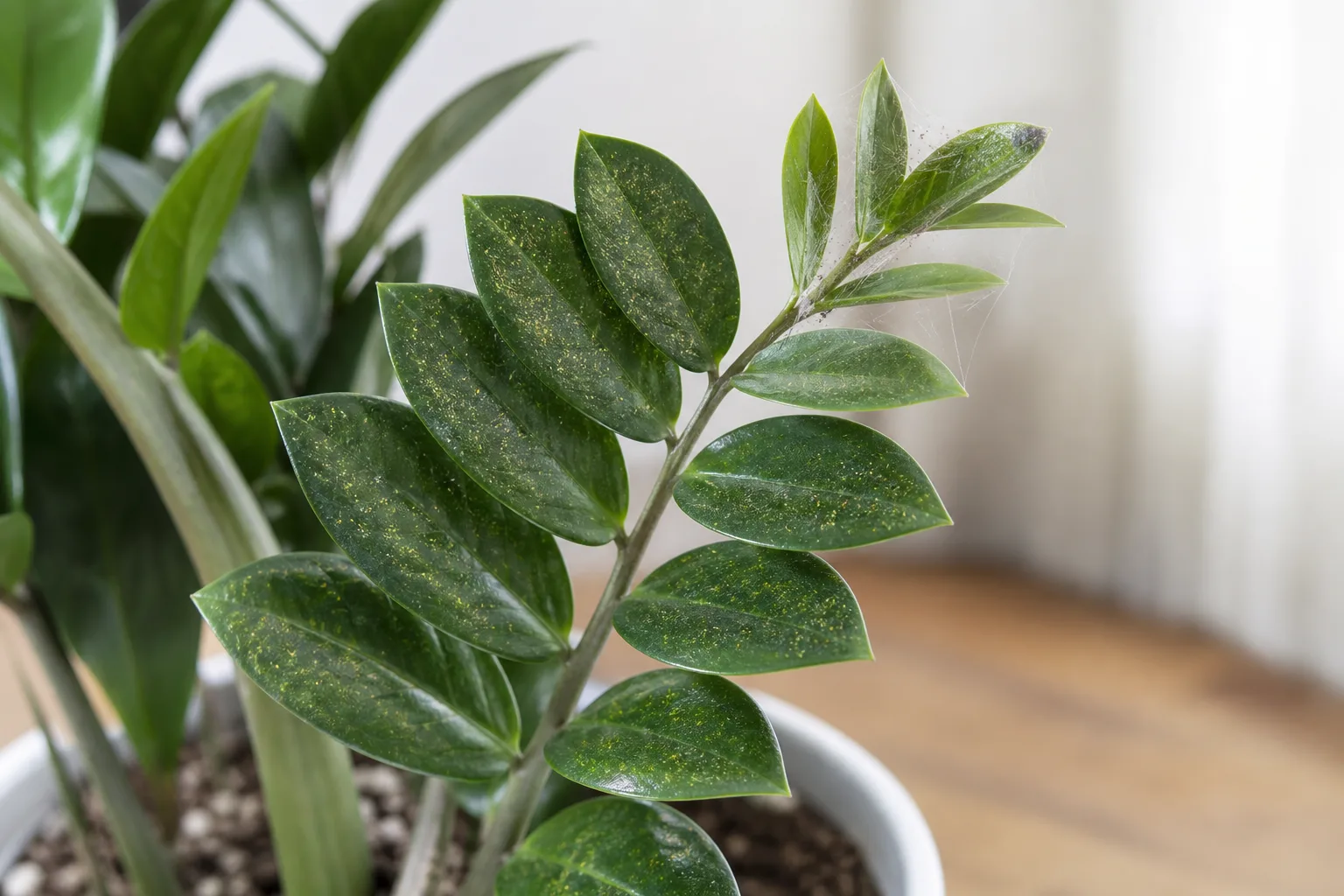
If you find insects, isolate the plant from others and wipe the foliage with a damp cloth, paying attention to leaflet undersides and stalk joints. Recheck every few days because eggs or hidden insects may survive the first cleaning. If you use an insecticidal soap or horticultural oil, use a product labeled for indoor ornamental plants, follow its directions exactly, and test a small area first; leaf treatments can injure sensitive or already stressed foliage. Avoid spraying a guessed remedy on a plant that has no confirmed pest.
Separate sap-feeder signs from leaf spots
Pest injury tends to show many tiny stipples, sticky residue, webbing, or visible insects. Leaf-spot disease or physical injury more often creates distinct lesions with darker or water-soaked margins, sometimes surrounded by a yellow halo. Clemson Cooperative Extension describes bacterial leaf spots as water-soaked marks that may have yellow halos and sometimes sticky ooze, but a photograph cannot reliably identify the pathogen. (Clemson Cooperative Extension)
If one or two leaves have expanding spots, isolate the plant, avoid wetting the foliage, improve air movement, and remove only badly damaged leaves with clean shears. Do not strip every yellow leaflet or treat the entire plant with a fungicide without confirming that a disease is present. UF/IFAS notes that disease is only one explanation for houseplant decline; when the whole plant wilts or softens, cultural stress is often the more useful place to start. If distinct lesions continue spreading after you improve care, seek a local extension diagnosis with clear photos and details about watering and light.
Put the response in the right order
A restrained sequence helps you avoid stacking several changes that make the cause harder to identify. Check the root-zone moisture and drainage first; if wet, stop watering and look for root decline only when other symptoms support it. If dry, water thoroughly and let the pot drain. If neither extreme fits, inspect light exposure, temperature, pests, fertilizer history, and the pattern of new yellowing.
Make one or two changes tied to the strongest evidence, then give the plant time to respond. A ZZ plant grows slowly, so old yellow leaflets are not a useful measure of a successful correction. Watch for whether new yellowing stops, stalks remain firm, and the mix begins to dry at a more predictable rate. Do not fertilize, repot, and move the plant all on the same day unless its root system is actively rotting and needs immediate intervention.
Keep conditions steady and track new damage
Take another photo from the same angle in a week or two and compare the same stalks, not just the plant’s overall color. Write down when you watered and whether the pot felt light or heavy; this quickly reveals whether a calendar routine is too frequent for a winter room or too sparse for a bright, warm spot. If the plant is stable, avoid pulling it from the pot repeatedly to check roots.
Keep the saucer empty, maintain bright indirect light, and protect the plant from cold drafts while it settles. Do not expect a fully yellow leaflet to recover; the useful sign is a pause in spread and continued firm green growth. If decline continues despite correcting the likely cause, revisit the diagnosis rather than adding stronger fertilizer or home remedies.
When a yellow leaflet is just aging
One of the oldest lower leaflets can yellow and drop as the plant renews itself. University of Maryland Extension notes that on a ZZ plant the leaflets may fall before the leaf stalk gradually shrivels, and that this is not concerning when it is the plant’s oldest current leaf. This fits normal aging best when the change is slow, other stems are firm, and no new yellowing appears across the plant. BBC Gardeners’ World also distinguishes an occasional yellow old leaflet from several stalks turning yellow at once, which merits a root check. (University of Maryland Extension, Ask Extension; BBC Gardeners’ World Magazine)
Low light can make an older plant shed leaves sooner, so “normal aging” and “not enough light” are not always completely separate explanations. Watch the pattern: one old leaflet at a time is different from several leaves yellowing together. If the oldest full stalk is completely yellow or dry, cut it close to the soil line with clean pruners; partly green foliage is still useful to the plant, so there is no need to remove it as soon as a yellow patch appears.
When to repot—and when to wait
Repotting is not a routine cure for yellow leaves. A plant that is stable in a pot with open drainage may need only a better watering rhythm or a less intense window position. ZZ plants prefer a snug container and grow slowly, so moving them to an oversized pot can leave extra mix wet around the roots for too long.
Repot when the container has no drainage, the mix has collapsed and stays wet, roots or rhizomes are crowded out of the pot, or root rot has damaged the current mix. Use a pot with a drainage hole only a little wider than the remaining root mass and a loose mix that does not pack into a dense, waterlogged plug. Do not bury the stalk bases deeper than before. After repotting, return the plant to steady indirect light and wait until the mix has dried substantially before watering again.
A newly purchased plant does not automatically need a larger pot. If it is in a plastic nursery pot inside a decorative cover, simply remove it to water and pour out the excess before returning it. This small change often corrects hidden standing water without disturbing a healthy root ball.
What recovery looks like after yellowing
A leaflet that has turned completely yellow is unlikely to become green again. Once the green tissue has been lost, correcting water, light, or feeding protects the remaining plant and supports later growth; it does not reverse the old damage. Leave a partly green leaflet in place while it is still firm, then remove a fully yellow or collapsed stalk with clean shears if you want to tidy the plant.
Judge recovery by what happens next: no additional leaflets yellow, stalks remain firm, and the plant produces healthy new growth when conditions are favorable. ZZ plants are slow growers, so new stems may take time, especially in winter or in low light. If the underground rhizomes remain firm, the plant may stabilize even when some old foliage is lost; if the rhizomes are soft and collapsing, recovery is less certain.
Conclusion
When ZZ plant leaves turn yellow, check the root zone before changing the care routine. A wet, heavy pot with spreading soft yellowing calls for drainage and root checks; a dry, light pot points toward a thorough drink; directional patches suggest light stress; and visible insects or distinct spots justify closer inspection. One slowly fading lower leaflet may simply be old growth.
Make the smallest correction that matches the evidence, keep runoff from standing under the pot, and judge recovery by firm stems and healthy growth rather than expecting yellow tissue to turn green. That approach protects the plant from the two most common mistakes: watering a plant whose roots are already wet and disturbing one that is only shedding an old leaf.



